Chauvet & Chevalier

OLYMPUS DIGITAL CAMERA

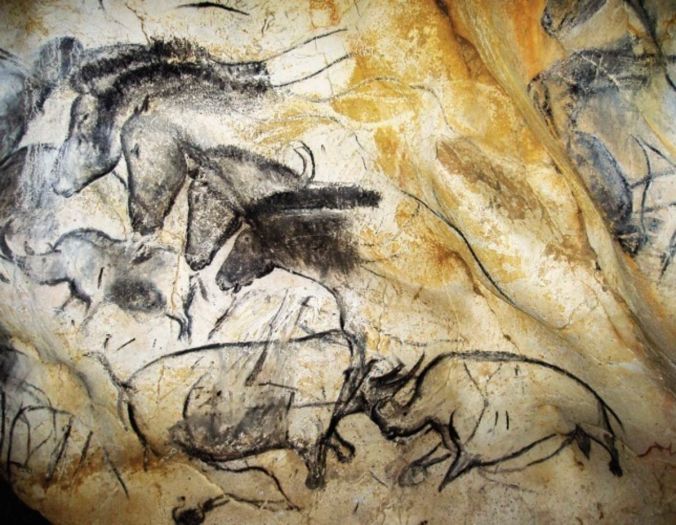
The World’s Oldest Art

BY  On Tuesday, Thurman received the Medal of Chevalier of the Order of Arts and Letters. Revisit her 2003 story on the Chauvet cave.

The New Yorker’s website invites you to celebrate news also cited by Art Forum about a writer who we have not cited here frequently, but whose most famous article (click the link above) is one of our favorites, and the film treatment of the same topic also had our attention; plus her francophilia is strongly shared among us:

Judith Thurman Receives the Medal of Chevalier of the Order of Arts and Letters

Yesterday, Judith Thurman—author, French literature scholar, and staff writer at the New Yorker—was conferred the insignia of chevalier of the Order of Arts and Letters by Bénédicte de Montlaur, the French Embassy cultural counselor. The ceremony took place at New York’s Payne Whitney Mansion. Continue reading

Trees & Wine

02pour1-master768

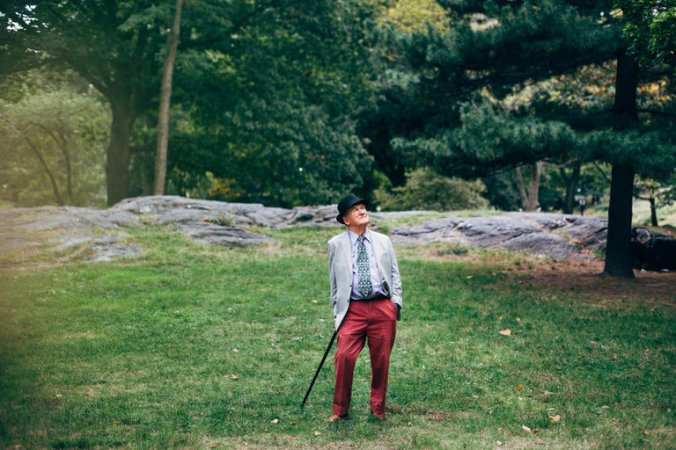
The wine writer Hugh Johnson in Central Park, where he admired one of the last stands of American elms in North America. Credit Andrew White for The New York Times

The New York Times keeps us looking at the trees…

Hugh Johnson’s Lifelong Journey Among the Trees

By

Hugh Johnson, the venerable English wine writer, had just arrived in New York City on a trip he tries to make every year, especially in the fall when “the elms start to fire up.”

As is his custom, he visited old friends, took in a few restaurants — Le Coucou, the new Rouge Tomate Chelsea and an old favorite, Jean-Georges Vongerichten’s JoJo. He stopped at a few museums and strolled through Central Park, where he indulged another passion that is as dear to his heart as wine — trees. Continue reading

Traditions Taken Beyond The Limit Of Logic

wine

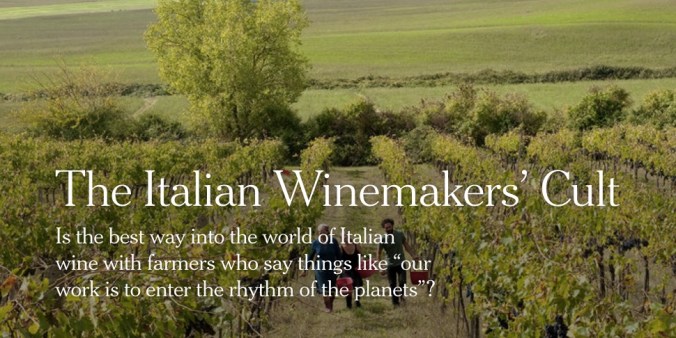
The annual harvest of the sangiovese grapes at the tiny Colombaia winery outside Siena. Credit Susan Wright for The New York Times

This story touches on many of our favorite themes, so thanks to Mr. Pergament for telling it well (click the image above to go to the original, at the New York Times website):

By DANIELLE PERGAMENT

It was a hot, late summer evening in Tuscan wine country — and, unexpectedly, I was getting a lesson in astrology.

Inside a grid of cool, lush green vines, amid hills and valleys rippling toward the horizon, a cherubic woman in a wide straw hat named Helena Variara was pointing toward the sky.

“You have days of fire, air and days of earth — the 12 constellations are our helpers,” she said matter-of-factly. “Our work is to enter the rhythm of the planets.” Continue reading

The Best Use We Have Ever Heard Of For A Taco Bell

30dealers1-master768-1

From left, Emma Fernberger, associate director of the Bortolami Gallery; the dealer Stefania Bortolami; and the artist Tom Burr in the former Pirelli Tire Company building in New Haven, where Mr. Burr plans an installation as part of the gallery’s “Artist/City” initiative. Credit Christopher Gregory for The New York Times

We do not bother complaining about fast food on this platform, but we are happy to pass along this story about re-purposing a fast food site:

Art Dealers Move Out of the Gallery and Into a Taco Bell

By

Stefania Bortolami still recalls, with cathartic exultation, the moment she decided to display her art in a slower, smaller way. It was May 2015, and Ms. Bortolami, the owner of the Bortolami Gallery in Manhattan, was at the art fair Frieze New York — her sixth such gathering of the year. Continue reading

Library Luxury of a Different Sort

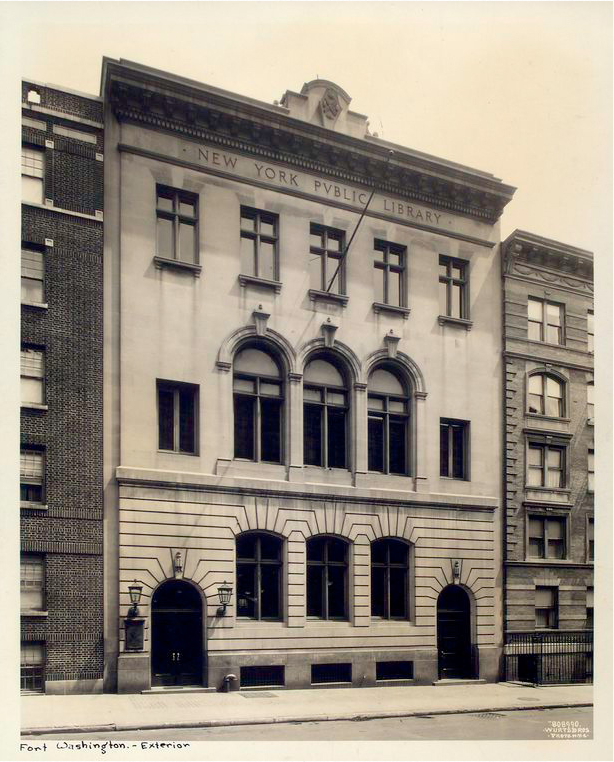
The exterior of the Fort Washington library the year it opened, 1914. The top floor windows are for the apartment. (Photo: New York Public Library/Public Domain)

The beautiful Beaux-Arts design of many of the buildings in the New York Public Library system represent only one definition of luxury. The idea of children growing up playing and reading in the stacks at night produces the colorful imaginings of literature where children spend nights in museums, or ramble about in the “tippy-top floor of the Plaza Hotel”.

I’m sure most of us haven’t heard of the custodian apartments that used to grace New York City’s branch libraries, and I for one, am grateful to Atlas Obscura for sharing this curious history.

Inside the New York Public Library’s Last, Secret Apartments

There are just 13 left.

There used to be parties in the apartments on the top floors of New York City’s branch libraries. On other nights, when the libraries were closed, the kids who lived there might sit reading alone among the books or roll around on the wooden library carts—if they weren’t dusting the shelves or shoveling coal. Their hopscotch courts were on the roof. A cat might sneak down the stairs to investigate the library patrons.

When these libraries were built, about a century ago, they needed people to take care of them. Andrew Carnegie had given New York $5.2 million, worth well over $100 million today, to create a city-wide system of library branches, and these buildings, the Carnegie libraries, were heated by coal. Each had a custodian, who was tasked with keeping those fires burning and who lived in the library, often with his family. “The family mantra was: Don’t let that furnace go out,” one woman who grew up in a library told the New York Times. Continue reading

South India Via NYC

12rest-pondicheri-slide-gmzc-videosixteenbyninejumbo1600

Before moving to India in 2010, my search for the perfect Indian restaurant, in North America and Europe and anywhere else Indian expats were numerous, was a constant. Now, when I travel outside India, my culinary quests are inverted; I never search for Indian while traveling. But Pete Wells makes me think I should rethink next time I am in New York City:

Pondicheri Makes Indian Flavors an All-Day Affair

By

“This is the first place you’ve taken me where I’d come back and spend my own money,” a friend said in the middle of lunch at Pondicheri. He is highly sensitive to pretension and unjustified expense, so whenever I take him along on one of my hunting parties, I try to pick something with a high ratio of flavor to price. At Pondicheri, I finally hit his sweet spot. Continue reading

Paris Gardens

980x-6

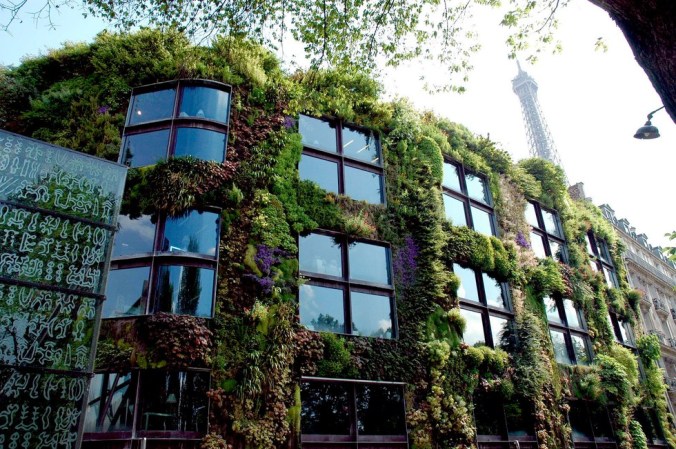
By the year 2020, the City of Paris wants to add 100 hectares of vertical gardens and roofs, with a third dedicated to urban agriculture.The Vertical Gardens by Patric Blanc / Flickr

Greening La Ville Lumière is as good a new objective as we can think of for a city that already has alot going for it (thanks to EcoWatch for the story):

Paris Becomes One of the Most Garden-Friendly Cities in the World

Earlier this summer, Paris quietly passed a new law encouraging residents to help green the City of Light by planting their own urban gardens. Continue reading

Conservation, Nature & Culture

09gero-master768

Credit Ping Zhu

A writer who captures the nuanced relationship between conservation of nature and culture has our attention:

The Lost Cultures of Whales

By

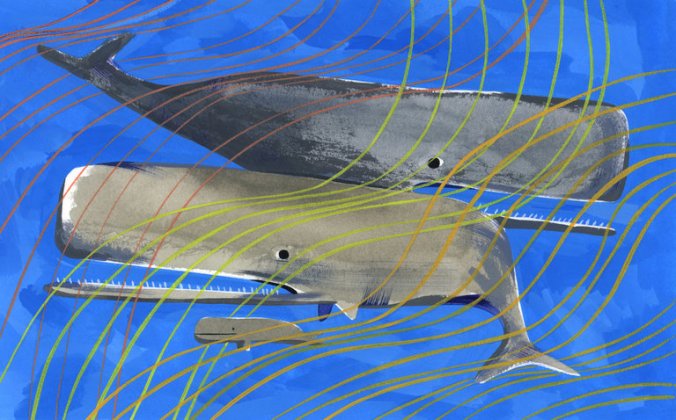
Aboard the Balaena, Caribbean — I am alone on deck, my headphones filled with the sounds of the deep ocean. I have been tracking the sperm whales since 4 a.m. Now the island of Dominica imposes its dark shape in front of the rising sun.

“We have whales!” I shout down to Hal Whitehead, who founded the Dominica Sperm Whale Project with me a decade ago. He puts the kettle on and asks who it is as he comes on deck. Continue reading

Library Reading Room, Luxury, Legacy

schwartz-restored-rose-reading-room-1200

The Rose Reading Room is luxurious in the way that only certain shared spaces can be. Its grandeur attracts its visitors, and is in turn amplified by their presence: the true urban symbiosis. PHOTOGRAPH BY DREW ANGERER / GETTY

It was the room in the photo above where I sat, in the early 1990s, collecting some data for a research project that would eventually become my doctoral dissertation. I had been in that room once or twice in my youth, but as an adult on a specific mission (little did I know the data collected that day would help me develop ideas that we now call entrepreneurial conservation within La Paz Group) the room barely registered in my notice. Except as a very practical place to read some historical documents.

So I am delighted to see that room again after a long time. It looked great to me the last time I saw it. Now I can say wow for different reasons. The legacy of the room is protected, and perhaps renewed for another hundred years. If you click the image and go to a larger viewing with greater detail, you will understand why the word luxury fits in the title of this post on the New Yorker website.

It is not our practice to use the word luxury because it is so laden with old and often inappropriate (considering the ecological condition of the planet, considering advances in socio-economic development, and considering other modern sensibilities) meanings. So we appreciate when others take care in how they use it:

THE ROSE READING ROOM AND THE REAL MEANING OF “LUXURY” IN NEW YORK CITY

By

To say that the ceiling of the Rose Main Reading Room, at the New York Public Library’s main building, on Fifth Avenue—the biggest room in the biggest public-library branch in the country’s biggest city—is an ornate piece of work is putting it mildly. Continue reading

Save The Truffle, A Campaign We Are Destined To Support

3b044a32123901-56703376190bcThis is a series of videos realized to launch “Save The Truffle” a new brand aiming to promote traditions and the conservation of the White Truffle of Alba. In this videos Agnello Renato, one of the last and most important “trifulau” (truffle seeker) of the zone, shares his stories about being a truffle seeker.For this project I took care of shooting, lighting and editing.
Creative project by Grid Studio.

Our family has a very happenstance connection to truffles that goes back to some sustainable tourism development work I carried out in Croatia starting in 2000, which led to our nirvanic 2006-2007 spent on an island in the southern Adriatic. But on my first visit to Croatia, in late autumn 2000, on a weekend off from work a local friend took me to Istria and the rest is history. You either love them or you probably will be disgusted by them, and I was in the former camp. A month later, coming home to my family in Costa Rica, I had some vacuum-packed fresh truffles; since then, we have been devotees.

A few years later, Milo became an encyclopedic mycophile, and a few years after that Seth had the chance to take a mycology courses at Cornell as an undergrad. So we are all happy to see this campaign represented by the logo above left. The article that brought our attention to this campaign is worth a read, whether you are a foodie, a fungist, or any kind of traditionalist. Click the logo to see some of the early creative work emerging for the campaign. We look forward to seeing more, but for now appreciate the journalist’s keen eye for what really matters in this story:

Amid Hills of Wine and Truffles, a Mission to Give Fungus Room to Breathe

Tasting The Place

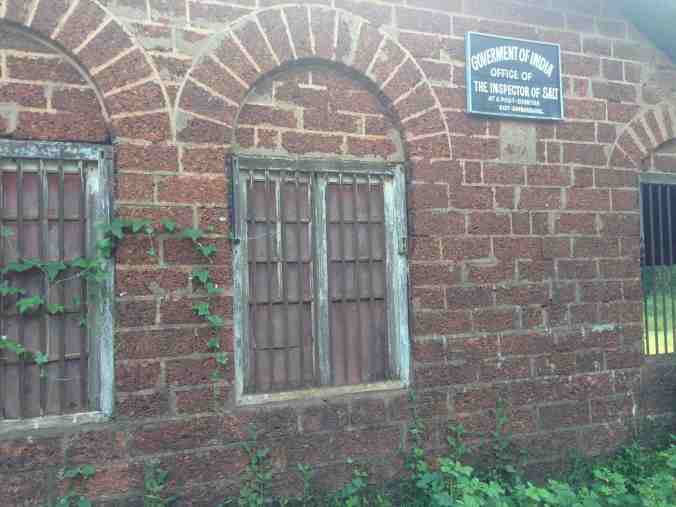
aarvlisalt

Where I am located, since last week and until next, there is an abundance of flavors; both in terms of intensity and in terms of diversity. Thanks to a longstanding tradition of ensuring that those flavors pop, there is not only salt, but salt inspection. Only the finest will do, and the finest is also harvested locally. Just as the fish is harvested locally as in the photo below, taken a few hundred meters from where I am typing right now.

img_5532

Continue reading

Bookstores Are Just A Small Notch Below The Library In Our Pantheon Of Cultural Institutions, But They Are There

eckstein-bodhi-1200

Bodhi Tree—Los Angeles, California

We liked it the first time around, and appreciate his extension:

DRAWING THE WORLD’S GREATEST BOOKSTORES

By

It was a little more than two years ago that I walked around New York, drawing pictures of the city’s endangered landmark bookstores.  Continue reading

Mango Dreaming

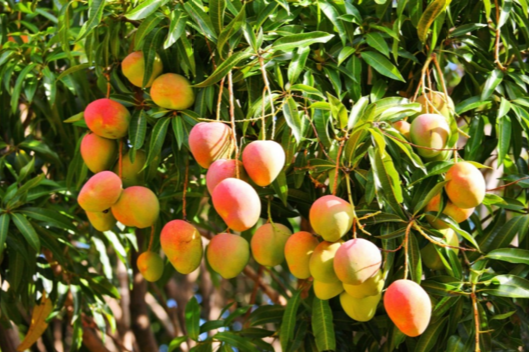
Crist’s visit to small farms as part of our work on a new project serves as a reminder of the amazing diversity and abundance of fruits and vegetables growing in many fertile parts of this country. In Kerala it seems that any seed or stick placed into the rich soil will sprout, and even in the sandy or red clay soil of Maharashtra he found vegetables with explosive flavor.  He described the mango trees that surrounded the farm – not only was he in “mango headquarters”, as he put it – he was likely surrounded by the one of the most prized of this “king of fruit” – the Alphonso.

Note to self: visit during mango season. Continue reading

Perspective On The Ages

ages_custom-9ff69ab35ab626c9478bbdca45cef0f576c4797a-s1100-c85

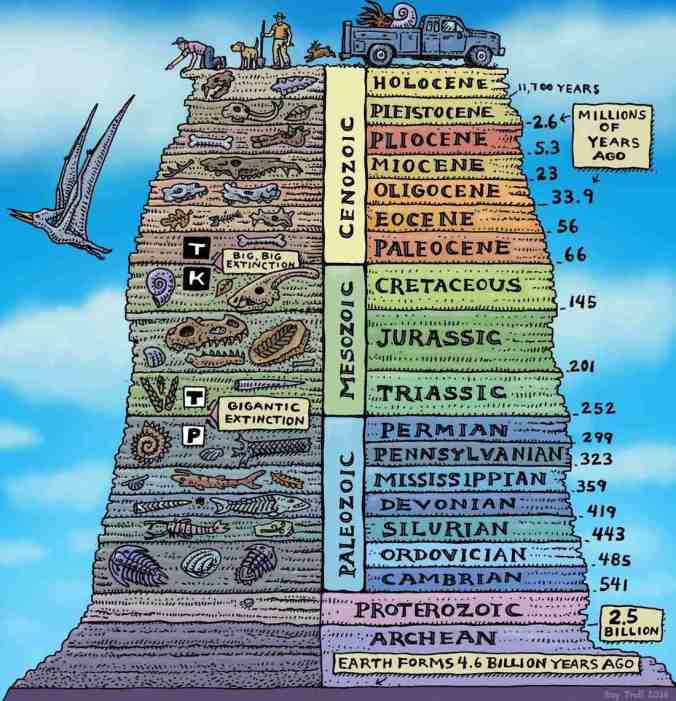
The Geologic History of Earth. Note the timescales. We are currently in the Holocene, which has been warm and moist and a great time to grow human civilization. But the activity of civilization is now pushing the planet into a new epoch which scientists call the Anthropocene. Ray Troll/Troll Art

Big words in the title may distract from the excellent point of this “cosmos & culture” article at National Public Radio (USA), worth a read:

Climate Change And The Astrobiology Of The Anthropocene

You can’t solve a problem until you understand it. When it comes to climate change, on a fundamental level we don’t really understand the problem.

For some time now, I’ve been writing about the need to broaden our thinking about climate. That includes our role in changing it — and the profound challenges those changes pose to our rightly cherished “project” of civilization. Continue reading
Agricultural Exploration, Flavor Surprise


aarvliag1

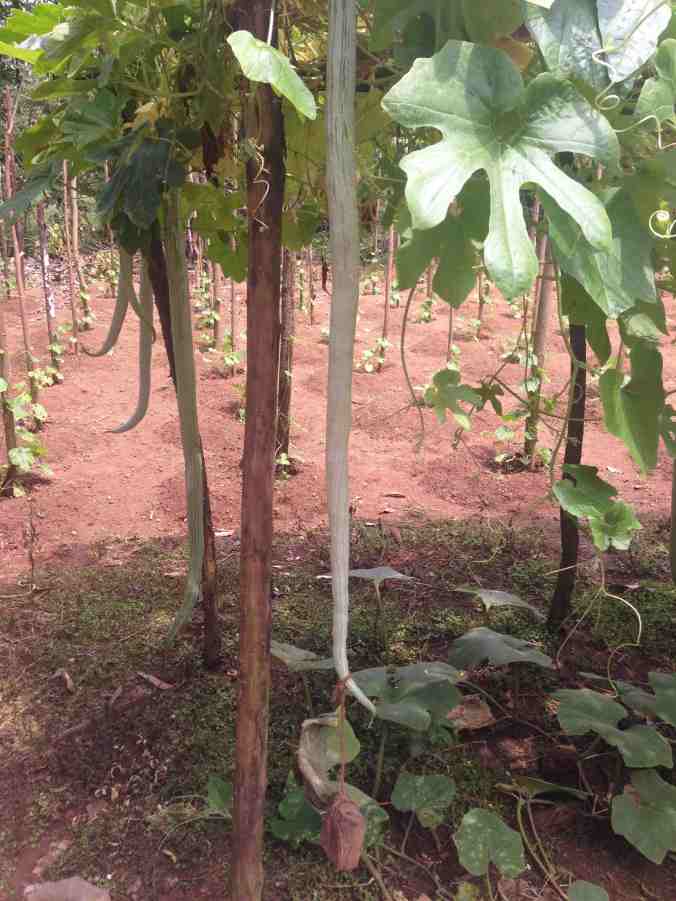
Where is Asha, or at least her book? I could utilize her culinary inputs related to southern Indian vegetables and flavors right about now.

I am in the coastal region of southern Maharashtra now, just north of the Goa border. The cuisine is different from that of Kerala, but with many of the same vegetable inputs. For ten days my mission is primarily to food-focused. For a new project we are working on, our current task is to determine what food items will be grown on property and which will we sourced from local farmers. This is always a curious task. Continue reading

Tale Of Two Souths

Two Souths.jpg

I had the distinct pleasure of dining with a friend at Asha’s restaurant in Atlanta, and of having a discussion with Asha after dinner about our inverted common experience of operating restaurants in these two souths referenced in the title of her new cookbook (she has family in Kerala and I have family in Atlanta, and we both live in one another’s country of birth).

My foodie dinner companion and I thought it would be interesting for Asha to come to Kerala to share her culinary talents in one or more of the kitchens we were in the process of setting up at the time of that dinner a couple years ago. Asha was then, and obviously remains, quite too busy for that. Go, Asha!

Review: An Indian Twist on Southern Cuisine in ‘My Two Souths’

By

Can the remix be better than the original? It’s something to contemplate while working through the chef Asha Gomez’s debut cookbook, “My Two Souths: Blending the Flavors of India Into a Southern Kitchen,” with Martha Hall Foose. Ingredients make unexpected cameos that often steal the show. Continue reading

About The Roses

lueders-slide-odmi-jumbo

It is difficult to resist a story like this when you have recently completed a multi-year restoration.

lueders-slide-vg4p-superjumboWhen it involves a former convent I have a particular reason to be interested. This article had me at the mention of Patmos, one of my favorite islands, but there is more. It is that cloister, with the rose garden seen in part in the photo to the right, that intrigues me. I have noticed that in European convents, the older the better, there are rose gardens that contain strains of rose that are difficult to find elsewhere. Presumably “antique” roses, they have a fragrance that is incomparable:

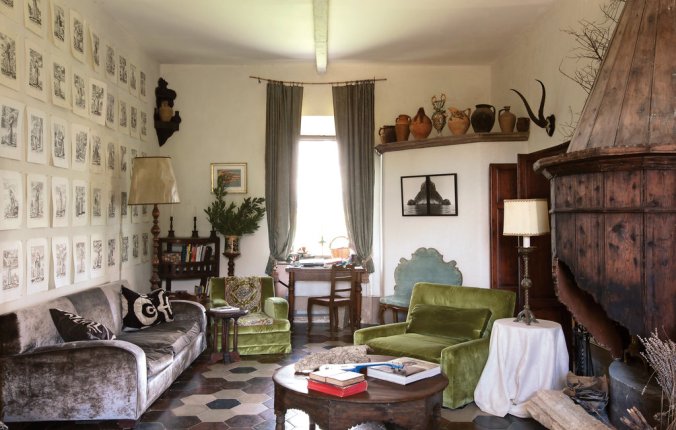
Restoring a Run-Down Convent in Tuscany

A mother-daughter duo brought back to life a centuries-old house in the countryside.

By

For 60 years, a 16th-century Franciscan convent designed by the Florentine architect Antonio da Sangallo the Younger, a creator of both the Palazzo Farnese and the Villa Madama in Rome, had existed in a state of abandoned decrepitude. Situated on the edge of the town of Pitigliano, in southern Tuscany, with vegetation engulfing its cloisters, the house had no electricity, almost no running water and no windows. It was exactly what the mother-and-daughter duo Holly Lueders and Venetia Sacret Young had been looking for: “the perfect ruin.” Continue reading

Down An Amazing Rabbithole

Yesterday’s post got us looking through the MacArthur Foundation’s website, and lots of worthy material there to investigate, including this news we missed a couple months back. In some ways the findings are intuitive, and maybe seem not surprising; but the scientific evidence of the challenges facing biodiversity on the planet are certainly useful for policy planning, not to mention strengthening our resolved commitment to entrepreneurial conservation:

screen-shot-2016-09-25-at-3-23-18-pmMost Biodiverse Countries Spending the Least on Conservation, Study Finds

biodiversity-200.jpg.580x580_q85.jpgCountries that contain most of the world’s species biodiversity are also spending the least on a per-person basis to protect these natural assets, according to a MacArthur-supported study by theWildlife Conservation Society and the University of Queensland. Countries near or in the tropics, where most of the world’s diversity is located, spent the least on biodiversity conservation. The report recommends engaging leadership of these countries and promoting conservation through existing social traits within cultures that do not currently prioritize conservation.  Continue reading

Food Memories & History, Coastal Mesoamerican Edition

18mag-18eat-t_ca0-master768

Hudutu Credit Davide Luciano for The New York Times. Food stylist: Maggie Ruggiero. Prop stylist: Gozde Eker.

Belize is a close neighbor to the culture described here, so this story, and especially the colors on the tables in the photos, have an air of familiarity:

A History Lesson, Served as Coconut-Seafood Soup

By

When Sulma Arzu-Brown’s father traveled from his village in Honduras into the city, people pointed at him, at his black skin. When he spoke his language, people laughed. “They said, ‘Look at that monkey, goo goo gaga,’ ” Arzu-Brown told me. Continue reading

Antikythera, Belize & Wondrous Discoveries

21tb-shipwreck-master768

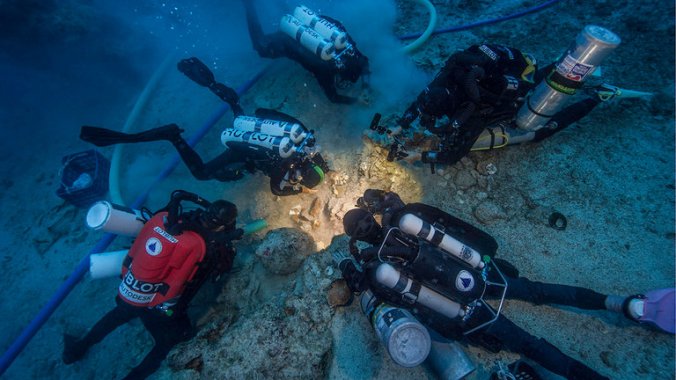
Divers and archaeologists excavating the 2,000 year old Antikythera shipwreck. Credit Brett Seymour/EUA-WHOI, via Argo

This story, about remains recently found under water in a region of the Greek islands where several of us at La Paz Group have very fond memories of, gives me pause. At the time the ship in this story wrecked, the Mayans in Belize were flourishing. The archeologists working at Chan Chich Lodge are still dating the structures there, but the sailor from the ship lost in Antikytheran waters would likely have found the Mayans quite advanced relative to his own culture.

Greece’s classical period was long over by the time this sailor lost his life, and Rome’s empire was still expanding, impressively. Lots of progress, civilization-wise, philosophy-wise, math-wise, geometry-wise in that Mediterranean zone; but also in what is now called Belize, and the wider Mesoamerican corridor. Reading this article, I appreciate the work of archeologists who advance our understanding of those who came before us:

Human Remains Found at Ancient Roman-Era Shipwreck

By

Underwater archaeologists have found a 2,000-year-old skeleton belonging to a victim of the famed Antikythera shipwreck from ancient Roman times. Continue reading