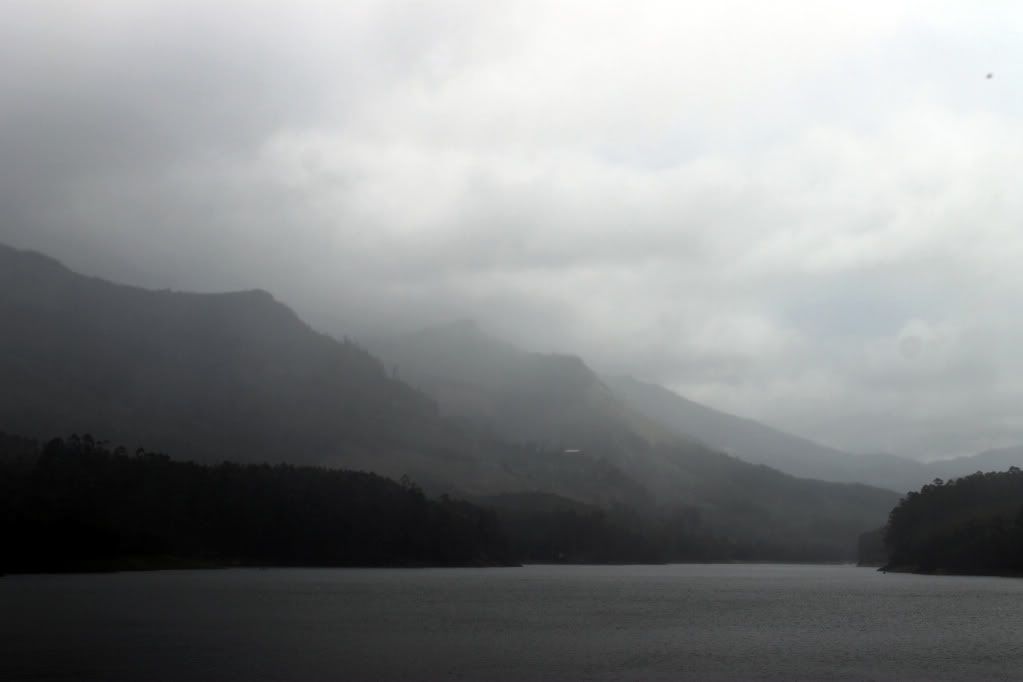
The Idukki district of Kerala is known for mystical mists.
The Idukki district of Kerala is known for mystical mists.
Chili. Chili Pepper. Capsicum. Multiple monikers for a simple fruit in the nightshade family that has successfully colonized all cultures around the globe.
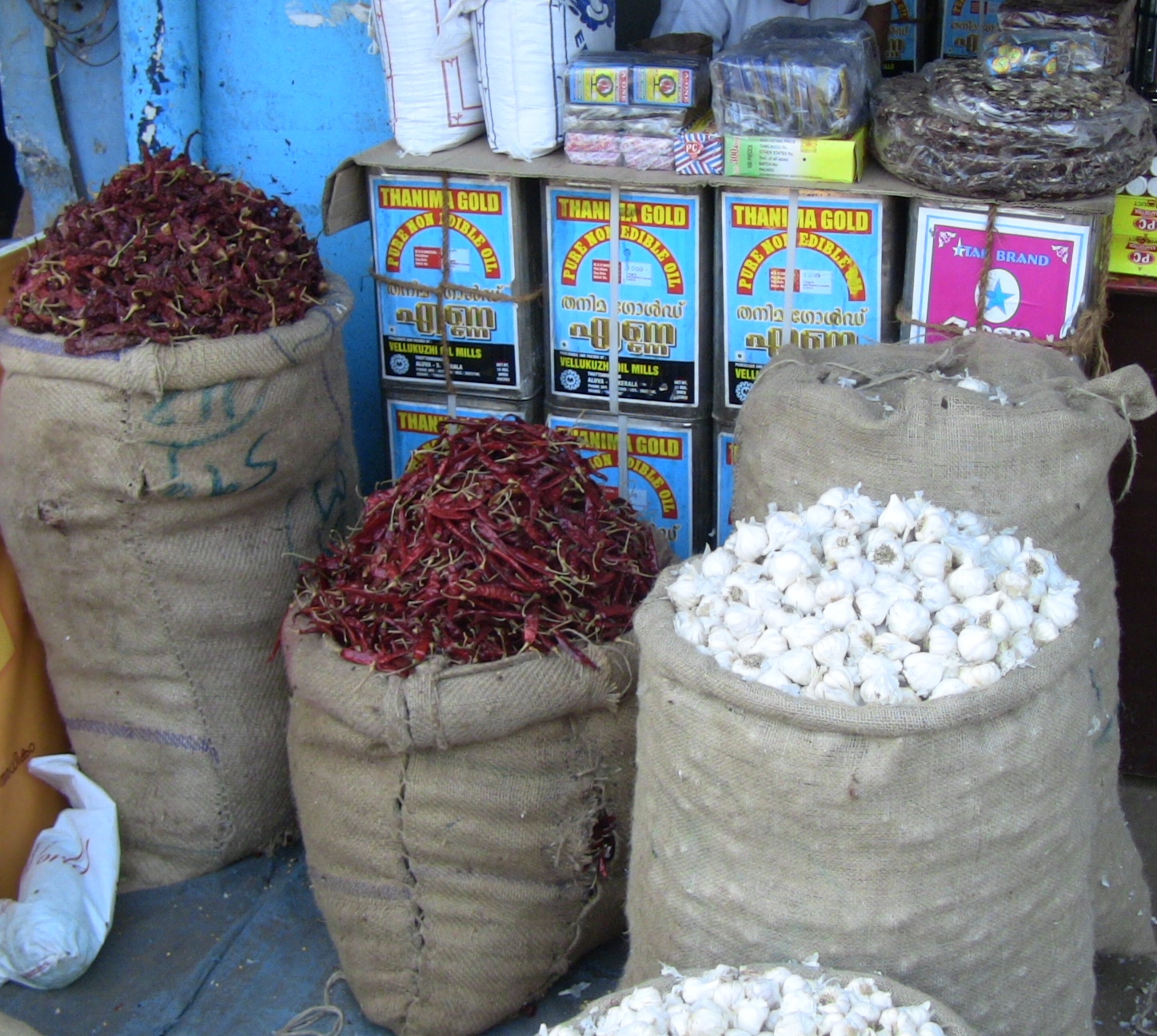
Chili Peppers and garlic at the Ernakulum Market, Cochin
This new world crop was part of the so called “Columbian Exchange”, using those newly opened passages to cross oceans and then continents. Both the Spanish and the Portuguese had interests and influence across Asia and India, and these fiery fruits were quickly incorporated into local cuisine.
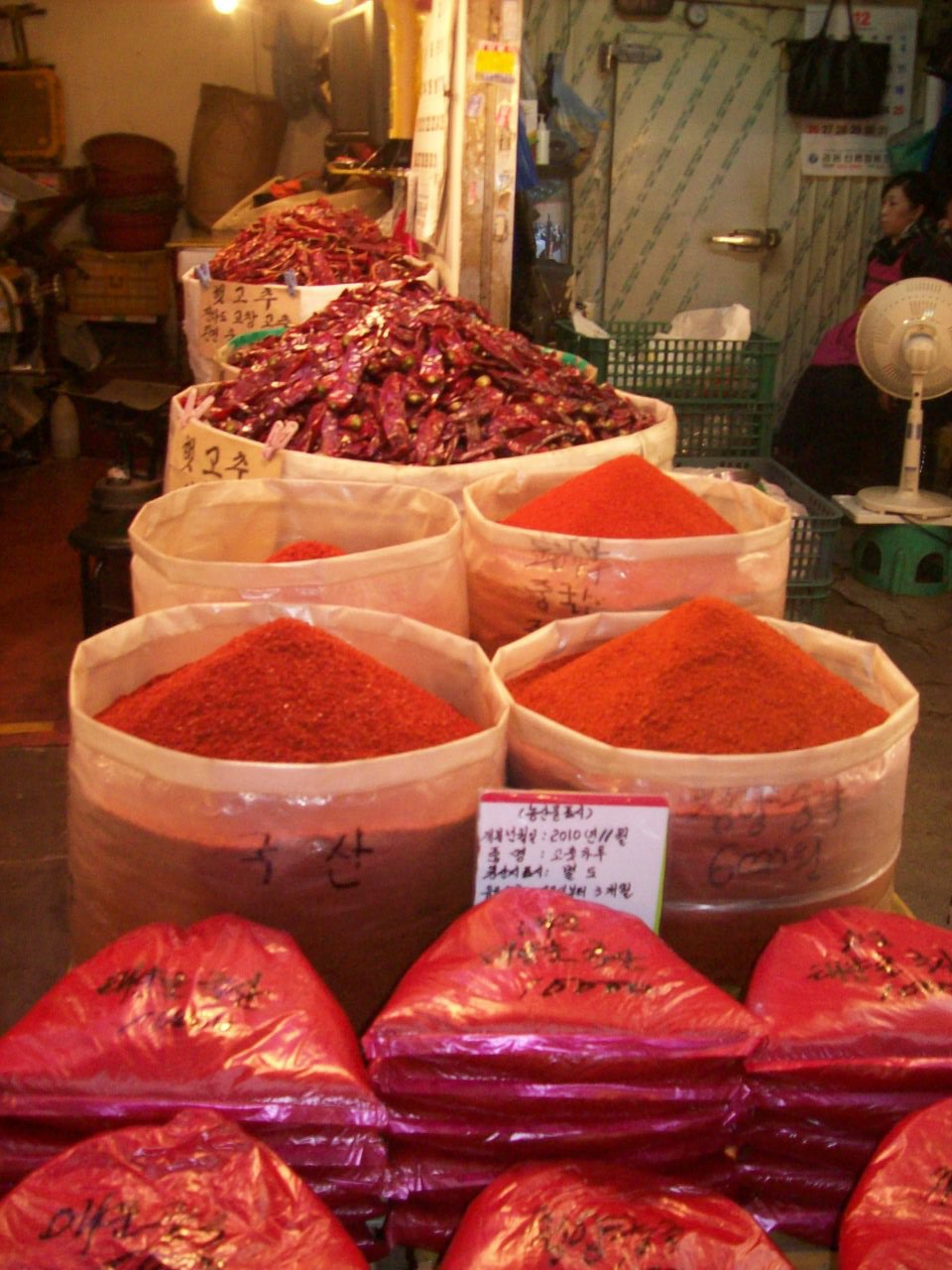
Chili Peppers (whole and ground) at Yangnyeong Market, Seoul
Oaxaca, Mexico has been a culinary mecca for decades and the chili has played an enormous role. A market excursion wouldn’t be complete without a visit to the chili stalls. As I’ve written in previous posts, this form of “shopping” goes way beyond simple provisioning. It’s a both lifestyle and a lifeline to a different time…
Mark Bittman is referring to a particular terroir in his article. But using an anthropomorphic conceit I’ll ask readers to consider the concept of “slow food” as a citizen of Pangaea.
I wrote yesterday about the North American cod stocks that have practically disappeared during the last century as a result of overfishing. Needless to say, this is just one of many species that humans have had a seriously detrimental effect upon in their shaping of the Earth. An article from The Economist this May discusses the geological forces that humans have had on the Earth, focusing on topics like the carbon cycle or nitrogen fixation rather than species extinction.
Paul Crutzen and Eugene Stoermer coined the term “Anthropocene” in 2000 to classify what they see as a new age on the geological time scale, and the fairly abrupt and sharp decline of cod may be one of the many changes visible in the fossil record thousands or millions of years from now. As you can see in the image below, we are currently in the Holocene, but Crutzen and Stoermer, along with many other scientists, including several of those in the International Commission on Stratigraphy (which arbitrates the geological time scale), believe that we have entered an age primarily shaped by Homo sapiens.

Image from The Economist
Our visit to Munnar’s High Range Tea plantations gave us more insight into the history of the drink than just the lively culture of the “cuppa”.
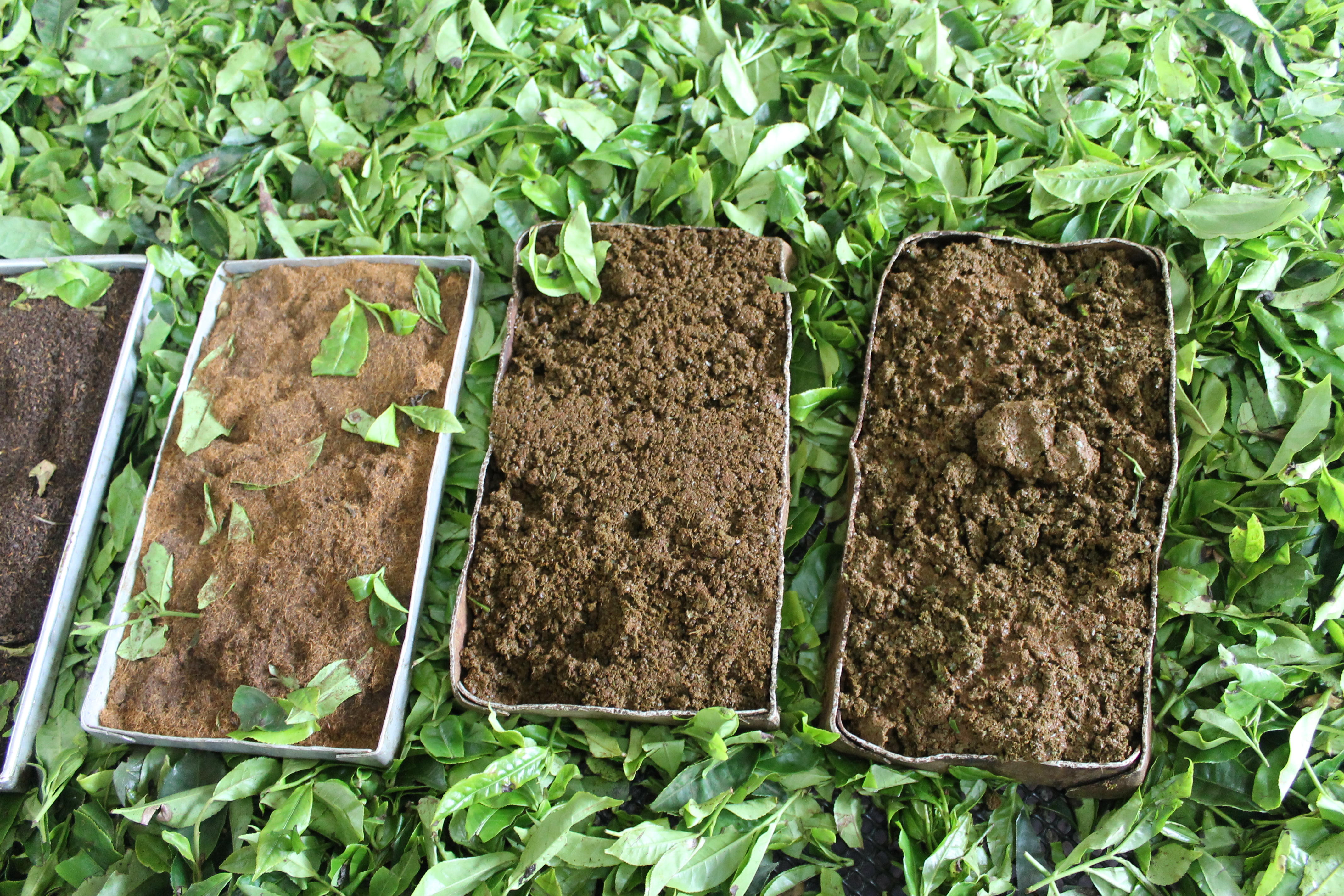
Traditionally called Chai, tea has been the backbone of numerous communities in the mountainous areas of India and Sri Lanka (formerly known as Ceylon). Schools, health clinics and even Hindu temples were built by the plantations for the betterment of the community. The Shristhi Welfare Centre, founded by a local tea plantation, sells delicious High Range strawberry preserves and handmade paper products that contributes to the rehabilitative vocational work of physically and mentally challenged children of the plantation workers. Unfortunately they were closed on Sunday when we wanted to visit.
There’s more to tea than meets the palette. I will be writing more about the Shristhi Welfare Centre, and its relation to tea, in posts to come.
William Bradford, governor of Plymouth Colony in Massachusetts for much of the first half of the 1600s, from whom North Americans have inherited the notion of communal Thanksgiving (and incidentally my grandfather 26 generations removed) noted:
The major part [of the Pilgrims] inclined to go to Plymouth chiefly for the hope of present profit to be made by the fish that was found in that country (Cod; 67).
Fast forward a few centuries. Bottom trawling, longlining, and gillnetting during the 19th and 20th Centuries were probably the most responsible for cod’s population decline in North America. Faced with the same great abundance that had helped bring settlers to Cape Cod, huge fishing companies acted rationally to maximize their own gain, taking advantage of the bountiful commons, and this led to ruin. With the near disappearance of cod came the absence of herring, capelin, humpback whales, and squid. Continue reading
Amie has written about market in various contexts, making use of both its verb and noun form. In our day to day activities, we are motivated by entrepreneurial conservation, by which we mean market-oriented solutions to complement the efforts of NGO, philanthropic and governmental efforts to preserve ecosystems and maintain the vitality of cultures.
We abhor all things fundamentalist, so the cliche of the University of Chicago notion of markets is not one we cling to (nor is the cliche apt anymore; see their contributions in the realm of behavioral economics to get a sense of where this great institution is heading in terms of hegemonic ideas). The same goes for the fundamentalism that has prevailed in the world of conservation–a belief that markets cause environmental problems but cannot provide solutions. So, in the spirit of tamping down fundamentalism of all kinds, we might look at the marginalia of this word’s definition, rather than OED‘s definition itself, as we otherwise systematically do:
Proverb: you may know how the market goes by the market folks.
We adapt this, in our daily work, to mean: let’s be realistic while we attempt creative, fun approaches to serious problem-solving.
In another superb field note, Paula Pedraza echoes sentiments seen in several posts by our own Contributors:
Everyday life for these people is like a lifetime of adventures for us. Working here really has been an illuminating, inspiring and humbling experience.
Michael’s reflections on the Tiger Trail comes to mind. So does the follow up to that. Speaking of Michael, we are certain that when he is back in the swing of things at Amherst College, and with a bit of encouragement from his fan base, he will be gracing these pages again soon.

The lake Mattupetty, created by a hydroelectric dam only 13 kilometers from one of the Western Ghats’ most visited hill stations – Munnar.

We’ve lived in India a year now (more on that in another post) and for much of this time I’ve wanted to visit Munnar, the iconic tea-laden hill station in the Western Ghats. Most of our mountain excursions have been to Thekkady, a place we’ve grown to love for its proximity to the Periyar Tiger Reserve, and the team we work with at Cardamom County.
This weekend we had the best reason for a change of route–to scout a prospective organic farm that might join our portfolio of properties under management–so I was looking forward to also discovering the differences between these two hill stations. I did in fact find something different in Munnar, but not in the way I was expecting it. Continue reading
 If you have already read his more famous books, and enjoy his writing, you will wonder why this one is not considered among Umberto Eco’s most important. He does not even mention it in one of the best interviews he has granted in the English language.
Strange. My being in India now is at least in part due to this book. For the work we do it is an illuminating text, in an Eco-intuitive, not everything is as it seems kind of way. If I made a list of top 10 choices for the one book to take on one of those desert island strandings, this would be on it.
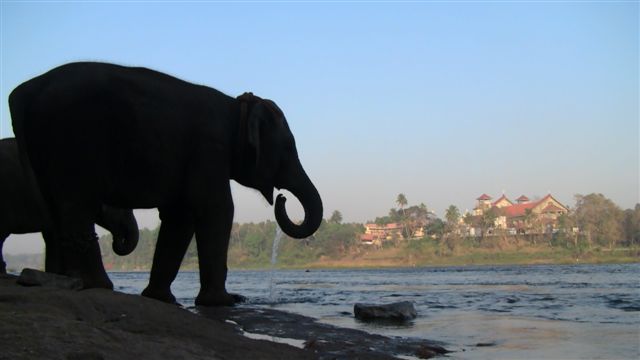
One of the many hats I wear within my La Paz Group responsibilities is orienting our new interns and visiting colleagues to the Kerala experience.
The usual itinerary includes a visit to some of the cultural sights at Fort Kochi, as well as Backwater excursions and of course, Thekkady and the Periyar Tiger Reserve.
I think I can say without reservation that each intern who enters the reserve has expressed the clear desire to encounter one of India’s most charismatic fauna–the elephant– and some have been luckier than others.
An important part of Indian mythology and culture, here in Kerala elephants were once called “sons of the Sahya”, meaning “sons of the Western Ghats”–referring to the mountain range that not only forms the border with a neighboring state but represents the heart of this one. Continue reading
To get to a basic meaning of good using music, plenty of choices were available beyond the “folk,” “ska” and “world” categories. Bach, Handel, Mozart and Beethoven among many other classical composers had more than enough to say musically that helps us get a grip on good. The point was more about Pete Seeger’s character, and his choice to not back down and his ability to not become embittered by the injustice; the choice The Specials made to sing to protest a hero’s unjust imprisonment, or Raghu Dixit’s choice to celebrate virtue through a young girl.
For a cinematic rendering of good, Wim Wenders film Until the End of the World comes to mind, which brings the topic back to good music. Lou Reed does not normally evoke good the way Pete Seeger does, but his contribution to the soundtrack of this film, What’s Good, is worth a listen. It approaches the subject by pondering inexplicable loss. Another contributor to that soundtrack is even harder to associate with the word good, but if you listen to him in conversation, he sure sounds like he knows something about good.
Are there equations predicting good behavior other than George Price’s? If so, please share. Meanwhile, you might find Laurie Anderson’s Let X = X, a fine diversion.
I experienced monstrous difficulty getting this piece written. The difficulty was that of synthesis, which eludes one all the more deftly when one searches for it too seriously. Almost desperately, I wanted, both for my own sake and for the sake of this, our burgeoning compendium of tidbits and travel tales, to provide a perfectly comprehensive explication of my two months in Kumily. But I have to give up the ghost, and I always have to think more humbly about writing.
So after several drafts, I submit an account more prosaic than I’d hoped for, which is the price of my liberation from this imprecise living–both here and there and in neither hemisphere entirely. I have had reason and time to think about travel, specifically about travel and writing, the collection and formation of disparate experiences for the creation of something meaningful. Growing up, I tended to believe that writing just happened–that a writer, when faced with a given circumstance, simply reported what was before him, and that his metaphors and imagery arose spontaneously from the content of his impressions. I don’t believe that any longer. Writing is hard, and writing honestly is harder. Continue reading
 It’s said that about 70% of communication is nonverbal. However in the case of Kathakali, which has its own stylized language of dramatic movements, stories – epic classics even – can be 100% told without uttering a single word. Next door to the Kalari Centre where Sung and I witnessed the impressive show of Kalari Payattu, is the Mudra Centre for Kathakali: yet another cultural spectacle that originated in the southern Indian state of Kerala. Continue reading
In my post about Sergio Ramírez, former vice-president of Nicaragua, I had very few pictures. I have corresponded with José Tomás, and thanks to his camera I can provide some pictures here:
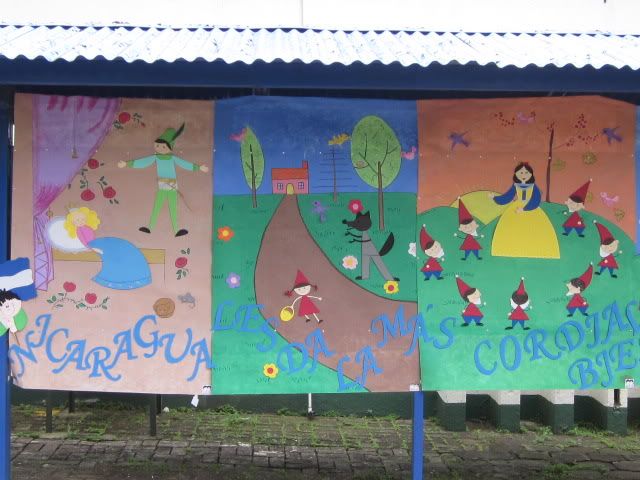
A welcome poster made by children showing famous stories
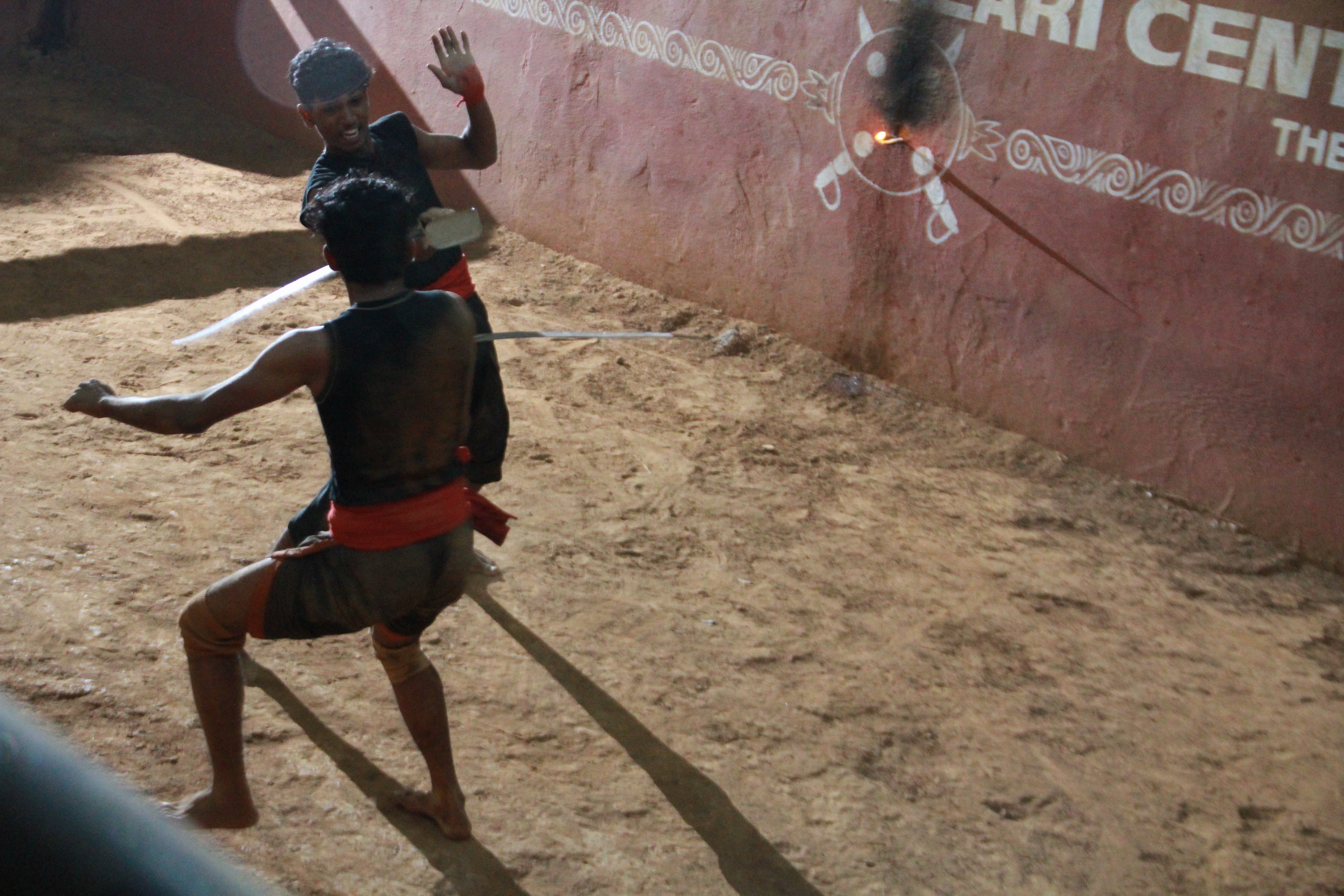 You may have heard the common expressions, ‘jumping through hoops’ or ‘bending over backwards’ to describe an act, done for someone else, which is in some way a difficult challenge. I’m now willing to venture a guess that these phrases originated from the practitioners of kalari payattu – an ancient martial art native to Kerala – who literally do both of these things as devotional acts and for the love of their art. Continue reading
Seth mentioned Sloboda Cinema in Dubrovnik, and by the mysteries of modern technology, and friends in faraway places, these photos have arrived, allowing a view of that location from the outside and inside:

These photos were taken a few days ago. Views of the interior follow the page break and if you have been to Dubrovnik you know how amazing the interior wall of this cinema is in historical terms. What film did Vesna see? Continue reading
Several of our Contributors have returned to Cornell, so Ithaca was in the air. A pleasant surprise, always, to be reminded of Homer’s clever hero but when travel writers do the reminding it is especially so:
…all I had to do was hop a bus or two to the port of Patra, and from there a ferry could take me, at long last, to Ithaca, the place Odysseus called home.
In another short burst of wisdom, Mr. Egan brings attention to the remarkable risks that accompany forays into wilderness, quoting one of the elders of the field:
Yosemite’s most lyrical advocate, the naturalist John Muir, anticipated the urban hordes as the population moved away from field and farm. At the dawn of the 20th century, he saw the parks as places to escape “the stupefying effects of the vice of over-industry and the deadly apathy of luxury.” But Muir also expected people to have some basic understanding of the outdoors.
This paragraph is bounded by vignettes of sublime and ridiculous examples of nature providing refuge as well as danger. It is not clear why he validates a trope of ideologues–his point would have been made without the nanny state reference. Or would it?

During my two final years of high school, I became involved with the Dunwoody Community Garden (previously mentioned here). We joined the group while the Garden was still in the process of being set up, and my family would help out on weekends, digging holes or laying out lines to create a grid for the 4×8 foot garden plots. At some point around this time, I became one of the officers for Dunwoody High School’s National Honor Society (NHS). Since the officers were always looking for community service projects to suggest to NHS members, I recommended sending Dunwoody NHS students to help build the Community Garden during a time when so much grunt-work was needed.
A handful of high school students was exactly what was needed to speedily complete the garden. A good adult leadership team was already in place, and energetic teenagers were eager to help, spreading newspaper and mulch to lay the foundation for fertile land. Once the plots were all set out, NHS purchased one so that students could raise flowers and vegetables to give away.
Since then, the Garden has only grown. Over 3,200 square feet have been added to the original land, creating more than 25 new plots for Dunwoody community members. In addition to the privately owned plots, DCG maintains several plots for economically stressed families (10% of the cultivable garden), and gives away another 10% of produce to the Atlanta Community Food Bank. To learn more, I’d recommend visiting DCG’s blog or the DunwoodyPatch.
In the next few days I’ll try to learn more about what Dunwoody High School has done to stay involved with the Community Garden.
 Organikos