Backwaters Home: Pampa Villa

Pampa Villa On The Pamba River

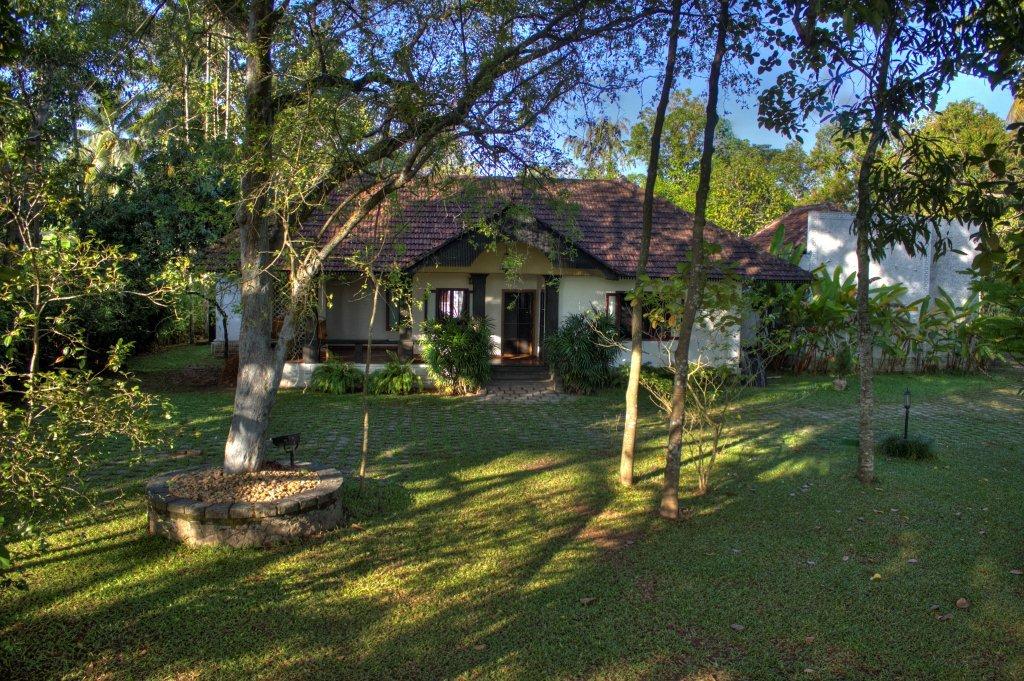
We have mostly shown images of life on Kerala’s backwaters from the perspective of boats, as in looking at and looking from.  As Milo’s recent post showed (at the tail end, so to speak), there is much more life on these waters than first meets the eye of the occasional visitor.  The view above is from the river, looking at a home that Raxa Collective recently took responsibility for.

This responsibility included modifications to the interiors in order to make it more welcoming to travelers.  It had served as the home of a prosperous resident of the backwaters, but now is open to receive visitors whose preferences in terms of privacy, decor and food (at least spice levels) often differ from those of locals, at least a bit.

Continue reading

Haiku and Homilies

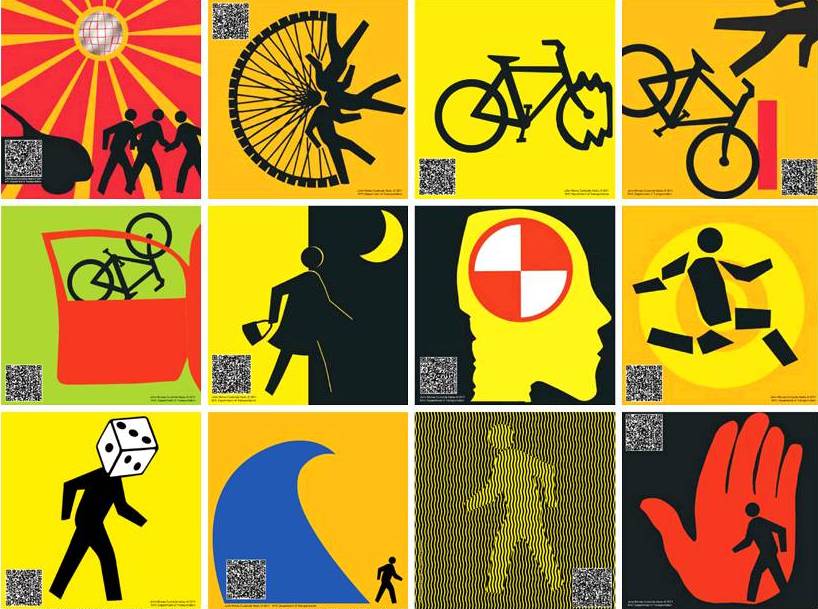
From New York to Paris to Bombay, navigating city streets can be a challenging choreography between bipeds, bicycles and motorized vehicles.  In places like India that dance expands to include the more than occasional quadruped as well.

We’ve written about driving in India on several other occasions, and to mitigate the apparent chaos the Indian Government has a program of sometimes rhyming, often droll, road signs that include little “ditties” such as:

Speed Thrills But Kills

Impatient on the Road, Patient in the Hospital

Safety On Road; Safe Tea At Home!

Reach Home In Peace, Not In Pieces!

Continue reading

Carbon Emissions Series: Green Neighborhood Design

With the close of the semester, I’ve had some time to reflect on the classes I took—and which ones provided the most value. One of best courses I took this semester at Cornell was called Green Real Estate, and it was taught by Mark Vorreuter, a passionate LEED AP who was eager to see students of all majors interested in green buildings. The course covered many aspects of LEED (Leadership in Energy and Environmental Design), a certification offered by the Green Building Council for buildings, homes, and neighborhoods that meet a set of criteria. I remembered spending several nights cramming for a practice LEED exam in which I had to acquaint myself with many of its specific criteria, but not until recently was I able to see the real effects of green building and neighborhood design.

Suburbs in Pearland offer large houses, wide roads, and generous land spacing.

Continue reading

Necessary Versus Sufficient

There are needs, and there are wants.

A toothpick sculpture?  Not necessary for San Francisco to demonstrate its greatness (as might have been an underlying objective of the commission).  Not sufficient for that purpose either.

Continue reading

Gnarly, Radical & Tubuluar: Surf Industry Innovation

Guest Author: Nicole Kravec

After watching Garret McNamara set the world record for riding a 90 (NINETY!) foot wave (aka 27.4 meters) in Praia do Norte, Portugal, I can’t help but wonder where he’ll go next – and what his ride implies for the surf tourism industry – an industry with between 25-50 million participants around the world with yearly growth around 15%, that can unfortunately oftentimes have unsustainable impacts.

McNamara, along with other Big (an understatement) Wave Surfers like Laird Hamilton and Mike Parsons, use a technique called “Tow-In Surfing.”  The process uses artificial assistance to literally tow a surfer into a breaking wave by a partner driving a personal watercraft like a Jet Ski or a helicopter with a tow-line attached.  Tow-In Surfing is what helped get McNamara his wave, as it is used when the wave is uber large and/or where positioning within the wave is critical.  There is some controversy associated with Tow-In Surfing, as it creates a lot of noise and exhaust that can certainly harm the local ecosystems. Continue reading

Rapt

This slideshow requires JavaScript.

Sometimes it takes another person’s perspective on a familiar place or object to see it in a new light–drawing an outline around a space highlights an additional dimension.  Be it a Parisian bridge that is crossed by thousands daily without a second’s thought, or pathways through Manhattan’s Central Park, both locations represent an aspect of the “heart of the city”. (For centuries, the Pont Neuf has literally been the heart of Paris, connecting the Île de la Cité with the left and right banks of the Seine, and the eponymous nature of Central Park requires little explanation.)

Continue reading

Artifacts

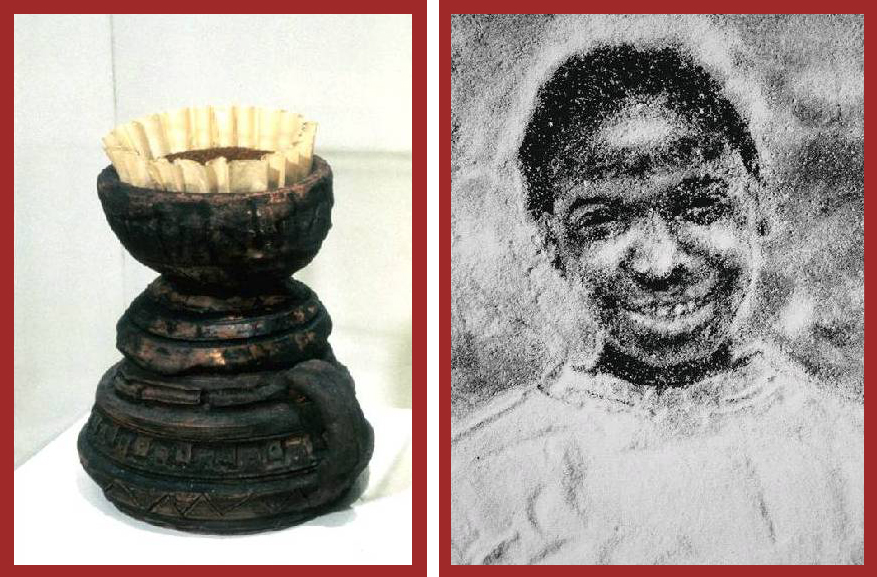
When I posted about the artist Vik Muniz a few days ago I wrote primarily about his collaborative film with director Lucy Walker. I feel I didn’t do justice to the general wit of his work.  Like fellow artists Chris Jordan and Mary Ellen Croteau,  Muniz is an ultimate recycler, but his “puckish” personality informs his work, both through his choice of medium (sugar to create shimmering portraits of the children of cane workers on St. Kitts) or visual jokes (Pre-Columbian drip coffee maker). Continue reading

Don’t Blink

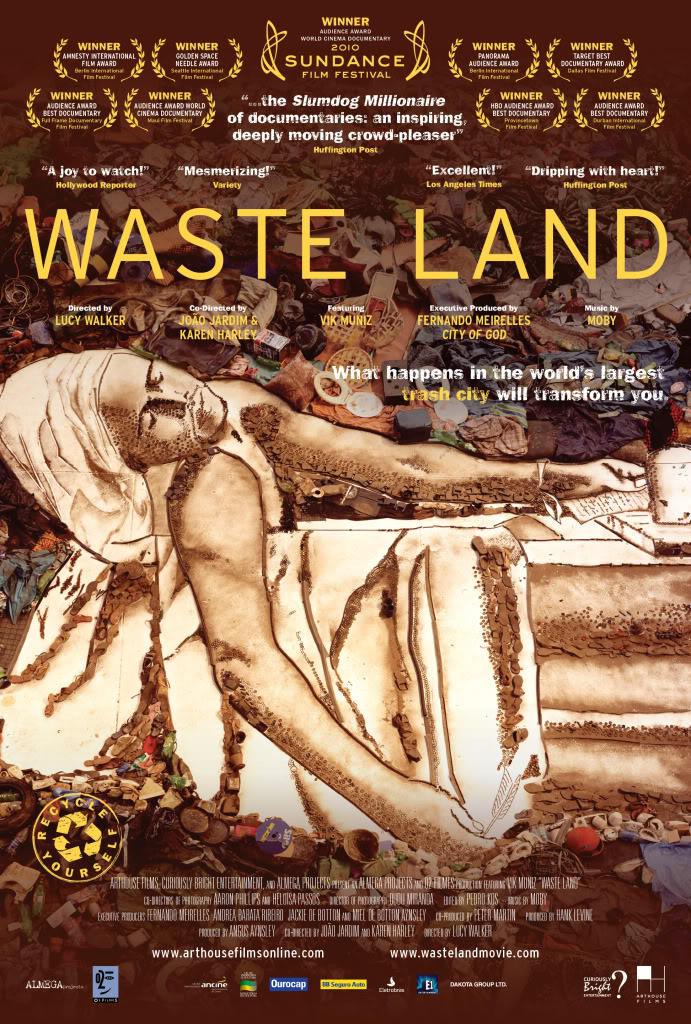
The beautiful thing about garbage is that it’s negative; it’s something that you don’t use anymore; it’s what you don’t want to see. So, if you are a visual artist, it becomes a very interesting material to work with because it’s the most nonvisual of materials.  You are working with something that you usually try to hide. –Vik Muniz

Brazilian artist Vik Muniz is known for his visual wit using either the world’s detritus or the generally unexpected as the medium for his portraits and landscapes.  Each piece, formed by ink drops, chocolate drips, dust motes, thread swirls or garbage itself, is temporary by nature, achieving permanence via a camera’s lens. Continue reading

Mosstrix

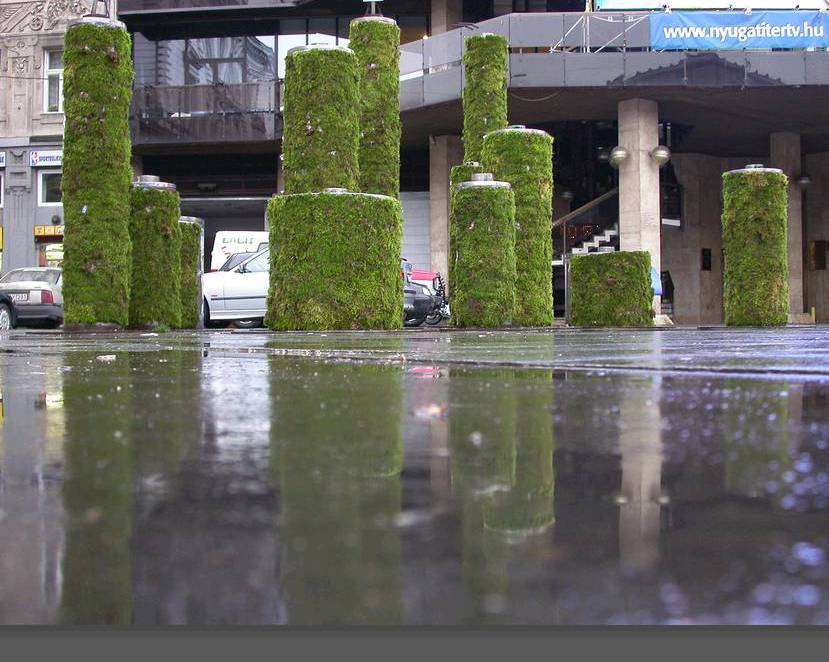
Mosstika: As It Started, Budapest, 2004

Nature calls to us.  All the more so in urban settings.  This is evident in the long history of elaborate parks and gardens in major cities, dating back to Frederick Law Olmstead,  André Le Nôtre and beyond.  Olmstead’s designs were meant to emulate the Savana landscape that strikes so strong a chord in people around the world, whereas Le Nôtre helped define that famously manipulated symmetry of the classic French garden.

Both respond to what we now refer to as biophilia, the magnetic draw that nature has on each of us.  The question we have to ask ourselves is which one is “Art”.  Not an easy task, to be sure. Perhaps the solution is to say “both” and leave it at that. Continue reading

And the “Fourth R Award” Goes to….

This slideshow requires JavaScript.

Two months ago I wrote about British restaurateur Arthur Potts Dawson and his closed loop restaurant concepts and social enterprise food cooperatives here.   When I came across the Greenhouse I found the perfect follow up.  One would not be amiss to call the Australia based designer/builder/environmentalist Joost Bakker “green-blooded”.  His Dutch flower growing heritage helped forge a lifelong passion with growing things and plant inspired structures, such as greenhouses and conservatories.  His greenery walls invoke the power of nature creeping back into urban environments, making them simultaneously comforting and edgy. Continue reading

Such Stuff As Dreams Are Made On

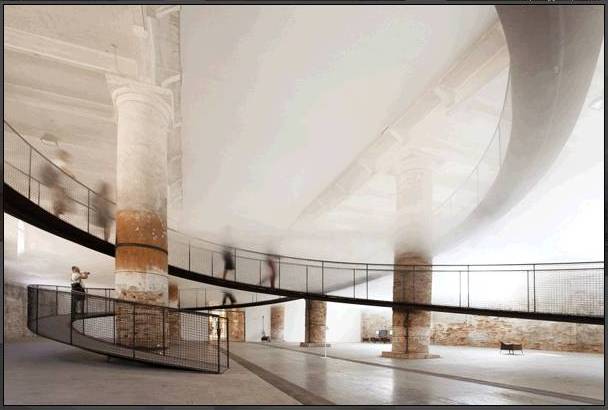
Cloudscapes (2010), Transsolar and Tetsuo Konda Architects

The Venice Architectural Bienale has a long history of showcasing innovative, thought provoking design and the Arsenale is a ideal venue to experience it.  Once the largest industrial complex before the Industrial Revolution, in the 16th century the assembly line system was so efficient that it is said they could complete the manufacture of a ship in one day. (I won’t go into the number of trees required to feed this system throughout the centuries…)

The exhibition space of the Corderie, built in 1303 and then rebuilt between 1576 and 1585, covers a 6400 square meter surface that includes nearly 10 meter high ceilings, a magnitude that allows for a range of installations in the 2010 Bienale themed “People Meet in Architecture”.

Cloudscapes is an aerie (and slightly eerie) example of the possibilities.   Continue reading

Maize

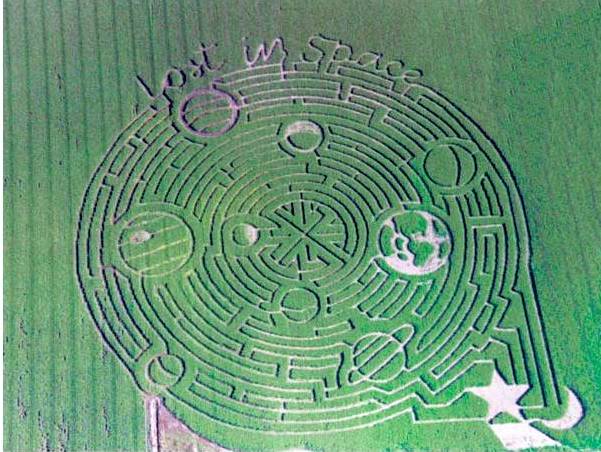
Despite the lush color in the photograph above, most corn mazes designed by Brett Herbst are enjoyed by people this time of year, when the pumpkins are filling their patches and the apples are filling their trees.  During this season the mazes coincide well with hay rides and cider pressing, quintessential fall activities.

Mr. Herbst and his team have designed 1,800 mazes in the past 15 years, from custom made “Your Name Here” styles to the image above that almost feels inspired by the Nazca Lines.

Many of the mazes have bridges and signposts with clues to assist visitors to find the correct paths, versus the twists and turns that lead to either dead ends or back where you came from.

Wouldn’t it be great if life was like that?

The High Line

Notice where the railway used to enter the building

The High Line railway was originally designed to bring shipments straight from the Hudson to manufacturing warehouses in Manhattan. The train cars could run packages from wharves to upper-level floors of these industrial buildings without having to obstruct street traffic or be carried up several stories manually (freight elevators weren’t a common sight in the 1930s, whether for safety, efficiency, or invention reasons I don’t know).

In 1980 the High Line trains stopped running, and construction of the new park design started in 2006 (after seven years of planning). The first section opened to the public in 2009, and the second section in 2011.

I first heard of the High Line Park this summer, while doing some browsing about the city online. I was immediately struck by the ingenuity of converting what had once been industrial space Continue reading

Through the Looking Glass

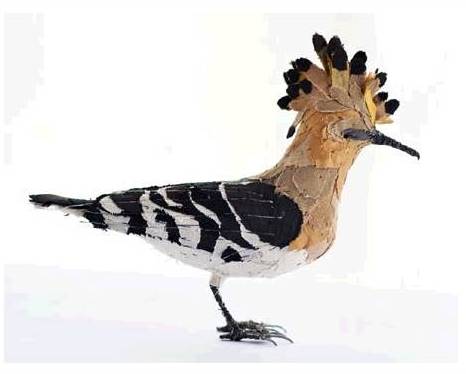
Hoopoo by Textile Artist Abigail Brown

Question: What would a Natural History Museum look like in Wonderland?

Answer:  Abigail Brown’s studio.

The Victorians were avid collectors, and there’s something deliciously Victorian about the detail and precision with which textile artist Abigail Brown practices her craft, bringing the winged world to life with bits and pieces of cloth that each carries their own history. Continue reading

The Eye of the Beholder

Chris Jordan, Caps Seurat, 2011

Seattle based photographer Chris Jordan has been making visual statements about mass consumption for over ten years. Using the “artist’s eye” to be able to step back from the overwhelming truths of societies’ excesses, he simultaneously breaks down that mass consumption into its smallest part and its incomprehensible whole.

Jordan uses  commodities  that are discarded daily–plastic and paper cups, newspapers, electronics–as the “brushstrokes” to illustrate the wastefulness  in cultures of consumerism. His photographs place both conscious and unconscious behaviors under a microscope, which is often unsettling, and always thought provoking. Continue reading

Wind, Water, Light

Janet Echelman, Her Secret is Patience, Phoenix, AZ, U.S.A. 2009

American artist Janet Echelman has worked in numerous mediums throughout her career and has a long history of working collaboratively with communities outside of her own culture, whether it be Balinese textile artisans or Indian bronze castors.

A Fulbright lectureship about painting brought her to Mahabalipuram, India, a fishing village in Tamil Nadu famous for sculpture. But it was watching the millennia-old craft of weaving and working with nets that ultimately inspired the work that now defines her art. When she watched the men making piles of nets on the shore she began wondering if the material was “a way to create volumetric form without heavy, solid materials.”   Continue reading

Bambouzle

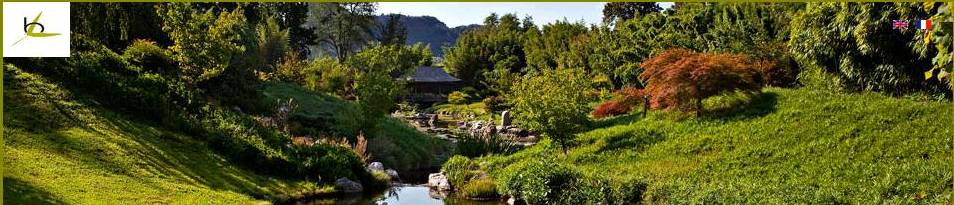
France has a horticultural history that goes back centuries, from the forested hunting grounds to the formal gardens of kings.  But “Liberté, égalité, fraternité” leads to parks for the people, offering countless opportunities for visitors to fulfill their desires to commune with nature.

Continue reading