The (Eco-friendly) Sound of Music

Eco-friendly and environment-friendly – the terms have become all too familiar now. From being used at green summits and in corners where the gatekeepers of conservation meet, they’ve entered mainstream vocabulary. The words are a call-to-action, they are rules, and have come to define a way of life. What is interesting is to see how much of this ‘eco-friendliness’ is thoughtfully designed for use, innovated and improved upon, and finally marketed and delivered as utilities. Over being mere concepts and terminologies, how much of this ‘friendliness’ can be used on a day-to-day basis. Yes, we heard about how biking can power phones but let’s hear more.

Continue reading

A Goodbye to Utility Bills?

Life off the grid? An actuality realized by just a few and romanticized by the rest. But if things go as per plan, Bratislava-based Nice Architects and their seven-year project Ecocapsule will make this possible by the end of 2015. Imagine having to pay no utility bills, being able to set up your own egg-shaped home in any corner of the planet, and being super sustainable through a life powered by the wind and the sun! Yes, let’s go get that dream!

Continue reading

The Future of Parking is Here!

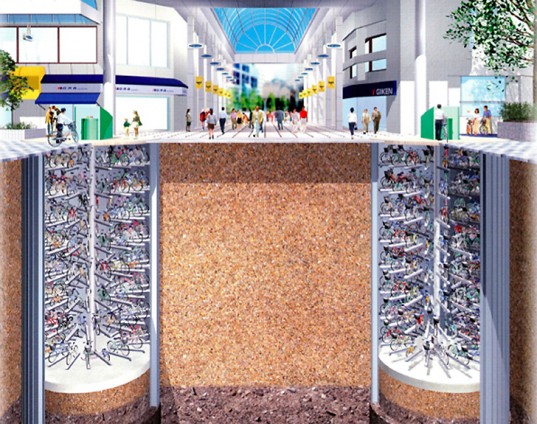
Developed by construction company Giken, the robotic system stores the cycles in a 11-meter deep well PHOTO: GIKEN LTD

Developed by construction company Giken, the robotic system stores the cycles in a 11-meter deep well PHOTO: GIKEN LTD

If there is one problem that puts developed and developing countries on the same footing, it is parking space. And Japan seems to have found a way around it. At least for bicycles. Considering that they are carbon neutral and land value is high, hindering the commissioning of exclusive bicycle roads and parking lots, this idea could be the future. Eco-cycle is an anti-seismic mechanical underground parking lot for cycles, designed along the concept of “culture above ground, function underground”. So when in Japan, particularly around Kounanhoshi Park, head to this bicycle elevator. Wait as the electronic card reader scans your membership (fee around $15 a month) code, remove pets and all valuables from the cycle, and stand back as your wheels make an eight-second journey to its slot. On your return, scan the code and your ride reaches you in a jiffy. More pedal power to that someone who really gave parking some extra thought!

Detailed photos (and some Japanese) here.

A feast for your eyes

98 2.5 cm cubes of raw food make this stunning isosymmetric photograph. COURTESY: Lernert & Sander

98 2.5 cm cubes of raw food make this stunning isosymmetric photograph. COURTESY: Lernert & Sander

When it comes to food, they say you eat with your eyes first. And you cannot help but do just that when it comes to Lernert & Sander’s new work, Cubes. May be that’s after you’ve tried identifying as many of the 98 cubes of raw food (we couldn’t help ourselves, too!). Commissioned by Dutch newspaper De Volkskrant last year for a feature on the nation’s eating habits, the duo started with what they could find in their neighborhood grocery store. Each type of food was then cut into cubes of 2.5 cm with a custom-designed tool, placed equidistant from the camera, each row photographed separately, and the entire image put together using digital compositing. No, absolutely no use of Photoshop. The equal distances and the one single size put all the vegetables, fruits and meats on equal footing. The digital editing turned the physically impossible feat into visual reality.  Continue reading

Collective Roots

Attention to detail is a highly prized attribute in all aspects of the work we have been doing in India since 2010, and we hope it doesn’t seem pedestrian to extend that concept to something as commercial as shopping. Some people may beg to differ, but there are many cases where the “consumer transaction” is so much more.

We’ve spent many happy hours in exploration to find sustainably produced, cottage industry items. A trip to Gujarat led us to the Kala Raksha Trust. Walks in Cochin led us to the Vimalalayam Convent School, and the NGO A Hundred Hands has introduced us to many of the wonderful craftswomen whose products we highlight, including designer Usha Prajapati from Samoolam.

We’ve been great fans of the results of her work with the women of Bihar from the moment we saw it, and hearing her personal story adds a beautiful dimension to the concept of “self-help”. Thanks to FvF (Freunde von Freunden) for their inspiring online interview.

Samoolam, Usha’s design collective, which is making a name for its beautiful hand-crocheted lifestyle products, is incredible not just because its founder is young, talented and inspiring, but because its process of creation is held together by a network of strong and talented women much like her – women who make things happen, who are changing their worlds, one crochet bead at a time.

Continue reading

Progress, Evolution & Design

Screen Shot 2015-03-21 at 10.38.33 AM

Thanks to the Harvard Gazette for bringing our attention to this magazine, published twice yearly by the Harvard University Graduate School of Design:

Making print modern

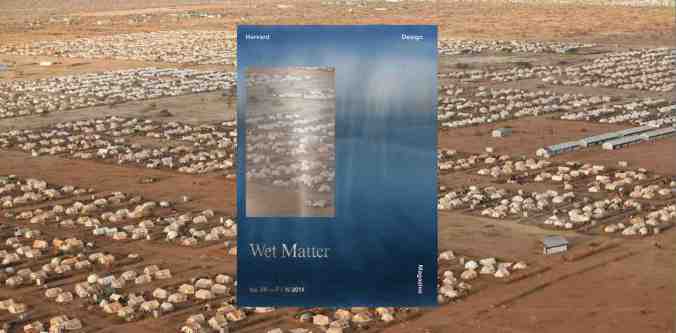
New look for Harvard Design Magazine deepens focus on ‘Wet Matter’

By Corydon Ireland, Harvard Staff Writer

In an age of bits and bytes and pixels and text on screens, Harvard Design Magazine — relaunched in a new format last year ― fervently embraces the thingness of print, the quotidian actuality of paper and ink.

The right wordsmiths were on hand to recast and renew the magazine, which is produced at the Harvard Graduate School of Design.

Continue reading

Clothing Past, Experienced In The Present

One of Hortense Mitchell Acton’s Callot Soeurs gowns in the Camera Verde of Villa La Pietra. The gold and silver lace at the neck, the apron skirt, and the five metallic rosettes across the chest recall the forms of a Gothic cathedral. The sleeves are made of metallic lace, now oxidized. PHOTOGRAPHS BY PARI DUKOVIC

One of Hortense Mitchell Acton’s Callot Soeurs gowns in the Camera Verde of Villa La Pietra. The gold and silver lace at the neck, the apron skirt, and the five metallic rosettes across the chest recall the forms of a Gothic cathedral. The sleeves are made of metallic lace, now oxidized. PHOTOGRAPHS BY PARI DUKOVIC

It is likely that the New Yorker is the publication we link to the most, between its magazine and its website. If so, there is a reason. They care about stories we care about, enough to put their best writers and photographers on the task:

PortfolioMARCH 23, 2015 ISSUE

Twenty-One Dresses

BY AND

A number of years ago, a young painting conservator entered a forgotten storeroom in a fifteenth-century Florentine villa and stumbled on a pile of Louis Vuitton steamer trunks. She opened them and discovered a collection of exquisite dresses, the kind usually seen only in movies, or inside protective vitrines in museums. Closer inspection revealed silk labels, hand-woven with the name “Callot Soeurs.” Continue reading

Lighting Up Language

Malayalam Project at Kochi Biennale

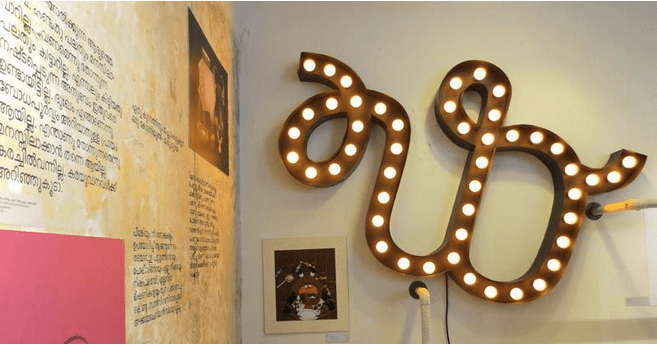
Malayalam Project at Kochi Biennale

As a language, Malayalam is a perfect example of form as function: its “loopy” forms seem to roll off the speaker’s tongue. The word itself is even a palindrome, reading forward and backward in a never-ending loop. The high literacy rate in Kerala is evident in the newspapers found in tea stalls at every corner, not to mention the ubiquitous walls painted with verbal signage in both urban and rural settings, and those signs often feel more like murals due to the graphic nature of the language itself. The Kochi-Muziris Biennale ’14 is the perfect platform to express this concept:

Among the various internationally-acclaimed installations at the Kochi-Muziris Biennale ’14 is Malayalam Project that strives to draw the world’s attention towards the regional language and script.

A partner project at the Biennale, Malayalam Project is a collaborative forum that experiments with Malayalam letterform and typography. Kochi-based firms Thought Factory Design and Viakerala have put together this typography cum graphic design exhibition in collaboration with Riyas Komu, secretary of the Kochi Biennale.

“In the digital era, where imagery is used to communicate ideas, words become canvas of graphic. We are looking at how Malayalam, which is either a sound or a text enters the visual age we live in,” said the creative director Theresa Joseph George.

Pointing out that her firms have done lot of research into the field of Malayalam typography, Theresa, who is also a graphic designer, says, “Malayalam script with its loopy curves provides immense scope for experimentation.” Continue reading

Chinese Fishing Nets, Kerala

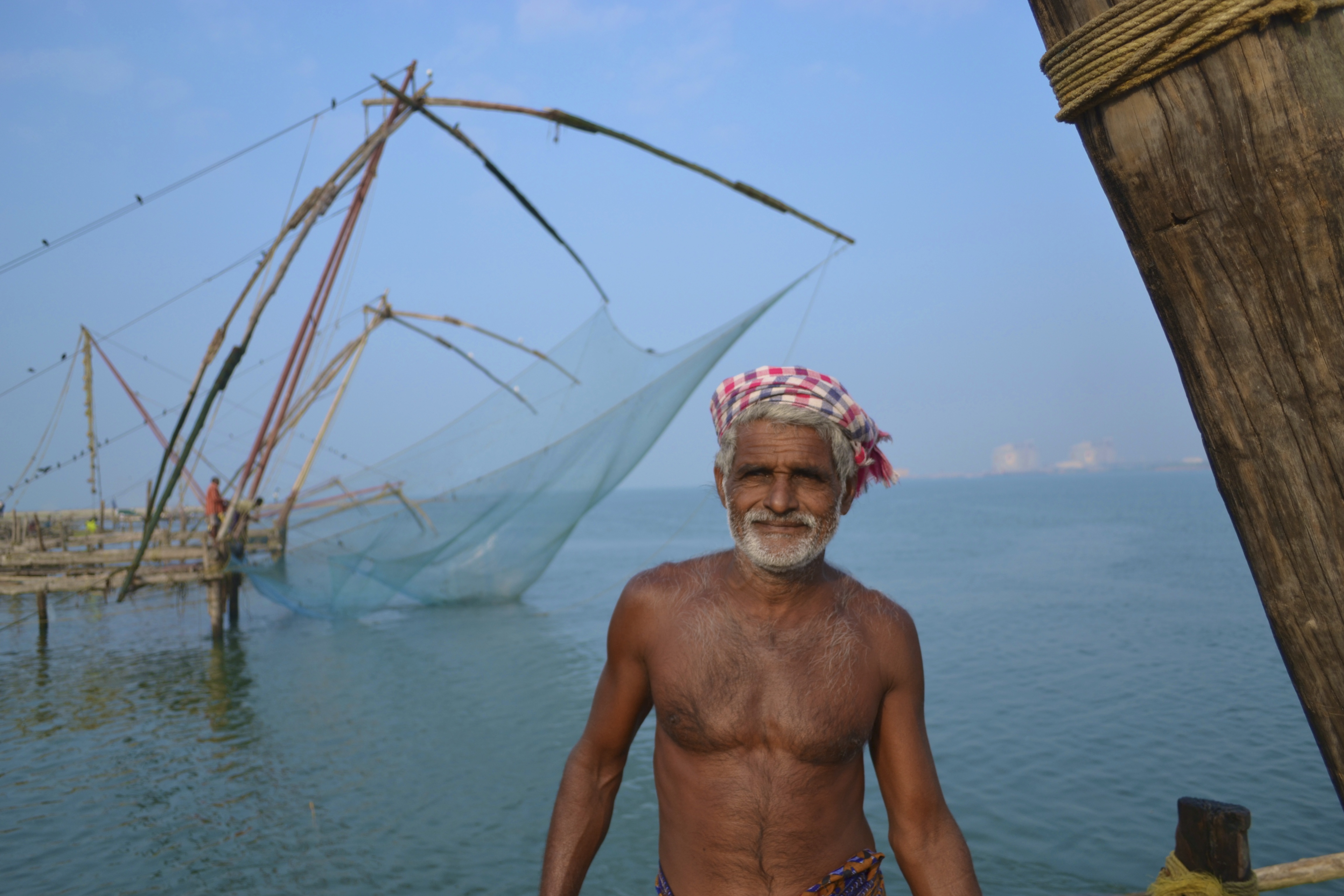
Marconi in front of of the nets in Fork Kochi

Marconi

Marconi is an original decedent of the Mongolian people (a Chinese state at the time) who were the creators of the “Chinese Fishing Nets” in Kerala, India. These structures are at least 30 ft high and the nets stretch out more than 50 ft across the water! It takes half a dozen people to even attempt to heave the nets which work on a pulley system with GIANT boulders hanging from the opposite side to counteract the weight. Continue reading

Rainwater Harvesting, Try This At Home

rainhouse

Thanks to Conservation for this reference to a concept, a design, and a design firm which all catch our full attention:

THIS ENTIRE HOUSE IS A WATER FILTER

Hungarian design firm IVANKA is an avant-garde concrete company. Over the past decade, they’ve developed unexpected ways to incorporate this utilitarian material into everything from designer handbags to BMW concept cars. Lately, though, the company is focusing not just on luxury goods but on the most basic of everyday resources: clean water. Their new “bio-concrete” could turn houses, schools, and factories into giant water filters to produce drinking water from rain. Continue reading

Sneak Peek at Xandari’s Upcoming Holiday Tree

The Raxa Collective Holiday tree at Cardamom County, 2012.

Two years ago, the Raxa Collective team designed a new kind of conical decoration to replace the traditional pine tree at Cardamom County, one of Raxa Collective’s properties in Kerala, India. Pictured left, this tree received many compliments from employees and guests alike, was considered a success all around, and came out again last year with some new ornaments at Cardamom County. For the last several years, Xandari has relied on a small palm tree from the gardens here as the holiday ornament, but the resort has been looking for alternatives. When I showed the team what might now be considered the “Raxa Collective tree,” they were immediately excited and started planning to build one straight away.

And so it was that Edwin (José Luis‘s brother) and I found ourselves in two of the several bamboo groves on Xandari property with a saw and a machete on Tuesday. We started out with a simple sketch design of our planned tree based on the images we’d seen of the Indian version, then set out to cut a couple bamboo poles for the construction phase. We knew we’d need three 2.1 meter poles for the pyramid sides, so we got them from one type of medium-thickness bamboo. Then we needed twenty-one rods of seven different lengths (see design photo above), so we went to a grove of thinner type of bambooContinue reading

Geckos, A 10th Latitude Lovely

science-take-gecko-sfSpan-v3

Geckos are in most of our favorite places–Kerala, Costa Rica, Ghana–which share some 10th Latitude commonalities in different continents.  They are one tiny example of the commonalities, but one that most of us love, for reasons we cannot begin to explain. So for us this story is a welcome puzzle solver for mysteries we did not know needed explaining, yet enjoy the answers:

SCIENCETAKE

Climbing a Glass Building? Try a Gecko’s Sticky Pads

By JAMES GORMAN

The lizard and, well, Spider-Man, have ideal tools for scaling slippery surfaces. Engineers have copied the gecko’s clingy foot pads.

Wet Future, Sustainable Cities

city-sponge

Thanks to Conservation for this counterintuitive explanation of the sustainable city of the future, with the water-related effects of climate change taken into account:

THE FUTURE WILL NOT BE DRY

In a world of melting ice caps, storm surges, and tropical cyclones, the most resilient cities aren’t the ones that fight the water back—but the ones that absorb it.

By Fred Pearce

The ramshackle river port of Khulna in southwest Bangladesh is one of the most flood-prone urban areas on Earth. The third-largest city in one of the world’s poorest and most populous nations is at constant risk of inundation. It lies 125 kilometers inland from the shores of the Indian Ocean. And yet a tenth of this city of 2 million people is flooded at least ten times a year on average.

Continue reading

Walter Isaacson On Geniuses Of The Digital Revolution

File photo by Kris Snibbe/Harvard Staff Photographer.  "We’re now in a phase in which the connection of creativity to technology is going to drive innovation," said Walter Isaacson ’74, a Harvard Overseer, biographer, and CEO of the Aspen Institute. "I do believe that it’s important for people to have an appreciation for the arts and humanities."

File photo by Kris Snibbe/Harvard Staff Photographer. “We’re now in a phase in which the connection of creativity to technology is going to drive innovation,” said Walter Isaacson ’74, a Harvard Overseer, biographer, and CEO of the Aspen Institute. “I do believe that it’s important for people to have an appreciation for the arts and humanities.”

Thanks to Christina Pazzanese and Harvard Gazette for this conversation with one of the more interesting biographers writing today:

Ghosts in the machines

The history of the Digital Revolution touches our hearts and heads, Isaacson says

In many ways, the entire Digital Era can rightly be laid at the courtly foot of Lord Byron’s rebellious daughter, Ada. Lady Lovelace was the poet’s only child born in wedlock, inheriting both her father’s headstrong, Romantic spirit and her mother’s practical respect for mathematics.

As the Industrial Revolution bloomed, her appreciation for the beauty of numbers and invention, an analytical approach she called “poetical science,” led her to write what is now regarded as the first algorithm and to help refine a machine that could be programmed to perform many different tasks, an idea that anticipated the modern computer by a century.

That’s where Walter Isaacson’s latest book, “The Innovators: How a Group of Hackers, Geniuses, and Geeks Created the Digital Revolution,” steps off.

Continue reading

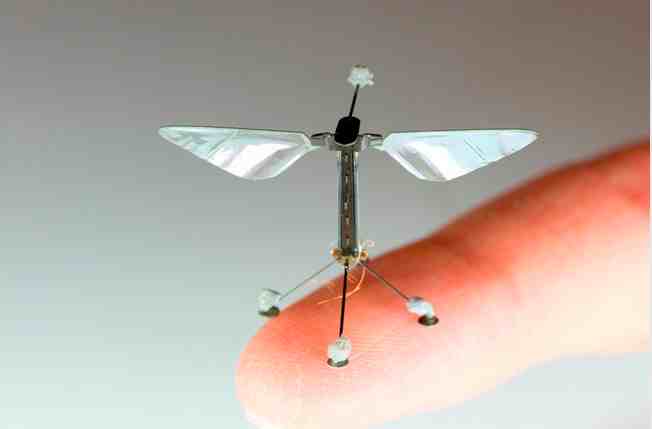
Robo-bees

PHOTO COURTESY OF KEVIN MA AND PAKPONG CHIRARATTANANON

PHOTO COURTESY OF KEVIN MA AND PAKPONG CHIRARATTANANON

At RAXA Collective we’re often writing about the birds and the bees within the context of ornothological and entomological biodiversity, as well as the agricultural health of the planet. The impact of CCD, or colony collapse disorder, is significant enough that the Obama administration has challenged scientists with the same force of urgency as Kennedy’s 1962 appeal for a moon landing before the decade was over.

Food attorney and National Geographic contributor Mary Beth Albright writes:

To stay optimistic on this planet I have to believe that most agree that saving honeybees is vastly preferable to replacing them but an interesting alternative is coming out of Harvard. On its website a research team led by engineering professor and National Geographic Emerging Explorer Robert Wood states “we do not see robotic pollination as a wise or viable long-term solution to Colony Collapse Disorder. If robots were used for pollination—and we are at least 20 years away from that possibility—it would only be as a stop-gap measure….”

Continue reading

Bicycle Zeitgeist

We love design and we love bicycles, and we’ve been writing about their innovation-intersection long before Gianluca’s collapsable model came to our attention.

But we’re grateful for the reminders of the creativity that urges us to upcycle, recycle and craft our “ride”.

Gianluca, Come To Kerala!

sada-bike

As the metropolitan area of Ernakulum, where Raxa Collective has many contributors who commute to work, completes its futuristic mass transit scheme, our thoughts reach out to a time when the collapsible bike is a necessity here. For now, we can appreciate the design for its own sake of this model that has just come to our attention.

We like everything we read about it, as much as the visual aesthetics. We even hope we might be of some service to its creator, given our history with entrepreneurial conservation. We are on the lookout, constantly, for opportunities to collaborate with creative craftsmen and to welcome them into Raxa Collective’s growing community across the globe. Conservation magazine brought Gianluca Sada onto our radar. We extend to him our usual invitation for a visit thanks to that:

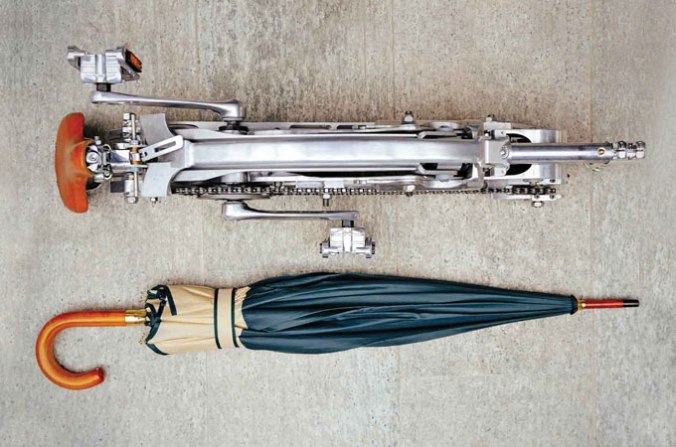
COLLAPSIBLE COMMUTE

Carrying a bicycle onto a bus or subway for unrideable sections of your carless commute is less than convenient. This is where the Sada Bike fits in. Whereas other foldable bikes have shrunken frames and wheels, the Sada Bike’s full-sized frame folds down to the size of an umbrella; its spokeless, hubless, 26-inch wheels double as a backpack frame.

Continue reading

Straw Bale Construction: Part 3/3

Guest Author: Virginia Carabelli

For Part 2, click here, or if you’re new to the post this is Part 1.

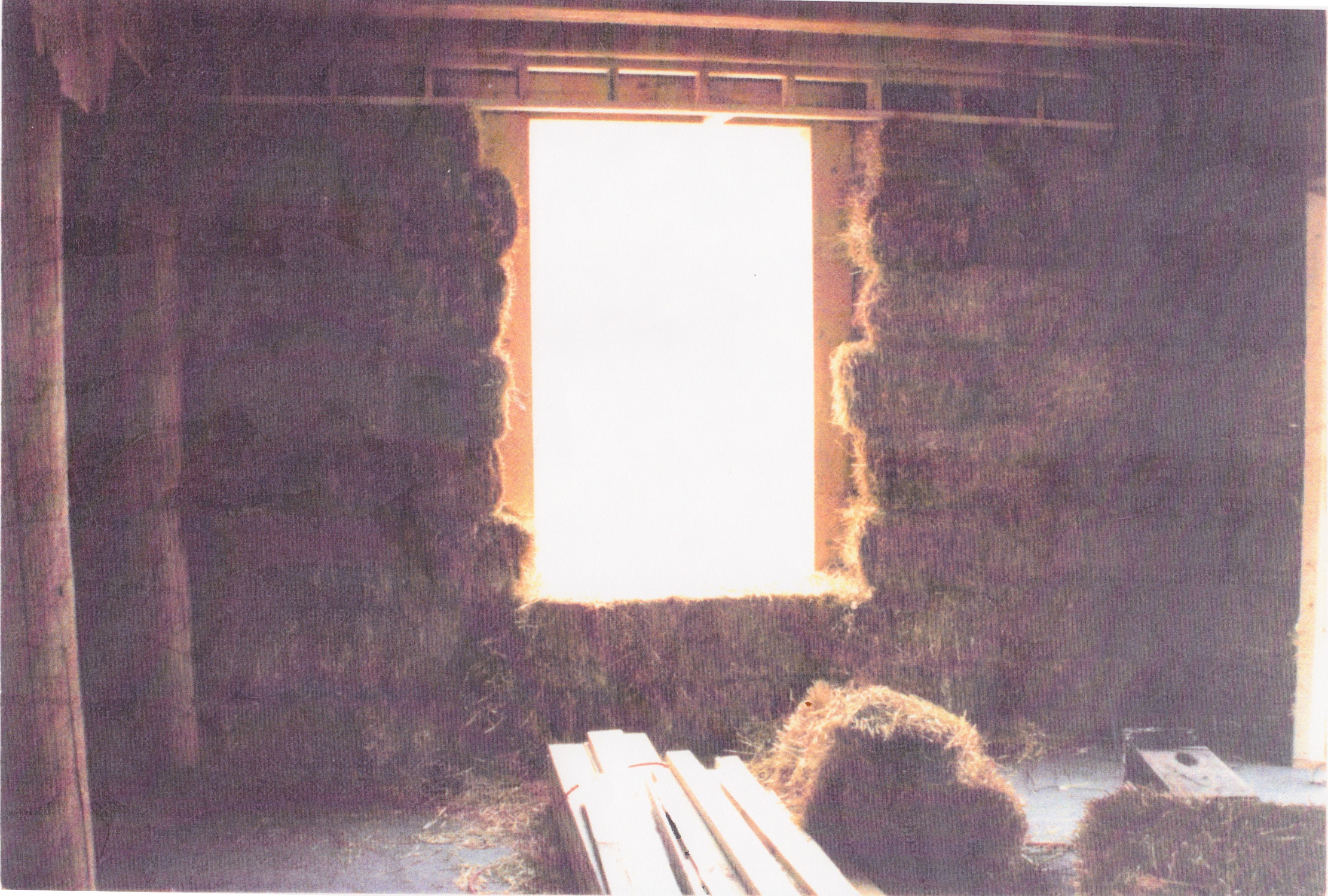
You might wonder at this point, what about permits? All materials used for building in the US have to be tested in a federally approved lab. Straw bales not only passed the required standards, but exceeded them in many tests. Federal building codes supersede state building codes, meaning that no state can legally forbid its use. Most people, including many building departments, are unaware of this fact. Each state, has slightly different requirements. For example, if you live in a seismologically active area, your building code will reflect that (by the way, straw bales perform exceedingly well in earthquakes).

So if you want to build a post and beam structure with straw bale insulation (which is the basic building technique), you should have no problem. However, if you want to build a load-bearing structure (no post and beam to support your roof), you will have to restrict yourself to a small building, following a given formula depending on the size of your straw bales. You might run into some resistance in certain states, although load-bearing was one of the required tests passed by this material. Here in New York, several lovely load-bearing straw bale structures have been legally built. Continue reading

Straw Bale Construction: Part 2/3

Guest Author: Virginia Carabelli

Before

Before

In case you missed the first part of this post, click here.

At this point, let me get the three things that may be on your mind out of the way, before I move to introduce the building technique, without getting too technical.

1. Fire – Fire needs oxygen to burn, a compacted straw bale + encasing in cement or mud plaster offers no oxygen for fire to take hold. Try and burn your phone book as is (do they still make them?) and you’ll see what I mean. At worse, it will smolder.

2. Pests – Straw is like a little stalk of bamboo, in a way. It is the stem of grains whose function is to carry nutrients to the head. It has no nutritional value, protein, etc., so bugs are not very interested in it—they prefer hay or alfalfa. In fact, Continue reading

Straw Bale Construction: Part 1/3

Guest Author: Virginia Carabelli

Hello everyone, I am delighted to be invited by RAXA Collective to participate in such a wonderful community! My name is Virginia Carabelli. I was born in Italy and raised both there and in France. I moved to the US in my late teens to attend college and fell in love with this beautiful country. I have always been more comfortable in nature and silence and have never been very interested in the rat race and busi-ness. I would much rather be than do.

I’ve always found our human ways mostly destructive and superficial, and had a plan since childhood to live life on my own terms as much as possible. In 1989 I achieved one of my childhood dreams: I bought a beautiful piece of property in a verdant valley in New Mexico, where I could live at least partially off the land. The community was mixed Spanish/Pueblo Indian, and many families lived in trailers (by that I do not mean a nice double-wide, but rather a large shipping container on cement blocks). Ecologically speaking, the valley was a fragile environment. With those two things in mind I said a simple prayer asking for guidance to build a home that would be in harmony with nature and also provide some good affordable housing for those in need. I had no idea how to do this, but I had only to wait a couple of weeks for Matts Myhrman to coincidentally walk into my life. Continue reading