New Species Discovered, A Swamp Creature Worthy Of Cinematic Stardom

18SCI-SALAMANDER2-jumbo-v2.jpg

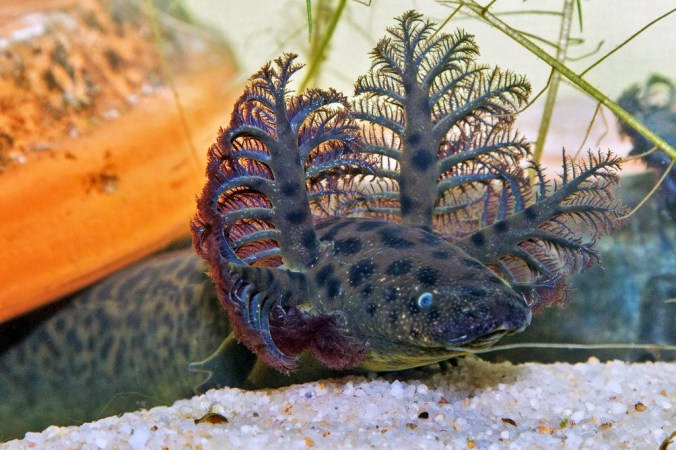
The reticulated siren is so mysterious to researchers that they didn’t even know how they reproduced until 2013. Like fish and unlike other salamanders, they fertilize eggs externally. Credit Pierson Hill

It has been a while since we saw news of a species discovery, and this is no small matter, so thanks to Asher Elbein for this:

A Salamander of Legend Emerges From Southern Swamps

The reticulated siren is the largest vertebrate discovered in the United States in decades.

18SCI-SALAMANDER1-jumbo-v2

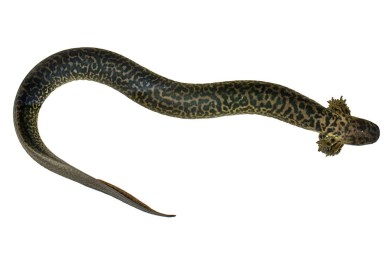
The newest named salamander in the animal kingdom: the reticulated siren. Credit David Steen

It’s eel-shaped and leopard-spotted, and it has no hind-limbs. It grows to two feet long. And yet until recently, hardly anyone had ever seen it.

A team of researchers has discovered of new species of salamander in the pine forests of northern Florida and southern Alabama. The so-called reticulated siren is the largest vertebrate found in the United States in decades, and the first new member of its family since 1944.

“It’s a really cool animal,” said David Steen, a conservation biologist at the Georgia Sea Turtle Center and an author of a genetic analysis of the salamander published in PLOS One. The salamander’s distinctive patterning “jumps out immediately,” he said.

Known for their size and bushy gills, sirens are a fixture in Southeastern swamps and watery ditches. Previously, Dr. Steen said, the genus was assumed to contain only two species: the lesser siren and greater siren, which can grow to three feet in length, one of the longest American salamanders. Continue reading
Natural History, Artists & Detectives

merlin_64424663_a3c20202-94cc-4113-8bde-d2d75ffa40c6-jumbo.jpg

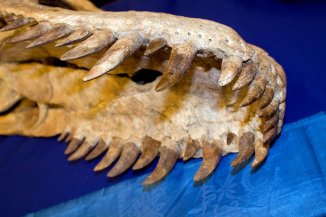
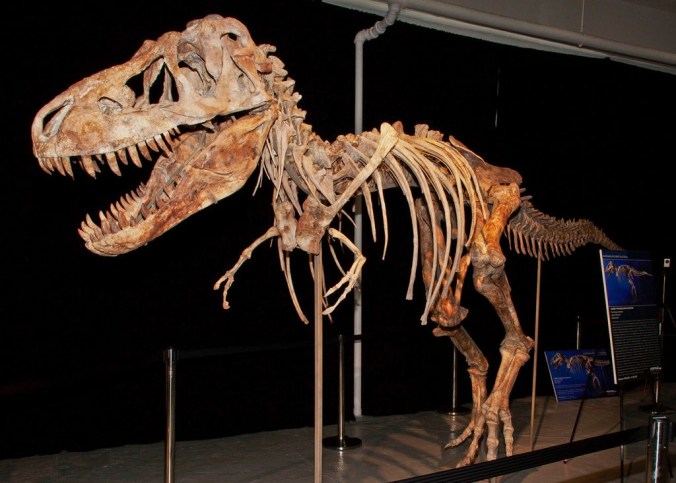
This Tyrannosaurus bataar dinosaur was at the center of a lawsuit demanding its return to Mongolia. Credit U.S. Attorney’s Office for the Southern District of New York

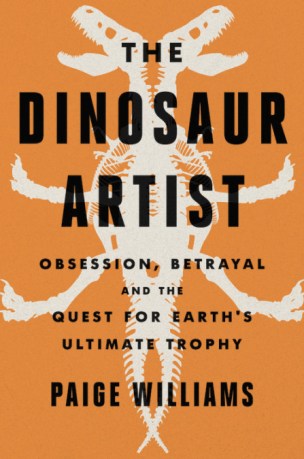
97803163825331.jpgMammoth-hunting is the closest anyone in our immediate circle has gotten to the kind of story that is on my mind today. Searching the word dinosaur on our platform I see that the story told in the book to the left has had a long trail that I have been following for years. If like me you had youthful dreams of becoming a hunter for pre-history’s wonders you might have thrown around phrases such as “whatever it takes.”

This cautionary tale by Paige Williams might be the antidote for any kid whose instincts are for this kind of sleuthing adventure, which requires rules just like any good game. Speaking of which, longform tale-telling is as much an interest of mine as natural history, and the way this book came to my attention was through an interview with its author.

The Bizarre Tale of the ‘Dinosaur Artist’ Who Trafficked in Stolen Fossils

merlin_143888991_5f8b55e5-6ce9-423f-b080-0cbe911996e3-jumbo

John Marshall Mantel for The New York Times

As far as case law goes, there are more consequential decisions than The United States of America v. One Tyrannosaurus Bataar SkeletonFew, however, feature a more charismatic defendant.

In 2013, the United States literally arrested the skeleton of a giant apex predator dinosaur slumbering in a warehouse in Queens. But understanding how this came to be first requires a panoptic survey of everything from the world of the Late Cretaceous period to the 1990s rise of right-wing politics in Mongolia. This is the dizzying task that Paige Williams, a staff writer for The New Yorker, has set for herself in “The Dinosaur Artist: Obsession, Betrayal and the Quest for Earth’s Ultimate Trophy.”

What began for her as the tale of an unusual court case involving a rogue fossil hunter unspools in this book into a wide-ranging examination of the ways that commercialism, ambition, politics and science collide. (Just a glance at some of the index’s entries reveals the scope: Genghis Khan, Newt Gingrich, St. Augustine, Stegosaurus and Preet Bharara.) Continue reading

Mapping Earth’s Remaining Intact Ecosystems

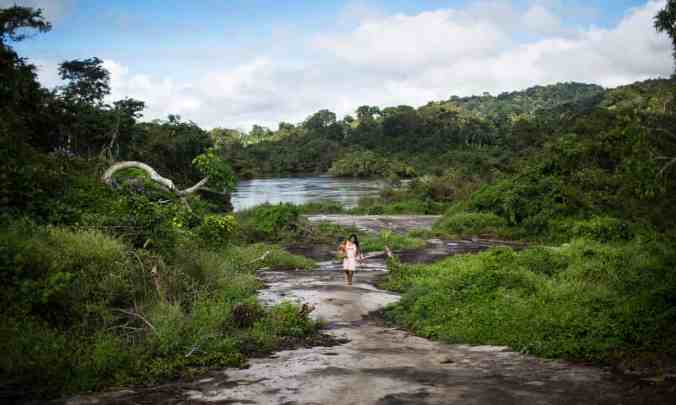
A Xikrin woman walks back to her village from the Cateté River in Brazil. Photograph: Taylor Weidman/Getty Images

Thanks to Lisa Cox, the Guardian’s Australia correspondent for environment, for this:

Five countries hold 70% of world’s last wildernesses, map reveals

First map of Earth’s intact ecosystems shows just five nations are responsible for most of them – but it will require global action to protect them

1048.jpg

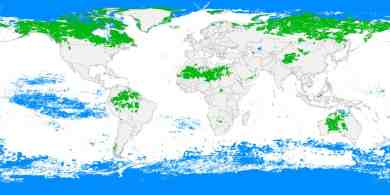
Map of the world’s remaining wilderness. Green represents land wilderness, while blue represents ocean wilderness. Photograph: Nature

Just five countries hold 70% of the world’s remaining untouched wilderness areas and urgent international action is needed to protect them, according to new research.

Researchers from the University of Queensland (UQ) and the Wildlife Conservation Society (WCS) have for the first time produced a global map that sets out which countries are responsible for nature that is devoid of heavy industrial activity.

It comes ahead of the conference of parties to the Convention on Biological Diversity in Egypt in November where signatory nations are working towards a plan for the protection of biodiversity beyond 2020.

Conservationists are calling for a mandated target for wilderness conservation that will preserve the planet’s vulnerable ecosystems. Continue reading

For The Last Tigers, What Is Next?

merlin_145827315_a41e80a9-2f6c-49c8-ba24-ea8c7f20d280-superJumbo.jpg

A South China tiger, a subspecies that only survives in captivity. Credit Francois Savigny/Minden Pictures

Some of these photos we have featured in earlier stories. That is a testament to the seriousness of the subject. Thanks to Rachel Nuwer for this:

Divide and Preserve: Reclassifying Tigers to Help Save Them From Extinction

Are there many subspecies of tiger, or only two? A correct accounting is the only way to preserve what is left of the animal’s genetic diversity, some scientists say.

26TIGERS4-jumbo.jpg

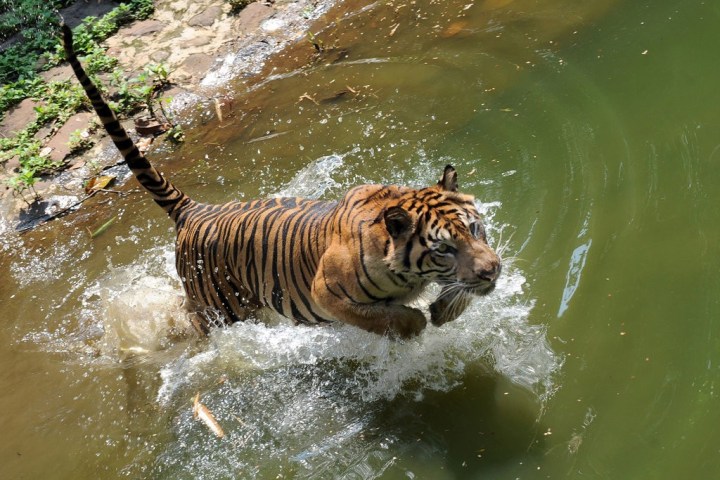
A Sumatran tiger at the Ragunan Zoo in Jakarta, Indonesia. Sumatran tigers were the first to evolve from all tigers’ common ancestor. Credit Romeo Gacad/Agence France-Presse — Getty Images

Fewer than 4,000 tigers remain in the wild. New research aims to give conservationists an improved understanding of their genetics in order to help save them.

After years of debate, scientists report in the journal Current Biology that tigers comprise six unique subspecies. One of those subspecies, the South China tiger, survives only in captivity.

“The results presented in this paper are important because they contradict the currently accepted international conservation classifications for tigers,” said Uma Ramakrishnan, a molecular ecologist at the National Center for Biological Sciences in Bangalore, India, who was not involved in the study. Continue reading

Maritime History Just Got Richer

blackseaship_wide-ba336617e8054f7120da46d07a837b5d0c46e374-s1200-c85.jpg

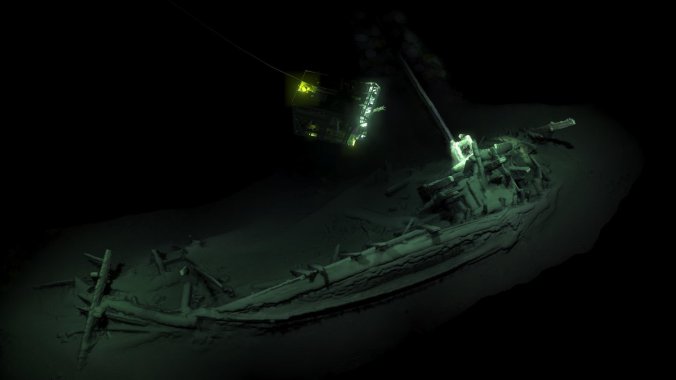
The Black Sea Maritime Archaeology Project says the intact shipwreck was discovered at a depth of more than 1 mile, where the scarcity of oxygen helped preserve the ancient vessel. Black Sea MAP/EEF Expeditions

Who knew there were still such discoveries to be made? Obviously, someone did. And Homer’s epic tale of Odysseus and his journeys plays a part in this story:

‘Oldest Intact Shipwreck Known To Mankind’ Found In Depths Of Black Sea

gettyimages-113635460_sq-30ea9188d1e635b97822388656dde1dcdae3c53e-s1200-c85.jpg

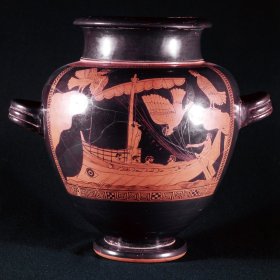
The recently discovered shipwreck reveals details that are similar to the ship on this famed ancient Greek vase, which dates to the fifth century B.C. and depicts Odysseus tied to the mast to brave the sirens.
Universal Images Group/Getty Images

More than a mile beneath the surface of the Black Sea, shrouded in darkness, an ancient Greek ship sat for millennia unseen by human eyes — until the Black Sea Maritime Archaeology Project happened upon its watery grave last year.

The team announced the find Tuesday, saying its discovery has been “confirmed as the oldest intact shipwreck known to mankind.” Radiocarbon-dated to roughly 400 B.C., the trading vessel plied the waves in the days of Plato and Sophocles, when the city-states of ancient Greece had scattered colonies all around the Black Sea.

Since then, it has sat at a depth that more than doubles the height of the tallest skyscraper in the world. In water that deep, oxygen is hard to come by, and because of that, so too are the organic processes that help drive decomposition. That left the ship all but undisturbed until the research team discovered it — along with dozens of other shipwrecks — during an 800-square-mile survey of the seabed. Continue reading

Citizen Science, Children & Bees

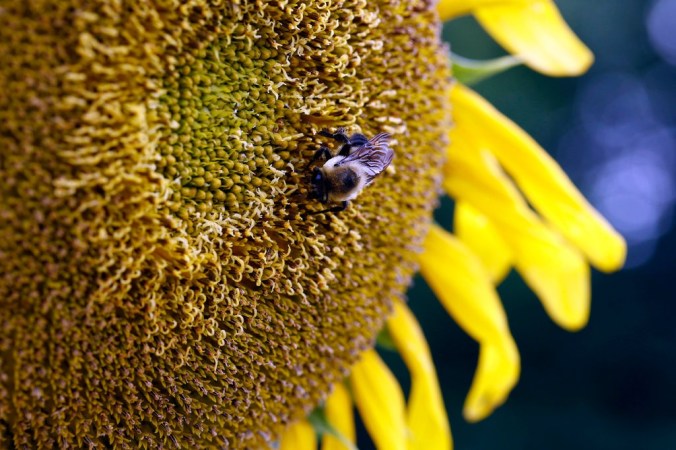
11TB-BEES2-jumbo.jpg

Scientists expected bees to gradually cease buzzing as the sky darkened during an eclipse. Instead, they stopped altogether. Credit Rogelio V. Solis/Associated Press

After following the work of Nicholas St. Fleur for a couple years now–his beat includes archaeology, paleontology, and space among other of the things we care about on this platform, including conservation–his most recent story below is my favorite for one reason, namely citizen science. Specifically the participation of youth in such an important scientific investigation:

The Moon Eclipsed the Sun. Then the Bees Stopped Buzzing.

Researchers worked with a small army of elementary school children to collect audio recordings of bees as they visited flowers along the path of last summer’s total eclipse.

merlin_145121940_aa0e5867-a947-44eb-9851-f90f39f77723-jumbo

National Forest Service workers at the Bridger-Teton National Forest Office in Jackson, Wyo., took a break to watch the Great American Eclipse last year. Credit Celia Talbot Tobin for The New York Times

Last year’s Great American Eclipse drew hundreds of millions of eyes to the sky. But while people across the country “oohed” and “aahed” at the phenomenon, it appears the bees went silent.

So found a new study that monitored the acoustic activity of bees before, during and after totality — the moment when the moon completely blocked the sun — during the solar eclipse on Aug. 21, 2017. Researchers at the University of Missouri, along with a small army of elementary school children and other volunteers, collected audio recordings of honeybees, bumblebees and other types of bees as they visited flowers along the path of totality Continue reading

The Oldest Animal We Know Of

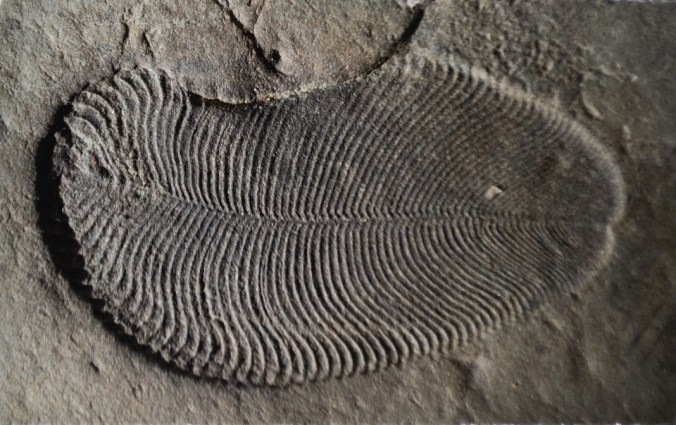
Organically preserved Dickinsonia fossil from the White Sea area of Russia.

ILYA BOBROVSKIY / AUSTRALIAN NATIONAL UNIVERSITY

Thanks to Ed Yong for this:

A 558-Million-Year-Old Mystery Has Been Solved

Scientists have finally confirmed that a weird ribbed oval called Dickinsonia is an animal.

Organically preserved Dickinsonia fossil from the White Sea area of Russia.

Dickinsonia fossilILYA BOBROVSKIY / AUSTRALIAN NATIONAL UNIVERSITY

While it sits in place, petrifying, waiting, the world around it changes. The Earth’s landmasses merge into a single supercontinent before going their separate ways. In the ocean, animal life explodes; for the first time, the world is home to eyes, shells, and mouths. Living things invade the land, coating it first in thin films of moss and lichens, and then covering it in huge forests. Insects rise, into existence, and then into the skies. A dinosaur empire rises and falls. Mammals finally take over, and one of them—a human by the name of Ilya Bobrovskiy—finally unearths the fossilized ribbed oval from its resting place. Continue reading

Unexpected Affection

21TB-OCTOPUS-jumbo.jpg

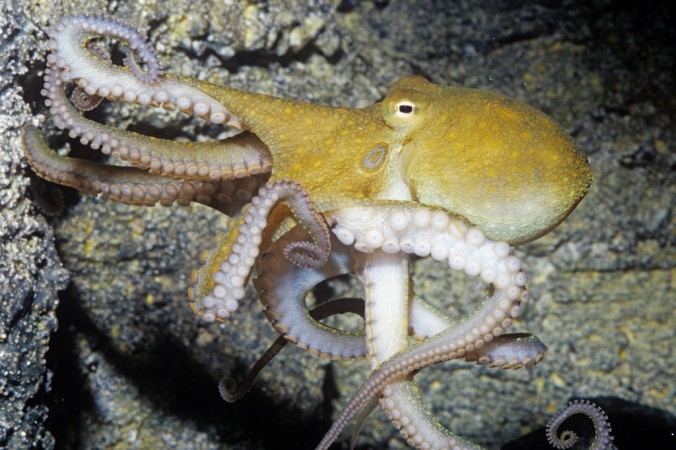
An octopus on its way to an underwater EDM festival. Credit Ken Lucas, via Getty Images

Thanks to JoAnna Klein a regular contributor for The New York Times Trilobites feature, for this:

On Ecstasy, Octopuses Reached Out for a Hug

By dosing the tentacled creatures with MDMA, researchers found they share parts of an ancient messaging system involved in social behaviors with humans.

Octopuses are smart. They open jars, steal fish and high-five each other.

Though interactive, they’re generally asocial, and temperamental, with unique behavior patterns, like those shown by Otto, who caused blackouts at a German aquarium and Inky, who famously escaped a tank in New Zealand.They learn through experience and observation, forming lasting memories with brain-like bundles of hundreds of millions of neurons in each arm and a centralized bundle in the middle.

A desire to understand the evolutionary underpinnings of this brain power led scientists to give octopuses ecstasy. Yes ecstasy — molly, E, MDMA, the party drug, which in humans reduces fear and inhibition, induces feelings of empathy, distorts time and helps people dance to electronic music all night. Continue reading

Testing Animal Intelligence

ParrottScience.jpg

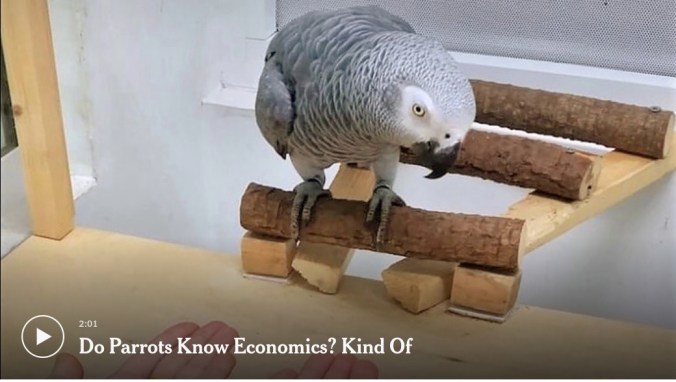
A test of four different species shows they can accurately assign value to food and tokens, swapping lower value items for higher value food. Credit Image by Comparative Cognition Research Group (CCRG)

Thanks to James Gorman for the latest examination of animal intelligence:

Chalk up another achievement for parrots, with an odd twist that raises questions about whether the experimenters or the birds know best.

Anastasia Krasheninnikova and colleagues at the Max Planck Institute for Ornithology in Germany tested four species of parrots in an experiment that required trading tokens for food and recently reported their findings in the journal Scientific Reports.

Would the birds resist an immediate reward to trade for something better? Many species have shown the ability to hold off on an immediate treat — like a dry corn kernel — for something tastier later on, like a bit of walnut. Continue reading

Omnivore’s Dilemma In A Shark Species

07tb-sharks-jumbo.jpg

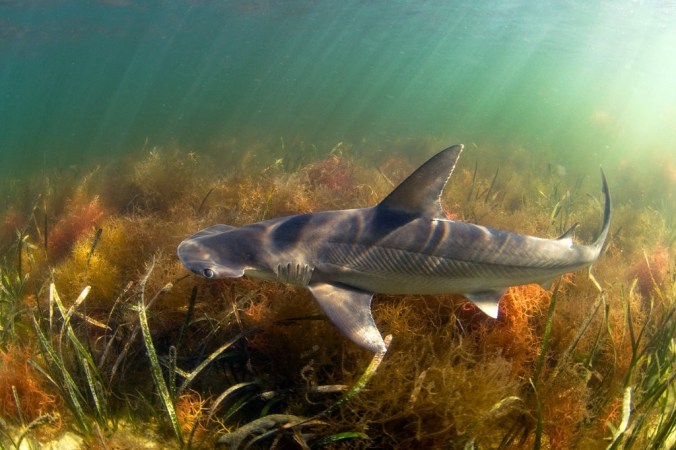
A bonnethead shark in the shallows of Florida’s Pine Island Sound. Credit Getty Images

I do not know why it has been so long since we last linked to a story by her, and I will remain on the lookout for more excellent science writing by her, but for now a quick thanks to Veronique Greenwood for this:

The Omnivorous Sharks That Eat Grass

Diminutive bonnethead sharks are the first omnivorous sharks known to science, which could change our understanding of what some sharks eat.

merlin_143308854_1e868ce5-fc07-4d7f-b6cb-4bf4d92684b8-jumbo.jpg

After researchers caught bonnethead sharks for study, they received a daily meal consisting of a wad of seagrass wrapped in a piece of squid, resembling a large inside-out sushi roll. Credit Samantha Leigh

Sharks are not known for their taste for greenery. But at least one species of shark enjoys a salad of sea grass as well as the prey it hunts.

The bonnethead shark, a diminutive species that reaches up to 3 feet in length, lives in the shallow sea grass meadows off both coasts of the Americas. It eats small squid and crustaceans ferreted from the swaying underwater fronds. But, researchers who have carefully monitored everything going in and out of captive bonnetheads say in a study published in Proceedings of the Royal Society B that they also eat large quantities of seagrass. The grass isn’t just passing inertly through the sharks’ guts. They extract nutrition from it just as they do from the meaty portion of their diet. These sharks must, therefore, be reclassified as omnivores — the first omnivorous sharks known to science. Continue reading

Roots Of Biodiversity

052918_antonelli_0090.jpg

Alexandre Antonelli references the International Plant Names Index to identify specimens.
Rose Lincoln/Harvard Staff Photographer

Our practice was born in Costa Rica, so we sometimes may appear partisan when it comes to celebrating the sciences related to biodiversity. Costa Rica has impressive credentials in that realm, especially relative to its size as a country. But we are very clear on the fact that it would take dozens of Costa Rica-sized biodiversity hotspots to match the scale of the Amazon region, and it is no surprise that studies like those of these scholars are carried out with Amazonian data:

The Amazon as engine of diverse life

052918_antonelli_0233.jpg

“Most evolutionary research focuses on how new species form. But we want to understand how whole ecosystems evolve,” said Alexandre Antonelli.
 Rose Lincoln/Harvard Staff Photographer

A recent study says that many of the plants and animals that call Latin America home may have had their roots in the Amazon region.

The study, co-authored by Harvard Visiting Scholar Alexandre Antonelli and an international team of researchers, says that a dynamic process of colonization and speciation led to the formation of the American tropics, which is the most species-rich region on the planet. The study is described in a paper published in the Proceedings of the National Academy of Sciences.

“We were astonished to detect so much movement across such different environments and over such large distances,” said Antonelli, the study’s lead author. “Up until now, these natural dispersal events were assumed to be quite rare. Our results show how crucial these events have been in the formation of tropical America’s unique and outstandingly rich biodiversity.” Continue reading

The Science Of Nature, Exhibited

27folkart2-jumbo.jpg

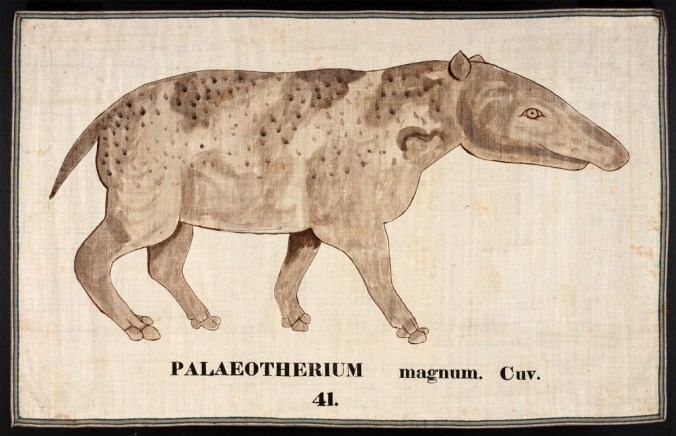
Classroom chart on linen drawn by Orra White Hitchcock, 1828–1840. Credit Amherst College Archives & Special Collections

Thanks to Jason Farago for this review of  Charting the Divine Plan: The Art of Orra White Hitchcock at the American Folk Art Museum:

Mushrooms, Magma and Love in a Time of Science

27folkart1-superJumbo.jpg

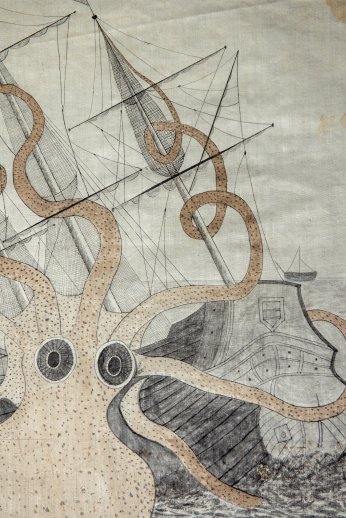
“Colossal Octopus,” 1828–1840, by Orra White Hitchcock, one of America’s first female scientific illustrators, on view at the American Folk Art Museum. Credit George Etheredge for The New York Times

Women remain grossly underrepresented at the highest echelons of American science, and continue to face absurd claims of “innate” inferiority, whether from former Harvard presidents or senior engineers at Google. But until the mid-19th century — when the sciences became professionalized, and when Charles Darwin and others put Christian doctrine under pressure — a woman’s place was in the laboratory, or among the geology and zoology specimens.

Back then the humanities (classics and philosophy, especially) were understood as masculine academic pursuits. It was the more genteel disciplines of natural science, astronomy, chemistry, botany and anatomy, to which women of a certain class gravitated.

merlin_141627540_d42f254c-e955-4d3d-9751-733e1d3723eb-superJumbo.jpg

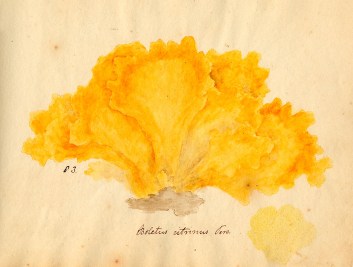
Orra White Hitchcock’s “Fungi Selecti Picti, Vicinity of Conway, Massachusetts” (1821), watercolor, pencil, pen and ink, and ink wash on paper in sewn album. Credit Smith College Special Collections

Orra White Hitchcock (1796-1863) was one of the most remarkable women from this more egalitarian age of scientific study. She had a deep knowledge of botany, zoology and paleontology, and she was also an artist — though that “also” would have seemed unnecessary to her. She produced two albums of botanical illustrations, and later, as introductory materials for her husband’s classes, she diagramed volcanoes, sketched the skeletons of extinct fish and mammals, and drew undulant squids and octopuses on large cotton sheets.

They’re all united at the American Folk Art Museum in “Charting the Divine Plan: The Art of Orra White Hitchcock,” a handsome and unexpectedly passionate exhibition on art, science and education in the early American republic. More than 100 watercolors and classroom charts are here, from painstakingly accurate paintings of reeds and mushrooms to boldly colored abstractions of the earth’s crust and core, and they share space with a splendid array of diaries and correspondence, redolent with the Hitchcocks’ intertwined loves for science, God and each other. Continue reading

Don’t Take The Bait

10661.jpg

Is the evidence for fish-eating better than simply taking a fish oil pill? Composite: Getty

Paul Greenberg, author of The Omega Principle: Seafood and the Quest for a Long Life and a Healthier Planet (Penguin Press), is making the rounds with an important argument; get the short version here in the Guardian:

Fool’s gold: what fish oil is doing to our health and the planet

Omega-3 is one of our favourite supplements – but a huge new study has found it has little or no benefit for heart health or strokes. How did it become a $30bn business?

9781594206344.jpgThe omega-3 industry is in a twist. Again. Last week, Cochrane, an organisation that compiles and evaluates medical research for the general public, released a meta-analysis – a study of studies – to determine whether or not omega-3 pills, one of the world’s most popular dietary supplements, reduced the risk of coronary heart disease. After comparing 79 trials involving 112,059 people, the researchers could find “little or no difference to risk of cardiovascular events, coronary heart deaths, coronary heart disease events, stroke or heart irregularities”.

I can’t say that I was particularly surprised. Over the past 15 years, more than 20 studies have shown a similar lack of effect. But what does surprise me is how we continue to look at the world of fish and seafood through the amber lens of a fish oil capsule. Omega-3s do something in our bodies – and probably something important. But without the larger context of the marine organisms that contain them, omega-3s get lost in the noise of human metabolism and modern marketing.

Continue reading

Peacock Spiders!

Spider1.jpg

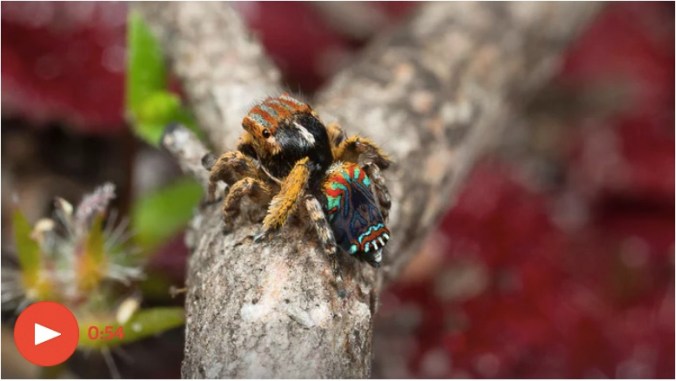
New peacock spider species filmed in Western Australia – video

Thanks to the Guardian for this reminder that nature is generous, bestowing vibrant colors in the most unexpected places:

Biologist Jürgen Otto and colleagues have named two species of the extraordinarily colourful dancing spiders

Spider2.jpgIt is only a few millimetres in size, performs a dance as part of a courtship ritual and has striking coloured markings on its back that “look like a pharaoh’s headdress”.

But when biologist Jürgen Otto first spotted the peacock spider species he has named Maratus unicup, he didn’t immediately recognise how special it was.

Tasmanian Tiger Tale

180702_r32368_rd.jpg

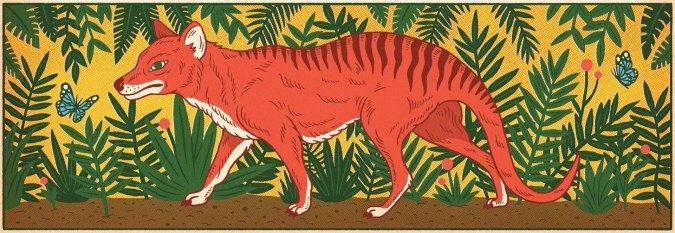
Like the dodo and the great auk, the Tasmanian tiger is more renowned for the tragedy of its death than for its life, about which little is known. Enthusiasts hope it will be a Lazarus species—an animal considered lost but then found. Illustration by Bene Rohlmann

We thank Brooke Jarvis for her reporting on this compelling tale:

The Obsessive Search for the Tasmanian Tiger

Could a global icon of extinction still be alive?

Andrew Orchard lives near the northeastern coast of Tasmania, in the same ramshackle farmhouse that his great-grandparents, the first generation of his English family to be born on the Australian island, built in 1906. When I visited Orchard there, in March, he led me past stacks of cardboard boxes filled with bones, skulls, and scat, and then rooted around for a photo album, the kind you’d expect to hold family snapshots. Instead, it contained pictures of the bloody carcasses of Tasmania’s native animals: a wombat with its intestines pulled out, a kangaroo missing its face. “A tiger will always eat the jowls and eyes,” Orchard explained. “All the good organs.” The photos were part of Orchard’s arsenal of evidence against a skeptical world—proof of his fervent belief, shared with many in Tasmania, that the island’s apex predator, an animal most famous for being extinct, is still alive. Continue reading

Elephants Can Smell

ElephantNose.jpg

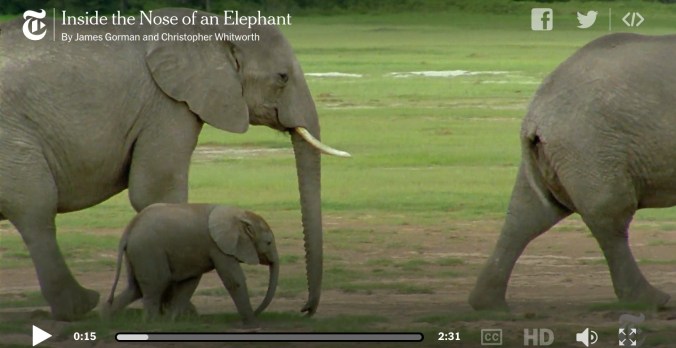
Elephants have a keen nose. They have more smell receptors than any mammal – including dogs – and can sniff out food that is several miles away. A new study tests their ability to distinguish between similar smelling plants. Image by akrp, via Getty Images

It is true that elephants can smell. As in, be smelly. But they can also smell well, better than I knew. Yesterday’s elephant mention was the first in a long time, reminding us how frequently we posted about them from India. When we were in the land of elephants, and other charismatic megafauna, we ran stories frequently about their mega-wondrousness. Now, a welcome reminder about how amazing these big creatures are in smaller ways too. Click above to go to the video accompanying this story below by James Gorman:

The Elephant’s Superb Nose

In the world of noses, the elephant’s trunk clearly stands out for its size, flexibility, strength and slightly creepy gripping ability.

Go ahead, try to pluck a leaf with your nostrils and see how you fare. So perhaps it should come as no surprise that the elephant’s sense of smell is also outstanding. Continue reading

Bess, Honey & Nothing

merlin_139147827_59aa1ad7-2e69-4dd7-8bc2-8ee31aa76222-jumbo.jpg

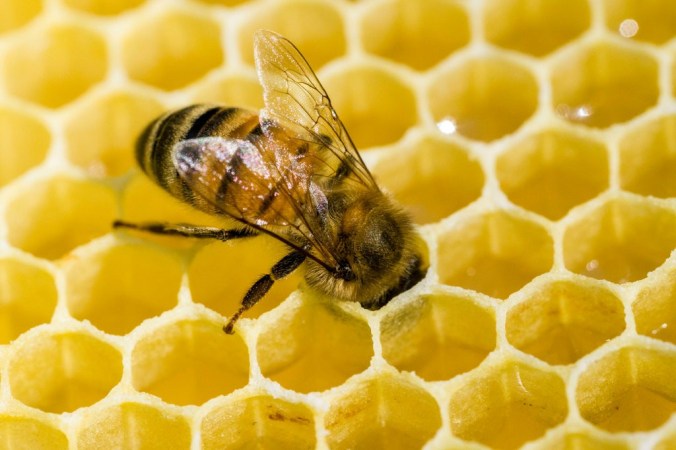
Not only can a honey bee count, it understands the concept of zero, according to researchers. CreditFrank Bienewald/LightRocket, via Getty Images

Thanks as always to James Gorman, one of the best illuminators of any variety of natural mysteries who we never tire of citing in these pages. He tells funny stories sometimes, about beautiful as well as awesome phenomena that we want to know. And he knows how to tell it:

Do Bees Know Nothing?

Researchers say bees understand the concept of nothing, or zero. But do we understand what that means?

What would it mean if bees could understand the concept of nothing?

That would be really something.

merlin_139147956_3b91262b-cb30-4eb9-9279-465935577f13-jumbo.jpg

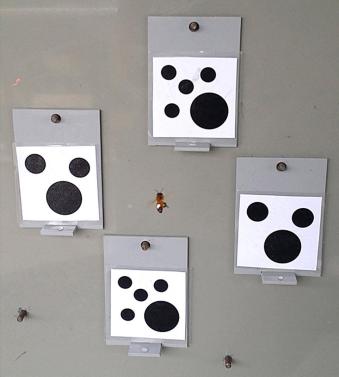
Bees were rewarded when they landed on cards with more shapes.CreditScarlett R. Howard et al.

Yet that is what scientists reported Thursday in the journal Science. Bees had already demonstrated they could count. Now, the researchers wrote, bees have shown that they understand the absence of things — shapes on a display in this experiment — as a numerical quantity: none or zero.

This is a big leap. Some past civilizations had trouble with the idea of zero. And the only nonhuman animals so far to pass the kind of test bees did are primates and one bird. Not one species, one bird, the famed African gray parrot, Alex, who knew not only words, but numbers. Continue reading

Moving Slowly & Avoiding Breakage

Preston-Ecological-expedition-Honduras-8

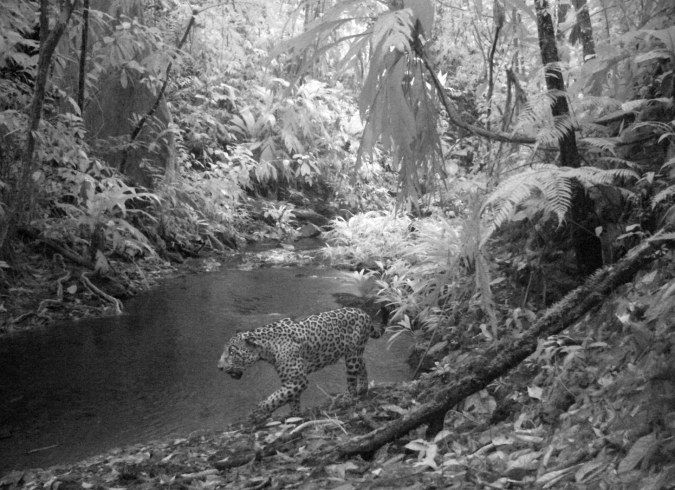
Panthera onca. The jaguar is the king of neotropical forests, where it is the largest of the cats. Its presence at the White City indicates an extensive, thriving ecosystem. © Washington State University, Panthera, Wildlife Conservation Society, Zamorano University, Honduran Forest Conservation Institute, Travis King, John Polisar, Manfredo Turcios

When the journalist Douglas Preston shared this story, I was in the process of closing up shop in India, where we had been in residence since 2010. Kipling-induced daydreaming notwithstanding, Amie and Milo (whose photos may be the most tangible representations of the dreaminess of those years) and I never had the illusion that there were lost civilizations or any such thing in India.

movefast (1)We did have the nonstop motivation of feline-fueled conservation initiatives, and some close encounters. Those provided us a perfect counterpoint to the seemingly irresistible catchphrase that described progress in the form of disruptive technology. Haste really does make waste when it comes to ecology, anthropology, and realms of life other than economic forward-marching.

When I read Mr. Preston’s story on the first day of last year I realized that our relocation to Central America, oddly enough since it is in the hemisphere called the New World, was full of potential for all kinds of discovery of “lost” things. And my own discoveries further sensitized me to the importance of moving slowly and avoiding breakage. My posts on this platform from February through July, 2017 are evidence of the richest ecological and anthropological observations of my lifetime (so far), and that makes Mr. Preston’s update post yesterday all the more wonderful to read:

Deep in the Honduran Rain Forest, an Ecological SWAT Team Explores a Lost World

Preston-Ecological-expedition-Honduras-1

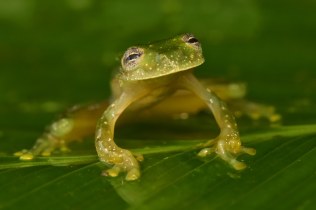
Sachatamia albomaculata. The inner organs of glass frogs are visible through their translucent bodies. Photograph by Trond Larsen / Conservation International

A little more than three years ago, I joined a team of archeologists on an expedition to La Mosquitia, a remote mountain wilderness in eastern Honduras. For centuries, the region had been rumored to contain a lost city, known as the City of the Monkey God or the White City, and now, thanks to a combination of luck and modern technology, an ancient settlement had been found. Although it was probably not the lost city of legend, it was a very real place, built by a mysterious civilization that flourished long before Columbus arrived in the Americas. Hidden in a densely forested valley, it had never been explored. Continue reading
Victorious Bananas

physed-banana-master768.jpg

iStock

We are already big fans of this fruit, for all kinds of reasons, so this is like icing on the cake:

Bananas vs. Sports Drinks? Bananas Win in Study

A banana might reasonably replace sports drinks for those of us who rely on carbohydrates to fuel exercise and speed recovery, according to a new study comparing the cellular effects of carbohydrates consumed during sports.

It found that a banana, with its all-natural package, provides comparable or greater anti-inflammatory and other benefits for athletes than sports drinks. But there may be a downside, and it involves bloating.

For decades, athletes and their advisers have believed, and studies have confirmed, that eating or drinking carbohydrates during prolonged exertion can enable someone to continue for longer or at higher intensities and recover more quickly afterward than if he or she does not eat during the workout. Continue reading
The Wisdom Of Wolves

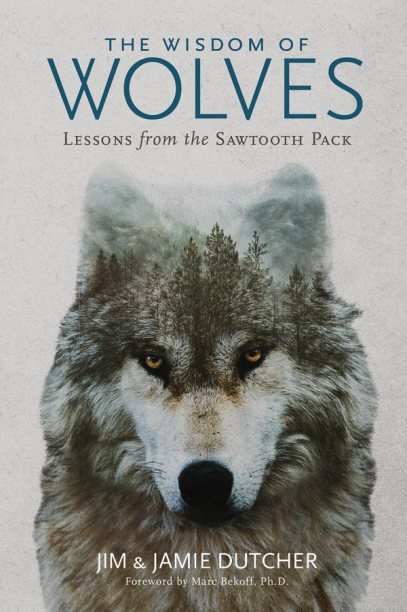
WisdomofWolvesCover.600x900.jpgWe first heard of the book here, so thanks to Public Radio station WNYC. However, in the blurb for the podcast interview with the authors, the link to the book went directly to Amazon. Must it forever more be so? Hope not.

So, click the image to the left to go to the actual source of the book, which seems a more worthy place to consider purchasing it, even though here too they give you the option to buy on Amazon. But there is a slight favoring of the publisher, National Geographic, in the purchase options. Here’s what they say:

CURIOSITY. COMPASSION. FAMILY FIRST.

After living among the wolves of The Sawtooth Pack for years, Jim and Jamie Dutcher present a new book, The Wisdom of Wolves: Lessons from the Sawtooth Packproviding groundbreaking observations of their unique experience.
As strong, and just as immediately recognizable as the ties that unite a human family, the emotional bonds shared among wolves are far more complex than ever realized, and now are detailed in this exceptional book. Continue reading