MycoHab & Other Namibian Wonders

Desert in Namibia

Namibia has a severe housing shortage, with woody encroacher bush reducing the amount of land available for building. Photograph: Hoberman Collection/Universal Images Group/Getty

Mycological options for solving problems are abundant. We had not considered odor as a key potential obstacle, so thanks to Ester Mbathera for this reporting from Namibia:

‘People think they’ll smell but they don’t’: building homes from mushroom waste and weeds

A sustainable project aims to repurpose encroacher bush to create building blocks to solve Namibia’s housing crisis

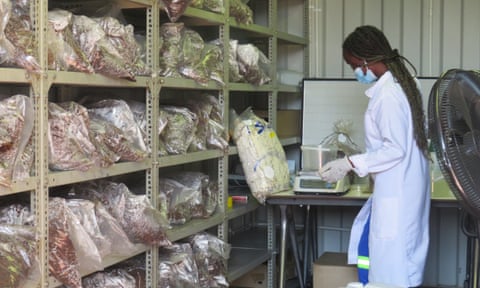
Oyster mushrooms in bags on a shelf with a woman using weighing scales

The remnants of the oyster mushrooms grown on weeds of encroacher bush will be used to create building blocks. Photograph: Ester Mbathera

People think the house would smell because the blocks are made of all-natural products, but it doesn’t smell,” says Kristine Haukongo. “Sometimes, there is a small touch of wood, but otherwise it’s completely odourless.”

Haukongo is the senior cultivator at the research group MycoHab and her job is pretty unusual. She grows oyster mushrooms on chopped-down invasive weeds before the waste is turned into large, solid brown slabs – mycoblocks – that will be used, it’s hoped, to build Namibian homes. Continue reading
California, Solar Showcase


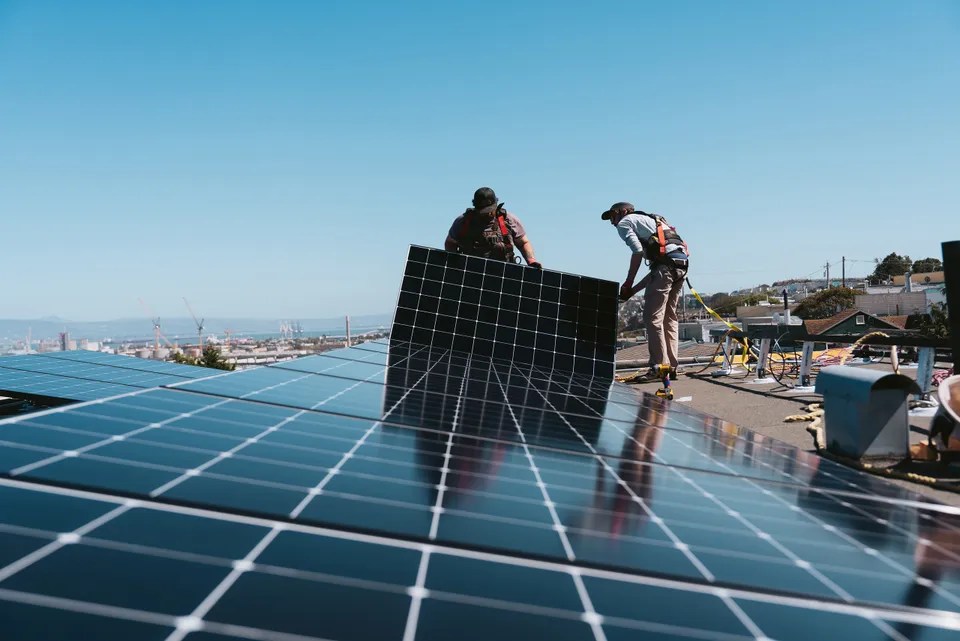
Workers install solar panels at a home in San Francisco, California.Photograph by Michaela Vatcheva / Bloomberg / Getty

McKibben’s essay in the New Yorker, showcasing the showcase for renewable energy, will brighten your day:

California Is Showing How a Big State Can Power Itself Without Fossil Fuels

For part of almost every day this spring, the state produced more electricity than it needed from renewable sources.

Something approaching a miracle has been taking place in California this spring. Beginning in early March, for some portion of almost every day, a combination of solar, wind, geothermal, and hydropower has been producing more than a hundred per cent of the state’s demand for electricity. Continue reading

Bullish On Solar

image: la boca

The Economist makes a compelling case for us all to be more bullish on solar–not that we needed much convincing:

The exponential growth of solar power will change the world

An energy-rich future is within reach

It is 70 years since at&t’s Bell Labs unveiled a new technology for turning sunlight into power. The phone company hoped it could replace the batteries that run equipment in out-of-the-way places. It also realised that powering devices with light alone showed how science could make the future seem wonderful; hence a press event at which sunshine kept a toy Ferris wheel spinning round and round. Continue reading

Hydropower In The Age Of Climate Change

A dry section of the Guavio Reservoir that feeds the Guavio Hydroelectric Power Plant in Gachala, Colombia, in April. Jhojan Hilarion/Agence France-Presse — Getty Images

We knew that dams’ days are numbered, but the evidence keeps mounting:

When Hydropower Runs Dry

The struggle of the world’s largest source of renewable last year could have important implications for the fight against climate change.

Global pollution from electricity generation was set to fall last year, thanks to the growth of renewable energy. Then came the droughts.

Hydropower, the biggest source of renewable energy in the world, was crippled by lack of rain in several countries last year, driving up emissions as countries turned to fossil fuels to fill the gap. Continue reading

Upgrading Electrical Power Lines

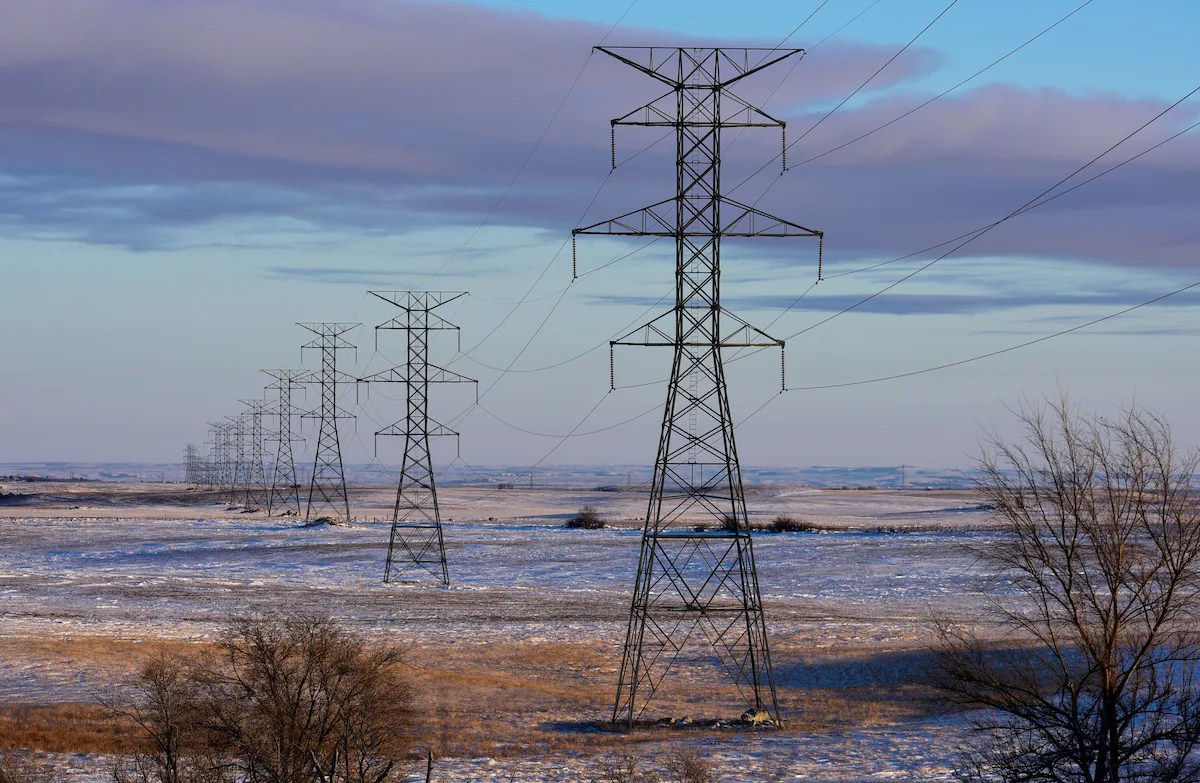
High voltage power transmission lines near Underwood, N.D. Installing new wires on the high-voltage lines that already carry power hundreds of miles across America could double the amount of power those lines carry. (Dan Koeck for The Washington Post)

Shannon Osaka, writing in The Washington Post, offers an unglamorous but effective-sounding story about the role that electrical transmission lines may play in upgrading our energy infrastructure:

How a simple fix could double the size of the U.S. electricity grid

Rewiring miles of power lines could make space for data centers, AI and a boom in renewables.

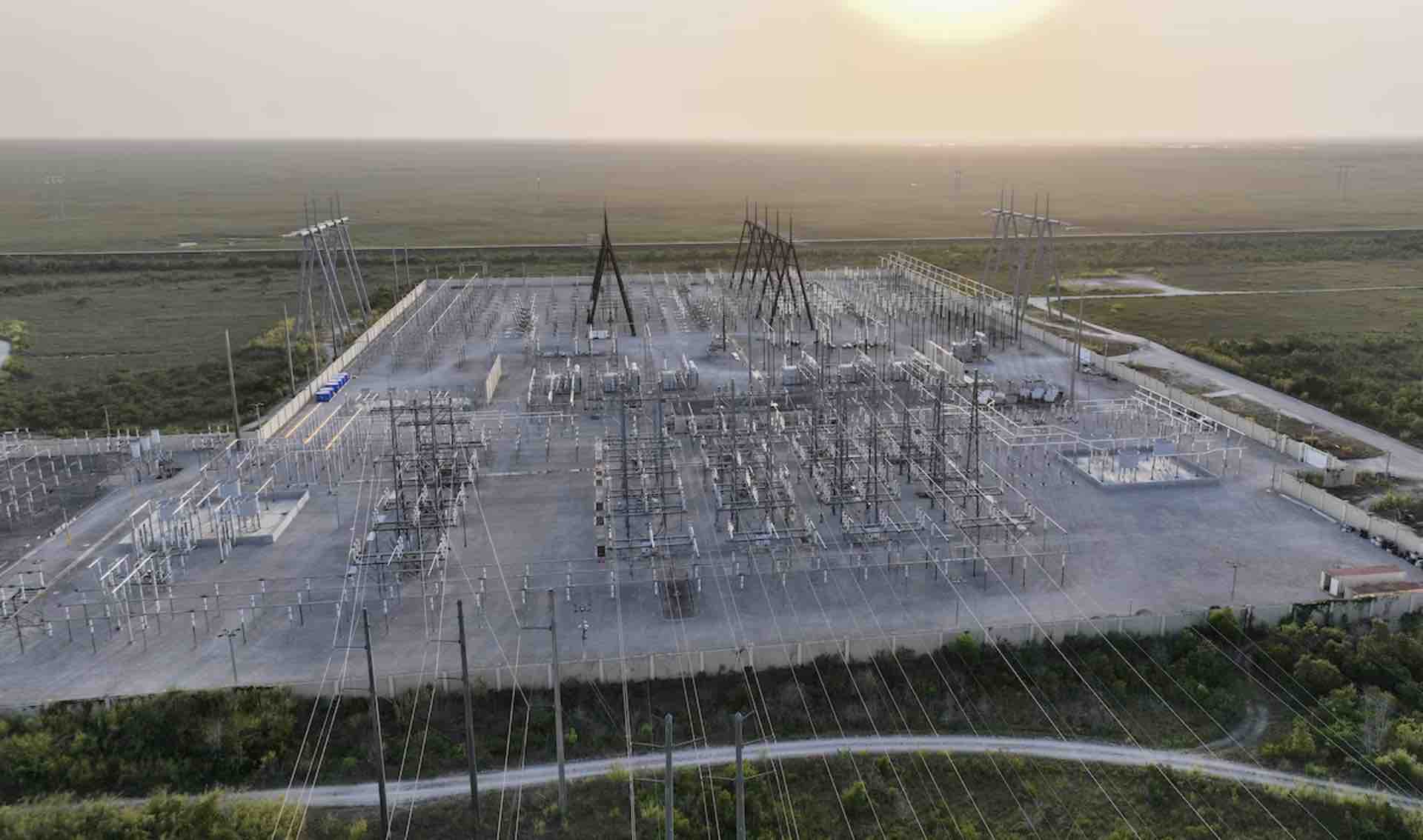
High voltage power lines run through a substation along the electrical power grid in Pembroke Pines, Florida. The grid is strained by increasing demand from electricity-hungry data centers and electric vehicles, as well as extreme weather events. (Joe Raedle/Getty Images)

There is one big thing holding the United States back from a pollution-free electricity grid running on wind, solar and battery power: not enough power lines.

As developers rush to install wind farms and solar plants to power data centers, artificial intelligence systems and electric vehicles, the nation’s sagging, out-of-date power lines are being overwhelmed — slowing the transition to clean energy and the fight against climate change. Continue reading

Sailing Circa 2024

photograph: getty images

Continuing the theme of new sailing technology, our thanks to the Economist:

A new age of sail begins

By harnessing wind power, high-tech sails can help cut marine pollution

In 1926 an unusual vessel arrived in New York after crossing the Atlantic. Continue reading

Slowed Growth Of Fossil Fuel

For those who might say too little too late we say this still counts as good news worth reading, so thanks to Yale Climate Connections:

‘Turning point in energy history’ as solar, wind start pushing fossil fuels off the grid

Fossil fuel growth has stalled while wind and solar are growing.

Solar and wind energy grew quickly enough in 2023 to push renewables up to 30% of global electricity supply and begin pushing fossil fuels off the power grid, the Ember climate consultancy concludes in a report released May 8. Continue reading

Magrathea Metals & Seawater Bounty

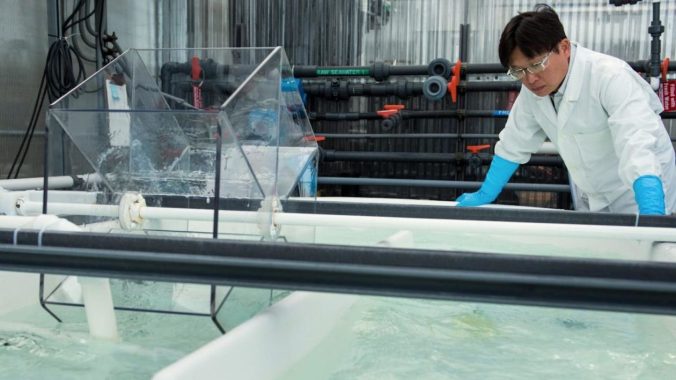
A system for testing technology to draw minerals from seawater at the Pacific Northwest National Laboratory in Sequim, Washington. PACIFIC NORTHWEST NATIONAL LABORATORY

Thanks as always to Jim Robbins and Yale e360:

In Seawater, Researchers See an Untapped Bounty of Critical Metals

Researchers and companies are aiming to draw key minerals, including lithium and magnesium, from ocean water, desalination plant residue, and industrial waste brine. They say their processes will use less land and produce less pollution than mining, but major hurdles remain.

Can metals that naturally occur in seawater be mined, and can they be mined sustainably? Continue reading

Price Adjustments & Carbon Emmissions

illustration: javier jaén/getty images

The Economist shares this news:

Carbon emissions are dropping—fast—in Europe

Thanks to a price mechanism that actually works

“Our most pressing challenge is keeping our planet healthy,” declared Ursula von der Leyen on the day she was elected president of the European Commission in July 2019. Continue reading

Andrea Vidaurre, Making Good Trouble in California

Take five minutes to celebrate Andrea’s activism and its accomplishments:

2024 GOLDMAN PRIZE WINNER

Andrea Vidaurre

Andrea Vidaurre’s grassroots leadership persuaded the California Air Resources Board to adopt, in the spring of 2023, two historic transportation regulations that significantly limit trucking and rail emissions. The new regulations—the In-Use Locomotive Rule and the California Advanced Clean Fleets Rule—include the nation’s first emission rule for trains and a path to 100% zero emissions for freight truck sales by 2036. The groundbreaking regulations—a product of Andrea’s policy work and community organizing—will substantially improve air quality for millions of Californians while accelerating the country’s transition to zero-emission vehicles.

The Paper Log House On View Until December

The Paper Log House at The Glass House. Photo by Michael Biondo.

The building in the background of the photo above has never featured in any of our architecture-focused posts before, even though architecture has been a key theme since our start, and especially after hosting these interns in India. I know why I never wanted that particular architect in our pages, but nevermind that. This post is about another architect’s achievement, which I plan to visit if I get close enough before December:

SHIGERU BAN: THE PAPER LOG HOUSE

The Glass House, Shigeru Ban Architects (SBA), and The Irwin S. Chanin School of Architecture of The Cooper Union announce the completion of Shigeru Ban: The Paper Log House at The Glass House. Students from The Cooper Union joined in erecting the structure through a unique opportunity offered this semester for the university’s Building Technology course. The collaborative installation will be on display April 15th through December 15th 2024 for The Glass House’s more than 13,000 annual visitors. Continue reading

Heat Pumps, Circa 2024

Heat pumps are energy efficient and considered by many to be powerful tools in combating climate change. Jackie Molloy for The New York Times

The technology is still young, and raising questions, but also full of promise according to this article by Hilary Howard in the New York Times:

Why Heat Pumps Are the Future, and How Your Home Could Use One

The highly efficient devices are the darlings of the environmental movement. Here’s why.

Heat pumps, which both warm and cool buildings and are powered by electricity, have been touted as the answer to curbing greenhouse gas emissions produced by homes, businesses and office buildings, which are responsible for about one-third of the emissions in New York State. Continue reading

10,000 New Electric Buses In India

People wait to board an electric bus in Pune, India. (Image credit: courtesy of ITDP)

Seven years and many bus stories among us recall the old buses. Noisy, smoke-belching, hot and crowded. Time to retire the old ones and at least lessen the noise and belching. Thanks to Sarah Spengeman and Yale Climate Connections:

India makes a big bet on electric buses

Fast-growing cities need electric buses if the country is to meet its climate goals.

Public transportation riders in Pune, India, love the city’s new electric buses so much they will actually skip an older diesel bus that arrives earlier to wait for a smoother, cooler ride in a new model. This has fed a new problem: overcrowding. Fortunately, more new buses are on the way. Continue reading

Industry Pivots Via Carbon Sequestration

This gas processing plant at Casalborsetti is the focus of the first phase of an ambitious plan to capture carbon dioxide and bury it under the sea. Maurizio Fiorino for The New York Times

Where to put carbon is a major question of the day. Thanks to writers like Stanley Reed and publications like the New York Times the ideas keep coming:

Plan to Stash Pollution Beneath the Sea Could Save Money and Jobs

The Italian energy giant Eni sees future profits from collecting carbon dioxide and pumping it into natural gas fields that have been exhausted.

Renowned for ancient churches and the tomb of Dante, the 14th-century poet, the city of Ravenna and its environs along Italy’s Adriatic coast are also home to old-line industries like steel and fertilizer. Continue reading

PureCycle Technologies, Promising But Still Needing Verification

Recycled polypropylene pellets at a PureCycle Technologies plant in Ironton, Ohio. Maddie McGarvey for The New York Times

Big companies have not earned our trust, especially when it comes to plastics. So, our thanks to Hiroko Tabuchi for the tough questions in this New York Times article:

There’s an Explosion of Plastic Waste. Big Companies Say ‘We’ve Got This.’

By 2025, Nestle promises not to use any plastic in its products that isn’t recyclable. By that same year, L’Oreal says all of its packaging will be “refillable, reusable, recyclable or compostable.”

And by 2030, Procter & Gamble pledges that it will halve its use of virgin plastic resin made from petroleum.

To get there, these companies and others are promoting a new generation of recycling plants, called “advanced” or “chemical” recycling, that promise to recycle many more products than can be recycled today.

Crushed plastic waste at the PureCyle plant. Nestlé, Procter & Gamble and L’Oréal have expressed confidence in the company despite its early setbacks. Maddie McGarvey for The New York Times

So far, advanced recycling is struggling to deliver on its promise. Nevertheless, the new technology is being hailed by the plastics industry as a solution to an exploding global waste problem.

The traditional approach to recycling is to simply grind up and melt plastic waste. The new, advanced-recycling operators say they can break down the plastic much further, into more basic molecular building blocks, and transform it into new plastic.

PureCycle Technologies, a company that features prominently in Nestlé, L’Oréal, and Procter & Gamble’s plastics commitments, runs one such facility, a $500 million plant in Ironton, Ohio. Continue reading

Solar’s Impressive Portion Of USA Energy Supply Increase

Robert Nickelsberg/Getty Images

Thanks to Tik Root, Senior Staff Writer at Grist:

Solar hits a renewable energy milestone not seen since WWII

With supply chains finally open, solar provided most of the nation’s new electricity capacity last year.

Solar accounted for most of the capacity the nation added to its electric grids last year. That feat marks the first time since World War II, when hydropower was booming, that a renewable power source has comprised more than half of the nation’s energy additions.  Continue reading

The Vertical Forest In Milan

The Vertical Forest, a residential complex in Milan. Marta Carenzi/Archivio Marta Carenzi/Mondadori Portfolio, via Getty Images

Italy has not figured in our climate change solutions coverage, until now. Our thanks to Stephen Wallis and the New York Times for this:

A Growth Spurt in Green Architecture

Buildings made shaggy with vegetation or fragrant with wood are no longer novelties.

In the lineup of climate villains, architecture towers above many. The building and construction industries account for some 37 percent of worldwide carbon dioxide emissions, according to the United Nations Environment Program. Three of the most commonly used building materials — concrete, steel and aluminum — generate nearly a quarter of all carbon output. Continue reading

Carbon Clean 200’s Performance Update Report

A press release for this report above summarizes the findings:

Carbon Clean 200 Companies Outperform Dirty Energy by 39%

The 11th cohort of global Clean200 leaves dirty energy investments in the dust

As You Sow and Corporate Knights today released their 11th update of the Carbon Clean200™, a list of 200 publicly traded companies worldwide leading the way among global peers to a clean energy present and future. These companies generated almost double the returns of the main fossil fuel index from July 1, 2016, to January 15, 2024, despite geopolitical tensions that have favored fossil fuel stocks in the past two years. Continue reading

Dickson D. Despommier Discussing The New City Concept

The vertical farming part of this concept is one we have linked to many times. The appeal is not difficult to grasp even if sometimes the concept is stretched. This is different and worth hearing him out:

Dickson Despommier Wants Our Cities to Be Like Forests

A leading proponent of vertical farming discusses how urban areas should adapt to a perilous environmental future.

Illustration by Daniele Castellano

In 2000, Dickson D. Despommier, then a professor of public health and microbiology at Columbia University, was teaching a class on medical ecology in which he asked his students, “What will the world be like in 2050?,” and a follow-up, “What would you like the world to be like in 2050?” As Despommier told The New Yorker’s Ian Frazier in 2017, his students “decided that by 2050 the planet will be really crowded, with eight or nine billion people, and they wanted New York City to be able to feed its population entirely on crops grown within its own geographic limit.” Continue reading

Nature, Peer-Reviewed Science Since 1869

The scientific journal Nature shows up in exactly one search result among thousands of posts here. And that one, because photos have such a wide audience. We have not linked to their articles because, since 1869, they are written by and oriented to highly credentialed scientists. A look at ten influential articles makes the point. And we can only respect what they do, even if we wish more of us could digest more of the science. Now that they offer some articles in audio version, this may make the science more accessible to those who hear better than they read. Judge for yourself, if you want to pay to play. The audio version of the article below (available on YouTube above) is free, but unless you have a subscription the written version is available for a small charge:

Rooftop solar panels in China. Tandem cells could boost power density in crowded urban areas. Credit: VCG/Getty

A new kind of solar cell is coming: is it the future of green energy?

Firms commercializing perovskite–silicon ‘tandem’ photovoltaics say that the panels will be more efficient and could lead to cheaper electricity.

On the outskirts of Brandenburg an der Havel, Germany, nestled among car dealerships and hardware shops, sits a two-storey factory stuffed with solar-power secrets. It’s here where UK firm Oxford PV is producing commercial solar cells using perovskites: cheap, abundant photovoltaic (PV) materials that some have hailed as the future of green energy. Surrounded by unkempt grass and a weed-strewn car park, the factory is a modest cradle for such a potentially transformative technology, but the firm’s chief technology officer Chris Case is clearly in love with the place. “This is the culmination of my dreams,” he says.