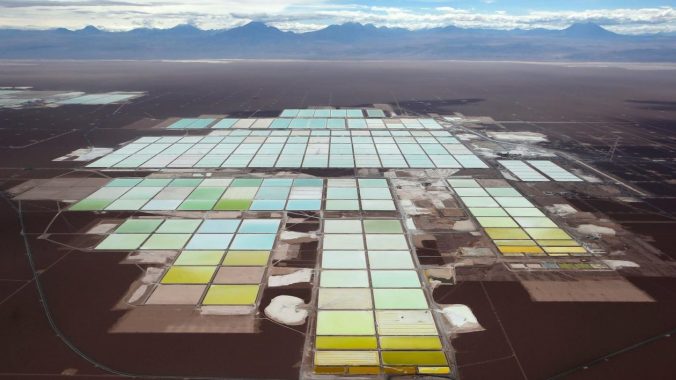
Brine pools at the Soquimich lithium mine on a salt flat in northern Chile. IVAN ALVARADO / REUTERS VIA ALAMY
On my one visit to the Atacama desert in 2009 I had a feeling unlike any I had previously experienced, and it was attributed to the lithium. There is so much, you can feel it. And to put it simply, it feels good. I knew it was being mined, but I assumed it was primarily for pharmaceutical use; no clue it would become so important for batteries. And this set up a sort of zero-sum game, which Fred Pearce helps to understand:
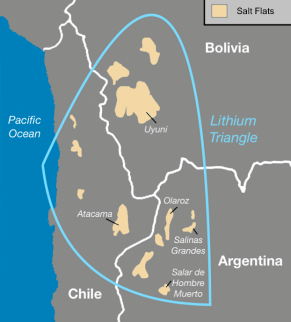
The Lithium Triangle region. YALE ENVIRONMENT 360
Why the Rush to Mine Lithium Could Dry Up the High Andes
The demand for lithium for EV batteries is driving a mining boom in an arid Andes region of Argentina, Chile, and Bolivia, home to half the world’s reserves. Hydrologists are warning the mines could drain vital ecosystems and deprive Indigenous communities of precious water.
What environmental price should the world be willing to pay for the metals needed to switch to electric vehicles? The question is being asked urgently in South America where there are growing fears that what is good for the global climate may be a disaster for some of the world’s rarest and most precious ecosystems — salt flats, wetlands, grazing pastures, and flamingo lakes high in the Andean mountains. Continue reading












 Organikos