Pristine Nature?

Nijhuis-TheresNoSuchThingAsPristineNature-1200

A domesticated cat and a native tropical bird, in Papua New Guinea. Environmentalism has long been a nostalgic enterprise, but the unspoiled past that it aspires to looks increasingly like an illusion. PHOTOGRAPH BY LEONARD FREED / MAGNUM

If you have been reading our blog for any stretch of time you would be aware that we believe in pristine nature, and the importance of its conservation. We do not spend alot of time picking nits about the definition of pristine nature, but from time to time we are reminded that details, aka reality, is in need of fact-checking:

A Lone Couple, a Desert Island, and Turtles

Despite living in utter isolation on a desert island for 40 years, one inspirational couple has overcome disability and blindness to make a difference. PHOTO: BBC

Despite living in utter isolation on an island for 40 years, one couple has overcome disability and blindness to make a difference. PHOTO: BBC

Isn’t there a line about finding heroes in the most unlikely places? This is the setting of Daeng Abu’s and his wife Daeng Maida’s inspirational story: a desert island off the coast of Sulawesi in Indonesia, disabilities in Abu being blind and facing leprosy, their days spent raising sea turtles and speaking against the cyanide and dynamite fishing that is devastating Indonesia’s reef.

Neither knows how old they were when they entered their arranged marriage on nearby Pulau Pala (Nutmeg Island) – they currently believe they’re in their 80s – but Abu thinks he was older than 20 and Maida remembers it was the dry season. Her uncle fired three shots in the air; she walked over to his family’s home; Abu built a shack from bamboo and palm leaf; and married life began. Little did they know at the time – the couple was bound to become a rather unlikely pair of environmental activists.

Continue reading

Sorry, Bolivia!

bolivia

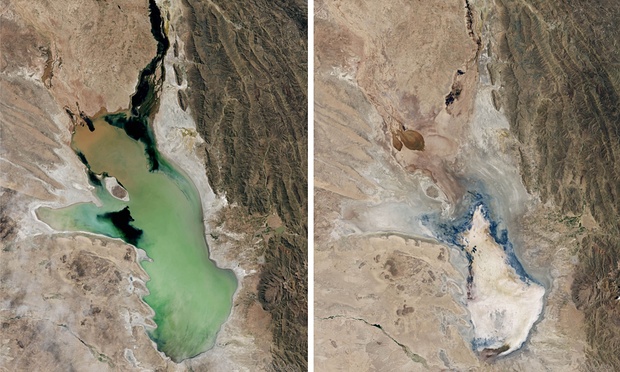
NASA satellite images show Bolivia’s Lake Poopo filled with water in April 2013 (left), and almost dry in January 2016. PHOTO: NASA/AP

Drying rivers, lakes, and reservoirs. Fancy a list? Here and here, you go. The world’s waters are rapidly running dry, threatening wild habitats and human civilization, exacerbating climate change. In turn, livelihoods, ecosystems, energy generation are all affected. Like in Bolivia, which just lost its second largest lake.

Continue reading

The Dilution Effect

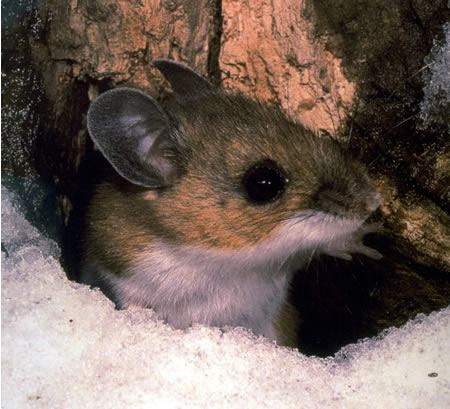
Deer mouse photo by National Park Service, via Wikimedia Commons

We should all be concerned with animal diseases, especially if those pathogens have the potential to become zoonotic, or transmittable to human beings. And if you agree that biodiversity is one of Earth’s great treasures and essential to the health of its ecosystems, then it won’t come as a surprise to hear that there seems to be a link between a habitat’s biodiversity and fewer zoonotic diseases in the respective area.

This situation is known as the dilution effect in epidemiology, and Jason Goldman reports for University of Washington’s Conservation Magazine on the case of a certain hantavirus (which is a zoonotic virus carried by rodents) studied within deer mice in Utah:

Deer mice are the natural hosts for the Sin Nombre hantavirus, or SNV. When contracted by humans, the virus can lead to the sometimes fatal Hantavirus Pulmonary Syndrome.

To test the dilution effect in a deer mouse population, the researchers trapped 155 of the rodents on BLM land in Juab County, Utah, and implanted small microchips inside them. They also took a small blood sample to test for SNV infection. Then they distributed an array of feeding trays in the desert, half in areas of high biodiversity and half in areas of low biodiversity.


Continue reading

Thanks To Humboldt

Homboldt.jpg

In the “oops, forgot to post on this” category, we recommend you start with the introductory video above, then continue on to the author’s website:

55054_us_humboldt_cov“The Invention of Nature” reveals the extraordinary life of the visionary German naturalist Alexander von Humboldt (1769-1859) and how he created the way we understand nature today. Though almost forgotten today, his name lingers everywhere from the Humboldt Current to the Humboldt penguin. Humboldt was an intrepid explorer and the most famous scientist of his age. His restless life was packed with adventure and discovery, whether climbing the highest volcanoes in the world, paddling down the Orinoco or racing through anthrax–infested Siberia. Perceiving nature as an interconnected global force, Humboldt discovered similarities between climate zones across the world and predicted
Continue reading

Saving the Hill of Her Childhood

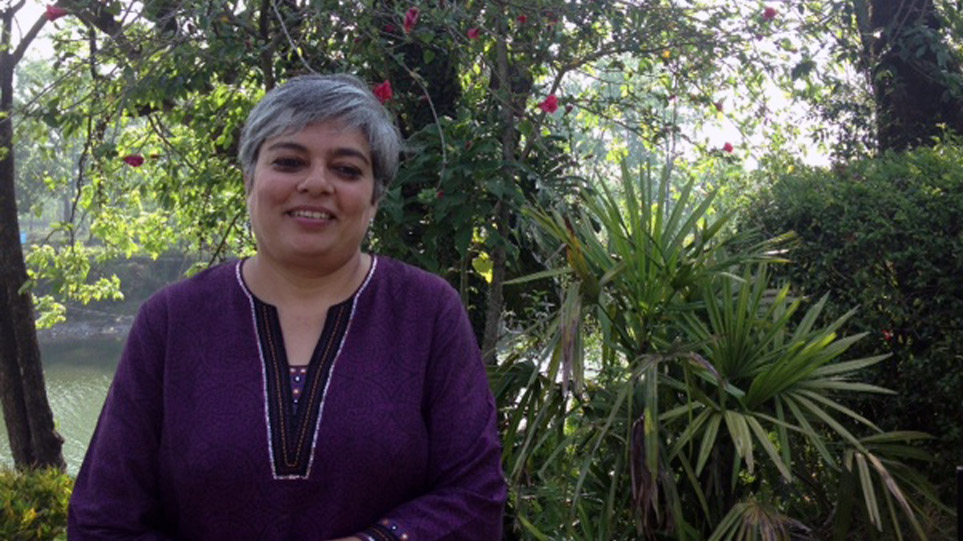
Plant and animal life on Flag Hill, near the hill station town of Mussoorie in north India, has been restored through the efforts conservationist Sejal Worah.

Plant and animal life on Flag Hill, near the hill station town of Mussoorie in north India, has been restored through the efforts conservationist Sejal Worah.

Environmentalist and WWF India Programme Director, Sejal Worah, and her local team have spent the last two years attempting to revive a 400 acres area situated in the Garwhal Himalayas, in Mussoorie, Uttarakhand.  From being a degraded and over grazed territory, within two years of conservation efforts the protected area has become a sanctuary for wildlife which hadn’t been reported for years, like the Himalayan black bear and Sambhar deer.

Continue reading

What’s the Tree Population?

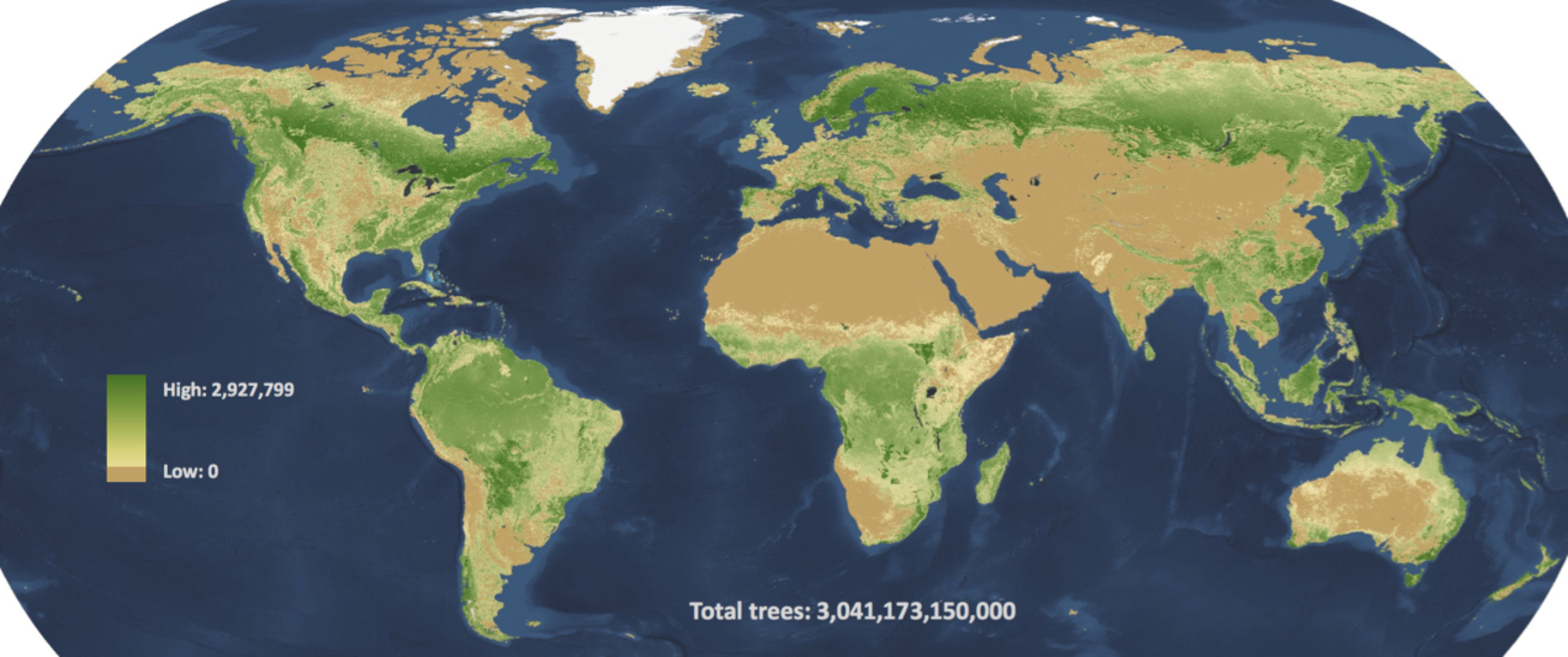
Three trillion trees, mapped to the square kilometre.  Source: Crowther et al / Nature

Three trillion trees, mapped to the square kilometre. Source: Crowther et al / Nature

Three trillion trees live on Earth, but there would be twice as many without humans. Each year more than 15 billion trees are lost worldwide, according to a major new study. Previous estimates for the total number of trees on Earth have been much lower. The new study is important not only because it gives a higher number, but how it was produced. As well as using remote sensing data such as images taken by satellites that can classify land type, the research also integrated 429,775 ground-based assessments of tree density.

Continue reading

Notes from a Natural History Museum

Harvard Natural History Museum

I recently had the chance to visit the Harvard Natural History Museum. Despite having lived in Cambridge for nearly a year, and having often thought about visiting the museum when I passed by going to and from my apartment, I had not stopped in until now. What a treat! The collections are full, diverse, and well curated. On this occasion, I spent most of my time in the animal wing, but I plan to return soon to take in the flora and minerals, and spend much more time in choice display rooms (e.g. the absolutely gorgeous Mammals/Birds of the World permanent exhibit: see below for pictures).

A ground sloth skeleton. It is hard to get an idea of the size of this creature from this photo, but it probably weighed several tons while alive!

Continue reading

Should Animal Deaths Worry You?

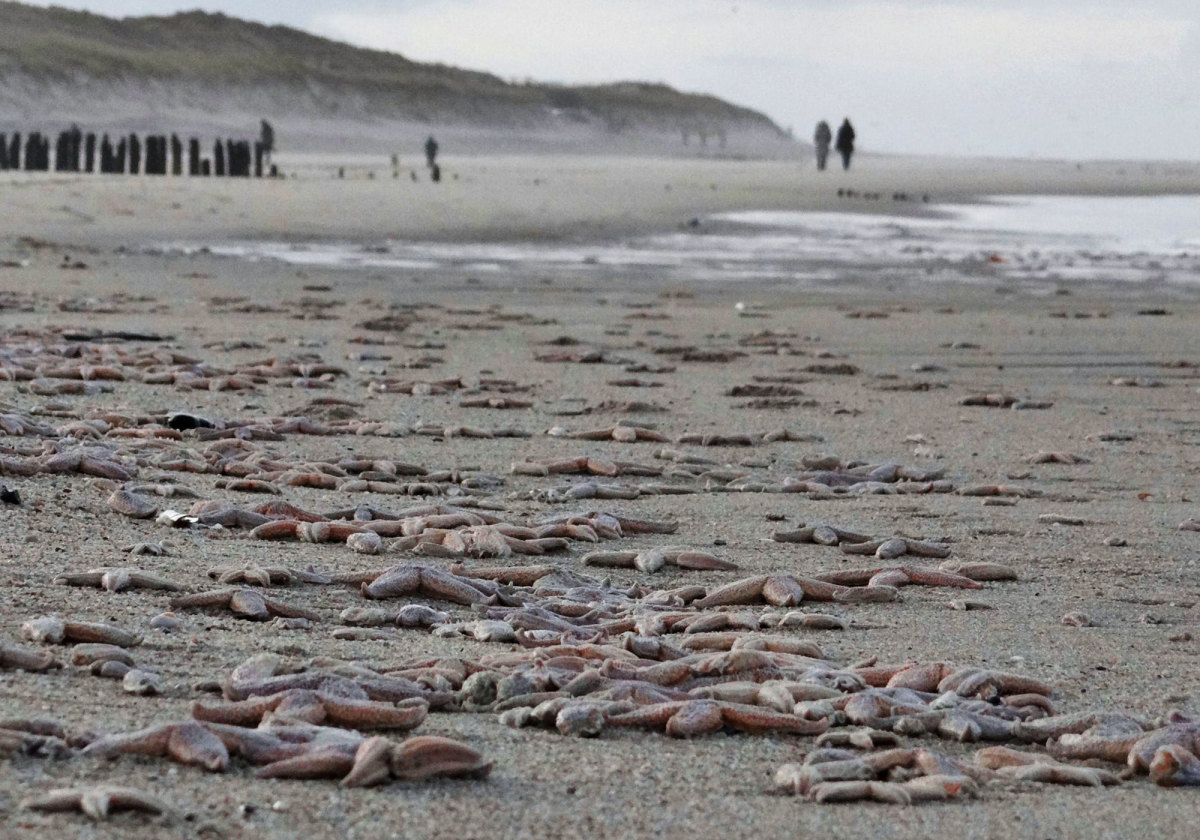
Dead starfish line the shore of the German island of Sylt. Mass wildlife die-offs have been interpreted as omens of an impending environmental collapse. PHOTOGRAPH BY DANIEL FRIEDERICHS

Dead starfish line the shore of the German island of Sylt. Mass wildlife die-offs have been interpreted as omens of an impending environmental collapse. PHOTOGRAPH BY DANIEL FRIEDERICHS

Mass-mortality events are sudden, unusual crashes in a population. If you think that you are hearing about them more often these days, you’re probably right. (Elizabeth Kolbert described frog and bat die-offs in a 2009 article; her subsequent book won a Pulitzer Prize recently.) Even mass-mortality experts struggle to parse whether we’re witnessing a genuine epidemic (more properly, an epizootic) of these events. They have also raised another possibility: that we are in the throes of what one researcher called an “epidemic of awareness” of spooky wildlife deaths.

Continue reading

Cornell Orchards Stick to Free Bees

Bryan Danforth inspects apple blossoms and native pollinators at the Cornell Orchards. © Jason Koski/University Photography

Earlier this spring, instead of hiring commercial honeybee keepers to bring in their hives to apple orchards, Cornell decided to try relying solely on wild bee species for pollination of the blossoms at their Ithaca site. Based on research from the university’s entomology department, the Cornell Orchards knew it had a robust population comprised of twenty-six different wild bee species among the Ithaca apple trees. They counted on this local bee life to do all the pollinating work that the imported European honeybees would have done, and by the end of May it was clear that a full crop’s worth of flowers had been pollinated! We’ve featured plenty of stories about the deeply troubling colony collapse disorder in Apis mellifera and are always eager to emphasize the importance of pollination, so it may seem strange to celebrate the non-use of European honeybees in this case, but the main point here is that the value of wild native bee species should not be forgotten! If commercial honeybees continue to struggle, alternative methods of pollination will be necessary, and fostering local biodiversity is a great way to compensate for that potential eventuality.

As a fun coincidence, I heard about this story because the lead researcher in the wild bee population was my entomology professor sophomore year. You can read more about Professor Bryan Danforth’s role and the Cornell Orchards decision in the piece for the Cornell Chronicle below, by John Carberry:

As the state’s land-grant institution, Cornell University was born to explore science for the public good – a mission that can sometimes require a leap of faith.

Just such a leap is paying off now at Cornell Orchards in Ithaca, as researchers and managers from the Horticulture Section of the School of Integrative Plant Science and the Department of Entomology celebrate a solid spring pollination season for the site’s apple trees. While crisp apples and fresh cider Continue reading

Avian Alarm Calls

A Tufted Titmouse calling in flight.

When you’re walking in the woods or even on a city block, chances are you’ll hear birds chirping at some point. Whatever they’re trying to communicate, it certainly isn’t the joyous celebration of life that cartoons and our active imaginations often make out birdsong to be. Males might be trying to attract a mate, individuals could be declaring their territory, and if it’s the right time of year, chicks may be begging for food. Another reason for a bird to vocalize is to create an alarm call in the interest of its general foraging flock, whether to flee from or mob a potential predator.

I’ve watched small birds like sparrows and chickadees mob a pygmy owl, crows, and a Red-tailed Hawk, but I’ve never had the chance to experience the beginning of the action, which apparently starts with just one alarm call, which turn out to be variable enough in some cases to communicate predator size and danger. Christopher Solomon reports for the New York Times‘ science section:

MISSOULA, Mont. — In the backyard of a woodsy home outside this college town, small birds — black-capped chickadees, mountain chickadees, red-breasted nuthatches — flitted to and from the yard’s feeder. They were oblivious to a curious stand nearby, topped by a curtain that was painted to resemble bark.

Continue reading

Ecological Intelligence, Desperately Needed, Requires Social Intelligence, The Foundation Of Which Is Individual Emotional Intelligence

Screen Shot 2015-04-08 at 11.41.53 AM

To do what we do, at Raxa Collective, and to do it well, and to succeed, requires alchemy. We are neither sure we are doing it, nor how to do it, nor whether it can be explained; thus, alchemy. No formula. For those of us with management education, of a certain age, there was a certain author who brought alchemy closer to theory, and so closer to the grasp. A conceptual grasp more often than an actual grasp. Mastery? Not even close. But try? Yes. In the beginning it was all about emotional intelligence, but expanded in interesting directions to now include even ecological. Important ideas. Powerful tools. In the current Education section of the New York Times, a small dose that helps understand why:

How to Be Emotionally Intelligent

What makes a leader? Knowledge, smarts and vision, but also the ability to identify and monitor emotions and manage relationships.

When New Roads Signal Nothing But Danger Ahead

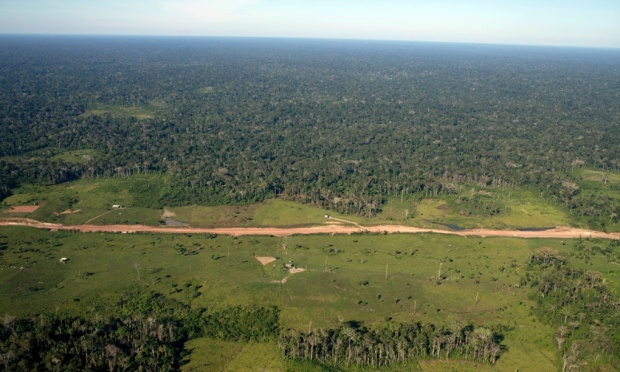
 A newly constructed road goes through the Amazon rainforest outside Rio Branco, the capital of Acre province, Brazil. For every 40 meters or road created, around 600 sq km of forest is lost. Photograph: Per-Anders Pettersson/Corbis

A newly constructed road goes through the Amazon rainforest outside Rio Branco, the capital of Acre province, Brazil. For every 40 meters or road created, around 600 sq km of forest is lost. Photograph: Per-Anders Pettersson/Corbis

Thanks to the Guardian for keeping us up to date with news, no matter how dismal, which in this case raises red flags about the future of our earth’s lungs:

Roads are encroaching deeper into the Amazon rainforest, study says

Oil and gas access roads in western Amazon could open up ‘Pandora’s box’ of environmental impacts

Oil and gas roads are encroaching deeper into the western Amazon, one of the world’s last wildernesses and biodiversity hotspots, according to a new study.

Roads across Bolivia, Colombia, Ecuador, Peru and western Brazil could open up a ‘Pandora’s box’ of negative environmental impacts and trigger new deforestation fronts, the study published in Environmental Research Letters finds.

“The hydrocarbon frontier keeps pushing deeper into the Amazon and there needs to be a strategic plan for how future development takes place in regards to roads,” said the report’s lead author, Matt Finer, of the Amazon Conservation Association.

Continue reading

Field Ecology At University, Twin Of Our Daily Activities For Guests At Xandari, Cardamom County, And Soon At Zaina Lodge

Screen Shot 2014-10-27 at 6.56.03 AM

Cornell University’s social media outreach often includes topics we cover regularly on this site, this video being a standard example, so we share six minutes on a topic of relevance to several of Raxa Collective’s properties where immersion in learning about nature is our parallel universe equivalent of Professor Agrawal’s approach:

Nature as the Classroom: Goldenrod, Treehoppers and Ants

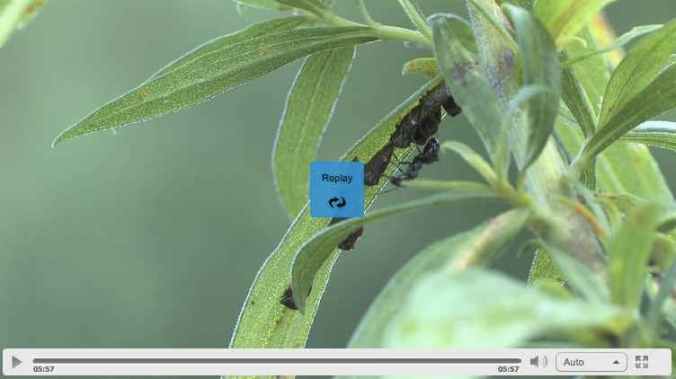
Classes in field biology are often very defined; go here, do that, measure this and come to this conclusion. Students in Anurag Agrawal’s field ecology course observe treehoppers in a field of goldenrod and devise their own study, then collect data to answer the questions. The approach comes much closer to how real field biology is actually done.

The Marari Fruit Diaries

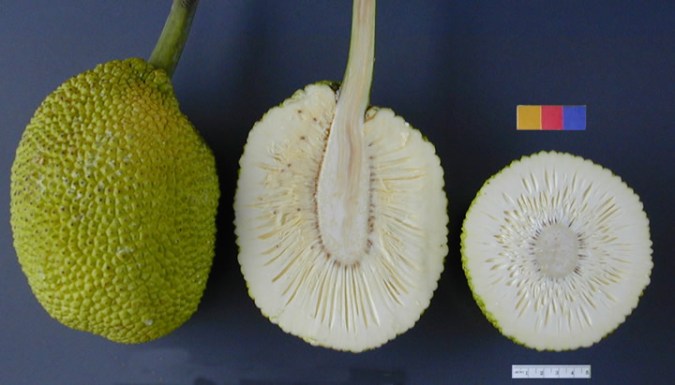
This is a picture of breadfruit, which actually tastes like freshly baked bread

This is a picture of breadfruit, which actually tastes like freshly baked bread

I’ve been writing about the exciting biodiverse varieties of plants at the new property, Marari Pearl. I want to point out though that even before we started, the land has hundreds of coconut trees on it, as well as dozens of mango and cashew trees, which is exciting in its own right.

One thing about the coconut trees that makes them a win-win, is that it helps provide local jobs. There is a certain group of people whose legal right it is in Kerala to do the job of tending to coconut trees. Before Marari Pearl was there, no one was hiring them to take care of the trees. Now that we are utilizing them to provide coconuts for our properties, they get jobs and we get fresh coconuts.

We are adding a cornucopia of other fruits, both local and exotic. I mentioned that we have pomelos, rambutans, tamarinds, several types of jackfruit,  lovi-lovis, mangos, and oranges as well as the infamous miracle fruit. There is also the hong kong guava, burmese grape bud, pomegranate, sapota, malayalam champa fruit, abiu fruit, jaboticaba fruit, langsat tree, and several varieties of avocados or ‘butter fruit’ as its called here. There are breadfruit trees as well as peanut butter trees. There is karonda fruit, nelli puli fruit, mangosteen, and mooty fruit. There are five pages of names, some I know, some I don’t, and some I can’t understand because it’s a handwritten list. Continue reading

The Sense in Sustainability

adak-fish-farm-krishnankotta-mala

Today we went to  a 68 acre fish farm in Thrissur called ‘Haya Poya’. They were using a traditional box system (the local name is petty para) to collect fish and manage the water level. We went to learn about implementing aquaculture at Kayal Villa, a newer property.

By using this traditional method, they do not have to introduce new varieties of fish in order to farm. They do this mainly because it is less costly to collect the fish naturally than to artificially introduce fish. Also, since it is all local varieties, it limits the possibility of messing up the natural ecosystem with foreign invasive species.

During our ride home, the agronomist, Mr. Deyal, and I continued the conversation about doing what’s ecologically beneficial is actually easier and more cost-efficient. He said

“Only an ecologically viable system will be economically viable. When we fight against the environment, the environment will go against us and we will have to invest more money to protect against it.”

This reminds me of a conversation I had with an oil driller recently. When I asked him what the most challenging thing about his job was, he said ‘going against nature,’ and then proceeded to tell me how rebellious nature was to the oil drilling process and how costly it is. I found it interesting that although their career choices were the antithesis of each other, the conversations I had with them had parallel messages: going against nature is costly.  Continue reading

Beach Banana Genome Project

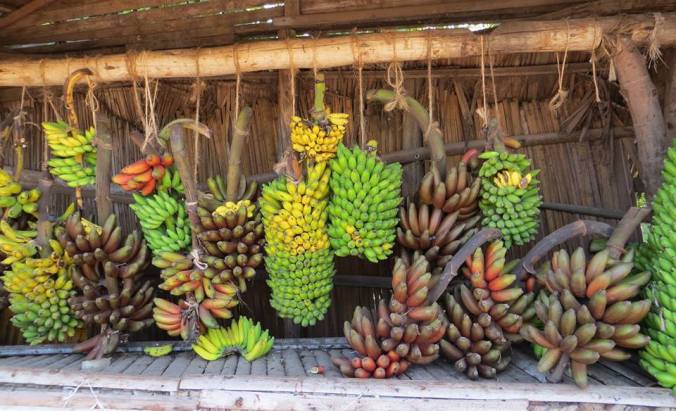
The next Xandari property that La Paz Group is developing is at Marari beach, and in my mind it could easily be called the “Beach Banana Genome Project” due to the 30 varieties of bananas being planted on site.

banana wonders

There are actually over 1000 varieties of bananas in the world, which is pretty crazy to think about since the main variety in global commerce is the Cavendish. There are red bananas, dwarf bananas, sugared-fig bananas, pregnant bananas, ice cream bananas, Popoulou bananas, the golden aromatic bananas, Macaboos, Thousand-Fingered bananas, and the list goes on. Out of the 1000+ types of bananas, grocery stores in the United States only offer one main type? Why?

That’s because our grocery stores are in a permanent global summertime, as Adam Gollner puts it in his book “The Fruit Hunters”. Because our fruits aren’t sourced locally in the United States, they must be able to endure the rigorous journey of international trade. If I hadn’t traveled to India for the summer, I would’ve probably never been offered the range of varieties I’ve gotten to taste here.

Most people in the United States won’t get exposed to a diverse range of options and therefore do not demand them. Big banana agribusiness makes is buck with monoculture. They can reliably deliver the same subpar banana. 

It’s not as reliable though in the long run because monoculture invites disease. Thats why before the Cavendish banana was the world’s top banana, there was the Gros Michel banana. It was struck by a fungus called the Panama Disease, and now a mutation of that disease is threatening the Cavendish. Biodiversity acts as a natural buffer to disease but biodiversity isn’t conducive to agrarian capitalism. Continue reading

Breakthroughs In Nutrition Via Entrepreneurial Conservation

Exo's peanut butter-and-jelly bar contains about 40 ground-up crickets and has a familiar nutty, sweet flavor. Meredith Rizzo/NPR

Exo’s peanut butter-and-jelly bar contains about 40 ground-up crickets and has a familiar nutty, sweet flavor. Meredith Rizzo/NPR

Thanks to National Public Radio (USA)’s food-focused program, The Salt, for another story on unexpected breakthroughs in nutrition:

…”Insects are probably the most sustainable form of protein we have on Earth,” Bitty Foods founder Megan Miller, who spoke passionately about eating bugs at a TEDx Manhattan event earlier this year, tells The Salt. “The only real barrier to Americans eating insects is a cultural taboo.” Continue reading

Seeing in the Dark

7296_591181947589412_1926452569_n

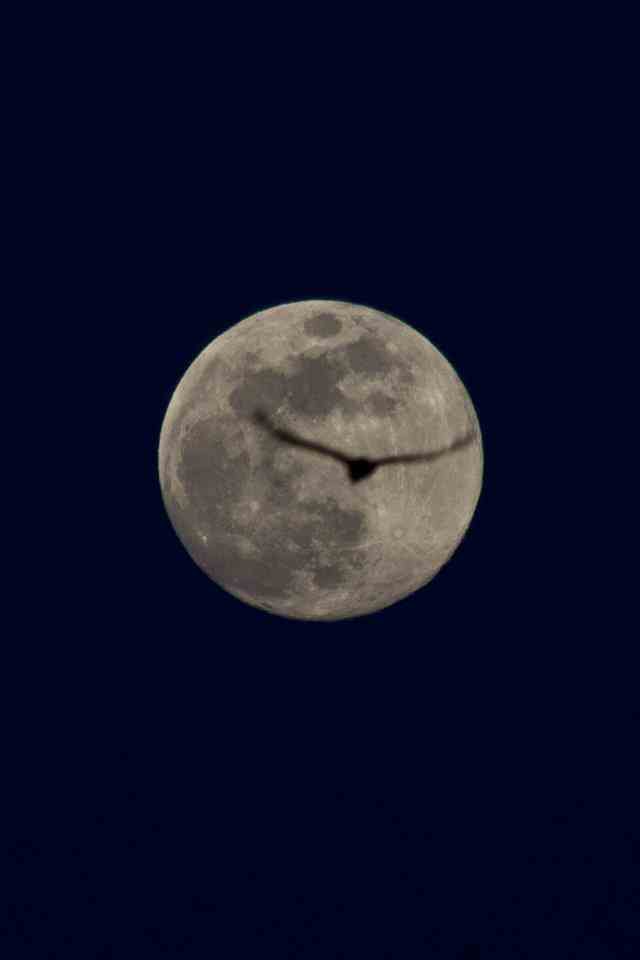
Full moon shot Kayal Villa. Photo: Milo Inman

That traveling state of mind woke up a part of my brain that’s been sleeping for a while. I’ve been feeling my grey matter stretch as a fellow Raxa friend put it. An idea I’ve been thinking about started while on the Camino de Santiago pilgrimage when a man told my friend and me not to walk the Camino at night. He said, “If God wanted us to walk the Camino at night, he would have put a light in the sky so we could see the Camino’s beauty”.

We were confused- why didn’t he see beauty in walking at night under the full moon and stars? After that, my friend and I began to contemplate how darkness has been associated in both sacred and secular literature with the lack of spiritual enlightenment, lack of awareness; in our language, to say something is dark has bad connotations. We felt more motivated than ever to walk at night.

We began to question how a society’s aversion to darkness could inform everything. We considered how the aversion to darkness could be a deeper layer to the resistance to female equality and even environmental understanding of the interdependency of nature and cycles of dark and light.

Continue reading

A Sophie’s Choice Moment For Two Species, One Environment, And No Solomon In Sight

Damian Mulinix — Chinook Observer. A small portion of the cormorant colony as seen from a bird blind.

Damian Mulinix — Chinook Observer. A small portion of the cormorant colony as seen from a bird blind.

You can read about this in a major media outlet, but try another approach for this story. Local journalism is alive and well, and covering complex, important topics through the local lens:

A plan to kill 16,000 double-crested cormorants on East Sand Island has some residents on the North Coast scratching their heads. Although still in the proposal phase, the plan drew many to an open house in Astoria last week to ask questions of the federal agencies involved. “I can’t believe in this day and age we can’t come up with an alternative solution to killing things,” said Tommy Huntington of Cannon Beach. Continue reading