Victorious, For Now, Reining In LNG

When Bill McKibben announces victory, savor it but stay vigilant:

A Massive Win, and What It Means

For Once, Big Oil Takes It on the Chin

I wrote you two days ago with provisional good news—it looked as if the long and deep fight to rein in runaway LNG export growth had scored a huge victory. Continue reading

Charles Duhigg & 2024 Themes

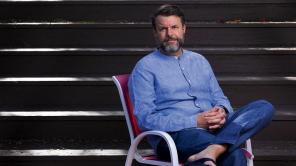
Charles Duhigg at home. PHOTOGRAPH OF CHARLES DUHIGG BY GLENN MATSUMURA

The themes in Charles Duhigg’s work are ones we aim to pay more attention to this year. So, thanks to Jonathan Shaw at Harvard Magazine for this:

Reporting, with an M.B.A.

Charles Duhigg unpacks how business and finance—and you—really work.

IN THE HISTORY OF stock market rallies and economic recessions, much defies quantitative explanation. Whether looking back on the tulip mania that gripped the Netherlands in the 1630s, or to the present obsession with bitcoin, the decisive role of human behavior fascinates journalist and author Charles Duhigg. Continue reading

Bitcoin Keeps Getting Dirtier & Cheerleaders Keep On Cheering

Chart: Matthew SparkesSource: Cambridge Centre for Alternative Finance Created with Datawrapper

We already knew it was dirty. But it keeps getting dirtier and the guys who cheerlead unfettered “innovation” come across as celebrating the dirty as the unavoidable cost of progress. Something’s gotta give:

Skull of Satoshi, a sculpture by Benjamin Von Wong highlighting the environmental impact of bitcoin. VonWong/Skull Of Satoshi/Greenpeace blog.vonwong.com/skull/

Should nations try to ban bitcoin because of its environmental impact?

Bitcoin miners seem unwilling to take action to curb the cryptocurrency’s energy and water use – so some campaigners argue that it is time for governments to intervene

The amount of electricity used to mine and trade bitcoin climbed to 121 terawatt-hours in 2023, 27 per cent more than the previous year. Continue reading

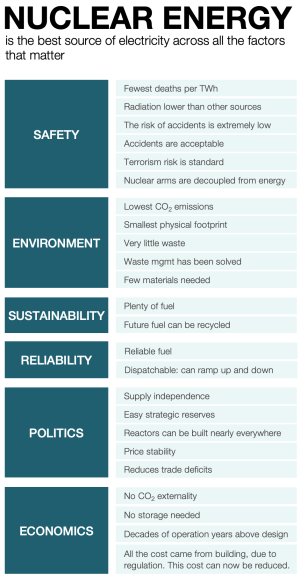
Nuclear Energy Cheat Sheet

Nuclear reactors around the world. Source.

We have linked to articles about nuclear energy before, but this one is more like a cheat sheet for a yes opinion on the option than earlier articles we have read:

Why Nuclear Is the Best Energy

This article will convince you of that nuclear is the best source of energy.1 Don’t read it if you need your mind to remain anti-nuclear. If you are against nuclear, I recommend you to precisely write down your concerns and what it would take for you to be convinced that nuclear is great, otherwise you might move the goalposts subconsciously. 

To do justice to the topic, the article had to cover all the important aspects of nuclear energy, and as a result is long. I chose to publish it in one piece despite that so all the relevant information is in one place, and I can update it over time and you can bookmark, reference, and share it. Continue reading

The Alternative, Reviewed

Nick Romeo has a new book coming out, and the Guardian recommends it, tentatively. It is up to all of us to answer the reviewer’s doubts through our choices and actions:

The Alternative by Nick Romeo review – moral substitutes for the free market model

A survey of the global alternatives to the current economic system makes for an enlightening, inspiring read, but you’re left wondering why such initiatives have failed to take hold

Anti-capitalist street art in the 11th arrondissement of Paris. Photograph: Soma/Alamy

I wrestled with how to approach this review. On the one hand, The Alternative brings together an appealing range of ways people across the west are imaginatively and determinedly contesting the givens in today’s capitalism. There is an ache for better – for more just ways of organising the way we work and adding more meaning to our lives. Continue reading

Rishi’s Wrong, Skidmore’s Right

Chris Skidmore said he could ‘no longer condone nor continue to support a government that is committed to a course of action that I know is wrong’. Photograph: Chris McAndrew/UK Parliament/PA

We rarely applaud those on the right side of the political spectrum when it comes to environmental issues. Most have been on the wrong side of history with regard to climate change. When one stands up and challenges the status quo, applause applause:

Chris Skidmore resigns Conservative whip over Sunak’s oil and gas licence plan

Former minister also resigns as an MP, which will trigger byelection in his Kingswood constituency

A former Conservative minister has announced he is resigning as an MP in protest at the party’s dash for oil and gas, setting up an awkward vote for the prime minister on the issue on Monday and an even more difficult byelection within weeks. Continue reading

Bikes Connected To The Grid

A man rides an ebike in Hermosa Beach, California. Photograph: Mel Melcon/Los Angeles Times/Getty Images

From one point of view ebikes could be viewed as just one more form of entertainment drawing energy from the grid. But an argument can be made that this increase in load on the grid is decreasing other carbon footprints. On top of that, maybe more people on bikes is its own gain:

Sales surge as cities and states look to cut pollution from cars and improve options for Americans to get around

After several years of false starts, electric bikes are finally entering the American mainstream, amid booming sales of a multiplying number of models on offer and as more states offer incentives for people to ditch their cars and shift to two, motor-assisted, wheels. Continue reading

Standing, Healthy Forests Are Essential

A managed forest near Jokkmokk, Sweden. Humanity will not limit global heating to safe levels without forests and woodland. Photograph: Peter Essick/Aurora/Getty Images

We thank Patrick Greenfield for this opinion in the Guardian:

Root and branch reform: if carbon markets aren’t working, how do we save our forests?

The world has looked to offsetting schemes to protect forests, fund conservation and fight the climate crisis – but many fail to fulfil their promises. Here are five ways to keep our forests standing

Keeping the world’s remaining forests standing is one of the most important environmental challenges of the 21st century. Continue reading

Heirloom Captures Carbon

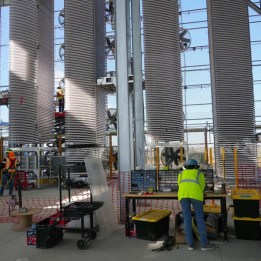
Heirloom’s plant in Tracy, Calif., pulls carbon dioxide from the air so it can be sealed permanently in concrete. Jim Wilson/The New York Times

We have been waiting for this day to arrive:

In a U.S. First, a Commercial Plant Starts Pulling Carbon From the Air

The technique is expensive but it could help fight climate change. Backers hope fast growth can bring down costs.

In an open-air warehouse in California’s Central Valley, 40-foot-tall racks hold hundreds of trays filled with a white powder that turns crusty as it absorbs carbon dioxide from the sky.

The start-up that built the facility, Heirloom Carbon Technologies, calls it the first commercial plant in the United States to use direct air capture, which involves vacuuming greenhouse gases from the atmosphere. Continue reading

Pricing Flights Realistically

United Airlines wants to zero out its greenhouse gas emissions by 2050, but without using conventional carbon offsets. Nicolas Economou/NurPhoto via Getty Images

If airlines can quantify what it would cost to become carbon neutral within a relevant timeframe, it implies that we know by how much they are currently fudging their investment model. If it is going to require an investment of X number of dollars over Y number of years to achieve carbon neutrality then they should invest, and price their flights accordingly. Then we will all know the real cost of flying, including the environmental cost. Thanks to Umair Irfan (long time since we last saw his work) and to Vox for this:

Emirates demonstrated a Boeing 777 flight fueled with SAF earlier this year. Giuseppe Cacace/AFP via Getty Images

Airlines say they’ve found a route to climate-friendly flying

Cleaner, faster, cheaper — the aviation industry’s plan to decarbonize air travel, explained.

If you’ve caught an ad for an airline lately on TV, a podcast, or the entertainment display on your flight, you’ve probably heard the company brag about what it wants to do about climate change.

Major airlines like AmericanDeltaSouthwest, and United have all set targets of achieving net-zero greenhouse gas emissions by 2050. They’re using a suite of tactics including buying more fuel-efficient aircraft, electrifying their ground vehicles, and increasing the efficiency of their operations. They’re also testing the winds on battery- and hydrogen-powered planes, as well as some radically different aircraft designs. Continue reading

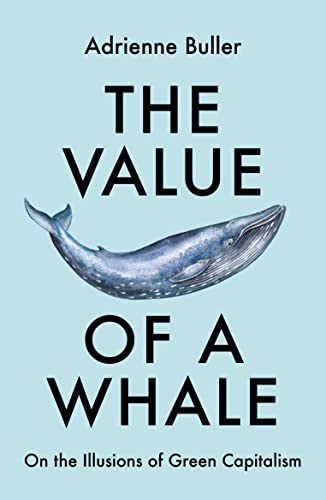
Green Capitalism Reconsidered

We shared an interview with the author of this book a few months ago, but missed the numerous reviews when her book was published last year. Thanks again to a Dutch biologist named Leon at the Inquisitive Biologist for this book review now:

BOOK REVIEW – THE VALUE OF A WHALE: ON THE ILLUSIONS OF GREEN CAPITALISM

In an attempt to address climate change and other environmental problems, governments are increasingly turning to economic solutions. The underlying message is clear: capitalism might have created the problem, but capitalism can solve it. Adrienne Buller, a Senior Fellow with progressive think tank Common Wealth, is, to put it mildly, sceptical of this. From carbon credits to biodiversity offsets, she unmasks these policies for the greenwashing that they are. The Value of a Whale is a necessary corrective that is as eye-opening as it is shocking. Continue reading

Subsidy Absurdity

Sprinklers water a field on Sept. 28, 2022 near Yuma, Arizona. Photo by David McNew/Getty Images.

This article by Stephen Robert Miller in the New Republic tells a story that is simultaneously inconceivable and yet perfectly explanatory of humanity’s contribution to climate change:

Why are we paying for crop failures in the desert?

Taxpayers are on the hook for heat-related crop losses in parched states like Arizona. That needs to change.

In mid-July in Phoenix, a man demonstrated to a local news station how to cook steak on the dashboard of his car. The city sweltered through a nearly monthlong streak of 110-degree temperatures this summer, while heat records are tumbling across the Southwest. Continue reading

Overfishing & Long Island Fancyfolk

Chris Winkler, a fisherman in ever-fancier Montauk on Long Island, is accused of breaking limits on his catch.

We hope that the wrongs get righted:

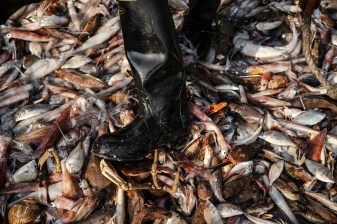
Chris Winkler is on trial, accused of taking too many fish from the seas off gentrified Montauk. His former partners have pleaded guilty, and stand to make millions from the sale of their small seafood-themed empire.

Along with trash fish, catch that exceeds daily limits must be tossed overboard even if it perishes.

It was just before dawn when Chris Winkler, a fisherman in Montauk, N.Y., set off on his trawler, the New Age.

A longhaired surfer who looks far younger than his 63 years, Mr. Winkler was in flip-flops and shorts, trailed by Murphy, a good-natured Irish water spaniel who is usually his only company. Continue reading

Environmental Status Reports & Lurking Contradictions

The last time we shared an advertisement here? Never. Occasionally, we promote a video like Kill the K-Cup that serves the opposite purpose. But this ad? Must see. It promotes a powerful message, and paradoxically at the same time, as Bill McKibben points out in this week’s newsletter, a whole other big mess is lurking just behind the curtain. He starts by bringing our attention to a new bill being considered in California, and then relates that bill to Apple in a way that raises questions about the accomplishments celebrated in the ad:

…#In California, SB 253 made it through the legislature, which is an incredibly big deal. Because California is the fifth largest economy on earth, and this law would force the big companies that do business there—which is everyone, really, because who is going to miss out on that economy?—to fully disclose their carbon emissions, including their “Scope 3” emissions, which are the ones that come from the supply chain. Continue reading

Insect Respect

Agronomist Caterina Luppa watches black soldier flies reproduce at Bugslife, a firm in Perugia, Italy, that is turning fly larvae into animal feed. LUIGI AVANTAGGIATO

We have featured this subject a few times over the years, especially once we started showcasing one such product. I acknowledge I am still not a total convert to an insect-centric diet, but every story like this draws me in, however slowly:

Edible Insects: In Europe, a Growing Push for Bug-Based Food

Marco Meneguz, an entomologist with BEF Biosystems in Casalnoceto, monitors black soldier flies as they mate. During mating, “the males gather in a courtship ritual characterized by fights and competitive displays,” he says. The blue light helps the flies see each other better. LUIGI AVANTAGGIATO

To rein in emissions, the E.U. is looking to insects as an alternate source of protein for livestock and people and is easing regulations and subsidizing makers of insect-derived food. In a photo essay, Luigi Avantaggiato explores the emerging bug food industry in northern Italy.

The European Union recognizes it has a meat problem. The bloc has no easy way to curb the climate impact of its livestock, which eat soybeans grown on deforested lands and belch heat-trapping gas. According to one estimate, Europe’s farm animals have a bigger carbon footprint than its cars.

Trent Barber, a technician at BEF Biosystems, vacuums up 200 pounds of fly larvae that are plump after two weeks of feeding on food scraps. The remaining food waste, now rich in excrement, will be sold as compost to farms. LUIGI AVANTAGGIATO

In this photo essay, Luigi Avantaggiato explores an unusual solution to this dilemma that is now gaining traction — feeding insects to livestock and, potentially, people. The European Commission says that insects could replace soy-based animal feed, helping to slow deforestation, or even supply an alternate source of protein for humans. Studies show that insects can furnish the same amount of protein as livestock while using as little as 10 percent of the land and producing as little as 1 percent of the emissions. Continue reading

Credibility & Carbon Credits

Sapo National Park in Liberia. Under a deal now being negotiated, Blue Carbon would sell carbon credits from the park. EVAN BOWEN-JONES / ALAMY STOCK PHOTO

For the decade during which the market for carbon credits has been on our radar, concerns about credibility have been lurking. Now this:

In New Scramble for Africa, an Arab Sheikh Is Taking the Lead

A company established by a Dubai sheikh is finalizing agreements with African nations to manage vast tracts of their forests and sell the carbon credits. Critics are concerned the deals will not benefit Africans and will just help foreign governments perpetuate high emissions.

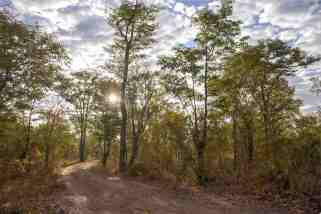
A forest in Mbire, Zimbabwe that is generating carbon credits. Blue Carbon has signed a memorandum of understanding with Zimbabwe to sell carbon credits from its woodlands. CYNTHIA R. MATONHODZE / BLOOMBERG VIA GETTY IMAGES

A prominent sheikh in the oil-rich Gulf state hosting this year’s UN climate negotiations, COP28, is heading a new rush to capture and sell carbon credits by managing tens of millions of acres of forests across Africa. Sheikh Ahmed Dalmook Al Maktoum, a member of the royal family of Dubai, which is part of the United Arab Emirates (UAE), wants to sell those credits to rich governments in the Gulf and elsewhere, so they can offset their carbon emissions to help them meet their carbon pledges under the 2015 Paris Agreement. Continue reading

Solidarity, Class Traitors & Ambiguity Management

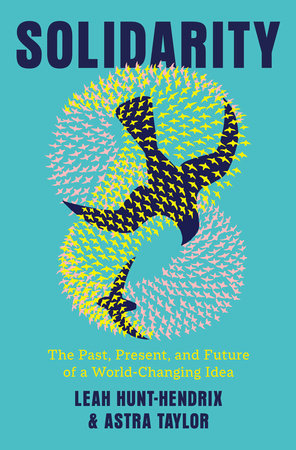
Solidarity by Leah Hunt-Hendrix and Astra TaylorThis book comes with a strong pitch by Bill McKibben. It came to my attention while reading this profile by Andrew Marantz. Full of ambiguity, about a balancing act between privilege inherited from fossil fuel wealth and sincere commitment to solidarity movements, what follows is entirely worth the read to get to the last paragraph (which only works if you have made it through the entire text):

What Should You Do with an Oil Fortune?

The Hunt family owns one of the largest private oil companies in the country. Leah Hunt-Hendrix funds social movements that want to end the use of fossil fuels.

Leah HuntHendrix photographed by Platon.

“Leah was clearly preoccupied with how a person of extreme privilege can live responsibly in the world,” her Ph.D. adviser said. Photograph by Platon for The New Yorker

Let’s say you were born into a legacy that is, you have come to believe, ruining the world. What can you do? You could be paralyzed with guilt. You could run away from your legacy, turn inward, cultivate your garden. If you have a lot of money, you could give it away a bit at a time—enough to assuage your conscience, and your annual tax burden, but not enough to hamper your life style—and only to causes (libraries, museums, one or both political parties) that would not make anyone close to you too uncomfortable. Or you could just give it all away—to a blind trust, to the first person you pass on the sidewalk—which would be admirable: a grand gesture of renunciation in exchange for moral purity. But, if you believe that the world is being ruined by structural causes, you will have done little to challenge those structures. Continue reading

If You Are In The Market For A New Puffer Jacket

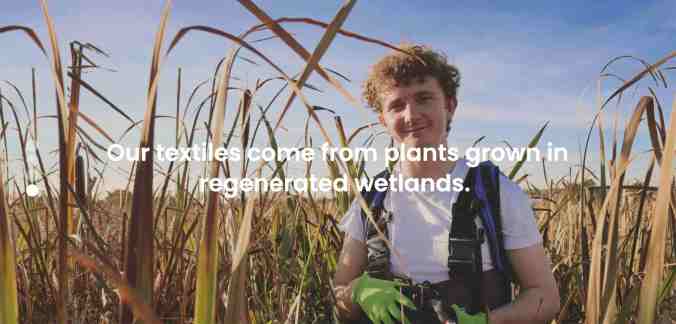
The first and last time some of us heard the word bullrush was with regard to baby Moses. That may change. Thanks to Patrick Greenfield at the Guardian for bringing this company and its innovative product to our attention:

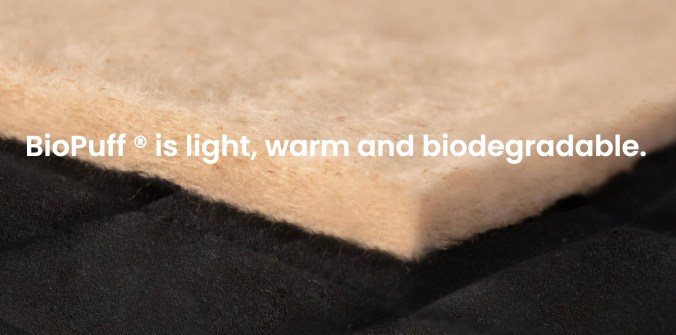
Goosedown out, bulrush in: the plant refashioning puffer jackets

By 2026, a rewetted peatland site in Greater Manchester will be harvesting bulrushes in a trial that aims to boost UK biodiversity, cut carbon emissions and provide eco-friendly stuffing for clothes

Bulrushes grow in marshes and peatland across the UK. Photograph: Krys Bailey/Alamy

The humble bulrush does not look like the next big thing in fashion. Growing in marshes and peatland, its brown sausage-shaped heads and fluffy seeds are a common sight across the UK. Yet a project near Salford in north-west England is aiming to help transform the plant into an environmentally friendly alternative to the goosedown and synthetic fibres that line jackets, boosting the climate and the productivity of rewetted peatland in the process. Continue reading

Birds Tell It As They See It

A moment of truth as absurd comedy:

Our cartoonist on capturing the environmental crisis

How to illustrate mankind’s environmental folly

Under the pen name KAL, Kevin Kallaugher has been drawing for The Economist for 45 years. Here, our cameras capture how his cartoons have become ever more strident in trying to illustrate the global environmental crisis that humanity faces…

Plastic Waste Losing Another Place To Land

An Indonesian customs official intercepts a container full of illegally imported plastic waste in September 2019. ACHMAD IBRAHIM / AP PHOTO

When conscientious citizens learn more about where all the plastic goes when they do their part to recycle, it can be demoralizing. Recycling is important but the real solution is reducing the waste in the first place:

Indonesia Cracks Down on the Scourge of Imported Plastic Waste

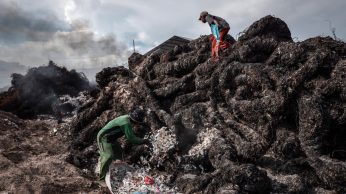
Workers prepare to burn plastic waste at an import dump in Mojokerto, Indonesia. ULET IFANSASTI / GETTY IMAGES

When China banned plastic waste imports in 2018, exporters in wealthy countries targeted other developing nations. Faced with an unending stream of unrecyclable waste, Indonesia has tightened its regulations and has begun to make progress in stemming the plastics flow.

In 2019, at a meeting in Geneva, Switzerland, delegates from 187 countries approved the first-ever global rules on cross-border shipments of plastic waste. Continue reading