World Wildlife Week: Spotted and Sambar Deer

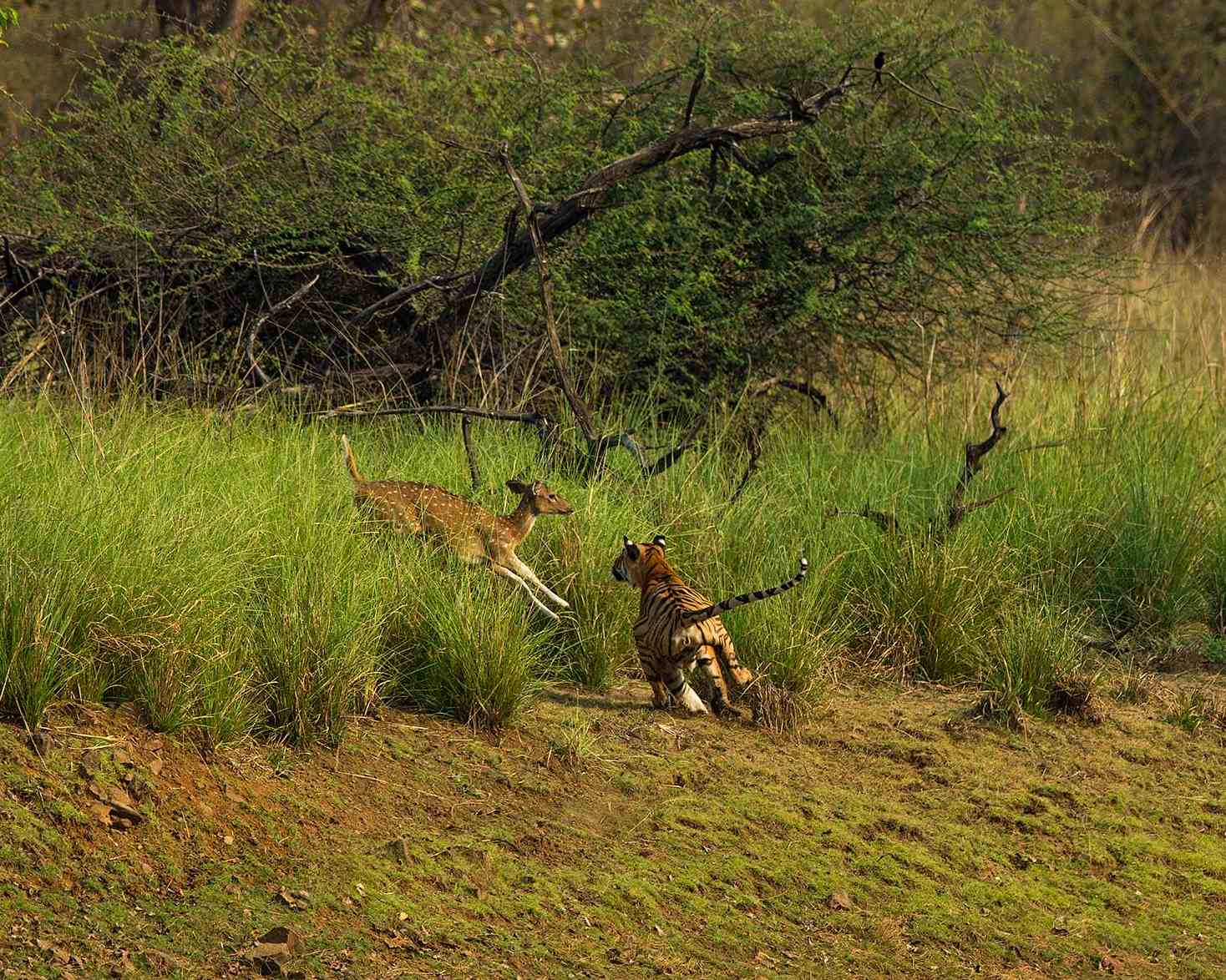
tiger hunt

As a part of celebrating World Wildlife Week I will be sharing information about the importance of saving our Natural Heritage, hopefully trying to create awareness among the growing population of nature lovers and wildlife photographers. My first post makes the correlation between a healthy tiger habitat with our own well-being.

Now let me talk about the importance of deer in our forests.

One of the primary reasons why large areas of forest in India no longer have tigers is because local people have hunted and eaten away most of the prey animals. While the direct poaching of tigers is contributing to their rapid decline now, it is the steady erosion of the tiger’s prey base that has resulted in low numbers of tigers to start with.

An adult tiger needs about 3000 kg of food a year. This translates roughly into one deer-sized animal every week.
Continue reading

Stories from the Field: The Western Ghats In Search of the Bright-headed Cisticola


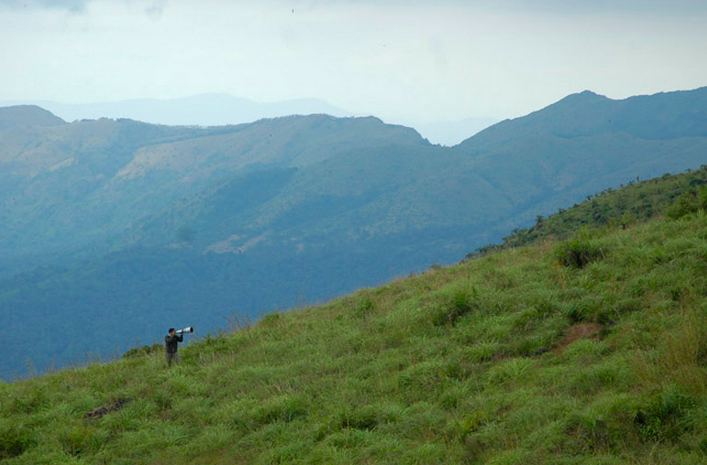
Habitat of the Bright Headed Cistola. That’s me trying to capture one! photo credit: Yathin

I always wanted to visit the Western Ghats and was looking for an opportunity to do so. The weather was a bit cloudy and was drizzling, so we were a bit worried about the weather in Kemmangundi, a hill station in the Chikkamagaluru district in the state of Karnataka. But what the heck, rain or shine, we decided to go ahead with the trip.

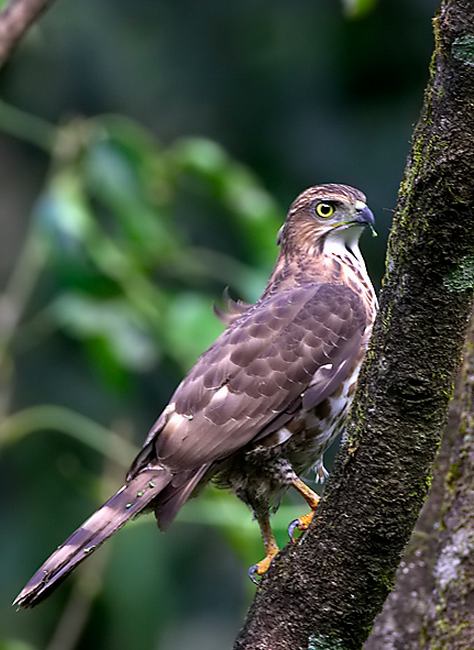
Crested Goshawk

The next morning we were all set to go and capture the brilliant Bright-headed Cisticola. After all, that was the reason for the trip. We decided to visit the same place where Yathin had shot it previously. We took it easy and shot at what ever moved in the sholas. I was a lucky to get an accipiter which we thought was the Besra. But it was later confirmed as Crested Goshawk. Continue reading

Ocean Conservation, Of Vital Interest Among Islanders Everywhere, Gets Its Due From The Relatively Tiny Barbuda

A map of protected marine zones that are being established around the Caribbean island of Barbuda. Credit Waitt Institute

A map of protected marine zones that are being established around the Caribbean island of Barbuda. Credit Waitt Institute

We had not expected to see Dot Earth again, but all of a sudden, thanks again for the surprise Mr. Revkin:

A Small Island Takes a Big Step on Ocean Conservation

Marine life in the Caribbean has been badly hurt in recent decades by everything from an introduced pathogen that killed off reef-grooming sea urchins to more familiar insults like overfishing and impacts of tourism and coastal development.

Some small island states are now trying to restore once-rich ecosystems while sustaining their economies. A case in point is Barbuda, population 1,600 or so, where the governing council on Aug. 12 passed a suite of regulations restricting activities on a third of the island’s waters. The regulations and reef “zoning,” in essence, came about after months of discussions involving fishing communities, marine biologists and other interested parties, facilitated by the Waitt Institute, a nonprofit conservation organization. Continue reading

Tamil Lacewing Butterfly

Photo credits : Aparna P

Photo credits: Aparna P

The Tamil Lacewing Butterfly (Scientific name: Cethosia nietneri) is endemic to the  Western Ghats of India and Sri Lanka, where it commonly cuts through the breezes from the months of June to September. Frequent at the onset of monsoon season, the beautiful insect usually disappears by September or October. Catch it while you can! Continue reading

A Sophie’s Choice Moment For Two Species, One Environment, And No Solomon In Sight

Damian Mulinix — Chinook Observer. A small portion of the cormorant colony as seen from a bird blind.

Damian Mulinix — Chinook Observer. A small portion of the cormorant colony as seen from a bird blind.

You can read about this in a major media outlet, but try another approach for this story. Local journalism is alive and well, and covering complex, important topics through the local lens:

A plan to kill 16,000 double-crested cormorants on East Sand Island has some residents on the North Coast scratching their heads. Although still in the proposal phase, the plan drew many to an open house in Astoria last week to ask questions of the federal agencies involved. “I can’t believe in this day and age we can’t come up with an alternative solution to killing things,” said Tommy Huntington of Cannon Beach. Continue reading

Humanity’s Diet Makes A Difference, Historically As Well As Futuristically

On the timescale of evolutionary history, paleo enthusiasts note, agriculture is a fad. Credit Illustration by Mike Ellis.

On the timescale of evolutionary history, paleo enthusiasts note, agriculture is a fad. Credit Illustration by Mike Ellis.

Since the early days of this blog we have been hungry consumers of environmental long form journalism, of which Elizabeth Kolbert’s New Yorker chronicles are best-in-category. They are also, frankly, almost always depressing.

Nonetheless, they put humanity into its natural context. This not-at-all-depressing chronicle demonstrates the value of that contextualization well:

The first day I put my family on a Paleolithic diet, I made my kids fried eggs and sausage for breakfast. If they were still hungry, I told them, they could help themselves to more sausage, but they were not allowed to grab a slice of bread, or toast an English muffin, or pour themselves a bowl of cereal.

Continue reading

The Yamfly Butterfly

Photo credit : Jose K

Photo credit: Jose K

Yamfly butterflies are found across India and are commonly seen in the Western Ghats. They are especially numerous during the monsoon season in damp forest patches. This species has reddish orange bordered with black on the upper sides of the wings and a lighter yellow on the bottom. At the back of the wing, Continue reading

Common Emigrant Butterfly

Photo credits : Faisal

Photo credits: Faisal

Butterflies are ecologically important due to the role they play in the food chain of a forest ecosystem. They also greatly affect biodiversity, since most butterflies are pollinators of flowering plants. India’s Western Ghats play home to many species of butterfly.

The Common Emigrant Butterfly is Continue reading

Plant-a-Tree at Xandari

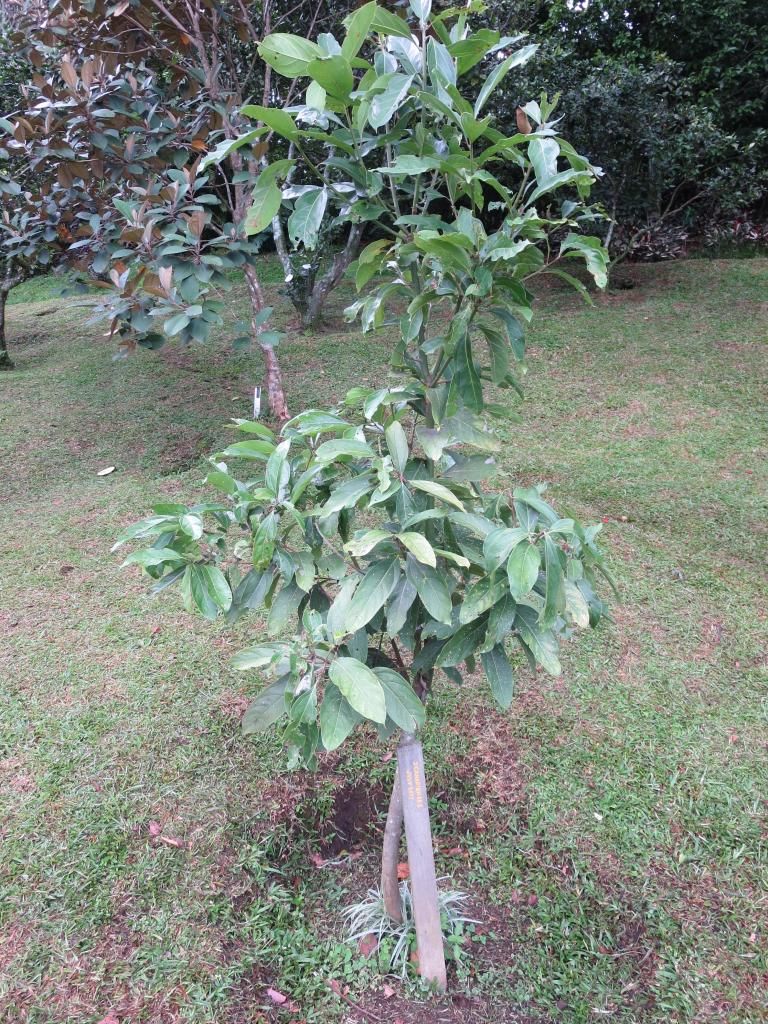
The stake in front that holds the planter’s name says (quite humorously, to my mind): 3 CANADIENSES!

Plant-a-tree programs are real winners: educational, fun, and productive. Next time you visit Xandari (or another sustainable or eco-friendly hotel), be sure to ask about the opportunity about the opportunity to plant a sapling. At Xandari, plantings are usually done in the orchard or in one of the old coffee plots. Everybody who plants a tree has a small wooden stake erected near the spot, commemorating the event and recognizing the effort to make the world a little bit greener. Continue reading

Citizen Science in Belize – Update on Lionfish Jewelry: Part 2

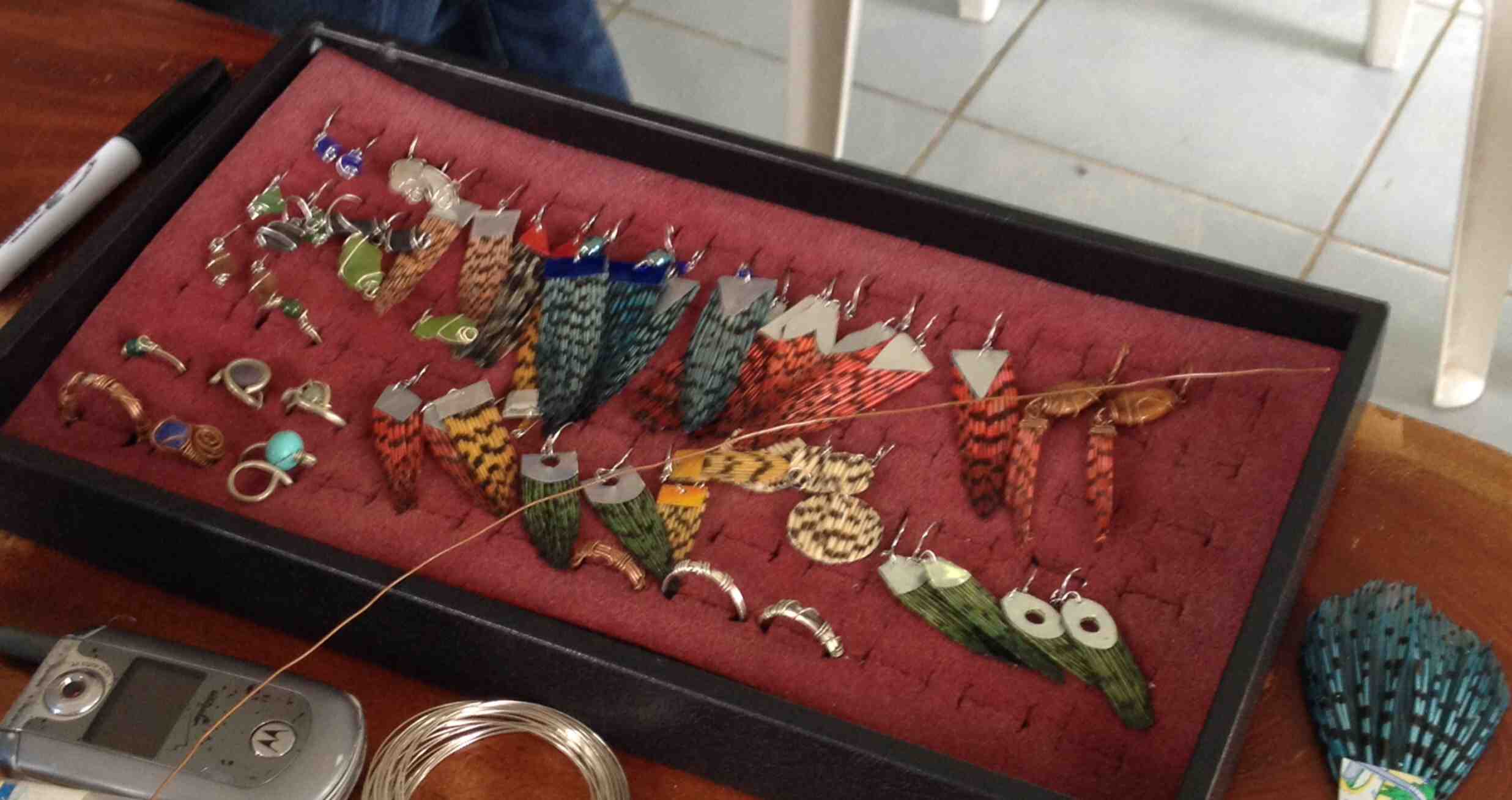
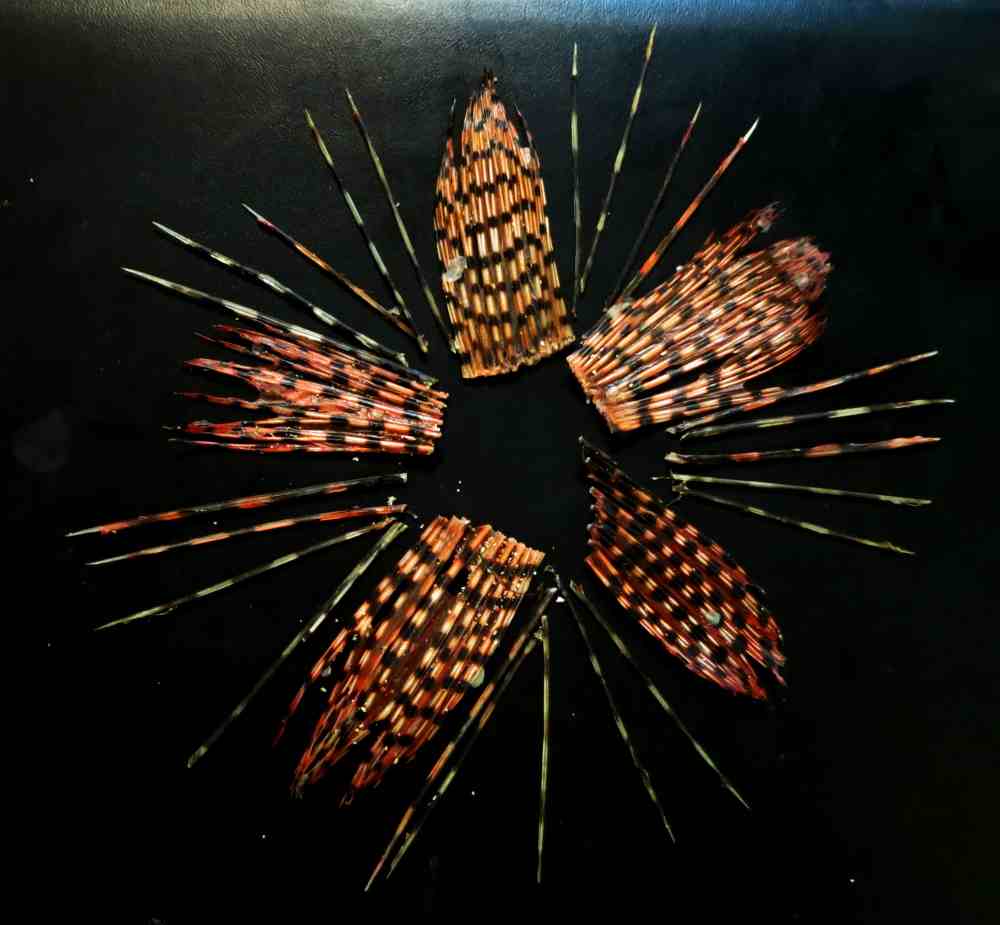
Assorted lionfish jewelry from Palovi Baezar, Punta Gorda, Belize

Assorted lionfish jewelry from Palovi Baezar, Punta Gorda, Belize

In Part 1 of this post I wrote about my recent visit to Belize to help with further development of the nascent  market for lionfish jewelry; one of several market-based approaches to addressing the threat to Southwest Atlantic marine ecosystems posed by the invasion of this non-native species. I noted that the market is most advanced in the area around Punta Gorda, in Southern Belize, in large measure due to the support provided by ReefCI which has provided training on jewelry making to a group of local women and is supplying them with lionfish spines, fins, and tails as well as marketing assistance.

Lionfish spines, fins, and tails ready for jewelry

Lionfish spines, fins, and tails ready for jewelry

While ReefCI’s involvement has been instrumental in getting things started, further development and expansion of the market will require engagement with artisans and women’s groups in other parts of the country, particularly areas closer to major tourist markets. Interventions are also needed to develop a reliable and sustainable supply chain for lionfish jewelry production and sales. I was pleased to hear from one of the jewelry makers in Punta Gorda that a local fisherman had approached her about selling lionfish tails. This was music to my ears, as one of the motivations behind the lionfish jewelry idea has been to up return to fishers in order to create added commercial incentive for them to hunt lionfish (the fish cannot be caught using conventional fishing methods such as hook and line or nets, but must instead be speared or hand-netted by diving). Continue reading

Growing Fruit and Vegetables at Xandari

The view from the path right before reception

Much of the fresh, rich compost that Xandari produces from all sorts of organic material is used as the perfect substrate to grow delicious fruits and vegetables on property, both in greenhouses and out in the open. During our tour a few days ago with José Luis, James and I saw dozens of tomatoes (three different varieties), lots of lettuce, citrus and other tropical fruits, green beans, and much more.

Continue reading

Citizen Science in Belize – Update on Lionfish Jewelry: Part 1

Freshly dried lionfish fins and tails. Photo: Polly Alford, ReefCI

I’ve written in previous posts about the initiative to develop a market for lionfish jewelry as one of a number of commercially sustainable approaches to fighting this invasive species that is threatening marine ecosystems throughout the Caribbean, the Gulf of Mexico, and the Southern Atlantic seaboard of the United States. In my last post, I mentioned that the idea is beginning to take off in Belize.  I was able to observe this first-hand last month, spending two and a half weeks in the country.  During my stay I had the opportunity to meet local artists who are making lionfish jewelry and to participate in several workshops to share techniques and designs.  Continue reading

Ichnology, Xandari-Style

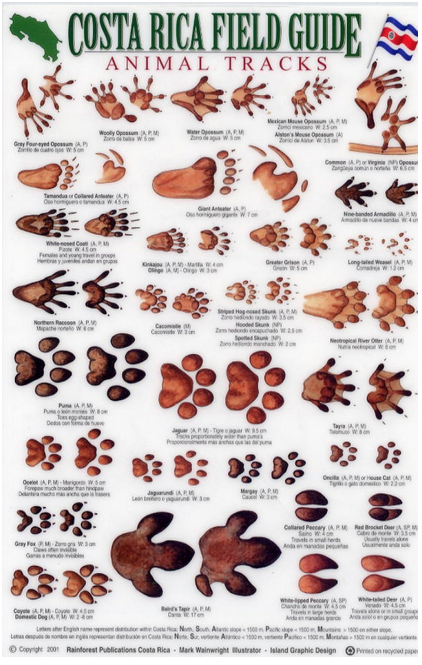
Ichnology is the study of animal traces—commonly tracks, but also anything else that organisms leave behind in their activities (for example, burrows, nests, scat, feeding remnants, or territory markers). It is often far easier to discover an animal’s presence through tracks than direct visual sighting, especially for shy or nocturnal mammals. “An animal can only be in one place at a time, its tracks can be everywhere,” one of my environmental science professors sometimes remarked in support of this principle. Indeed, around Emory’s campus (Atlanta, Georgia) I found tracks on stream banks that belonged to animals I had never actually clapped eyes on in the flesh. Prized among those were a  Continue reading

Saving Species–One Paper, One Video, One Course, And One Initiative At A Time

saving-species-logo-long-small

We thank Stuart Pimm for his ongoing excellent contributions to conservation through science and education, as well as creative activism, and congratulate him and his colleagues for their most recent publication:

new scientific paper was published today in the prestigious journal Science and it has important findings for biodiversity. Though it reaffirms what we already know—that there is a global extinction crisis and it is worse than we believed—it also details how technology and smart decision-making are offering hope for endangered species and their habitats. Continue reading

About Those Dancing Frogs


Thanks to National Geographic’s website for extending the details of this  news we first shared here:

…The spectacular haul more than doubles the number of Indian dancing frogs, a family named for the bizarre courtship displays of their foot-waving males, to 24 species. Continue reading

Fiji Shark Dive

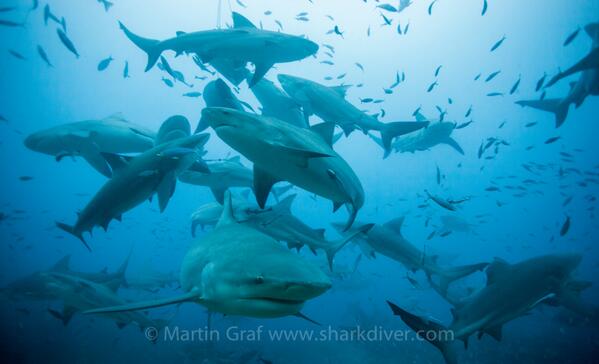
Photo Credit: Martin Graf, Sharkdiver.com

Photo Credit: Martin Graf,  Sharkdiver.com

In an earlier post I wrote about how more and more countries are waking up to the benefits of preserving natural capital, in recognition of the economic value that can be derived through ecotourism. I noted, in particular, the value that can be generated through ecotourism ventures focused on iconic species such as sharks, manta rays, and sea turtles. I cited a number of studies and calculations that demonstrate that the ecotourism value of these animals far outweighs their one-time economic value if harvested for food or body parts.

Earlier this week, I had an opportunity to experience one such venture first hand, via the famous Fiji Shark Dive. Over the course of two dives I was treated to the spectacle of 40+ Bull Sharks and dozens of Blacktip and White Tip Reef Sharks, up close and personal!  What an amazing experience to see these magnificent animals – some upwards of 8 feet long –swimming only inches away.  Click here for a video (check out the background music!) courtesy of Martin Graf, one of the pioneers of the Shark Diving industry, who just happened to be in Fiji this week and was along on my dives. Continue reading

Controlling Invasive Lionfish – Update on Market Solutions: Part 2/2 — Lionfish Art

spines and tails-photo3

Array of dried lionfish spines and tails -ready for jewelry use Credit: ReefCI

In Part 1 of this post regarding market-based solutions to fighting the lionfish invasion that is threatening coral reef and other marine ecosystems throughout the Caribbean, Gulf of Mexico, and Southern Atlantic Seaboard of the United States, I wrote about the challenge of developing commercially sustainable strategies for undertaking the systematic removals that are needed to keep lionfish populations under control. I discussed the need to develop a series of vertical markets, pointing to promotion of lionfish as a seafood choice as the most obvious of these. Capture of juvenile lionfish for the aquarium trade as another.  A third market, and one in which I’m personally involved, is use of lionfish spines and tails for jewelry and other decorative items.  Continue reading

Controlling Invasive Lionfish – Update on Market Solutions: Part 1/2


I’ve posted previously about the lionfish invasion that is threatening coral reef and other marine ecosystems throughout the Caribbean, Gulf of Mexico, and Southern Atlantic Seaboard of the United States. As I noted in earlier posts, it is the general consensus of the scientific and conservation community that eradication of lionfish from the Atlantic is impossible. There have been some anecdotal reports that native predators such as groupers and snapper are beginning to recognize lionfish as prey, but there is no systematic evidence, as of yet, of widespread predation. So the conclusion remains that human intervention is the only way to keep lionfish populations in check. The good news is that there is growing evidence that systematic removal efforts can indeed be effective in controlling lionfish populations and in reversing their negative impact on reef health. A study published earlier this year found that populations of snapper and grouper rebound by 50-70 percent once lionfish are removed. And it isn’t necessary to remove 100 percent of lionfish for recovery of native fish populations to take place; the study found that reduction of lionfish populations by as little as 75 percent will do the trick. This is important, given difficulties in reaching lionfish at depths beyond the limits of divers.  Also, removal efforts may become more difficult over time, as lionfish on reefs where regular culling takes place begin to wise up and hide from divers (click here for a cute poetic rendition of findings of a study on this behavioral adaptation).

Thus the challenge is to find a sustainable basis on which to undertake the systematic removals that are needed to keep lionfish populations under control. Continue reading

Natural Capital Valuation and Protection of Marine Megafauna

Photo © Fabrice Jaine

I’ve noticed a number of positive and interesting developments as of late in the area of marine species protection, pointing to an increasing recognition, by policymakers, of the value of natural capital and associated ecosystem services, particularly the value arising from ecotourism.

In February of this year, the Government of Indonesia granted full protection to manta rays within its nearly 6 million square kilometer exclusive economic zone (EEZ), making it the world’s largest sanctuary for manta rays. This reverses the trend of the past three decades wherein Indonesia has had the dubious distinction of being home to the world’s largest fishery for sharks and rays. Why the reversal? It seem that studies showing that the ecotourism value of a manta ray is an estimated $1 million over its lifetime, as compared to the onetime value of several hundred dollars for its gill rakers and meat played a key role in persuading policymakers to take action to protect the iconic species.

A few weeks later, the President of Palau announced that the country’s entire 200 nautical mile EEZ will be declared a marine sanctuary and closed to commercial fishing and seabed mining.  This follows a move a few years earlier to declare Palau a shark sanctuary. In explaining the reasoning behind the moves Palau’s president noted that a dead shark is worth several hundred dollars, whereas a live shark is worth $1.9 million in tourism during its life span, and that his country will promote scuba diving, snorkelling and ecotourism as an alternative income to commercial fishing. Continue reading

Sights of Kerala

DSC_1811

Photo credits: Christoph Hurni

DSC_2375

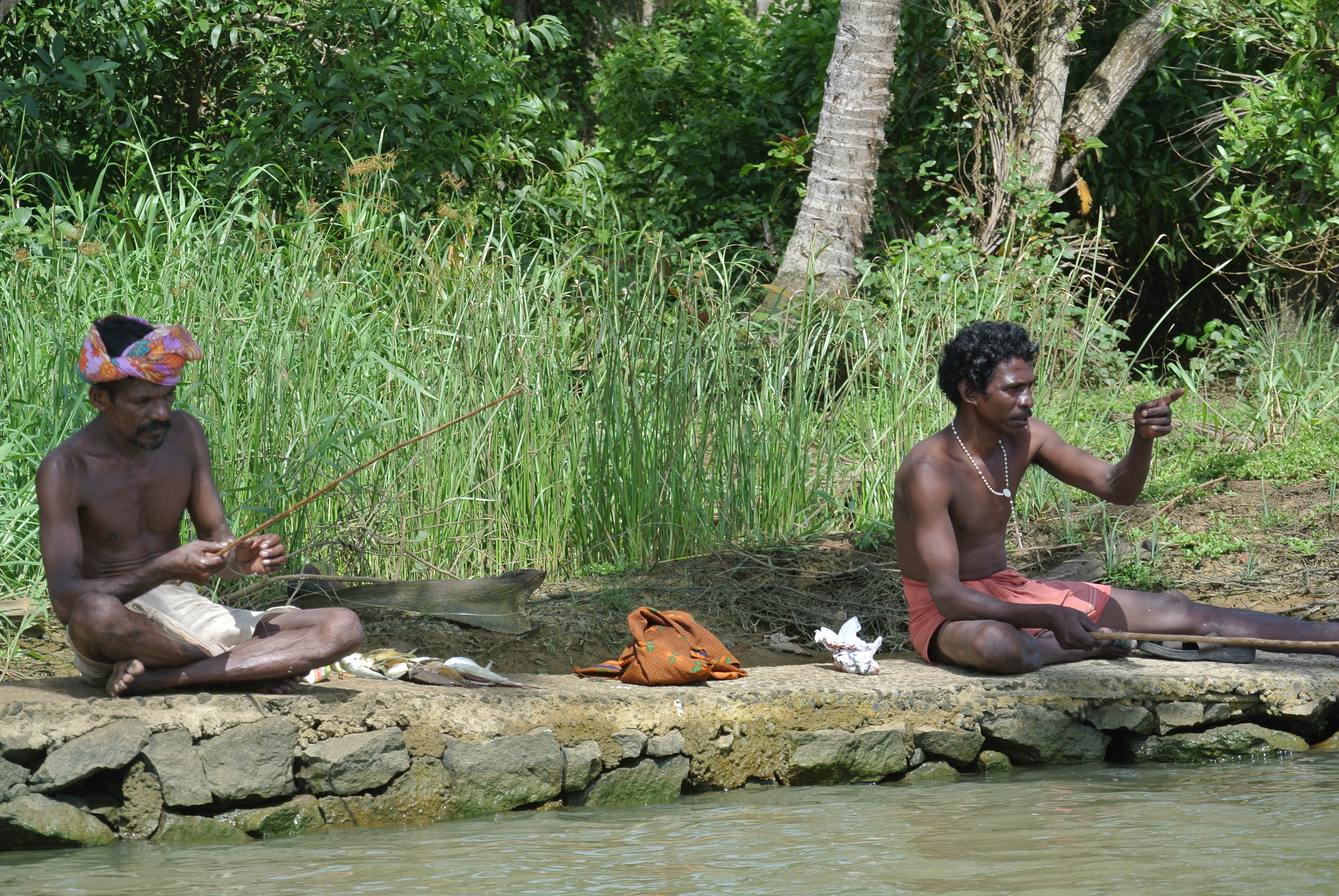
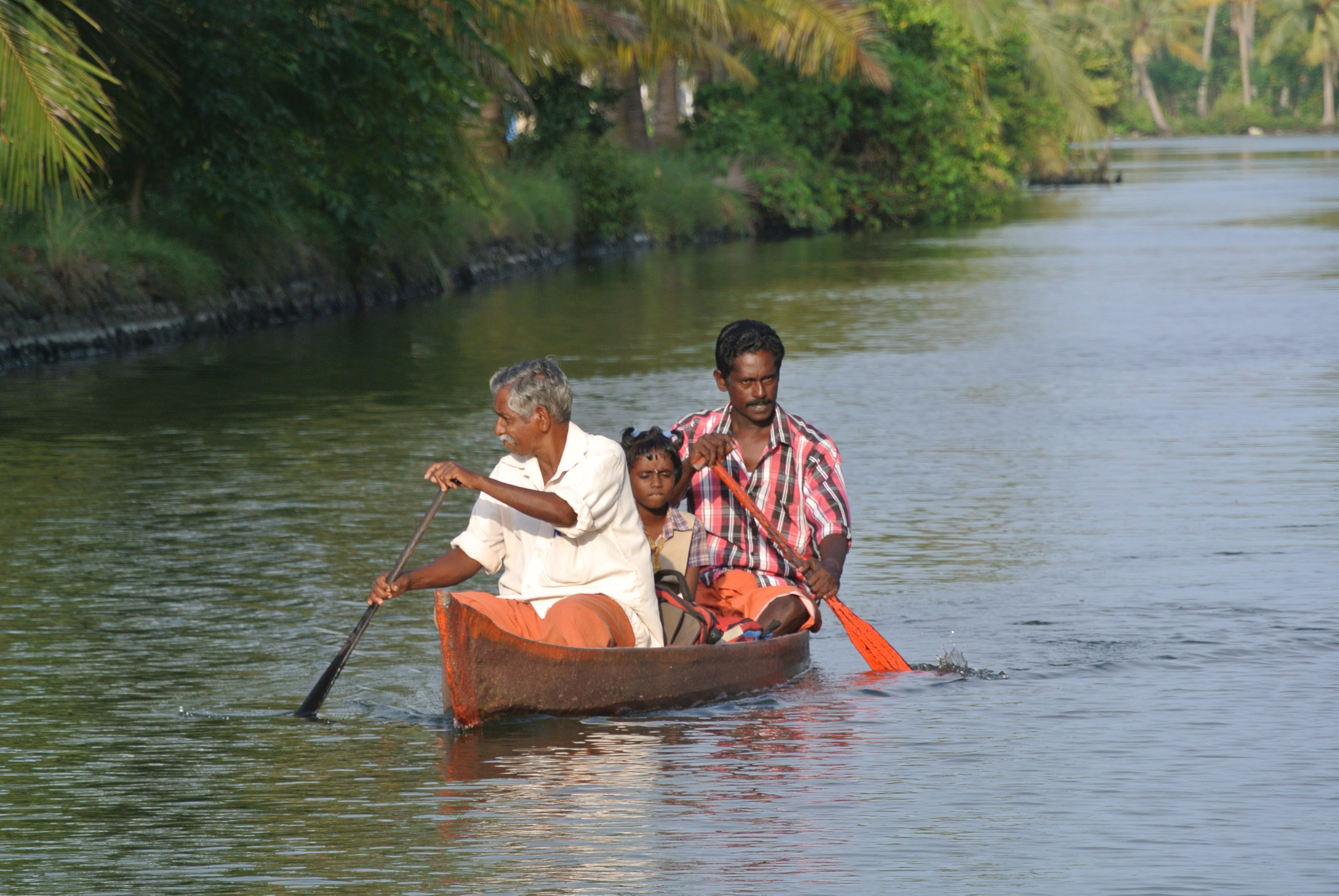
Photographs more than words are often able to capture the true essence of a place, and Kerala is no exception. The backwaters are an iconic example of the region. The rivers and canals that flow silently only kilometers from the coast, sometimes acting as a carrier for boats and people serving as means of transportation and leisure, and an ecosystem where fishermen make their livelihoods.  Continue reading