Ted Greene’s Treetime

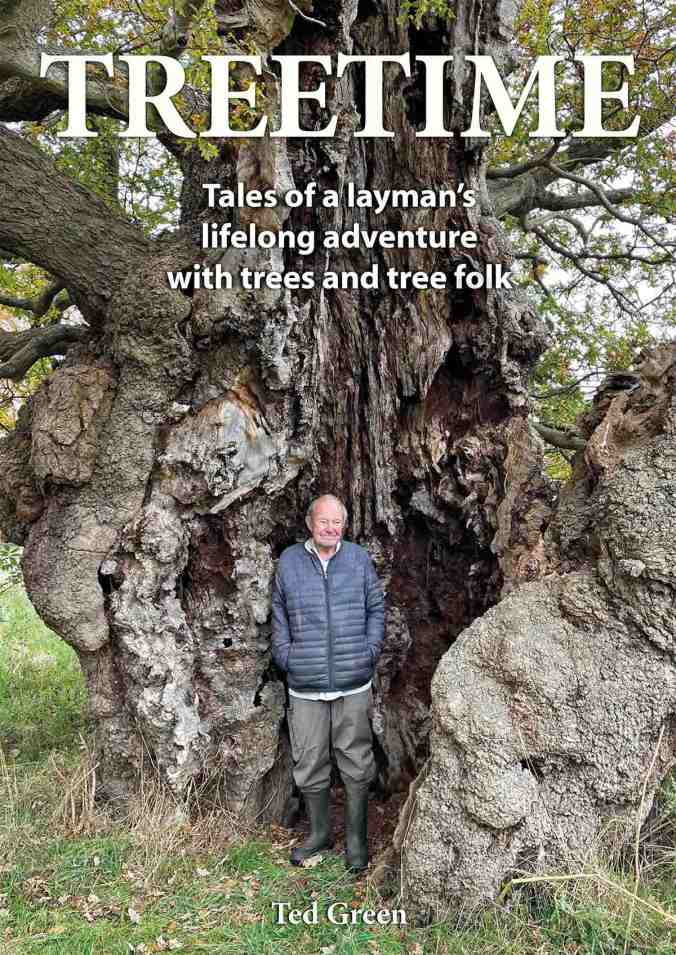
Thanks to the Guardian for bringing the above book to our attention:

Ted Green, a conservation adviser to the crown estate at Windsor, has a provocative take on our ‘living heritage’

Ted Green is a rebel. He calls sheep “land maggots”. A horse-riding centre is “a dog-food complex”. And the ancient tree expert’s new book includes a photo of him sticking up two fingers at a portrait of Margaret Thatcher. Continue reading

More Honey & Bees, Also

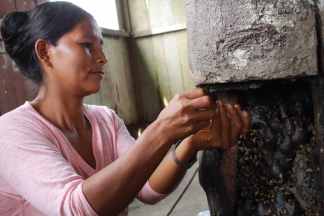
Tarkis Ríos Ushiñahua harvesting honey from stingless bees in a tree-trunk hive, at her home in Puerto Huamán in the Peruvian Amazon, 2019. [Hannah Hutchinson]

Along with anything else to get 2024 off to a good start, an article by Andrew Wingfield and Michael P. Gilmore that we missed from last year. The topic is one that we have only briefly touched on a couple times. The wider world of honey and the bees responsible for it are topics we hope to share more of this year.

To begin, let this bring some joy:

A Sweet and Potent Harvest

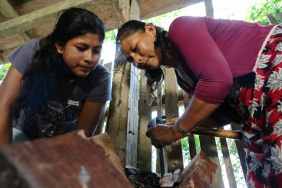
Tarkis Ríos Ushiñahua teaches her daughter to divide a hive, 2022. [Dylan Francis]

For the Maijuna of the Peruvian Amazon, harvesting honey from stingless bees is bringing prosperity and empowerment. Local beekeeping might also help preserve a vast ancestral forest.When Tarkis Ríos Ushiñahua collects honey from one of her beehives, she wears no protective clothing and uses just one tool, a large plastic syringe. 1 As she lifts the lid from the wooden box housing the hive, the bees swarm. They buzz around her face, land on her back, and settle in strands of her straight black hair, but they do no harm — these bees are stingless.

The bee yard of Loida Ríos Tamayo and Saúl Peterman Mosoline, 2021. [Enrique Redondo Navarro]

The slender tip of Ríos Ushiñahua’s syringe fits neatly inside the hive’s honeypots, brownish, papery-looking pouches that the bees have fashioned from wax and plant resins. Continue reading

Authentica, Nicoya Peninsula

Traveling by car from Monteverde to Palo Verde National Park should take about 90 minutes

The Nicoya Peninsula is one of the Blue Zones we have mentioned previously. For our family there is a memorable connection to the wetlands area where we are opening a shop this month, just as there was in Tamarindo. In 1998 we had a dozen family members visiting and organized a small bus to transport us to Arenal, Monteverde, and onward to the Palo Verde National Park. Continue reading

Rubber-Induced Destruction

Satellite images of Cambodian forest in 2000 (left) and, after being cleared, in 2015 (right). Forests were replaced by a grid of rubber plantations, as well as croplands. Source: NASA

If you have never seen ecosystem destruction firsthand, count yourself lucky. I witnessed, during visits over several years, as 1,000 acres of primary forest ecosystem was destroyed to make way for a rubber plantation. It was horrifying. And I am further horrified to read how what I witnessed was only a small part of a much bigger rubber-induced destruction (thanks as always to Fred Pearce):

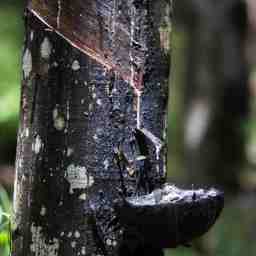
Rubber resin collected from a tree near Lubuk Beringin, Indonesia. TRI SAPUTRO / CIFOR

How Mounting Demand for Rubber Is Driving Tropical Forest Loss

The growing market for rubber is a major, but largely overlooked, cause of tropical deforestation, new analysis shows. Most of the rubber goes to produce tires, more than 2 billion a year, and experts warn the transition to electric vehicles could accelerate rubber use.

The elephants are gone. The trees are logged out. The Beng Per Wildlife Sanctuary in central Cambodia is largely destroyed, after being handed over by the government to a politically well-connected local plantation company to grow rubber. Continue reading

Power Rangers With A Different Approach

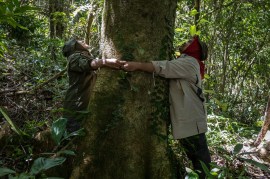
Women rangers hugged a tree while collecting data during a forest patrol near the village of Damaran Baru, in Aceh Province, Indonesia. Ulet Ifansasti for The New York Times

We thank Muktita Suhartono for the story and  Ulet Ifansasti for the photographs:

Female Rangers ‘Don’t Go All Alpha Like the Men’ to Protect a Forest

Rather than take a confrontational approach with trespassers looking to farm or log in a tropical rainforest in Indonesia, teams of women rangers try dialogue first.

Asmia, one of 15 rangers whose job is to protect nearby forests from squatters who want to clear trees for timber or to farm the fertile soil.

Riding her motorbike while balancing a backpack, a wok and a sharp cleaver, Asmia expertly maneuvered her way up a dangerous cliffside: a three-mile trip along a precipitous dirt path, barely 40 inches wide, to reach the mouth of the forest.

Asmia is one of the 15 members of a team of rangers — 10 of whom are women — whose job is to protect their village forest in Aceh Province in Indonesia from the squatters who want to clear the trees for timber or to farm the fertile soil.

Two teams of rangers, each consisting of five women and two men, take turns each month on five-day forest patrols.

“Here, we once fought with a squatter, asking him to stop the encroachment,” Asmia said, pointing as she walked beneath the thick canopy of trees that shadow her rounds. “He insisted on clearing the land, as he wanted to grow coffee. He was persistent. But we talked him out of it.” Continue reading

Newly Revised For Planting Plans

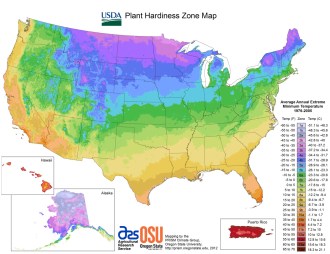
Source: U.S. Department of Agriculture

The topics of what to plant, when to plant, where to plant are constantly with us in Costa Rica.  Thanks to Julia Simon at National Public Radio (USA) for this note on gardeners in the USA using an online resource to rethink their planting plans:

‘It feels like I’m not crazy.’ Gardeners aren’t surprised as USDA updates key map

A newly updated government map has many of the nation’s gardeners rushing online, Googling what new plants they can grow in their mostly warming regions. Continue reading

Invasive Pythons Are Winning, Get Your Game On

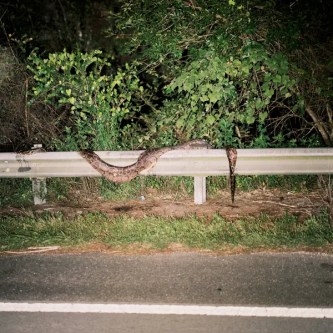
A Burmese python that was hit by a car. Zack Wittman for The New York Times

Nearly 12 years to the day since the first spectacular article we read on invasive species, we still watch for these stories. When it is invasive-hunting season, we take notice when new initiatives are announced:

Her Livelihood? Hunting Pythons in the Dead of Night.

Amy Siewe teaches people how to find and euthanize invasive Burmese pythons, which have been so successful at adapting to Florida that they appear here to stay.

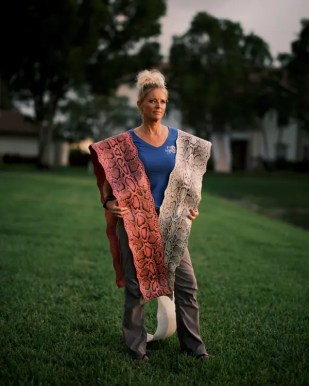
On a clothing rack in Ms. Siewe’s living room are a dozen of skins, dyed deep hues by a tannery that helps her make python-leather products, including Apple Watch bands. Zack Wittman for The New York Times

An unexpected chill can fall over the Florida Everglades late at night. Stars speckle the sky. Frogs croak and croak, their mating calls echoing in the air.

It is all peace and wonder until you remember why you are out at this hour, on the flatbed of a pickup truck outfitted with spotlights, trying to find invasive creatures lurking in the shadows.

A python hunt might evoke images of hunters trudging through swamps and wresting reptiles out of the mud. In reality, it involves cruising the lonely roads that traverse the Everglades in S.U.V.s, hoping for a glimpse of a giant snake. It is strange work, straining on the eyes, brutal on the sleep schedule. Continue reading

Removing Environmental Protections Will Not Seem So Clever In Hindsight

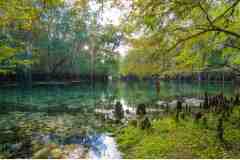
Sunset in the trees at Manatee Springs, Florida. Photograph: Michael Warren/Getty Images/iStockphoto

Oliver Milman, again, brings our attention to an environmental activism that deserves attention, this time for all the wrong reasons:

Experts fear half of the 290m wetland acres have lost federal protection and could be at risk from developers

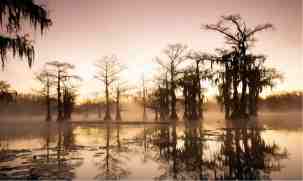
Lake Caddo, on the border between Louisiana and Texas, is a beautiful cypress swamp. Photograph: wanderluster/Getty Images

Often dismissed as dismal wet bogs and rampantly cleared since European arrival in the US, the underappreciated importance of wetlands has been placed into sharp relief by a supreme court ruling that has plunged many of these ecosystems into new peril.

The extent of wetlands, areas covered or saturated by water that encompass marshes, swamps and carbon-rich peatlands, has shrunk by 40% over the past 300 years as the US drained and filled them in for housing, highways, parking lots, golf courses and other uses. Globally, wetlands are disappearing three times faster than forests are. Continue reading

Pop-up Lake At Badwater Basin Salt Flats, Death Valley

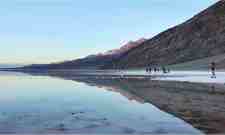
Visitors gather at the sprawling temporary lake in the Badwater Basin salt flats of Death Valley national park, California. Photograph: Mario Tama/Getty Images

We had been wondering what the place might look like after Burning Man brought the rare weather to our attention:

Death Valley visitors delight in rare ephemeral lakes left behind by storm

Shimmering bodies of water have appeared in the sand dunes of the recently reopened national park after a summer deluge

After months of closure, visitors to Death Valley national park are being greeted by stunning new features, including lakes left behind by a ferocious summer deluge. Continue reading

Species-Specific Safe Spaces

O’Keefe’s team designed bat boxes that offer a wide range of interior temperatures. Joy O’Keefe

We have pointed to stories about activism and entrepreneurship in the interest of protecting animal habitat plenty of times, but not so much on the science of the field work. As part of its Climate Desk collaboration Mother Jones shares this article originally published by Undark, written by Marta Zaraska, that addresses some of the science of species-specific safe spaces:

Inside Scientists’ Race to Create Safe Refuges for Animals

Climate crisis is destroying habitats. Can technology help create new ones?

Conservation ecologist Ox Lennon simulated stacks of rocks that would create crevices big enough for skinks, but too small for mice. Courtesy Ox Lennon

In 2016, Ox Lennon was trying to peek in the crevices inside a pile of rocks. They considered everything from injecting builders’ foam into the tiny spaces to create a mold to dumping a heap of stones into a CT scanner. Still, they couldn’t get the data they were after: how to stack rocks so that a mouse wouldn’t squeeze through, but a small lizard could hide safely inside. Continue reading

Fireflies At Risk

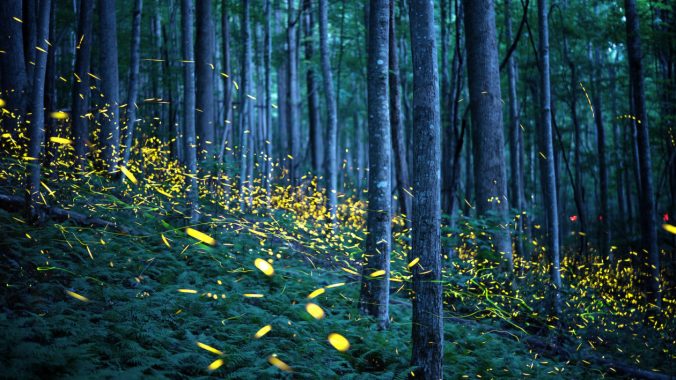
Fireflies in Great Smoky Mountains National Park. RADIM SCHREIBER

Fireflies being among the more charismatic insects, they and other glowing creatures have been covered in our pages second only to bees. Our thanks to Ted Williams, writing for Yale e360, for explaining their specific challenge:

A Summer Light Show Dims: Why Are Fireflies Disappearing?

Fireflies — whose shimmering, magical glows light up summer nights — are in trouble, threatened by habitat destruction, light pollution, and pesticide use. With 18 species now considered at risk of extinction in North America alone, recovery efforts are only just beginning.

For millions of people around the globe, fireflies have been a big part of the magic of spring and early summer nights. They certainly were in our family. When my children were young, our field in central Massachusetts blazed with fireflies. Continue reading

Fungi & Fireproofing

Mycologist Zach Hedstrom sprays a spore-infused liquid to inoculate debris from forest thinning.

Inside Boulder Mushroom’s laboratory, a refrigerator houses an array of agar plates containing diverse mycelium cultures.

We have paid attention to mycological wonders for long enough that surprises are rare; but they happen. Stephen Robert Miller’s reporting, with photography by Jimena Peck were published in the Washington Post and came to our attention by way of the Food & Environment Reporting Network, which is where you can read the entire article:

How mushrooms can prevent megafires

Thinning forests to prevent fires produces a lot of sticks and other debris, which also pose a fire risk. In Colorado and elsewhere, scientists are using fungi to turn those trimmings into soil.

Overgrown stands of lodgepole pine are a risk for megafires. Thinning the stands simulates the effects of a natural fire but also generates a large amount of biomass, called “slash,” which can also fuel forest fires.

If you’ve gone walking in the woods out West lately, you might have encountered a pile of sticks. Or perhaps hundreds of them, heaped as high as your head and strewn about the forest like Viking funeral pyres awaiting a flame.

These slash piles are an increasingly common sight in the American West, as land managers work to thin out unnaturally dense sections of forests — the result of a commitment to fire suppression that has inadvertently increased the risk of devastating megafires. Continue reading

Insect Oases

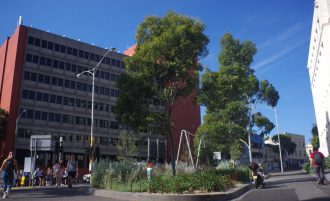
A small patch of native plants in Melbourne, Australia, draws native insects. MATA, ET AL.

Thanks to Yale e360 for this short story on small wonders:

Even a Small Patch of Native Greenery Can Give a Big Boost to Local Insects

In cities, a little native greenery can go a long way. Australian scientists found that, after adding native shrubs to a planting in Melbourne, the number of insect species at the site increased sevenfold. Continue reading

Beechnut & Beaver Hope

Nearing the end of the northern summer, one for too many of the wrong kind of record books, some notion of hope is more than welcome. This edition of his newsletter offers some:

Beavering Away

With Your Help. (An annual update!)

In the guise of my annual report on our nifty online community I’m going to show you my vacation pictures! Lucky you!

It’s possible I’m just feeling guilty because I took a couple of days off in this Summer To End All Summers. But Sunday and Monday, while Hillary was introducing southern Californians below the age of 85 to the concept of ‘tropical storm,’ I went on a wander with an old friend through the middle of the Wilcox Lake Wild Forest in New York’s Adirondack Mountains, a splendidly remote chunk of land that I’ve lived on the edge of, off and on, for much of my life, and which I never tire of exploring. Continue reading

Honey Bee Dangers & Mythology

Gorazd Trusnovec inspects a beehive at the B&B Hotel Ljubljana Park in Ljubljana, Slovenia.

Thanks to this article by David Segal, with photographs and video by Ciril Jazbec, we realize now that even after our dozens of links to articles about bees, one key point was never on our radar. Our beekeeping/honey-making friends in Costa Rica inform us that the opposite is an issue here–in the entire country there are only 800 beekeepers and most of them are small scale hobbyists, and that a national authority (SENASA) controls the density of hives per area:

Mr. Trusnovec at home. “I would say that the best thing you could do for honey bees right now is not take up beekeeping,” he says.

In Slovenia and around the world, conservationists try — and mostly fail — to combat the widespread belief that honey bees are in danger.

When the B&B Hotel in Ljubljana, Slovenia, decided to reinvent itself as an eco-friendly destination in 2015, it had to meet more than 150 criteria to earn a coveted Travelife certificate of sustainability. But then it went step further: It hired a beekeeper to install four honey bee hives on the roof. Continue reading

Antarctica Off The Bucket List

Illustration by The Atlantic. Source: Getty.

During my two years working in southern Chile I was close several times to going further south. In spite of my disappointment at the time, in hindsight I am fine with not having made the journey. Thank you, Sara Clemence, for getting that clear in my head:

Take Antarctica off your travel bucket list.

On the southernmost continent, you can see enormous stretches of wind-sculpted ice that seem carved from marble, and others that are smooth and green as emerald. You can see icebergs, whales, emperor penguins. Visitors have described the place as otherworldly, magical, and majestic. The light, Jon Krakauer has said, is so ravishing, “you get drugged by it.”

Travelers are drawn to Antarctica for what they can find there—the wildlife, the scenery, the sense of adventure—and for what they can’t: cars, buildings, cell towers. They talk about the overwhelming silence. The Norwegian explorer Erling Kagge called it “the quietest place I have ever been.” Continue reading

The Diligence Of Local Bees

Native Bees Yield Hardier Flowers Than Honey Bees, Research Finds

Bees getting the scientific attention they deserve, our thanks to Yale e360 for summarizing and sharing these findings:

Native Bees Yield Hardier Flowers Than Honey Bees, Research Finds

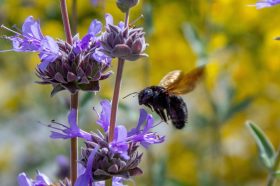
Flowers pollinated by native bees produce fitter offspring than flowers pollinated by honey bees, according to a new study carried out in San Diego, California. Continue reading

Panthera’s Puma Program

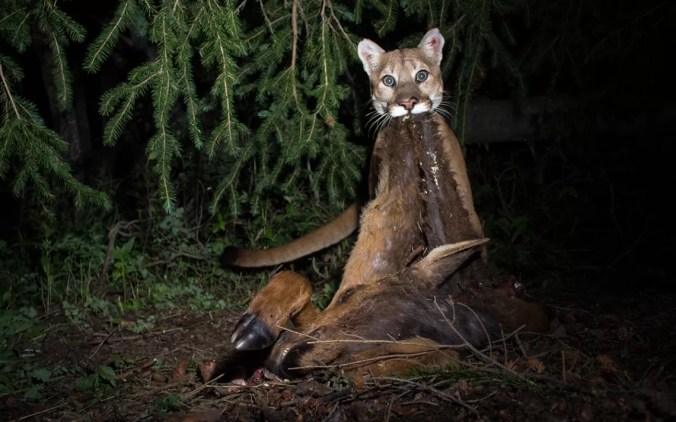
Puma in Wyoming. | Photo by Neal Wight, courtesy of Panthera

Thanks to Grace van Deelen for this article in the magazine of the Sierra Club:

Mountain Lions Are Murder Gardeners

By leaving carcasses, mountain lions create lush landscapes for future victims that could attract prey

If you’re hiking in Yellowstone and stumble upon an unusually lush landscape, you might have found a mountain lion’s garden. Continue reading

Indigenous Food Foraging

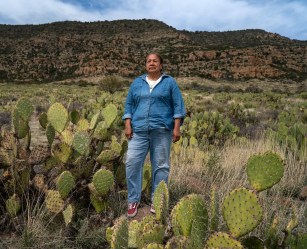
Prickly pear cacti, which produce Twila Cassadore’s favorite fruit. Photograph: Gabriela Campos/The Guardian

Samuel Gilbert was in Bylas, Arizona, on the San Carlos Apache Reservation to report this article, which contains excellent accompanying photographs by Gabriela Campos.

We thank the Guardian for this coverage of indigenous heritage:

‘It healed me’: the Indigenous forager reconnecting Native Americans with their roots

Twila Cassadore hopes teaching Western Apache traditional foodways can aid mental, emotional and spiritual health
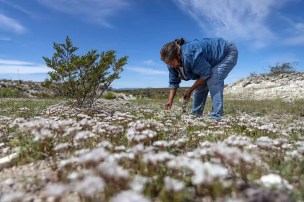
Twila Cassadore gathers wild pearl onions on a foraging trip in the San Carlos Apache Reservation in April. Photograph: Gabriela Campos/The Guardian

On a warm day in April, Twila Cassadore piloted her pickup truck toward the mountains on the San Carlos Apache Reservation in Arizona to scout for wild edible plants. A wet winter and spring rains had transformed the desert into a sea of color: green creosote bushes topped with small yellow flowers, white mariposa lilies, purple lupines and poppies in full bloom.
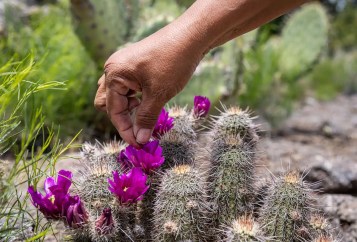
Cassadore picks the petals off a flowering cactus during a foraging trip. She uses the petals in salads. Photograph: Gabriela Campos/The Guardian

Cassadore and I drove up a rough dirt road that used to be an old cattle trail, passing through various ecosystems, moving from Sonoran desert to grasslands and piñon-juniper woodlands. In each area, Cassadore would stop to gather desert chia seeds, cacti flowers and thistles.

Cassadore stopped her truck beside a three-leafed sumac bush brimming with fruit. Continue reading

Snow Lab & Melting

Water released from Hetch Hetchy Reservoir’s O’Shaughnessy Dam flows into the Tuolumne River. The reservoir currently supplies drinking water to 2.7 million San Francisco Bay Area residents. Photograph by Aubrey Trinnaman

We are gratified to know of such a place as a snow lab, and that their scientists share their knowledge in language we can all understand:

California’s Snow Is Melting, and It’s a Beautiful Thing

By Andrew Schwartz.

Dr. Schwartz is the lead scientist and station manager at the University of California, Berkeley, Central Sierra Snow Lab.

Photograph by Aubrey Trinnaman

SODA SPRINGS, Calif. — My fellow Californians often remark that the weather in this state seems it has been reduced to two seasons, both defined by natural disasters: In summer and fall, huge, intense wildfires rip their way across dry land, and winter and early spring bring intense atmospheric rivers with heavy rainfall, floods and landslides, along with winds that take down trees. Continue reading