Transformative Practices For A Better World

Christophe Archambault/AFP/Getty Images

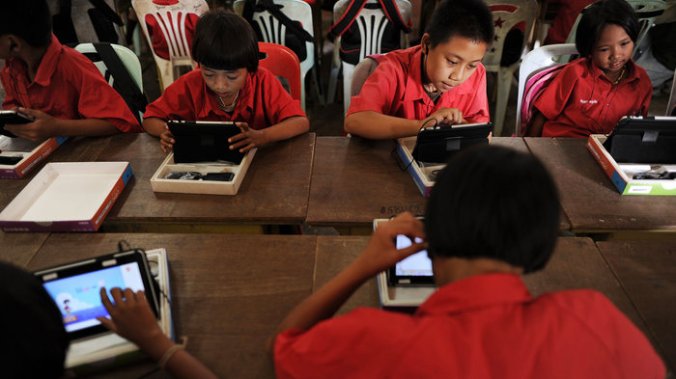
Students use tablets in a classroom in Mae Chan, a remote town in Thailand’s northern province. Christophe Archambault/AFP/Getty Images

Scanning the developing world, anywhere that poverty puts lives at risk, it is useful to have a short list of particularly transformative practices as in this four minute story podcast from National Public Radio (USA):

There are so many projects in global health that sometimes it’s hard to figure out which ones are the most important.

So Lawrence Berkeley National Laboratory set out to list the 50 breakthroughs that would most transform the lives of the poor, especially in sub-Saharan Africa and South Asia. Shashi Buluswar, an author of the study, spoke with Morning Edition‘s Renee Montagne. Here’s a sampling:

A low cost, fuel-free way to desalinate water. Many people in the world do not have enough fresh water to grow crops, and more and more fresh water runs off into oceans. Desalination creates usable water out of salty or brackish sources. “Right now it’s tremendously energy intensive and expensive,” Buluswar tells Montagne, “so trying to come up with a much more affordable, scalable and energy-efficient way of desalinating water would be tremendous.” Continue reading

Food Rebels

From guerilla gardeners, to food foraging, to our own movement toward preserving food biodiversity and farm to table sustainability, we love to write about the food we eat and how it reaches our plate.

Luckily for all of us we’re not alone in either our interest or speaking out about it. Generations since Rachel Carson‘s seminal book there have been people writing about, and more importantly, acting upon the need to re-embrace the old methods of food production while sometimes using technology to our more healthy advantage.

Food Forward opens the door into a new world of possibility, where pioneers and visionaries are creating viable alternatives to the pressing social and environmental impacts of our industrial food system. Continue reading

Thank You, Oxfam International

Photo courtesy of behindthebrands.org

Photo courtesy of behindthebrands.org

The Oxfam International campaign Behind the Brands aims to address how little is known about supply chains of the top 10 largest food and beverage companies. Listening to the NPR Salt Chat provides a good explanation about how pushing for transparency from these big companies is a catalyst for on-the-ground change. The campaign has only been around for a year and a half and they’ve already seen great progress in terms of land rights for local community, government intervention, and women’s rights.

It’s not always easy to connect the dots between the food we consume and the people who grow it, or the impact of growing and processing that food on the health of our planet.

But a campaign called Behind the Brands, led by Oxfam International, an advocacy organization dedicated to fighting poverty, is trying to make the inner workings of the 10 biggest food companies in the world more visible…

We sat down to talk with Chris Jochnick, one of the architects of this campaign and Oxfam America’s director of private sector development. We touched on how social media is giving activists more power, why big food companies respond to pressure, and whether corporate executives are his friends or his enemies.

We also wanted to know: Will the promises that these companies make really translate into concrete changes on, say, cocoa farms in West Africa?

Continue reading

A Biodiversity Triumph at Marari

As I mentioned in my last post, the new property, Marari Pearl, could easily be called the Beach Banana Genome Project because it has 30 varieties of bananas being grown on it. When Amie and I saw the list of everything being grown on the property, our joy was akin to kids on christmas.

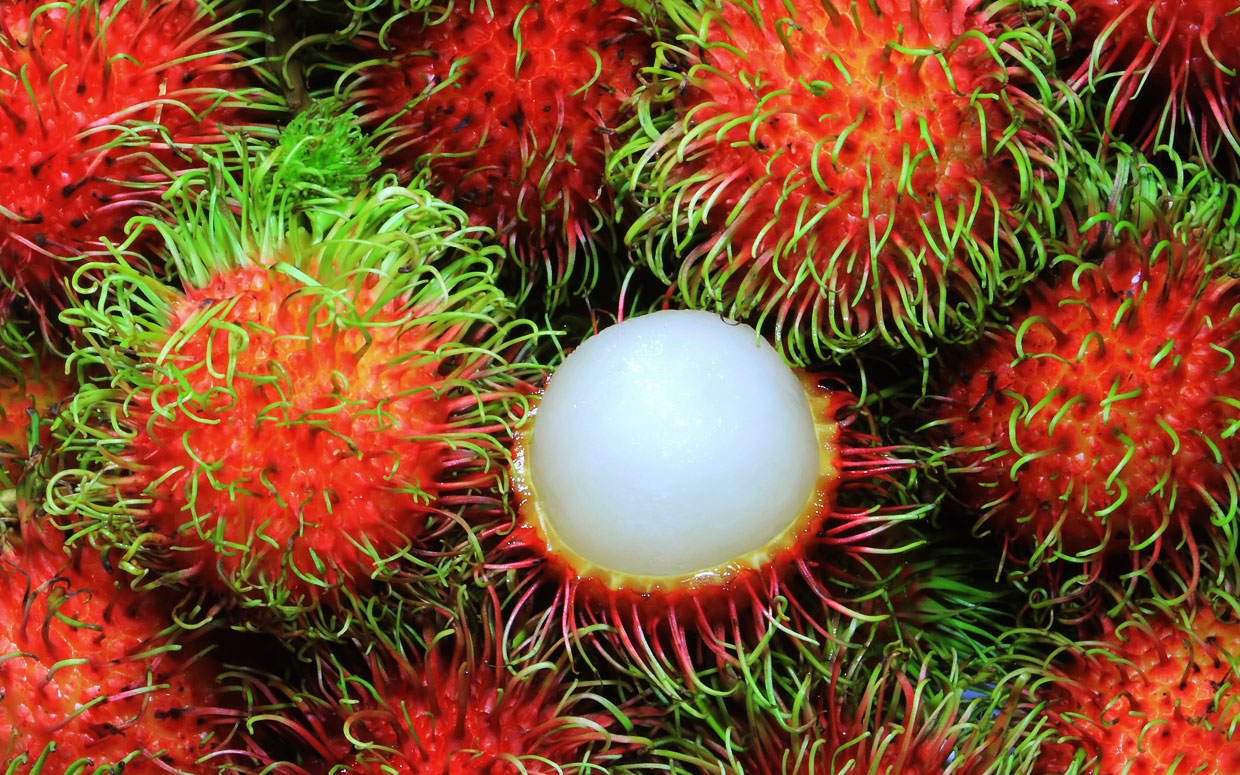
Have you ever seen a rambutan?

Have you ever seen a rambutan?

Since I’ve been reading The Fruit Hunters by Adam Leith Gollner, I’ve realized the role variety awareness plays in conserving biodiversity. Simply not knowing about all the varieties allows agribusiness to monopolize the market with one or two varieties that best suit global trade. For example, when people only saw red and yellow apples in the supermarket, they did not know what they were missing out on, so they weren’t as picky. Once Fujis and Galas became known, customers began to demand more. Knowledge of varieties is seen as a threat to supermarket because customers focused on varieties become less easy to please with subpar, out-of-season fruits.

So with that being said, simple awareness of varieties is a method of raising the bar. It helps promote biodiversity because people are less willing to accept generic and standardized fruit.

On the Marari Pearl property, there are pomelos, rambutans, and tamarinds. There are several types of jackfruit,  lovi-lovis, mangos, and oranges. I was particularly excited to see the miracle fruit on the list. Continue reading

Seed Saving as a Safeguard for Biodiversity

logo

This is a seed savers network we are looking to collaborate with on our organic farm initiatives.

The recent post here about The New Yorker article on genetically modified seeds and Vandana Shiva helped me understand more about this era we are entering of biotechnology.

Regardless of whether or not it’s healthy to consume genetically modified foods, we are at risk of losing biodiversity and heirloom varieties. In support of protecting biodiversity, having heirloom varieties of plants in the La Paz Group gardens is important. Once the plants go to seed, we can save them to plant the following season.  Continue reading

Seeing in the Dark

7296_591181947589412_1926452569_n

Full moon shot Kayal Villa. Photo: Milo Inman

That traveling state of mind woke up a part of my brain that’s been sleeping for a while. I’ve been feeling my grey matter stretch as a fellow Raxa friend put it. An idea I’ve been thinking about started while on the Camino de Santiago pilgrimage when a man told my friend and me not to walk the Camino at night. He said, “If God wanted us to walk the Camino at night, he would have put a light in the sky so we could see the Camino’s beauty”.

We were confused- why didn’t he see beauty in walking at night under the full moon and stars? After that, my friend and I began to contemplate how darkness has been associated in both sacred and secular literature with the lack of spiritual enlightenment, lack of awareness; in our language, to say something is dark has bad connotations. We felt more motivated than ever to walk at night.

We began to question how a society’s aversion to darkness could inform everything. We considered how the aversion to darkness could be a deeper layer to the resistance to female equality and even environmental understanding of the interdependency of nature and cycles of dark and light.

Continue reading

Bird Fun (…and Aristotle?) around Tacacorí

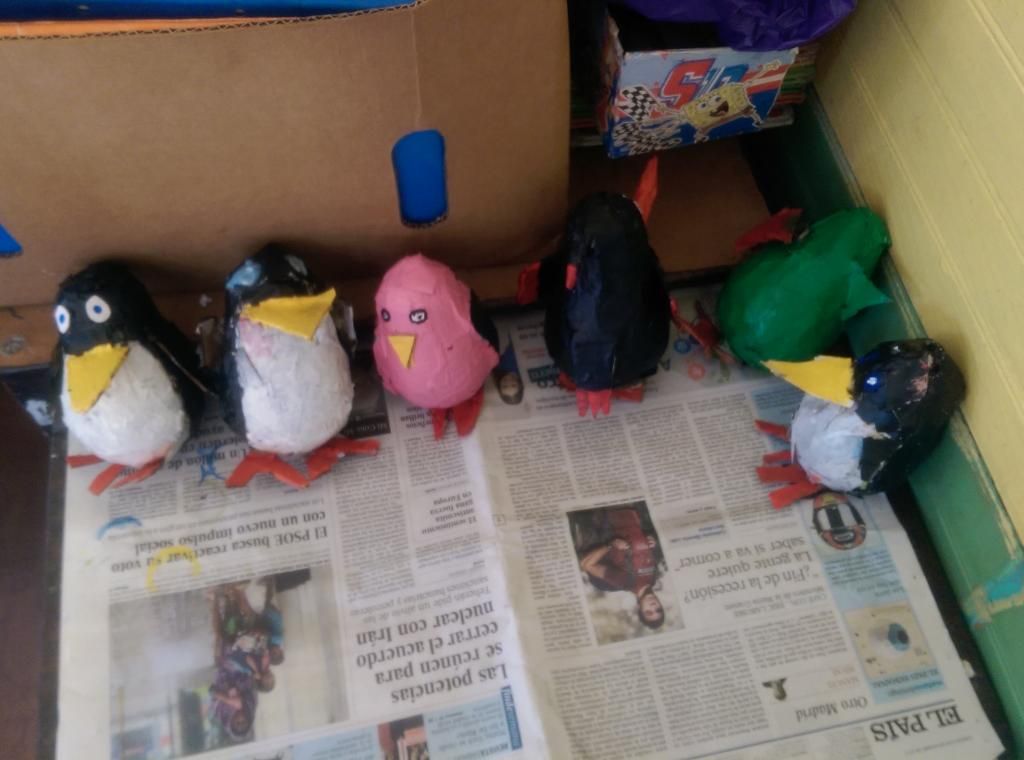
Papier-mâché penguins and other birds from the fourth grade class

In his recent post on our work at the local school in Tacacorí, Seth outlined our papier-mâché and painting ambitions with the third and fourth grades there. The second half of the week, Seth and I were split up because of the kids’ conflicting class schedules. I took fourth grade on the last few days, and he worked with third grade.

In his Poetics, Aristotle elaborates an aesthetic theory partly on the basis of μίμησις (mimēsis), or “imitation.” According to Aristotle, humans are “mimetic” beings, that is, disposed to imitate nature and other human beings. Art’s basis is precisely in Continue reading

That Traveling State of Mind

10437354_10201362789791511_7388278044108926240_n

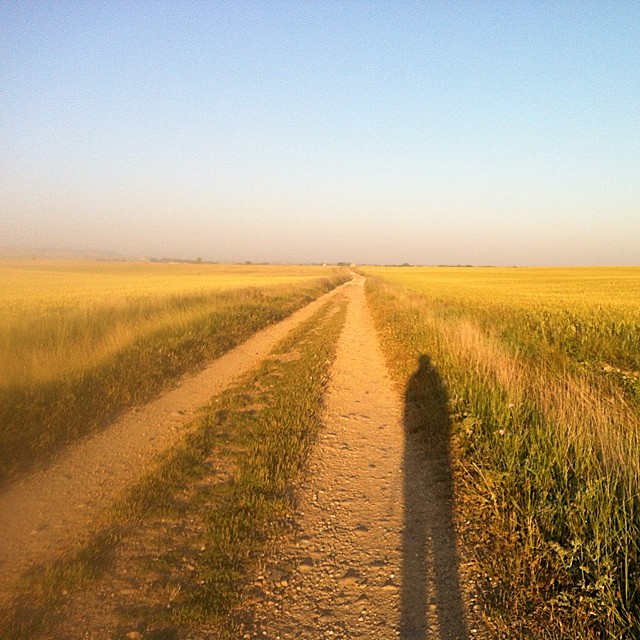
I took this while backpacking across this very empty and flat part of the Camino in Spain called the Meseta.

In my daily life, I flee myself in sneaky ways. I flip on a movie. I hang out with friends. I have habits when I am at home. There are these creature comforts that become little patterns that can give me an easy way out. Since I’ve been traveling, different parts of myself have surfaced. And if I don’t like those parts, tough luck. There is no easy way out, only a way forward. To just be with what I am experiencing, as it is.

The culture of the different places I have been and the range of different things I see activate streams of thought and states of mind I do not find myself in from my experiences at home. I really appreciate this about the traveling state of mind.

I think this is a different kind of tourism. Visiting different parts of myself inspired by different parts of the world.

Continue reading

Bamboo Wind Chimes for Birds

One of the finished chimes

The picture above shows one of a couple bamboo wind chimes that Seth and I built to put up around Xandari. The sound is, err, rather wooden–but definitely mild and pleasant! You may be asking why we took it upon ourselves to demonstrate our mighty artistic prowess. Well, we really had the birds of Xandari in mind with this project. Specifically, a poor Buff-throated Saltator who had thrown himself against the spa window so many times that he had Continue reading

Citizen Science in Belize – Update on Lionfish Jewelry: Part 2

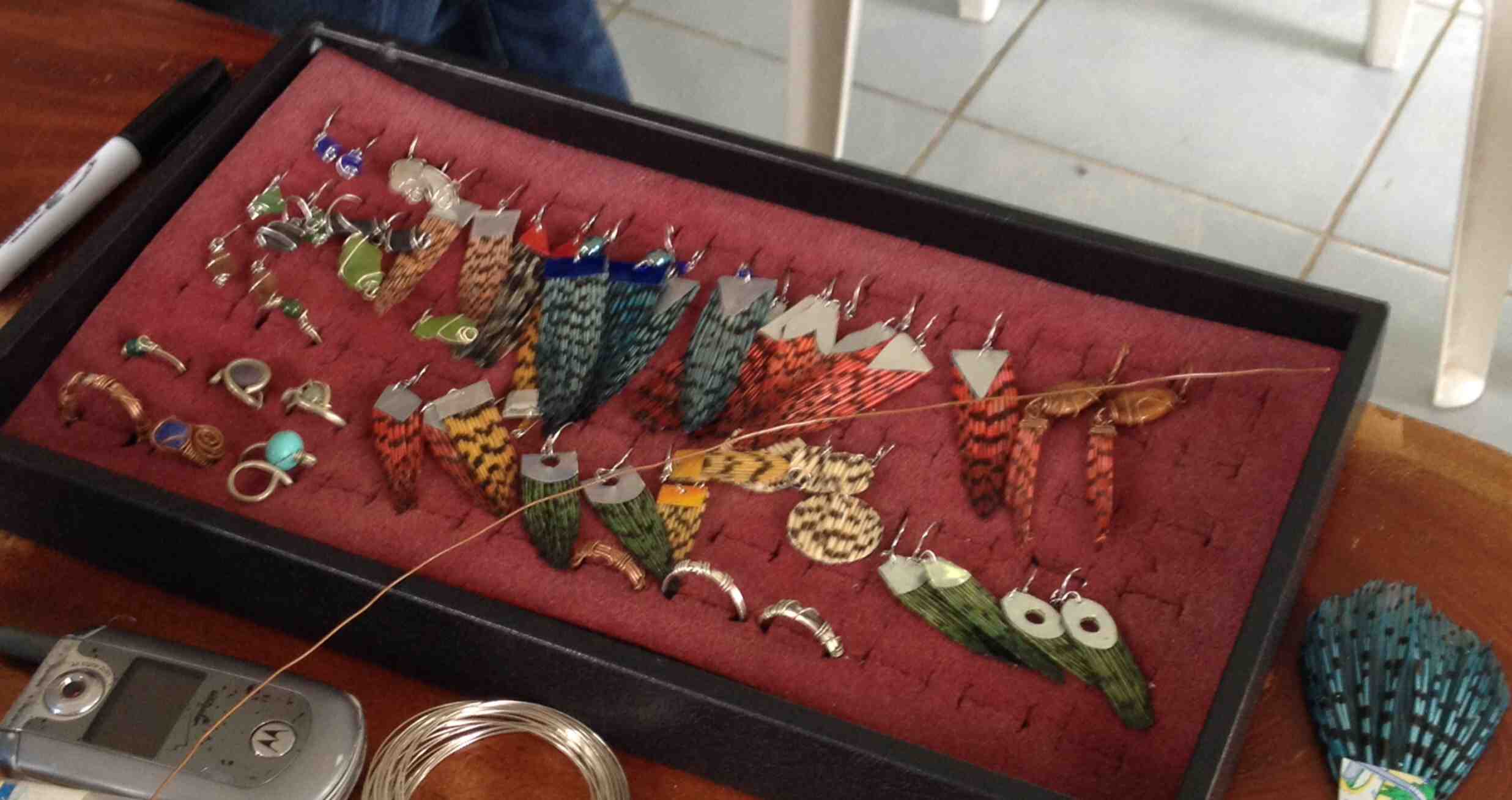
Assorted lionfish jewelry from Palovi Baezar, Punta Gorda, Belize

Assorted lionfish jewelry from Palovi Baezar, Punta Gorda, Belize

In Part 1 of this post I wrote about my recent visit to Belize to help with further development of the nascent  market for lionfish jewelry; one of several market-based approaches to addressing the threat to Southwest Atlantic marine ecosystems posed by the invasion of this non-native species. I noted that the market is most advanced in the area around Punta Gorda, in Southern Belize, in large measure due to the support provided by ReefCI which has provided training on jewelry making to a group of local women and is supplying them with lionfish spines, fins, and tails as well as marketing assistance.

Lionfish spines, fins, and tails ready for jewelry

Lionfish spines, fins, and tails ready for jewelry

While ReefCI’s involvement has been instrumental in getting things started, further development and expansion of the market will require engagement with artisans and women’s groups in other parts of the country, particularly areas closer to major tourist markets. Interventions are also needed to develop a reliable and sustainable supply chain for lionfish jewelry production and sales. I was pleased to hear from one of the jewelry makers in Punta Gorda that a local fisherman had approached her about selling lionfish tails. This was music to my ears, as one of the motivations behind the lionfish jewelry idea has been to up return to fishers in order to create added commercial incentive for them to hunt lionfish (the fish cannot be caught using conventional fishing methods such as hook and line or nets, but must instead be speared or hand-netted by diving). Continue reading

Building Kerala’s Entrepreneurial Next Generation

Screen Shot 2014-06-22 at 11.50.48 AM

We hope it is both bark and bite (that the idea catches and results in young entrepreneurs getting the support they need in an an otherwise very old school economic culture that would definitely benefit from more startups) and will track it; but for now, fyi: Continue reading

Field Trips-R-Us

Science teachers huddle over bacteria colonies at Chicago's Museum of Science and Industry. The museum plans to train 1,000 area educators to be better science teachers in the next five years. Linda Lutton/WBEZ

Science teachers huddle over bacteria colonies at Chicago’s Museum of Science and Industry. The museum plans to train 1,000 area educators to be better science teachers in the next five years. Linda Lutton/WBEZ

We are partial to field trips. Bravo to these educators for recognizing their value and putting their own two feet forward first (thanks to NPR, USA, for the podcast and published story):

In a classroom across from the coal mine exhibit at the Chicago’s Museum of Science and Industry, students are huddled around tables, studying petri dishes of bacteria.

But these aren’t school-age kids — these students are all teachers, responsible for imparting science to upper-elementary or middle-school students.

That’s a job that many here — and many teachers in grammar schools around the country — feel unprepared for. Continue reading

Women’s Empowerment In Kerala, A Success Story

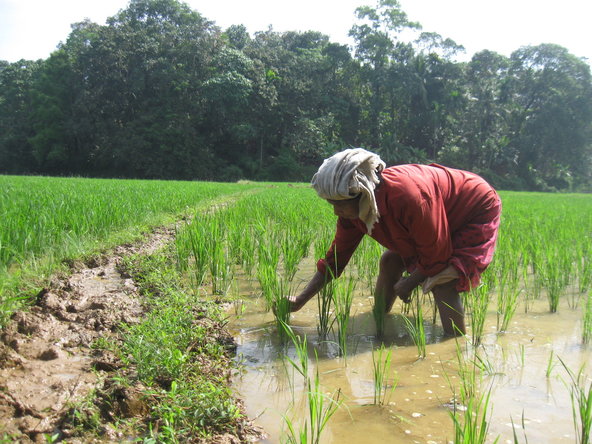
Vishnu Varma. A Kudumbashree worker involved in community farming near the Kerala village of Kadakkanad. Around 260,000 workers currently till and harvest more than 60,000 acres throughout the state.

Vishnu Varma. A Kudumbashree worker involved in community farming near the Kerala village of Kadakkanad. Around 260,000 workers currently till and harvest more than 60,000 acres throughout the state.

Thanks to India Ink, and Vishnu Varma, for this article about several million women, in communities across the state where we call home, collaborating their way to empowerment:

ERNAKULAM, Kerala — In a country that has been criticized as lacking commitment to women’s rights, one program in the southwest state of Kerala has been quietly serving as an example that a government can indeed successfully empower women, both economically and socially. Continue reading