Birds, Gastronomy, Cultural Heritage–Is It Entrepreneurial Conservation?

ORTOLAN-articleLarge

Michel Guérard, left, the chef of Les Prés d’Eugénie, and Jean Coussau, the chef of Relais de la Poste, are among a handful of chefs trying to bring the ortolan back to the restaurant menu in France. Credit Ulrich Lebeuf/M.Y.O.P for The New York Times

We do not link often to the countless stories of rhino populations being decimated due to poaching, not because they are depressing, which they are; but because there have been no breakthrough entrepreneurial conservation stories related to that tragedy. Ditto for elephants and other charismatic megafauna–overwhelmingly depressing and no solution in sight, with the rare glimmer of hope.

So, when I see an article like the one below, even though it focuses on charismatic minifauna rather than megafauna, I take note. We pay a disproportionate amount of attention to birds on this platform for reasons that should be clear to regular readers of these pages, so for now a question to all ornithologically advantaged readers: is the reference to the unpublished Canadian study at the end of the article real or bogus? If the latter, please share your knowledge through our comment section and we will provide the publisher a crowd-sourced, fact-checked update to the article.

This is one of the exceptional articles for which we provide full text because of its urgent environmental value, with the expectation that you will click through to the source to give proper credit, with thanks to the New York Times:

“The bird is absolutely delicious,” said Mr. Guérard, who recalled preparing ortolans for Mitterrand and his successor, Jacques Chirac, back when it was legal. (Mitterrand was said to linger over two ortolans in his last supper before his death in 1996, also consuming three dozen oysters, foie gras and capon.)

“It is enveloped in fat that tastes subtly like hazelnut,” Mr. Guérard said, “and to eat the flesh, the fat and its little bones hot, all together, is like being taken to another dimension.”

But the campaign has provoked environmentalists, who accuse the chefs of engaging in a publicity stunt to promote what they say is an archaic custom that will further endanger the bird, and that treats the ortolan inhumanely before it is killed. Continue reading


If You Happen To Be In New York City

website-header1

It is the sort of conference we are happy to see hosted by an MBA program:

MILLENNIALS RISING: WHAT’S NEXT FOR SUSTAINABILITY?

Friday, October 31, 2014

We are living in promising but turbulent times. Never before has there been such interest in harnessing innovation to find sustainable solutions for communities and the environment, but never have the problems been more urgent, complex or challenging.

While more business leaders are pursuing sustainable strategies, what can be done to accelerate this change and harness the talents of millennials as future sustainable leaders to ensure they realize this potential? What can be done to sustain interest in solving social and environmental issues, sustain funding for these efforts, and sustain the pipeline of social entrepreneurs leading these changes?

Join us at the 2014 Social Enterprise Conference by Columbia Business School and help spark the conversation on driving sustainable change beyond the new millennium:

Continue reading

Entrepreneurial Conservation, Macro Version

ILLUSTRATION BY CHRISTOPH NIEMANN

ILLUSTRATION BY CHRISTOPH NIEMANN

In the current issue of the New Yorker, the excellent “explainer in brief” of economic phenomena provides a macro equivalent example of what we have referred to as entrepreneurial conservation. Instead of just a sampling of the text we provide the full story here, per an occasional exception we make for important environment-related stories, but please click through to the source to give proper attribution:

During the recent U.N. Climate Summit, it was hard not to think of the quip, attributed to Charles Dudley Warner, “Everyone complains about the weather, but no one does anything about it.” A parade of global leaders (including Barack Obama) made all the right noises, but there was little action. So it was notable when Norway announced a deal with Liberia: Norway will give Liberia up to a hundred and fifty million dollars in aid, in exchange for which Liberia will work to stop the rapid destruction of its trees.

Continue reading

Lionfish, Prized Case Study In Innovative Environmentalism

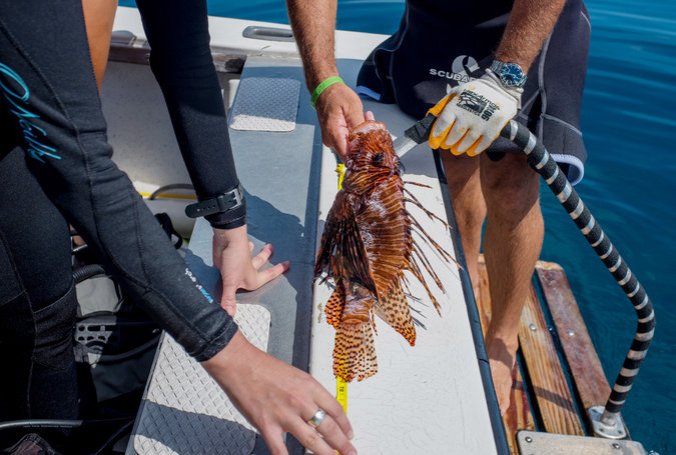
A lionfish caught near Homestead, Fla., by researchers for the Reef Environmental Education Foundation, which is trying to curb the species’ proliferation. Credit Angel Valentin for The New York Times

A lionfish caught near Homestead, Fla., by researchers for the Reef Environmental Education Foundation, which is trying to curb the species’ proliferation. Credit Angel Valentin for The New York Times

We have hosted a series of posts from Raxa contributor Phil Karp, with citizen science and entrepreneurial conservation angles to the story; and now the New York Times considers the story fit to print in a well-detailed reportage:

A Call to Action Against a Predator Fish With an Import Ban, an App and Even Rodeos

Continue reading

Throwback Thursday: Community, Collaboration & Conservation Exemplified

When Horace Greely (well, actually John B. L. Soule) said “Go West, young man, and grow up with the country!” he was speaking from the perspective of limitless possibilities. The Lewis and Clark Expedition had helped map out the west and many young men, and later women, answered the call.

With wilderness in peril, that same entrepreneurial spirit has opened up a new world of empowerment and possibilities for later generations.  The California Conservation Corps and Southwest Conservation Corps have teamed with the non-profit Veterans Green Jobs in a win-win program to support both the country’s military veterans and the country’s national parks. Continue reading

Documenting the Conservation Story, Part 2

Photo courtesy of Heena Metha

Photo credit: Heena Metha

As I mentioned earlier, the internship program for my school requires we do an Informational Interview with our supervisor. I wanted to share the interview here for other people who are interested in entrepreneurial conservation. The rest of the information from the interview will soon be in the updated About section of the site.

Informational Interview with Crist Inman, Founder of La Paz Group:

1. How does the partnership between environment and business work in the sustainable tourism industry?

The idea behind it is what we call the valorization of nature, paying for conservation through experiential services rather than exploiting nature for its extractive value. For example, you can cut down a tree only once, but you can monetize it by having people pay for a hike over and over again. It is a partnership between environment and business that engages people in conservation. Philanthropic conservation such as writing a check to WWF or The Nature Conservancy is good and important, but there is still a deficit of conservation.

The public sector plays an incredibly important role as well, but we are going to need more than philanthropy and public sector work because the world is losing more wilderness than all the philanthropies and governments in the world combined can protect. The intangibles of culture loss are harder to detect and comprehend but the world is losing too much cultural heritage as well. This is a business model that allows people to engage in conservation rather than just writing a check as a donation or in the form of tax. This allows people to participate and experience nature and culture in a way that makes business sense as much as it achieves conservation.

2. What is entrepreneurial conservation?

Usually these two words don’t get used in the same sentence. Together though, these words build something more valuable and effective than either could on their own. The premise underlying entrepreneurial conservation is that there are good economic reasons to preserve natural and cultural heritage. And when such good reasons present themselves, opportunity and need go hand in hand. Essentially, it is professionals developing and/or managing a business whose profits are invested in the conservation of natural and/or cultural patrimony. Continue reading

The Marari Fruit Diaries

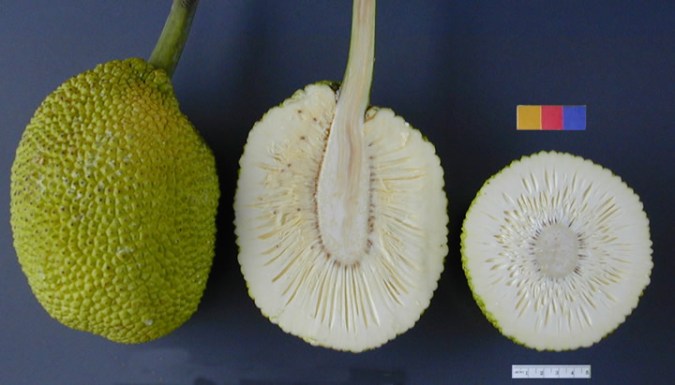
This is a picture of breadfruit, which actually tastes like freshly baked bread

This is a picture of breadfruit, which actually tastes like freshly baked bread

I’ve been writing about the exciting biodiverse varieties of plants at the new property, Marari Pearl. I want to point out though that even before we started, the land has hundreds of coconut trees on it, as well as dozens of mango and cashew trees, which is exciting in its own right.

One thing about the coconut trees that makes them a win-win, is that it helps provide local jobs. There is a certain group of people whose legal right it is in Kerala to do the job of tending to coconut trees. Before Marari Pearl was there, no one was hiring them to take care of the trees. Now that we are utilizing them to provide coconuts for our properties, they get jobs and we get fresh coconuts.

We are adding a cornucopia of other fruits, both local and exotic. I mentioned that we have pomelos, rambutans, tamarinds, several types of jackfruit,  lovi-lovis, mangos, and oranges as well as the infamous miracle fruit. There is also the hong kong guava, burmese grape bud, pomegranate, sapota, malayalam champa fruit, abiu fruit, jaboticaba fruit, langsat tree, and several varieties of avocados or ‘butter fruit’ as its called here. There are breadfruit trees as well as peanut butter trees. There is karonda fruit, nelli puli fruit, mangosteen, and mooty fruit. There are five pages of names, some I know, some I don’t, and some I can’t understand because it’s a handwritten list. Continue reading

Banksy, Entrepreneurial Conservationist?

_77174539_mobile_lovers_by_banksy

Banksy’s Mobile Lovers appeared in a doorway in April

Street art is not everyone’s cup of tea, but you kind of have no choice but to love this story:

Banksy’s Mobile Lovers sale to ‘keep Broad Plain boys’ club open’

A Banksy artwork has been sold to a private collector for enough money to keep the seller – a cash-strapped boys’ club – open for “a few years”.

The sale price of Mobile Lovers, which has been on display at Bristol Museum and Art Gallery, will be revealed on Wednesday when it is handed over.

The piece of street art appeared in a Bristol doorway in April, but a row broke out over who owned it.

Banksy then wrote to hard-up Broad Plain Boys’ Club saying it was theirs.

Broad Plain will be sharing a portion of the proceeds with a number of other voluntary sector youth clubs across the city. Continue reading

Tourism, Conservation, Whale Sharks

shark-shutterstock_127906316-680x450

shutterstock.com

Thanks to Conservation for this item about entrepreneurial conservation of the ecosystems where one of the greatest of sea creatures dwell:

HOW CAN WHALE SHARK TOURISM BE KEPT SUSTAINABLE?

August 22, 2014

When the revenue generated by wildlife-related tourism is higher than that generated by the consumption of that wildlife, then the animals in question are worth more alive than dead. This seems intuitive, but the economics of wildlife tourism aren’t always easy to work out.

Over the last couple decades, one form of wildlife-based tourism that has quickly become popular is diving alongside free-swimming whale sharks. While they’re the largest fishes in the sea, whale sharks are actually quite docile and have highly predictable seasonal movement patterns. That makes them particularly attractive to dive operators. While whale shark tourism has operated in Western Australia’s Ningaloo Reef since the late 1980s or early 1990s, most whale shark tourism outfits have sprung up more recently, in the eastern Gulf of Mexico, Honduras, Belize, the Philippines, Mozambique, Seychelles, and the Maldives. While some attempts have been made to quantify the economic impacts of whale shark tourism in Ningaloo, Belize, and the Seychelles, nobody has done so for the Maldives. Measuring the economic value of the industry is especially important because it is difficult for local governments, with limited powers especially when it comes to environmental protection, to prioritize conservation without that information. Continue reading

Breakthroughs In Nutrition Via Entrepreneurial Conservation

Exo's peanut butter-and-jelly bar contains about 40 ground-up crickets and has a familiar nutty, sweet flavor. Meredith Rizzo/NPR

Exo’s peanut butter-and-jelly bar contains about 40 ground-up crickets and has a familiar nutty, sweet flavor. Meredith Rizzo/NPR

Thanks to National Public Radio (USA)’s food-focused program, The Salt, for another story on unexpected breakthroughs in nutrition:

…”Insects are probably the most sustainable form of protein we have on Earth,” Bitty Foods founder Megan Miller, who spoke passionately about eating bugs at a TEDx Manhattan event earlier this year, tells The Salt. “The only real barrier to Americans eating insects is a cultural taboo.” Continue reading

Tea and Conversation

Credit: Ea Marzarte

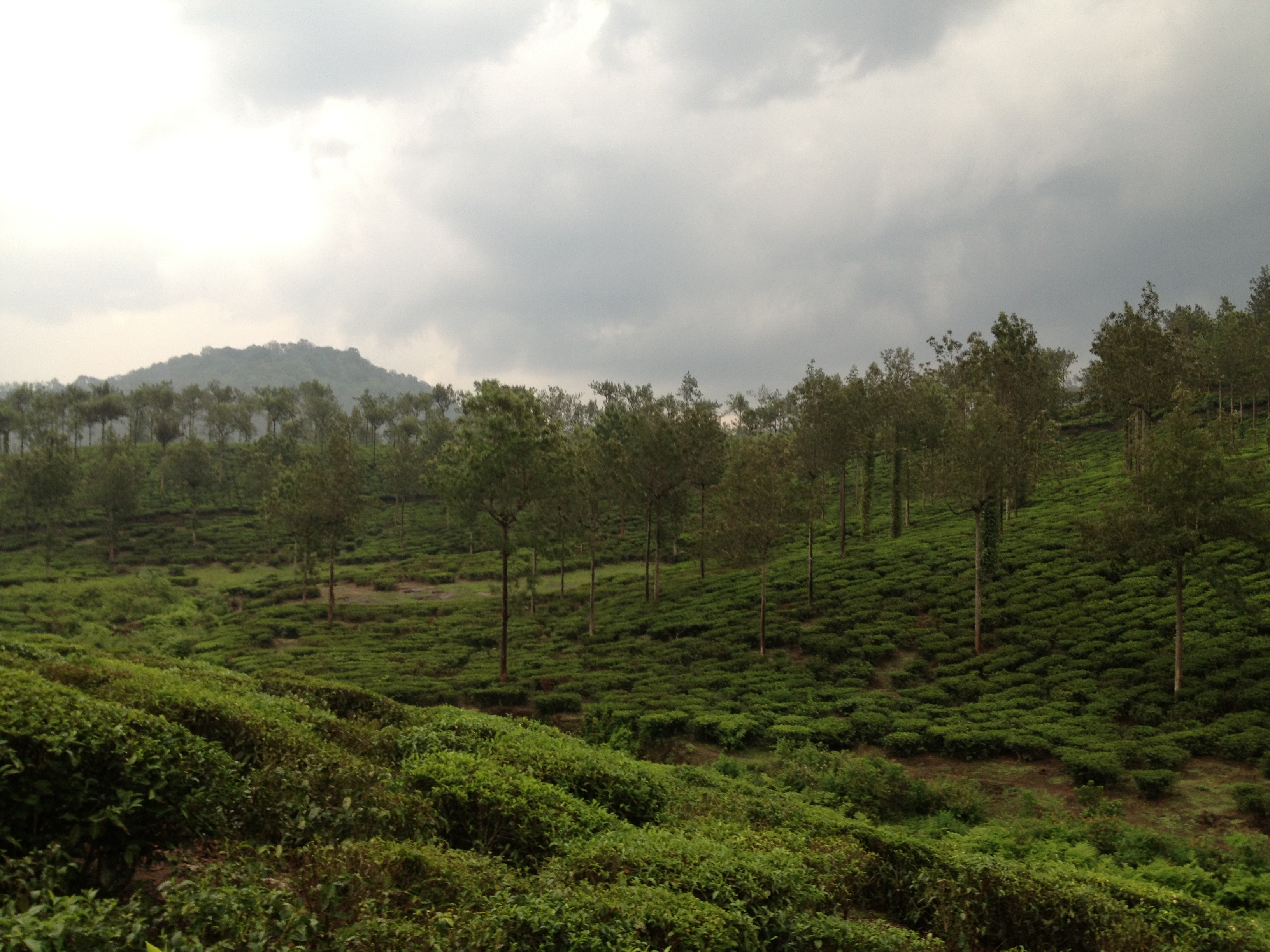
As I wrote about in my last post, my current project is documenting the conservation story of RAXA Collective. Yesterday we were driving up to the Cardamom County property in Thekkady from Spice Harbor in Cochin. I’m used to the busy main “highway” but this time we took a different route. It was through Vagamon, which is this lush, green landscape with waterfalls and not many cars on the road. We drove through tea plantations. Driving through the tea plantations with all the greenery and fog kind of enchanted me into this quiet, contemplative space.

In order to document the conservation story, I have been asking Crist questions whenever we have time to sit down about the business model of projects they’ve worked on. While driving through the tea, we had plenty of time for this conversation.

The landscape and the conservation seemed to pull me within, pointing out the shape and feeling of an idea. I don’t know what it will end up being, but I can feel the progress and formation of something. This shape seems to be magnetizing key words and planting them like seeds. I am inspired by the idea of creating a business model that funds environmental and cultural conservation.  Continue reading

Documenting the Conservation Story

a8cbefa7f9b9970419b4595b3c5dbd49

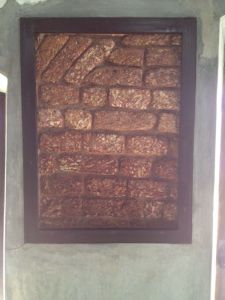
This is a wall from the Spice Harbor property. A lot of the conservation story can be told in the design. The way they built this property is an example of historical/cultural conservation. The restaurant building was a “go down”, or waterfront warehouse, that used to store spices. They didn’t knock down the old building, they actually just built around it and framed pieces of the old wall to display it as art. This design concept has been passed on by word of mouth-taught to the workers here, but it hasn’t been documented yet.

I felt that this blog could better serve its purpose if the conservation story was told in one place. The stated purpose of the RAXA Collective site is to provide a space for people to learn about entrepreneurial conversation. It seems to me that highlighting the details of the property is less meaningful without context of the concept and history behind them.

The summarized version as stated in the RAXA Collective “About section” is to have a business whose profits are invested in conservation of natural and cultural patrimony. However, as I’ve been learning, the way this model manifests itself depends on the situation. Each story is pretty radically different than the next. So, we have a very general description (About section) and very specific descriptions (every day posts), but we don’t have the overall narrative of each property to show how “it depends” shows up differently in the field of entrepreneurial conservation.

I resonate with the initially stated goal in the About section about having this site provide a space for university students to learn about alternatives to mainstream occupations and career paths. As a university student myself, that is really what I am here as an intern to learn. I have been able to offer my skills and passions for organic agriculture and gain more practice in that field as an intern here. However, that is a skill I have picked up along my studies, which are driven by the bigger goals of conservation and environmental business models.

Continue reading

Newspaper Bag Station at Cardamom County

???????????????????????????????

New member of PaperTrails stationed at Cardamom County

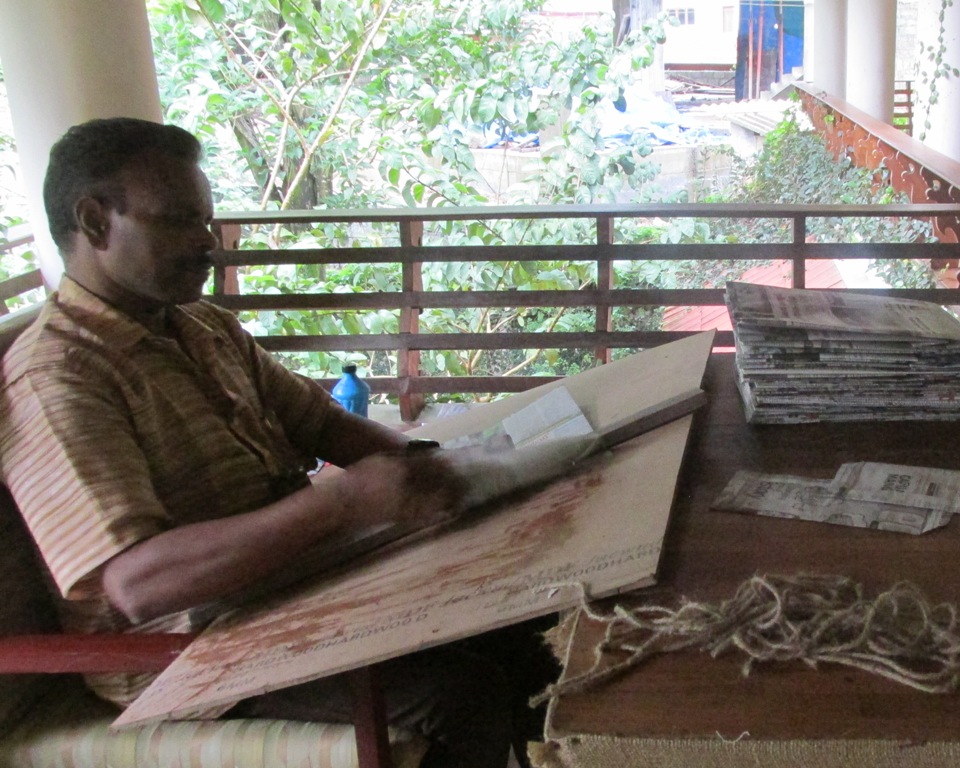
At Cardamom County, we have been working to get the local community involved through the group PaperTrails. PaperTrails helps provide jobs for people who could otherwise not get them. La Paz Group has appreciated the way it involves the locals by providing work and  re-purposing old newspaper. For La Paz Group they make gift bags out of recycled newspaper and sanitary bags from recycled paper. Now, we have a new member of the PaperTrails team stationed at Cardamom County. He is stationed on the second level of the Ayurvedic Center and makes bags for all the La Paz Group properties.. We like this because now guests can engage with the paper bag initiative in a new way. They can see how they are made and learn to make them as well.  Continue reading

Gianluca, Come To Kerala!

sada-bike

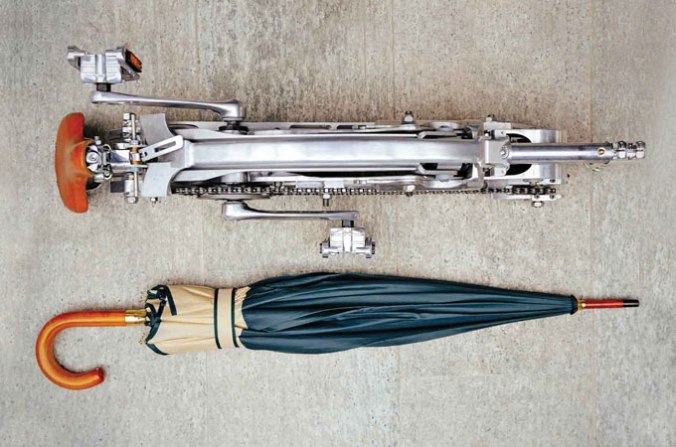
As the metropolitan area of Ernakulum, where Raxa Collective has many contributors who commute to work, completes its futuristic mass transit scheme, our thoughts reach out to a time when the collapsible bike is a necessity here. For now, we can appreciate the design for its own sake of this model that has just come to our attention.

We like everything we read about it, as much as the visual aesthetics. We even hope we might be of some service to its creator, given our history with entrepreneurial conservation. We are on the lookout, constantly, for opportunities to collaborate with creative craftsmen and to welcome them into Raxa Collective’s growing community across the globe. Conservation magazine brought Gianluca Sada onto our radar. We extend to him our usual invitation for a visit thanks to that:

COLLAPSIBLE COMMUTE

Carrying a bicycle onto a bus or subway for unrideable sections of your carless commute is less than convenient. This is where the Sada Bike fits in. Whereas other foldable bikes have shrunken frames and wheels, the Sada Bike’s full-sized frame folds down to the size of an umbrella; its spokeless, hubless, 26-inch wheels double as a backpack frame.

Continue reading

Citizen Science in Belize – Update on Lionfish Jewelry: Part 2

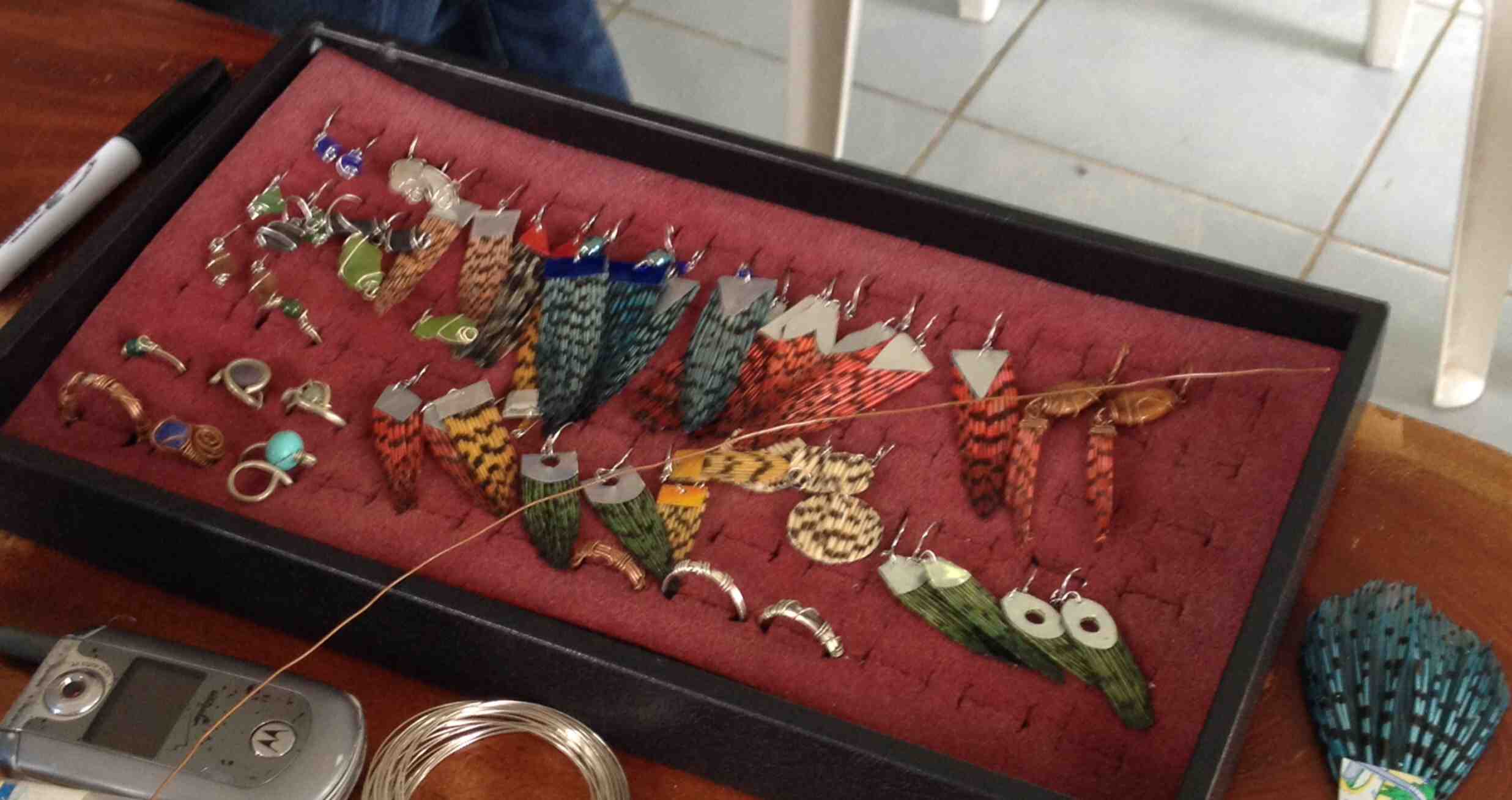
Assorted lionfish jewelry from Palovi Baezar, Punta Gorda, Belize

Assorted lionfish jewelry from Palovi Baezar, Punta Gorda, Belize

In Part 1 of this post I wrote about my recent visit to Belize to help with further development of the nascent  market for lionfish jewelry; one of several market-based approaches to addressing the threat to Southwest Atlantic marine ecosystems posed by the invasion of this non-native species. I noted that the market is most advanced in the area around Punta Gorda, in Southern Belize, in large measure due to the support provided by ReefCI which has provided training on jewelry making to a group of local women and is supplying them with lionfish spines, fins, and tails as well as marketing assistance.

Lionfish spines, fins, and tails ready for jewelry

Lionfish spines, fins, and tails ready for jewelry

While ReefCI’s involvement has been instrumental in getting things started, further development and expansion of the market will require engagement with artisans and women’s groups in other parts of the country, particularly areas closer to major tourist markets. Interventions are also needed to develop a reliable and sustainable supply chain for lionfish jewelry production and sales. I was pleased to hear from one of the jewelry makers in Punta Gorda that a local fisherman had approached her about selling lionfish tails. This was music to my ears, as one of the motivations behind the lionfish jewelry idea has been to up return to fishers in order to create added commercial incentive for them to hunt lionfish (the fish cannot be caught using conventional fishing methods such as hook and line or nets, but must instead be speared or hand-netted by diving). Continue reading

Citizen Science in Belize – Update on Lionfish Jewelry: Part 1

Freshly dried lionfish fins and tails. Photo: Polly Alford, ReefCI

I’ve written in previous posts about the initiative to develop a market for lionfish jewelry as one of a number of commercially sustainable approaches to fighting this invasive species that is threatening marine ecosystems throughout the Caribbean, the Gulf of Mexico, and the Southern Atlantic seaboard of the United States. In my last post, I mentioned that the idea is beginning to take off in Belize.  I was able to observe this first-hand last month, spending two and a half weeks in the country.  During my stay I had the opportunity to meet local artists who are making lionfish jewelry and to participate in several workshops to share techniques and designs.  Continue reading

Big Business, Conservation, Innovation

We have written about and linked to others’ thoughts on altruism more than once, thinking we will eventually have an ultimate illumination on its origins and how to increase its likelihood. Likewise on our main theme as an organization, with regard to entrepreneurial conservation. We also keep a watch out for big companies (versus entrepreneurs) and governments (as in the case of the state initiative in the banner above, which is discussed below) doing the right thing.

Thanks to this article in the New Yorker for bringing our attention to the efforts to bring sustainable and affordable water to the good folks of Texas, and at the same time raising our awareness of the tightrope walking between big businesses that have many motivations to participate in innovative conservation schemes, and the organizations that have been the innovators in this regard for decades:

Mark Tercek, the head of the Nature Conservancy, recently took a tour of the largest chemical-manufacturing facility in North America: the Dow plant in Freeport, Texas. The Nature Conservancy, which is responsible for protecting a hundred and nineteen million acres in thirty-five countries, is the biggest environmental nongovernmental organization in the world. Tercek, accompanied by two colleagues, had come to Freeport because the facility—a welter of ethylene crackers and smokestacks built next to a river that flows into the Gulf of Mexico—is at the center of a pilot collaboration that he hopes will reshape conservation.The key idea is to create tools that can assign monetary value to natural resources. Continue reading

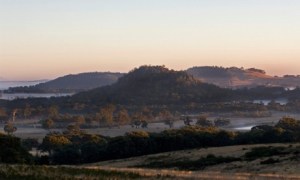
Help Hanging Rock, If You Can

18064a9e-466d-40ea-86d7-2a6ade5ee448-460x276

Government funding for Hanging Rock will support the upkeep of picnic areas, wetlands and protection of plant and animal life. Photograph: John Crook/AAP

Fans of Peter Weir will be inclined to heed the call, if they can, to help ensure Hanging Rock is not spoiled:

Controversial plans to build a tourist resort at Victoria’s Hanging Rock have been scrapped after the state government committed $250,000 a year to maintain the landmark.

The funding, announced on Friday, will fund the upkeep of trails and signs along the rock, as well as the nearby picnic areas, wetlands and protection of plant and animal life. Planning protections in the area would be strengthened to shield the area from “inappropriate development in the long-term”, the Victorian planning minister, Matthew Guy, said.

Plans by the Macedon Ranges shire council to build a 100-room resort, eco-cabins, a “nature-focused adventure facility” and a day spa near the unique volcanic rock formation had divided the small community north-west of Melbourne. Continue reading

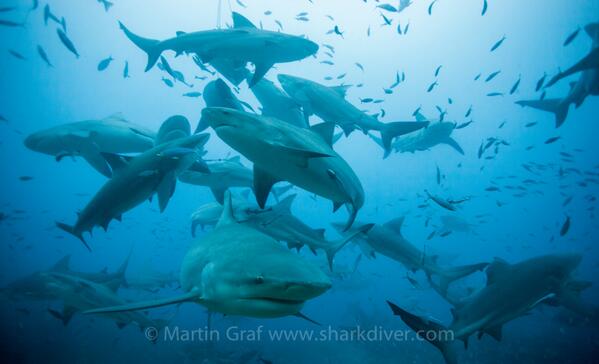
Fiji Shark Dive

Photo Credit: Martin Graf, Sharkdiver.com

Photo Credit: Martin Graf,  Sharkdiver.com

In an earlier post I wrote about how more and more countries are waking up to the benefits of preserving natural capital, in recognition of the economic value that can be derived through ecotourism. I noted, in particular, the value that can be generated through ecotourism ventures focused on iconic species such as sharks, manta rays, and sea turtles. I cited a number of studies and calculations that demonstrate that the ecotourism value of these animals far outweighs their one-time economic value if harvested for food or body parts.

Earlier this week, I had an opportunity to experience one such venture first hand, via the famous Fiji Shark Dive. Over the course of two dives I was treated to the spectacle of 40+ Bull Sharks and dozens of Blacktip and White Tip Reef Sharks, up close and personal!  What an amazing experience to see these magnificent animals – some upwards of 8 feet long –swimming only inches away.  Click here for a video (check out the background music!) courtesy of Martin Graf, one of the pioneers of the Shark Diving industry, who just happened to be in Fiji this week and was along on my dives. Continue reading

Building An Invasivore Economy

wild-city-pigeon Since Phil first started posting his series on possible solutions to invasive species last year, in conjunction with the theme of citizen science that Seth has been writing about for the last couple years, we have been on the look out for citizen solutions to environmental challenges–stories that match our interest in entrepreneurial conservation. Phil’s series suggests that citizen science may be the best path to building what might be called an invasivore economy. As it happens, just after his first couple posts there was an article in Conservation that dealt with this very issue:

SEND IN THE INVASIVORES

Recipes for Ecosystem Recovery By Sarah DeWeerdt

“We’re trying to be unsustainable,” says University of Vermont conservation biologist Joe Roman. And he says it with glee. Roman runs www.eattheinvaders.org, a compendium of invasive species recipes. He is one of a growing number of people who advocate controlling invasives by eating them. Instead of relying on toxic pesticides, expensive eradication campaigns, or risky introductions of biological control agents, “why not use our own appetites to good advantage?” he suggests.

Continue reading