Above is the lead photo in an intriguing story of an act of protest, reported by by David Streitfeld. Reading it, no surprise that he won a Pulitzer Prize for Explanatory Reporting five years ago in a series of stories about Apple. Now his attention is placed on another company that has come to have an outsized role in the world, and needs explanation, and as I see it, deep concern. It is a company that I have only rarely, and only when I had no acceptable alternative, paid money to. When I have bought from them I have regretted it each time, even though the price I paid was the lowest available and the service was remarkable. Why do I resist doing business with that company and why do I wish others would do the same? That is a puzzle worth solving, and I hope that journalists are up to the task. Today, the headline proclaims:
- The company is said to be nearing deals to move to Long Island City in Queens and Arlington, Va., though a final decision has not been announced.
- The surprise change would allow the tech giant to tap into the talent pools of two different regions.
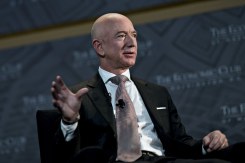
Bezos during his appearance at Economic Club of Washington, in September. Photograph by Andrew Harrer / Bloomberg / Getty
Exciting stuff for the politicians who want to claim credit for Amazon’s choice. But there’s a very big story behind all that. The company is powerful, and what is said about power leading to corruption is too simple for this story, and for the man leading this powerful enterprise.
I can find no reason to dislike Jeff Bezos personally. Any entrepreneur can find reasons to admire his intelligence, his determination and his contrarian approach. Every time I see him in recorded interview video I find his enthusiasm and laughter contagious. But I have had growing concern in the last decade about the company he founded, because of all the ways the lives of everyone around me seem to feed into Amazon’s market power. If you have time to read only one article on this topic today, it should probably be this one about Amazon’s location choice for HQ2:
On October 21, 2016, an entity called the Cherry Revocable Trust purchased two adjacent buildings in the Kalorama neighborhood of Washington, D.C., for twenty-three million dollars. The buildings, which previously had housed the Textile Museum, were to be converted into a private residence—at twenty-seven thousand square feet, the largest in the city. In January, it was revealed that the anonymous purchaser represented by the Cherry Revocable Trust was Jeff Bezos, the founder and C.E.O. of Amazon. The finished property will have eleven bedrooms, twenty-five bathrooms, five staircases, and a large ballroom suitable for gatherings of Washington’s notables. It will be, in the words of the journalist Ben Wofford, “a veritable Death Star of Washington entertaining.”
In July, Jeff Bezos became the richest man in modern history, when his net worth topped a hundred and fifty billion dollars. In September, Amazon became the second company, after Apple, to achieve a trillion-dollar valuation. These two milestones in the history of this country and capitalism passed with little fanfare outside the business world, preoccupied as we are by the antics of the pretend mogul who resides in the White House. But Bezos, an actual mogul, has also been making moves in Washington, none more high-profile than his purchase of the Washington Post, in 2013. More quietly, Amazon is investing heavily in the area. Continue reading →











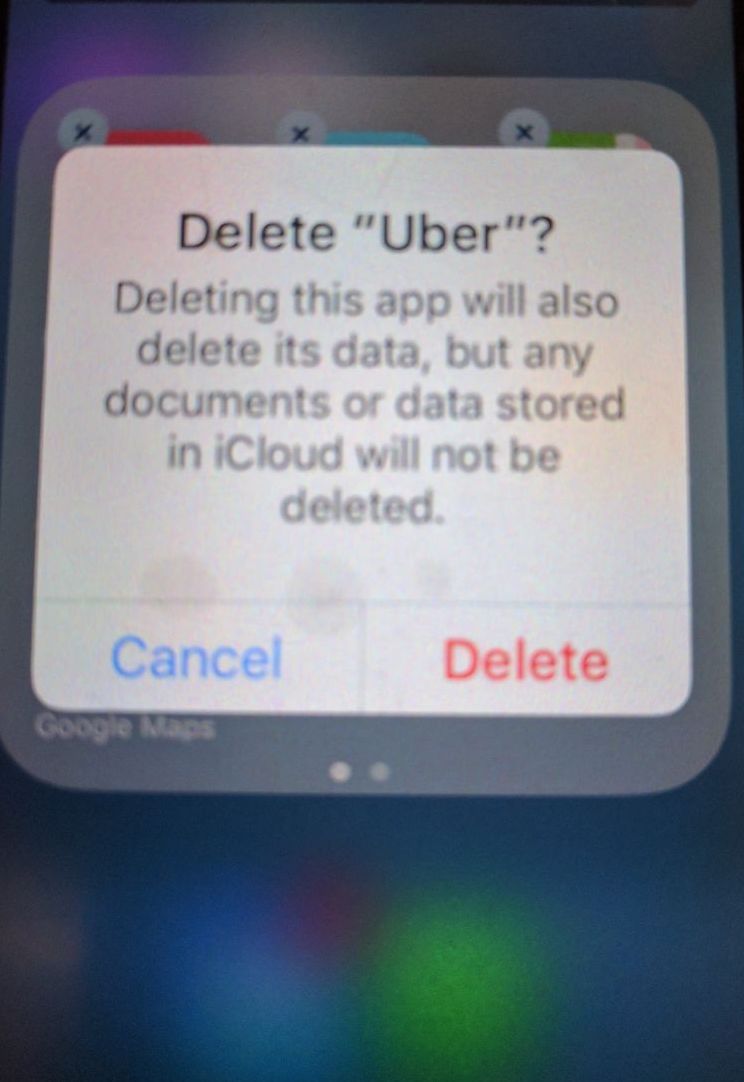 Shame on me for waiting until today to finally do it. I started hearing one year ago from friends and family about why they had decided to stop using Uber. But Uber was just then ramping up in Kerala, India and I found it compelling enough to abandon car ownership. When I saw the details recently on what a creep Uber’s founder and largest shareholder is, that should have been enough. But, it was this article that finally compelled me. Thanks to the New York Times reporter Kevin Roose for the perspective:

 Organikos