Truffle Entrepreneur, Immigrant Son’s Success

lavin-howatexasteen-agerbecamenewyorkcitystoptruffledealer-800

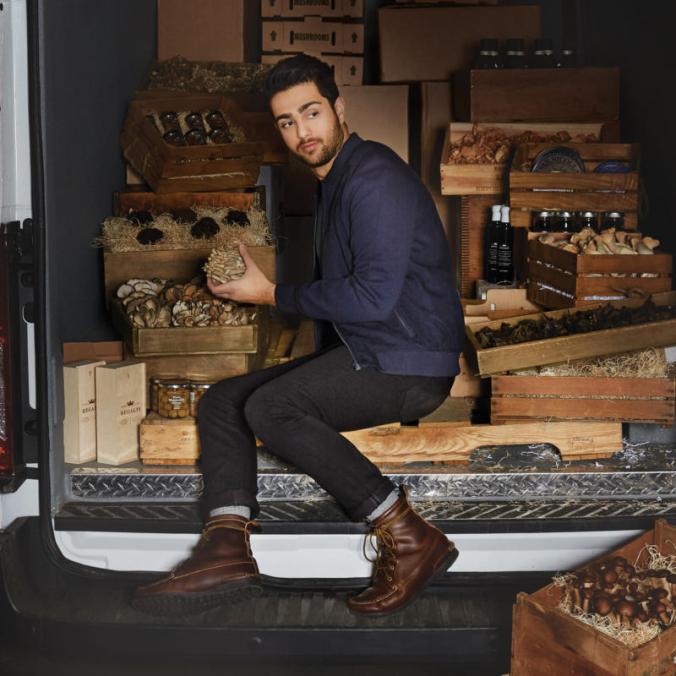
Ian Purkayastha, the twenty-four-year-old wunderkind behind the luxury-food company Regalis, aims to “demystify this bourgeois product for a new generation.” PHOTOGRAPH BY KRISTIN GLADNEY / WIEDEN+KENNEDY

It could just be that I have had a nearly two-decade love for truffles; or the storyline combining entrepreneurship, economics and food, a mix that I favor; or maybe my being the son of an immigrant explains my response to this post at the New Yorker’s website; probably it is because I can almost picture my own son in such a story, in a parallel universe; whatever, enjoy:

HOW A TEXAS TEEN-AGER BECAME NEW YORK CITY’S PREMIER TRUFFLE DEALER

On a bare side street in Long Island City, Queens, beside Oh Bok Steel Shelving & Electric Supply, the Regalis luxury-food company keeps its goods. Upon entering the warehouse through a small red door, a visitor is immediately greeted by an intoxicating and pungent scent: the unmistakable, and nearly indescribable, odor of truffles. Continue reading
Food Waste Approaching Zero (Goals Are Powerful)

dsc_0080-90-beea8781c209d5611d13eacd9f03985d6f1a805d-s1100-c85

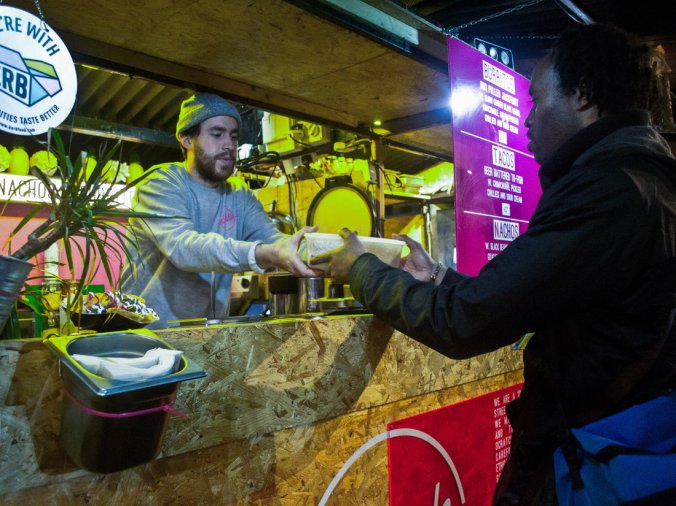
Junior Herbert, a volunteer with Olio, collects leftovers from vendors at London’s Camden Market. London has become a hub for apps and small-scale businesses that let restaurants and food vendors share leftovers with the public for free, and otherwise reduce the amount of edibles they toss. Maanvi Singh for NPR

Green entrepreneurship is alive and well in London (thanks to National Public Radio, USA, and its program the salt for this story):

Eat It, Don’t Leave It: How London Became A Leader In Anti-Food Waste

MAANVI SINGH

It’s around 6 o’clock on a Sunday evening, and Anne-Charlotte Mornington is running around the food market in London’s super-hip Camden neighborhood with a rolling suitcase and a giant tarp bag filled with empty tupperware boxes. She’s going around from stall to stall, asking for leftovers.

Mornington works for the food-sharing app Olio. “If ever you have anything that you can’t sell tomorrow but it’s still edible,” she explains to the vendors, “I’ll take it and make sure that it’s eaten.” Continue reading

Plastic Bottles for Homes

pbv_bluff_2

Source: plasticbottlevillage.com

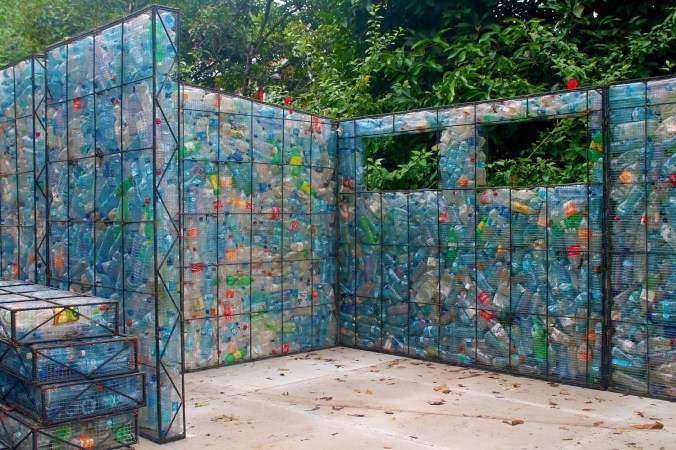
A Canadian man, Robert Bezeau, who lives in Bocas del Toro, Panama, woke up from a dream one night that transformed the future of a village – and our perception of plastic bottles. Bezeau dreamed of a village where everything was made of bottles and instead of leaving the idea dormant in his mind, he decided to act on his vision and turn it into a reality.

One hundred and fifty million tones of plastic waste are estimated to be floating in our oceans, and at the current pace it is predicted that by 2050 there will be more plastic than fish in the sea. Assuaging this brutal prediction, Bezeau’s company, Plastic Bottle Village, builds houses, roads, and more from plastic bottles that are collected from the surrounding communities. Continue reading

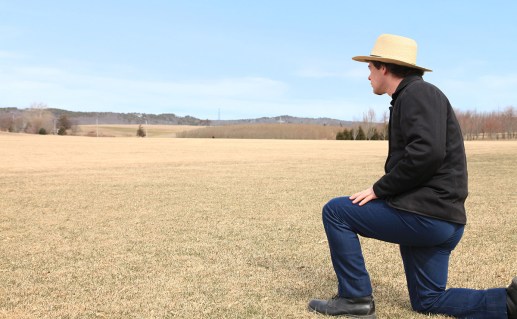
Regenerative Agriculture Revolution

kempfhero

Source: Modern Farmer

Organic farming is the agricultural “trend” that we keep hearing about for the future, but what about a different type of farming method that is not certified organic but is still environmentally friendly? The following is the story of John Kempf, a young Amish man who embarked on a quest to rescue his family farm from worsening disease and pest problems and from it all, became a staple in the alternative-agriculture lecture circuit and founder of a consulting company, Advancing Eco Agriculture (AEA). Here’s his story as shared on Modern Farmer:

Once he finished school at age 14, Kempf went to work on his family’s fruit and vegetable farm in northeastern Ohio, overseeing irrigation, plant nutrition and herbicide and pesticide applications. In the fields, Kempf used horses instead of a tractor, with a sprayer powered by a small Honda engine.

It was a trying time for the family. Pests and disease were ravaging the crops, and Kempf found himself mired in escalating chemical warfare against them, with little success. Things hit a low point in 2004, when well over half of the Kempfs’ mainstay crops – tomatoes, cucumbers, zucchini and cantaloupes – were lost. With the family staring at an increasingly bleak financial situation, Kempf, then 16, set off on his mission to relearn everything he’d been taught about farming.

Continue reading

High Fashion Upcycling

om-archist_upcycling

Source: triplepundit.com

The concept of upcycling has become a movement thanks to innovative and sustainable companies that divert our wasteful habits and produce other goods in order to recreate the cycle in nature: nothing goes to waste. An example of one of these companies in the clothing industry is Looptworks. The company only uses excess materials that would have otherwise been incinerated or ended up in landfills to create high-quality bags, accessories and apparel.

Co-founder Scott Hamlin noticed the issue of clothing material waste in the manufacturing process during the time he worked for a large outdoor apparel company.

“Thirty percent of our materials never actually got used in manufacturing,” Hamlin said of his prior work experience with an outdoor gear company. “To me, that was a huge issue that nobody was talking about. It was dealt with as ‘business as usual.’”

Continue reading

A Portable Power Plant

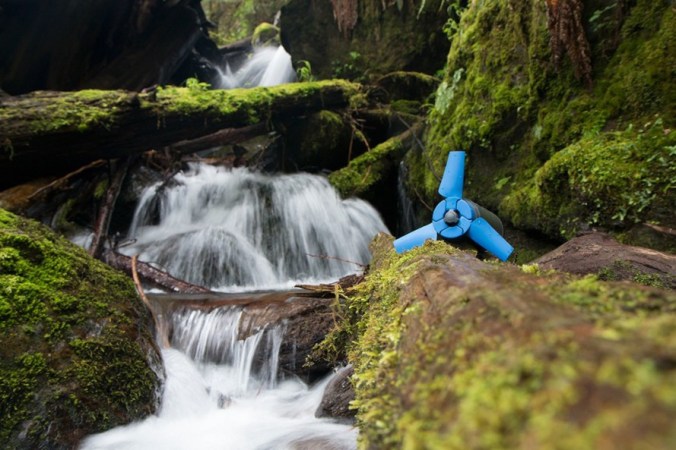
estream-portable-hydro-power-plant-blades-889x593

Source: Enomad.com

I believe I can confidently say that all of us at some point during a nature outing have run out of battery power on our cell phone or camera just at the moment we were about to capture a magnificent shot of a cool animal or a picturesque landscape. There are plenty of portable battery chargers that can spare us from those despairing occurrences, but what about one that uses a renewable energy source to charge? I bet you’re guessing it’s solar powered, but that would be too ordinary for the developers at Enomad. They have created a portable hydroelectric generator called Estream that can fit easily into a travel pack. The tube-like device has three turbines which rotate when placed or dragged underwater and the energy created from the rotating turbines gets stored in the battery attached. The battery takes about 4.5 hours to charge, and can power up a maximum of three smartphones, GoPros, or even tablet PCs.

Continue reading

A DIY Desalination Machine

fayez-al-hindi-solar-desalination-3-889x514

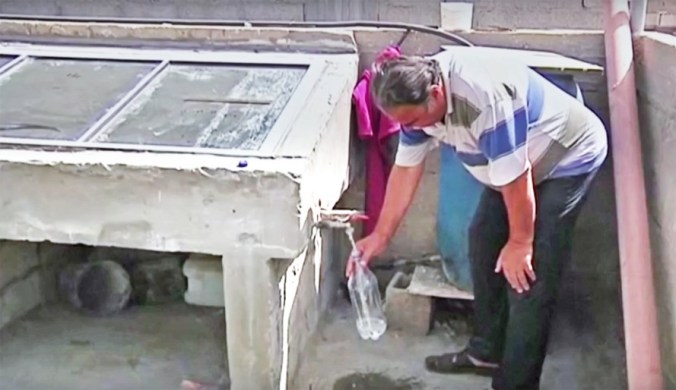
Fayez al-Hindi gathering drinking water from his solar-powered desalination machine Source: Inhabitat.com

We love DIY (Do-It-Yourself) projects, especially when they involve creating a  sustainable mechanism that solves a critical problem. Fayez al-Hindi, a resident of the Gaza region, created a homemade solar-powered desalination machine that can produce 2.6 gallons of fresh water every day. His creation is of particular importance considering that 90 percent of the region’s water supply is unfit for human consumption. Al-Hindi’s distilled water was proven to be safe drinking water by the Coastal Municipalities Water Utility. The most promising part of the story is that he plans to help other local residents build their own distillation systems, making potable water accessible to a greater number of people.

Watch the video on his invention below! Continue reading

Grubby Animal Feed

4980

Source: The Guardian

Two Georgia Tech graduates (who also happen to be cousins), Sean Warner and Patrick Pittaluga, are breeding and selling an insect many people consider revolting in order to provide a more sustainable substitute for animal feed (if you are about to eat a meal, I recommend postponing this article for a later, food-free, time). The insect they are growing is larvae, specifically black soldier fly larvae. Grubbly Farms, the name of their company, dries the larvae and sells them whole as chicken treats. This is a more sustainable protein and fat source for chickens, pigs and farmed seafood compared to the more popular animal feed that is based on fish, called fish meal.

Around 75% of the fish used in [conventional fish meal] are wild-caught species of small fish such as anchovies, herring and sardines. Demand for these species will likely increase as the world relies more on fish farming – and less on depleting wild fish stocks – to feed the growing appetite for seafood.

Grubbly Farms’ business plan isn’t just about creating more nutritious and sustainable animal feed, Warner said. It’s also looking to tackle America’s billion-dollar problem with food waste – produce and leftover foods being tossed away by businesses and homes and clogging up landfills at the rate of 52m tons per year. Warner is feeding the larvae fruit and vegetable pulp from a local juicery, and the company has also recently started working with a bakery to add days-old bread to the mix. Warner estimates that once production is up-and-running, they will use around two tons of food waste a day.

Continue reading

Kakaw Designs

kakaw_zpsromz8y4q

Image from Vimeo

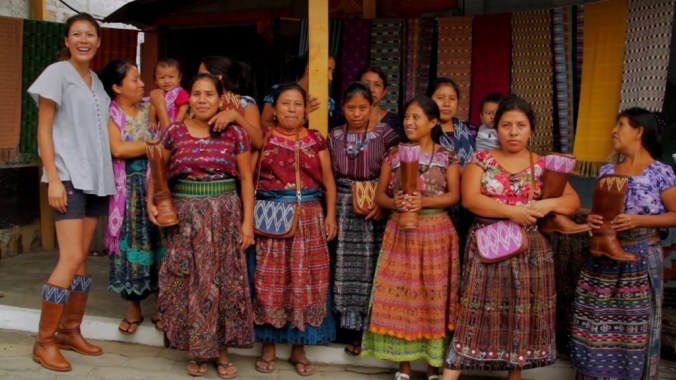
Recently I was introduced to a small online business that sells handmade women’s boots and bags called Kakaw Designs. Seth met the company’s founder, Mari, before his work at the school they both taught at in the Galapagos four years ago and mentioned the ethical concept of her business.

Continue reading

Drink Maple? Sure

squam-swamp-run-maple--3781_wide-e793fcc0e7e7afb2f5f94466ffbbc47899d9fbae-s1400-c85

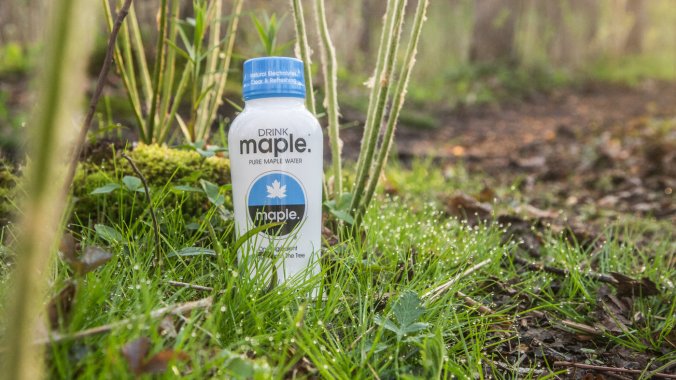
Courtesy of Drinkmaple

 Those of us who grew up in maple territory can easily relate to this, and even place palm on forehead and ask–why didn’t I think of that?–so thanks to the Salt over at National Public Radio (USA) for this:

From Tree To Tap: Maple Water Makes A Splash

Unlike syrup, which is boiled down into a thick, sticky liquid, maple water is made from unprocessed sap that is 98 percent water. Its growing popularity is a boon for local farmers. Continue reading

Changing Our Eating Habits

impossible-foods-6_edited_custom-7dc5fbab4da8c072dcd7f800ee14c96766bb0f58-s1400-c85

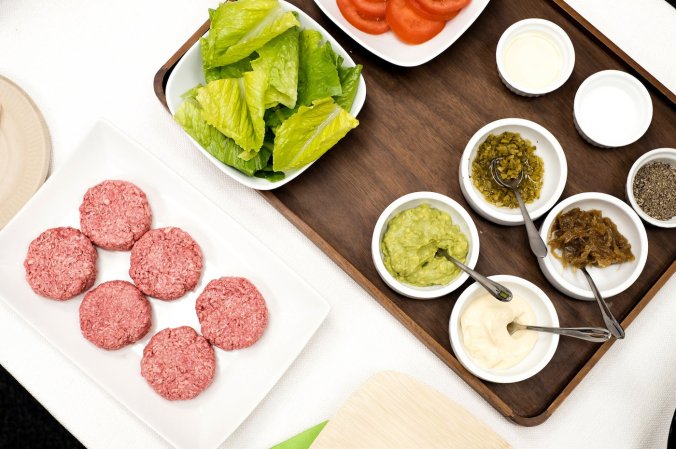
Silicon Valley-based Impossible Foods has taken a high-tech approach to creating a plant-based burger that smells and tastes like real meat. At the company’s headquarters in Redwood City, Calif., chef Traci Des Jardins served the Impossible Burger (pictured uncooked) with vegan mayo, Dijon mustard, mashed avocado, caramelized onions, chopped cornichon, tomato and lettuce on a pretzel bun. Maggie Carson Jurow

Full disclosure first: we operate restaurants that serve meat. It is always the best quality meat we can source, and best includes the most humane and most ecologically sensitive growing conditions. But still, it is meat, and meat is problematic. So, we tread lightly when we speak about our behaving responsibly, and try to minimize judgementalism.

When we get reminders of the importance of reducing meat consumption we know it is true, but we still ensure all our guests are able to get, within reason, the best of what they want food-wise.  I spent more time, and consumed more calories than I care to count, taste-testing for the new menus at three hotel restaurants in the last two years; that is my own sin to bear, and I am in penance mode now, trust me.

So, when I see a good feature story related to vegetarianism, or to vegetarian innovations, I am all in. Here is one from the Salt show on National Public Radio (USA) and I look forward to taste-testing it:

This summer, diners in New York, San Francisco and Los Angeles will get their hands on a hamburger that has been five years in the making.

The burger looks, tastes and smells like beef — except it’s made entirely from plants. It sizzles on the grill and even browns and oozes fat when it cooks. It’s the brainchild of former Stanford biochemist Patrick Brown and his research team at Northern California-based Impossible Foods. Continue reading

Shoutout To Tyler Gage & His Runa Crew

RunaLast time I spoke with Tyler, he was just a couple years into his startup. He and I both participated in a program to share our experiences in the form of a live case study shared with social entrepreneurship students at Brown University, which inspired me for quite some time. Still does. Tyler was kind enough to contribute on this site back when he had time. Look at him now. Wow. This story in Scientific American is worth the read:

Can Tea Help Save the Amazon?

An effort in Ecuador might point the way to a more sustainable future for the rainforest and people

Continue reading

CO2 + Brine = Baking Soda and More

Map showing the largely artificial salinity of the Persian Gulf.

Desalination is clearly going to be a very important technology for the future, as our drinking water supply dwindles. Carbon capture/storage is also an imperative process to be working on in an effort to slow down global warming in any way possible. So the fact that a scientist at Qatar University is working on a process that takes pure CO2 waste from natural gas plants, waste brine from desalination plants, and ammonia, which all react chemically to create sodium bicarbonate (baking soda), calcium chloride (used as a preservative or tanning chemical), and ammonia (which can be recycled to continue the process). Erica Gies reports for Scientific American:

Farid Benyahia wants to solve two environmental problems at once: excess carbon dioxide in the atmosphere and excess salt in the Persian Gulf (aka the Arabian Gulf). Oil and natural gas drive the region’s booming economies—hence the excess CO2—and desalination supplies the vast majority of drinking water, a process that creates concentrated brine waste that is usually dumped back into the gulf.

Continue reading

The Origins of E-Ink

Some of us contributors to the blog are Kindle users. We all have friends that are obstinate book-handlers and would never give up the feeling of rustling pages or the musty smell of yellowing paper, and we understand the appeal, but sometimes the convenience of having several books packed into one slim package is too much to give up. But one thing we’ve taken for granted is the relatively new technology of e-ink. How does it work? When was it invented? Chau Tu reports for Science Friday in an article from a few weeks ago:

When Amazon introduced its first Kindle back in 2007, it raved about the e-reader’s “crisp, high-resolution electronic paper display that looks and reads like real paper, even in bright sunlight.” The tablet did not use the LCD screens that most consumers saw on their laptops or TVs. “It reflects light like ordinary paper and uses no backlight, eliminating the eyestrain and glare associated with other electronic displays such as computer monitors or PDA screens,” Amazon boasted.

Continue reading

Sustainable Socks

20160331SOCKS-slide-HQ12-videoSixteenByNine1050-v3

Raymond McCrea Jones for The New York Times

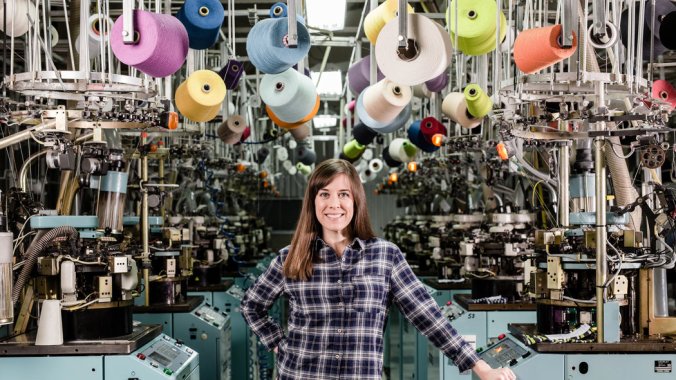
News about socks? News about the deep south of the USA? Both seemed unlikely to show up on these pages until just a few minutes ago. And then we read this, and it fits the news we can use test:

A Podcast Worthy Of The Binge

startup_logo_small2

Alex Blumberg was only vaguely familiar to me when I listened to an interview with him on a podcast series that accompanied my early morning bicycle rides in late 2015. I had listened to Planet Money on occasion, and found it amusingly interesting most of the time. I had rarely, if ever, listened to This American Life, though many friends had recommended it.

Blumberg caught my full attention in this conversation recorded in October, 2014 as he described the process of sharing his experience starting up a new company. Continue reading

What The Holiday Wrought

071029_r16568c_p646-320

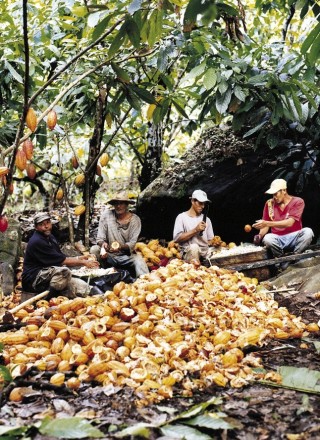
Cutting cacao pods on Diego Badaró’s farm, in Bahia. PHOTOGRAPHS BY JASON FLORIO

Because celebrating the Easter holiday is now so closely associated with chocolate, I presume, this article from the archives is suddenly front and center at one of our favorite websites. During our time in India I have learned from artisanal chocolatiers about Cadbury, among other big candy companies, who incentivized the removal of the high quality cacao that was growing here, in favor of more economical lower quality cacao. Bummer.

I remember first learning about chocolate from this article (click the image to the right to go to it), and it was worth the time to read it again based on my now-expanded interest in chocolate; also because it is a great story of entrepreneurship; and because Bill Buford is one of the greatest long-form writers on food:

Extreme Chocolate

The quest for the perfect bean.

BY BILL BUFORD

On July 7, 2001, Frederick Schilling and his girlfriend, Tracey Holderman, arrived in New York to attend the Fancy Food Show and launch Dagoba, an organic-chocolate company. Schilling had just turned thirty, Holderman was twenty-nine, and the show was the first entrepreneurial event of their lives. Dagoba had no employees and no orders. It had a lease for a ground-floor industrial space in Boulder, Colorado (the “factory”), and an investment of twenty thousand dollars (borrowed from Schilling’s mother and an uncle), which, after flights, a hotel, and a fee for the smallest possible booth, against a dark wall in the basement of the Jacob K. Javits Convention Center, was gone. It also had “launch products”—seven bars, including infusions of raspberry and mint—an amateurish jamboree, confected and poured into molds by a man who had never liked chocolate, hand-wrapped by a woman who rarely ate more than two ounces a year, and tested only by their Boulder friends and roommates, a scraggly crew of ski bums and folksingers. Dagoba was more bedroom than boardroom. In New York, that changed. Continue reading

Agripreneurship

A wonderful aspect of both young people and entrepreneurs is their ability to find creative solutions to apparently insoluble problems. The two overlap beautifully within the Global Forum on Agricultural Research (GFAR) and the Youth Agripreneurs Project (YAP), where the goal is to pilot innovation to help rural communities world wide.

Kulisha, which is the verb ‘to feed’ in Swahili, the national language of Kenya, is a proposed project that addresses both the problem of creating a sustainable food source in Kenya and the extractive fishing methods of coastal trawlers. Aquaculture is an important food industry in East Africa, but the method of using fish meal from wild caught anchovies is destructive on all levels. Kulisha’s goal is to produce sustainable fish feed in Kenya made from black soldier fly larva.

Our idea, Kulisha, will provide a low-cost, high-quality sustainable fish feed made from black soldier fly larvae. We will sell dried insects to these rural fish farmers to replace the anchovies they are using to mix their own. In addition, we’ll produce a nutrient-rich fertilizer as a by-product from raising the insects which will be sold at a low cost to local crop farmers. It is our long term goal to formulate and sell our own feed. Continue reading

Entrepreneurship, Ghana and Bamboo Bikes

In the early days of this site I wrote with enthusiasm about High Design bamboo bikes. We can’t overstate the importance of bicycles in both rural and urban environments.

Ghanian Entrepreneur Bernice Dapaah’s work is not only empowering the women who she employs in making bamboo bicycles, but the product should serve as an inspiration to people worldwide,  Continue reading

Hiking for E-mail

mahabir pun

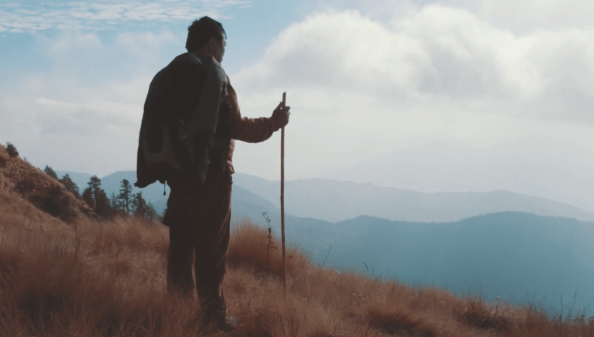
For six years, Mahabir Pun trekked long distances to check emails in Nepal. Until he brought the Internet home to his remote village. PHOTO: Hiking for Emails, Vimeo

In India, there exists this dwindling practice of writing letters to the Editor. Of publications. Most people write on current affairs, some write to highlight issues that range from a lack of streetlights to dissent. Some write in to commend actions, public campaigns. A handpicked bunch of these are published in a column titled Letters to the Editor. Mahabir Pun of a remote village in the mountainous country of Nepal wrote to BBC, asking for help to bring the Internet home.

Continue reading