International Seabed Authority

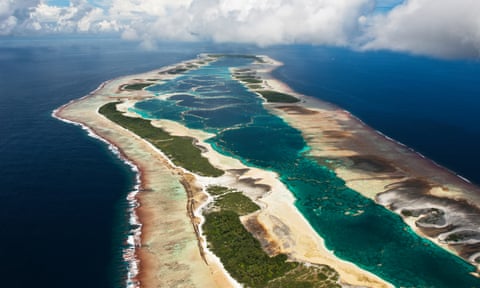
A long thin atoll around a lagoon

The Millennium Atoll in Kiribati, the Pacific state that is sponsoring Michael Lodge for re-election as ISA leader. Photograph: Mauricio Handler/Getty

Before we leave the subject of oceans, back to the question of how their protection is managed, and by whom.

We are learning today that some of the planet’s smaller nation states have a potentially significant, and clearly long overdue influence on how the oceans surrounding them will be protected:

The rare dumbo octopus (Cirrothauma murrayi)

The rare dumbo octopus (Cirrothauma murrayi) is one of many creatures potentially at risk from deep-sea mining. Photograph: NOAA

Inside the battle for top job that will decide the future of deep-sea mining

Marking a pivotal moment for the fate of the barely known ecosystems on the ocean floor, 168 nations will decide this week who will head the International Seabed Authority

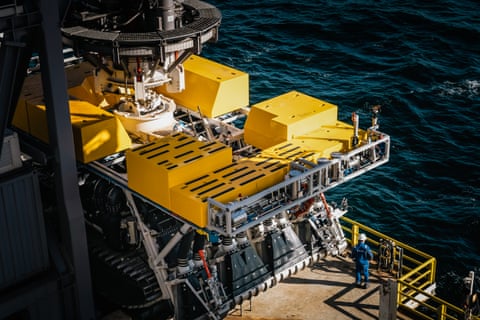
Deep-sea mining exploration machinery in the Pacific Ocean

Deep-sea mining exploration trials under way in the Clarion-Clipperton Zone of the Pacific Ocean between Hawaii and Mexico. Photograph: Richard Baron/The Metals Company

Leticia Carvalho is clear what the problem is with the body she hopes to be elected to run: “Trust is broken and leadership is missing.” Later this week, at the headquarters of the International Seabed Authority (ISA) in Kingston, Jamaica, nations negotiating rules governing deep-sea mining face a critical vote that could impact the nascent industry for years: who should be the next leader of the regulatory body? Continue reading

The Ocean’s Depths & You

An illustration of sea creatures floating in outer space. The planet Earth is in the center.

Isabel Seliger

While Brisa surfs in Tahiti, the fate of our oceans will be on our minds. While not self-evidently important to most of us, most of the time, their scale on our planet gets us to pay attention when someone makes the case. Porter Fox, who reports on climate change, has come to the following conclusions with regard to those waters:

There’s a New Reason to Save Life in the Deep Ocean

Honey Long and Prue Stent

To most of us, the ocean is a no man’s land — a vast, bottomless and uncharted void. Three-quarters of the ocean has never been seen by humans, and only a quarter of its floor has been mapped in detail, which means we have a better understanding of the surface of Mars than we do of the seas on our own planet. It is this lack of exploration and appreciation — particularly of the layer of cold, dark water that begins where light fades, known as the ocean’s twilight zone — that has led us to a very precarious place. Continue reading

Hydropower In The Age Of Climate Change

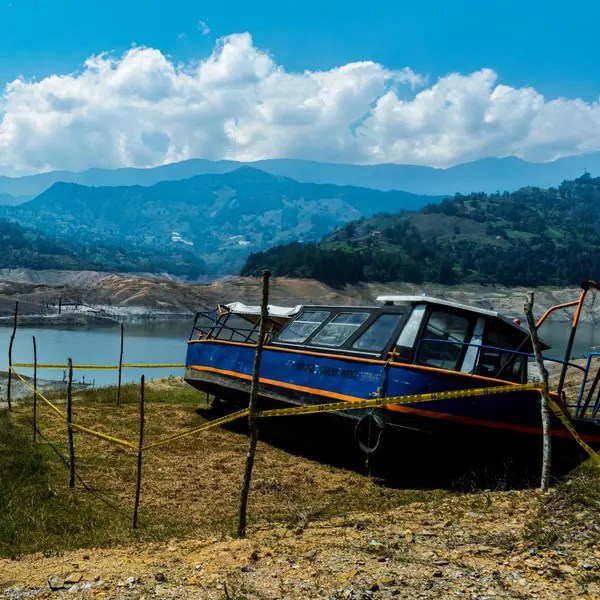
A dry section of the Guavio Reservoir that feeds the Guavio Hydroelectric Power Plant in Gachala, Colombia, in April. Jhojan Hilarion/Agence France-Presse — Getty Images

We knew that dams’ days are numbered, but the evidence keeps mounting:

When Hydropower Runs Dry

The struggle of the world’s largest source of renewable last year could have important implications for the fight against climate change.

Global pollution from electricity generation was set to fall last year, thanks to the growth of renewable energy. Then came the droughts.

Hydropower, the biggest source of renewable energy in the world, was crippled by lack of rain in several countries last year, driving up emissions as countries turned to fossil fuels to fill the gap. Continue reading
Vermont Vote Victory

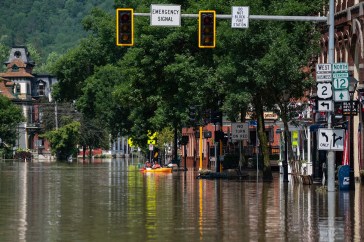
Flooding in downtown Montpelier, Vermont, in July, 2023.Photograph by John Tully / Washington Post / Getty

When you read to the end of this short commentary, you will wonder whether this is a victory at all, but when Elizabeth Kolbert says it is, it probably is. It just requires more pondering to understand how it is:

Vermont Moves to Hold Fossil-Fuel Companies Liable for Climate-Change Damage

A new constituency is willing to stand up to Big Oil (and Gas and Coal): state government.

On July 10, 2023, Vermont’s state capital, Montpelier, was hit with more than five inches of rain. Continue reading
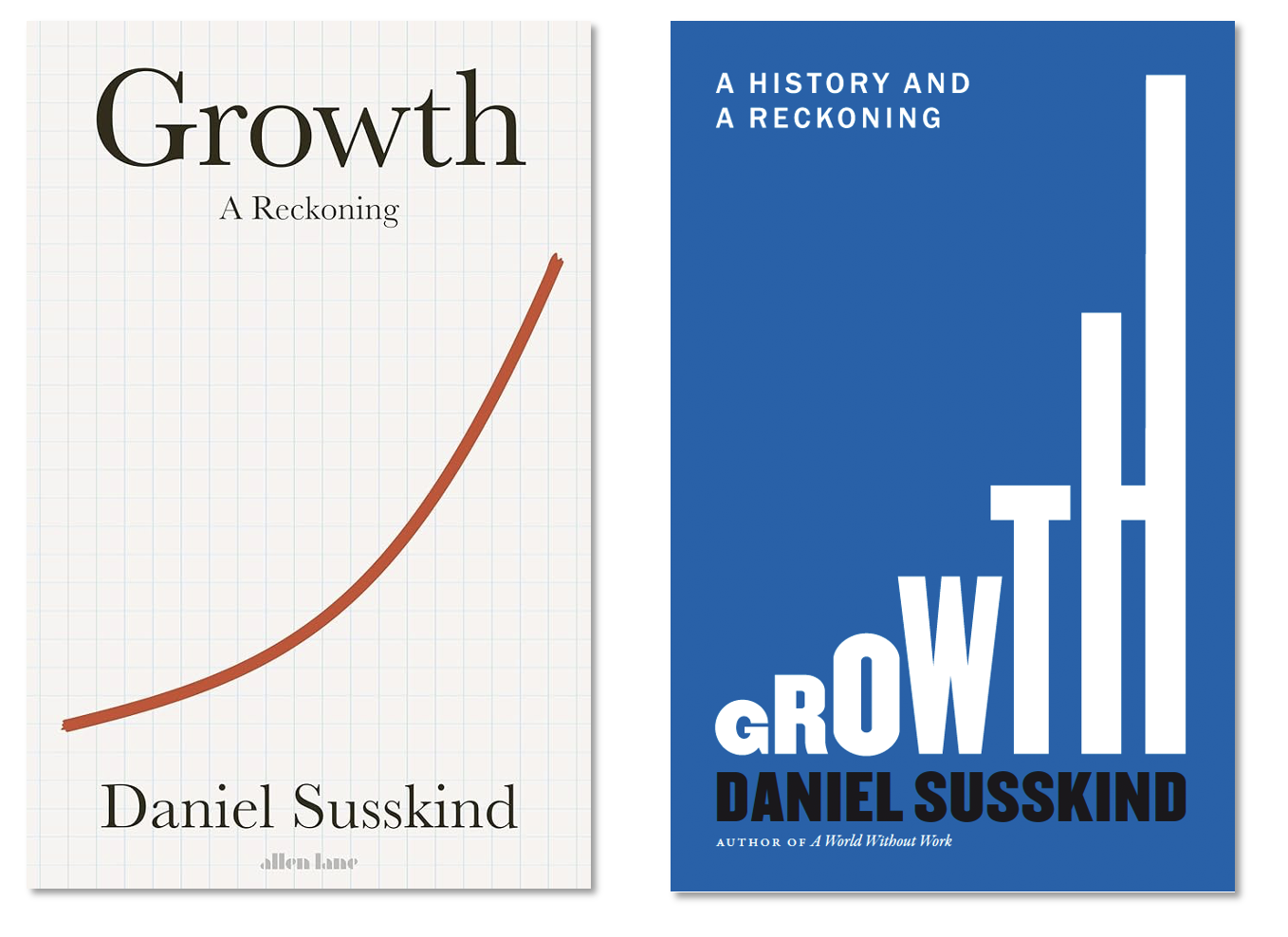
Idrees Kahloon On Daniel Susskind On Growth

Idrees Kahloon is an excellent discussant on the Economist podcast, and reviews Daniel Susskind’s new book in the current issue of the New Yorker:

Capitalism, as it has been practiced throughout the past century, has brought with it plenty of problems; as with any engine, harnessing it properly requires controlling it properly.Illustration by Carl Godfrey; Source photographs from Alamy; Getty

The World Keeps Getting Richer. Some People Are Worried

To preserve humanity—and the planet—should we give up growth?

In April, 1968, a consequential meeting took place in the Villa Farnesina, a stately Roman home built for Pope Julius II’s treasurer and adorned with frescoes by Raphael. The conveners were Alexander King, a Scottish chemist who directed scientific affairs for the Organization for Economic Co-operation and Development, and Aurelio Peccei, an Italian industrialist who simultaneously held executive positions at the automaker Fiat, the typewriter manufacturer Olivetti, and a large consulting firm. Continue reading

One Film, Two Decades Of Influence

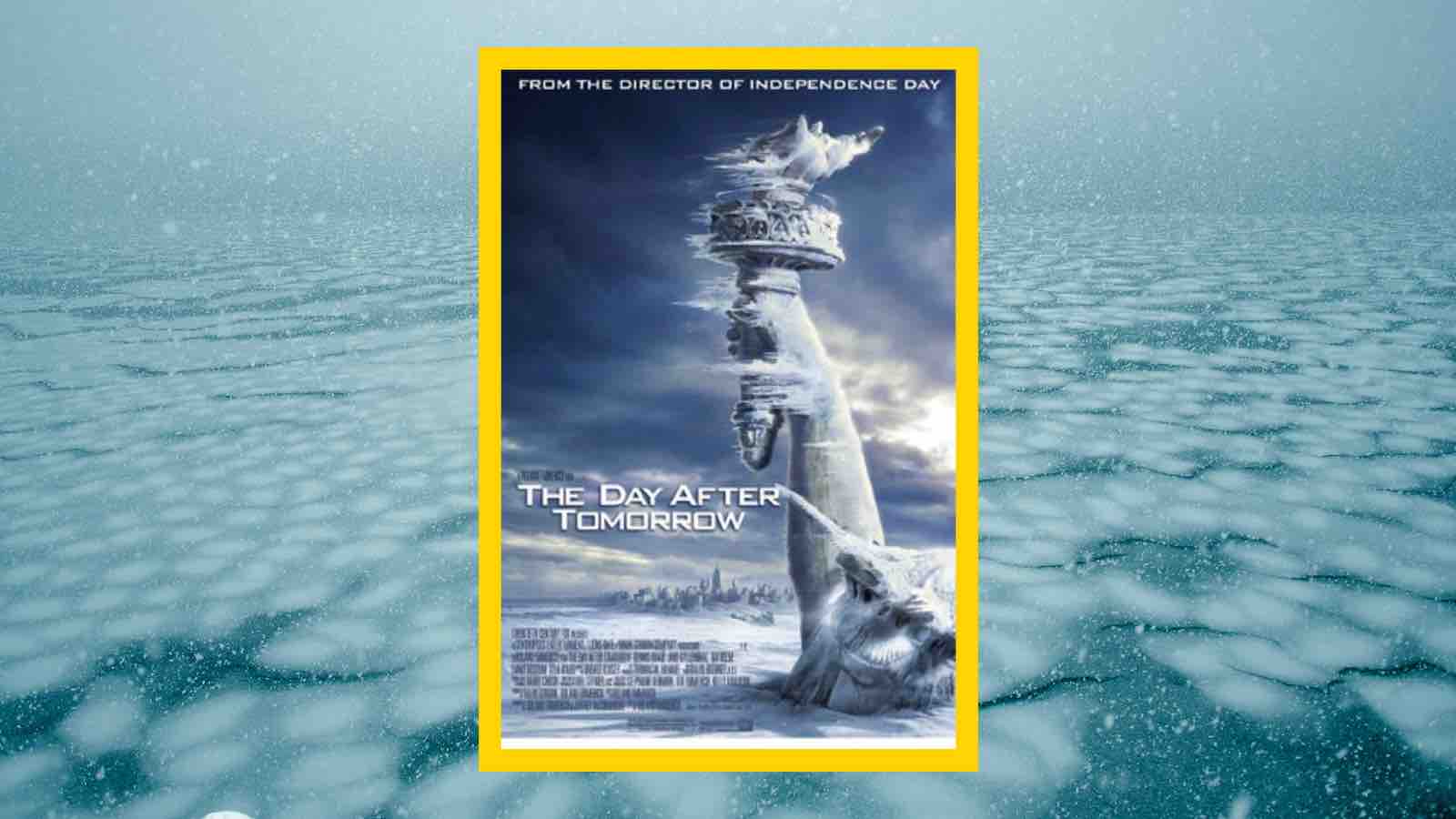
It has not been top of mind for any of us contributing to this platform, but Michael Svoboda, the Yale Climate Connections books editor, puts the influence of this film in perspective:

The enduring influence of “The Day After Tomorrow,” 20 years later 

The groundbreaking film popularized an extreme climate scenario. To what effect?

It has been 20 years since we first saw the paleo-climatologist Jack Hall, played by Dennis Quaid, standing at a railing overlooking a command center at NOAA and asking his colleagues the question that baffled them: “What about the North Atlantic Current?” Continue reading

Ever Green & Restoration Of Abundance

We missed Ever Green when it was published last year, but it came to our attention through this essay by one of its co-authors in the current issue of The Atlantic. The essay is about a path to the restoration of hope:

Our Once-Abundant Earth

Protecting species from extinction is not nearly enough.

When Otis Parrish was a kid in the 1940s, abalone were abundant. Each abalone grows in a single, beautiful opalescent shell, which can get as big as a dinner plate. Parrish’s father showed him how to pry the abalone off the rocky shoreline at low tide with an oak stick or the end of a sharpened leaf spring. Continue reading

Not The End Of The World

This book came to my attention through an episode of Ezra Klein‘s podcast:

Cows Are Just an Environmental Disaster

The environmental data scientist Hannah Ritchie argues that climate technology is increasingly catching up to the world’s enormous need for clean energy and with a few changes, a more sustainable future is in sight.

Marshes Matter, And This One More Than Many

The outer edge of the Nartë lagoon in Vlorë, Albania. YURIY BRYKAYLO / ALAMY STOCK PHOTO

I have worked in some of Albania’s most important coastal and inland bird habitats, though not this one. My time working there is not my only reason for caring about this particular location. Read on–thanks as always to Fred Pearce–to understand why it matters so much. No offense intended to Jared Kushner, but this is not one of his better ideas. The destruction is not worth whatever it is he is hoping to accomplish:

Jared Kushner Has Big Plans for Delta of Europe’s Last Wild River

Albania’s Vjosë River is known as Europe’s last wild river, and its pristine delta is a haven for migratory birds. As plans for luxury developments there — spearheaded by Donald Trump’s son-in-law Jared Kushner — move ahead, conservationists are sounding the alarm.

It is the jewel of the Adriatic. Its shimmering waters feed a rare colony of Dalmatian pelicans, the world’s largest freshwater birds, sustain the endangered Albanian water frog, and host loggerhead turtles on its encircling dunes. Continue reading

Responding To A Red Alert

Another reason to subscribe to Bill McKibben’s newsletter:

How Not to Act in an Emergency

Forget AI–we need some human intelligence

We’re getting right to the nub now.

Yesterday the World Meteorological Organization officially certified 2023 as the hottest year in human history. Just to put on the record here what should have been the lead story in every journal and website on our home planet:

Andrea Celeste Saulo, secretary general of the WMO, said the organisation was now “sounding the red alert to the world”.

The report found temperatures near the surface of the earth were 1.45C higher last year than they were in the late 1800s, when people began to destroy nature at an industrial scale and burn large amounts of coal, oil and gas.

Last year’s spike was so scary that NASA’s Gavin Schmidt—Jim Hansen’s heir as keeper of NASA’s climate record—wrote in Nature this week that it raised the most profound possible implications. Please read his words slowly and carefully: Continue reading

McKibben On Responsibility & Accountability

Vermont’s capitol city, underwater in epic July flooding that wrecked most of Montpelier’s retail district

Holding the responsible accountable is part of Bill McKibben’s objective; he also provides sunshine. Subscribe to this newsletter if you can:

You flood it, you pay for it.

States are considering ‘climate superfund’ laws to hold Big Oil accountable

One prong of the climate fight involves installing so much renewable energy that fossil fuel use actually declines dramatically—a few places are finally showing that’s possible, like sunny Germany which last week said emissions in 2023 dropped more than ten percent. Continue reading

When Embarrassment Really Means Shame

Alex Wong / Getty

The sentiment is appreciated, but we should use the stronger word, shame, in describing the feeling many of us share:

Goodbye to America’s First Climate Envoy

John Kerry believes the world can still limit global warming, even if U.S. climate politics are “embarrassing.”

The smallest hint of frustration had crept into John Kerry’s voice. We were talking about international climate diplomacy, which for the past two years has been Kerry’s job as the U.S. special presidential envoy on climate, a role President Joe Biden created to signal his commitment to the issue. Continue reading

The Last Fire Season, Reviewed

Fire and its suppression are topics we are never quite sure about. Scientifically, there may be a correct answer. But this personal account sounds worthy of consideration as well.  This book review by Casey Schwartz in The Atlantic makes a compelling case:

Living Through the End of California
In a new book, Manjula Martin faces up to the way the altered environment of her home state will change her life forever.

In his 1998 book, Ecology of Fear, Mike Davis, the late California muckraker and self-proclaimed Marxist environmentalist, made the case for “letting Malibu burn.” Continue reading

Scotland’s Farmed Salmon Deserves Attention

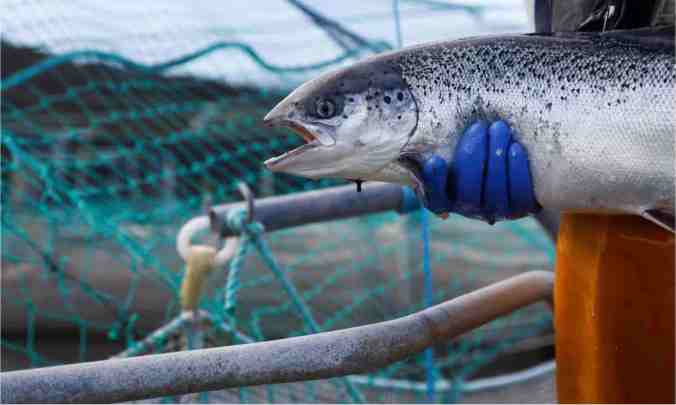
Salmon farms certified as organic have to adhere to certain standards. Photograph: Murdo MacLeod/The Guardian

Scotland has been moving in the right direction in other ways, so this call for action in an area where they have not been leading with best practices is worthy of attention. Thanks to the Guardian’s Karen McVeigh for providing it:

‘Unacceptable greenwashing’: Scottish farmed salmon should not be labelled organic, say charities

Open letter calls for Soil Association certification to be removed from industry, amid concerns of negative environmental impact

The British body that certifies food in the UK as organic has been accused of misleading consumers over its labelling of Scottish farmed salmon.

Thirty charities, conservation and community organisations, including WildFish, the Pesticide Action Network and Blue Marine Foundation, say the negative environmental impacts of the industry in Scotland “run completely counter” to the principles of the Soil Association’s promotion of healthy, humane and sustainable food. Continue reading

A 20-Minute Read On Problematic Forest Management Policies

Elizabeth Kolbert always carries out her duty, which often makes it difficult to savor life’s small pleasures or even big victories without considering the law of unintended consequences. Give 20 minutes of your time to this one:

The Perverse Policies That Fuel Wildfires

Strategies intended to safeguard forests and homes have instead increased the likelihood that they’ll burn.

The provincial government of Alberta defines a “wildfire of note” as a blaze that could “pose a threat to public safety, communities or critical infrastructure.” Continue reading

Dismantling Regulation

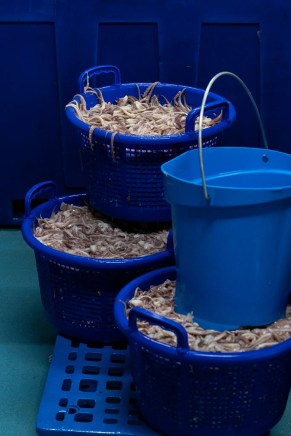
Bins of squid waiting to be packaged in Cape May. In a good week, Mr. Bright said his boats can bring in $100,000 worth of herring. Rachel Wisniewski for The New York Times

You can read the story or click the photo of William Bright below right to hear an explanation of how his case may be the end to regulation as we know it.

A Fight Over a Fishing Regulation Could Help Tear Down the Administrative State

The Supreme Court will hear arguments on Wednesday over whether to overturn a key precedent on the power of executive agencies.

On a blustery fall morning in southern New Jersey, the weather was too rough for the fishing boats at the center of a momentous Supreme Court case to set out to sea.

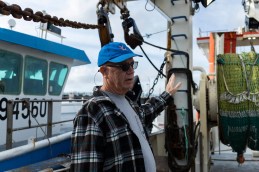
William Bright, a fisherman in New Jersey. He is the lead plaintiff in a case that could undermine the power of executive agencies, a long-sought goal of the conservative legal movement. William Bright, a fisherman in New Jersey. Photo: Rachel Wisniewski for The New York Times

A herring fisherman named Bill Bright talked about the case, which will be argued on Wednesday and could both lift what he said was an onerous fishing regulation and wipe out the most important precedent on the power of executive agencies, a long-sought goal of the conservative legal movement.

As workers cleaned squid and the salt air whipped over the docks, Mr. Bright, who has been fishing for 40 years and whose family-owned company is one of the plaintiffs, said he recognized the impact the case could have. Continue reading

Plastic’s Plentiful Problems

Emil Lippe for The New York Times

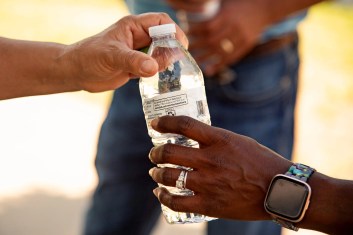
The waste has been our main objection to plastic water bottles. But there are other major questions.

We have reason to wonder (more on that another day) whether water in reusable glass bottles is an answer to this one:

Bottled Water Is Full of Plastic Particles. Can They Harm Your Health?

Here’s what scientists know so far about the health effects of nanoplastics, and what you can do to reduce your exposure.

A liter of bottled water contains nearly a quarter of a million pieces of nanoplastic on average, according to new research published this week in the Proceedings of the National Academy of Sciences. Continue reading

The Great Carbon Divide

While the wealthiest 1% tend to live climate-insulated lives, their emissions are responsible for immense suffering. Illustration: Guardian Design

Jonathan Watts, whose work we have been linking to for some years now, is the global environment editor for the Guardian, and this may be his most revealing story yet.

Even if you are not in the 1%, if you are not in the bottom 66% the implications for all of us on the wealthier side of the divide are challenging:

Richest 1% account for more carbon emissions than poorest 66%, report says

‘Polluter elite’ are plundering the planet to point of destruction, says Oxfam after comprehensive study of climate inequality

The richest 1% of humanity is responsible for more carbon emissions than the poorest 66%, with dire consequences for vulnerable communities and global efforts to tackle the climate emergency, a report says. Continue reading

Letters To The Secretary

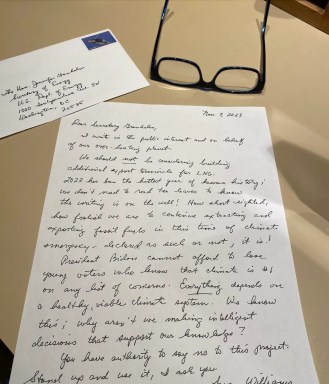
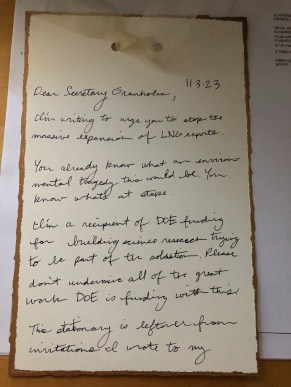
We have appreciated this newsletter since it started, and every issue since. This week it brings these handwritten letters to our attention:

…Oh, and who’s the other group of climate voters the president needs to worry about? That would be older people, like those of us at Third Act—we codgers have been organizing mass protests all year. And while we may not be TikTok savvy, we have another weapon: pen and stationery. In the last week Third Actors have unleashed thousands of letters on DOE headquarters—which may not sound quite as sexy as petitions from the Internet, but they have their own impact, since officials know that if you’re willing to do more than click you’re probably an effective and motivated adversary.

So consider [image above left]

Or [image to the right]

What I’m trying to say is, the Department of Energy has a real problem—an increasingly aware and activated posse of youngsters and oldsters. And a solution: announce CP2 is going nowhere, and that no other project will be approved, or even considered, until there’s been an exhaustive rewrite of the criteria taking into account the latest science and economics. It’s not hard. Continue reading

Climate Scientist Wields Words Well

Carl Recine/Reuters

Kate Marvel is a climate scientist at the environmental nonprofit Project Drawdown, and was a lead author on the Fifth National Climate Assessment. She has well-informed opinions and as we have noted before, she knows how to express them clearly:

I’m a Climate Scientist. I’m Not Screaming Into the Void Anymore.

Two and a half years ago, when I was asked to help write the most authoritative report on climate change in the United States, I hesitated. Did we really need another warning of the dire consequences of climate change in this country? Continue reading