Not So Happy Earth Day

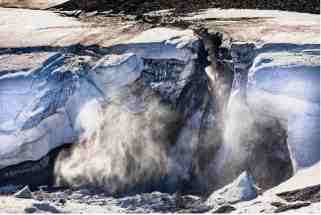
Over the past three decades, the rate of ice loss from Greenland has increased sevenfold. Photograph by Kerem Yücel / AFP / Getty

On yet another Earth Day, whatever those two words mean together in tandem these days, a message from a reliable source:

It’s Earth Day—and the News Isn’t Good

New reports show that ice sheets in Greenland and Antarctica are melting faster than anticipated, and other disasters loom.

The Greenland ice sheet is, quite literally, a relic of the last ice age. It consists of snow that fell year after year, century after century, and never melted; at the very bottom, there are flakes that fell more than a hundred thousand years ago. Continue reading

California’s Wildflower Bloom Boom

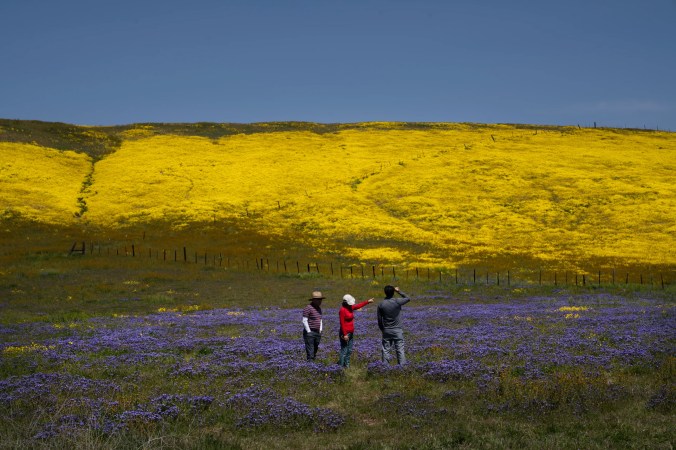
People view fields of flowers at Carrizo Plain National Monument, California’s largest remaining grassland.
Claire Harbage/NPR

When lemons are plentiful, make the best of it:

California’s destructively wet winter has a bright side. You’ll want to see it

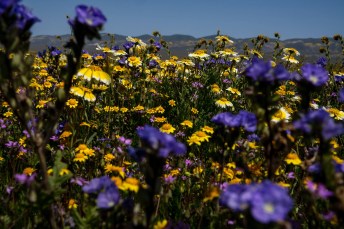
A benefit of California’s wet winter is what is known as a superbloom. Flowers including purple phacelia, yellow goldfields, hillside daisies and tidy tips grow at Carrizo Plain National Monument. Claire Harbage/NPR

CARRIZO PLAIN NATIONAL MONUMENT, Calif. — The roads are still rutted where rainwater carved them and farms are still flooded down the valley, but here in California’s largest remaining grassland, the benefits of the state’s destructively wet winter are on full display.

And they’re spectacular.

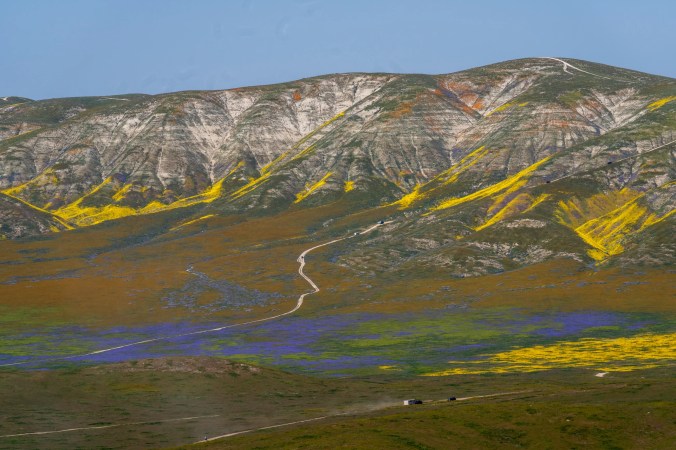
Wildflowers — yellow, purple, blue and orange — are splattered across the landscape in sweeps and pools like a clumsy airbrush painting.

Flowers are splattered across the landscape at Carrizo Plain. Claire Harbage/NPR

A superbloom. Continue reading

Fort Lauderdale Weather In Context

Police evacuate residents from this week’s epic Ft. Lauderdale floods

You probably did not need Bill McKibben’s newsletter to tell you about this weather event, but putting it in context is what he is particularly good at:

We’re in for a stretch of heavy climate

Ominous signs that the next step phase of global warming is starting;

This week’s Fort Lauderdale rainstorm was, on the one hand, an utter freak of nature (storms ‘trained’ on the same small geography for hours on end, dropping 25 inches of rain in seven hours; the previous record for all of April was 19 inches) and on the other hand utterly predictable. Continue reading

Thaw Gas Measurement

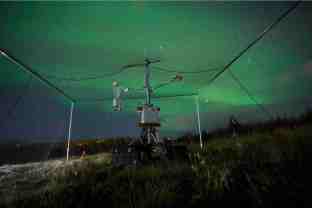
Covered in netting to deflect stray balls, these instruments gather methane data on the seventh hole of Midnight Sun Golf Course. Permafrost is rapidly thawing across the far north, deforming fairways here and releasing the highly potent greenhouse gas, which leads to more warming. PHOTOGRAPH: FRANKIE CARINO

Thaw problems are coming. Permafrost is losing its permanence. Measuring the speed and impact of the thaw is a new form of sleuthing:

The Arctic’s Permafrost-Obsessed Methane Detectives

The Far North is thawing, unleashing clouds of planet-heating gas. Scientists rely on an arsenal of tech to sniff out just how nasty the problem is.

AT THE MIDNIGHT Sun Golf Course in Fairbanks, Alaska, they say you never get the same shot twice. Continue reading

Valuation Of Biodiversity

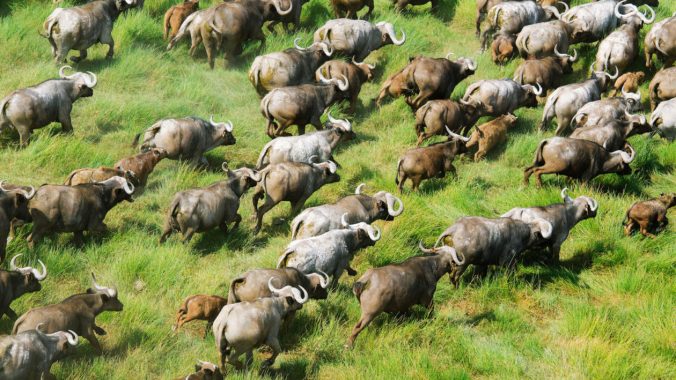
Cape Buffalo in Kenya. MARTIN HARVEY / ALAMY

Biodiversity valuation is a topic we link to from time to time, so we thank Zach St. George for this article’s contribution to our understanding:

Pricing Nature: Can ‘Biodiversity Credits’ Propel Global Conservation?

Backed by the UN, an alliance of conservationists and policymakers is devising new ways to finance the preservation of biodiversity by placing economic values on ecosystems. Some analysts say such schemes have the potential to boost conservation, but others are skeptical.

In 2009, as global financial markets shuddered, David Dorr became interested in the possibility of putting a price on nature. Dorr is a Cayman Islands-based global macro trader, attuned to what he calls the “butterfly effect” of geopolitics and other international forces on financial markets. Continue reading

Glaciers In Uganda?

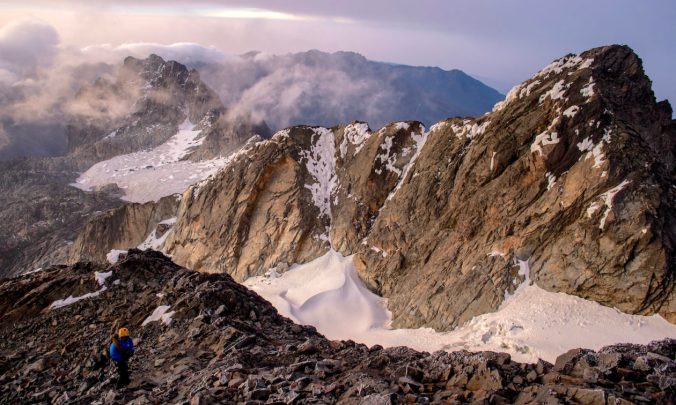
Margherita Peak, with mountain guide Uziah Kule (lower left) ascending. The Stanley Glacier is in the background. JOHN WENDLE

We should not be surprised that there are glaciers anywhere in Africa, especially given the title of a book many of us have read that name checks one of the continent’s highest mountains with reference to its snow. But still, surprise:

For Uganda’s Vanishing Glaciers, Time Is Running Out

A trek through tropical forest, mud fields, and scree reveals the last remnants of the once-sprawling ice fields in Uganda’s Rwenzori Mountains. Their loss has profound implications for local communities, uniquely adapted species, and scientists studying the climate record.

Enock Bwambale stopped at the lip of the dying glacier, its blunted nose arcing steeply down to scoured rocks, then shouted up to his fellow guide Uziah Kule that the ice was too sheer to descend on foot. Continue reading

Phosphogeddon, Peecycling & Other Modern Portmanteaus

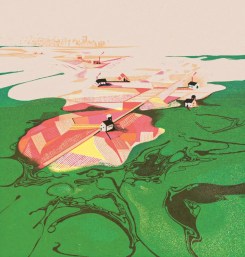
Addressing the problem, some scientists believe, may require reimagining agriculture from the ground up. Illustration by Juan Bernabeu

Stephen Porder is Professor of Ecology and Evolutionary Biology, a Fellow in the Institute at Brown for Environment and Society, and the Assistant Provost for Sustainability at Brown. Elemental is his new book looking at how life shapes Earth using basic elements we may take for granted. Read on to learn more about the book, and its wider relevance to other books now being published that discuss phosphorous.

Thanks, as always, to Elizabeth Kolbert for her book reviews, and in this case a nod to the Rich Earth Institute:
Phosphorus Saved Our Way of Life—and Now Threatens to End It

Fertilizers filled with the nutrient boosted our ability to feed the planet. Today, they’re creating vast and growing dead zones in our lakes and seas.
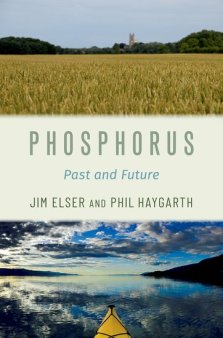
In the fall of 1802, the German naturalist Alexander von Humboldt arrived in Callao, Peru’s major port, just west of Lima. Humboldt had timed his visit to coincide with a transit of Mercury, which he planned to observe through a three-foot telescope, in order to determine Lima’s longitude. He set up his instruments atop a fort on the waterfront, and then, with a few days to kill before the event, wandered the docks. A powerful stench emanating from boats loaded with what looked like yellowish clay piqued his curiosity. From the locals, Humboldt learned that the material was bird shit from the nearby Chincha Islands, and that it was highly prized by farmers in the area. He decided to take some home with him. Continue reading

War With The Newts & Anticipation

The MIT Press ReaderJohn Rieder, an emeritus professor of English at the University of Hawai‘i at Mānoa, shares the following, excerpted from the book Uneven Futures: Strategies for Community Survival From Speculative Fiction:
On Karel Čapek’s Prophetic Science Fiction Novel ‘War With the Newts’

The Czech writer’s darkly humorous novel, published in 1936, anticipated our current reality with eerie accuracy.

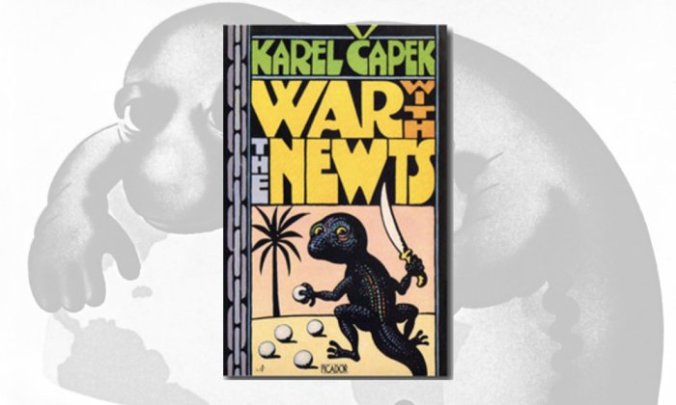
Karel Čapek’s “War with the Newts,” published in 1936, one of the greatest pieces of science fiction of the 20th century, is a prophetic work. When I say prophetic, I mean it has the gift of seeing the present for what it is — and not only seeing it but also telling the rest of us what we have been looking at. Continue reading

Greta Thundberg Talking To David Wallace-Wells

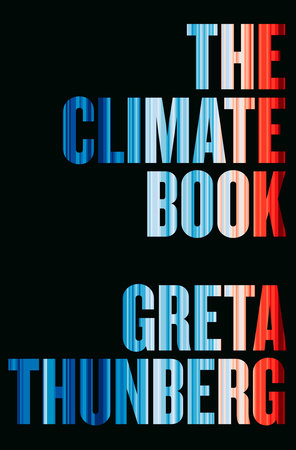
David Wallace-Wells has published a conversation, Greta Thunberg: ‘The World Is Getting More Grim by the Day’, in advance of the publication of the book to the right:

There is genuinely no precedent in the modern history of geopolitics for the climate activist Greta Thunberg.

Four and a half years ago, she began “striking” outside of Swedish parliament — a single teenager with a single sign. She was 15. In just a few months, she had made her mark at the United Nations climate conference in Poland: “You are not mature enough to tell it like it is,” she told the assembled diplomats and negotiators, “even that burden you leave to us children.” Continue reading

Snowpack & Colorado River Recovery

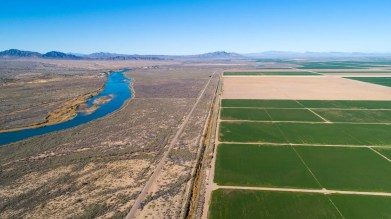
Among the arid lands where water from the Colorado River makes agriculture possible is the Colorado River Indian Tribes reservation, which serves Mohave, Chemehuevi, Hopi, and Navajo peoples. More than 70,000 acres of alfalfa, cotton, potatoes, and other crops are being produced on the reservation. (Image credit: Ted Wood/The Water Desk, CC BY-NC-ND 4.0)

The Colorado River holds our attention for many reasons, but mostly now due to climate impact. Our thanks to Bob Henson at Yale Climate Connection for this:

Wet winter won’t fix Colorado River woes

“One year of good flows doesn’t mean we have a trend,” noted one expert.

Snowpack has been running well above average this winter across the Colorado River watershed. It’s a rare bright spot after 23 years of grinding megadrought brought the driest conditions in 1,200 years to the basin that supplies 40 million people in Arizona, California, Colorado, Nevada, New Mexico, Utah, Wyoming, and Mexico. Continue reading

Time To Care About Climate Change

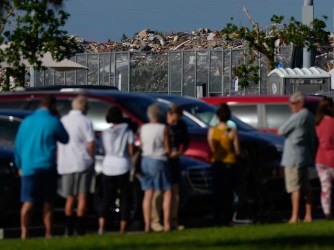
A pile of debris from Hurricane Ian rises behind a line of people waiting to vote in Fort Myers, Fla., in November 2022. Research suggests support for some climate policies increases immediately after climate-driven disasters such as Ian.
Rebecca Blackwell/AP

If you are not (yet) concerned about climate change there is no time like the present:

How our perception of time shapes our approach to climate change

Most people are focused on the present: today, tomorrow, maybe next year. Fixing your flat tire is more pressing than figuring out if you should use an electric car. Living by the beach is a lot more fun than figuring out when your house will be underwater because of sea level rise. Continue reading

Why Waste Western Water?

A woman walks along a cliff top near Lake Powell, the second biggest reservoir in the U.S., where climate-change-driven drought continues to lower water levels. Photograph by David McNew / Getty

The management of water in the western USA has been an occasional topic in these pages and Rachel Monroe adds to our understanding:

The Water Wranglers of the West Are Struggling to Save the Colorado River

Farmers, bureaucrats, and water negotiators converged on Caesars Palace, in Las Vegas, to fight over the future of the drought-stricken Southwest.

In mid-December, I drove to Lake Mead, the nation’s largest reservoir, to see its infamous bathtub ring. The bathtub, in this metaphor, is Lake Mead, on the border between Nevada and Arizona; the ring is a chalk-white coating of minerals that its receding waters have left behind. The Southwest, which includes the Colorado River Basin, has been in a protracted drought since 2000; climate change has made it worse. Continue reading

Biodiversity, Montreal & Us

The opening plenary of the U.N. biodiversity conference in Montreal. Photograph by Andrej Ivanov / AFP / Getty

We continue, as a species, to document our impact on other species. The warning signs keep getting clearer. It is not pleasant reading, but it is documented for a reason; it is about us. It is about our responsibilities. Our thanks, as always, to Elizabeth Kolbert:

Can the U.N. Save the World from Ecological Collapse?

At this week’s summit, delegates will consider ambitious new conservation targets—even though the old ones have yet to be achieved.

The Red List of Threatened Species might best be described as a lack-of-progress report. Continue reading

Climate Science Is Getting Old

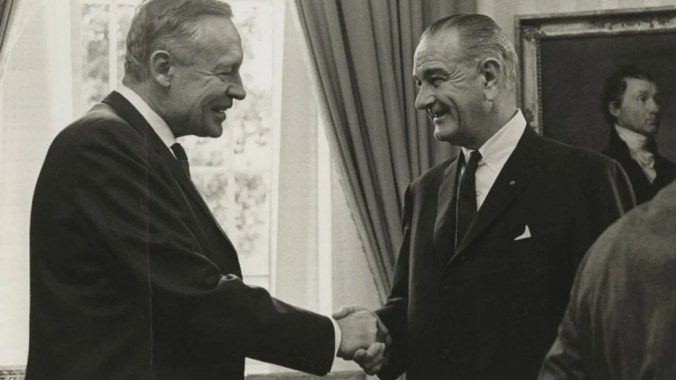
Scientist Roger Revelle, an adviser who warned Lyndon Johnson about climate change in 1965, greets the president in the Oval Office. Roger Revelle papers/Special Collections Archives/UC San Diego

In keeping with a theme–that the science of climate risk has been around for a couple generations now–we have linked to each time there are new revelations:

What Big Oil Knew About Its Products’ Climate Risks—and When

A long-forgotten report sheds light on a high-stakes liability question.

Carroll Muffett began wondering in 2008 when the world’s biggest oil companies had first understood the science of climate change and their product’s role in causing it. Continue reading

Thwaites & Us

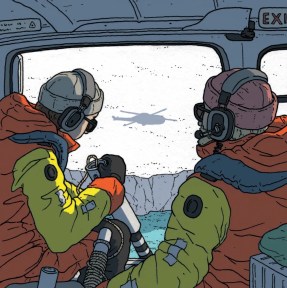
Probes beneath the ice could shed light on the fate of the world’s coastlines. Illustration by Owen D. Pomery

Most of us do not spend much time thinking about what is happening there, but Antarctica’s future is now very much entwined with the future of the rest of the planet.  All of us. So, thanks to David W. Brown for this travelogue:

Journey to the Doomsday Glacier

Thwaites could reshape the world’s coastlines. But how do you study one of the world’s most inaccessible places?

I first saw our icebreaker, the RV Araon, when we were due to leave for Antarctica. The largest icebreakers are more than five hundred feet long, but the Araon was only the length of a football field; I wondered how it would handle the waves of the Southern Ocean, and how it would fare against the thick sea ice that guards the last wilderness on Earth. Continue reading

Cover Considered

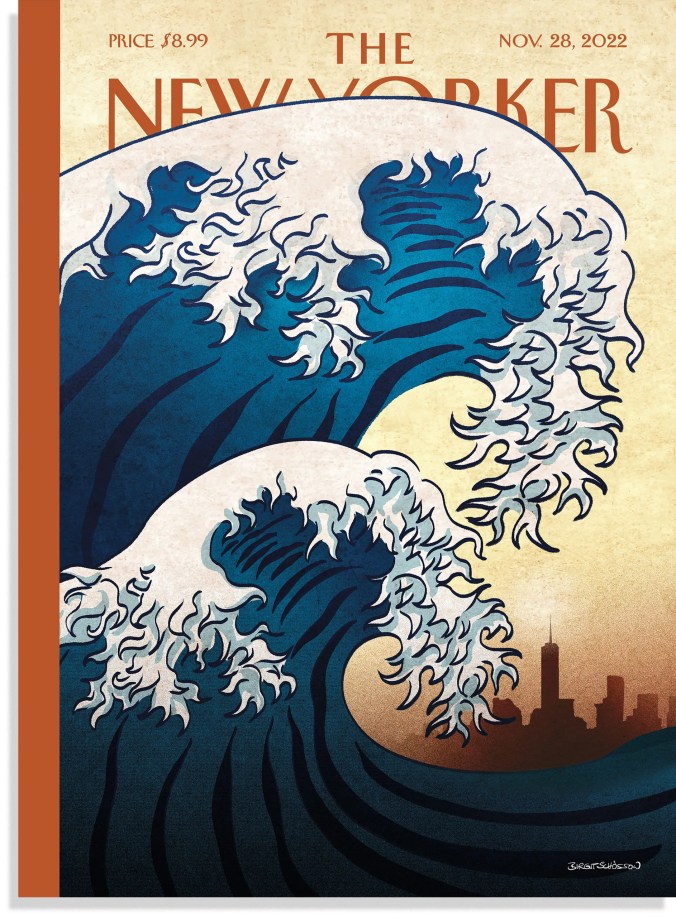
We link to essays and articles, as well as profiles and book reviews from this magazine constantly, but never previously to a cover and only once, by reference, to cartoons. The cover of this week’s issue merits consideration:

Birgit Schössow’s “The Future Is Here”

The artist talks about incorporating environmental themes in her work, and the historical inspiration behind her cover for the Climate Issue.

Françoise Mouly,  Birgit Schössow

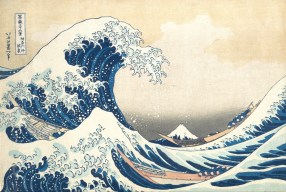
Hokusai’s “Under the Wave off Kanagawa,” circa 1830-32, is said to have inspired Debussy’s piece “La mer” (The Sea) and Rilke’s poem “Der Berg” (The Mountain).

In her new cover, the Germany-based artist Birgit Schössow drew inspiration from an artistic masterpiece. Starting in the late seventeen-hundreds, the Japanese artist Katsushika Hokusai created woodblock prints in a genre called ukiyo-e, part of an artistic movement known as “the floating world.” One of Hokusai’s best-known works is one of a series called “Thirty-six Views of Mount Fuji” that shows a giant wave cresting in the foreground. The wave’s dramatic curve and stature, topped with a skim of frilly foam, are so eye-catching that you might miss the slender fishing boat it’s about to topple onto. Continue reading

Coral Defying The Odds

Corals in the waters of the Ras Mohammed National Park in the Red Sea near Sharm el Sheikh, Egypt, home to one of the only reefs in the world that can tolerate heat. Sima Diab for The New York Times

Our thanks to Jenny Gross and Vivian Yee reporting from Egypt:

Attendees of the United Nations climate conference took breaks from negotiations to see the corals for themselves.Credit…Mohammed Abed/Agence France-Presse — Getty Images

As warming waters devastate coral around the world, the sea’s stunningly colorful reefs have been remarkably resilient. But pollution, mass tourism and overfishing put them at risk.

SHARM El SHEIKH, Egypt — The vast majority of the world’s coral reefs are likely to be severely damaged in the coming decades if the planet keeps warming at its current rate. Continue reading

David Wallace-Wells & Co With New Perspective

After providing some of the deepest gloom, one of the environmental journalists we respect for not flinching or sugar-coating is singing a new tune, at least on this day:

Beyond Catastrophe

A New Climate Reality Is Coming Into View

By David Wallace-Wells
Photographs by Devin Oktar Yalkin
Captions by Charley Locke

You can never really see the future, only imagine it, then try to make sense of the new world when it arrives Continue reading

Memo From Mr. Gates

We have only rarely linked to stories featuring or mentioning Mr. Gates.

This is not because we do not value his opinions; we think he is the smart money on multiple fronts. Climate change is one of them.

Even if we consider McKibben the more reliable scribe, and even if we give Malmo his due, this is still smart money territory:

The state of the energy transition

My annual memo about the journey to zero emissions.

When I first started learning about climate change 15 years ago, I came to three conclusions. First, avoiding a climate disaster would be the hardest challenge people had ever faced. Second, the only way to do it was to invest aggressively in clean-energy innovation and deployment. And third, we needed to get going. Continue reading

Essential Lithium & Essential Water

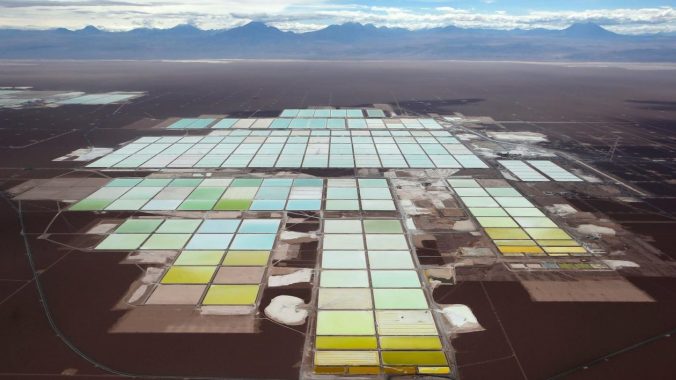
Brine pools at the Soquimich lithium mine on a salt flat in northern Chile. IVAN ALVARADO / REUTERS VIA ALAMY

On my one visit to the Atacama desert in 2009 I had a feeling unlike any I had previously experienced, and it was attributed to the lithium. There is so much, you can feel it. And to put it simply, it feels good. I knew it was being mined, but I assumed it was primarily for pharmaceutical use; no clue it would become so important for batteries. And this set up a sort of zero-sum game, which Fred Pearce helps to understand:

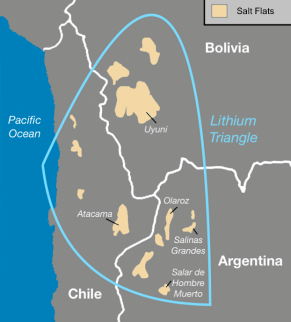
The Lithium Triangle region. YALE ENVIRONMENT 360

Why the Rush to Mine Lithium Could Dry Up the High Andes

The demand for lithium for EV batteries is driving a mining boom in an arid Andes region of Argentina, Chile, and Bolivia, home to half the world’s reserves. Hydrologists are warning the mines could drain vital ecosystems and deprive Indigenous communities of precious water.

What environmental price should the world be willing to pay for the metals needed to switch to electric vehicles? The question is being asked urgently in South America where there are growing fears that what is good for the global climate may be a disaster for some of the world’s rarest and most precious ecosystems — salt flats, wetlands, grazing pastures, and flamingo lakes high in the Andean mountains. Continue reading