When New Roads Signal Nothing But Danger Ahead

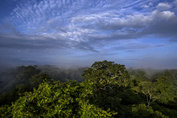
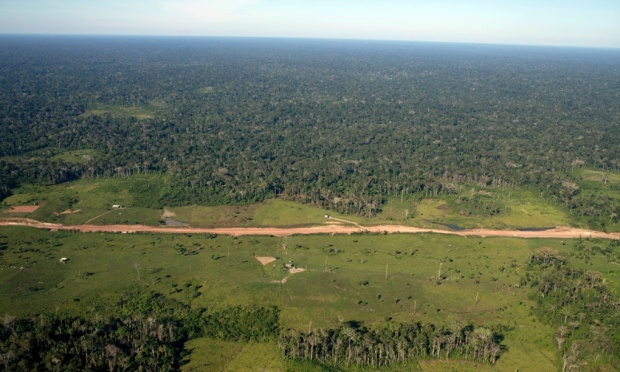
 A newly constructed road goes through the Amazon rainforest outside Rio Branco, the capital of Acre province, Brazil. For every 40 meters or road created, around 600 sq km of forest is lost. Photograph: Per-Anders Pettersson/Corbis

A newly constructed road goes through the Amazon rainforest outside Rio Branco, the capital of Acre province, Brazil. For every 40 meters or road created, around 600 sq km of forest is lost. Photograph: Per-Anders Pettersson/Corbis

Thanks to the Guardian for keeping us up to date with news, no matter how dismal, which in this case raises red flags about the future of our earth’s lungs:

Roads are encroaching deeper into the Amazon rainforest, study says

Oil and gas access roads in western Amazon could open up ‘Pandora’s box’ of environmental impacts

Oil and gas roads are encroaching deeper into the western Amazon, one of the world’s last wildernesses and biodiversity hotspots, according to a new study.

Roads across Bolivia, Colombia, Ecuador, Peru and western Brazil could open up a ‘Pandora’s box’ of negative environmental impacts and trigger new deforestation fronts, the study published in Environmental Research Letters finds.

“The hydrocarbon frontier keeps pushing deeper into the Amazon and there needs to be a strategic plan for how future development takes place in regards to roads,” said the report’s lead author, Matt Finer, of the Amazon Conservation Association.

Continue reading

Australian Emissions Drop With New Carbon Tax

Via The Guardian

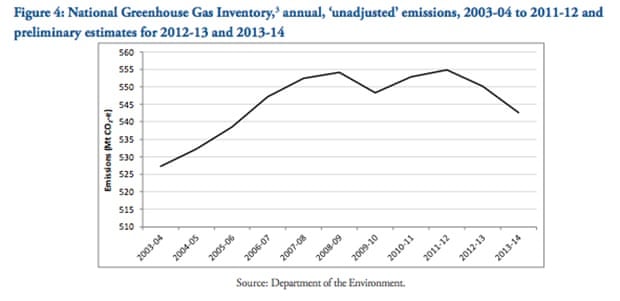
In 2012, Australia introduced a carbon tax, or carbon “price,” with the goal of reducing the country’s greenhouse gas emissions. Then, this July, the Australian government — under a different party than in 2012 — abolished the carbon tax to fulfill an election promise, since they argued that the tax was too much of a burden on homeowners and also discouraging industry. But data released this month by the Department of the Environment shows that Australia’s emissions dropped 1.4% during 2013 (the second year of the tax), which is the highest annual decrease in the country’s emissions within the last decade. Oliver Milman reports for The Guardian:

The latest greenhouse gas inventory showed emissions from the electricity sector, the industry most affected by carbon pricing, fell 4% in the year to June.

Electricity emissions account for a third of Australia’s emissions output, which stood at 542.6m tonnes in the year to June, down from 550.2m tonnes in the previous 12 months.

Emissions from transport dropped 0.4% in the year to June, with gases released by the agriculture industry decreasing by 2.6%. Industrial processes emitted 1.3% less greenhouse gas during the year, although fugitive emissions, such as those from mining, rose 5.1%.

Electricity emissions peaked in 2008 and have steadily decreased ever since, driven by a number of factors such as the winding down of parts of Australia’s manufacturing base and energy efficiency initiatives.

Continue reading

Forests Are Life

23FOREST-slide-O45T-mediumFlexible177We are happy, for the sake of the next generation(s), to read this news:

Restored Forests Aid Climate Change Efforts

Driven by a growing environmental movement, corporate and government leaders are making a fresh push to slow the cutting of rain forests — and eventually to halt it.

Not Cool, Greenpeace

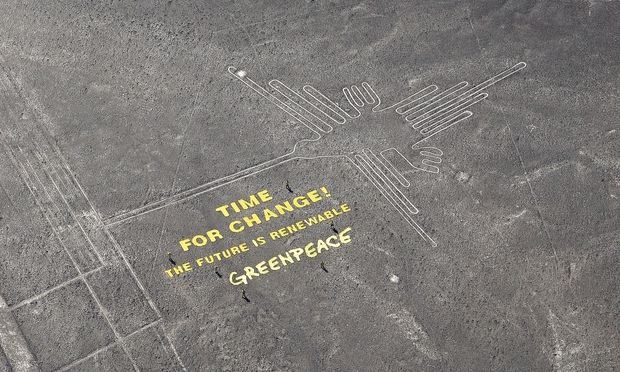
Greenpeace’s ‘time for change’ message next to the hummingbird geoglyph in Nazca. Photograph: Thomas Reinecke/TV News

Greenpeace’s ‘time for change’ message next to the hummingbird geoglyph in Nazca. Photograph: Thomas Reinecke/TV News

Hard to believe, but sometimes otherwise smart people do really dumb things, and sometimes apologies cannot correct the damage:

Greenpeace has apologised to the people of Peru after the government accused the environmentalists of damaging ancient earth markings in the country’s coastal desert by leaving footprints in the ground during a publicity stunt meant to send a message to the UN climate talks delegates in Lima. Continue reading

A Human’s Best Illustration Of Important Stuff

179571de-e7d8-4a39-82bf-ad6bef672f58-620x372

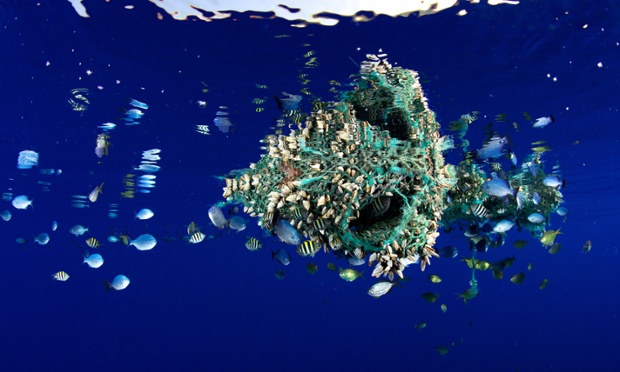
Plastic pieces in the ocean damage wildlife and enter the food chain when ingested by fish. Photograph: Bryce Groark/Alamy

Thanks to the Guardian for ongoing coverage of the world’s great environmental challenges:

Full scale of plastic in the world’s oceans revealed for first time

Over five trillion pieces of plastic are floating in our oceans says most comprehensive study to date on plastic pollution around the world

More than five trillion pieces of plastic, collectively weighing nearly 269,000 tonnes, are floating in the world’s oceans, causing damage throughout the food chain, new research has found.

Data collected by scientists from the US, France, Chile, Australia and New Zealand suggests a minimum of 5.25tn plastic particles in the oceans, most of them “micro plastics” measuring less than 5mm.

Continue reading

Who’s Got Your Back, Long Term?

Stewartjp-mediumThreeByTwo210We read both publications regularly, and find that both cover environmental issues well, as such; but the difference between this New York Times article and the New Yorker post we started the day with speaks for itself. We understand the purpose of the article below meeting current needs, but do we really need our news to be so parochial? Sorry, Times. You will have to work harder for your subscription money.

Steep Slide in Oil Prices Is Blessing for Most

If history is any guide, it’s hard to see falling oil prices as anything but good news for everyone whose fortunes aren’t tied to oil.

The Worst News Of The Week

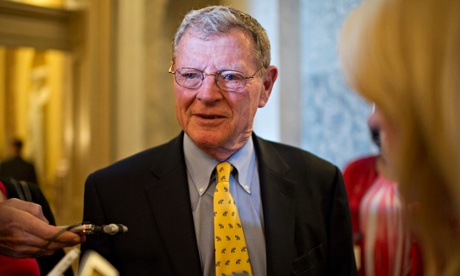
Republican Senator Jim Inhofe is expected to get the Senate top environmental job. Photograph: Tom Williams/Getty Images

Republican Senator Jim Inhofe is expected to get the Senate top environmental job. Photograph: Tom Williams/Getty Images

Read it and weep (thanks to the Guardian):

Climate change denier Jim Inhofe in line for Senate’s top environmental job

Obama faces a fight to protect his climate change agenda after midterm results suggest Senate’s top environmental post will fall to Republican stalwart of climate denial

The Senate’s top environmental job is set to fall to Jim Inhofe, one of the biggest names in US climate denial, but campaigners say Barack Obama will fight to protect his global warming agenda.

Continue reading

Food Packaging, Counterintuitive Proposition

broccoli

Staying informed about best practices to reduce your carbon and other footprints is one of our objectives on this blog. When we see something we had not known, and which seems worthy of consideration, we pass it along here. Thanks to Professor Tyler, and Conservation, for this one:

And when can packaging actually be good for the environment?

If you’re like me, you probably get a bit annoyed when you discover that an item you bought in the grocery store uses too much packaging. It seems like such a waste of plastic and cardboard. From an environmental perspective, wouldn’t it be better to conserve resources and use less packaging material?

Not necessarily—it depends on the type of food.

Continue reading

Feral, Reviewed

washington-square

Thanks to Conservation for this review of a book I first started hearing about last year, and now have even more motivation to read:

ADD A FEW SPECIES. PULL DOWN THE FENCES. STEP BACK.

Brandom Keim reviews George Monbiot’s Feral

The early twenty-first century is a soul-searching moment for conservation. With each new report of vanishing species and dwindling biodiversity, the last century’s great successes grow distant. Fundamental ideals and assumptions, in particular our cherished notions of wilderness, often feel ill-fitted to a crowded planet of more than 7 billion people. Continue reading

Profits, Privileges, Environmental Destruction

Mombiot blog on sea protection : Fishing boats near the beach at Flamborough head Yorkshire

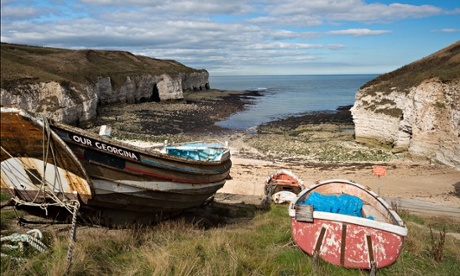
Fishing boats near the beach at North Landing, Flamborough Head, on the Yorkshire coast. Falmborough Head is home to one of the UK’s three ‘no take’ zones – that in total cover just 5 sq km. Photograph: Paul Richardson/Alamy

The excellent Guardian editorialist, whom we have linked to more than once, strikes again:

Ripping up the sea floor on behalf of royal profits

George Monbiot: Even the pathetic laws protecting marine life in this country are instantly swept aside in response to lobbying by Prince Charles’s tenants

A few days ago, I visited the Flamborough Head “no take zone”, one of the UK’s three areas in which commercial fishing is prohibited.

Here marine life is allowed to proliferate, without being menaced by trawlers, scallop dredgers, drift nets, pots and all the other devices for rounding it up, some of which also rip the seabed to shreds. A reef of soft corals, mussels, razorfish and other species has begun to form, in which plaice and cod, crabs and lobsters can shelter, unmolested by exploitation. Fantastic, isn’t it?

Well curb your enthusiasm. Continue reading

Earth Hour 2014 at Xandari

This past March, on the 29th, Xandari supported the 60+ Earth Hour movement by hosting a candle-lit dinner and inviting guests to turn off their lights between 8:30-9:30PM to join hundreds of millions of people around the world in saving energy. In 162 countries and around 7,000 cities, people joined Earth Hour and the World Wildlife Fund for Nature to symbolically pledge to do more for the environment and engage in energy-saving efforts throughout the year. Watch the video below for some footage of national monuments around the world flipping the switch for an hour, and learn more about the 60+ movement.  Continue reading

Listen When Nature Is Speaking

Edward Norton provided the voice for the soil in Conservation International's Nature is Speaking campaign. Credit Conservation International

Edward Norton provided the voice for the soil in Conservation International’s Nature is Speaking campaign. Credit Conservation International

Dot Earth, once upon a time, was a daily source of amazing material, until it seemed to disappear, and then again it reappeared. Ed Norton gets our attention any time:

Nature Talks Back, and Sounds a Lot like Edward Norton

Continue reading

Watch Your Pump Jockey

shutterstock.com

shutterstock.com

Conservation‘s daily summary of an intriguing scientific finding captures our attention at least one time per week. Which is about how often, on average, some of us fill the gas tank of our vehicles. And we learn that the fuel lost during those visits can add up to massive waste. Which means, this should interest you:

First, you pull into the gas station. You open the cover to the fuel tank, unscrew the cap, insert the nozzle, and pump away. Once you’ve filled up your tank, you dislodge the nozzle and return it to its starting position. But in between – perhaps without even noticing – you spilled a few drops of gasoline onto the concrete. You were as careful as possible, and it was just a tiny bit wasted…right? A few drops here and there aren’t a big deal, are they?

Well, it might be. That’s according to new research published this week in the Journal of Contaminant Hydrology. Continue reading

Breakthroughs In Nutrition Via Entrepreneurial Conservation

Exo's peanut butter-and-jelly bar contains about 40 ground-up crickets and has a familiar nutty, sweet flavor. Meredith Rizzo/NPR

Exo’s peanut butter-and-jelly bar contains about 40 ground-up crickets and has a familiar nutty, sweet flavor. Meredith Rizzo/NPR

Thanks to National Public Radio (USA)’s food-focused program, The Salt, for another story on unexpected breakthroughs in nutrition:

…”Insects are probably the most sustainable form of protein we have on Earth,” Bitty Foods founder Megan Miller, who spoke passionately about eating bugs at a TEDx Manhattan event earlier this year, tells The Salt. “The only real barrier to Americans eating insects is a cultural taboo.” Continue reading

Say It Ain’t So, Ferran!

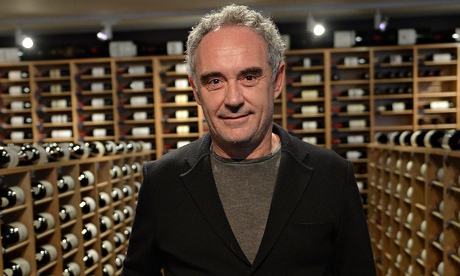
Ferran Adrià, of the award-winning restaurant elBulli. Photograph: Emmanuel Dunand/AFP/Getty Images

Ferran Adrià, of the award-winning restaurant elBulli. Photograph: Emmanuel Dunand/AFP/Getty Images

The quote from a group supporting the development of a museum on a protected coastal ecosystem–“We understand that it’s very easy to raise the populist flag in defence of the environment and that this always manages to attract a good number of supporters,”–says all you need to know to understand how important this issue is. In fact, it is not so easy. It is not easy at all to protect the last remaining unspoiled beaches in the world. We are sure that with a bit of publicity, the right outcome will prevail in this case:

When Ferran Adrià shut the doors of his elBulli restaurant in 2011, he quickly reassured gastronomes that it was not closing for good, just for a revamp. ElBulli would become a cultural foundation , complete with museum and visitor centre called elBulli 1846, all to reopen on an expanded plot in 2015.

Foodies may have been reassured, but not so environmentalists, who are furious that the expanded elBulli will eat up more space on the Cala Montjoi, one of Spain‘s few protected Mediterranean beaches. Continue reading

Seeing in the Dark

7296_591181947589412_1926452569_n

Full moon shot Kayal Villa. Photo: Milo Inman

That traveling state of mind woke up a part of my brain that’s been sleeping for a while. I’ve been feeling my grey matter stretch as a fellow Raxa friend put it. An idea I’ve been thinking about started while on the Camino de Santiago pilgrimage when a man told my friend and me not to walk the Camino at night. He said, “If God wanted us to walk the Camino at night, he would have put a light in the sky so we could see the Camino’s beauty”.

We were confused- why didn’t he see beauty in walking at night under the full moon and stars? After that, my friend and I began to contemplate how darkness has been associated in both sacred and secular literature with the lack of spiritual enlightenment, lack of awareness; in our language, to say something is dark has bad connotations. We felt more motivated than ever to walk at night.

We began to question how a society’s aversion to darkness could inform everything. We considered how the aversion to darkness could be a deeper layer to the resistance to female equality and even environmental understanding of the interdependency of nature and cycles of dark and light.

Continue reading

A Sophie’s Choice Moment For Two Species, One Environment, And No Solomon In Sight

Damian Mulinix — Chinook Observer. A small portion of the cormorant colony as seen from a bird blind.

Damian Mulinix — Chinook Observer. A small portion of the cormorant colony as seen from a bird blind.

You can read about this in a major media outlet, but try another approach for this story. Local journalism is alive and well, and covering complex, important topics through the local lens:

A plan to kill 16,000 double-crested cormorants on East Sand Island has some residents on the North Coast scratching their heads. Although still in the proposal phase, the plan drew many to an open house in Astoria last week to ask questions of the federal agencies involved. “I can’t believe in this day and age we can’t come up with an alternative solution to killing things,” said Tommy Huntington of Cannon Beach. Continue reading

Thank You, General Mills

cheerios

Photo Credit: Grist Article

I came across this article on Grist.com about General Mills’s new action plan to reduce their contribution to climate change. After being called out by Oxfam International,  Oxfam says that General Mills will be, “the first major food and beverage company to promise to implement long-term science-based targets to cut emissions.”

With both a mitigation and adaptation plan, I am pretty impressed by this corporations efforts to take responsibility of their role. On the official page of their website describing this policy, they cite the 2014 Intergovernmental Panel on Climate Change (IPCC) Working Group II Summary for Policy Makers, which suggests to me that they have people on their team helping them make really informed decisions grounded in scientific evidence. I appreciate in the report the full acknowledgement of the IPCC’s call to action:

“Science based evidence suggests we must limit the global mean temperature rise to less than 2 degrees Celsius above preindustrial levels in order to avoid permanently altering the atmosphere and negatively impacting the environmental, social and economic systems that sustain us – both today and in the future.”

I haven’t seen a big corporation like this that would normally be considered a “dirty business” so blatantly speak to the environmental reality we face. To see a corporation cite this gives me hope that mainstream conversations around climate change are moving towards what we can do and away from whether or not its real. I hope more corporations follow their lead just for the sake of drumming the beat of awareness.

The true colors of this policy will show in how effectively it is implemented, because that will determine whether it is a fluffy ‘greenwashing’ tactic with loopholes built in.

Here are a few of the main points of the policy:

  • Set global targets and track progress related to reductions in GHG emissions, energy, water, transportation, packaging and solid waste.
  • Support the Innovation Center for U.S. Dairy commitment to reduce fluid milk GHG emissions by 25 percent by 2020.  Work with smallholder and conventional farmers to strengthen globally sustainable farming practices.
  • Address GHG emissions due to land use change through sustainable sourcing efforts in key supply chains and growing regions.  Our aim is to achieve zero net deforestation in high-risk supply chains by 2020. We will regularly report progress towards the zero net deforestation goal.
  • Ensure responsible governance and oversight of all sustainability efforts, including climate mitigation and adaptation.  Convene the General Mills Sustainability Governance Committee 3 times per year to review and approve strategies, programs and key investments.
  • Report progress against goals – our own as well as those in our broader supply chain – on an annual basis via our Global Responsibility Report, available on the General Mills website

For a more extensive look at the report, click here.

While I raise my eyebrows at some of the vague wording in their initiatives, like “support”, “work with”, and “ensure” that are less concrete objectives, I also see timelines and checkpoints to keep themselves more accountable to this than they had to. I have learned to appreciate initiatives that move in the direction of the ideal, rather than criticizing anything that doesn’t model the most perfect action. While it is good to remain skeptical, I think it is important to acknowledge leadership in the right direction when we see it.
 

Notes from the Garden: Building a house or a vegetable cage?

photo 2

Measuring the length of our new monkey-protected area in the organic farm at Cardamom County

Building a 15 meter x 20 meter vegetable cage is no small feat. The last estimate we had was that it would cost about 4 lakhs, which is apparently the cost of a small house. A lakh is a unit in the South Asian numbering system equivalent to 100,000. So, is 400,000 rupees worth it for a vegetable cage? I think spending energy to get a smarter design would be more worth it.

With the help of Raxa Collective’s head engineer, it is very likely we will be able to lower that cost significantly. As I talked about in my post about quantifying farm-to-table, I think that with a combination of lowering the cost and then taking advantage of the monkey-protected area as vigorously as possible with efficient use of the space, it will be worth it. There are elements of farm-to-table that are not quantifiable but can be seen in the overall conservation story of supporting smart land-use practices.

At the end of the day, at least the food here is locally sourced mostly from the Cumbum vegetable market in Tamil Nadu. This market is only about 25 km away and the farmers in that market are relatively close. This is far better then the way most food is sourced in the United States.

In the United States, eating local is a challenge. Most agriculture in the states is for corn and soybeans, rather than vegetables. And “local” is difficult when the local environment has few green spaces left, let alone farmland. So even though we don’t have “monkey-challenges” to growing our food locally in the states, we have monocultures and rapid suburbanization keeping us farther and farther away from fresh food.  Continue reading

Humanity’s Diet Makes A Difference, Historically As Well As Futuristically

On the timescale of evolutionary history, paleo enthusiasts note, agriculture is a fad. Credit Illustration by Mike Ellis.

On the timescale of evolutionary history, paleo enthusiasts note, agriculture is a fad. Credit Illustration by Mike Ellis.

Since the early days of this blog we have been hungry consumers of environmental long form journalism, of which Elizabeth Kolbert’s New Yorker chronicles are best-in-category. They are also, frankly, almost always depressing.

Nonetheless, they put humanity into its natural context. This not-at-all-depressing chronicle demonstrates the value of that contextualization well:

The first day I put my family on a Paleolithic diet, I made my kids fried eggs and sausage for breakfast. If they were still hungry, I told them, they could help themselves to more sausage, but they were not allowed to grab a slice of bread, or toast an English muffin, or pour themselves a bowl of cereal.

Continue reading