Notes from the Garden: Quantifying Farm-to-Table

We are in process of building a monkey-proofed area of the garden. You can see my past post to get a feel for the evolution of this idea. The main issue with providing the Cardamom County restaurant with food from the on-site organic farm is monkeys. We were inspired by these subsistence farmers in Ixopo, South Africa, who blogged about building their monkey-proof vegetable cage. They, too, are neighbors with a nature reserve, so their situation is quite similar to Cardamom County! Now, we are on our way to having a truly farm-to-table menu!
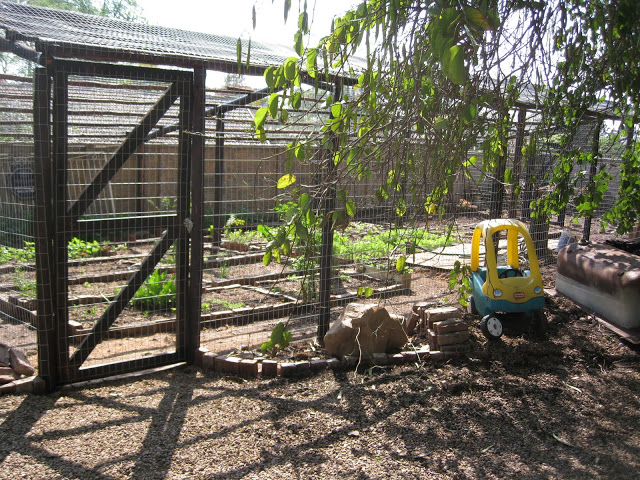
Here is the cage we are modeling ours after. Check out their blog: http://foodieschannel.blogspot.com/2011/04/this-isnt-really-recipe-but-its-about.html

Here is the cage we are modeling ours after. Check out their blog: http://foodieschannel.blogspot.com/2011/04/this-isnt-really-recipe-but-its-about.html

You may be wondering, why is there all this buzz these days about farm-to-table? There is more to it than just fresh, delicious food.

Obviously, a lot of nature gets destroyed for agricultural purposes. In the United States, so much land gets wasted on sprawling, inefficient development. In the in-between spaces, you could feed a nation. But we eat up our open, natural spaces for agriculture. Our agriculture is rarely local so it leads to problems of unnecessary carbon emissions from transport and a lot of not-fresh food in grocery stores. When we can use the land we have already developed on to provide the people there with food, why spread ourselves out so thin into nature? Continue reading
Following the Paper Trail, Redux

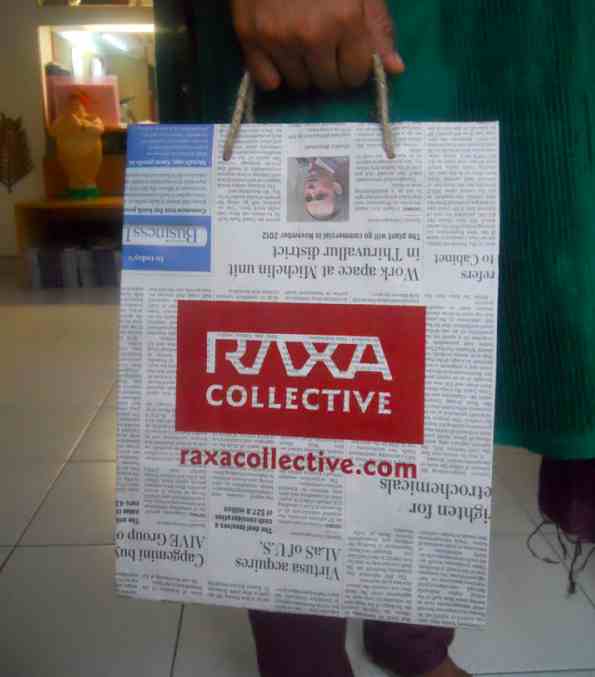
raxa collective bagI have been following the Paper Trail since I got here as an intern and got involved in this social entrepreneurship project Raxa Collective has been working on! There are some types of environmental action that focus on being inherently low-impact from the original design while other methods focus on closing loops from more poor designs that leave good material wasted, such as newspapers. Something is sustainable when it meets the triple bottom line: environmental, economic, and social. RAXA Collective has been meeting this triple bottom line with its newspaper bag initiative! Working with the group, PaperTrails, they have been able to provide a livable income for local people who are unable to get work for whatever reason. They have work based on creating useful bags or envelopes out of recycled newspaper. Paper Trails has been providing bags and envelopes for Raxa Collective’s properties from newspapers and other recycled material. Now, we are taking the newspaper bag initiative to the next level. Continue reading

“Patagonia Sin Represas”–Finalmente

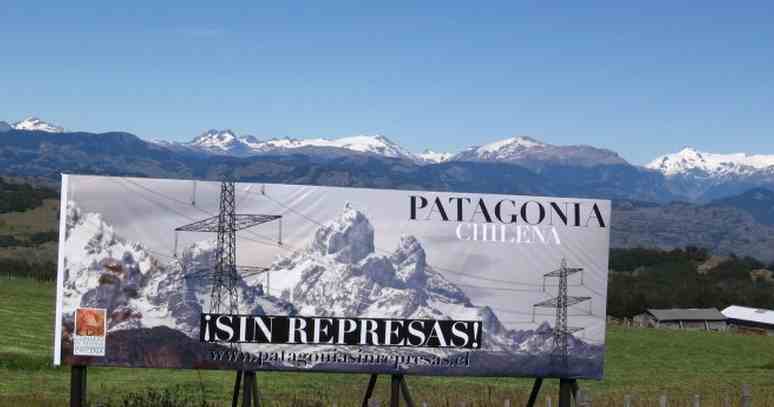
One of the many billboards representing the outcry from environmentalists and concerned members of the tourism sector

One of the many billboards representing the outcry from environmentalists and concerned members of the tourism sector

It’s been some years since our work brought me to this magical part of the world, but all of Patagonia and the specific region of Aysen have long been close to our hearts. So the news that the Chilean government overturned their 2011 approval of the HidroAysén project was happy indeed. The Baker and Pascua Rivers, previously slated for a series of 5 dams, are two of Patagonias wildest, and that’s saying a lot in a country filled with rugged beauty as diverse as it’s 4,300 kilometer length can possibly hold.

Part of that diversity has the potential to offer multiple options for renewable energy sources other than hydro-electric power. Solar power from the Atacama Desert, wave and tide projects from that enormous coastline, as well as wind turbines in areas of the country where winds reach gale force strength on a regular day are all possible options.  Continue reading

Big Business, Conservation, Innovation

We have written about and linked to others’ thoughts on altruism more than once, thinking we will eventually have an ultimate illumination on its origins and how to increase its likelihood. Likewise on our main theme as an organization, with regard to entrepreneurial conservation. We also keep a watch out for big companies (versus entrepreneurs) and governments (as in the case of the state initiative in the banner above, which is discussed below) doing the right thing.

Thanks to this article in the New Yorker for bringing our attention to the efforts to bring sustainable and affordable water to the good folks of Texas, and at the same time raising our awareness of the tightrope walking between big businesses that have many motivations to participate in innovative conservation schemes, and the organizations that have been the innovators in this regard for decades:

Mark Tercek, the head of the Nature Conservancy, recently took a tour of the largest chemical-manufacturing facility in North America: the Dow plant in Freeport, Texas. The Nature Conservancy, which is responsible for protecting a hundred and nineteen million acres in thirty-five countries, is the biggest environmental nongovernmental organization in the world. Tercek, accompanied by two colleagues, had come to Freeport because the facility—a welter of ethylene crackers and smokestacks built next to a river that flows into the Gulf of Mexico—is at the center of a pilot collaboration that he hopes will reshape conservation.The key idea is to create tools that can assign monetary value to natural resources. Continue reading

Saving Species–One Paper, One Video, One Course, And One Initiative At A Time

saving-species-logo-long-small

We thank Stuart Pimm for his ongoing excellent contributions to conservation through science and education, as well as creative activism, and congratulate him and his colleagues for their most recent publication:

new scientific paper was published today in the prestigious journal Science and it has important findings for biodiversity. Though it reaffirms what we already know—that there is a global extinction crisis and it is worse than we believed—it also details how technology and smart decision-making are offering hope for endangered species and their habitats. Continue reading

Congratulations, Annie Leonard And Greenpeace

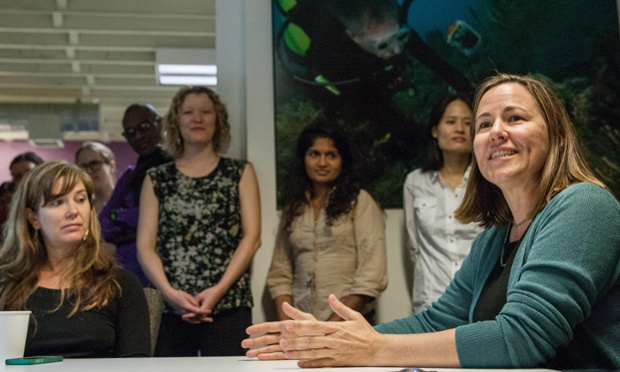
Annie Leonard, a veteran environmental campaigner, is taking over as the new head of Greenpeace USA. Photograph: Erin Lubin/Greenpeace

Annie Leonard, a veteran environmental campaigner, is taking over as the new head of Greenpeace USA. Photograph: Erin Lubin/Greenpeace

We have linked to her work more than once, and this time it is a story of her new commitment that pulls our attention in her direction (thanks to the Guardian for their coverage). Just as we have noted about Paul Watson, not everyone agrees with all the tactics of environmentalists and the organizations they lead, but it is still our interest to share moments of importance like this one:

One of the first things Annie Leonard was asked on being named the new leader of Greenpeace USA this month was: are you willing to get arrested?

“I said: ‘Absolutely! I just need to figure out who is going to drive the car pool’,” Leonard told The Guardian. “It’s going to be interesting being a single mum doing this,” she said.

The last time Leonard worked for Greenpeace, over 20 years ago, the campaign group was known – only half-jokingly – as “boys and their boats”, because of its reputation for dangerous, high-visibility actions. Continue reading

China’s Environmental Laws Just Got Stronger

20140517_CNP004_0

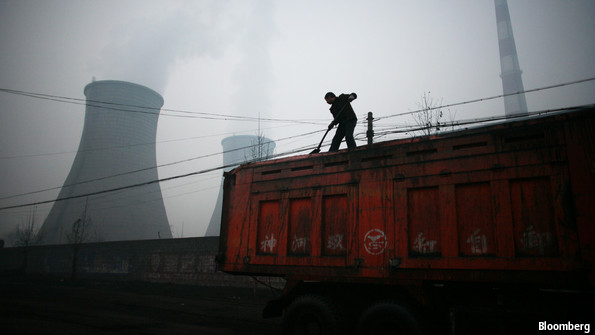
Where there’s smoke, there’s ire

Thanks to the Economist magazine for this update on a set of laws that have not been able to keep up with the pace of development:

Environmental protection

Green teeth

The government amends its environmental law

AT LAST year’s annual session of the National People’s Congress, China’s legislature, Li Keqiang, the prime minister, said the notoriously bad air quality in Chinese cities made him “quite upset”.

Continue reading

Help Hanging Rock, If You Can

18064a9e-466d-40ea-86d7-2a6ade5ee448-460x276

Government funding for Hanging Rock will support the upkeep of picnic areas, wetlands and protection of plant and animal life. Photograph: John Crook/AAP

Fans of Peter Weir will be inclined to heed the call, if they can, to help ensure Hanging Rock is not spoiled:

Controversial plans to build a tourist resort at Victoria’s Hanging Rock have been scrapped after the state government committed $250,000 a year to maintain the landmark.

The funding, announced on Friday, will fund the upkeep of trails and signs along the rock, as well as the nearby picnic areas, wetlands and protection of plant and animal life. Planning protections in the area would be strengthened to shield the area from “inappropriate development in the long-term”, the Victorian planning minister, Matthew Guy, said.

Plans by the Macedon Ranges shire council to build a 100-room resort, eco-cabins, a “nature-focused adventure facility” and a day spa near the unique volcanic rock formation had divided the small community north-west of Melbourne. Continue reading

Mythology of Waste

This slideshow requires JavaScript.

It’s been several months since Chinese conceptual artist Xu Bing orchestrated the monumental task of suspending a pair of 12 ton birds into the nave of one of New York City’s most famous cathedrals. Fashioned from salvaged construction debris from Beijing’s World Financial Center, the phoenix pair is reminiscent of the more 2-dimensional work of Brazilian artist Vik Muniz in both philosophy and meticulously layered execution.

Throughout China’s history, every dynasty has had its form of phoenixes. Representing luck, unity, power and prosperity, these mythological birds have, for the most part, been benevolent, gentle creatures. But this pair, fashioned from the materials of commercial development, reflect the grimmer and grittier face of China today.

“They bear countless scars,” Mr. Xu explained, having “lived through great hardship, but still have self-respect. In general, the phoenix expresses unrealized hopes and dreams.” Continue reading

If You Happen To Be In Amsterdam

Most of our followers know we love coffee. We love how it grows. We love how it tastes. We love the settings where we can drink it. Which makes it all the more unfortunate that we’re in India and not in Amsterdam this weekend to experience Coffee Week NL 2014.

The festival collaboration with the Allegra Foundation makes participation all the more enticing:

50% of all ticket sales to The Amsterdam Coffee Festival will go towards Project Waterfall, the charitable components of NL Coffee Week. Continue reading

Bedeviling Bovine Biproducts

cow-butt

Roberta Kwok, over at Conservation, shares a new view on the humble cow:

COWS VS. COAL

To reduce emissions, the usual thinking goes, we should promote alternative energy and declare war on coal. But researchers argue that policymakers are ignoring a crucial climate threat: cows. Continue reading

Welcome Back, Dot Earth

An illustration from a children’s book published in 1888.

An illustration from a children’s book published in 1888.

Out of nowhere, a few days back, Andrew Revkin and Dot Earth came back from who knows where. In our first year or two they were among our most consistent sources of excellent reportage on environmental issues. Then, nothing. Now, something, sneaking into view within the Opinion pages of the New York Times (really, we need their old excellent reporting more than we need opinion, but…):

dotearth_postENVIRONMENTAL POLICY

No Time to Waste: Students Pursue Environmental Progress Instead of Exam Grades

By ANDREW C. REVKIN APRIL 22, 2014, 12:13 PM

Continue reading

‘Empty Room’ Artist Maya Lin On Changing The Course Of The World

Screen Shot 2014-04-21 at 6.28.17 PM

Aren’t we all? (Trying to change the course of the world, in our own chosen way.) Some by manual labor, some by intellectual labor, some by more typically defined fine art, among others. We appreciate any venue chosen by those who want to make a difference. Click the image above, or click here, to go to the video of artist Maya Lin, with excerpts of her recent lecture at Cornell University discussing:

her work, including her recent sculptures and the installation Empty Room, from her What is Missing? memorial, on view as part of beyond earth art • contemporary artists and the environment at the Milstein Hall Auditorium. 

Duchamp Design Du Jour

tumblr_mjnoeg7QzL1qz5g9bo1_1280

Our thanks to Mel Duarte for this referral of a design idea that has artistic legs and history, but is as fresh as ever:

In a small Brazilian village, artist and photographer Mel Duarte came across this great example of turning an old thing into a new thing.

“I really like the idea of creative recycling, and hope to inspire people with the potential it offers. With this in mind, I took the chance when I was in a little town in Bahia, Brazil, called Serra Grande, to wander through the village looking for something that could express this idea. That’s how I came across the recycled toilet bowl – it’s such a lovely example of how waste can be turned into something funny and beautiful.” Continue reading

Do The Green Thing Countdown 25/29

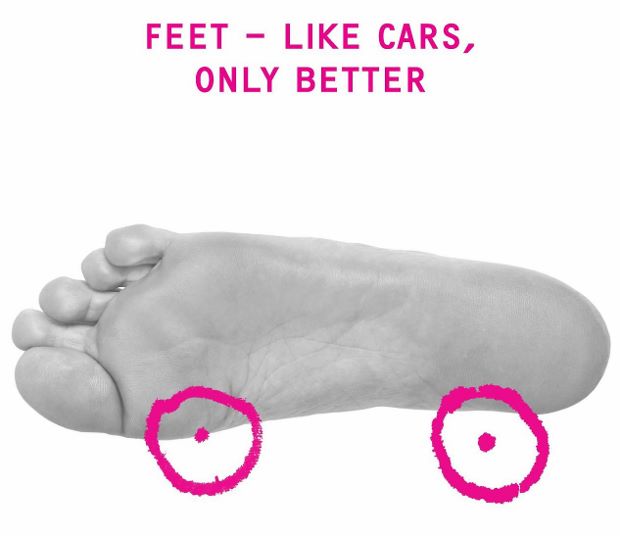
Continuing our promotion of Do The Green Thing’s campaign on behalf of WWF for Earth Hour, we point you to Switch Off Engine by Harry Pearce in which he:

…takes a warning sign from the depths of the car world and reuses it to create a messages that instructs us to step away from our vehicles and go by foot instead.

“The visual language of obedience demands our attention and compliance,” says Harry. “Maybe the car industry should follow its own rules.”

Why?

Continue reading

Pro-Environment Posters For WWF’s March 29 Earth Hour Initiative

Walk the Walk by Marina Willer for 29 Posters for the Planet

Walk the Walk by Marina Willer for 29 Posters for the Planet

We appreciate collaborative efforts to raise awareness about environmental issues, especially when they come from places where the focus is not normally on conservation. Design agencies are generally designed to sell more stuff. Publishers are generally designed to use ex-trees to communicate stuff. But some designers are on the other side of the consumer behavior-influencing fence. And some publishers use those ex-trees to publicize a more tree-centric future.  Ethics sometimes prevail over ambition. Education sometimes jumps the line.

Professional communities–whether design firms, publishers, hotel companies or take your pick–all have latent collective action lurking in their futures. We hope nature and culture are the beneficiaries. Thanks in particular at this moment to publisher Phaidon, which is in itself worthy of a post on its series of environmentally-friendly books and initiatives, for bringing this initiative of design firm Pentagram to our attention:

Pentagram’s carbon free foot print

Design agency works with Do The Green Thing charity on environmentally friendly posters

The gulf between our high-consumption lifestyles and the kind of sustainable world many of us hope to inhabit is vast. Yet the changes that could take us there aren’t unthinkable, as our recent book, The World We Made, makes clear. Continue reading

Extinction And Its Discontents

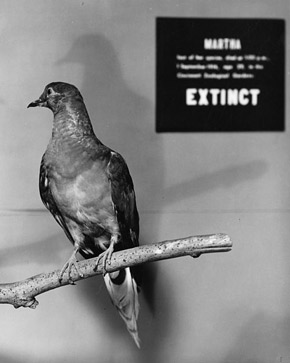
Photograph: Smithsonian Institution Archives.

Photograph: Smithsonian Institution Archives.

I consciously favor stories of alternative approaches and progress on solving environmental challenges rather than the easier-to-find doom and gloom stories, which can have the effect of making one want to turn off the news altogether. I also strive, often in vain, to not be trite. But on occasion I am willing to push that edge as well–pop tarts? yes, when the story is worth telling. Among the toughest topics is extinction, because of its foreverness, and repeated stories with ethical heaviness embedded. Still, I try.

Elizabeth Kolbert, the New Yorker‘s point person on ecological challenges, not least mass extinction, has a remarkable ability to make information about impending cataclysm compelling; she compels me with that information to open my eyes rather than shut them; she also has reasoned ideas about that information, as this post on the magazine’s website displays:

Sometime in the summer of 1914, probably on September 1st but perhaps a few days earlier, the last passenger pigeon on Earth expired. The bird, named Martha, had spent most of her life at the Cincinnati Zoo. Until a few years before her death, she had a companion, George, who shared her ten-by-twelve-foot cage. Whether the two ever tried to mate is unknown. Like the Washingtons, they left no heirs. Continue reading

Improving Governance For The Environment, One Citizen And One Pollinator At A Time

We have been noting increasing stories about loss of pollinators in the USA and Europe, and especially notice how seriously this problem is taken in the UK. Solutions? Not so obvious.  But we are on the lookout each day for innovations in both the public and private sectors. This UK governance procedure seems a promising mechanism for getting citizens aware of, then involved finding solutions for environmental challenges such as the alarming loss of pollinators nationwide:

A consultation on the National Pollinator Strategy: for bees and other pollinators in England

Overview

Defra is seeking views on a proposed national pollinator strategy for bees and other pollinators in England.  The strategy sets out proposals to safeguard these important insects given their role in pollinating many food crops and wild plants and their contribution to our food production and the diversity of our environment… Continue reading

Drought, Desalination, Drink

Extreme drought conditions in California have state officials looking for alternative sources of water, including desalinated ocean water. Richard Vogel/AP

Extreme drought conditions in California have state officials looking for alternative sources of water, including desalinated ocean water. Richard Vogel/AP

National Public Radio in the USA has this story, both podcast and text version, about efforts to provide drinking water to a dry, thirsty region:

California is getting some much needed rain this week, but more than two-thirds of the state is still in extreme drought conditions, and that has the state thinking about alternative ways of getting water.

On the coast in Carlsbad, Calif., construction workers are building what will be the largest seawater desalination plant in the Western Hemisphere. When finished in early 2016, it is expected to provide up to 50 million gallons of fresh drinkable water every day.

“That’s enough water for 112,000 households here in the region,” says Peter MacLaggan with Poseidon Resources, the developer of this $1 billion plant. Continue reading

Saving Rainforest One Pop-Tart At A Time

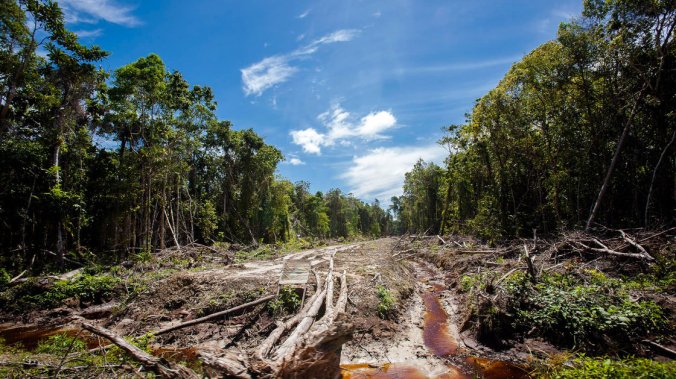
An access road is constructed in a peatland forest being cleared for a palm oil plantation on Indonesia's Sumatra island in 2013. Chaideer. Mahyuddin/AFP/Getty Images

An access road is constructed in a peatland forest being cleared for a palm oil plantation on Indonesia’s Sumatra island in 2013. Chaideer. Mahyuddin/AFP/Getty Images

Thanks to National Public Radio in the USA for this story of palm oil, Pop-Tarts and ethics, wrapped up in the clothing of an entrepreneurial conservation case study among multinational corporations:

If you think a small shareholder can’t get the attention of the multibillion-dollar palm oil industry, think again.

Lucia von Reusner lives half a world away from the palm oil plantations in Southeast Asia that have become notorious for environmental, labor and human rights abuses.

So, how did she nudge for change? She couldn’t tell palm oil plantations in Indonesia to clean up their act. But, as a Kellogg shareholder, she figured out how to put pressure on the company to use its leverage to push for change.

Palm oil, of course, is the fat that lubricates so many of our packaged snacks today, from Pop-Tarts and Eggo waffles to soaps and other personal products. And global demand for palm oil has grown quickly.

The clear-cutting of precious forests in countries like Indonesia and Malaysia to grow the oil palm trees has been well-documented. More recently, an investigation by Bloomberg Businessweek into human rights abuses on Indonesian palm oil plantations and an Accenture analysis that described the use of child labor have raised more awareness about other unsavory realities in the industry. Continue reading