Solar’s Messy Compromises

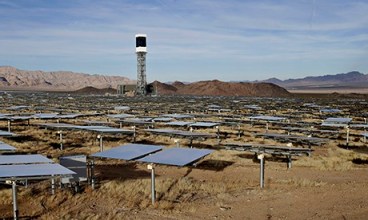
BrightSource Energy's Ivanpah Solar Electric Generating System in the Mojave Desert. Photograph: Isaac Brekken/Washington Post

BrightSource Energy’s Ivanpah Solar Electric Generating System in the Mojave Desert. Photograph: Isaac Brekken/Washington Post

It’s not easy being green.  Even seeming no-brainers like this solar initiative requires complicated tradeoffs between one environmental objective and another:

…The Ivanpah Solar Electric Generating System will send that power across California, the Golden State, early this year, becoming the largest solar plant in the world to concentrate the sun’s rays to produce electricity. Such utility-sized solar plants are beginning to appear across the US, with 232 under construction, in testing or granted permits, many in the south-west and California, says the Edison Electric Institute, which represents utilities. The scale of the largest plants is difficult to imagine in the eastern part of the country, where a relative lack of available open land and unobstructed sunlight have limited solar facilities to perhaps a tenth the size of the West’s plants. In the west, ample sun, wide-open spaces, financial incentives, falling costs and state mandates have made big solar plants possible…

…But even as the largest plants are helping utilities meet state requirements for renewable energy, the appetite for them may be waning, say experts. The next phase of solar development – especially in the east – may feature smaller projects located closer to cities. Environmental groups want regulators to look at sites such as landfills and industrial zones before allowing construction in largely undisturbed environments such as deserts. Continue reading

Self-Sufficiency Taken To The Outer Extremes

Before the lights go out on the last New Yorker issue of 2013, one more of several articles we found worth the read, and relevant to our common themes of interest–community-building, innovation, environmentalism, farming, etc.–on this blog, even if we tend to incremental change rather than the radicalism on display here:

Marcin Jakubowski, the owner of a small farm in northwestern Missouri, is an agrarian romantic for high-tech times. A forty-one-year-old Polish-American, he has spent the past five years building industrial machines from scratch, in a demonstration of radical self-sufficiency that he intends as a model for human society everywhere. He believes that freedom and prosperity lie within the reach of anyone willing to return to the land and make the tools necessary to erect civilization on top of it. His project, the Global Village Construction Set, has attracted a following, but among the obstacles he has faced is a dearth of skilled acolytes: the people who show up at his farm typically display more enthusiasm for his ideas than expertise with a lathe or a band saw. Continue reading

Fact-Checking Walter Isaacson

Walter Isaacson has done some remarkable things (according to his present byline he is “CEO of the Aspen Institute. Author of biographies of Steve Jobs, Albert Einstein, Benjamin Franklin, and Henry Kissinger. Former editor of Time, CEO of CNN”).  Little reason for him to doubt his own authority, on anything.  But he invites you to fact check the book he is currently working on, starting with a draft of a chapter published in Medium.  I appreciate the creative spirit of collaboration, and his faith in the wider community to get his facts both straight and full of color:

The Culture That Gave Birth to the Personal Computer

I am sketching a draft of my next book on the innovators of the digital age. Here’s a rough draft of a section that sets the scene in Silicon Valley in the 1970s. I would appreciate notes, comments, corrections

In that draft he makes reference to the starting point of the Whole Earth Catalog, and the meme that came with it of using an image of the earth from space to communicate its fragility and limitations as much as its wondrousness; which, along with the rest of the draft (as if you needed convincing) makes the book sound worth the wait: Continue reading

Vegan Viewpoint

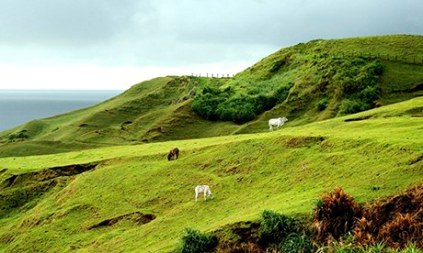
'By preventing the growth of trees and other deep vegetation in the hills, and by compacting the soil, grazing animals cause a cycle of flash floods and drought.' Photograph: Farley Baricuatro (www./Getty Images/Flickr RF)

‘By preventing the growth of trees and other deep vegetation in the hills, and by compacting the soil, grazing animals cause a cycle of flash floods and drought.’ Photograph: Farley Baricuatro (www./Getty Images/Flickr RF)

One of the editorialists at the Guardian whom we read for an unflinching environmentalist perspective, today on veganism:

He did it quietly, and the decision is the better for that: Al Gore, according to reports in the US press, has gone vegan.

Certain things could be said about other aspects of his lifestyle: his enormous houses and occasional use of private jets, for example. While we can’t demand that everyone who espouses green causes should live like a Jain monk, I think we can ask that they don’t live like Al Gore. He’s a brilliant campaigner, but I find the disjunction between the restraint he advocates and the size of his ecological footprint disorienting.

So saying, if he is managing to sustain his vegan diet, in this respect he puts most of us to shame. I tried it for 18 months and almost faded away.  Continue reading

If You Build It They May Come, But If You Build It Better Will They Pay For It?

fairTradeLogoThe following paper has been influential since its publication more than two and a half years ago, and seems destined to have a lengthy shelf life, which we hope to contribute to.  It is not only interesting theoretically, but gets at practical questions we consider existential at the level of our enterprise. If consumers (in our case travelers) are willing to pay a fair premium for building and operating a business that is more sensitive to environmental and social responsibility, we can afford to engage in fair trade; if they are not really willing, uh oh…

We are more than happy to share our empirical evidence, but for now let’s take a look at some scientifically-derived evidence:

Consumer Demand for the Fair Trade Label: Evidence from a Field Experiment

Jens Hainmueller

Massachusetts Institute of Technology (MIT) – Department of Political Science

Michael J. Hiscox

Harvard University

Sandra Sequeira

London School of Economics

April 1, 2011

MIT Political Science Department Research Paper No. 2011-9B

Abstract: 

A majority of surveyed consumers claim to prefer ethically certified products over non-certified alternatives, and to be willing to pay a price premium for such products. There is no clear evidence, however, that people actually seek out such ethically certified goods and pay a premium for them when shopping. We provide new evidence on consumer behavior from experiments conducted in a major U.S. grocery store chain. Continue reading

Jack London & Literature’s Role In Environmental History

Caleb Crain‘s book review of this biography will no doubt be of interest to any of our readers who follow Seth’s work on the history of environmentalism.  Subscription to the New Yorker is required, and worth it, but here is the blurb available to all prior to passing the pay wall:

Jack London never felt that he got enough meat. When he was seven, he stole a piece from a girl’s basket—an incident that he called “an epitome of my whole life.” Although his mother claimed that “he didn’t go hungry in our house!” and a childhood friend recalled being served steak during a visit, London insisted that he had been deprived. “It has been hunger,  Continue reading

The Big Thaw

2009 Jökulsárlón, Iceland. Destined to melt, an 800-pound chunk of ice glows in moonlight, from the National Geographic story “Meltdown.”

2009 Jökulsárlón, Iceland. Destined to melt, an 800-pound chunk of ice glows in moonlight, from the National Geographic story “Meltdown.”

On our pages we like to narrate stories, sometimes stories that people would rather not hear. If a “picture is worth a thousand words” then James Balog’s images for National Geographic tell a poignant narrative.

The pictorial language has the unique ability to penetrate the human heart and mind and photography has the power to alter the course of civilization through perception. My main subject has been the collision between human needs and nature, it’s always seemed to me that’s one of the pivotal issues of our moment in history Continue reading

A Hero’s Welcome On Familiar Ground

Stephanie Mitchell/Harvard Staff Photographer. “My goal is to bring at least some of you out of retirement and into a life of climate-change activism,” said Bill McKibben, who delivered the annual Robert C. Cobb Sr. Memorial Lecture, sponsored by the Harvard Institute for Learning in Retirement.

This article, about one of the activists we have favored in past posts more than once, is worth a spark to the imagination about the power that could be unleashed if he has captured the attention of his fellow alumni:

If you Google “Bill,” the first hit you get is the phrase “Bill me later.” It’s an accidental tribute to the writer-turned-activist whom everyone calls by his first name: Bill McKibben ’82, who spoke at Harvard Tuesday.

McKibben’s message for years has been that oil-based economies shelve the issue of the environmental costs of fossil fuels. When it comes to the natural systems that support humanity — clean air, fresh water, and pristine seas — the message from developing countries has been: Bill me later.

Well, the bill is due, McKibben said, and it may be too late to pay. Seas are rising, temperatures climbing, storms intensifying, and floods and droughts worsening because of fossil fuel emissions, a statement with a 95 percent chance of certainty, according to the Intergovernmental Panel on Climate Change, up from 66 percent in 2001. Continue reading

Saving a Gentle Giant

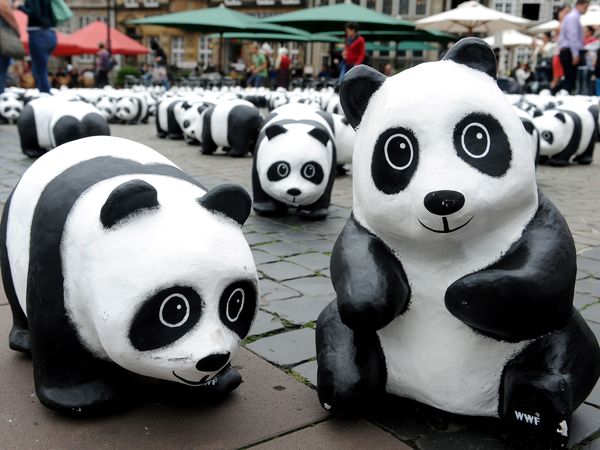
1,600 WWF's Paper mâché pandas representing today's Giant Panda population

1,600 WWF Paper mâché pandas representing today’s Giant Panda population
Photo Courtesy of National Geographic

The Giant Panda is the logo for WWF, the world’s largest conservation organization and it isn’t hard to see why they’re such a successful symbol. Their black and white coloring, and compellingly large eyes have tugged on the heartstrings of millions of people around the globe. This past week the newest baby panda was born at the Washington D.C Zoo.  Mei Xiang’s cub was welcomed with applause and awe from around the world, but this event has also brought about some questions about the money going into WWF for saving the Giant Panda. National Geographic recently addressed this issue.

Is the considerable effort and millions of dollars put into breeding the animals in captivity really worth it?

Some conservationists say yes, claiming public “pandemonium” can translate to real conservation action. But others argue that the money could be better spent on other things, such as preserving threatened habitat.

Statistically, Giant Pandas have a lot stacked against them for the survival of their species. First, there are approximately only 1,600 individuals in the world today, and of those, 300 are held in captivity. Secondly, according to biologist Devra Kleiman, the Giant Pandas have a very small mating window. The female panda is only “in heat” for 2-3 days a year, and thirdly, the natural areas where the panda thrives are fractured and damaged, making it less likely that a pair will find one another easily during that limited period of time.

Continue reading

Foraged Cuisine

The concept of ethical eating isn’t new to these pages and neither is the suggestion that cuisine might be the secret weapon in the fight against invasive species. So we were thrilled to read about chef, artist, environmentalist and social activist Bun Lai’s menus based primarily on what he can forage from his 100 acres of shellfishing grounds off of the Thimble Islands in Connecticut.

The kitchen is the perfect place to exhibit the spirit of exploration and creativity–why not exploit it as a method of controlling ecological pests?

Ecological Modernism Elucidated

Thanks  to Yale Environment 360 for this big mental poke:

New Green Vision: Technology As Our Planet’s Last Best Hope.

The concept of ecological modernism, which sees technology as the key to solving big environmental problems, is gaining adherents and getting a lot of buzz these days. While mainstream conservationists may be put off by some of the new movement’s tenets, they cannot afford to ignore the issues it is raising.

by Fred Pearce

There is a new environmental agenda out there. One that is inimical to many traditional conservationists, but which is picking up kudos and converts. It calls itself environmental modernism — which for many is an oxymoron. Continue reading

Entrepreneurial Conservation Through Carbon Visualization

Thanks to the University of Washington’s magazine Conservation, we found our way to this video, and the magazine’s blurb about the source of the video is a worthy introduction because of its explanations of the images that accompany:

For Antony Turner, pictures make a story come alive—and in the climate change story, one of the main characters is invisible. In 2009, together with artist/scientist Adam Nieman, he founded Carbon Visuals to help people “see” the carbon dioxide that’s trapping heat in Earth’s atmosphere. Continue reading

Natural Resources, Economic Development, And Fair Play

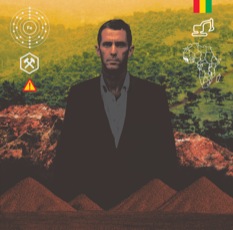
Guinea, in West Africa, is one of the world’s poorest countries. The iron ore buried inside the Simandou range may be worth a hundred and forty billion dollars.

Guinea, in West Africa, is one of the world’s poorest countries. The iron ore buried inside the Simandou range may be worth a hundred and forty billion dollars.

An article in this week’s New Yorker documents the challenges of sustainability in resource-rich developing economies with a history of political instability:

One of the world’s largest known deposits of untapped iron ore is buried inside a great, forested mountain range in the tiny West African republic of Guinea. In the country’s southeast highlands, far from any city or major roads, the Simandou Mountains stretch for seventy miles, looming over the jungle floor like a giant dinosaur spine. Some of the peaks have nicknames that were bestowed by geologists and miners who have worked in the area; one is Iron Maiden, Continue reading

Conservation Is Sometimes The Story Of Change

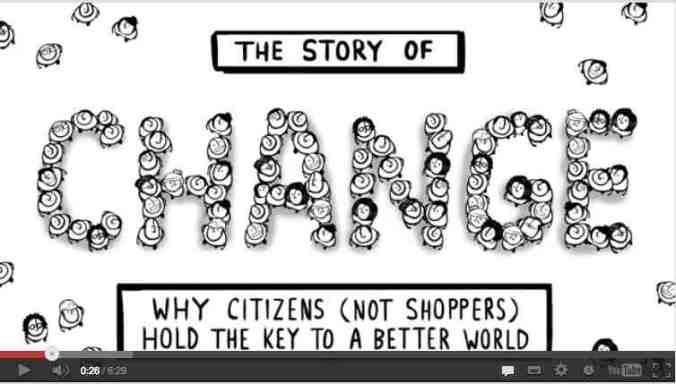
Click above to go to the location where Cornell University is hosting this brief video by a fellow alum of several Raxa Collective contributors:

Can shopping save the world? The Story of Change urges viewers to put down their credit cards and start exercising their citizen muscles to build a more sustainable, just and fulfilling world. Continue reading

Celebrating Conservation’s Important Moments In History

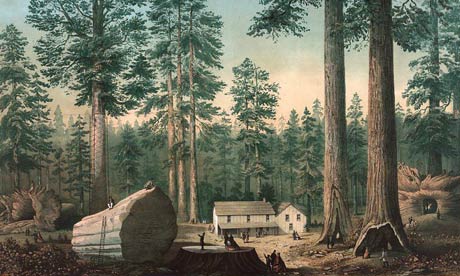
Tourists inspecting the stump of the 'Mammoth Tree' in Calaveras County, California, c1860. The 'Mother of the Forest', without its bark, can be seen in the background. Image: LoC

Tourists inspecting the stump of the ‘Mammoth Tree’ in Calaveras County, California, c1860. The ‘Mother of the Forest’, without its bark, can be seen in the background. Image: LoC

We have written about and sometimes celebrated important moments in conservation history in the past, and these celebrations are among those most responded to by readers of this blog.  A few days ago, a landmark anniversary was observed in an editorial at the newspaper that most consistently keeps us in perspective:

Today marks the 160th anniversary of a seminal, but largely forgotten moment in the history of the conservation movement.

On Monday, 27 June, 1853, a giant sequoia – one of the natural world’s most awe-inspiring sights – was brought to the ground by a band of gold-rush speculators in Calaveras county, California. It had taken the men three weeks to cut through the base of the 300ft-tall, 1,244-year-old tree, but finally it fell to the forest floor. Continue reading

Diurnal bats

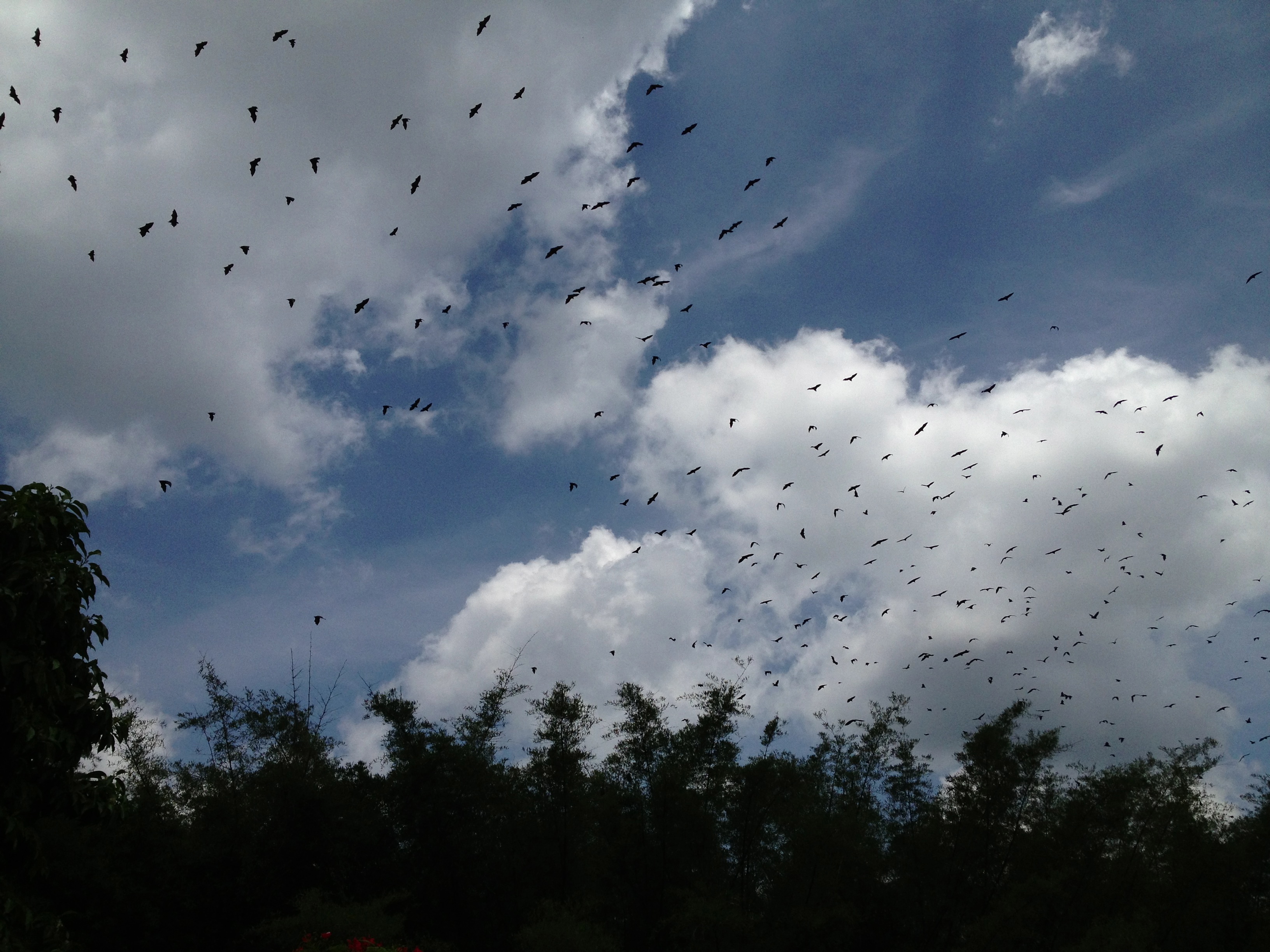
The forest canopy of the Periyar Tiger Reserve is rich in fruit all year round and bats feel very much at home.  Out of the 119 species of bats found in India, 28 occur in Kerala. As many as six species of bat have been recorded in the Periyar :  the  flying fox, the shortnosed fruit bat,  the Great-Eastern horse-shoe bat, the Tickell’s bat, the Common yellow bat, and the Painted bat.

Bats usually roost in camps in the bamboo across the road from Cardamom County, hanging upside down all day and feeding on the abundant fruit in the area after sunset. However when I sighted this wide cloud of bats around midday on the rooftop of the restaurant, it got me wondering : what disturbed them during the day ? Continue reading

Documentaries : The Carbon Rush by Amy Miller

carbon rush credit Amy Miller

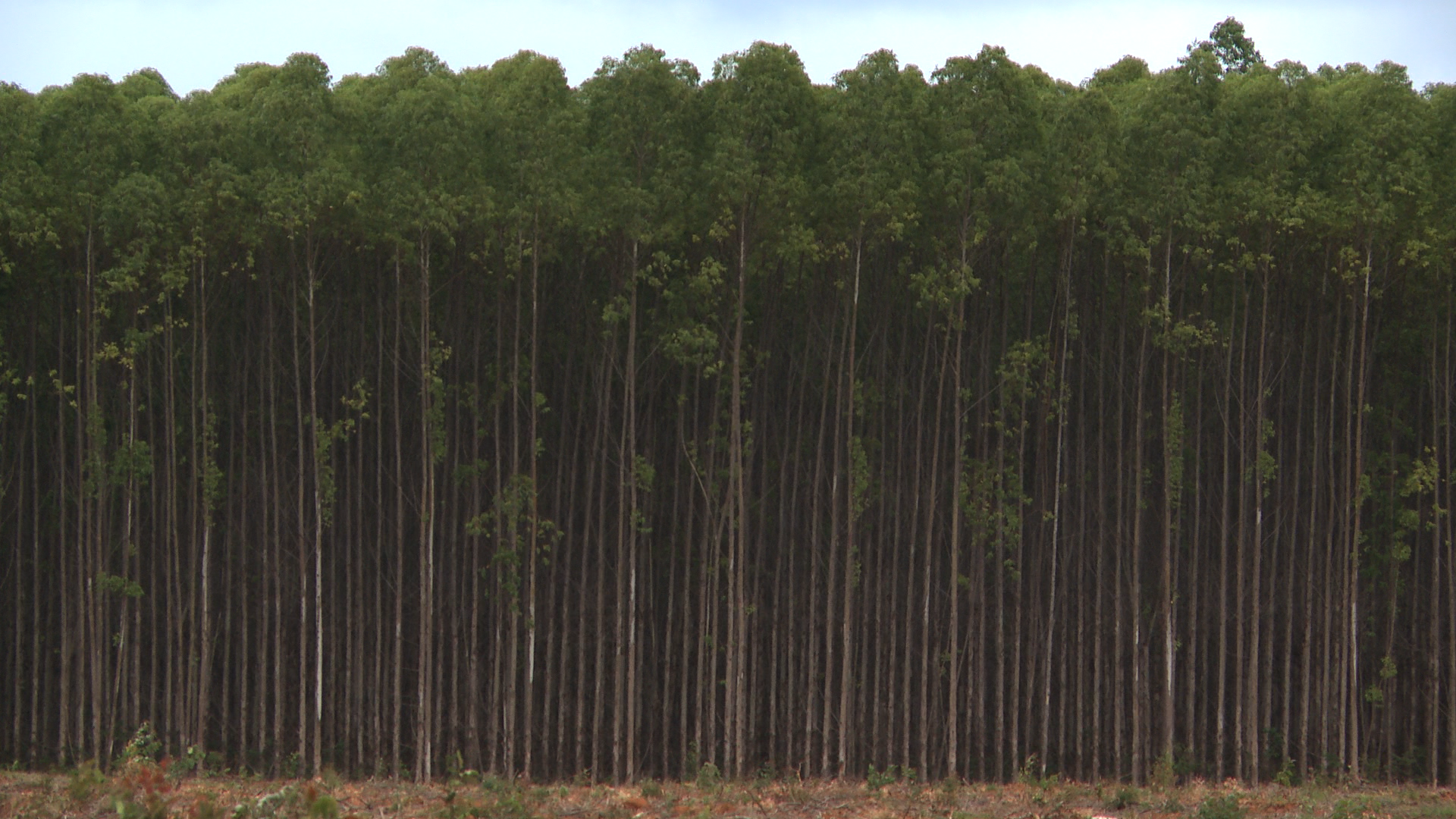
I am from Europe where since the Roman conquest forest and civilization were perceived as antagonistic. Silva, the forest, was wild and needed to be tamed, and ager, the man-made open space was culture. So when Western countries debate of reducing deforestation and planting trees to offset carbon emissions, you can bet they mean elsewhere.

We have shops where you can buy a wooden chair but in exchange you pay for a carbon offsetting voucher which will allow for trees to be planted somewhereThat’s the thinking behind the Clean Development Mechanism (CDM), which allows a country with an emission-reduction or emission-limitation commitment under the Kyoto Protocol to implement an emission-reduction project in developing countries. Director Amy Miller went around the world to meet the communities where some of those offsetting projects were implanted.  See the trailer after the jump.

Continue reading

TED talk Majora Carter : Greening the Ghetto, how entrepreneurial conservation and urban regeneration lead to more social justice

This seminal talk from 2006 by Majora Carter, founder of the Majora Carter Group, introduced me to entrepreneurial conservation. So you can say it kind of led me here.

It is unfortunate how the reputation of a neighbourhood may reflect on its inhabitants. In french the silly expression “C’est le Bronx” refers to a messy room. People from the Bronx, Majora Carter included, decided to change this image. In fact, they decided to reclaim their rivers, their air, their land while creating jobs, leisure activities for local families, a safer gentler environment for children to grow up in.

It’s a story I’d like to hear about in many neighbourhoods around the world.

The Bishnois of Rajasthan: The First Environmentalists

Khamu Ram Bishnoi fights against the pollution carried by discarded plastic bags in India since 2005. Every year during Mukam festival, the Bishnois, his community, must bring sand on top of dunes to solidify them and block the advance of the desert.  Lately pilgrims had taken the habit of collecting the sand in plastic bags, causing a widespread pollution in the Thar desert. To protect the landscapes and the animals who regularly ate plastic bags, Khamu Ram started to demonstrate noisily to educate his community about alternatives to plastic bags.

In 2008, he was invited to talk at a series of environmental conferences in  France. When looking at the street dustbins in Paris, Khamu Ram had the idea of a mobile public dustbin.  Since 2010, he installs these dustbins complete with jute bags in public places, during festivals, pilgrimages, and organizes their collection. Last February Khamu Ram Bishnoi received the award of “Extraordinary man of India” in Jaipur, Rajasthan.

If Khamu Ram Bishnoi is an extraordinary man, he’s also part of an extraordinary community. He is a bishnoi. Continue reading

Documentary: Shunte ki pao! (Are you listening), the life of a family of climate refugees in Bangladesh

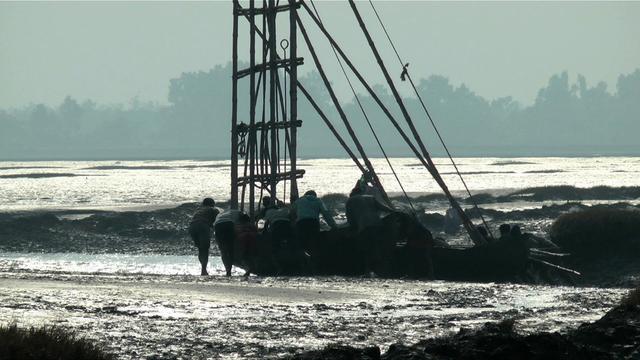
Shunte ki pao (Are you listening) (c) Beginning Production

When introducing his documentary at the Paris International Documentary festival, Cinéma du Réel, director Kamar Ahmad Simon said to the audience: “Thank you for being here. I will be back at the end of the screening to discuss the film with you. I’d like to know your opinion and to answer any questions you may have, whether you liked the film or not, so I can go forward and progress.” If I had to sum up the response from the audience and jury it would be something like: “Please keep going. We’ll follow.”

Click here for the  trailer  of Shunte Ki Pao ! (Are you listening)

Rakhi and Soumen are a beautiful couple, they are young, in love and are the happy parents of little Rahul. You could say they have it all. That’s if their region of the coastal belts of Bangladesh had not been wiped out by the tidal in 2009. Rakhi and Soumen are climate refugees. A couple among  almost a million homeless, stranded under the open sky on an ancient dyke. They now live in a small village named Sutarkhali. Rakhi and Soumen were from the middle-class, today three years after the tidal, they buy fruits by the unit, fish for their meal and line-up on neverending queues for food aid. And life goes on.  Shunte Ki Pao ! (Are you listening) is not about disaster, it tells how people build a life afterwards. Continue reading