Animal, Insect, Vegetable Altruism

It’s been said that there’s an imbalanced focus on ornithology within our site, but we can also claim to have a slightly skewed preference for sloths as well. Whether it’s their permanently gentle grin or their slow, methodical movements we’re not sure, but we know we’re not the only ones who find them fascinating.

Sloths are found in both rainforest and dry tropical forest ecosystems but the biodiversity of their habitat is nothing compared to what they carry around with them in their arboreal lives. A team of biologists from the University of Wisconsin led Jonathan N. Pauli and M. Zachariah Peery has recently tackled a 35-year-old mystery about sloth behavior.

The sloth is not so much an animal as a walking ecosystem. This tightly fitting assemblage consists of a) the sloth, b) a species of moth that lives nowhere but in the sloth’s fleece and c) a dedicated species of algae that grows in special channels in the sloth’s grooved hairs. Groom a three-toed sloth and more than a hundred moths may fly out. When the sloth grooms itself, its fingers move so slowly that the moths have no difficulty keeping ahead of them.

Every week or so, the sloth descends from its favorite tree to defecate. It digs a hole, covers the dung with leaves and, if it’s lucky, climbs back up its tree. The sloth is highly vulnerable on the ground and an easy prey for jaguars in the forest and for coyotes and feral dogs in the chocolate-producing cacao tree plantations that it has learned to colonize. Half of all sloth deaths occur on the ground. The other serious hazard in its life is an aerial predator, the harpy eagle.

Why then does the sloth take such a risk every week? Researchers who first drew attention to this puzzle in 1978 suggested that the sloth was seeking to fertilize its favorite tree. Meanwhile, the algae that gave the sloth’s coat a greenish hue were assumed to provide camouflage.

Writing last week in Proceedings of the Royal Society B, the Wisconsin researchers assembled all these pieces in a different way. They started by trying to understand what would compel the sloth to brave the dangers of a weekly visit to ground zero. Continue reading
The Hut of Romulus

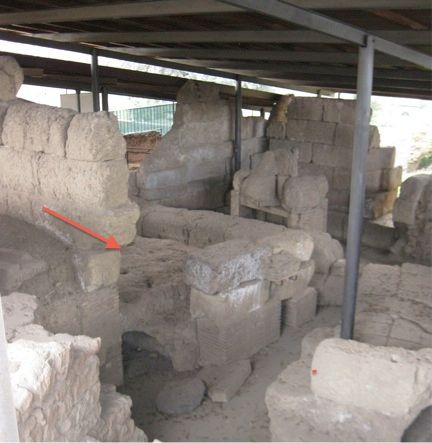
Hut of Romulus (Post holes where arrow is pointing.)

Today, all that remains of the so-called “Hut of Romulus” are the holes you see in the picture above (the slight indentations on the platform where the arrow is pointing). When intact, Romulus’ humble wattle-and-daub dwelling, located in the southwest corner of the Palatine Hill in Rome, might have looked something like this. One might have expected that the passing of nearly three millennia would not have treated well the wood, straw, and twisted bark ties of the hut, but even in its own day the Hut was prone to accidental destruction. One particularly ignominious story has a crow dropping Continue reading

High Tide in New York City

This slideshow requires JavaScript.

(all photos ©Ken Brown)
In India, as with the rest of the world, sometimes life gets the best of us and we miss out on the cyclical events that have marked time for millennia. Once again we have Ken Brown to thank for both bringing this event to our attention and documenting it so well.
I know it sounds like something from the Discovery Channel, but a truly remarkable event takes place each year when a 460 million year mating ritual is enacted on the beaches of New York City during a full moon high tide. Continue reading

Prehistoric Hemispherical Face-Off

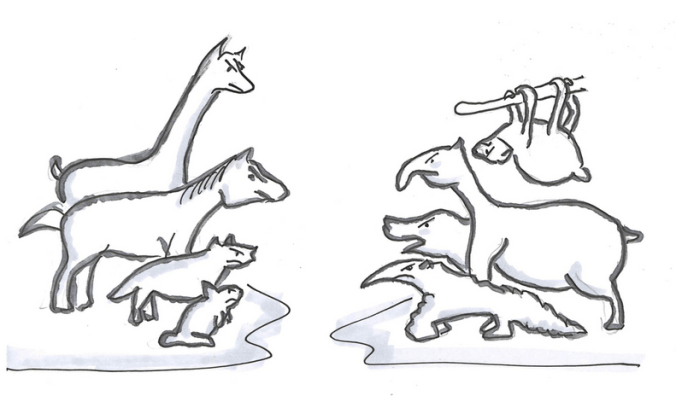
Robert Krulwich/NPR

Wondrous prehistory, thanks to Robert Krulwich:

This is the story of two continents doing battle, North America versus South America. It is also a biological mystery.

For a very long time, North America and South America were separate land masses. The Pacific Ocean slipped between them, flowing into the Caribbean. The Isthmus of Panama was there, but it was underwater. The two continents didn’t touch.

As a result animals on both continents, especially mammals, evolved independently. They didn’t, couldn’t, interbreed. And yet, both North and South America had mountains, plains, long lazy rivers, deltas and supported similar forms of mammalian life. In fact, when biologists look back at the fossils, they found almost mirror like populations. Continue reading

The Poetry of Science

This conversation between two luminaries of modern science: Neil deGrasse Tyson, astrophysicist and host of NOVA and evolutionary biologist Richard Dawkins is as poetic as it is informative, and well worth the time it takes to listen.

Professor Dawkins says that science is the poetry of reality. We take pleasure in his and Professor Tyson’s expanded bandwidth… Continue reading

Humans Tell Stories For A Living

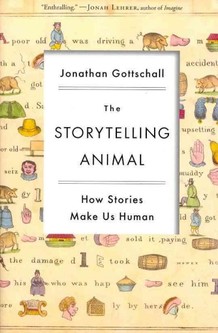
A great conversation with the author of this book is podcast here thanks to PBS and its contributors.  In the current issue of American Scientist, a review:

Gottschall clearly considers it safe to say that storytelling has something to do with helping us navigate our social worlds, since we are such thoroughly social animals: “We are attracted to fiction not because of an evolutionary glitch, but because fiction is, on the whole, good for us. This is because human life, especially social life, is intensely complicated and the stakes are high.”

Continue reading

Orion Nature Quarterly’s Online Evolution

From a magazine we appreciate for its 30+ years of awesome long form non-fiction writing on important issues related to nature, as much as its audio-visual contributions on the same, in the item featured here:

Photographer Douglas Gayeton explains the genesis of his giant-sized, mural-like photos designed to protect from corporate marketing the meaning behind the words we use to describe sustainability. The project began as a language experiment in Tuscany, Italy.

Evolutionary Biology Unhinged

From last week’s New Yorker, a book review about the challenge to the dominant strain of science related to how mental traits evolved, saying it makes no practical difference.  This is the stuff science is made of, starting with stories:

When Rudyard Kipling first published his fables about how the camel got his hump and the rhinoceros his wrinkly folds of skin, he explained that they would lull his daughter to sleep only if they were always told “just so,” with no new variations. The “Just So Stories” have become a byword for seductively simple myths, though one of Kipling’s turns out to be half true. Continue reading

Evolution’s Malcontents

Click the image to the right for an accessible discussion of one strain of debate within the field of evolutionary biology:

The best way to distinguish between Professor Dawkins’ waking and sleeping states is probably on the basis of how contentious he is at a given time. Nevertheless, I’m compelled to say something for two reasons. First, this particular fight happens to be taking place right in my proverbial (and professional) wheelhouse; second, I’ve just finished my annual re-reading of Michael Crichton’s Jurassic Park duology.

Nature’s Other Side

Click the image above to go to an article, not for the faint of heart, about why encounters with real, wild nature are more valuable than those most of us have, which are increasingly sanitized, gentle and unreal:

…Ecologically speaking, this sanctified nature is not nearly enough. “We live more and more in an enchanted illusion of what nature is, which I think is counterproductive to conservation,” says the Cornell University biologist Harry Greene. It’s the back half of that statement—counterproductive to conservation—that contains surprises… Continue reading

Nurturing Nature

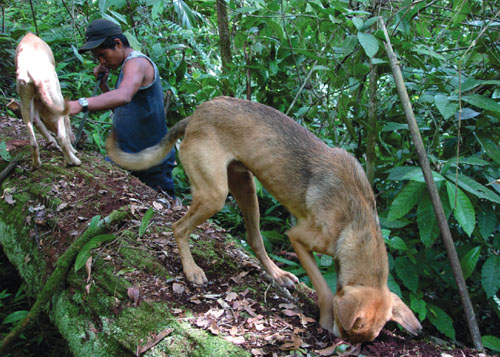
Dog domestication may have given anatomically modern humans an advantage over Neandertals. Studies of modern-day hunters suggest that dogs help people hunt more efficiently and ensure a more plentiful food supply. Here, a Mayangna hunter in Nicaragua works with his dogs to pursue an agouti (a rabbit-sized rodent) in a hollow trunk. The best dogs sometimes help these indigenous hunters bring in more than 50 kilograms of meat per month. Photo, Menuka Scetbon-Didi.

(Click the image above to go to the story in Scientific American):

One of the classic conundrums in paleoanthropology is why Neandertals went extinct while modern humans survived in the same habitat at the same time. Continue reading

Zimmer Jive

The ever clever science writer, Carl Zimmer, has an item in the new issue of National Geographic, accompanied by a lovely short video illustration, which you can see by clicking the image above (also see a sample of the opening below):

The Common Hand

Humans, of course, have them. So do bats, cats, dolphins, elephants, and frogs. Our artwork takes you inside these useful appendages.

By Carl Zimmer

Illustration by Bryan Christie Continue reading

Drifters

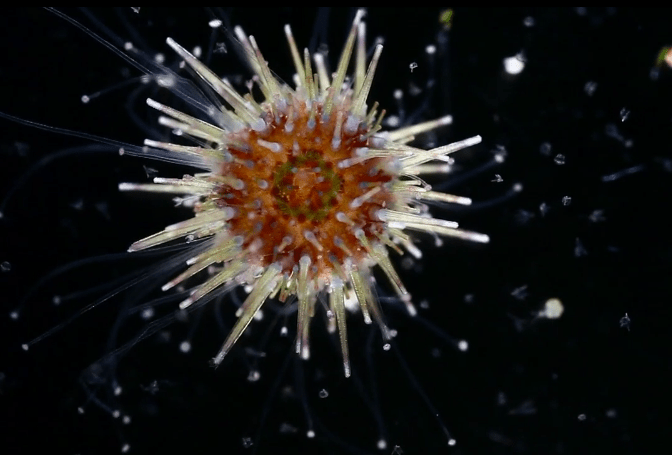
Despite its “Science Fiction Trilogy” sounding name, The Plankton Chronicles is a series of short, compelling educational videos made in conjunction with Tara Oceans Expeditions (a scientific expedition to “sail the seven seas” collecting plankton samples to understand and hopefully mitigate the effects of climate change) and the Observatoire Oceanologique de Villefranche-sur-Mer.

Viewed as a set, they invite the viewer into the kaleidoscopic world that exists in a teaspoon of seawater as well as the open oceans.  Click on the image for a macro lens glimpse. Continue reading

What Ice Reveals

Good news is meant to be shared., and we are excited to share the achievements of another branch of our company: La Paz Group, Heritage Conservation Project – Mammuthus. (Click on the photo to go to the BBC Nature News link.)

A year and half ago we began discussions with Discovery Channel and BBC, and the first step of our four-year media plan for Mammuthus was set in motion with the airing of “Woolly Mammoth: Secrets from the Ice” in the UK this week. Continue reading

If You Happen To Be In New York April 10

Seth’s third installment is well timed to coincide with an upcoming event covering similar issues (albeit one is an undergraduate’s ornithology student perspective and the other a Harvard superstar entomology professor’s perspective).  Click the image to the left to go to the New York Public Library’s invitation to visit with one of our favorite scientists.  Click here to read more about his upcoming book (and view the three short videos at the bottom of the front page when you click through).  The promo for the event at NYPL says: Continue reading

Yoga & Evolution

A few months ago there was an article in The New York Times that apparently caused a ruckus (click the image to the left to read The Guardian‘s coverage of that aftermath) in the Western yoga community.  Maybe it is because I am not a member of the Western yoga community that, when I read the article originally I thought:   Brilliant.  Eastern tradition meets Western science.  Evolution.  Improvement.

Today I had a reminder about that article, and my response to it, while listening to this podcast.  The journalist (a Pulitzer-toting science writer who also has practiced yoga for more than 40 years and recently published The Science Of Yoga) writing that article says something about half way through that rings true: Continue reading

Horticultural Midwifery

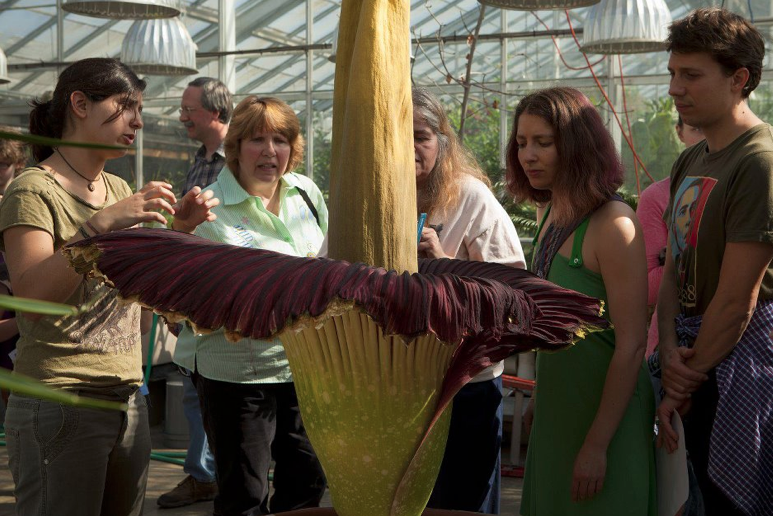
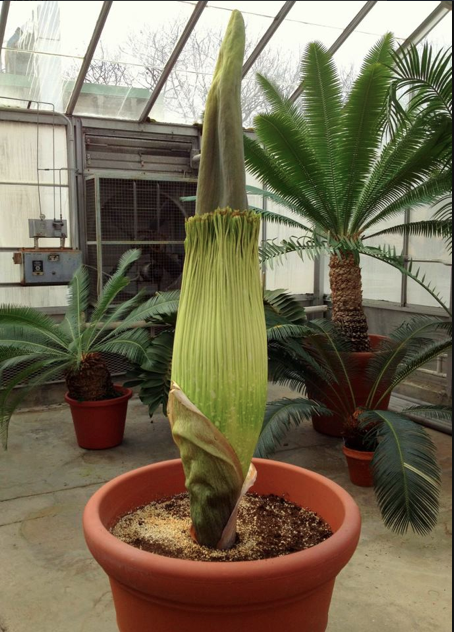
Photo: Robert Barker / Cornell University

At risk of being labeled a “horticultural geek” I feel compelled to continue Audrey‘s story.  (Although I surely should stop calling the plant by that name, but once again, I can’t seem to help myself.)

Most plants in cultivation require human pollination in order to remain genetically viable.  The Titan Arum is no acception.  In fact, this plant actually can’t self pollinate because the 450 female flowers that ring the base of the column-like structure (spadix) are receptive days before the the 500 to 1,000 male flowers above them are ready to  shed their pollen. (Even in botany females mature earlier than males!) Continue reading

Humongous, Malodorous and Rare


It’s big. It’s green. Its growth is rapid. And even before it actually blooms it easily brings “Audrey”, the plant from The Little Shop of Horrors to mind. An extremely rare titan arum, also called the corpse plant, is expected to bloom at the Kenneth Post Lab Greenhouses at Cornell University this week.

Titan arum, also known as Amorphophallus titanum, is a plant that grows in the wild only in the rainforests of Sumatra and rarely blooms in cultivation. Many universities and botanical gardens have specimens, but there have been approximately only 140 such cultivated blooms in recorded history.   Continue reading

Monkey Dads

Who knew that evolutionary biology might surprise us with more examples of fathers playing an important role in the rearing of offspring? Most of the time, for most species, we think of the mother being invested with all the reasons to be the “responsible” parent.

Continue reading

Melville’s Muse

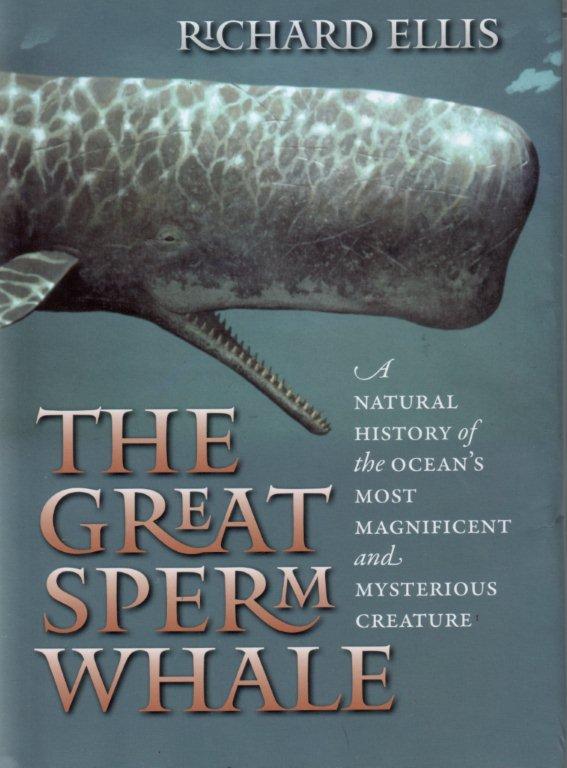
Click the image above to go to the publisher’s website (which also sells the book directly).  If your only knowledge of the title creature comes from a high school literature class, the blurb on the book’s promotional page might make you think this book belonged in the syllabus of the last biology course you took:

Ranging far and wide, Ellis covers the sperm whale’s evolution, ecology, biology, anatomy, behavior, social organization, intelligence, communications, migrations, diet, and breeding. He also devotes considerable space to the whale’s hunting prowess, including its clashes with the giant squid, and to the history of the whaling industry that decimated its numbers during the last two centuries.

According to the review provided in the Times Literary Supplement, the book deserves more attention than that blurb would imply. Continue reading