Glass Eels & Industry

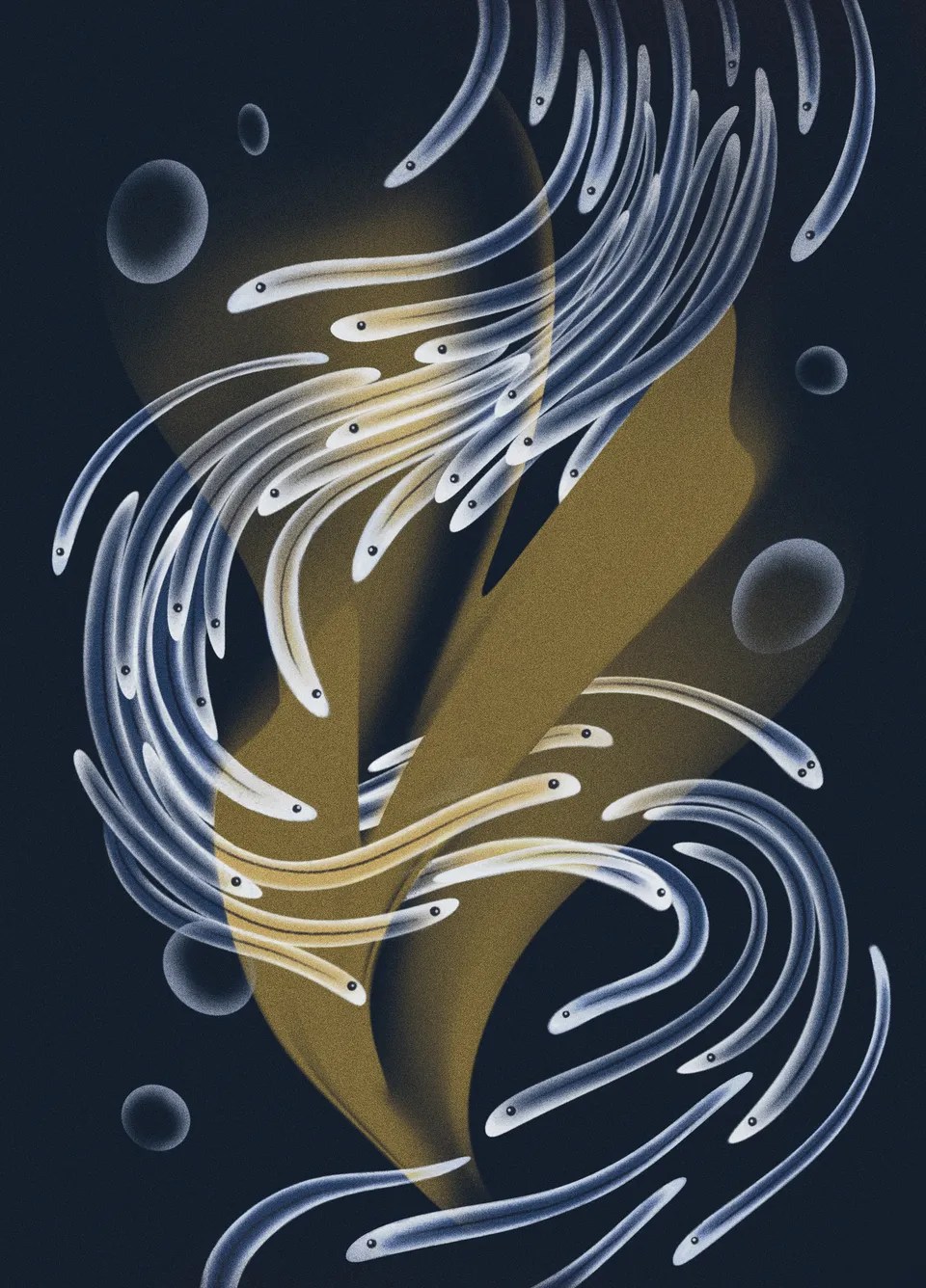
A lot of Mainers want badly to win the elver lottery. This year, more than forty-five hundred people applied for sixteen available licenses. “It’s an industry, not a fucking cult,” a fisherman said. Illustration by Agnes Jonas

Salty language comes with the territory in this story; we thank Paige Williams as always for her excellent reporting at the intersection of natural history and current environmental affairs:

Inside the Slimy, Smelly, Secretive World of Glass-Eel Fishing

Each spring, hundreds of millions of baby eels swarm the waterways of coastal Maine. Soaring global demand incited an era of jackpot payouts and international poaching.

The Sargasso Sea, a warm, calm expanse of the North Atlantic Ocean, is bordered not by land but by four strong currents—a gyre. Vast mats of prickly brown seaweed float so thickly on the windless surface that Christopher Columbus worried about his ships getting stuck. Continue reading

Wind Farm Fishing

(Photo credit: Ionna22 / CC BY-SA 4.0 DEED)

Wind power has had reasonable detractors as well as those who resist for aesthetic reasons. Sometimes nimbyism gives way to pimbyism, and in this case it is people who fish that we can thank for the latter. Thanks to Yale Climate Connections for sharing this story:

Some anglers say Rhode Island’s Block Island wind farm has improved fishing

The bases of the turbines attract fish, survey respondents reported.

Off the coast of Rhode Island, anglers fish for striped bass, fluke, and mahi-mahi. Continue reading

South American Fishing Methods, And Choices

An open-net salmon farm on the Chilean side of the Beagle Channel. Photograph: Dani Casado

As we increase our awareness of the many choices we have when consuming fish (among other things), here is more food for thought:

Crabs, kelp and mussels: Argentina’s waters teem with life – could a fish farm ban do the same for Chile?

Puerto Almanza, on the Beagle Channel in Argentinian Tierra del Fuego, is one of the world’s most southerly settlements and best known for the local seafood, especially Patagonian king crabs.
Photograph: Visit Argentina

While the ecosystem is thriving off the coast of Argentina, the proliferation of salmon farms in Chile’s waters is threatening marine life, say critics

A rocky path, strewn with thick tree roots, leads from a dirt road down to a small green hut overlooking the choppy waters of the Beagle Channel, a strait between Chile and Argentina. The shack is home to Diane Mendez and her family but doubles as Alama Yagan, one of nine restaurants in the fishing village of Puerto Almanza. Continue reading

Anchovies Rock

Kalichka / Getty

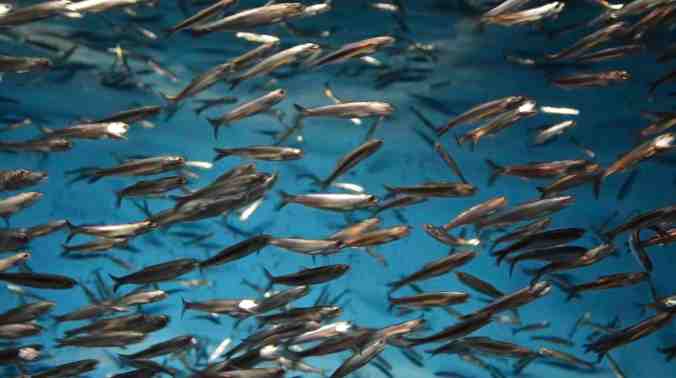
Anchovies are not exactly a staple in our pages, but they make their presence known. They are important. Thanks to The Atlantic, and their collaboration with Hakai Magazine for this article by Christina Couch that illustrates another remarkable feature of these small creatures:

The little fish’s mating rocks the ocean as much as a major storm.

Bieito Fernández Castro wasn’t expecting to find a turbulent hotbed of anchovy sex.

Commissioned by the Spanish government to investigate the conditions behind algae blooms, which kill mussels, Continue reading

More Cameras On The High Seas, Please

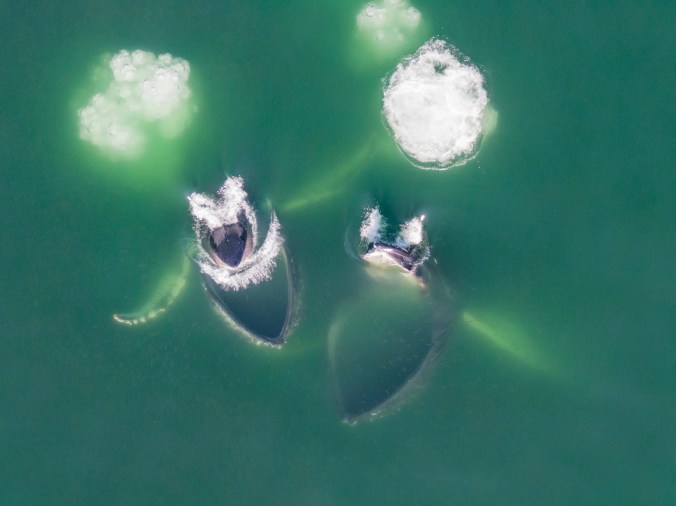
A pair of humpback whales synchronized the release of bubbles to corral and consume sand eels.

This article by Ellie Duke, with photographs and video by Sutton Lynch, is a sort of bookend to another recent article. It makes one wish for more people skilled with cameras in the oceans, and fewer skilled in placing nets:

A school of bluefish forming a circle in shallow water.

The photographer Sutton Lynch is documenting a dramatic turning point off the coast of Long Island — a resurgence of sea life after decades of depletion.

Sutton Lynch rises most days before the sun, arriving at Atlantic Beach in Amagansett, N.Y., for the early-morning calm. It’s the same beach he’s been going to since he was a child, and where he worked as a lifeguard for years as a teenager. Now 23, he spends his mornings surveying the horizon. When he spots activity on the water’s surface, he sends out his drone. Continue reading

Overfishing & Long Island Fancyfolk

Chris Winkler, a fisherman in ever-fancier Montauk on Long Island, is accused of breaking limits on his catch.

We hope that the wrongs get righted:

Chris Winkler is on trial, accused of taking too many fish from the seas off gentrified Montauk. His former partners have pleaded guilty, and stand to make millions from the sale of their small seafood-themed empire.

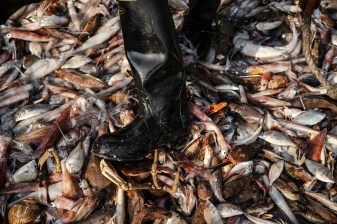
Along with trash fish, catch that exceeds daily limits must be tossed overboard even if it perishes.

It was just before dawn when Chris Winkler, a fisherman in Montauk, N.Y., set off on his trawler, the New Age.

A longhaired surfer who looks far younger than his 63 years, Mr. Winkler was in flip-flops and shorts, trailed by Murphy, a good-natured Irish water spaniel who is usually his only company. Continue reading

Sea Cucumbers Working Overtime

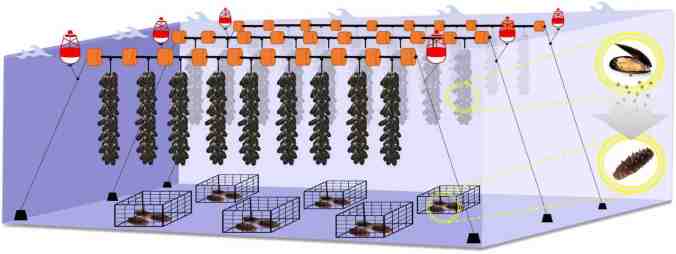
Diagram of a test project in Italy in which sea cucumbers cleaned up excrement from farmed mussels. GROSSO ET AL.

A topic that rarely, if ever, has made our pages, the sea cucumber’s moment in the spotlight has arrived:

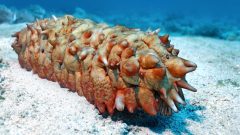
A sea cucumber near Mindoro Island in the Philippines. IMAGEBROKER / ALAMY STOCK PHOTO

Are Sea Cucumbers a Cleanup Solution to Fish Farm Pollution?

Seafood farm operators are breeding and deploying sea cucumbers to vacuum up the massive amounts of fish waste that pose a major problem for their industry. It is part of an effort to redesign fish farms with multiple species so that they work more like natural ecosystems.

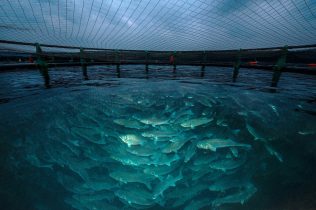
Sea bass at a fish farm in the Adriatic Sea off the coast of Slovenia. WATERFRAME / ALAMY STOCK PHOTO

Off the coast of the Hawaiian Island of Kauai, an underwater metropolis bustles. Sea turtles glide lazily through the surf while schools of fluorescent yellow butterflyfish weave between basketball-size sea urchins and sharp corals.

But Dave Anderson isn’t distracted by the otherworldly charm of the coral reef — he’s here on a mission. Around 70 feet below the surface, he finds his prize: a red sea cucumber. Continue reading

The Bathysphere Book, Reviewed

When a book like this comes along, take in what the review has to say, maybe read a second opinion, then go find a copy from any of the several independent booksellers offering it:

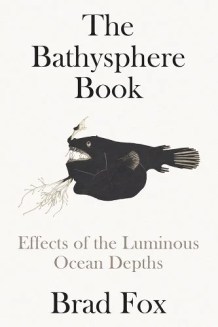
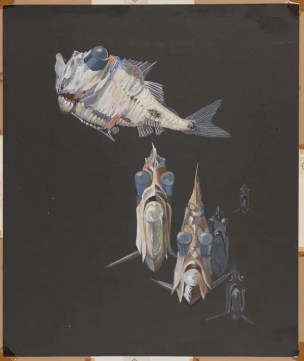
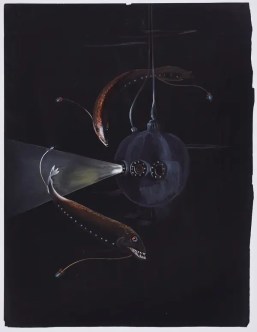
In “The Bathysphere Book,” Brad Fox chronicles the fascinating Depression-era ocean explorations of William Beebe.

Wildlife Conservation Society Archives

Consider the siphonophore. An inhabitant of the lightless ocean, it looks like a single organism, but is actually a collection of minute creatures, each with its own purpose, working in harmony to move, to eat, to stay alive. They seem impossible but they are real. In 1930 William Beebe was 3,000 feet underwater in a bathysphere, an early deep-sea submersible, when he spotted a huge one: a writhing 20-yard mass whose pale magenta shone impossibly against the absolute blackness of the water. As you can imagine, it made an impression.

Wildlife Conservation Society Archives

“The siphonophore mind, Beebe thought, asks us to rethink our individuality, to consider our epidermis as only one way to measure the extent of our bodies,” writes Brad Fox in “The Bathysphere Book,” a hypnotic new account of Beebe’s Depression-era underwater exploration. “In that light, our furious competition, our back-stabbing and fights over resources, is nonsense. Better we work together, getting closer and closer, more finely attuned to each other’s needs until we are indistinguishable.” Continue reading

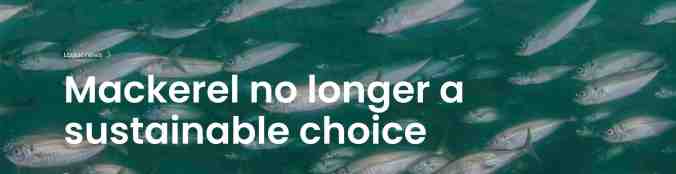
Decline Of Mackerel Fisheries

In the UK the Marine Conservation Society has issued this guideline on mackerel:

We’ve updated the environmental sustainability ratings on our Good Fish Guide in line with the latest scientific advice.

We reviewed 186 environmental ratings for seafood, with 20 seafood ratings moving to the ‘Fish to Avoid’ list and only 15 seafood ratings joining the green-rated, ‘Best Choice’ list with this season’s ratings update. Unfortunately, Northeast Atlantic mackerel has moved on to the amber list, having been on the charity’s green list since before 2011. Continue reading

Animal-Free Meat & Racing The Clock

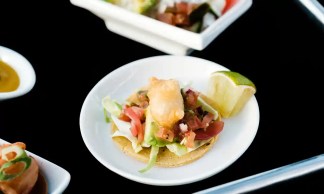
BlueNalu’s fried cell-cultured yellowtail amberjack fish taco. Photograph: Courtesy of BlueNalu

Whether the meat you eat is from land animals or from the ocean, the chances are high that you will be eating man-made versions sooner rather than later:

‘Fishless fish’: the next big trend in the seafood industry

‘Alternative seafood’ is having a moment, with the rise of companies like BlueNalu and Wildtype, which has the backing of Leonardo DiCaprio

In the middle of San Francisco, there’s a pilot production plant for Wildtype, one of a handful of cell-cultivated seafood companies in the US. Inside, it’s growing sushi-grade coho salmon in tanks similar to those found in breweries – no fishing or farming required. Continue reading

Another Surprise From The Deep

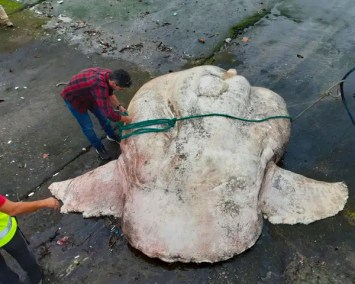
Researchers with a giant sunfish at the marina in Horta in the Azores in December. Atlantic Naturalist

We do not tire of the ocean surprises; this one is of an entirely different magnitude:

A sunfish found near the Azores in the Atlantic Ocean weighed as much as an S.U.V. Scientists say it’s a sign that the sea’s largest creatures can live if we let them.

The fish, at more than 6,000 pounds, is about the weight of a Chevrolet Suburban S.U.V. Atlantic Naturalist

It was easy for scientists to have doubts when they were told that the carcass of a colossal fish had been found floating just off the coast of Faial Island in Portugal’s Azores archipelago in the Mid-Atlantic Ocean in December 2021.

People do tend to exaggerate when it comes to the size of fish after all. However, their skepticism lifted the moment they laid eyes on the fish. It was the biggest bony fish they had ever seen. In fact, it might have been the biggest anyone had ever seen. Continue reading

Fishing Endgame

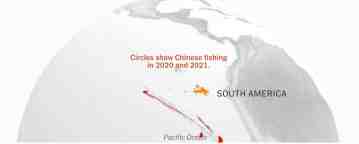
Note: Data for 2020 is from June 2020 through May 2021; for 2021, it is from June 2021 through May 2022.

Overfishing and potential solutions have received lots of attention in our pages over the years. It is not a new problem. And yet, we now have better metrics for how serious the problem is and who is responsible, currently, for making the problem worse. The screenshot to the left does not capture the full value of the dynamic illustration accompanying this article. Click the image to go to the source:

A Chinese ship fishing for squid off the west coast of South America in July 2021. Isaac Haslam/Sea Shepherd via Associated Press

How China Targets the Global Fish Supply

With its own coastal waters depleted, China has built a global fishing operation unmatched by any other country.

Rich and ecologically diverse, the waters around the Galápagos Islands have attracted local fishermen for centuries. Now, these waters face a much larger, more rapacious hunter: China. Continue reading

Whales, Fishing Boats & Depredation’s Discontents

Yesterday’s dramatic photograph at sea shows an interaction between two sea creatures, and combines stark beauty with the occasional terror of pure nature. Man and nature in conflict at sea is not beautiful in any manner. This article below, authored by Nick Rahaim and published in Hakai Magazine, helps put the video above in context. Please click the title to read the story in full at its origin, or listen to it here:

Clever Whales and the Violent Fight for Fish on the Line

As a commercial fisher, I’ve watched colleagues shoot at whales looting from their lines. Here’s why everyone loses when that happens.

Whales seem to be increasingly looking to fishing boats, especially longliners (not pictured), as sources of free meals. Photo by Audun Rikardsen

As I coiled rope on the deck of a commercial fishing boat in the western Gulf of Alaska, I felt the sudden thud of a revolver reverberate in my chest. Continue reading

One More Eel Mystery Revealed

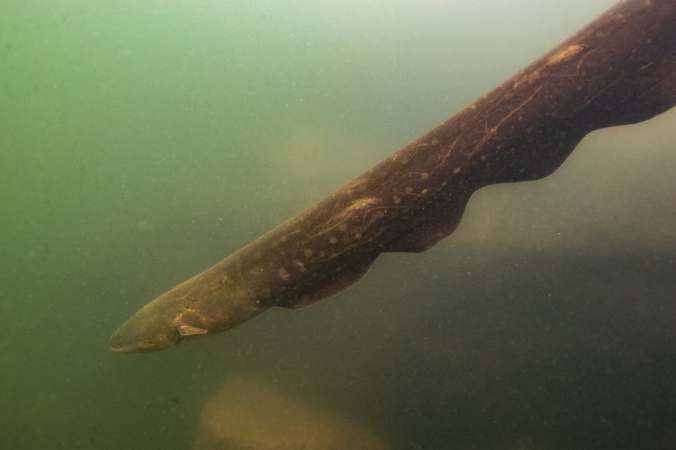
A Volta’s electric eel in the Xingu River in northern Brazil. L. Sousa

Our attention to eels is only occasional, but the mysteries keep coming.  The article contains an amazing video of this pack-hunting phenomenon. Thanks to Annie Roth for this:

Electric Eels Hunt in Packs, Shocking Prey and Scientists

The behavior, used by wolves and orcas to run down fast prey, is rarely seen in fish.

In August 2012, Douglas Bastos, then a graduate student at Brazil’s Instituto Nacional de Pesquisas da Amazônia, was exploring a remote waterway in the Amazon rainforest when he came across a small lake teeming with electric eels. Continue reading

You Can’t Have Your Crabcake And Eat It Too

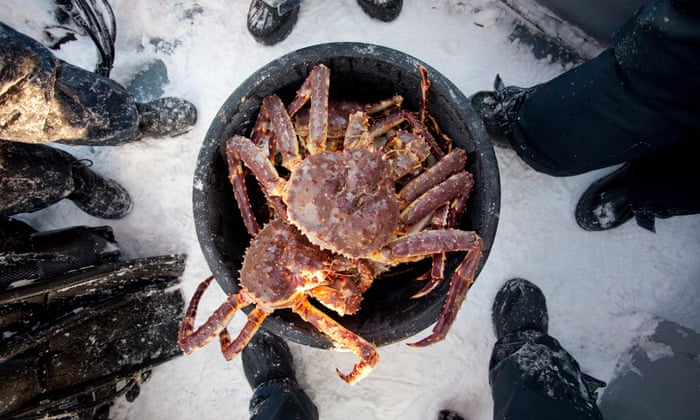
Pot of red gold … Norway exported nearly $9m worth of king crab in October alone. Photograph: Cultura Travel/Philip Lee Harvey/Getty

Invasive species sometimes lead to creative opportunities, but rarely without some tradeoffs:

Crab-22: how Norway’s fisheries got rich – but on an invasive species

Known locally as ‘Stalin’s Red Army’, an invasion of king crabs from Russia created a lucrative industry, and difficult choices

Bugøynes

Fishermen in Bugøynes were struggling before the crabs marched in from Russia. Photograph: Nadia Isakova/Alamy

The Norwegian fishing village of Bugøynes, 310 miles north of the Arctic Circle and a frigid, dark place for much of the year, was on the edge of ruin.

Work was scarce. Years of overfishing and mismanagement had stymied cod quotas. Boats lay idle in cold waters. Those who chose to stay were forced to rely on what meagre wages they could still muster from fishing and processing. Continue reading

Brilliant & Ominous

When you genuinely smile and then recoil a moment later, you are responding to what this artist wants you to see and then understand. The animation is brilliant and its short message on how ocean litter/marine plastic is harming marine life is ominous. The  Artist Statement that accompanies it is not required reading, but it is there for the taking:

Two years ago, an experience on a small island inTaiwan changed my life. It was the closest I’d lived to the sea, being only a ten minute drive away. Everyone can enjoy the beach with its white sand and turquoise ocean. At the time, I went snorkeling almost every week. Seeing such alluring tropical fish and coral reefs still lingers in my mind. However, I also cannot forget the scenes of tons of human waste lying around the shore as if it was a part of nature. Continue reading

Eliminating Fish From The Diet

1314 (1)

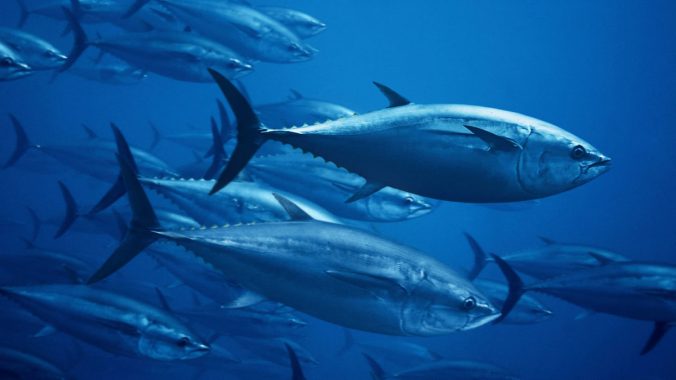
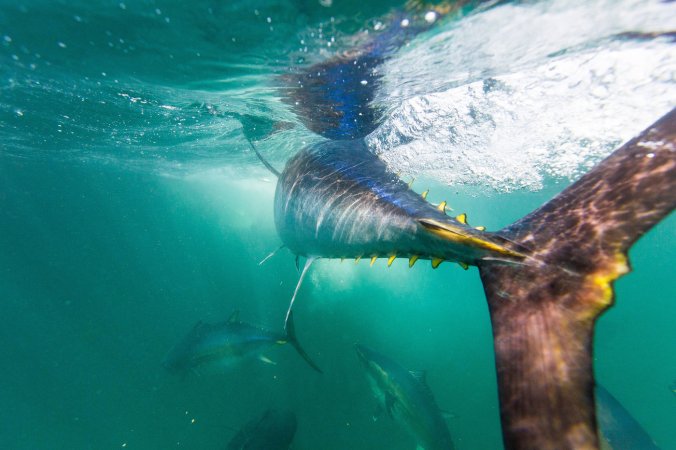
Atlantic bluefin tuna (Thunnus thynnus) off the coast of Madeira Island, Portugal. PAULO OLIVEIRA / ALAMY

Of all the ways to transition to vegetarianism, which I am on snail’s pace doing, I just realized that the one form of animal protein that I have completely eliminated without thinking about it is fish. I cannot remember planning on doing this, but at this moment I cannot remember the last time I ate fish. It may have been 2016. But I have been conscious of the sensation every time I am grocery shopping that I avoid the fish.

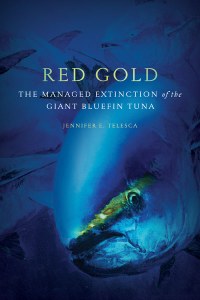
image_miniSushi was my favorite treat of a meal years ago, and while living in India we were as much pescatarian as vegetarian. But that changed with a growing awareness of the challenges related to regulating the world’s seas. So I quit eating things from it. Jennifer E. Telesca, writing in Yale e360, does not make me feel any better about this–as a data point I am exactly of zero relevance compared to the total market size–but I am gratified to see a book on a topic that will help me better quantify the reasons why exiting the market for fish is a priority:

How Global Regulators Are Selling Out the World’s Largest Tuna

The international commission responsible for managing Atlantic bluefin — prized for high-quality sushi — is failing to protect this magnificent fish. The regulators’ focus on fishing industry profits points up the need to change the way we view, and value, the lives of wild creatures.

In 2010, after years of global headlines highlighting the runaway harvest of bluefin tuna in the Mediterranean Sea and eastern Atlantic Ocean, the international regulatory agency managing this endangered fish capitulated. It cut the total allowable annual catch to 12,900 metric tons, the lowest level recorded. For the world’s most valuable fish, coveted as the most succulent sushi on the planet, a return to plenty looked promising. Continue reading

Seafood’s Scientific Solution

growing-seafood_2000.jpg

Mother Jones illustration; Getty

Companies like Impossible and its competitor Beyond Meat have gotten most of the attention in our pages for plant-based meat-like products, but when it comes to alternative seafood our stories have mainly focused on invasive species, or on farming kelp or on seaweed farming. Thanks to Mother Jones for stretching our attention to the alternatives to fresh caught or even farm-raised seafood that simulates the kinds of fish that have been over-harvested:

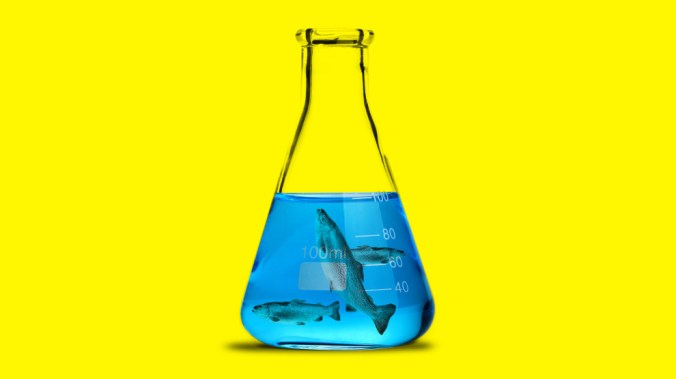
We Destroyed the Oceans. Now Scientists Are Growing Seafood in Labs.

This is why we can’t have nice things.

Do you love burgers—but not the animal cruelty and environmental degradation that go into making them? I come bearing good news: Someday, you might be able to get your meat fix, without all that bad stuff. Scientists can now grow animal flesh, without raising—or in most cases killing—an animal. This food, called “lab-grown meat,” “cell-based meat,” “cultured meat,” “cultivated meat,” “clean meat,” or as comedian Stephen Colbert jokingly called it in 2009, “shmeat,” has set off a flurry of media attention in recent years. Dozens of lab-grown meat companies have materialized, most aiming to solve the problems associated with large-scale beef, pork, poultry, and seafood production.

Finless Foods, a 12-person food-tech startup founded in 2017 and based in Emeryville, California, claims to be the first company to focus on lab-grown fish, although a handful of other startups have since joined them. In October, 28-year-old Finless Foods co-founder Mike Selden gave me a tour of their facility, and I dished about it on the latest episode of the Mother Jones food politics podcast Bite:

MJMeat.jpg

Selden and his co-founder Brian Wyrwas, both products of an agricultural biochemistry program at UMass Amherst, started the company, he says, to “make something good.” Continue reading

Slow Down On Tuna

tuna-1_custom-d47cd28103604517f199242df4377d3da1afe26b-s1400-c85

A new study finds that tuna harvests, including of some species considered “vulnerable,” have increased by an astonishing 1,000% in the last 60 years — a rate that some scientists warn is unsustainable. NiCK/Getty Images

Thanks to National Public Radio (USA) for this warning:

We’re Pulling Tuna Out Of The Ocean At Unprecedented — And Unsustainable — Rates

If you’re in the mood for a tuna poke bowl or an old-school tuna niçoise salad, here’s a tip: Don’t hit up the Greenhouse Tavern in Cleveland. It has been nearly six years since chef Jonathon Sawyer became a “tuna evangelist” after attending a meeting of like-minded chefs at the Monterey Bay Aquarium. It was there that he made the decision to forgo tuna — both in his personal life and on the menus at all four of his restaurants.

It wasn’t always easy. Turning down the chance to eat famed chef Eric Ripert’s mouthwatering thin-sliced tuna over a foie gras torchon took some Superman-like strength, but for Sawyer, the mission is an important one. He’s not trying to get people to give up tuna altogether. Rather, he’s trying to raise awareness of the sheer quantities that are coming across our collective plates and serve as a gentle warning that all that fish is coming from a limited resource.

It turns out that his effort is hitting a seafood sustainability bull’s-eye. Continue reading

Fishermen Helping to Protect Fish

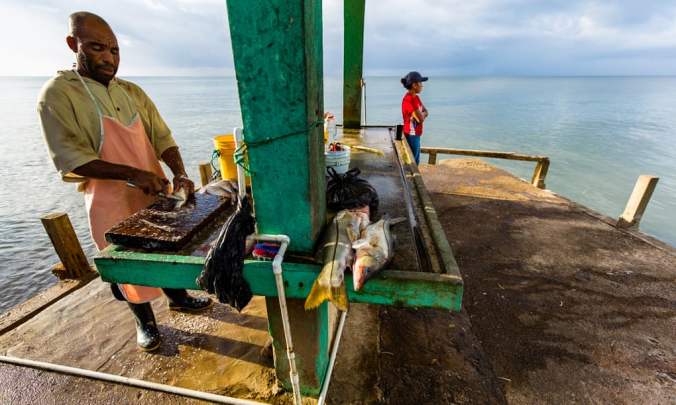
Belize’s system gets fishermen on side in helping to maintain the health of the ocean. photo credit: Tony Rath

Thanks to the Guardian for this story about Belize’s marine conservation efforts and how they can serve as a model for other countries.

Why tiny Belize is a world leader in protecting the ocean

Fish stocks are stable and reef health improving, in part thanks to Belize’s substantial ‘no-take’ zones. Now greater legislation is needed to secure progress

Across the turquoise water by the mangrove, forest ranger Allan Halliday spots a fishing skiff. “We’re going over to say hello,” he says, before abruptly changing the boat’s direction. But his real task is to check the couple on board have the license to fish in this part of the Port Honduras Marine Reserve, one of nine designated zones in Belize.

“We aren’t complaining but others do,” says Alonzo Reymundo, of the rules that now restrict Belize’s 3,000 commercial fishers to two geographic areas each. He and his wife Anselma have been fishing off southern Toledo for 30 years and their boat is laden with 50 or so pounds of shrimp – more than enough, he says, flashing his license. Today’s catch will be sold as bait and fetch around 330BZ$ (£135), he says.

But not all encounters are as friendly for the rangers from the Toledo Institute for Development and Environment (Tide), whose job includes enforcing the managed access (MA) programme that since 2016 has given traditional fishers the rights to secured grounds if they obtain licenses and report their catch. Illegal fishing has declined, says Halliday, but at night there are illicit incursions from Guatemala and high-speed chases around the reserve’s 500-square miles of pristine sea – a vast space to monitor for just four rangers alternating shifts at their station on Abalone Caye.

Covering all of Belize’s waters, the MA scheme is unique, says fisheries administrator Beverly Wade. “Belize is the only country in the world that has successfully divided all its territorial waters, including functional fishing waters. We direct all fishermen into two of nine areas to build an architecture from the ground up, where a constituent takes ownership of resources because their livelihood depends on it.”

The programme is just part of a groundbreaking approach to ocean protection that has won the tiny country in Central America a reputation as a world leader. Continue reading