Building An Invasivore Economy

wild-city-pigeon Since Phil first started posting his series on possible solutions to invasive species last year, in conjunction with the theme of citizen science that Seth has been writing about for the last couple years, we have been on the look out for citizen solutions to environmental challenges–stories that match our interest in entrepreneurial conservation. Phil’s series suggests that citizen science may be the best path to building what might be called an invasivore economy. As it happens, just after his first couple posts there was an article in Conservation that dealt with this very issue:

SEND IN THE INVASIVORES

Recipes for Ecosystem Recovery By Sarah DeWeerdt

“We’re trying to be unsustainable,” says University of Vermont conservation biologist Joe Roman. And he says it with glee. Roman runs www.eattheinvaders.org, a compendium of invasive species recipes. He is one of a growing number of people who advocate controlling invasives by eating them. Instead of relying on toxic pesticides, expensive eradication campaigns, or risky introductions of biological control agents, “why not use our own appetites to good advantage?” he suggests.

Continue reading

Flavours Of Kerala – Ela Ada

Photo credits : Jithin

Photo credits: Jithin

Ela ada is an authentic recipe of Kerala cuisine. A mixture of grated coconut, sugar and cardamom is layered inside a rice flour batter and wrapped in banana leaf and steamed. It is served as evening snack. Continue reading

Taste Of Xandari At 51

10155003_752610181446587_5118148078119598173_nRecently we passed a quarter million views on this site. We have no clue whether that is wow-alot or woeful-low; what metrics indicate how well we address the interests of both contributors and readers other than by comparing the performance of individual posts versus other posts? Carbon Emissions Series: Vacationers’ Diets, approaching 10,000 views and our most popular post, tells us alot about what our readers care about.

In short, they seem to love reading about good food that is also good for the environment and is healthy. This tells us why readers have also responded well to our posts about Xandari. To get a sense of the love, you can read a bit; to feel it, there is no choice. You must visit the resort. In case that is not in the cards in the near future, how about a taste?

Screen Shot 2014-04-23 at 4.07.00 PMIn Kerala, visit the Mattanchery neighborhood of Fort Cochin and stop in at 51 to sample one of the best-loved salads at Xandari. Since both Kerala and Costa Rica are situated within the tenth parallel north, chefs in both locations have many of the same farm-fresh ingredients to work with.

Flavours Of Kerala – Mambazha Pulissery

Photo credits : Jithin

Photo credits: Jithin

Mambazha Pulissery is a classic Kerala sweet and sour ripe mango curry. Traditionally it’s made using ripe, small mangos cooked in their own juice. The main ingredients are small mango fruit, turmeric powder, red chili, grated coconut, green chili, cumin seeds, coconut oil and curd. Continue reading

Sea-Level Summer, Citrus, And Chilling At 51

From Plate 205: Limon Caietanus by Giovanni Battista Ferrari (1584-1665)

From Plate 205: Limon Caietanus by Giovanni Battista Ferrari (1584-1665)

Helena Attlee
THE LAND WHERE LEMONS GROW
The story of Italy and its citrus fruit
272pp. Particular Books. £20.
978 1 84614 430 2

The views, not to mention recent temperatures, lead most guests to sit outdoors with the breeze on the deck, on either the ground level or mezzanine, watching the fishermen haul in their catches, or the tug boats, or the ferries. 51 is alive with citrus in these sea level summer days and evenings, starting with a tall glass of iced minted-lime cooler, continuing with a chilled avgolemono soup;  and so on. Clarissa Hyman, a freelance food and travel writer, catches our attention with this book review in the Times Literary Supplement:

A paradox pervades the Sicilian citrus groves and gardens. The scent is intoxicating but too often the fruit lies rotten on the ground, unwanted and worthless. In this maddening, singular island, where they say the sun drives you crazy and the moon makes you sad, the irony is your breakfast orange juice will most likely be diluted, long-life concentrate from oranges grown in Brazil. Continue reading

Pesaha Appam – Maundy Appam

Photo Credit : Renjith

Photo Credit: Renjith

Pesaha Appam is a traditional food made by Kerala Christians only during Maundy Thursday, the Thursday of holy week. The eldest  member of the family blesses and cuts the Appam and distributes it to the rest of the family members. Continue reading

Chefs Do The Most Surprising Things, At 51 In Kerala’s Historic Mattanchery Neighborhood, And Elsewhere

Photograph by Brian Ach/Getty

Photograph by Brian Ach/Getty

The kitchen team at 51 has gone from concept and recipe development, to food trials, to opening and ongoing operations, to continued taste tests, rather nonstop for months. They have risen to the challenge–Malabar cuisine showing off its Eastern Mediterranean multicultural influences–and surprised our palates pleasurably. But now a quick break with a fun story, for the team at 51.

Everyone loves a well-planned and meticulously executed surprise when the outcome is a big smile. Why not chefs, too? Chef stories are on our radar lately and this one, if it is to be believed in all details, has a surprise within a surprise in that these culinary artists who have all “made it” still deem to sleep in modest accommodation in the interest of pulling off the party of a lifetime, in secret, for someone they care about:

For forty-eight hours this week, some of the world’s most acclaimed chefs, who hold twenty Michelin stars and myriad awards between them, were living in hiding in New York City. The twenty non-New Yorkers were sequestered together deep in Williamsburg, in dingy rental apartments with thin mattresses on wooden slats, horrible lighting, and half-eaten bags of Doritos strewn about. Continue reading

Chicago’s Vertical Farming

Plant Chicago, NFP/Rachel Swenie

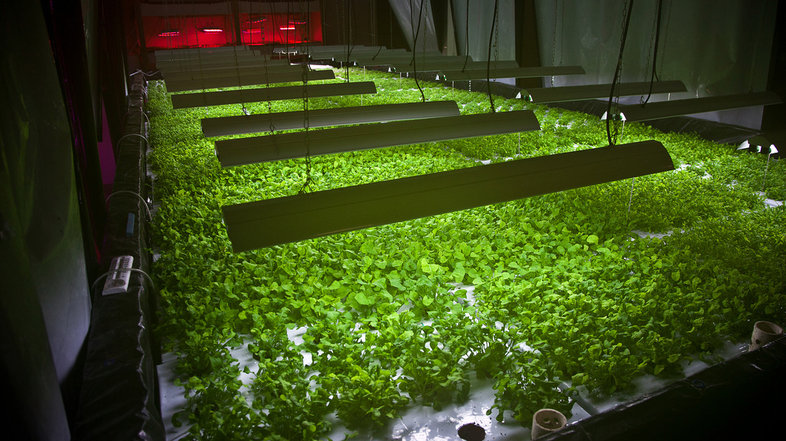
Arugula plant beds inside The Plant, a vertical farm operation in Chicago. Plant Chicago, NFP/Rachel Swenie

Thanks to National Public Radio (USA) for this story on their weekly program called The Salt:

From plant factories fueled by the magenta glow of blue and red LED lights, to the 30-foot tall Ferris wheel for plants in Singapore, we’ve shown you the design possibilities for growing vegetables up instead of out.

But critics ask, what kind of stresses does that put on the plant? And how do you feed this kind of intensive cultivation without spending more than what you get back in the harvest? Continue reading

Flavours Of Kerala – Mango Pickle

Photo credits : Sachin

Photo credits: Sachin

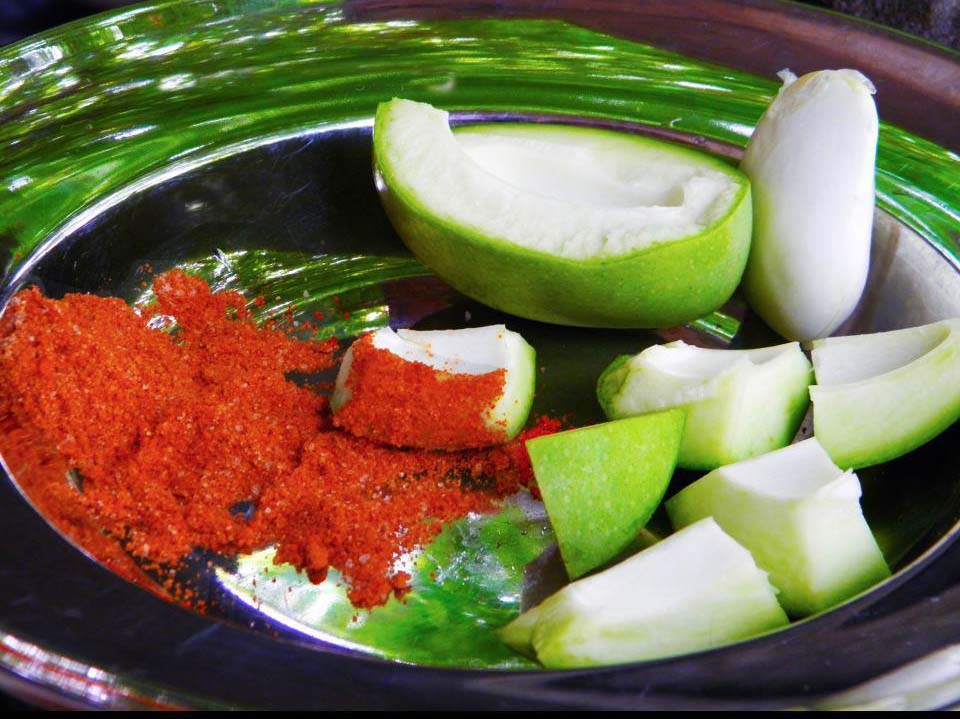
Both delicious and easy to prepare, Mango Pickle is an important condiment addition to most Kerala meals.  The main ingredients of this spicy and tangy condiment are raw mango, salt, red chili powder, turmeric powder, fenugreek seeds, fennel seeds, mustard oil and vinegar.

Continue reading

Vegetarian Cookbooks For Carnivores

Chefs are rapidly turning vegetables into the cash cow of the cookbook trade. Illustration by Serge Bloch.

Chefs are rapidly turning vegetables into the cash cow of the cookbook trade. Illustration by Serge Bloch.

If you are a New Yorker subscriber and a foodie, you look forward to the Food issue, which comes out in November each year, and anything written, at any time, by Jane Kramer. For good reason, the latter. Case in point:

Three years ago, I retired the chili party that I used to give in Italy at the end of August. This was a shame, because I liked my party, and thought that the chili made a nice reprieve from the ubiquitous barbecues of summer. Two of the twenty-four regulars at my party were vegetarians—one reluctantly, under a doctor’s orders. A doable number, it seemed to me: for years, I put out a bowl of pasta al pesto just for them. Then, from one chili party to the next, everything changed.  Continue reading

Flavours Of Kerala – Chiratta Puttu

Photo credits : Renjith

Photo credits: Renjith

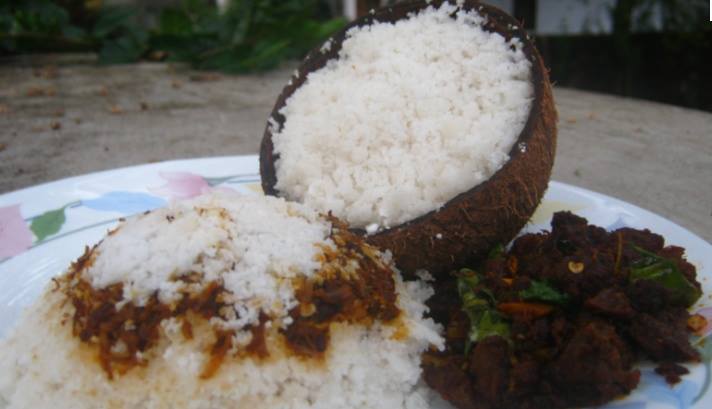
Chiratta Puttu is a variety of the Kerala Puttu that is steamed in a tube shaped vessel.  The traditional method requires soaking the rice for about one hour. Next clean a half coconut shell and make a hole in the “eye” portion. Boil the water in the Puttu vessel. Continue reading

Lunchtime, 51

51 LunchAs this post goes up, it is time to step in through the front door of 51. On Bazar Road, neighboring the spice merchants who have been plying their trade for centuries here in the Mattanchery neighborhood of Fort Kochi, you will see this sign on the left side of the road passing from the Brunton Ferry in the direction of the Dutch Palace.

Continue reading

Nākd Bars Revisited

A while back I was exposed to the wonder of Nākd bars, and I shared some reasons why you should eat them. Now, I’ve had the luck to try several more of their creative and delicious flavors. Before I dive into those, a quick aside: along with seven hundred other students, this semester I’m taking one of the most popular classes at Cornell University, Introduction to Wines. One of the course goals is learning how to parse the different aromas and their combination with the wine’s acidity, alcohol, and other elements, all of which come together to make a complex liquid.

As I tasted more Nākd bar flavors this year, I thought to myself that if I was being taught how to judge and analyze such a complicated thing as wine, then there was no reason I couldn’t apply the same process to something as naturally simple as a Nākd bar, and write some brief thoughts on the new flavors I tried!  Continue reading

Tasting Tour In Northern India

Kuni Takahashi for The New York Times

Kuni Takahashi for The New York Times

Food in India, and regional specialties in particular, are on our mind currently during kitchen tests for 51, so this article from the Travel section of the New York Times this week (click on the image to the left to go to the story) catches our eye:

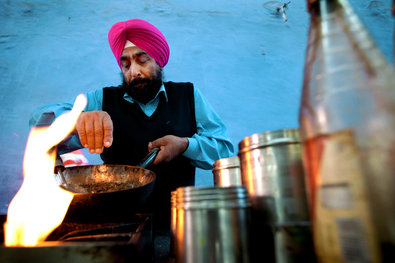
Cooking at Surjit Food Plaza in Amritsar, India.

The author heads to northern India for a tasting tour of dhabas, casual restaurants famous for their inexpensive and remarkably tasty cuisine. Continue reading

Not For Vegetarians, Nor For Kids In Some Cultures, But Worthy Of Consideration

The New York Times Dining section has this video to ponder “another” white meat for those so inclined:

Roasted Rabbit

Rabbit is no harder to cook at home than chicken. Melissa Clark shows how to enhance this lean meat with olives, lemon and feta cheese.

UK Organics Back In Black

The nation's appetite for organic food is growing. Photograph: Nick Turner/Alamy

The nation’s appetite for organic food is growing. Photograph: Nick Turner/Alamy

Thanks to the Guardian‘s ongoing coverage of environmental issues, this story about sales of organics in their home market:

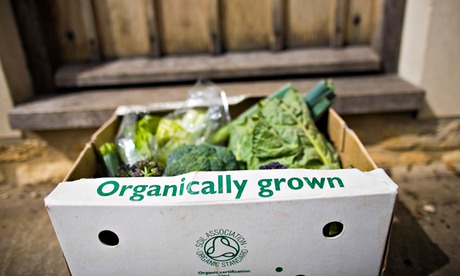
Sales of organic food and drink rose by 2.8% last year after successive years of decline, fuelled by strong growth among independent retailers and healthy online sales. Continue reading

If You Happen To Be In Oxford

spires_view__970

As we continue menu/kitchen-testing at 51, we confront daily the question of how much meat we want to offer guests, how to source it ethically, and how to improve our vegetarian options.  This book has generated considerable food for thought, so to speak. March 27 at 4pm, during the Oxford Literary Festival, co-author of the book Farmageddon, which is reviewed here and here, will be speaking for one hour. Wish we could attend. If you can and do, please send video or notes:

39829The chief executive of Compassion in World Farming Philip Lymbery uncovers the trend towards mega-farming that he says is threatening our countryside, farms and food. He says farm animals have been disappearing from our fields as food production becomes a global industry. And the recent horsemeat scandal demonstrates that we no longer know for certain what is entering the food chain. Lymbery collaborated with Sunday Times journalist Isabel Oakesott onFarmageddon, an investigation into mega-farming that ranges from the UK to Europe, the USA, China, Argentina, Peru and Mexico. Continue reading

Inspiration, 51

Photograph by James Pomerantz.

Photograph by James Pomerantz.

This post is for the team at 51, a new restaurant we are opening soon, located on the waterfront of Fort Cochin’s harbor in the history-intact, spice-trading Mattanchery neighborhood. That team is a group of men and women, chefs, support cooks, self-made cuisine historians, and other interested parties collaborating on a new concept.  It is a concept, but deftly avoiding pretension. More about fun historical convergences, good taste, and communities interacting over long stretches of time to create new food ways. Following is a restaurant review whose accompanying photo was the main draw, but so was the notion of foraging that has become so compelling to foodies of late:

It seems strange to say that the best thing at a place that specializes in juice cleanses is the porchetta, but Foragers Market and Table encapsulates the contradictory nature of the New York diet, serving quality food that feels “healthy,” and is often local and organic, but with none of that dull avocado-based asceticism. Continue reading

A Musically Satisfied Cow Is A Productive Cow

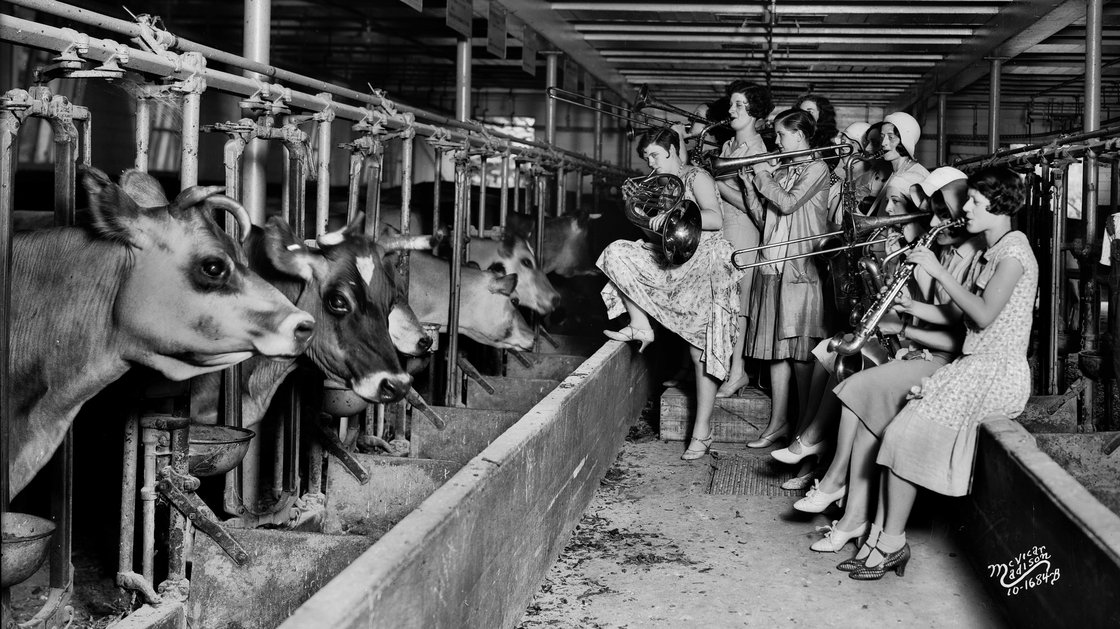
The Ingenues, an all-girl band and vaudeville act, serenade the cows in the University of Wisconsin, Madison's dairy barn in 1930. The show was apparently part of an experiment to see whether the soothing strains of music boosted the cows' milk production. Angus B. McVicar/Wisconsin Historical Society

The Ingenues, an all-girl band and vaudeville act, serenade the cows in the University of Wisconsin, Madison’s dairy barn in 1930. The show was apparently part of an experiment to see whether the soothing strains of music boosted the cows’ milk production. Angus B. McVicar/Wisconsin Historical Society

It is not difficult to believe, but it is funny. Thanks to National Public Radio (USA) for this story about the importance of animal happiness, an idea we can all, from carnivore to vegan all everyone in between, agree is good (the video below is at least as compelling as the scientific references):

When it’s time to buckle down and focus, plenty of office workers will put on headphones to help them drown out distractions and be more productive. But can music also help dairy cows get down to business?

Some dairy farmers have long suspected that’s the case. It’s not unheard of for farmers to play relaxing jams for their herds to boost milk production, as the folks at Modern Farmer recently reported.

A tantalizing 2001 study out of the University of Leicester in the U.K. appeared to lend credence to those claims. It found that milk production went up by as much as 3 percent when cows listened to slow tunes like R.E.M.’s “Everybody Hurts” and Simon & Garfunkel’s “Bridge over Troubled Water,” rather than faster songs. Continue reading

Flavours of Kerala – Pappadam

Photo credits : Renjith

Photo credits: Renjith

Kerala pappadams make a very popular side dish served with Kerala sadya (meals like the own depicted below). The main ingredients of pappadams are black gram (a type of lentil flour) and salt. Continue reading