App For Food Waste Reduction

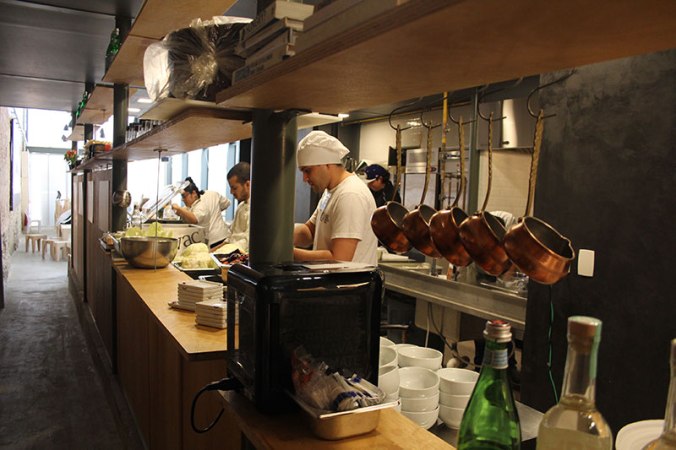
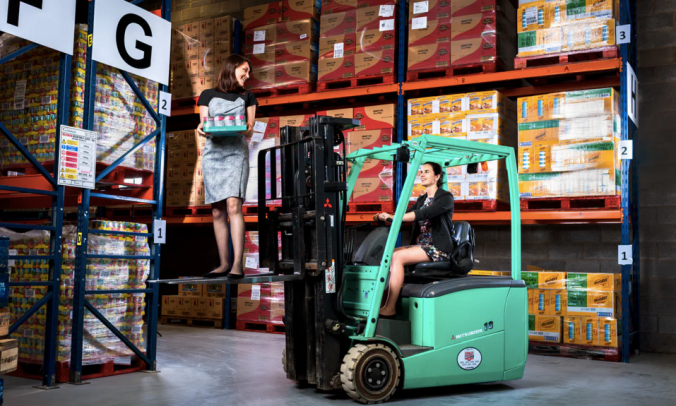
‘A love for food and a distaste for waste’: Iseult Ward (left) and Aoibheann O’Brien in the FoodCloud warehouse in Dublin. Photograph: Mark Nixon for the Observer

‘A love for food and a distaste for waste’: Iseult Ward (left) and Aoibheann O’Brien in the FoodCloud warehouse in Dublin.
Photograph: Mark Nixon for the Observer

Thanks to the Guardian for their coverage of stories about reducing food waste:

FoodCloud: new app proves a nourishing idea for wasted food

The distribution of surplus food in Ireland is being transformed by FoodCloud. Killian Fox meets the duo behind the venture

Killian Fox

Within one community, there can be a business that’s throwing away perfectly good food and just around the corner there’s a charity that’s struggling to feed people in need,” says Iseult Ward of FoodCloud, a remarkable social enterprise which she co-founded with Aoibheann O’Brien in 2012. “We wanted to connect the two.” Continue reading

New York City Food Heritage

04qa2-master768

In a photo from 1945, Broadway and 42nd Street in Manhattan in front of the Horn & Hardart Automat. Credit Andreas Feininger/The LIFE Picture Collection/Getty Images

This Travel section interview–Best Eating in New York? A Food Historian Has Some Advice By JOHN L. DORMAN–in the New York Times catches our attention:

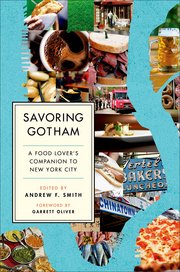
9780199397020 When the food writer Andrew F. Smith had an idea for a new book on New York City, he went for an intriguing angle. “We preserve the homes of people who were born here and later became famous, and we preserve all sorts of artwork,” he said, “but people don’t think about preserving a city’s food heritage, which was something that was missing in New York.”

His idea resulted in the book “Savoring Gotham: A Food Lover’s Companion to New York City,” which he edited. The topics range from the culinary history of the Lower East Side to the emergence of Automats, Continue reading

Learning How To Eat

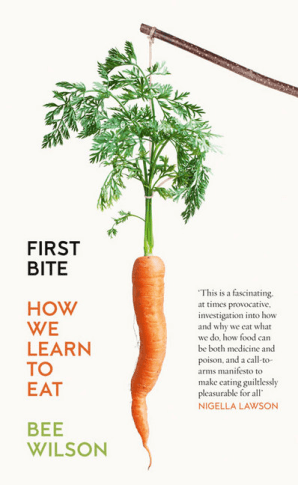
9780007549702When an author of Bee Wilson’s stature publishes it is not surprising to see reviews in the news outlets that we tend to source from in these pages. For the book to the right the first we saw was How Do We Get To Love At ‘First Bite’? on National Public Radio (USA), followed by reviews in the New York Times and the Guardian among others. We had even read the publisher’s blurb:
The way we learn to eat holds the key to why food has gone so disastrously wrong for so many people. But Bee Wilson also shows that both adults and children have immense potential for learning new, healthy eating habits. An exploration of the extraordinary and surprising origins of our taste and eating habits, First Bite explains how we can change our palates to lead healthier, happier lives.

But we had not gotten around to linking out to any of these reviews. Better late than never:

TEACHING GROWNUPS HOW TO EAT

By Nicola Twilley

Until the twentieth century, Japanese food was often neither delicious nor nourishing. Junichi Saga, a Japanese doctor who chronicled the memories of elderly villagers from just outside Tokyo, in the nineteen-seventies, found that, in the early years of the century, most families scraped by on a mixture of rice and barley, accompanied by small quantities of radish leaves, pickles, or miso. Animal protein was almost entirely absent in the Buddhist country, and even fish, as one of Saga’s informants recalled, was limited to “one salted salmon,” bought for the New Year’s celebrations, “though only after an awful fuss.” Continue reading

Food Waste Approaching Zero (Goals Are Powerful)

dsc_0080-90-beea8781c209d5611d13eacd9f03985d6f1a805d-s1100-c85

Junior Herbert, a volunteer with Olio, collects leftovers from vendors at London’s Camden Market. London has become a hub for apps and small-scale businesses that let restaurants and food vendors share leftovers with the public for free, and otherwise reduce the amount of edibles they toss. Maanvi Singh for NPR

Green entrepreneurship is alive and well in London (thanks to National Public Radio, USA, and its program the salt for this story):

Eat It, Don’t Leave It: How London Became A Leader In Anti-Food Waste

MAANVI SINGH

It’s around 6 o’clock on a Sunday evening, and Anne-Charlotte Mornington is running around the food market in London’s super-hip Camden neighborhood with a rolling suitcase and a giant tarp bag filled with empty tupperware boxes. She’s going around from stall to stall, asking for leftovers.

Mornington works for the food-sharing app Olio. “If ever you have anything that you can’t sell tomorrow but it’s still edible,” she explains to the vendors, “I’ll take it and make sure that it’s eaten.” Continue reading

The Future Of Food & Taxes

5126

Food production causes a quarter of greenhouse gas emissions, largely from the raising of cattle and other livestock. Photograph: Mike Kemp/Getty Images

Tax meat and dairy to cut emissions and save lives, study urges

Surcharges of 40% on beef and 20% on milk would compensate for climate damage and deter people from consuming as much unhealthy food

Damian Carrington

Climate taxes on meat and milk would lead to huge and vital cuts in carbon emissions as well as saving half a million lives a year via healthier diets, according to the first global analysis of the issue. Continue reading

Quail Eggs & Food Culture

Frazier-QuailTheQuieterBackyardEggOption-1200.jpg

Quail eggs have fewer calories than chicken eggs, and with their higher protein ratio two or three can make for a surprisingly hearty breakfast. PHOTOGRAPH BY WOLFGANG KAEHLER / LIGHTROCKET VIA GETTY

This post on the New Yorker’s website is a good sample of what has changed about the writing style, among other things, in the changing food culture of North America. We have left out the first half of the post, which is not for the squeamish in general and certainly not for animal rights activists. Yet, it is realistic, honest, transparent and alot of other things that our global food systems have not been in the last century:

QUAIL, THE QUIETER BACK-YARD EGG OPTION

By

…In her book, “The Coturnix Revolution,” Alexandra Douglas makes a convincing case for quail’s superiority over chickens: they are less expensive, take up less space, and convert feed into edible protein more efficiently. Not only is a quail cage quieter than a coop of squawking chickens, it can be small; a square foot is plenty of room for a single quail. Continue reading

If You Happen To Be In Oxford (MS, USA)

9780871406804Paul Freedman in conversation with John T. Edge

If we could, we would be there to hear this conversation; no less a part of the attraction is to do so at an institution worthy of everyone’s book orders:

Monday, September 26, 2016 – 5:00pm
Square Books
129 Courthouse Sq
Oxford, MS 38655

Whether charting the rise of our love affair with Chinese food through San Francisco’s fabled The Mandarin, evoking the richness of Italian food through Mamma Leone’s, or chronicling the rise and fall of French haute cuisine through Henri Soule’s Le Pavillon, food historian Paul Freedman uses each restaurant to tell a wider story of race and class, immigration and assimilation. Freedman also treats us to a scintillating history of the then-revolutionary Schrafft’s, a chain of convivial lunch spots that catered to women, and that bygone favorite, Howard Johnson’s, which pioneered midcentury, on-the-road dining, only to be swept aside by McDonald’s. Lavishly designed with more than 100 photographs and images, including original menus, Ten Restaurants That Changed America is a significant and highly entertaining social history.

In case you missed it, a review of this book is finally available from one of the great food writers of our time:

Continue reading

Wulff & Konstali & Hygge

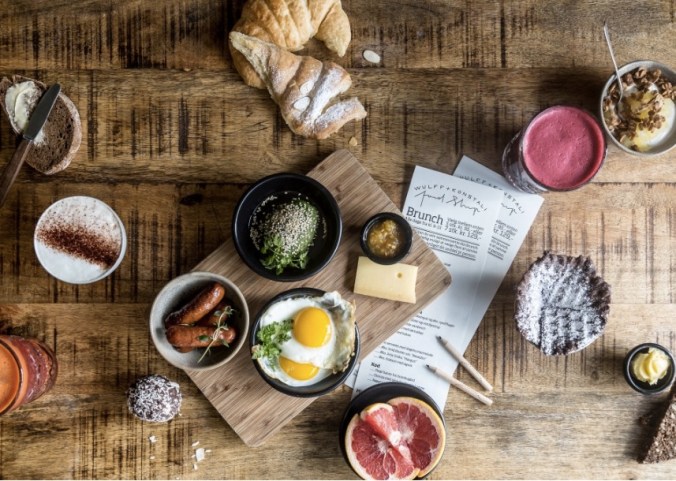
Brunch

Image from the Galleri of Wulff & Konstali’s website

It is just after 10am Sunday morning in Kerala, as I type this. Maybe because brunch is associated with late Sunday mornings, or maybe because I just read Jocelyn’s post (or maybe both) my mind is wandering in the direction of food experience. While we have had (and hosted) many a fine brunch in Kerala at the moment my brunch-thinking has drifted to Copenhagen. You do not need to speak Danish to sense the hygge in the image above, or to want to experience it in the space pictured below.

Hyggespace.jpg

Image from the Galleri of Wulff & Konstali’s website

If you need a primer on hygge, the best place to find it is this article just published in the Guardian, which also happens to be how my attention was brought to Wulff & Konstali:

…“Hygge is when you treat yourself, it’s not that healthy, but it’s good food,” Agnete says. Continue reading

Guilt In The Eye Of The Beholder

00otg-losangeles-master768.jpg

A raspberry dessert at Café Gratitude in Hollywood. Credit Monica Almeida/The New York Times

A few days back I was struck by a post on this site about lab-grown foods, and wanted to continue the thought exercise by sharing a few comments on a brief article I had just read elsewhere on the intersection between performance art and food issues. Two more cents to add here, by way of a few excerpts from this fascinating, if alarming, article:

Eschewing a Vegan Lifestyle at Home, but Still Embracing It at Work

Continue reading

Seaweed Farming to Start in Costa Rica

Red (despite the color) seaweed in spaghetti style. Photo © Ricardo Radulovich, UCR professor

A little less than a year ago, I read a very interesting article in The New Yorker about growing seaweed in Long Island Sound, off the shore of Connecticut, that held inspiring information on the environmental effects of farming the marine macroalgae: it absorbs excess nitrogen, phosphorus, and carbon dioxide from the ocean, all of which otherwise negatively affect the ecosystem’s health. Seaweed also can be a solid source of protein, vitamin B12, Omega 3 and 6 fatty acids, and fiber. So growing it is good for the oceans as well as our bodies.

Today, I was reminded about Dana Goodyear’s piece from last November as I read a headline on the University of Costa Rica’s webpage announcing that researchers from their School of Agricultural Engineering and Biosystems, after years of trial studies, will be promoting the growth of seaweed farming off of both coasts of Costa Rica, where they hope it will become a significant food source for the country. Continue reading

Podcast: The Magic of Salt

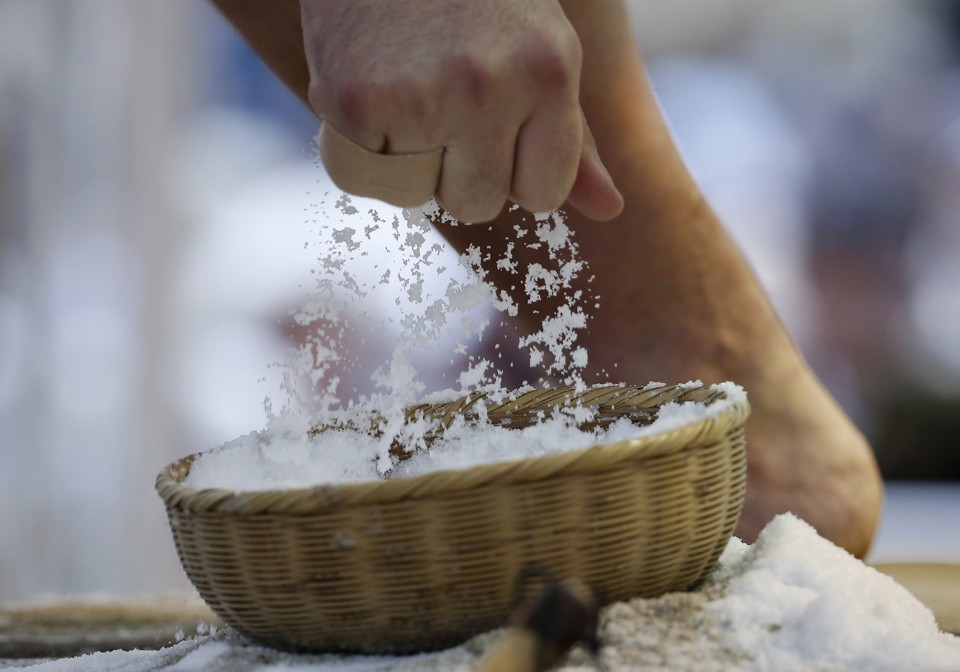
Yuya Shino / Reuters via The Atlantic

Almost exactly five years ago, I quoted Mark Kurlansky’s book focused on the history of an Atlantic fish species, Cod. I knew he’d written another book on the history of salt, but haven’t read it yet. With a podcast episode from Gastropod that was featured in The Atlantic recently, I got a nice summary of the subject and learned even more about the current issues revolving around sodium.

Salt is a magical substance. It reduces bitterness, enhances sweetness, boosts flavor, and preserves perishable foods. Without it, we would die: The human body can’t make sodium, but our nerves and muscles don’t work without it. It was considered rare until quite recently, so it’s hardly surprising that, throughout history, salt has been the engine behind empires and revolutions. Today, there’s a new battle in the salt wars, between those who think that we eat too much of it and it’s killing us—and those who think most of us are just fine. Join us for a serving of salt, seasoned with science, history, and a little politics.

Continue reading

Mobile Farmers Market Headed to Austin Neighborhoods

ben-watering-transplants-2

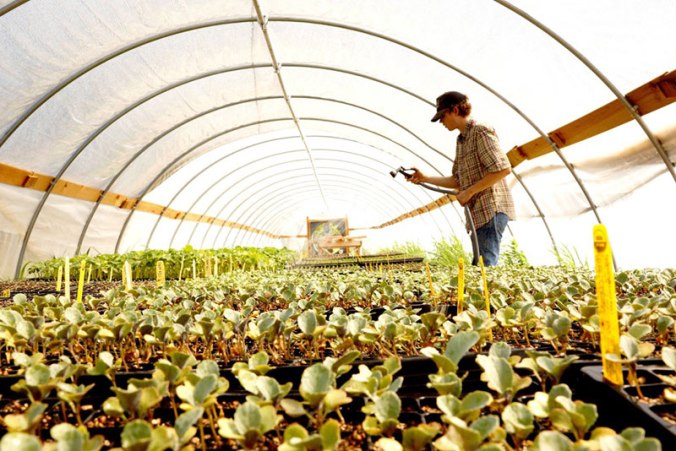
Source: Farmshare Austin

We have shared on previous occasions the benefits of organic farming. Well, getting affordable organic produce to neighborhoods who don’t have a single grocery store is commendable task, and the mission of Farmshare Austin. The non-profit organization received a grant from the city to help launch the program, which will make designated weekly stops in neighborhoods around Austin that lack access to organic fruits and veggies.

“Large areas of the city and county do not have full-service grocery stores, and it can be difficult for people in these places to get fresh, affordable food for themselves and their families,” [says] Taylor Cook, Farmshare Austin’s executive director. The market will target four areas, for now, that need the service most, and it will park in each district through an afternoon and evening. Cook says besides offering fresh seasonal produce from the organization’s 7-acre organic farm, they will also offer other staples, like cooking oil, on hand, so residents will have access to everything they need to cook a meal. The program accepts SNAP benefits and participates in the Sustainable Food Center’s Double Dollars program, allowing consumers using food assistance  to double their buyer power for fruits and vegetables. The pilot program will begin next month and run through the end of December. Cook says they hope to expand the mobile farmers market program in the coming years.

Continue reading

Upcycling Food Waste

bread_custom-ab4e4080afab7c1e3e53752023eca6d1b512719e-s800-c85

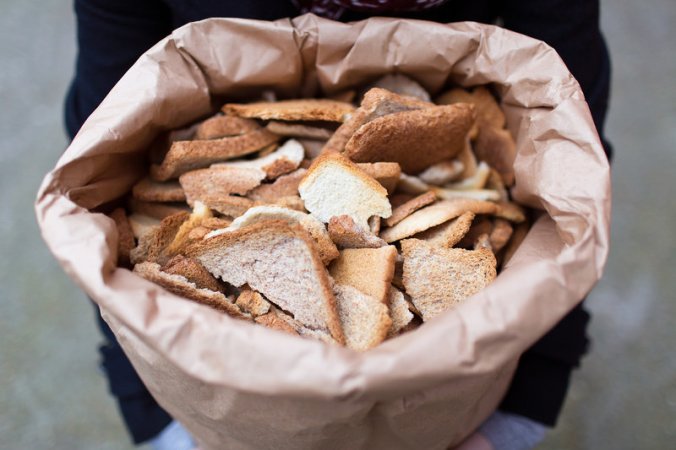
Crusty heels of loaves of bread which are used to make Toast Ale. All photos from: npr.org

We are no strangers to the food waste crisis. We recently wrote about the average landfill contribution per person per state in the U.S. and on prior occasions have shared stories about the severity of poor “waste” management.  At the same time, we acknowledge that there are people who are leading the cause to reduce the amount of food thrown away and salvage the unwanted scraps into healthful and tasty food, or otherwise useful products. It is important for us to share these stories to serve as inspiration for those with an entrepreneurial spirit and to inform citizens how they can support these businesses or organizations.

Toast Ale is a London-based company that sources fresh, surplus bread that would otherwise be thrown out to brew suds and create beer. The company believes it has found an environmentally friendly way to tap into the booming craft beer market. Continue reading

Community Food Systems Minor at Cornell

Compost demonstration in the Dedza region, Malawi. Photo by Catherine Hickey via cornell.edu

Classes are starting at Cornell University around now, and there’s a new minor in town: Community Food Systems, a multidisciplinary study housed within the College of Agriculture and Life Sciences’ Department of Developmental Sociology. With elective courses from three categories (ethical and epistemic perspectives; ecological perspectives; and agricultural perspectives) in wide-ranging departments like philosophy, natural resources, economics, and anthropology, the minor also includes a required practicum with a community-based organization that works on “just, equitable and environmentally sound” food systems. Krisy Gashler writes for the Cornell Chronicle:

Scott Peters, professor of Development Sociology, said the minor has been a years-long process of discussion among faculty, staff and community partners, and was developed through the Food Dignity project, a 5-year, $5 million grant from the Agriculture and Food Research Initiativeand support from a Cornell Engaged Curriculum development grant.

Continue reading

A Rio Restaurant Feeding the Homeless

img_9450-hero

All images from modernfarmer.com

Before the start of the Olympics, I shared a story about Rio de Janeiro that put a slightly dour mood onto the prospect of the international event. However, there are other important stories to share that cast a much brighter light on Brazil’s second-most populous city. Here’s an inspirational story about a restaurant in Rio that exemplifies a business model rooted on two principles, altruism and sustainability, and is helping solve two major problems in the city: feeding the homeless and decreasing food waste.

by Andrew Jenner

It’s coming up on 1 p.m. on Saturday, and the kitchen staff is hard at work. On one end, they’re chopping cabbage, onions, chayote, and a chicken. On the other, another pair of cooks preps a tangerine and carrot sorbet. Massimo Bottura—a dude with owlish glasses whose establishment in Italy was just named the world’s best by the British magazine, Restaurant—peeks over their shoulders with encouragement and a caution: easy on the sugar, OK?

In the front of the house, volunteers wander to and fro, harried people jab their phones, and a Telemundo TV crew jockeys for a few minutes with Bottura and David Hertz, the Brazilian chef and social entrepreneur who represents the other half of the brains behind the place. Outside, a generator outside throws off diesel fumes and a hellish racket, while construction workers tear apart the sidewalk to—Bottura and Hertz desperately hope—fix some issue with the kitchen’s gas supply. It’s one of a million little problems this little restaurant has faced, but Refettorio Gastromotiva is the little restaurant that could.

Continue reading

Breadfruit, Tropical Wonderfood

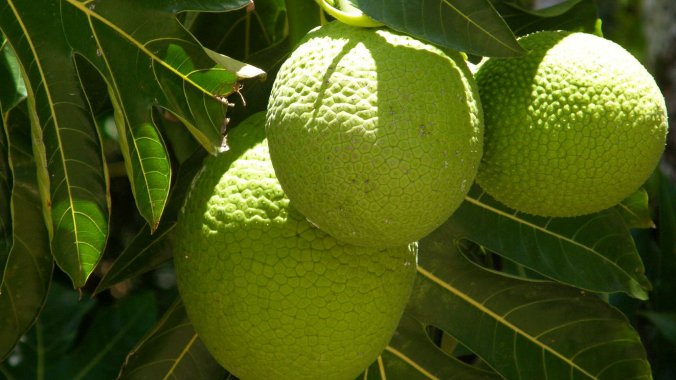
breadfruit_wide-4cafd8f5b004aa375b43dfd527929b0cc8e60e29-s1400-c85.jpg

Breadfruit is a protein and nutrient-rich staple in Hawaii and other islands in the Pacific Ocean. Malcolm Manners/Flickr

We have had these trees growing all around us in more than one tropical zone where we operate, but had not realized just how high their nutritional value is, nor their potential for doing more to alleviate hunger (thanks to the folks at the salt, National Public Radio USA):

Productive, Protein-Rich Breadfruit Could Help The World’s Hungry Tropics

Packed with nutrients, easy to grow and adaptable to local cuisines, this tropical superfood could bring more food and cash to poor farmers around the world.

On a muggy morning on Kauai’s south coast, ethnobotanist Diane Ragone inspects a dimpled bright green orb, the size of a cantaloupe. She deems the fruit mature, at its starchy peak. Perfect for frying or stewing. Continue reading

Jackfruit: Potential Meat Substitute?

A vegetarian restaurant in Kansas City, Missouri, offers the Jack BBQ: jackfruit, onions, and kosher dill pickles served on sourdough bread. PHOTOGRAPH BY STEVE HEBERT, THE NEW YORK TIMES/REDUX

This question has actually already been answered here before. Last year, Rosanna wrote about the fruit, revolving around an article from The Guardian that featured a recipe for pulled pork but with jackfruit replacing the meat. Earlier that month, we had linked to an NPR segment that called them a “nutritional bonanza” that may help with the food crisis in developing countries. And the year before that, we had written another post calling the fruit a “mega food.” So when will that happen for good? Hopefully, soon! Stacie Stukin writes for NatGeo on the would-be fad-food:

When Annie Ryu first encountered a large, spiky orb called jackfruit, she was perplexed. “I thought it was a porcupine,” she says.

But when she ate it prepared in a curry, she was amazed at how meat-like it was in taste and texture. That was in 2011, when she was traveling in southern India as a premed student helping community health workers improve prenatal care. By 2014, she had waylaid her medical career to start The Jackfruit Company.

Continue reading

Old School Fromage

Cheesemaker David Clarke separates the curds and whey to make Red Leicester cheese at Sparkenhoe Farm in Upton

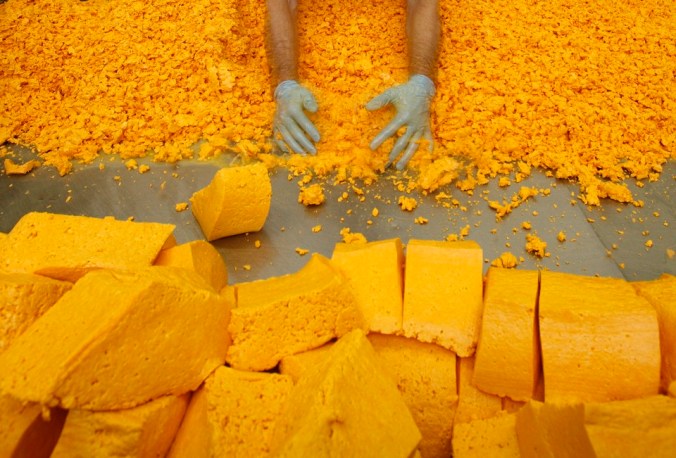
Cheesemaker David Clarke separates the curds and whey to make Red Leicester cheese at Sparkenhoe Farm in Upton, central England October 8, 2007. Red Leicester cheese had not been made in Leicestershire since 1956 until Clarke started producing his traditional, unpasteurised cloth-bound cheese using milk from his 150 pedigree Holstein Fresian cows. REUTERS/Darren Staples (BRITAIN)

Thanks to the Atlantic’s concern for our culinary well-being:

How Real Cheese Made Its Comeback

After decades of Kraft Singles, more Americans than ever are hungry for artisanal varieties of the past. An Object Lesson.

by LAURA KIESEL

As a child, I was a picky eater. Except when it came to cheese. Continue reading

Food Waste, Remarkably Grotesque

5451

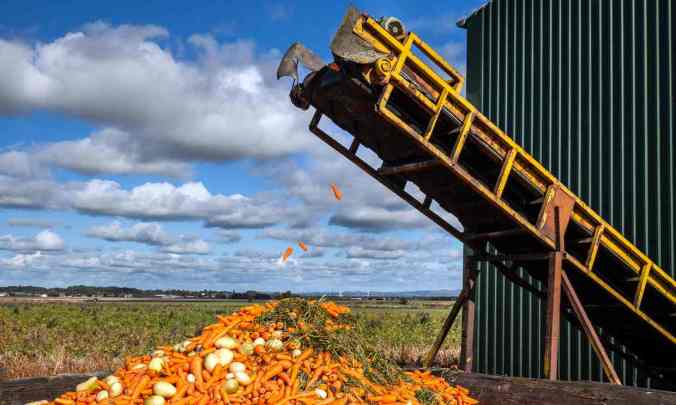
Discarded food is the biggest single component of US landfill and incinerators, according to the Environmental Protection Agency. Photograph: Alamy

We have known for some time the problem is serious, and we are always looking for counter-balancing stories that also highlight solutions. And we are constantly learning more details on just how serious the problem is getting; in short, worse rather than better. Now, new words come to mind. Grotesque is probably the most appropriate (thanks to the Guardian’s ongoing attention to this problem):

The demand for ‘perfect’ fruit and veg means much is discarded, damaging the climate and leaving people hungry

Americans throw away almost as much food as they eat because of a “cult of perfection”, deepening hunger and poverty, and inflicting a heavy toll on the environment.

Vast quantities of fresh produce grown in the US are left in the field to rot, fed to livestock or hauled directly from the field to landfill, because of unrealistic and unyielding cosmetic standards, according to official data and interviews with dozens of farmers, packers, truckers, researchers, campaigners and government officials.

Continue reading