Thank You, Mr. Friedman

When I began teaching a new graduate course ten years ago–an elective course that considered the impact of globalization on entrepreneurship–I assigned The Lexus and the Olive Tree as required reading.  The diploma for the masters degree was coming from Cornell University, the course was being taught in Paris, and my students were from 23 different countries.  The discussion around that book were the best I ever experienced as a professor.

I am now based in India, in a business partnership with a student from that course, and we often find ourselves using words like hot, flat and crowded as shorthand when discussing strategy (ours is an entrepreneurial business much affected by technology and globalization).  Continue reading
Good As You Want To Be

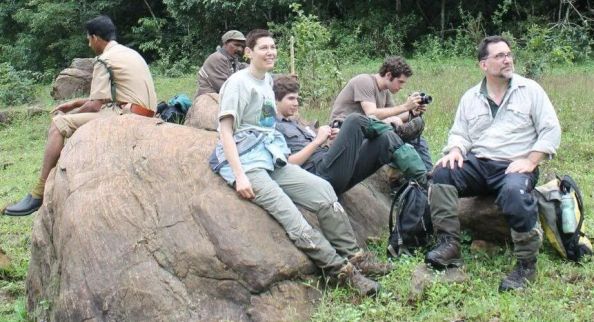
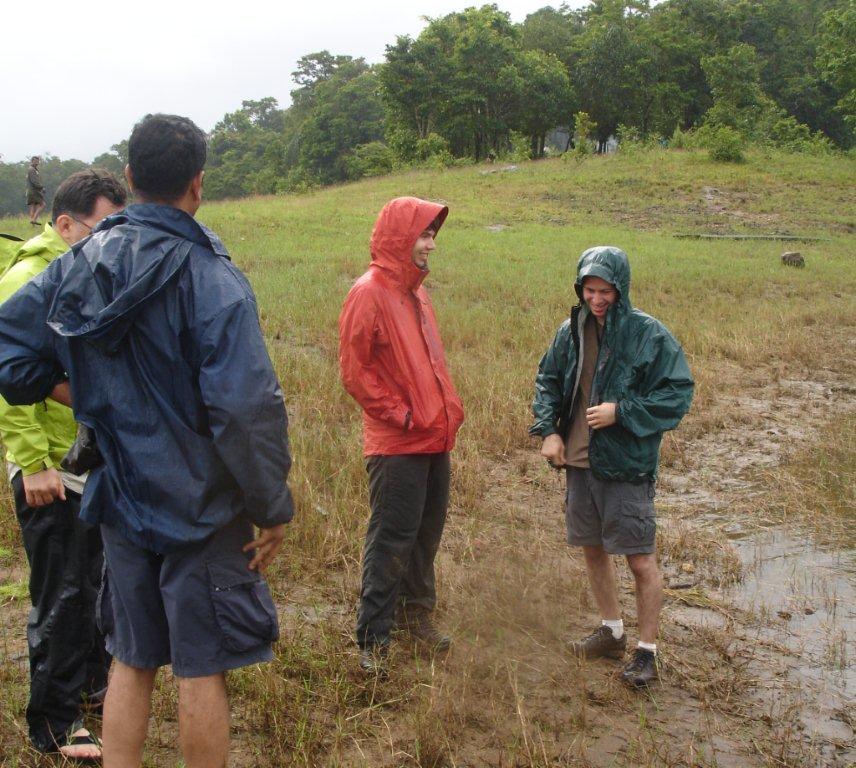
I have been thinking further on the Tiger Trail, and its connection to the purpose of this site.  Usually I muse on the wisdom of the judge that took the risk to allow convicted poachers to serve out their life sentence in the national park rather than in prison.  The opportunity we have to visit the wilderness with them, and to relay that story, is certainly a privilege, for this site and for the individuals who write about it.

But the reason I keep coming back to it is that the men who represented the risk have, by all appearances, made good on their promise not to return to poaching for all these years.  Why?

If the men were inherently good, an argument could be made, they would not have hunted and killed tigers for money, or destroyed the cinnabar ecosystem for money.  But to meet the men today, they certainly seem good, by nurture if not by nature.  And so, why? Continue reading

Sensible Sight, Visionary Sense

Milo’s post reminded me of the surprise I had, 30 years after first reading Brave New World, when (thanks to the generosity of The Paris Review, which started providing some of their archives online, free for the taking) I came across an interview with Aldous Huxley.  By most accounts, not least your high school English teacher’s, he was a visionary, right?  So ponder this, if you did not already know it:

…INTERVIEWER

How did you happen to start writing? Do you remember?

HUXLEY

I started writing when I was seventeen, during a period when I was almost totally blind and could hardly do anything else. I typed out a novel by the touch system; I couldn’t even read it. I’ve no idea what’s become of it; I’d be curious to see it now, but it’s lost. My aunt, Mrs. Humphry Ward, was a kind of literary godmother to me. I used to have long talks with her about writing; she gave me no end of sound advice…

Continue reading

Blind Sights


An interesting question to ask about a fully intact and functional brain’s cognitive abilities is this: how do we know that each individual’s perception isn’t unique, whether it’s visual, olfactory, or of any other sense? Processing and emotional responses aside – how do we know that people actually see things the same way, physically? The color I identify as red might appear as residing on the opposite end of the spectrum to someone else, despite the light’s wavelength being constant. The smell I identify as vanilla may be different from another person’s perception of vanilla’s odor, but because we are both correctly identifying the scent as that of vanilla, it is both futile and impossible to determine whether or not the stimulus is perceived identically between the two people.


Enter science! Everyone’s nose (at least those without ‘abnormalities’) has the same scent molecule receptors, meaning we all have the same capabilities for smelling the odors in the air (yes, they are molecules! they are not magically dispersed by the scent fairies, contrary to popular belief).  Continue reading

Little L Liberalism

The first time I remember having heard of Nicaragua was during an evening newscast sometime in the autumn of 1980.  The first time I had the opportunity to vote in a presidential election was November, 1980.  Most of the students I knew at that time were somehow very certain about what was right and wrong in general, about what would be best for Nicaragua, about who could best lead the United States, and about lots of other things. And most seemed to have similar views to one another. Some days I was impressed by the coherence and consistency, others nauseated.

It was the nausea, in the end, that motivated me.  That sickening feeling was not the result of judging people around me, but of realizing that I did not have sufficient experience to have such strong viewpoints.  That was why I left college (the ad below, which I did not see until a few years after graduating college, summed up in 30 seconds what I had been looking for).

Continue reading

Expectations

Some time between 1980 and 1981,  when I first became aware of Nicaragua, I started leafing through this book that I saw many fellow students carrying around with them.  It was the text for a course I was not taking, but maybe that was for the better.  The short bursts of exposure to the explication of “the new” in art were probably all I could handle while being shocked by everything else, all new too.

By the summer of 1981 I had dropped out of college, and away from all that other too new stuff, and began apprenticing with a blacksmith.  It was a reaction to the news about Nicaragua, in part.  Today’s news reminded me that in the ensuing 30 years answers have not gotten any clearer, or easier.

I do not have any photographs from my time as would-be artisan, which was short-lived.  I have visual and sensory recollections of it, including my first listening to Blood On The Tracks and long motorcycle rides through the blue grass hills of northern Kentucky and southern Indiana.  And through my nose I can recall the smithy coal fire and grunting leather bellows, food cooked over a wood fire, and Sunday morning folks in clean clothes on church pews. Continue reading

Strengthening Helpers’ High

Lately, I have been pondering altruism, one’s unselfish devotion to the well-being of others often without regard to personal well-being.  I admit I am befuddled by the concept.  It challenges theories of evolution and even caused Charles Darwin to question his own theory of natural selection—how could these acts of self-sacrifice exist in a world full of the fittest habitants, that possess only an incentive to survive and reproduce?   Regardless, I find it very encouraging to witness such selfless behaviors from my fellow mankind.    This behavior takes many forms in many aspects at many different times.

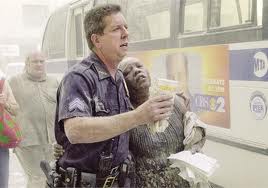
For instance, I reflect on the aftermath of September 11, 2001.  This date was one of the earliest times in my life when I acknowledged altruism’s existence.  I remember people gathering in tribute to the dead, celebrities organizing benefit concerts to raise money, and yellow ribbons streaming across nearly every home and shirt lapel signifying compassion for lost lives.  After Hurricane Katrina swept through the Gulf Coast, citizens all over the nation offered their support; my family even opened our home to refugees for a few weeks.  Similarly, this year’s September flooding of the southern tier of New York and the recent damaging snow storms of the East Coast have brought out the kindness and generosity of neighbors.  From the Flight 93 passengers to storm rescuers, altruism spurs many questions: Why are some people willing to help even at their own expense?  Why do some feel the urge to help more strongly than others?  Can altruism be learned or is it innate? Continue reading

Littler & Bigger Pictures

That bumper sticker activated my reflective reflex.  36 hours later I was going back, trying to find an article I had read (but when?) that quite artfully illuminated “things” for me.  Things related to that bumper sticker and the recent visit to New York City.  I found the article, re-read it, and recommend it.

At the same time I had photos and correspondence with Tal (he is the one looking at his camera in the photo below that Milo took) in the mix.  That all seemed related too (but how?).

TalMilo

Continue reading

Revisiting The Tiger Trail

When I send emails to friends, colleagues, and others about this website, and the objectives of Raxa Collective, I normally add links to a few posts that I think are representative.


Almost always, this one is included.  Michael captured the moment well.

As we continue adding contributors to this site, and the diversity of topics and locations we pay attention to expands, for some reason I still come back to the Tiger Trail as a favored topic because it is such a good example of what we care about.

That tendency to return, at least in thought, led me to reconnect with a “lost” member of our Tiger Trail entourage. Continue reading

Stretching Venues

This slideshow requires JavaScript.

I have posted images and passing thoughts about my recent work travels to venues that represent my day to day work, but nothing until now about visiting with another contributor to this site, in New York City, on a beautiful autumn long weekend.  That visit had its work component too, but I took away an image of creative energy that was not particularly work-related, nor (I thought until now) related to the core themes of this site, so I neglected to share these images before. Continue reading

Urbanature

Yes, spotting wild elephants on a mountainside is exciting. Agreed, a field full of flowers that blooms once every dozen years is a heart-warming sight. But not everyone who loves and appreciates nature has the time or money to travel to places where such phenomena can be experienced. Many people who live in cities – myself included – complain about not being able to connect with nature the way they would if they weren’t urbanites. However, I recently had an eye-opening (or re-eye-opening, rather) experience in Chennai, a city proportionally larger and less vegetated than Cochin, where I live, which showed me that nature is never far away.  Continue reading

Sometimes Comment Is King

Raxa Collective does not have any in-house physicists but we are determined to keep up with the Joneses on matters of interest like footprints.  We think about footprint in as many ways as possible in addition to our preferred venue, travel. In recent years that includes thinking about the footprint of the tool we take for granted as essential to our work: the internet.  Continue reading

Progress Back And Forth

We have noted before the intriguing coincidences that link the “old world” to the “new world”–not least the desire to establish trade with what is now Kerala and the accidental discovery of somewhere else; and other links in both directions.  “Old” and “new” become fuzzy qualifiers when considering “modern” European travelers of the 15th century sailing to “ancient” India and instead encountering people we now call Pre-Columbians.  Seth has posted on the environmental impacts of people from that so-called old world as they settled in the new world and brought their definitions of progress with them.  Now, thanks to an article in Smithsonian Magazine our attention is brought to a book and a man who broaden our horizons back to the old world from which those people came. Continue reading

Different Tastes, Together

I had a thought once about couples where one person was a vegetarian and the other was a meat eater. It seemed like they could really never share a meal and have the same experience without one person–usually the omnivore–compromising to suit the mutually agreeable meal. To a normal, well adjusted human being, this is a totally banal observation that wouldn’t warrant losing sleep over.

But to us at Studiofeast, we thought it’d be cool to do a meal where an omnivore and a vegetarian could both share the same meal without the former forgoing meat or the latter having to try flesh. That was the seed of an idea that grew into our most recent dinner: a 7 course meal with an omnivore and vegetarian option where each corresponding course looked identical across the meat/vegetable line. And on July 17th, we seated 40 guests–20 omnivores on one side of the table, 20 vegetarians sitting opposite them–and served them our Doppelganger Dinner.

This slideshow requires JavaScript.

See the whole story hereContinue reading

Krulwich Wonders (click on image)

I tried. I told myself, “You get one week to write about camouflage. One week only.”

I love hiding in plain sight. It makes me almost giddy. So last week I went on a camo binge: I wrote about hunting camo, food camo, underwater camo, but I can’t stop. I’ve got to do one more. Just one.

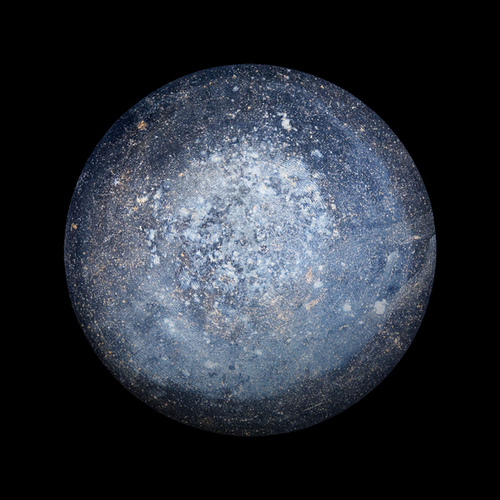
I’m calling it Celestial Camouflage.

Then we’ll move on. I promise.

So look at this:


And the “Fourth R Award” Goes to….

This slideshow requires JavaScript.

Two months ago I wrote about British restaurateur Arthur Potts Dawson and his closed loop restaurant concepts and social enterprise food cooperatives here.   When I came across the Greenhouse I found the perfect follow up.  One would not be amiss to call the Australia based designer/builder/environmentalist Joost Bakker “green-blooded”.  His Dutch flower growing heritage helped forge a lifelong passion with growing things and plant inspired structures, such as greenhouses and conservatories.  His greenery walls invoke the power of nature creeping back into urban environments, making them simultaneously comforting and edgy. Continue reading

Footprint Exercise

In an earlier post I was reminded of the origins of the metaphor we now commonly use to consider the impact we have on the environment.  Then a few weeks ago Seth mentioned that he was invited to have dinner with the fellow who brought that metaphor into common usage.  He did not post on the discussion that took place during that dinner, but here is how Cornell’s newspaper of record covered the presentation that followed.

Now, thanks to the BBC’s website, I have encountered this metaphor once again.  If you click on the image above and plug in your birthdate, you can have a quick snapshot of where you fit into the timeline of human history (I was approximately the 76,944,046,711th person born in history, according to my birth date, whereas someone born today would be somewhere around the 83,214,560,807th).

If you click through from that first step to the next in this mental exercise calculator, you can consider a couple more variables related to the human footprint over time and space.  Thank you again Mr. Wackernagel.