If you spend time in India, you are sure to have four or maybe five cups of tea a day. A former British colony, India has absorbed many British customs, and tea drinking is certainly one of them. As you drive throughout Kerala, you are bound to see numerous tea plantations on the beautiful hillsides, and Cardamom County offers you the opportunity to tour one of these plantations as well as its factory. Take the tour and learn how the cup of tea you just enjoyed at All Spice Restaurant ended up in front of you.
India
Engineering a Conversation
Guest Author: Siobhan Powers
My roomie Chi-Chi recently blogged about miscommunication between clients and architects so I thought it may be timely to bring to light some of my own recent difficulties in conversation and work development. I could not even begin to blog about engineer-non-engineer relations as that would take all day and there’s no point-we’re nerds to the core, I’ve realized and thus, misunderstood. Recently, however, I’ve found not just confusion between myself and non-engineers, but also with my fellow engineers-my people!
I have had few moments of serious language barriers during my time in India. Most people speak at least a little English, and if not there are pictures and hand gestures that can get points across. Shopping and dining is easy enough. Camping with strangers? You’ll find something to talk about (reference my other blog post– shout-out to Chief and Wise Eyes!). Engineering conversations, however, are not like this-there are no commonalities across language boundaries that can be pointed at and then nodded about, but instead there are abstract concepts like energy and science (gasp!).
Tanner’s Cassia (cassia auriculata)

Cassia is a tropical plant native to India and Sri Lanka prevalent in the Western Ghats. It is a popular ornamental throughout Kerala due to its year round blooms.
The Chellarkovil Waterfall
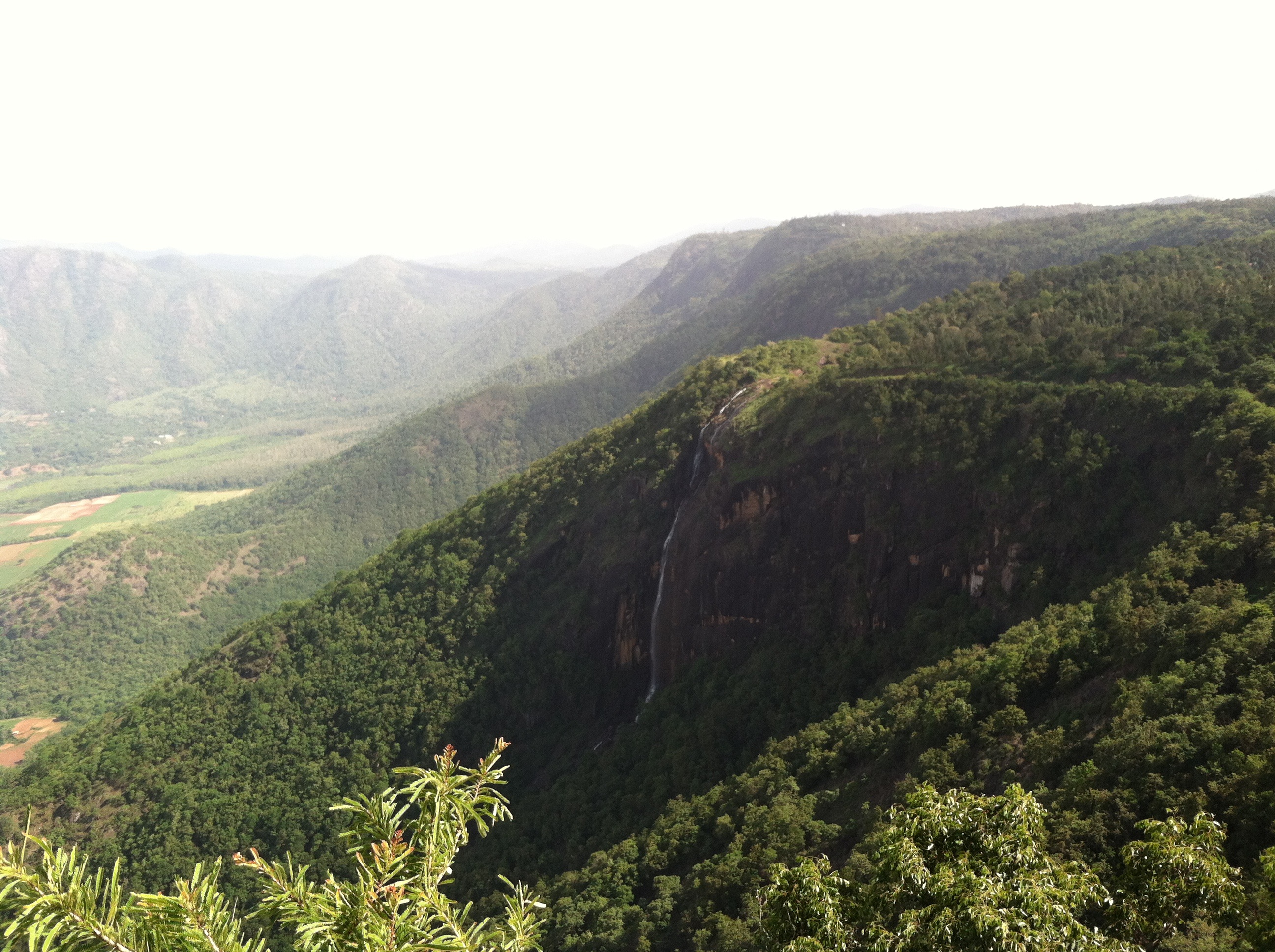
Kerala is considered ”God’s Own Country” for a reason, and that is because of its wonderful people, amazing wildlife, and absolutely stunning landscape. If you are looking to experience the natural beauty of Kerala, then definitely sign up for the Chellarkovil Waterfall trip. The mountaintop views of both Kerala and the neighboring state of Tamil Nadu are unbelievable, and looking out over the rolling hillside at the breathtaking waterfall is a truly unforgettable experience.
Bamboo Bats
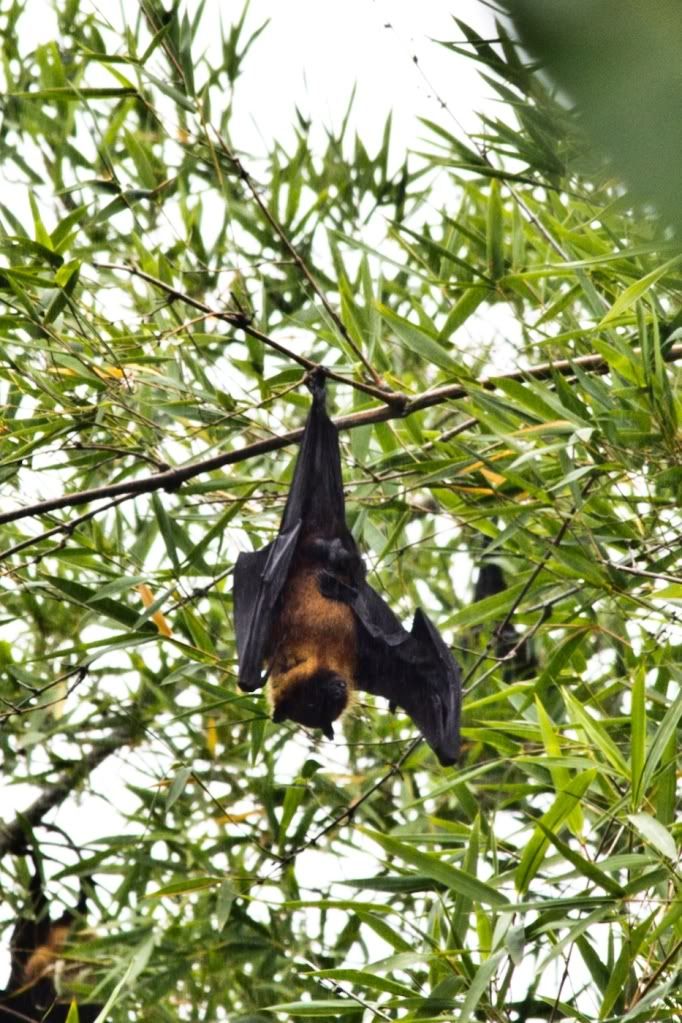
Last year, Sung wrote about the bats in the bamboo stands next to Cardamom County. I’ve always been aware of their presence, but I always lacked the equipment to get a closer look, and even more prominently lacked the equipment to photograph them. This year, my arsenal remains limited, but I have one more telephoto lens than I did previously. From the restaurant’s roof on a sunny day, I’m less than 20 meters away from well-lit subjects. On a windy sunny day, the subjects are generally stirring, as mentioned by Sung – the ideal time to photograph them.
Continue reading
A Jersey Girl’s Introduction to Camping
Guest Author: Siobhan Powers
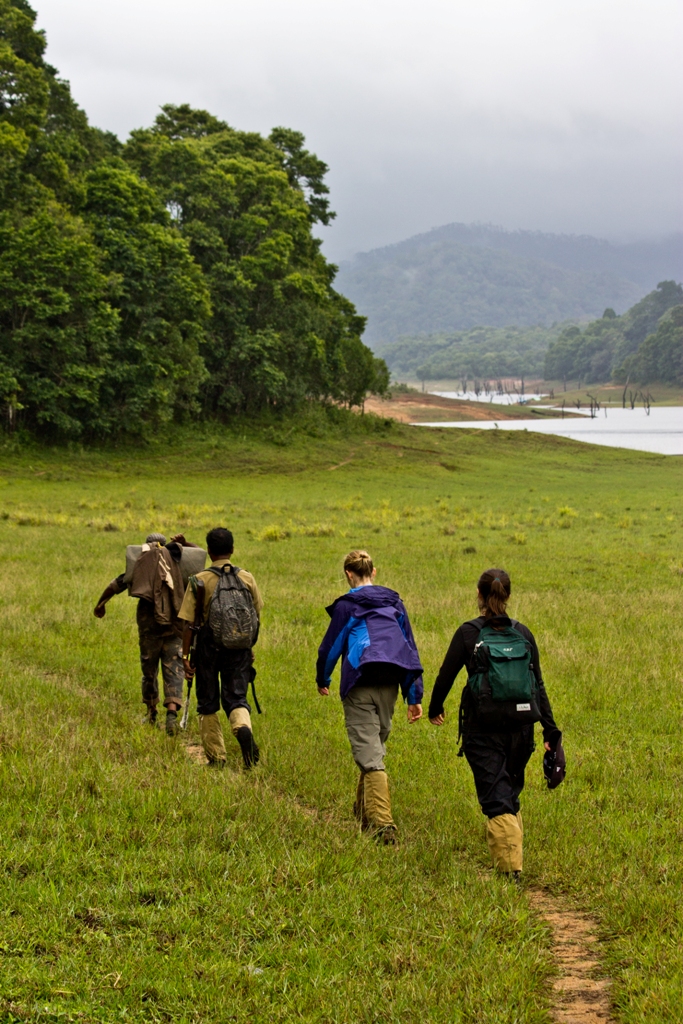
Before my journey to India, I’d never camped. Sure, I had slept in a tent in my friend’s backyard and gone to Girl Scout camp with my Scooby Doo sleeping bag, but I was feet from indoor plumbing and a roof every time. Where’s the fun in that? When I was belatedly asked to join a few interns on the Tiger Trail overnight trip into the Periyar Tiger Reserve, I was skeptical. My summer nights are usually spent running seafood to a hungry customer or chasing a high-maintenance boy across the beaches of the Jersey shore-therefore my presence in the jungles of Asia is quite ectopic, but I am an adventurous person (sometimes to my detriment). I took the opportunity for what it was- a once-in-a-lifetime chance to snuggle up to some tigers. Continue reading
Nadaswaram – Indian Musical Instrument
The Nadaswaram is a unique instrument in many traditional South Indian and Hindi ceremonies. Today, it is constructed primarily from bamboo, but materials such as sandalwood, copper, brass and ivory are historically included. This instrument is made of three parts: kuzhal, thimiru and anasu. All of these parts combine to make to the double-reed, bell shaped instrument that creates music with a range up to two and a half octaves. Because of its intense volume and strength, the Nadaswaram is most often enjoyed outdoors, but one thing is certain: the sound it produces is sure to be music to many ears.
Bullock Cart – A Traditional Transportation
The whole world is moving towards new technologies and scientific inventions, but still one can find the oldest and traditional mode of transportation in Kerala across some villages: the Bullock cart. Some merchants and travelers prefer the bullock cart over other transportation vehicles. Continue reading
Madurai Meenakshi Temple
Madurai, a city in the Indian state of TamilNadu, is commonly known as temple city as the Meenakshi Amman temple is situated there. The main deity of the temple is Meenakshi, the avatar of Goddess Parvati, spouse of Lord Shiva. The story behind the temple and Meenakshi is as follows. According to the legends, this avatar of Goddess Parvati was an answer to the devotion of King Malayadwaja Pandya and his wife Kanchanamalai, for their request for parenthood. They were granted a girl but she was three breasted. The worried king approached Parvati in prayer and a call from heaven answered that the third breast will disappear once she found her consort. Continue reading
Lord Hanuman
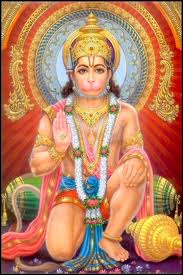
According to the Hindu epic ‘Ramayanam’, Hanuman was born to the queen Anjana Devi (a supernatural woman cursed into a monkey’s form) and her spouse King Kesari. Anjana, who was childless, prayed to Lord Shiva to give her a child. After her long devotion to Shiva, Vayu Bhagvan Mayut (the God of wind) granted her a son. Hence the boy was also known as Pavan putra, meaning Pavan-wind, putra-son. Continue reading
A Day Without Shoes
Over dinner one night, I revealed to a few of my fellow interns my fear of feet, specifically adult feet. We established that I may have podophobia: an irrational fear of feet. You may think that I should consider taking a quick course in dinner convo dos and don’ts, or consider seeking psychiatric help; however, I guess I feel I have bigger fish to fry than to try to acquit myself of this fear. We discussed other phobias and how many people overcome theirs by simply “facing” them. I certainly am not at a place in my life to face my peculiar fear, but I am happy to say that a trip the following day to Meenashki Amman Temple helped me take one step (well, many steps really) towards defeating podophobia.
This beautiful Hindu temple is located in Madurai, Tamil Nadu, India, and devoted to Meenashki, an avatar of Parvati, one of the few female Hindu deities to have a major temple named for her. Before entering the temple, visitors must remove both socks and shoes to be held outside. Thousands of devotees and tourists visit this temple daily, and from the lines of barefoot men, women, and children, I and my fellow interns seemed to be visiting on a busy day. I must admit: at first, I was not keen on sauntering around where so many people have trod, and for some time I tip-toed around to minimize my foot-to-ground contact. Though, with each step against the granite flooring, my focus shifted to the detailed sculptures and the passionate faces of those around me. Continue reading
Lord Ganesh – Lord of Beginings
Lord Ganesh is the son of Lord Shiva and Goddess Parvati. (The birth order of their children differs based on region: In northern India, Murugan is often said to be the elder, while in the south, Ganesha is considered the first born.)
Ganesh was the beloved son of his mother Goddess Parvati and according to the legends he was made from the dust rubbed from her body mixed with sacred oils during a time when Lord Shiva was away in meditation. Especially Parvati made him for her protection, as a security guard. She created her son in completely human form. The legend behind his elephant head is as follows: Goddess Parvati was taking her bath and Lord Ganesh was asked to not allow anyone to pass until she finished. Lord Shiva returned from his meditation and summoned Parvati to him. Not knowing his father, Ganesh refused him. After several attempts Lord Shiva got infuriated and cut off Ganesh’s head. When Goddess Parvati found her son dead, she ordered Shiva to restore him. Lord Shiva said he could grant the wish, but that the boy’s head had been destroyed and the only option was to use the head of another on his body. Lord Shiva sent his messengers through the camp to bring him the head of any creature that slept facing north. They found only a sleeping elephant and they returned with its head. Shiva attached it to the body of the boy and restored him to life and Lord Ganesh is recognize by his elephant’s face today. Continue reading
Learning a New Language: Malayalam
Many Cornell “hotelies” are multilingual; not only bilingual but often speaking three or four languages. Their coursework is in English, they may speak Spanish or French from high school education, and Chinese helps as the number of Chinese travelers increase every year. For example, my good friend from the Cornell Hotel School speaks Spanish because she is from Venezuela, speaks Chinese because her family is a Chinese-origin, speaks English just like all my classmates, and maybe she speaks some other languages that I don’t even know about. Similarly, I speak English, Korean, and some Spanish and Mandarin. So, as an hotelier, I called myself a multilingual and thought I could easily communicate with people anywhere I go. Until I arrived in Kerala.
Learning Malayalam is the first time in my life trying to learn a language that has a totally different alphabets and pronunciation. So the experience is totally different from learning English, Spanish, or French. One of my colleagues here learned Hindi before she arrived in Kerala for her studies but Malayalam is so different from Hindi that it doesn’t help her communicate. The one thing that saved all of us (Interns from US) is that English is an official second language in Kerala so all of the resort staffs here speak English pretty well. However, most of them speak Malayalam to each other during work and speak English only with foreigners, so I thought that learning Malayalam would be a good idea to get to know the culture and people better.
My first step in learning Malayalam started with memorizing some simple words and phrases so that I can initiate conversation with everyone. So our journey of learning Malayalam started by asking around for some Malayalam lessons.
“I found love when I was 6”: A Story of Tattoos and Love
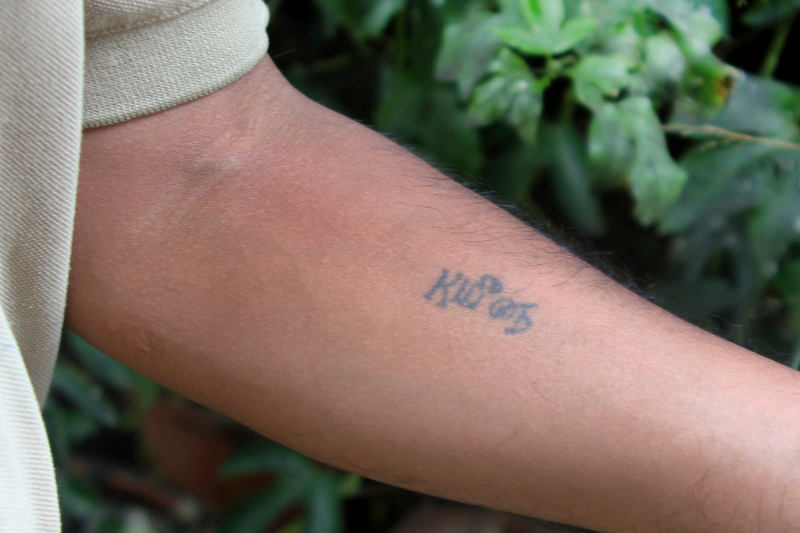
There are many things I could have named this blog post, but I decided it should sound scandalous, it should sound crazy, it should sound epic. I mean, what is more scandalous, more crazy, and more epic than falling in love when you’re is only 6 years old?
Getting a tattoo? No.
Getting a tatttoo at 6? No.
Getting a tattoo of your true love at 6? Now that, my friends, is crazy.
Lord Shiva – Major Hindu Deity

Lord Shiva is one of the three powerful Gods of Hinduism, with Lord Vishnu and Lord Brahma. According to the epics of Hindu tradition he has the power to transform and destroy the creatures in the world.
In ancient times he took many avatars to destroy demons and it is believed that those who worship him regularly will receive his blessings in the form of “boons”, or wishes granted. He is often represented with the River Ganga on his head and a snake round his neck, illustrating his powers against poison. He has an eye in the middle of his forehead which he opens when angered, ejecting a rain of fire. In Malayalam this eye is called Netrikkan. He is also the father of Lord Ayyapan, the famous deity of Sabarimala temple.
Lord Murugan – God of Tamil
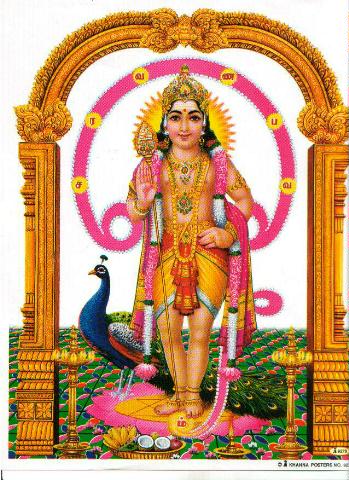
Lord Murugan is the son of Lord Shiva and his wife Goddess Parvati. He is very popular and is more frequently worshipped in the state of Tamil Nadu than the other Indian states. He has other names (or avatars) such as Arumugan (meaning six faced), Palaniyappan, and Kadirvelan. His vehicle is a peacock, so he is known as Mayilvahana in Tamil language.
A popular story is that when Murugan was born there were several maids willing to take care of him. Embarrassed by having to choose, Murugan took six avatars at once so he wouldn’t have to disappoint any of them and hence was given the name Arumugan. Continue reading
To Munnar And Back – 6 Interns And An Indian Staff Picnic
The morning of the staff picnic began with a wakeup call at 4:30am to prepare for a prompt 6am departure to Munnar, a beautiful hill station in the Idukki district of Kerala. To the interns, an early morning with a long bus ride meant a great opportunity to catch up on some sleep after several long days of trekking and work. To the staff it meant the party could start even earlier.
Within minutes of leaving the Cardamom County parking lot, a small group of the staff was already busy preparing the music list for the day’s journey. Immediately the bus was pouring with energy- Bollywood music incited full volume singing and raucous dancing that was only made more amusing by the jostling motions of the moving bus. It provided not only a humorous and exciting start to the day but also a somehow appropriate cultural soundtrack to the beautiful mountain views, tea plantations, and villages that passed by the bus window on the way to Munnar. Continue reading
Art of Taxi Driving
It has been a week since I arrived in Kerala, India. Not surprisingly, my first cultural shock was the ear-piercing, honking sound of rickshaws (small Indian taxis) that welcomed me when I stepped out of the Cochin airport. In the beginning, I thought the drivers here were just a little more aggressive or would get frustrated easily: the reason why they honked so much. But, as we drove away from the airport, our driver explained to us that these drivers honked to show their existence and alert others. In addition, drivers in India tend to not keep to their lanes. They use the entire road sometimes driving on the left side, right side, and in the middle…so ALL sides! These days, many young Indians are actively protesting to eliminate this unnecessary honking and to reduce noise pollution. So, increasingly you can see many signs like “Yi Horn Not OK Please.”
Mango Culture
More subscription-worthy coverage from the New York Times:
Mangoes are objects of envy, love and rivalry as well as a new status symbol for India’s new rich. Mangoes have even been tools of diplomacy. The allure is foremost about the taste but also about anticipation and uncertainty: Mango season in the region lasts only about 100 days, traditionally from late March through June; is vulnerable to weather; and usually brings some sort of mango crisis, real or imagined.
The Patel Phenomenon
In our organization, which includes more than one American working in lodging establishments in India, a sociological investigation like this catches the eye. Click the image to the left for a podcasted author interview. A few fun facts:
– At least 1 out of 2 motels are owned by Indian-Americans.
– Out of those Indian-owned motels, 70 percent are owned by Gujaratis, people with roots in the western Indian state of Gujarat.
– Of those Gujaratis, three-fourths share the last name Patel. There’s even a name for these overnight establishments: “Patel Motels.”