Is This the New Super Battery?

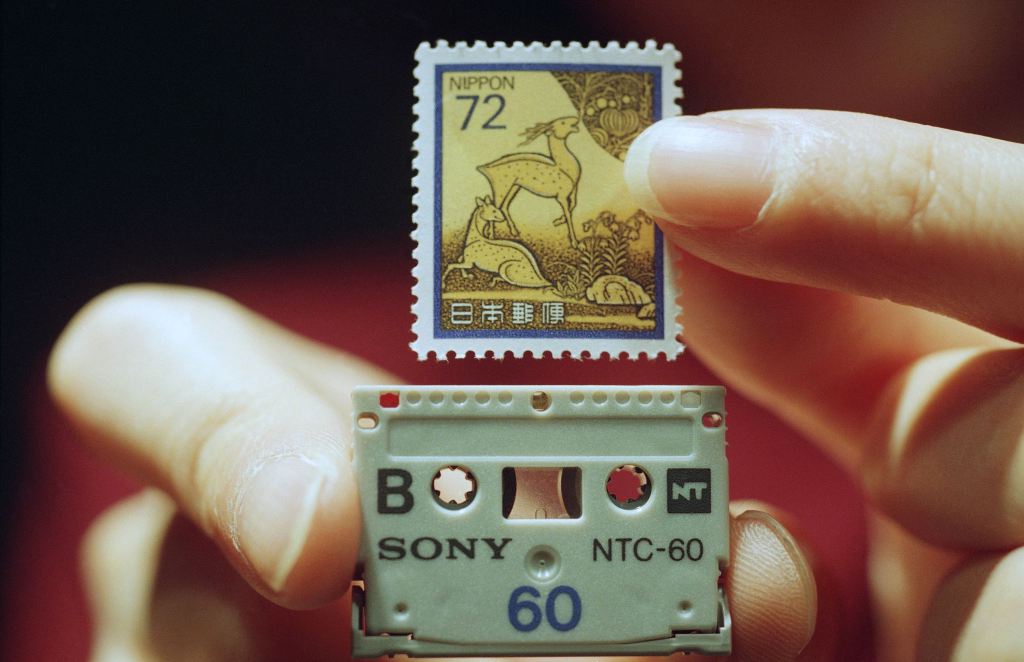
A cassette tape—the origin, incredibly, of how batteries are made.(AP Photo)

A cassette tape—the origin, incredibly, of how batteries are made.(AP Photo)

Since about 2010, a critical mass of national leaders, policy professionals, scientists, entrepreneurs, thinkers and writers have all but demanded a transformation of the humble lithium-ion cell. Only batteries that can store a lot more energy for a lower price, they have said, will allow for affordable electric cars, cheaper and more widely available electricity, and a reduction in greenhouse gas emissions. This is where Yet-Ming Chiang enters the picture. A wiry, Taiwanese-American materials-science professor at the Massachusetts Institute of Technology (MIT), Chiang is best known for founding A123, a lithium-ion battery company that had the biggest IPO of 2009.

Continue reading

The Ultimate Architect of Cardboard Buildings

“What is the difference between temporary architecture and permanent architecture?” No architect is more qualified to explore that question than Japanese architect Shigeru Ban. “Temporary” architecture, in disaster zones, is Ban’s calling card. For over 20 years, the 2014 winner of the Pritzker Prize, architecture’s Nobel, has best been known for his well-publicized humanitarian work. From Rwanda to Japan to Nepal, he has turned cheap, locally-sourced objects—sometimes even debris—into disaster-relief housing that “house both the body and spirit,” as Architectural League president Billie Tsien puts it.

Continue reading

Green Talk on the High Seas

Phytol-based herders aren’t a universal remedy for oil spills, but in certain scenarios they could become the go-to mitigation strategy. PHOTO: Bloomberg

In May, an oil pipeline in Santa Barbara County burst, pouring some 21,000 gallons of oil into the Pacific Ocean. Despite clean-up crews’ efforts to contain it, the oil slick stretched along the coast for miles, serving as a glaring reminder that spill mitigation strategies are still lacking. When oil tankers crash and inevitably spill oil into the open seas, a go-to clean-up method is corralling the rapidly spreading oil and burning it. But in some places, like the ice-strewn Arctic ocean, physically corralling that oil with boats and boons is practically impossible. But here’s a plant-based, eco-friendly molecule that could be used to clean up the inevitable spills of the future.

Continue reading

LEGO Is Going Green

LEGO will invest $150 million to build a sustainable materials research center at its headquarters in Denmark. It is hiring over 100 specialists in material science to shape the  green future of the favorite building brick. PHOTO: Pinterest Read more: LEGO is investing $150 million to make better, more sustainable toy bricks | Inhabitat - Sustainable Design Innovation, Eco Architecture, Green Building

LEGO will invest $150 million to build a sustainable materials research center at its headquarters in Denmark. It is hiring over 100 specialists in material science to shape the green future of the building brick. PHOTO: Pinterest

By 2030, LEGOs will no longer be made of plastic. Instead, the world’s largest toy company will be using a more “sustainable material” to compose their toy blocks, which have been made of a strong plastic called acrylonitrile butadiene styrene since 1963.

While the switch will certainly save the company on its carbon footprint — the production of LEGOs uses more than 6,000 tons of plastic annually — it won’t be cheap. The Lego Group plans to invest $1 billion in their new Lego Sustainable Materials Centre in Denmark, where a team of 100 specialists will conduct research to find the best sustainable replacement for the building blocks’ current building material.

Continue reading

Spider’s Silk, Minus the Crawlies

Bolt Threads' technology was inspired by the spider, but it has broadened into a platform of programmable polymers: a protein material that can be tuned to create a nearly limitless array of properties PHOTO: Researchgate

Bolt Threads’ technology was inspired by the spider, but it has broadened into a platform of programmable polymers: a protein material that can be tuned to create a nearly limitless array of properties PHOTO: Researchgate

Welcome to the age of slow fashion. Fashion that’s got its sense and sensibility focused on sustainability. Slow fashion represents all things “eco”, “ethical” and “green” in one unified movement. It was first coined by Kate Fletcher, from the Centre for Sustainable Fashion, when fashion was compared to the Slow Food experience. Carl Honoré, author of “In Praise of Slowness”, says that the ‘slow approach’ intervenes as a revolutionary process in the contemporary world because it encourages taking time to ensure quality production, to give value to the product, and contemplate the connection with the environment. And now meet Bolt Threads. A company that started out to make spider’s silk sans the creepy crawlies. Have they succeeded?

Continue reading

The Food Cart Just Turned Green

One hundred of the first carts will be funded by MOVE and reserved for disabled veterans, and the remaining 400 will go to vendors who sign up—at no cost to them, because the pilot program will be sponsored. PHOTO:  Today's the Day I

One hundred of the first carts will be funded by MOVE and reserved for disabled veterans, and the remaining 400 will go to vendors who sign up—at no cost to them, because the pilot program will be sponsored. PHOTO: Today’s the Day I

Food carts are an iconic part of New York City’s street life. NYC has over 5,000 licensed trucks and carts, and an estimated 3,000 unlicensed ones on the streets. Cart operators, representing diverse ethnicities and cuisines, serve approximately 1.2 million customers every day. A food cart can be started with little capital and improved with sweat equity. However, until now, this industry has had no choice but to rely on smoke-spewing carts and their antiquated technologies that are dirty and unsafe. But hold on, the MRV100 is here.

Most food carts run off a diesel generator that’s designed to run only a few hours. Vendors run them for stretches of up to 14 hours, leading to a high output of greenhouse-gas emissions such as carbon monoxide, nitrous oxide, and particulate matter. You can see the smoke with the naked eye, but the hard facts are even more frightening: The research and consulting firm Energy Vision found that each cart produces the same amount of nitrous oxide as 186 cars on the road.

Continue reading

This Furniture Can Grow You Dinner

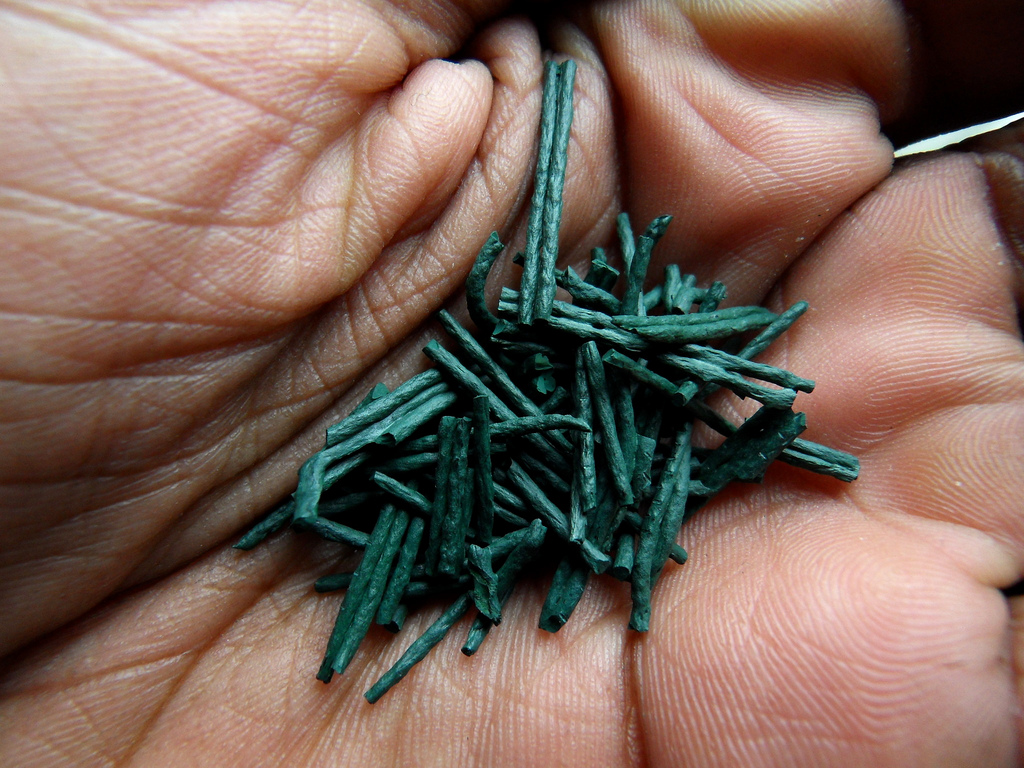
Spirulina is said to be the richest food in iron, 20 times higher than common iron-rich foods; and its iron is twice as effective than iron found in most vegetables and meats. COURTESY: Esse Spirulina

Spirulina is said to be the richest food in iron, 20 times higher than common iron-rich foods; and its iron is twice as effective than iron found in most vegetables and meats. COURTESY: Esse Spirulina

In the living room of the not-so-distant-future, you might have a glowing green blob of microorganisms next to your sofa instead of a lamp. A new line of photosynthetic furniture is filled with spirulina—a tiny, edible bacteria—that the designers imagine could help feed us without the incredible environmental footprint of conventional agriculture.

A new line of photosynthetic furniture is filled with spirulina… The custom glass bioreactors use waste heat, light, and carbon dioxide from a home to feed the spirulina inside. Periodically, someone can turn a tap, empty out the green sludge, and eat it.

Continue reading

Stop Typing!

Sustainable fonts require the least amount of energy to load. Using one also allows one to process more even when internet speeds are low.

Sustainable fonts require the least amount of energy to load. Using one also allows one to process more even when internet speeds are low. Is Ryman Eco one of them?

It’s only been an exact week since we discussed the ‘most eco-friendly’ ad campaign. And we vaguely remember a 14-year-old from a Pittsburgh-area middle school challenging the government to use the Garamond font in official communication to save up to $136 million each year. Find the original study here. So, clearly the sustainability debate has reached the doors of design. Supporters and naysayers abound, as is the case with Ryman Eco, whose creators claim it can reduce ink usage by 33 per cent.

“Ink is only about 15 percent of the total carbon footprint of a printed page. Despite the rise of e-everything, paper use is prodigious in the United States. Americans still use an average of 10,000 sheets of office paper per year, which is a lot.”

Continue reading

10,000 km in a Tuk-tuk and With the Sun

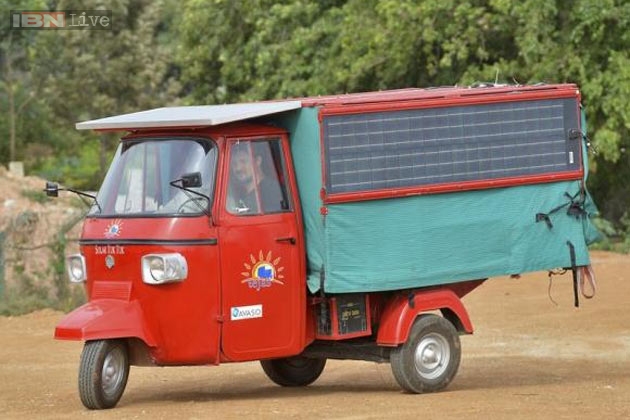
Tejas is a renovated Piaggio Ape  with a 13-kilo-watt prototype engine, lithium-ion batteries and six solar panels. PHOTO: IBN

Tejas is a renovated Piaggio Ape with a 13-kilo-watt prototype engine, lithium-ion batteries and six solar panels. PHOTO: IBN

Our itinerary has been filled with travel all week. And we almost gave The New Indian Express article on the travel plans of Indian engineer Naveen Rabelli and Austrian filmmaker Raoul Kopacka a miss. That was only until we read the details: a 10,000 km journey from India to London on a self-built solar-powered tuk-tuk/autorickshaw to Britain to promote a sustainable low-cost alternative-transport solution and check air pollution in towns and cities across their journey. Talk about going the extra mile.

Continue reading

When Ideas Take Flight

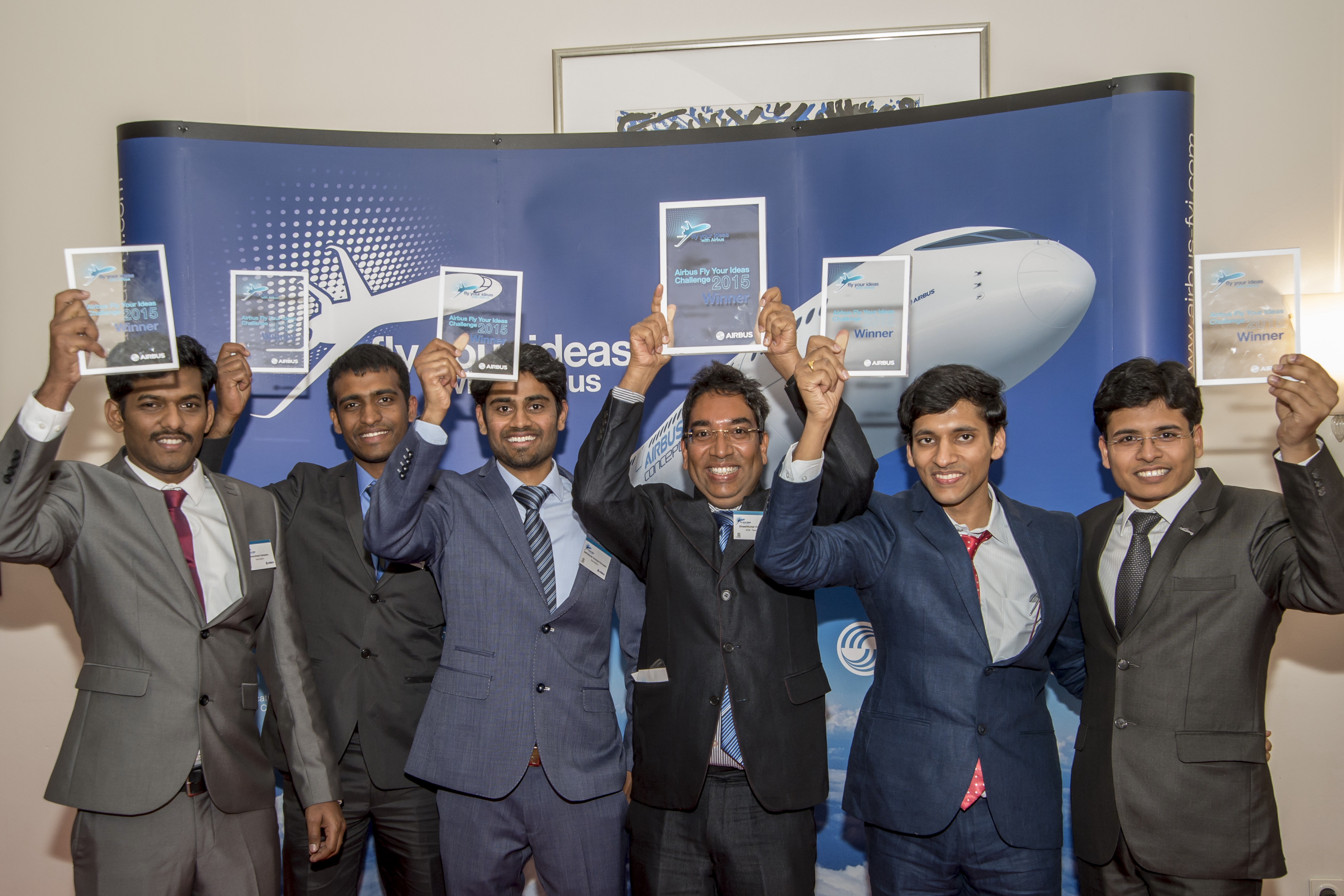
A team of Indian students won the fourth edition of the Airbus Fly Your Ideas global competition organised in partnership with UNESCO to encourage innovators . PHOTO: Airbus

A team of Indian students won the fourth edition of the Airbus Fly Your Ideas global competition organised in partnership with UNESCO to encourage innovators . PHOTO: Airbus

A few weeks ago, Hamburg hosted the fourth edition of the Airbus Fly Your Ideas competition. The city is where the most popular single isle A320 family aircraft are finalised, where A380 cabin interiors are fitted and where the revolutionary A350XWB sections are manufactured. Organised in partnership with UNESCO to encourage the next generation of innovators, the competition saw 518 multi-disciplinary ideas, representing 3,700 students from over 100 countries – all to better the future of flight. And a team of four Indian students and their “good vibes” took home the top prize money of €30,000 (£21,500). And here’s the best bit: the winners physically met only on the day of the finals.

Continue reading

Most Eco-friendly Ad Campaign Ever?

French organic food retailer Biocoop claims to have come up with the most eco-friendly campaign ever. PHOTO: AdWeek

French organic food retailer Biocoop claims to have come up with the most eco-friendly campaign ever. PHOTO: AdWeek

Welcome to the age of ‘organic’ being the marketing appeal of food production, design, crafts, consumer goods, and more. With it being a coveted USP and given the large planning and effort that go into taking the organic route, you might as well tell everyone who has a moment to listen. And that’s precisely what French organic food retailer Biocoop is doing. And doing it with a creative difference – rather than investing in commercials and monstrous hoardings, the company and its agency Fred & Farid Paris decided to make the medium their message. Marshall Mcluhan, you’d be proud! Organic by business and eco-friendly in their ad campaign, Biocoop’s message is crystal clear.

Continue reading

A Ticket on the Eco-friendly Supersonic, please

Supersonic flight is one of the four speeds of flight. speeds up to five times faster than the speed of sound. PHOTO: NASA

Supersonic flight is one of the four speeds of flight. It has speeds up to five times faster than the speed of sound. PHOTO: NASA

Imagine flying at more than twice the speed of sound. At that speed, a London to New York flight lasts under 3.5 hours. And the last time that happened was in 2003, just before the supersonic Concorde ceased operating. More than a decade later, there are conversations on whether the supersonic culture can be revived. There are arguments for both sides and the latest is news about the talent at NASA working on making commercial supersonic flight eco-friendly.

Unless you have access to a F-22 fighter jet, you probably haven’t been able to fly faster than the speed of sound since the last Concorde flight in 2003. NASA wants to change this. The agency said that it is spending over $6 million to fund research into cheaper and greener supersonic travel. This isn’t NASA’s first attempt to bring back supersonic travel. It has been (literally) pushing the boundaries of flight for years. NASA’s predecessor was involved in building the first supersonic plane in 1946, and the agency has been working on concepts since 2006 with companies like Lockheed-Martin and Boeing that may one day lead to a new generation of planes that get you places very quickly.

Continue reading

Fifty Shades of Black

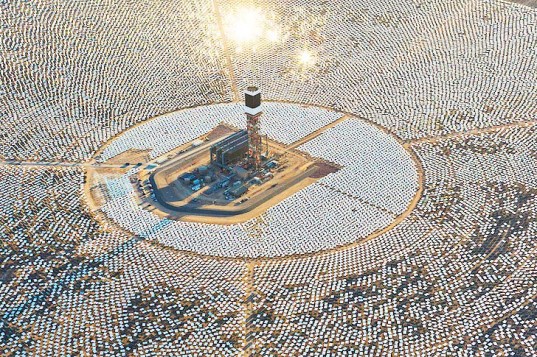
Ivanpah, the world's largest concentrating solar power plant, located just southwest of Las Vegas,  can produce a whopping 392 megawatts of solar energy to power 140,000 California homes with clean energy

Ivanpah, the world’s largest concentrating solar power plant, located just southwest of Las Vegas, can produce a whopping 392 megawatts of solar energy to power 140,000 California homes with clean energy PHOTO: Inhabitat

So we’ve all learnt, at some time or the other, that black absorbs light the maximum. And that the sun is one of the best sources of clean and renewable energy. Now, put two and two together. Yes, we are definitely talking tapping the sun’s light and heat. And we need a black surface to do so. The catch: the color needs to be as black as black can get.

Continue reading

The (Eco-friendly) Sound of Music

Eco-friendly and environment-friendly – the terms have become all too familiar now. From being used at green summits and in corners where the gatekeepers of conservation meet, they’ve entered mainstream vocabulary. The words are a call-to-action, they are rules, and have come to define a way of life. What is interesting is to see how much of this ‘eco-friendliness’ is thoughtfully designed for use, innovated and improved upon, and finally marketed and delivered as utilities. Over being mere concepts and terminologies, how much of this ‘friendliness’ can be used on a day-to-day basis. Yes, we heard about how biking can power phones but let’s hear more.

Continue reading

Another Step Forward for Merlin

© Visipedia

I don’t mean the bird species, which is found in North America and also in different varieties elsewhere in the world. I’m not talking about the wizard, either. I’m referring, rather, to the Merlin Bird ID app that I wrote about last month. It turns out that Cornell Tech and Caltech, working together as a team called Visipedia, have been developing a new tool with the Cornell Lab of Ornithology for Merlin Bird ID that involves computerized identification of bird photos. Called Merlin Photo ID, this beta-stage program can take an image of one of North America’s most common bird species (a pool of 400) and identify it after a human user has pointed out where its bill, eye, and tail are.

And after testing it out for a bit I learned that it doesn’t even need all of those Continue reading

Sweden, Take Our Trash, too?

With Swedes recycling almost half (47 percent) of their waste and using 52 percent to generate heat, less than 1 percent of garbage now ends up in the dump PHOTO: Shutterstock

With Swedes recycling almost half (47 percent) of their waste and using 52 percent to generate heat, less than 1 percent of garbage now ends up in the dump PHOTO: Shutterstock

Now, to ask someone to take your garbage will be met with censure in any part of the world, but not in Sweden. Since the country’s waste incineration program began in the 1940s, 950,000 homes are heated by trash; this lowly resource also provides electricity for 260,000 homes across the country, according to statistics. But there’s a problem: there is simply not enough trash.

Americans, in general, are bad at recycling. In 2010, U.S. residents recycled 34% of their waste—an embarrassing amount compared to European countries like the Netherlands, Germany, and Austria, where people recycle almost all of their waste. In Sweden, people are so diligent about recycling that just 4% of all trash ends up in landfills, It’s a heartening statistic, but it has led to a problem for the country—there’s not enough garbage to power the country’s large waste-to-energy program. Sweden’s solution: import trash. More.

Continue reading

Where Does This Light Come From?

Energy from solar, biomass and hydrogen is coming together for the first time in India to light up a tribal hamlet. PHOTO: The Telegraph

Energy from solar, biomass and hydrogen is coming together for the first time in India to light up a tribal hamlet. PHOTO: The Telegraph

When India’s Rabindranath Tagore became the first non-European to win the Nobel Prize for Literature in 1913, he made headlines. He continued to be in the news when he decided to use the prize money to set up a university town in India. Today, Santiniketan and its Visva-Bharati University can stake claim to their unique set of trailblazers of alumni; Nobel winning economist Amartya Sen and ace Indian auteur Satyajit Ray are among them. While the light of education draws thousands to the gates of the university town, its hinterland remains in darkness. But in education that leads to innovation we trust and there seems to be a glimmer of a sustainable solution on the horizon.

Continue reading

A Goodbye to Utility Bills?

Life off the grid? An actuality realized by just a few and romanticized by the rest. But if things go as per plan, Bratislava-based Nice Architects and their seven-year project Ecocapsule will make this possible by the end of 2015. Imagine having to pay no utility bills, being able to set up your own egg-shaped home in any corner of the planet, and being super sustainable through a life powered by the wind and the sun! Yes, let’s go get that dream!

Continue reading

The Future of Parking is Here!

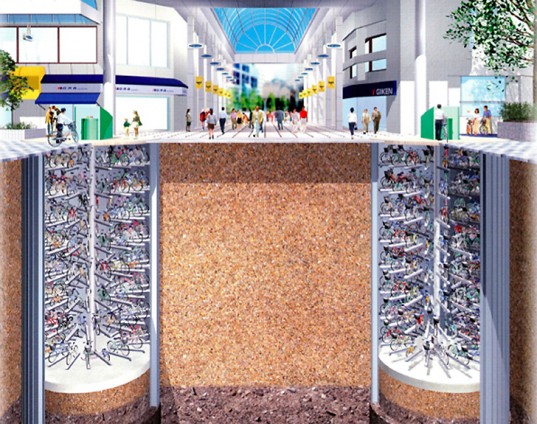
Developed by construction company Giken, the robotic system stores the cycles in a 11-meter deep well PHOTO: GIKEN LTD

Developed by construction company Giken, the robotic system stores the cycles in a 11-meter deep well PHOTO: GIKEN LTD

If there is one problem that puts developed and developing countries on the same footing, it is parking space. And Japan seems to have found a way around it. At least for bicycles. Considering that they are carbon neutral and land value is high, hindering the commissioning of exclusive bicycle roads and parking lots, this idea could be the future. Eco-cycle is an anti-seismic mechanical underground parking lot for cycles, designed along the concept of “culture above ground, function underground”. So when in Japan, particularly around Kounanhoshi Park, head to this bicycle elevator. Wait as the electronic card reader scans your membership (fee around $15 a month) code, remove pets and all valuables from the cycle, and stand back as your wheels make an eight-second journey to its slot. On your return, scan the code and your ride reaches you in a jiffy. More pedal power to that someone who really gave parking some extra thought!

Detailed photos (and some Japanese) here.

Desalination Technological Innovation, Well Timed, Much Needed

freshwater

Drought solution? A invention from MIT and Jain Irrigation Systems can turn salt water into clean drinking water using solar energy. Photo credit: Shutterstock

Thanks to EcoWatch for this good news:

MIT’s Solar-Powered Desalination Machine Could Help Drought-Stricken Communities

Lorraine Chow

A team from the Massachusetts Institute of Technology and Jain Irrigation Systems have come up with a method of turning brackish water into drinking water using renewable energy. With parts of the planet running dangerously low on fresh water, this technology can’t come soon enough.

This solar-powered machine is able to pull salt out of water and further disinfect the water with ultraviolet rays, making it suitable for irrigation and drinking. As the MIT News Office explained, “Electrodialysis works by passing a stream of water between two electrodes with opposite charges. Because the salt dissolved in water consists of positive and negative ions, the electrodes pull the ions out of the water, leaving fresher water at the center of the flow. A series of membranes separate the freshwater stream from increasingly salty ones.”

Continue reading