Citizen Science in Belize – Update on Lionfish Jewelry: Part 1

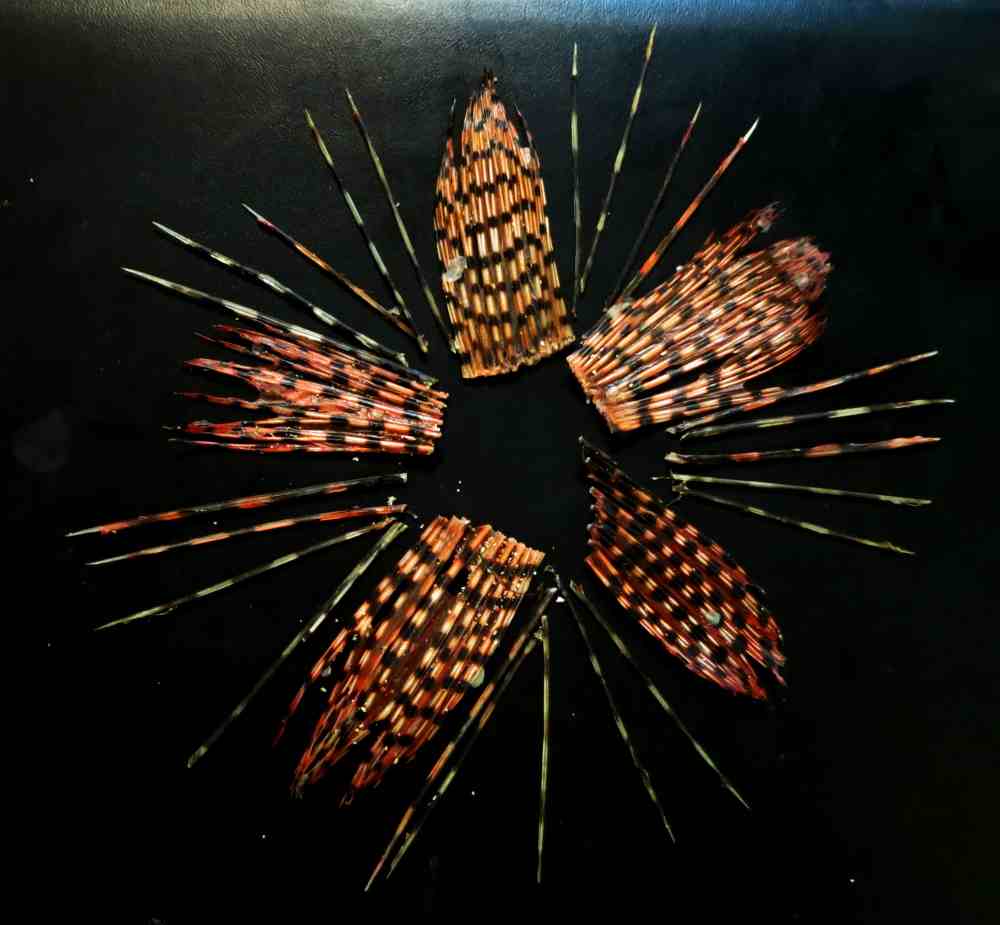
Freshly dried lionfish fins and tails. Photo: Polly Alford, ReefCI

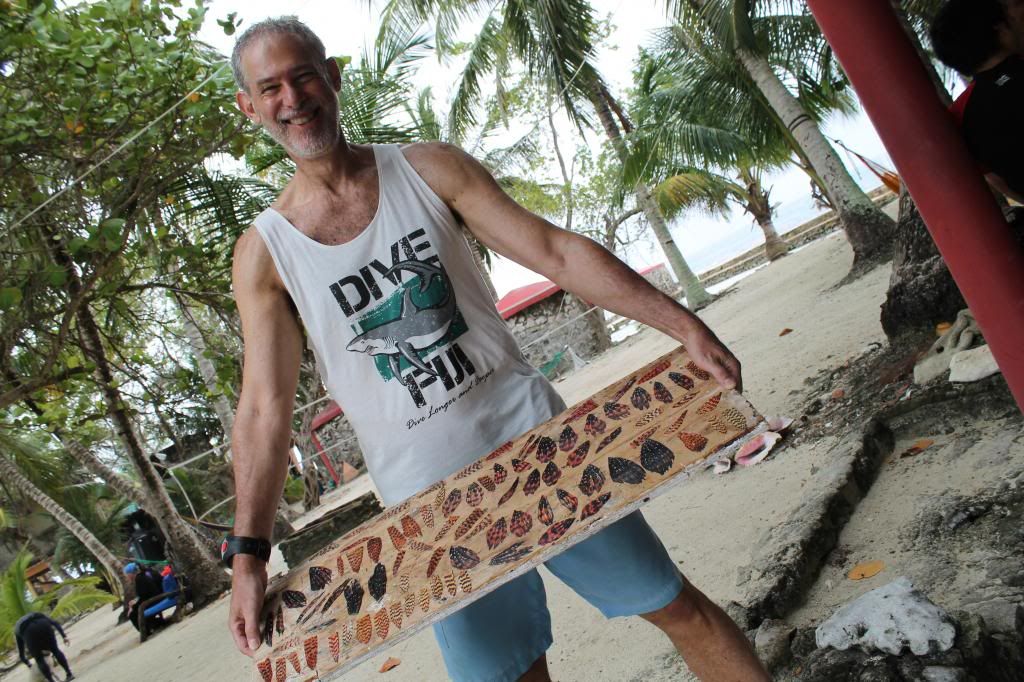
I’ve written in previous posts about the initiative to develop a market for lionfish jewelry as one of a number of commercially sustainable approaches to fighting this invasive species that is threatening marine ecosystems throughout the Caribbean, the Gulf of Mexico, and the Southern Atlantic seaboard of the United States. In my last post, I mentioned that the idea is beginning to take off in Belize.  I was able to observe this first-hand last month, spending two and a half weeks in the country.  During my stay I had the opportunity to meet local artists who are making lionfish jewelry and to participate in several workshops to share techniques and designs.  Continue reading

Solutions For An Invasive Plant Species Found In Waters Everywhere

water-hyacinth

Thanks to Conservation, a magazine published by the University of Washington, for this fascinating article on the invasive species known all too well by those of us based in Kerala’s backwaters:

The scene at Florida’s Crystal River National Wildlife Refuge in Kings Bay last October would have been familiar to anyone who has ever engaged in the battle to control the spread of invasive plants. Eager volunteers scurried about the shoreline of this manatee wintering ground, carting large plastic bins stuffed with water hyacinth, a notorious aquatic weed that’s caused headaches on five continents. Closer inspection, however, would have revealed the activity to be anything but business as usual: instead of hauling water hyacinth outof the bay, the conservationists were putting it back in—almost 4,300 gallons’ worth by day’s end. Continue reading

Building An Invasivore Economy

wild-city-pigeon Since Phil first started posting his series on possible solutions to invasive species last year, in conjunction with the theme of citizen science that Seth has been writing about for the last couple years, we have been on the look out for citizen solutions to environmental challenges–stories that match our interest in entrepreneurial conservation. Phil’s series suggests that citizen science may be the best path to building what might be called an invasivore economy. As it happens, just after his first couple posts there was an article in Conservation that dealt with this very issue:

SEND IN THE INVASIVORES

Recipes for Ecosystem Recovery By Sarah DeWeerdt

“We’re trying to be unsustainable,” says University of Vermont conservation biologist Joe Roman. And he says it with glee. Roman runs www.eattheinvaders.org, a compendium of invasive species recipes. He is one of a growing number of people who advocate controlling invasives by eating them. Instead of relying on toxic pesticides, expensive eradication campaigns, or risky introductions of biological control agents, “why not use our own appetites to good advantage?” he suggests.

Continue reading

Welcome Back, Dot Earth

An illustration from a children’s book published in 1888.

An illustration from a children’s book published in 1888.

Out of nowhere, a few days back, Andrew Revkin and Dot Earth came back from who knows where. In our first year or two they were among our most consistent sources of excellent reportage on environmental issues. Then, nothing. Now, something, sneaking into view within the Opinion pages of the New York Times (really, we need their old excellent reporting more than we need opinion, but…):

dotearth_postENVIRONMENTAL POLICY

No Time to Waste: Students Pursue Environmental Progress Instead of Exam Grades

By ANDREW C. REVKIN APRIL 22, 2014, 12:13 PM

Continue reading

Controlling Invasive Lionfish – Update on Market Solutions: Part 2/2 — Lionfish Art

spines and tails-photo3

Array of dried lionfish spines and tails -ready for jewelry use Credit: ReefCI

In Part 1 of this post regarding market-based solutions to fighting the lionfish invasion that is threatening coral reef and other marine ecosystems throughout the Caribbean, Gulf of Mexico, and Southern Atlantic Seaboard of the United States, I wrote about the challenge of developing commercially sustainable strategies for undertaking the systematic removals that are needed to keep lionfish populations under control. I discussed the need to develop a series of vertical markets, pointing to promotion of lionfish as a seafood choice as the most obvious of these. Capture of juvenile lionfish for the aquarium trade as another.  A third market, and one in which I’m personally involved, is use of lionfish spines and tails for jewelry and other decorative items.  Continue reading

Controlling Invasive Lionfish – Update on Market Solutions: Part 1/2


I’ve posted previously about the lionfish invasion that is threatening coral reef and other marine ecosystems throughout the Caribbean, Gulf of Mexico, and Southern Atlantic Seaboard of the United States. As I noted in earlier posts, it is the general consensus of the scientific and conservation community that eradication of lionfish from the Atlantic is impossible. There have been some anecdotal reports that native predators such as groupers and snapper are beginning to recognize lionfish as prey, but there is no systematic evidence, as of yet, of widespread predation. So the conclusion remains that human intervention is the only way to keep lionfish populations in check. The good news is that there is growing evidence that systematic removal efforts can indeed be effective in controlling lionfish populations and in reversing their negative impact on reef health. A study published earlier this year found that populations of snapper and grouper rebound by 50-70 percent once lionfish are removed. And it isn’t necessary to remove 100 percent of lionfish for recovery of native fish populations to take place; the study found that reduction of lionfish populations by as little as 75 percent will do the trick. This is important, given difficulties in reaching lionfish at depths beyond the limits of divers.  Also, removal efforts may become more difficult over time, as lionfish on reefs where regular culling takes place begin to wise up and hide from divers (click here for a cute poetic rendition of findings of a study on this behavioral adaptation).

Thus the challenge is to find a sustainable basis on which to undertake the systematic removals that are needed to keep lionfish populations under control. Continue reading

Foraged Cuisine

The concept of ethical eating isn’t new to these pages and neither is the suggestion that cuisine might be the secret weapon in the fight against invasive species. So we were thrilled to read about chef, artist, environmentalist and social activist Bun Lai’s menus based primarily on what he can forage from his 100 acres of shellfishing grounds off of the Thimble Islands in Connecticut.

The kitchen is the perfect place to exhibit the spirit of exploration and creativity–why not exploit it as a method of controlling ecological pests?

Citizen Science in Belize: Part 1/2

Photo © ReefCI

Photo © ReefCI

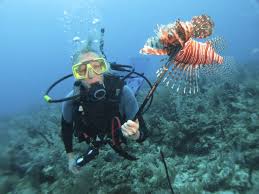
It might seem strange to accompany a posting about marine conservation with a photo of a fish on a spear, but in this case, it is entirely warranted.

I recently returned from the Sapodilla Cayes Marine Reserve in Southern Belize, where I spent two weeks working as a volunteer with ReefCI, a NGO dedicated to coral reef ecosystem conservation. Located 30 miles off the coast of Belize on the southern tip of the Mesoamerican Barrier Reef (the second largest in the world, after Australia’s Great Barrier Reef), the Sapodilla Cayes constitute a unique ecosystem.

Along with other volunteers, I assisted the ReefCI marine biologist with population surveys of conch, lobster, and commercial fish species, as well as coral reef health checks. At least one, and sometimes two surveys were carried out each day. The data collected is provided to the Belize Fisheries Department as well as to other cooperating NGOs.

Now about that fish on a spear. One of ReefCI’s projects is lionfish control. Spears Continue reading