Nature, Color, Science

Screen Shot 2016-07-09 at 5.50.02 AM

If you happen to be in London, starting July 15 this exhibition at the Natural History Museum looks worth a worth a visit:

Investigate how different animals see the world, and explore your own relationship with colour, through interactive experiences and immersive films.More than 350 specimens feature, from beautiful birds to fossils of the first organisms with eyes. And British artist Liz West has produced a stunning light installation, inspired by Newton’s colour spectrum and blue morpho butterflies in the Museum’s collection.

The BBC gives it a strong review here:

_90172043_b583d8fa-da3c-4d0a-aece-83ff65cc48a5

A new exhibition exploring the relationship between colour and vision in the natural world is opening at the Natural History Museum.

Intense and vibrant natural colours will be displayed in specimens and photographs of insects, animals and plants. At the heart of the exhibition – Colour and Vision, which opens on 15 July – is the question of how we perceive colour. Continue reading

Phenology Disrupted by Climate Change in the UK

The UK has a rich history of biological recording by scientists and ‘citizen scientists’ who document the first signs of spring. Photograph: Alamy/Guardian

We first heard of the word phenology on this site back in 2012, from writings on a citizen science workshop in the Galápagos. Since then, the term has been linked to citizen science in the context of forest life cycles in England, coffee farming in Costa Rica, and orchids in the United Kingdom. It’s a good thing that there’s a history of normal people collecting information on nature’s timelines in Britain, because that provides rich and deep data on changing phenology with a warming climate. Jessica Aldred reports for the Guardian on a new study published in Nature:

Climate change is disrupting the seasonal behaviour of Britain’s plants and animals, with rising temperatures having an impact on species at different levels of the food chain, new research shows.

The result could be widespread “desynchronisation” between species and their phenological events – seasonal biological cycles such as breeding and migration – that could affect the functioning of entire ecosystems, according to the large-scale study published this week in the journal Nature.

Continue reading

Words, Nature, Ideas

From today’s New York Times, whose lead headline is the largest in my lifetime that I remember, yet (with apologies to all those affected by the cause of those headlines) I find this editorial more urgent and hope Mr. Egan will not mind my sharing it here:

Pristine Nature

Chan Chich

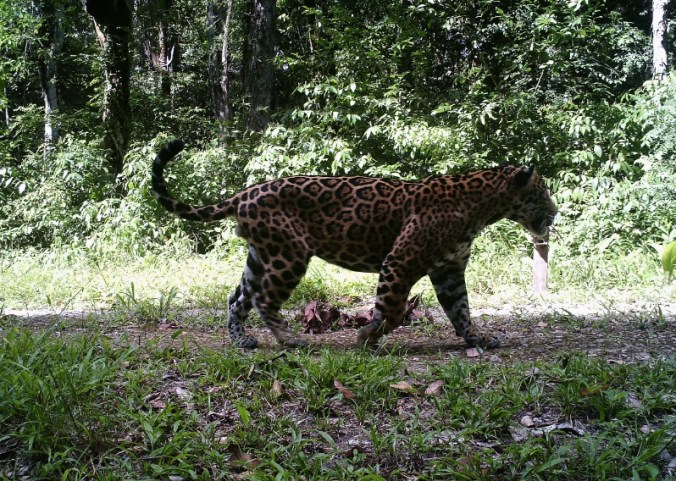
In writing about Belize recently, I had mentioned time spent with a tapir, favored in the diet of jaguar throughout Central America. The photo above was taken on property at the lodge my posts were referring to. Rule of thumb, it seems to me, is that a jaguar population requires relatively pristine nature to be sustainable, and that seems to be the case where this photo was taken. But what do I know, really? I am dedicated to entrepreneurial conservation but I am not a biologist so I depend on experts to inform my thinking, and to discipline it with a heavy dose of realism. In reading this post from earlier today I am better prepared to think about the mission of Chan Chich Lodge (more on which in a subsequent post), and the history of the 30,000 acre wilderness conservation area that it sits on:

Gallon Jug

At one time, the venerable 150 year old Belize Estates Company owned roughly one fifth of the entire country, about one million acres including much of the northwest corner of the country. From the turn of the century until the 1960’s, timber, mainly mahogany, cedar and santa maria, were selectively logged from this area. Gallon Jug, originally a logging camp located where the current GJ offices are, was named after a B.E.C. foreman, Austin Felix, discovered many discarded items from a Spanish camp, including a number of ceramic gallon jugs. Continue reading

Pristine Nature?

Nijhuis-TheresNoSuchThingAsPristineNature-1200

A domesticated cat and a native tropical bird, in Papua New Guinea. Environmentalism has long been a nostalgic enterprise, but the unspoiled past that it aspires to looks increasingly like an illusion. PHOTOGRAPH BY LEONARD FREED / MAGNUM

If you have been reading our blog for any stretch of time you would be aware that we believe in pristine nature, and the importance of its conservation. We do not spend alot of time picking nits about the definition of pristine nature, but from time to time we are reminded that details, aka reality, is in need of fact-checking:

If You Happen To Be In New York

29NATURE-blog427

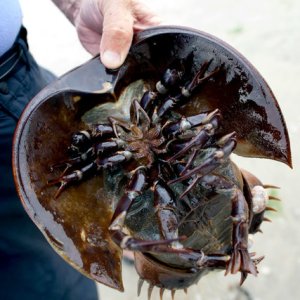
A horseshoe crab. Credit Brian Harkin for The New York Times

Thanks to a Nature essay in the New York Times, timed to be read over the Memorial Day weekend typically associated with the beginning of summer in the USA, a reminder of one of the joys of the season (at least on the Atlantic coast of the USA) just beginning:

The Medium Is The Message

o-COLUMNS-570.jpg

Charcoal has often been used by artists as a tool for sketching, but now this:

Floating Charcoal Sculptures Explore The Complex Relationship Between Man And Nature

Priscilla Frank
Arts Writer, The Huffington Post

Charcoal is a natural substance derived from the geological process of burning trees. The light black residue that remains, though created by nature, has a distinct architecture to its rough sides and sharp edges, reminiscent of the shapes made, consciously, by man.

Korean artist Seon Ghi Bahk uses this unorthodox artistic material to explore the complex and interwoven relationship between nature and human civilization. While Western culture has the tendency to view our natural surroundings as either a tool of human civilization or a pleasant backdrop for our daily lives, Bahk paints, or rather sculpts, a more nuanced picture.

Continue reading

In The Interest Of Debate On GMOs

We are concerned, and therefore generally against, GMOs up to now. But we are not 100% sure and so welcome new information when it is available. The University of Washington’s magazine, Conservation, is back in full awesomeness as a public service:

Despite the controversy surrounding genetically modified crops, they can be an important tool for developing disease-resistant crops that can eliminate the use of pesticides and reduce crop losses. In a trio of papers published recently in Nature Biotechnology, researchers documented how new, faster methods of isolating genes—and looking in some unexpected places—led them to identify, clone, and transfer disease-resistant genes into soybean, wheat, and potato plants. Continue reading

National Park Week

http://www.youtube.com/watch?v=0ykvO8UN3g0

On August 25th this year, the United States National Park Service will turn 100 years old, and this week, from April 16th to the 24th, it’s National Park Week, when the US celebrates its natural and cultural heritage with special events and free admission to any national park.

Continue reading

Respecting, And Loving, Wild Places

Screen Shot 2016-04-16 at 6.26.00 AM

Click above to watch the video an click here for the written story:

The wild, romantic side of Britain

The Lake District is now considered a beautiful part of the country – but it was once an unloved wilderness. Alastair Sooke describes the moment this changed. Continue reading

Finding a Boiling River in Peru

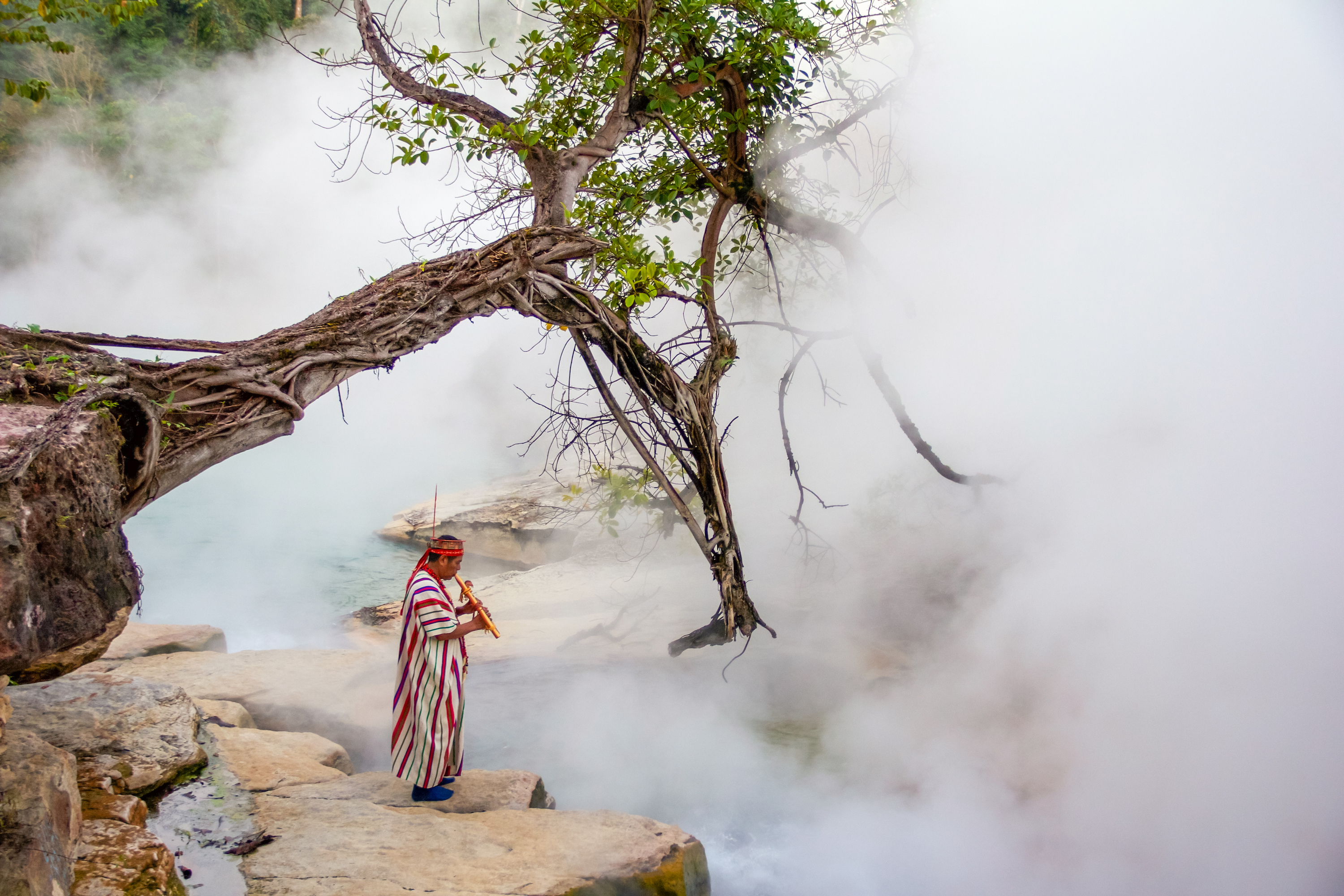
The Boiling River and an Amazonian shaman. Photo by Sofia Ruzo

Thanks once again to Chau Tu at Science Friday’s weekly written article, we’ve learned something new about the natural world, and it sounds like pretty much everyone except maybe a couple hundred people were unaware of its existence too: a steaming-hot river in the Amazon of Peru that isn’t volcanically heated. As Andrés Ruzo, the first geoscientist to study the water body, said in his TED Talk on the subject in 2014 (just released this February), “At a time when everything seems mapped, measured and understood, this river challenges what we think we know. It has forced me to question the line between known and unknown, ancient and modern, scientific and spiritual. It is a reminder that there are still great wonders to be discovered.” Here’s more from Chau Tu on the subject, and make sure to visit the Boiling River Foundation website.

Andrés Ruzo first heard about the Boiling River from his Peruvian grandfather, who shared a legend with him when he was a kid about the Lost City of Gold in Peru. “One of the details of the story was a ‘river that boils,’” Ruzo recalls.

Twelve years later, when Ruzo was studying at Southern Methodist University in Texas to become a geophysicist, he asked colleagues and other experts if they knew anything about a large river that boiled in the Peruvian Amazon. No one had; some scoffed at the inquiry. While thermal rivers do occur on earth, they’re generally tied to active volcanic or magmatic systems—neither of which were known to exist in the Amazon jungle, they said.

Continue reading

From A Friend In San Francisco

The magazine Bay Nature is new to us, brought to our attention thanks to a friend from that part of the world. It comes via this particular article, which touches on several topics–fungi, birds, conservation and Bay Area awesomeness–commonly seen in our own pages in the last five years. Have a read below and if you like it go read the remainder on their website:

Identifying With Lichen

How the surprising union between a fungus and an alga raises questions about the nature of identity

by Elizabeth Lopatto

In July, Governor Jerry Brown signed into law a bill declaring the lace lichen—found along the Pacific coast and throughout the coast ranges—the state lichen. As of January 1, 2016, California will be the first state ever to designate a lichen as a state symbol.

Lace lichen, Ramalina menziesii, is easily recognized. It is pale green and dangles in strips from trees. It’s sometimes confused with Old Man’s Beard (Usnea sp.), which is also pale green and dangly. Lace lichen’s range stretches from Alaska to Baja California. It’s an important food for deer; it also serves as material for birds’ nests. I see it once, in researching this story, when naturalist Morgan Evans, a former student naturalist aide at Tilden Nature Area in the East Bay hills, removes it from her backpack and spreads it out. Evans is a pleasant and patient woman, whose true love is fungi. Her interest in lichens is an extension of that, she says. Anyway, she found some lace lichen growing in Morgan Territory Regional Park. She figured I’d want to see it and there isn’t much growing in Tilden that she knows of. She hands me the lichen, which feels strangely plasticine. It’s pale green—she wetted it so it wouldn’t crumble when she transported it—and dangles impressively, at least six inches long. Lace lichen can grow as long as a meter, and it has a netted structure that looks, to me at least, more like fishnet stockings than lace. Perhaps fishnet-stocking lichen would be a little too racy a nickname. Continue reading

NatureNet Science Fellows

WOPA050824_D120

Giant clam in Pacific, Asia Pacific. (ALL RIGHTS GRANTED TNC)

The Nature Conservancy is, among the philanthropic conservation organizations we are aware of, uniquely entrepreneurial beyond their core competency in land conservation. Their communications outreach is among these excellent extensions of their mission.  This article, about one of the NatureNet Science Fellows, is a good case in point:

Adventures in Alternative Energy: Giant Clam Edition

When most people think about alternative energy sources, Pacific giant clams probably do not spring readily to mind. Within their iridescent tissues, however, the world’s largest clams may well hold the missing link to finally enable the efficient (read: commercially viable) large-scale production of clean biofuels from algae.

Giant clams as alternative energy powerhouses. Who knew? Continue reading

Bringing Nature-Oriented Science To An Urban Audience

Screen Shot 2016-02-16 at 10.04.40 AM

Wild monkeys can learn from a demonstration video set up in the forest. Video by David Frank and James Gorman on September 29, 2014

Several of the videos in this series have been featured on our pages over the last few years, but not all of them (for an example of one we neglected to link to previously, check out this one above). Today the series is crossing round number landmark, so we join in their celebration in hope that the series continues:

Fire Ants, Goshawks and Dog Tongues, Oh My: The Best of Science Take

Continue reading

Bringing Nature To An Urban Audience

AMNH-03-320

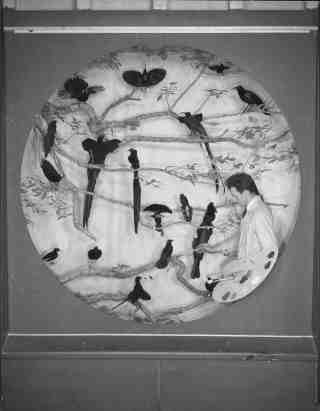
Installing the Birds of Paradise group, 1945. COURTESY AMERICAN MUSEUM OF NATURAL HISTORY

Our interest in the display of natural history makes this is a must-read:

The dioramas at New York City’s American Museum of Natural History—those vivid and lifelike re-creations of the natural world, in which the taxidermied specimens almost seem to breathe and the painted horizons seem to stretch for miles—are very much products of the late-nineteenth and early-twentieth-century milieu in which many of them were created. Temporally and aesthetically sandwiched between the cabinet of curiosities and “Planet Earth,” the dioramas grew out of the intersection between a nascent conservation movement and an age of swashbuckling adventurism…

Of course, we prefer natural history in natural places, preferably intact and living and resplendent as hinted at in this video which we have featured previously. But museums have their place, and the mural at the Cornell Lab of Ornithology is just the most recent of a long line of efforts to get the inanimate to animate our interest. But for those of us who grew up making dioramas, this feature brings to mind the power of three dimensions, even when inanimate, to animate.

AMNH-07-690

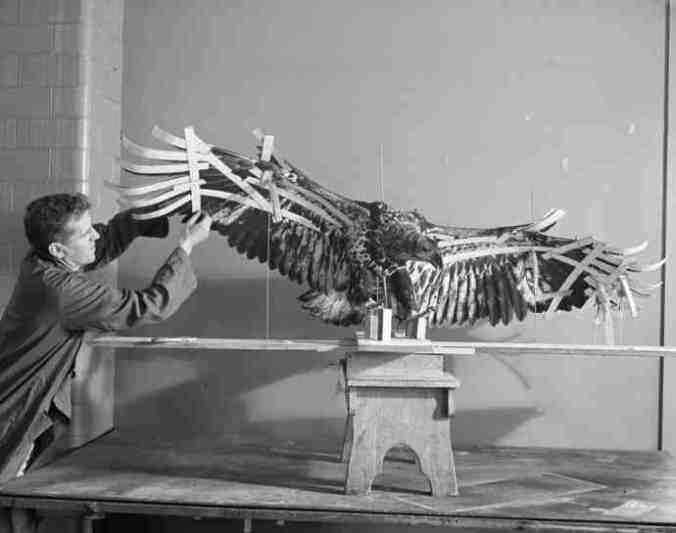
An eagle for the bird-group exhibit, 1961. COURTESY AMERICAN MUSEUM OF NATURAL HISTORY

…The word “diorama,” which comes from the Greek for “to see through,” Continue reading

Sorry, Bolivia!

bolivia

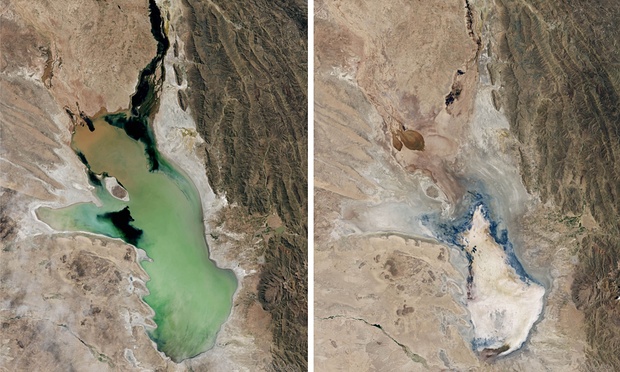
NASA satellite images show Bolivia’s Lake Poopo filled with water in April 2013 (left), and almost dry in January 2016. PHOTO: NASA/AP

Drying rivers, lakes, and reservoirs. Fancy a list? Here and here, you go. The world’s waters are rapidly running dry, threatening wild habitats and human civilization, exacerbating climate change. In turn, livelihoods, ecosystems, energy generation are all affected. Like in Bolivia, which just lost its second largest lake.

Continue reading

TNC: Prairie Restoration with Wild Seeds

closeup_of_baldwin27s_ironweed2c_a_common_tallgrass_prairie_plant_seen_on_the_konza_prairie2c_12c000_acres_of_virgin-_-_nara_-_557190

Closeup of Baldwin’s Ironweed, a common tallgrass prairie plant, by Patricia D. Duncan via WikiMedia Commons. 1974.

The word “restoration” might bring to mind an artistic connotation of preservation and repair, as in a World Heritage Site, but lately where we’ve seen it the most is in an ecological sense: whether it’s wildlife in a forest, algae control in wetlands, or coral health in the oceans. Whole landscapes can be restored to an extent, as in the case of Tianjin, China, where forests and wetlands are being rebuilt while also studying the effectivity of different strategies.

That’s part of what The Nature Conservancy has been doing in the prairies of Minnesota, rebuilding the diverse grasses that used to exist in a landscape that was fragmented and degraded by huge farms during the last century. Justin Meissen and Meredith Cornett, two of the co-authors on a paper recently published in Restoration Ecology, report for the TNC blog:

Glacial Ridge is truly huge — at ~36,700 acres it’s one of the few places on Earth where you can look to all horizons and experience what early American pioneers once called the “sea of grass.”

But it wasn’t always like this. Only a few years ago Glacial Ridge was a patchwork of mostly farm land and a few prairie remnants. So what was the Nature Conservancy’s prescription for bringing this massive landscape back to life? Seeds — lots of seeds.

Continue reading

Flying Between Pages

birdsong

“There is no such thing as a stooped or a graceless bird”, writes Krishnan. PHOTO: Scroll


“Chugging out of New Delhi Railway Station on an early morning train, I’ve often amused myself by looking out for the “telefauna,” or birds perched on telegraph wires.” Bird lovers on here, there’s a new word for you right there. Of Birds and Birdsong, penned by Indian writer Krishna, is all at once a journal and a tribute. To him, it’s a record of winged creatures sighted around, while to his reader the names of these beauties bring to heart a familiar nostalgia.

Continue reading

India’s First Organic State

sikkim

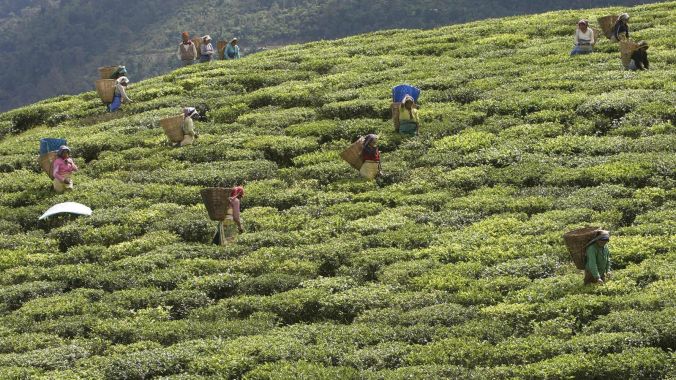
Tea plantations on the hillside. PHOTO: Reuters/ Rupak De Chowdhuri

The buzzword is organic. From grocery store shelves to textile designers to travel. At the center of this phenomenon is respect to the land, cognizance of the immense potential of living organisms, acknowledgement of a way of life that has restorative powers. Today, India hears that message loud and clear in the North-eastern hill state of Sikkim.

Continue reading

Thanks To Humboldt

Homboldt.jpg

In the “oops, forgot to post on this” category, we recommend you start with the introductory video above, then continue on to the author’s website:

55054_us_humboldt_cov“The Invention of Nature” reveals the extraordinary life of the visionary German naturalist Alexander von Humboldt (1769-1859) and how he created the way we understand nature today. Though almost forgotten today, his name lingers everywhere from the Humboldt Current to the Humboldt penguin. Humboldt was an intrepid explorer and the most famous scientist of his age. His restless life was packed with adventure and discovery, whether climbing the highest volcanoes in the world, paddling down the Orinoco or racing through anthrax–infested Siberia. Perceiving nature as an interconnected global force, Humboldt discovered similarities between climate zones across the world and predicted

Continue reading