David Attenborough Memoir Has A Captive Audience Here

9781473665958There is a reason why David Attenborough is the name that appears most frequently in these pages over the last seven years. So how did I miss this publication date nine months ago? Now there are several reviews and I am just late to the table. Nevermind that. Just read some of what Frans de Waal, the most recent reviewer, has to say:

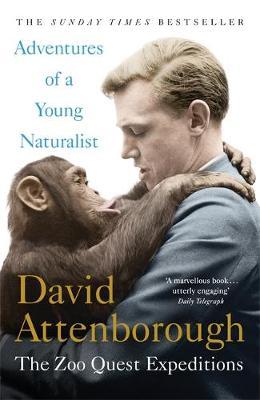
The soothing, authoritative voice of David Attenborough has become such a widely recognized feature of nature documentaries that there are now all sorts of spinoffs. Funny animations show gorillas munching on leaves while gossiping about their encounter with the pith-helmeted explorer. Spoof documentaries of our species’ mating rituals show young men drinking beer in a Canadian bar while Attenborough’s voice-over notes that “the air is heavy with the scent of females.” In my classes at Emory University, I show so many snippets of BBC documentaries that I need to warn students that not all of our knowledge about animal behavior comes from this omnipresent talking gentleman. He is just the narrator.

03De-Waal-superJumbo

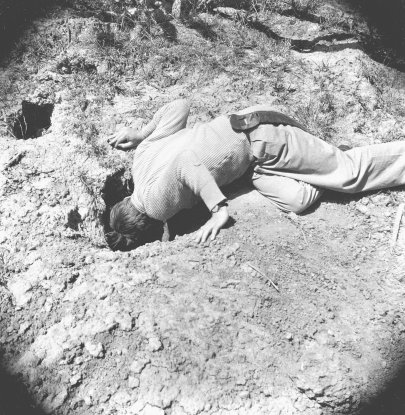
David Attenborough searching for armadillos. Photograph from David Attenborough

But “just” doesn’t do justice to his role, because Attenborough co-wrote the programs and the insertion of his persona into almost every scene is deliberate. It is the key to the success of “Life on Earth,” “The Blue Planet,” “Planet Earth” and all those other BBC nature series we love. It all started with a 1950s television program featuring animals from the London Zoo. The animals were brought into a studio, where the famous biologist Julian Huxley handled them while explaining their anatomy, habits and special skills. The occasional escapes and other mishaps on this live program greatly contributed to its entertainment value. Continue reading

Aspirational Recycling & Bigger Problems

20cli-aspirational-lede-superJumbo

Tony Cenicola/The New York Times

I recall reading this article by Livia Albeck-Ripka and thinking that I would like to read more from anyone who can write clearly and creatively about topics that are central to our purpose here. And so today, my wish was granted, twice. In this first one, I am introduced to a term, aspirational recycling, that I had not heard until now:

6 Things You’re Recycling Wrong

Can you recycle coffee cups or greasy pizza boxes? If you’re tossing things in the recycling bin out of sheer hope, you might be an “aspirational recycler.”

We have all done it: a greasy pizza box, a disposable coffee cup, the odd plastic bag. Sometimes, we want things to be recyclable, so we put them in the recycling bin.

Waste managers often call this wishful or aspirational recycling. But, unfortunately, putting these objects in with the rest of the recycling can do more harm than good. While rules differ in every municipality (check your local recycling website to find out what’s acceptable), we have picked out some key offenders to keep in mind.

Too many of these items will contaminate a batch of recycling. That means waste managers might not be able to find buyers for the materials — especially now that China, one of the world’s main importers of recyclable waste, has said it will reject shipments that are more than 0.5 percent impure. Contaminated loads could be sent to the landfill instead…

Same day, same publication, same author, an eye-opener for anyone who diligently follows all the rules made plain in the article above:

Your Recycling Gets Recycled, Right? Maybe, or Maybe Not

Plastics and papers from dozens of American cities and towns are being dumped in landfills after China stopped recycling most “foreign garbage.”

13cli-recycling-facility-jumbo

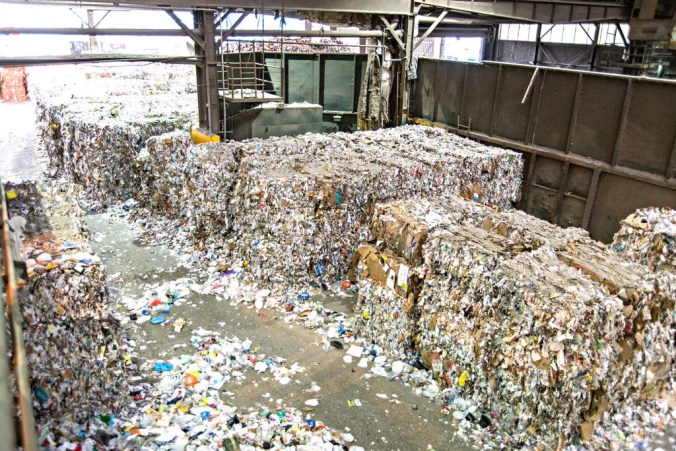
Bales of recyclable waste in Seattle. American waste managers are struggling to find plants to process their recyclables. Credit Wiqan Ang for The New York Times

Oregon is serious about recycling. Its residents are accustomed to dutifully separating milk cartons, yogurt containers, cereal boxes and kombucha bottles from their trash to divert them from the landfill. But this year, because of a far-reaching rule change in China, some of the recyclables are ending up in the local dump anyway. Continue reading

Social Media Needs Rethinking

9781250196682

It is so freshly pressed that there are no reviews to cite yet, but the author himself previewed the ideas here, which I remember reading and thinking that his big, important thoughts would get lost in the momentary hysteria of relatively small potatoes news (Cambridge Analytica) breaking at the time:

Be a pioneer – delete Facebook

Quitting means beating the addiction, making a political statement and redefining social life. Are you ready?

3500 (4)

‘Facebook deleters are indispensable. They should be celebrated. We all benefit from them.’ Photograph: GETTY IMAGES

When I wrote an about-to-be-published book last year about problems with social media, I thought it would be cute to call it Ten Arguments for Deleting Your Social Media Accounts Right Now. And then the Cambridge Analytica scandal broke, motivating a modest but notable wave of Facebook deletions in protest, including by prominent tech figures such as Elon Musk and Brian Acton, the co-founder of WhatsApp.

So much for the novelty of my book title. The biggest surprise was not the movement to delete accounts, but that the deleters have not been received well by pundits and commentators. The response has often been smug, dismissive, even scolding. Deleters are told they are abusing their privilege; that they are leaving behind the less fortunate, who cannot afford to quit. They are said to be abandoning society or distracting from the more important process of petitioning governments to regulate Facebook. They are accused of tilting at windmills

In early 2013 an article in Smithsonian first brought my attention to Jaron Lanier, and since then we have not featured him again on this platform, which is strange. I recall last year reading a short think piece by him, and listening to him, as he promoted an earlier book and finding him very compelling. Just today, he was back in the Guardian with another one-two punch of these ideas, in the effort to promote this new book. The book’s title tells me that even though I am already a convert to the basic principle, I want to know how he explains these ten ideas. And I admit I am susceptible to publishers’ blurbs when written by someone I respect: Continue reading

Moving Slowly & Avoiding Breakage

Preston-Ecological-expedition-Honduras-8

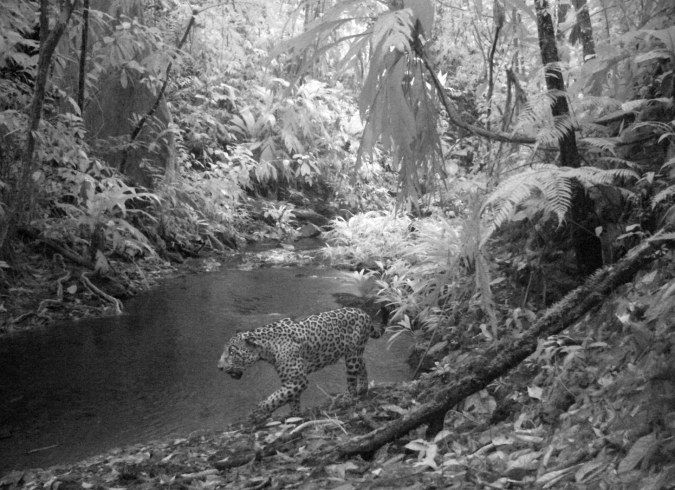
Panthera onca. The jaguar is the king of neotropical forests, where it is the largest of the cats. Its presence at the White City indicates an extensive, thriving ecosystem. © Washington State University, Panthera, Wildlife Conservation Society, Zamorano University, Honduran Forest Conservation Institute, Travis King, John Polisar, Manfredo Turcios

When the journalist Douglas Preston shared this story, I was in the process of closing up shop in India, where we had been in residence since 2010. Kipling-induced daydreaming notwithstanding, Amie and Milo (whose photos may be the most tangible representations of the dreaminess of those years) and I never had the illusion that there were lost civilizations or any such thing in India.

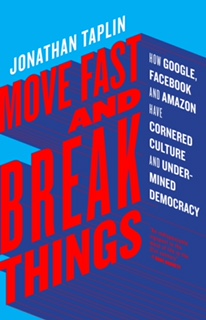
movefast (1)We did have the nonstop motivation of feline-fueled conservation initiatives, and some close encounters. Those provided us a perfect counterpoint to the seemingly irresistible catchphrase that described progress in the form of disruptive technology. Haste really does make waste when it comes to ecology, anthropology, and realms of life other than economic forward-marching.

When I read Mr. Preston’s story on the first day of last year I realized that our relocation to Central America, oddly enough since it is in the hemisphere called the New World, was full of potential for all kinds of discovery of “lost” things. And my own discoveries further sensitized me to the importance of moving slowly and avoiding breakage. My posts on this platform from February through July, 2017 are evidence of the richest ecological and anthropological observations of my lifetime (so far), and that makes Mr. Preston’s update post yesterday all the more wonderful to read:

Deep in the Honduran Rain Forest, an Ecological SWAT Team Explores a Lost World

Preston-Ecological-expedition-Honduras-1

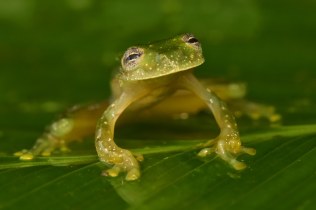
Sachatamia albomaculata. The inner organs of glass frogs are visible through their translucent bodies. Photograph by Trond Larsen / Conservation International

A little more than three years ago, I joined a team of archeologists on an expedition to La Mosquitia, a remote mountain wilderness in eastern Honduras. For centuries, the region had been rumored to contain a lost city, known as the City of the Monkey God or the White City, and now, thanks to a combination of luck and modern technology, an ancient settlement had been found. Although it was probably not the lost city of legend, it was a very real place, built by a mysterious civilization that flourished long before Columbus arrived in the Americas. Hidden in a densely forested valley, it had never been explored. Continue reading

Water, Power & Discontent

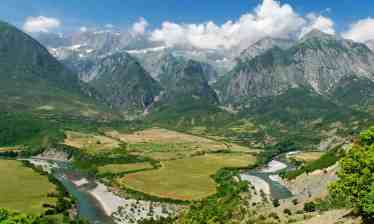
Early last year an article in the Guardian reminded me of work I had done in Montenegro in an earlier decade. The work was among the most impactful in my life, both professionally and personally, but the reminder was more a warning than a celebration. Something similar just happened with work I carried out in the region Rachel Dixon, a travel writer for the Guardian, brought to my attention with the film above, mentioned in this article:

Adventure in Albania: kayaking in one of Europe’s final frontiers

With wild rivers, mountains and Unesco sites aplenty, Albania is emerging as an exciting Mediterranean destination – but its wilderness could be devastated by huge dam-building projects

5188‘Go, go, go!” The white-water rafting guide shouted orders from the back of the boat and our five-strong crew paddled hard to stay on course. We were tackling a stretch of the Vjosa, a 270km river that begins in Greece (where it is called the Aoös) and flows through Albania and into the Adriatic just north of the city of Vlora. I was on a recce trip for a new southern Albanian break with Much Better Adventures, which specialises in long weekends to wild places in Europe and North Africa. But this trip was not just a fun adventure – rather just part of a campaign to save the river, which is under threat from proposed dams. A documentary film, Blue Heart, out this month, will highlight the fight to protect Europe’s last wild rivers, with help from ecotourism…

The film, and the article, have to do with the power of water. And the power of humans in deciding what to do with water. Not all reminders can be pleasant. This one is bittersweet. One sweet part is the call to action.

CallAct1

Step 1: Register your interest in hosting a screening

We are aiming to host hundreds of screenings of Blue Heart globally in 2018 to raise awareness of the plight of the people affected in the Balkan region. If you are interested in hosting a screening, please complete the form below and a member of our team will get back to you ASAP.  Please note the film is 40 mins long and we recommend that you allow at least 20 mins for a post screening discussion. Continue reading

Nonetheless, Arabica

SIERRA Coffee Biodiversity WB

PHOTO COURTESY OF PRAKASH MATADA

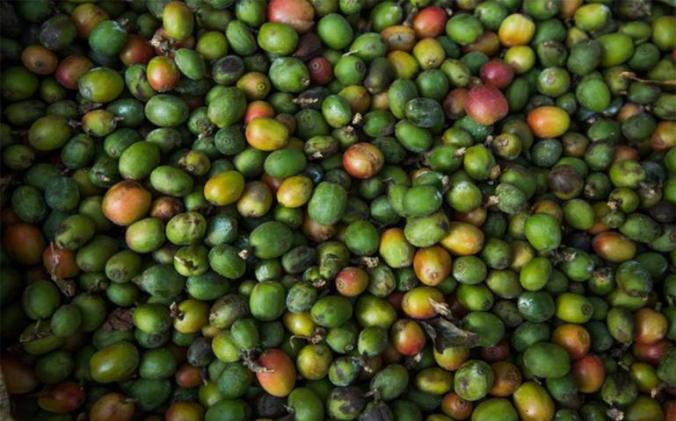
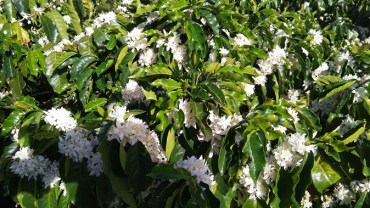
I have spent most of the last year expanding my coffee knowledge. One thing I was already confident about, and remain so, is that arabica is better than robusta on two scales that matter most to me: taste, and environmental impact. From 2010-2017 during our residency in the Western Ghats, we developed and opened a series of properties where both taste and environmental impact were brand signatures formed in Costa Rica.

image002

 Instituto del Café de Costa Rica

With regard to coffee, I knew there was more than one good reason why Costa Rica only permits arabica coffee to be grown in the country. And we sourced the highest grade arabica coffee produced in the Western Ghats as much as we could.

17TB-COFFEE6-superJumbo

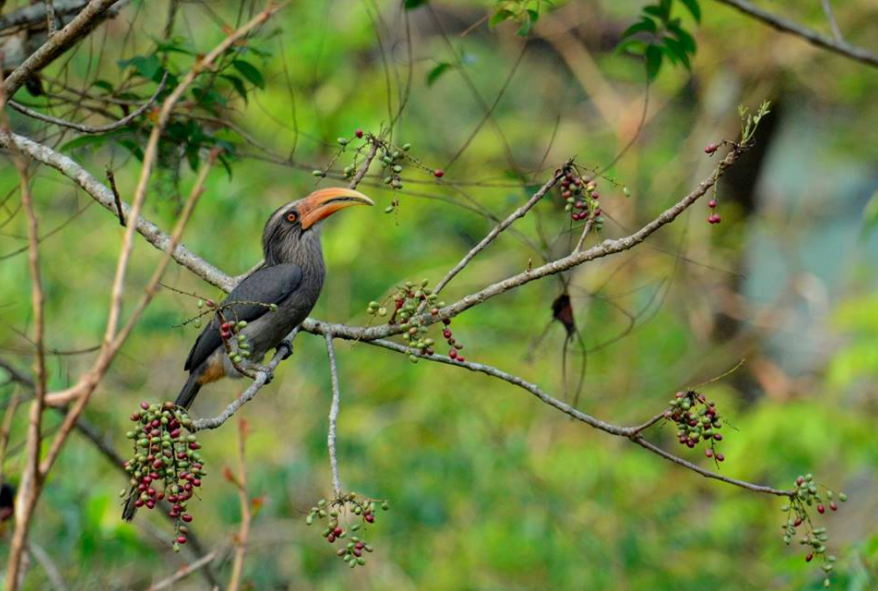
A Malabar pied hornbill, one of 204 species of bird found on coffee plantations in a new study, which found that the tree cover from shade-grown coffee farms provides a welcome habitat for all kinds of animal species. Credit Shashank Dalvi

I took to India a conviction that robusta coffee was to be avoided, but a few months ago started learning otherwise. Today I have read an article that reminds me to keep rethinking.

Thanks to Jason Daley in Sierra magazine for this look at the same scientific findings as those I first read in February in the New York Times,  (as I drink an organic arabica that I am sampling from a roaster in Atlanta, and even with this news about robusta I expect to remain committed to arabica for my own consumption, as well as our commercial purposes):

Which Coffee Is Better for Biodiversity?

A new study shows sun-loving robusta coffee doesn’t have to hurt biodiversity

SIERRA Coffee Biodiversity 2 WB

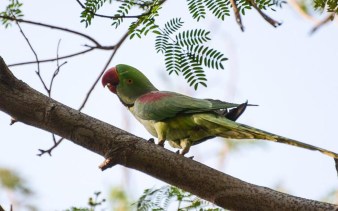
Alexandrine parakeet | Photo courtesy of Manish Kumarhoto

When coffee consumers think about the most sustainable way to manage their caffeine habit, they normally think about the cup it’s in—is it recyclable? But what about the coffee itself? Some coffee plantations require clear-cutting—will drinking one type of coffee have a bigger impact on the environment than another? Continue reading

What To Say About Amazon?

Click below for the second episode of the podcast I mentioned last week. The answer to the question, whether Facebook is fixable, was a surprise. Although we use that platform, if passively, to promote entrepreneurial conservation in our businesses, I personally chose not to have an account. It was only recently that I began appreciating the value of that decision. Now, something similar with Amazon, for which I have had equal measures of awe and wariness. This episode helps me understand the details that make my instinctive wariness insufficient.

CrazyG2a

Some time later this year, Amazon could become the first trillion-dollar company in American history. Its valuation has already doubled in the last 14 months to about $800 billion, and Jeff Bezos, its founder and CEO, is officially the richest man on the planet.

There are ways in which Amazon seems to be the greatest company in American history. It’s revolutionized the global shopping experience and expanded into media and hardware, while operating on razor-thin margins that have astonished critics. But some now consider it the modern incarnation of a railroad monopoly, a logistics behemoth using its scale to destroy competition.

So what is Amazon: brilliant, dangerous, or both?

The Foods Immigrants Offer

merlin_58349788_832d294e-bad8-4e32-94d6-96f61e9f8418-jumbo

Tacos at a restaurant in Nashville. Credit Christopher Berkey for The New York Times

Margaret Renkl, Contributing Opinion Writer for the New York Times, shares an opinion that I am, as a son of an immigrant, inclined to agree with. Even if I was not so closely related to the theme, it would still make sense to me:

Eating Without Borders in Nashville

NASHVILLE — Not quite two weeks ago, I was driving down Nolensville Road, Nashville’s “international corridor,” looking for a restaurant called Tennessee Halal Fried Chicken. In the passenger seat was John T. Edge, the director of the Southern Foodways Alliance and author of “The Potlikker Papers: A Food History of the Modern South.” He was telling me that this particular approach to dining out, in one way of looking at it, could be considered a form of exploitation: “To patronize a restaurant of people who are different from you can be a kind of booty call,” he said.

This is an idea Mr. Edge has been considering for some time. The historically complicated nature of cross-cultural dining goes back to black-owned barbecue joints in the age of Jim Crow: “White Southerners patronized those restaurants,” he said. “They got in, they got what they wanted, and they got out.” Continue reading

The Networking Of Trees, A Novel Idea In Novel Form

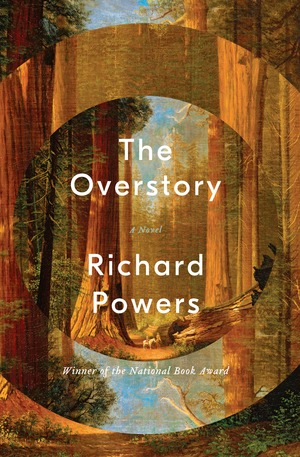
9780393635522_300The novelist Richard Powers, I see from this review, has utilized an idea I first heard of in 2016, and that idea disappeared for a couple years (from my view, anyway). But that compelling idea is back, fictionalized and more interesting than ever:

People see better what looks like them,” observes the field biologist Patricia Westerford, one of the nine—nine—main characters of Richard Powers’s 12th novel, The Overstory. And trees, Patricia discovers, look like people. They are social creatures, caring for one another, communicating, learning, trading goods and services; despite lacking a brain, trees are “aware.” After borers attack a sugar maple, it emits insecticides that warn its neighbors, which respond by intensifying their own defenses. When the roots of two Douglas firs meet underground, they fuse, joining vascular systems; if one tree gets ill, the other cares for it. The chopping down of a tree causes those surrounding it to weaken, as if in mourning. But Powers’s findings go beyond Dr. Pat’s. In his tree-mad novel, which contains as many species as any North American forest—17 are named on the first page alone—trees speak, sing, experience pain, dream, remember the past, and predict the future. The past and the future, it turns out, are mirror images of each other. Neither contains people.

merlin_136156101_0df4e4fd-b976-4a09-a8fc-5769260524f7-superJumbo

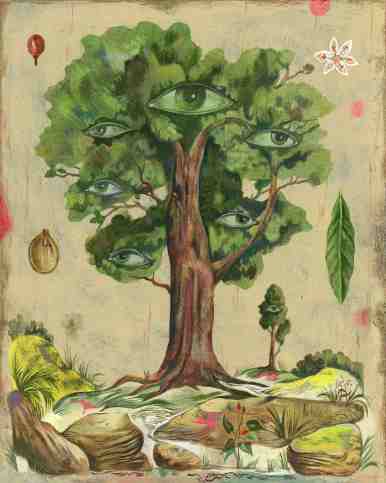
Olaf Hajek

Barbara Kingsolver’s earlier review in the New York Times started the ante on the must-read judgement that Nathaniel Rich (above) upped:

Trees do most of the things you do, just more slowly. They compete for their livelihoods and take care of their families, sometimes making huge sacrifices for their children. They breathe, eat and have sex. They give gifts, communicate, learn, remember and record the important events of their lives. With relatives and non-kin alike they cooperate, forming neighborhood watch committees — to name one example — with rapid response networks to alert others to a threatening intruder. Continue reading

Crazy/Genius, Worthy

CrazyGeniusI had already been impressed with the Atlantic’s weekly interview podcast, but since that most often has to do with politics or other topics not central to our purpose here, I have never linked to one of those. But here is an 8-episode show, whose first guest is one of my favorite thinkers currently. The host, Derek Thompson, is another plus, and the topic is quite timely:

CrazyG

Why Can’t Facebook Tell the Truth?

In the last 18 months, Facebook has gone through one of the worst public relations crises of any major tech company. In this episode, two guests debate whether Facebook is fixable, or whether its business model is designed to sell us lies. Continue reading

Big Day 2018 at Costa Rica’s Carara National Park, And Nearby At Marriott Los Sueños

IMG_0353

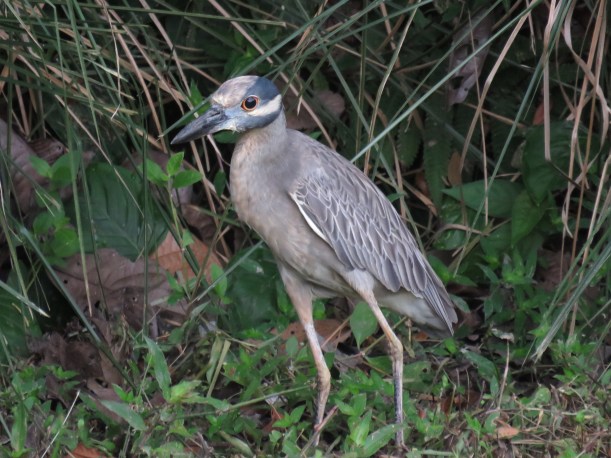
The first lucky bird of the day, a Yellow-crowned Night-Heron at Marriott, which I hadn’t seen yet on property

Almost four years ago, James and I took a day trip to Carara National Park, on the Pacific coast of Costa Rica where the tropical dry forest meets the moist rain forest in a transition zone that provides a great mix of habitats for all sorts of birds and other wildlife. On eBird, Carara’s Hotspot has over four hundred species, which made it a natural place for me to spend part of my Global Big Day this year, since I was already documenting the avian life on the property of the Marriott Los Sueños in Herradura, just half an hour south along the coast. These photos are from my May 5th efforts!

IMG_0359

The Turquoise-browed Motmot is a regular at Marriott and one of my favorite “common” birds in the country

I started the morning at 5:30am, heading out onto the perimeters of the forests surrounding Marriott Los Sueños and its golf course. Continue reading

Commerce, Conscience & Conservation

06Patagonia1-jumbo

Yvon Chouinard, the founder of Patagonia, with its chief executive, Rose Marcario, in the tin shed where he once forged and hammered metal. The outdoor-clothing company has mixed commerce and activism since the early 1970s. Credit Laure Joliet for The New York Times

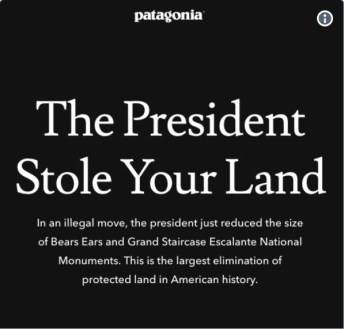
Since the early days of this platform we have linked to stories about this company many times, and its founder in particular is in our pantheon of role models. During these seven years we have also studiously avoided linking to stories involving politics, other than highlighting activism that holds public officials accountable. This story below borders on  too much politics, but I find the company’s position not only acceptable, but as usual about this company, aspirational. Thanks to David Gelles for this story about how Patagonia has supported grass-roots environmental activists for decades and how it is suing the president in a bid to protect Bears Ears National Monument:

merlin_136030764_da829491-ce0c-4974-a0f9-b170acc558c4-superJumbo

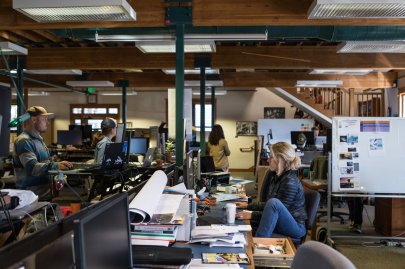
Patagonia employees at the Ventura, Calif., headquarters, where there are picnic tables in the parking lot, on-site day care and easy access to the beach.CreditLaure Joliet for The New York Times

VENTURA, Calif. — The offices of Patagonia occupy a low-slung complex of stucco buildings in this sleepy beachside town in Southern California. There are solar panels and picnic tables in the parking lot, day care with a jungle gym by the main lobby and easy access to the beach, where employees surf during lunch break. It is a corporate Eden of sorts, where idealistic Californians run a privately held company that sells about $1 billion of puffy down jackets and organic cotton jeans each year.

Screen Shot 2018-05-05 at 7.06.08 AMBut on an unseasonably hot and windy Monday morning in early December, Patagonia headquarters were transformed into something that quickly resembled a war room. There were emergency conference calls with Washington lawyers. Court filings were prepared. Web designers remade the company’s home page.

It wasn’t a business crisis that had mobilized the company, however. It was politics. Continue reading

Global Big Day 2018

GBD2018

Last year at this time, I was in Belize hosting a team from the Cornell Lab of Ornithology. I had known of the Lab starting 30 years ago when we moved to Ithaca for me to start graduate school at Cornell, and had known the Lab’s backyard, Sapsucker Woods, since Seth was born and we walked him through in a stroller from time to time. But I did not really know much about the Lab’s work until Seth started working there in 2011, during his sophomore year of college. And then in 2012 we had another young Lab worker join us in India.

We have been celebrating Global Big Day ever since, in India and Costa Rica, then last year in Belize. This year Seth is in Costa Rica, where he will be in a national park with a very high bird species counts. I hope we will hear from him about that experience. For now, may we recommend you click the button above to learn more?

Just When Ford Started Being Great Again, The Signals Indicated A Shift To Reverse

merlin_137576667_7fa921a6-9ace-4e0a-9579-4c864e5232c3-jumbo

Cristina Spanò

Ford1I have been based back in the Americas for fifteen months. For the previous couple years I had been driving Ford’s best-selling vehicle in India –a vehicle with the three letters Eco in its name. This was the company that built the cars I grew up in, but had long since stopped believing in. That “Eco” car got me starting to believe again.

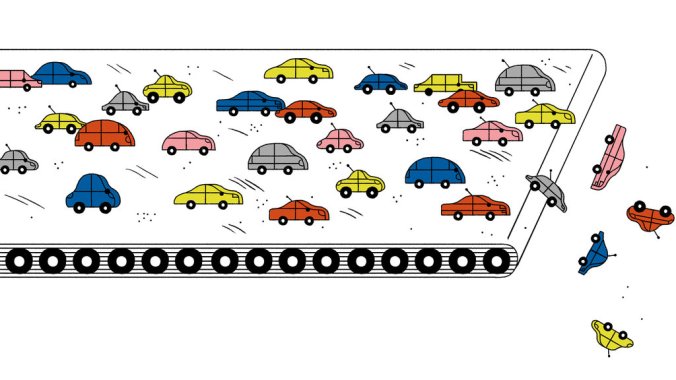
Then the election of 2016 happened. Holding aside all its other dangers, the election result has elevated ecological danger to perhaps its greatest level in my lifetime. A government elected on the slippery Make America Great Again slogan has given cover to companies seeing profit in rollbacks of erstwhile impressive ecological commitments. And the slope down which we all are now sliding seems to be getting steeper. An op-ed by Jamie Lincoln Kitman, the New York bureau chief for Automobile Magazine, illuminates the slip and the slope:

Why Is a ‘Green’ Car Company Pivoting Back to S.U.V.s?

Ford2Two years ago, the Ford Motor Company boasted about having been named Interbrand’s Best Global Green Brand and said it was committed to working to meet stricter fuel economy standards. Last week, after lobbying with the rest of the industry to strike down those standards, Ford announced that it would largely abandon the American passenger car market in favor of building more trucks, crossovers and S.U.V.s. Continue reading

Rehabilitation Of A Vilified Umamifier

Rosner-MSG.jpg

Ajinomoto, the world’s largest manufacturer of MSG, produces umami magic at its panda-themed headquarters. Photograph from Alamy

In the new issue of one of the sources we draw from weekly there is an article–An MSG Convert Visits the High Church of Umami, by Helen Rosner–that gives a refreshing splash of cold water on the face. My kitchen counter looks like the one she describes, sans MSG. And for the reasons she lays out. Always happy to be corrected, I recommend this to others who may have suffered the same culinary fate as me until now:

On my kitchen counter, to the side of the stove, there is a jagged skyline of jars and bottles, featuring the condiments and oils and spices that I use too often to ever properly put away. A few are ingredients so key that I buy them in bulk, storing the multi-kilo mega-packages in the back of the closet and decanting them for daily use into more countertop-friendly vessels: olive oil, kosher salt, and monosodium glutamate, or MSG. In one combination or another, this holy trinity ends up in almost everything I prepare—the MSG, with its savory chemical magic, is particularly useful as rocket fuel for dishes of raw fruits and vegetables. I whisk it into vinaigrette before dressing a salad; add it by the teaspoon to the relish of fresh plums and jalapeños that I make each summer; and, whenever I’m feeling snacky, sprinkle it on chopped cucumbers. Continue reading

Two Op-Eds Arguing The Same Powerful Case In Two Different Ways

23Englander-superJumbo.jpgNathan Englander came to my attention nearly six years ago. A novelist who lives in Brooklyn, he got me thinking about story-telling in a way that was very important to me, two years into our residency in India. He did something important for me again this last week, focusing my attention on an act I would normally ignore. But his point resonated with me because of the subject’s connection to the state of nature. So I thought about how to link to his op-ed in a manner consistent with our objectives on this site.

22conniff-superJumbo.jpg

Credit Lan Truong

Four years ago Richard Conniff, who writes about wildlife and human and animal behavior, started a long series of regular appearances in our pages. The day after Nathan Englander published the op-ed I mentioned above, Richard Conniff published an op-ed referencing the same act, a day in advance of Earth Day. And it is powerful. So I knew how to proceed, and with this excerpt you may be inclined to read both op-eds in full:

I was thinking about Mr. Buckel and about despair a few nights later, over a drink with Joe Walston of the Wildlife Conservation Society. As director of that organization’s worldwide field conservation work, Mr. Walston routinely comes face-to-face with the dark forces of human overpopulation, mass extinction of species, climate change and pollution. But he is also the co-author of a paper being published this week in the journal BioScience that begins with the uplifting words of Winston Churchill to the British nation in June 1940, under the shadow of the Nazi conquest of France: “In casting up this dread balance sheet and contemplating our dangers with a disillusioned eye,” Churchill declared, “I see great reason for intense vigilance and exertion, but none whatever for panic or despair.” Continue reading

Coffee, Journeys & Yemen

24bookeggers4-superJumbo-v2

CreditPatricia Wall/The New York Times

This review, thanks to Ghaith Abdul-Ahad, has my attention on The Coffee-Flavored American Dream of a young man with about as improbable a mission as I can imagine.  Returning to the coffee fields of Costa Rica’s Tarrazu region in a few days, I also plan to cross the Central Valley to see the latest mission accomplished of another coffee dreamer, the choice of Dave Eggers for his latest book topic is much appreciated.

A few years ago I traveled with a group of friends from the southern Yemeni port city of Aden to the capital of Sanaa in the north, taking the long coastal road that twists and curves around the bulge of Yemen’s southernmost tip. After passing the Bab el Mandeb strait, the road stretches along the seashore. Under a clear bright sky, the waters of the Red Sea shimmered and the sand glowed a warm ocher, the monotony interrupted only by an occasional fisherman’s shack, a small nomadic settlement or a bleached one-room mosque. Flat-topped trees looming in the distance suggested an African landscape.

merlin_135539598_25a28bf1-c1ea-4f91-864b-e5d08b63264d-master768

CreditLorenzo Gritti

Ahead of us lay the port of Mokha, or Al-Mukha in Arabic, where from the 15th century onward ships set sail with precious Yemeni coffee bound for Istanbul, London, Amsterdam and eventually New York — so much coffee that the word “mocha” became synonymous with it. Continue reading

Coffee, Starbucks & Costa Rica

hNKGIzaU-5568-3132

Yesterday we were compelled to link to an illustration that captured the importance of vigilance. Putting that link in context was the reminder that our primary purpose on this platform is to seek out evidence of progress related to environmental and social innovation.

kgGVpXmJ-6720-4480Today a case in point. Credit is due to Starbucks. Just a couple days ago our vigilance antennae were roused by their opening in Yosemite, one more step in a national park system compromised by commercialism. There is no doubt that Starbucks is commercial, but they can also be model corporate citizens when seen from another angle.

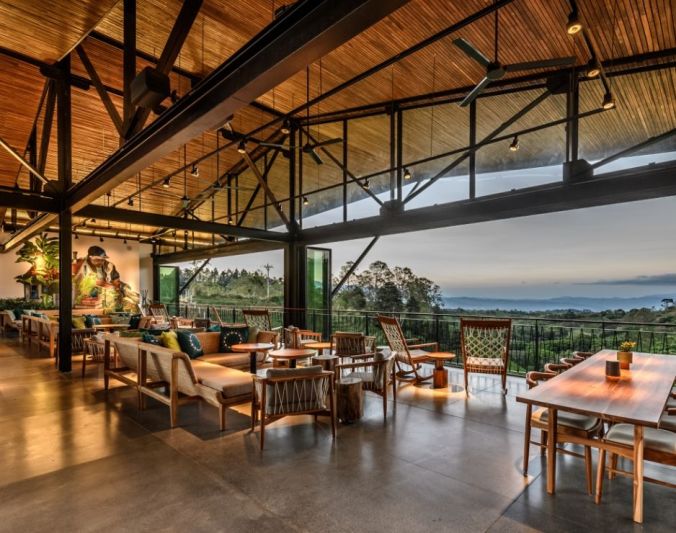
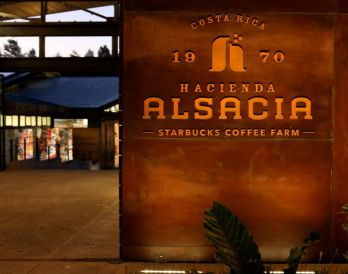
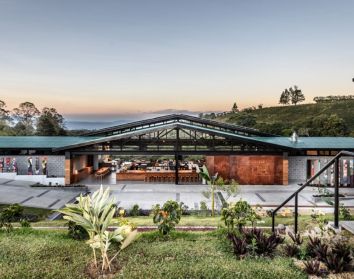
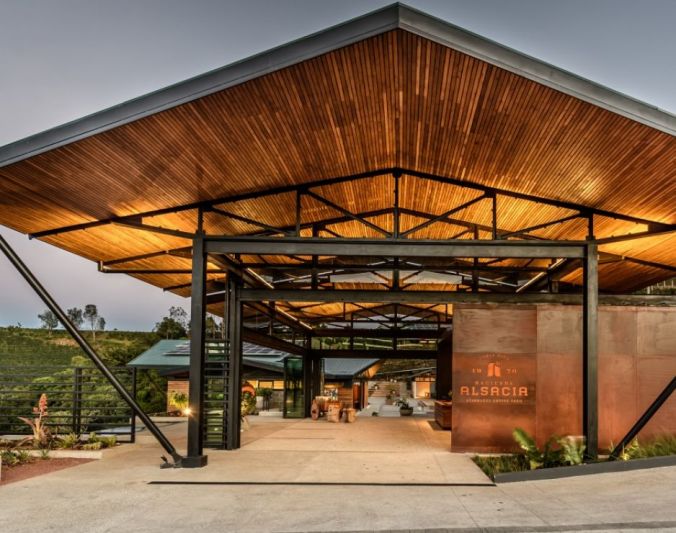
tMOCnNCo-5246-2623Costa Rica provides evidence in favor of Starbucks. Their recently opened facility–a combined working coffee farm, milling operation, visitor center, cafe, gift shop–called Hacienda Alsacia looks like a win-win for a country that deserves attention and investment, and a company that can provide them both of those.

HGX0IDH0-5402-2701

I plan to visit the property next week, so will save my commentary, focusing here on what makes me want to visit:

Starbucks Opens World Renowned Costa Rican Coffee Farm to Visitors

A 46,000-square foot visitor center immerses guests in the entire life cycle of sustainably grown, high-quality arabica coffee from seedling to picking, milling, roasting and the craft of brewing in a café

Starbucks approach to ethical sourcing and innovative coffee tree hybrid research also showcased at the visitor center, part of the company’s $100 million investment in an open-sourced farmer support program to help make coffee the world’s first sustainably sourced agriculture product Continue reading

Spying on Birds

“So, like, what do you do every day?”

I get asked this often and I’m not always sure how to explain it to people without pictures at hand or infinite patience for follow-up questions. So, in this blog post, with the benefit of time to pick the right words and theoretically infinite space to write them out, I figured I would try to provide an adequate answer.

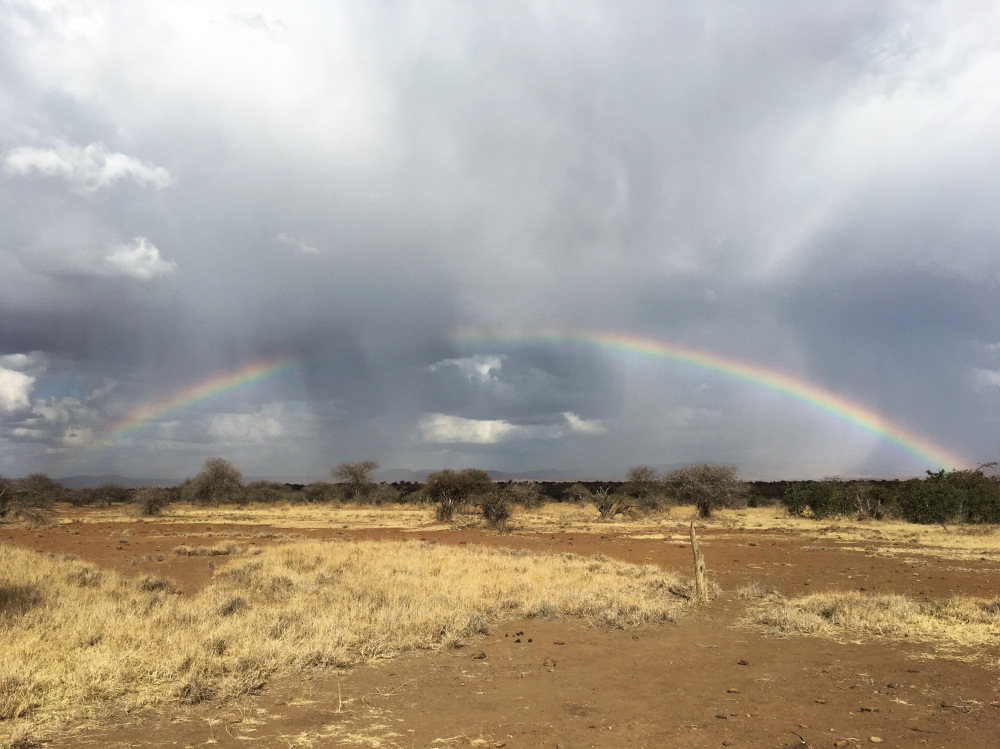
View from the field, a week or so ago

Why fieldwork?

This, I feel, is the question at the crux of the what-do-you-do-every-day question. Why do you have to go to Kenya to do your work? Right, the bird you study is only found there, but why do you have to be out on the savanna everyday – can’t you just bring the birds back to the lab or study them in a zoo?

Of course, you can (nowadays, only with the right permits) and that is precisely what early zoologists did, collecting specimens – alive or dead – from around the world and bringing them back to examine them under microscopes or in aviaries in a rainy British country garden. While this may be convenient, it inevitably renders your conclusions about a bird’s diet or the adaptive nature of its plumage coloration suspect, because they are arrived at out of context. Without the bird having been examined in the environment it’s found in, with different factors that might affect its behavior and morphology in play, it is impossible to understand why it acts the way it does and why it is the way it is. Hence, fieldwork: observing and sampling critters in the wild. Continue reading