Dear AI Overlords, Reviewed

Virginia Heffernan has appeared in our pages only once before, also reviewing a book. She is one of the great writers in the English language, but often on topics not connected to our themes here. While we mostly are interested in topics related to the natural world, and we know that this topic is a whole other realm, we can guess that AI’s impact on the natural world is part of what the title of this issue of Wired will mean to us pretty soon:

What If the Robots Were Very Nice While They Took Over the World?

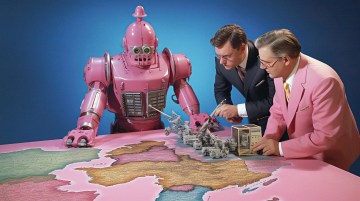
First it was chess and Go. Now AI can beat us at Diplomacy, the most human of board games. The way it wins offers hope that maybe AI will be a delight.

THE MORRISSEY HAD the right melodrama in his limbs, and his voice was strong and pained. I was at Gramercy Theatre in Manhattan to see a Smiths tribute band. I tried to get Morrissey’s acid yodel in my throat, to sing along. I am human and I need to be loved / just like everybody else does. But it didn’t feel right to copy a copy. Continue reading

Really, Rishi?

image: reuters

As a non-Brit, I spared the world my opinion on the own-goalness of Brexit, and the follow-up own-goal of electing Boris Johnson. Not my circus, not my monkey. But as a speaker of the English language, among other reasons, I have always cared about and paid attention to the civic affairs of the UK more than I do those of many other countries. I was reflexively optimistic with the baton passing to Rishi Sunak. He could not possibly be as terrible as his two immediate predecessors, right? In some ways right, but in the way that matters most to the entire world, shame on him. The Economist weighs in heavily, as does the New Yorker’s correspondent in the UK, the great Sam Knight:

Photograph by Justin Tallis / Getty

Rishi Sunak’s Self-Serving Climate Retreat

The British Prime Minister has rolled back the country’s policies on reducing emissions. To what end?

Since Rishi Sunak became Britain’s Prime Minister, almost a year ago, in the middle of a national financial breakdown, his premiership has been defined by trying to make things go away. Continue reading
Subsidy Absurdity

Sprinklers water a field on Sept. 28, 2022 near Yuma, Arizona. Photo by David McNew/Getty Images.

This article by Stephen Robert Miller in the New Republic tells a story that is simultaneously inconceivable and yet perfectly explanatory of humanity’s contribution to climate change:

Why are we paying for crop failures in the desert?

Taxpayers are on the hook for heat-related crop losses in parched states like Arizona. That needs to change.

In mid-July in Phoenix, a man demonstrated to a local news station how to cook steak on the dashboard of his car. The city sweltered through a nearly monthlong streak of 110-degree temperatures this summer, while heat records are tumbling across the Southwest. Continue reading
Carbon Capture, Scaled To Texas

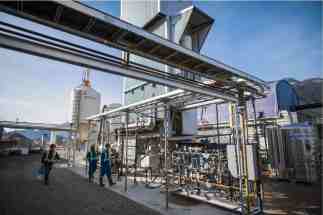
A direct air capture system at the Carbon Engineering pilot facility in Squamish, British Columbia, Canada. Photograph: Bloomberg/Getty Images

Carbon capture technology has its skeptics, but it has steadily improved and is closer to proof of concept. Next step, scaling to Texas:

The world’s biggest carbon capture facility is being built in Texas. Will it work?

The plant will inject 500,000 tons of carbon dioxide into the ground each year – but is it just greenwashing from big oil?

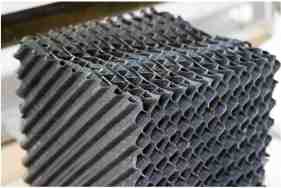
Plastic membrane used in the direct air capture system. Photograph: Bloomberg/Getty Images

Rising out of the arid scrubland of western Texas is the world’s largest project yet to remove excess carbon dioxide (CO2) from the atmosphere, a quest that has been lauded as essential to help avert climate catastrophe. The project has now been awarded funding from the Biden administration, even as critics attack it as a fossil fuel industry-backed distraction. Continue reading
The Coming Wave, Reviewed

The primary author of this book is one of the pioneers of AI, so what he has to say about it as a dilemma is relevant. From a recent conversation he had with Sam Harris my takeaway was that while I do not have much agency in the dilemma, it is better for me to understand it than ignore it. Containment is not, apparently, an option. So what can I do? In this book review, a quicker version of the same message, and the only option may be to ponder it:

The Coming Wave by Mustafa Suleyman review – a tech tsunami

The co-founder of DeepMind issues a terrifying warning about AI and synthetic biology – but how seriously should we take it?

On 22 February 1946, George Kennan, an American diplomat stationed in Moscow, dictated a 5,000-word cable to Washington. In this famous telegram, Kennan warned that the Soviet Union’s commitment to communism meant that it was inherently expansionist, and urged the US government to resist any attempts by the Soviets to increase their influence. This strategy quickly became known as “containment” – and defined American foreign policy for the next 40 years. Continue reading
Insect Respect

Agronomist Caterina Luppa watches black soldier flies reproduce at Bugslife, a firm in Perugia, Italy, that is turning fly larvae into animal feed. LUIGI AVANTAGGIATO

We have featured this subject a few times over the years, especially once we started showcasing one such product. I acknowledge I am still not a total convert to an insect-centric diet, but every story like this draws me in, however slowly:

Edible Insects: In Europe, a Growing Push for Bug-Based Food

Marco Meneguz, an entomologist with BEF Biosystems in Casalnoceto, monitors black soldier flies as they mate. During mating, “the males gather in a courtship ritual characterized by fights and competitive displays,” he says. The blue light helps the flies see each other better. LUIGI AVANTAGGIATO

To rein in emissions, the E.U. is looking to insects as an alternate source of protein for livestock and people and is easing regulations and subsidizing makers of insect-derived food. In a photo essay, Luigi Avantaggiato explores the emerging bug food industry in northern Italy.

The European Union recognizes it has a meat problem. The bloc has no easy way to curb the climate impact of its livestock, which eat soybeans grown on deforested lands and belch heat-trapping gas. According to one estimate, Europe’s farm animals have a bigger carbon footprint than its cars.

Trent Barber, a technician at BEF Biosystems, vacuums up 200 pounds of fly larvae that are plump after two weeks of feeding on food scraps. The remaining food waste, now rich in excrement, will be sold as compost to farms. LUIGI AVANTAGGIATO

In this photo essay, Luigi Avantaggiato explores an unusual solution to this dilemma that is now gaining traction — feeding insects to livestock and, potentially, people. The European Commission says that insects could replace soy-based animal feed, helping to slow deforestation, or even supply an alternate source of protein for humans. Studies show that insects can furnish the same amount of protein as livestock while using as little as 10 percent of the land and producing as little as 1 percent of the emissions. Continue reading
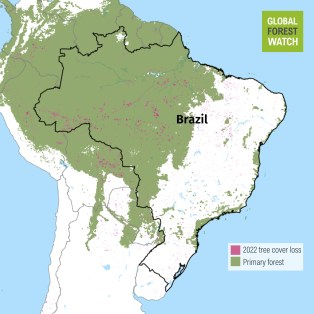
Migratory Birds Across The Americas

I rarely read comments from other readers on articles, but for some reason I did on this one; they are almost as interesting as the article itself:

For Migrating Birds, It’s the Flight of Their Lives

America’s birds are in trouble. Since 1970, nearly 3 billion birds have vanished from the skies over North America. Continue reading

Driverless Taxi, Anyone?

A Waymo self-driving car in San Francisco. Shutterstock/Iv-olga

Apparently there is a market for this service in San Francisco, according to Jeremy Hsu at New Scientist, in spite of the objections:

California approves driverless taxi expansion in San Francisco

Waymo and Cruise can now charge for ride-hailing services throughout San Francisco despite objections that driverless cars interfere with traffic and first responders

Driverless cars have the green light to operate as paid ride-hailing services in San Francisco after the companies Waymo and Cruise won approval from California state regulators. Continue reading

Plastic Waste Losing Another Place To Land

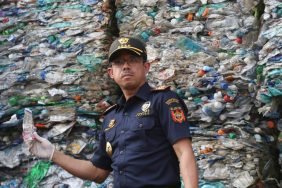
An Indonesian customs official intercepts a container full of illegally imported plastic waste in September 2019. ACHMAD IBRAHIM / AP PHOTO

When conscientious citizens learn more about where all the plastic goes when they do their part to recycle, it can be demoralizing. Recycling is important but the real solution is reducing the waste in the first place:

Indonesia Cracks Down on the Scourge of Imported Plastic Waste

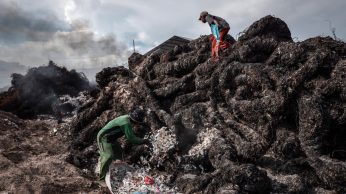
Workers prepare to burn plastic waste at an import dump in Mojokerto, Indonesia. ULET IFANSASTI / GETTY IMAGES

When China banned plastic waste imports in 2018, exporters in wealthy countries targeted other developing nations. Faced with an unending stream of unrecyclable waste, Indonesia has tightened its regulations and has begun to make progress in stemming the plastics flow.

In 2019, at a meeting in Geneva, Switzerland, delegates from 187 countries approved the first-ever global rules on cross-border shipments of plastic waste. Continue reading
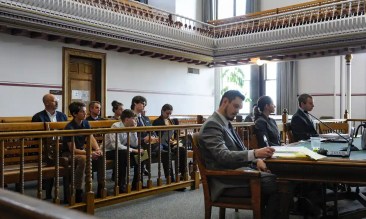
Property Rights Versus Trespassing Rights

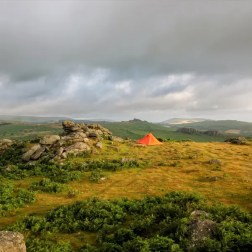
A wealthy couple bought an estate inside Dartmoor National Park and then successfully sued to bar campers from using their land. That ruling is now being appealed. Muir Vidler for The New York Times

Property rights, a foundational aspect of modern society, occasionally bump up against other rights. The journalist Brooke Jarvis has a new article that touches on this theme, we are happy to see:

The Fight for the Right to Trespass

A group of English activists want to legally enshrine the “right to roam” — and spread the idea that nature is a common good.

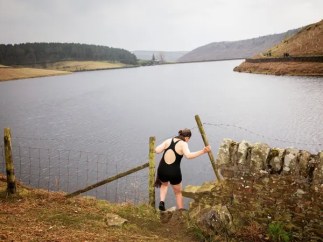
The signs on the gate at the entrance to the path and along the edge of the reservoir were clear. “No swimming,” they warned, white letters on a red background.

A protester at Kinder Reservoir. Muir Vidler for The New York Times

On a chill mid-April day in northwest England, with low, gray clouds and rain in the forecast, the signs hardly seemed necessary. But then people began arriving, by the dozens and then the hundreds. Some walked only from nearby Hayfield, while others came by train or bus or foot from many hours away. In a long, trailing line, they tramped up the hill beside the dam and around the shore of the reservoir, slipping in mud and jumping over puddles. Above them rose a long, curving hill of open moorland, its heather still winter brown. When they came to a gap between a stone wall and a metal fence, they squeezed through it, one by one, slipping under strings of barbed wire toward the water below. Continue reading

New Roots Garden, Urban Oasis

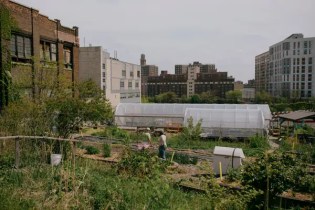
Sheryll Durrant has managed the New Roots Garden, which sits between the Grand Concourse and the Metro North railroad tracks in the Bronx, with volunteers for eight years.

We have linked out to stories about urban farming plenty of times; it never gets old:

Vital Places of Refuge in the Bronx, Community Gardens Gain Recognition

Lawmakers in Albany voted to designate community gardens statewide as crucial to the urban environment, especially in the fight against climate change. The bill awaits the governor’s signature but the role of these gardens stretches back decades.

The Morning Glory garden in the West Farms section of the Bronx is among more than 500 community gardens in New York City.

Sheryll Durrant left her family farm in Jamaica in 1989 and embarked on a career in corporate marketing. But after the 2008 financial meltdown, she reconsidered her life.

She returned to her roots.

Now she runs a thriving urban farm wedged into a triangular plot in the Bronx, between the Grand Concourse and the Metro North railroad tracks. At her farm, New Roots Garden, membership consists of refugees and migrants, resettled by the International Rescue Committee, whose herbs and vegetables sustain their memories of home.

“Just putting your hands in soil is a form of healing,” Ms. Durrant, 63, said. Continue reading

Paris & Continuous Greening

Paris’ iconic zinc roofs can heat up to 194 degrees F on a hot summer day. JAN WOITAS / PICTURE-ALLIANCE VIA GETTY IMAGES

We have celebrated the many greening efforts made in Paris over the last decade, and today is a small but important addition to our knowledge of those commitments. Our thanks to Jeff Goodell in Yale e360:

A rendering of a rooftop terrace installed by the Parisian startup Roofscapes. ROOFSCAPES

Paris When It Sizzles: The City of Light Aims to Get Smart on Heat

With its zinc roofs and minimal tree cover, Paris was not built to handle the new era of extreme heat. Now, like other cities worldwide, it is looking at ways to adapt to rising temperatures — planting rooftop terraces, rethinking its pavements, and greening its boulevards.

The tree-lined Boulevard des Italiens is much cooler than nearby streets that lack trees.

The tree-lined Boulevard des Italiens is much cooler than nearby streets that lack trees. MBZT VIA WIKIPEDIA

There’s a long tradition in France of taking August off for holiday. Paris virtually shuts down as the temperature drifts around in the seventies, and people go to the beach or the mountains to cool off and relax. Think of it as an old‑fashioned adaptation to heat. People who stick around during August are often older or have jobs that require them to stay and keep the city functioning. Continue reading

Stop Digging

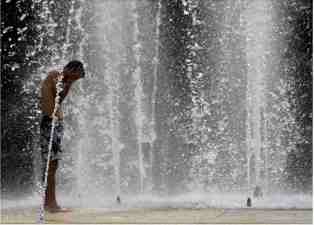
A man cools off by a fountain during a heat wave in Seville, Spain, on July 10th. Photograph by Cristina Quicler / AFP / Getty

It is difficult to imagine, from where I sit in cool weather in the mountains of Costa Rica’s central valley, what that heat would feel like. But it is not difficult to imagine all the possibilities for doing something about it. When you are in a hole that you do not want to be in, stop digging:

Is It Hot Enough Yet for Politicians to Take Real Action?

The latest record temperatures are driving, again precisely as scientists have predicted, a cascading series of disasters around the world.

We’ve crushed so many temperature records recently—the hottest day ever measured by average global temperature, the hottest week, the hottest June, the highest ocean temperatures, the lowest sea-ice levels—that it would be easy to overlook a couple of additional data points from this past weekend. But they’re important, because they help illuminate not just the size of our predicament but the political weaknesses that make it so hard to confront. Continue reading

Lula’s Commitments Continue Progress

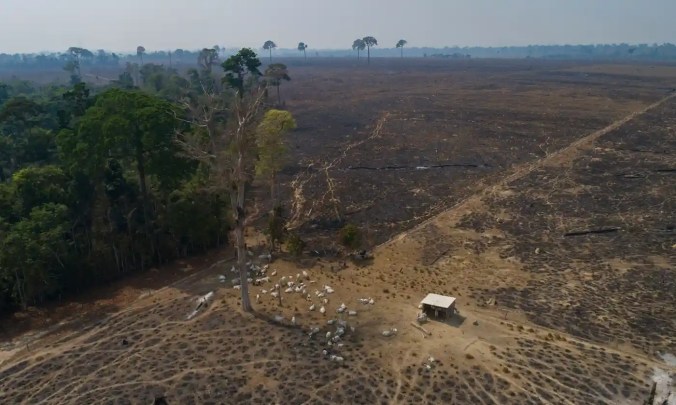
Cattle graze on land recently burned and deforested by cattle farmers near Novo Progresso, in Para state. Photograph: André Penner/AP

A short note following up on the progress reported earlier from our big and very important neighbor to the south:

Brazil: Amazon deforestation drops 34% in first six months under Lula

Government data shows marked reduction against same period last year, reversing trend of destruction during Bolsonaro reign

After four years of rising destruction in Brazil’s Amazon, deforestation dropped by 33.6% during the first six months of President Luiz Inácio Lula da Silva’s term, according to new government satellite data. Continue reading

Bill McKibben On Degrowth Movements Past & Present

Bill McKibben gives a thorough reconsideration of what, if any, growth is helpful now:

To Save the Planet, Should We Really Be Moving Slower?

The degrowth movement makes a comeback.

John Maynard Keynes once observed that dating from “say, to two thousand years before Christ—down to the beginning of the 18th century, there was no very great change in the standard of life of the average man living in the civilised centres of the earth. Ups and downs certainly. Visitations of plague, famine, and war. Golden intervals. But no progressive, violent change.” Continue reading

Graphic Comprehension Of Forest Loss

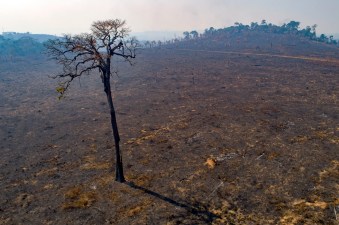
A section of forest in the Brazilian Amazon that was burned by cattle ranchers, seen on August 16, 2020. Cattle ranching is the largest driver of deforestation in the Amazon rainforest. Andre Penner/AP

The photograph heading the story is alarming enough, but the illustrations (especially the “scroll down” graphic) accompanying the written explanations are extremely compelling. Thanks to Benji Jones for the story and to Alvin Chang for the graphics in this Vox article:

The alarming decline of Earth’s forests, in 4 charts

Deforestation raged ahead again in 2022, even after scores of countries pledged to protect their forests.

Over the last decade, dozens of companies and nearly all large countries have vowed to stop demolishing forests, a practice that destroys entire communities of wildlife and pollutes the air with enormous amounts of carbon dioxide.

A big climate conference in Glasgow, in the fall of 2021, produced the most significant pledge to date: 145 countries, including Brazil, China, and Indonesia, committed to “halt and reverse” forest loss within the decade. Never before, it seems, has the world been this dedicated to stopping deforestation. Continue reading

Celebrating French Environmental Commitments

Paris mayor Anne Hidalgo and the co-president of the Paris bid for the 2024 Olympics, Tony Estanguet, paddle on the Seine in Paris. Photograph: Reuters

Since 11+ years ago many valuable environmental opinions by George Monbiot have been linked to in our pages; today a celebration of a neighboring country’s efforts:

When it comes to rich countries taking the environment seriously, I say: vive la France

Emmanuel Macron’s government is at least doing the bare minimum to avert the planetary crisis – and putting the UK to shame

While we remain transfixed by a handful of needy egotists in Westminster and the crises they manufacture, across the Channel a revolution is happening. It’s a quiet, sober, thoughtful revolution, but a revolution nonetheless. France is seeking to turn itself into an ecological civilisation. Continue reading

Prime Pitch Punished

Federal regulators have sued Amazon, alleging the company for years “tricked” people into Prime memberships that were purposefully hard to cancel. FREDERIC J. BROWN/AFP via Getty Images

We have shared our concern about the company so many times in the last decade it is surprising that this part of their market aggression has not featured until now:

FTC sues Amazon for ‘tricking and trapping’ people in Prime subscriptions

Federal regulators have sued Amazon, alleging the company for years “tricked” people into buying Prime memberships that were purposefully hard to cancel. Continue reading

Youth Is Not To Be Wasted In Montana

The plaintiffs look on during a status hearing for Held v Montana in the Lewis and Clark county courthouse in Helena, Montana, last month. Photograph: Thom Bridge/AP

At first it sounded like a gimmick, but listen to and read about it: there is a useful half hour podcast on this topic, and here we thank the Guardian for a bit more detailed coverage:

‘My life and my home’: young people start to testify at historic US climate trial

Some of the plaintiffs listen to arguments during the hearing in Montana. Photograph: Thom Bridge/AP

The plaintiffs note that Montana’s constitution pledges a healthy environment ‘for present and future generations’

The US’s first-ever trial in a constitutional climate lawsuit kicked off on Monday morning in a packed courtroom in Helena, Montana.

The case, Held v Montana, was brought in 2020 by 16 plaintiffs between the ages of five and 22 from around the state who allege state officials violated their constitutional right to a healthy environment by enacting pro-fossil fuel policies. Continue reading

Food Waste Best Practice, South Korea Edition

Unloading the food waste at a disposal facility in Seoul. Chang W. Lee/The New York Times

One of the most covered topics in our pages during the decade since we started paying attention to it, still going strong for all the wrong reasons; so, our thanks to the New York Times for assigning John Yoon (reporting, writing) and Chang W. Lee (for photographs and video) to go to South Korea:

Food waste being separated from plastic bags at the Goyang facility.

When wasted food rots in landfills, it pollutes soil and water — and warms the planet. Here’s how one country keeps that from happening.

Around the world, most of the 1.4 billion tons of food thrown away each year goes to landfills. As it rots, it pollutes water and soil and releases huge amounts of methane, one of the most potent greenhouse gases. Continue reading