Tapping The Largest Animal For Science

08tb-whales01-superJumbo.jpg

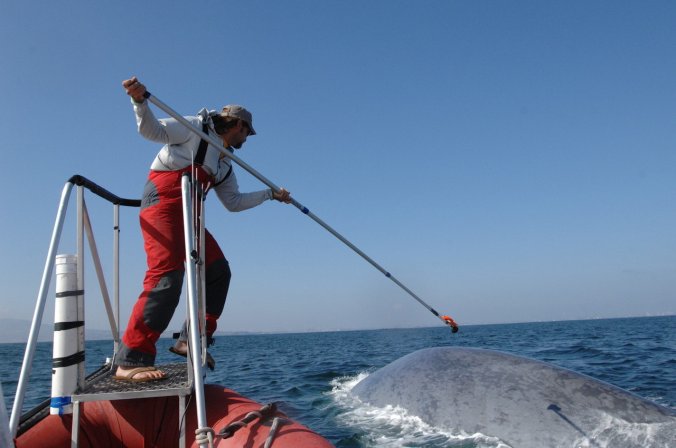
Ari Friedlaender, a marine ecologist at Oregon State University, deploying a multi-sensor tag on a blue whale off the California coast. Credit Jeremy Goldbogen

Camera traps, in the interest of science, and of conservation, are no longer a novelty. The story accompanying the photo above is new, for us. At first glance it looks like an act of aggression, which the history of whaling has taught us to expect. But this story has a much better outcome than the old obsessions:

How to Attach a Video Camera to a Humpback Whale

This is how you put a video camera on a whale.

Hop into an inflatable boat and head out to where they’re feeding. Stand in a pulpit with a 20-some-foot pole in your hands. Then watch and wait until you spot a whale. Plan your angle of approach with the driver of the boat. (Never approach directly from behind). Get close. Get closer. Get within 16 feet of this sea giant — which is more than twice the size of your boat if it’s a humpback — and as soon as it surfaces, tap the whale on its wet tire of a back with the pole. If you’re lucky, the detachable suction-cup on the end of the pole — which has a camera and sensors — will stick. Continue reading
Birds Banging On Drums

29tb-cockatoos01-superJumbo.jpg

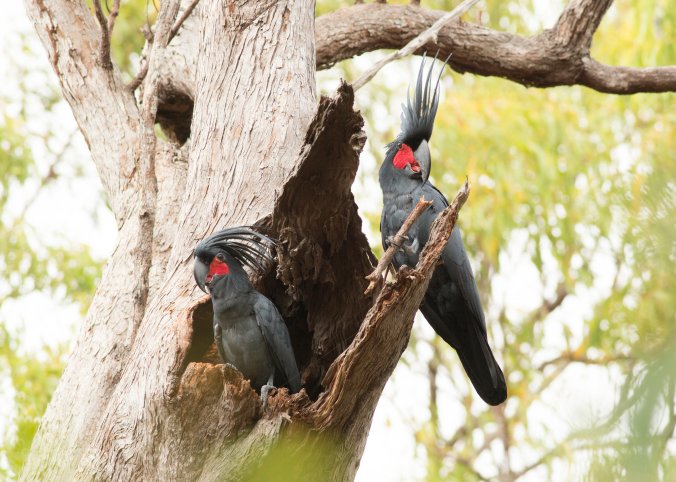
A male palm cockatoo, right, drumming with a stick for a female. Credit Christina Zdenek

Todd Rundgren, a musical talent better known to an earlier generation, had an oddball hit song about banging on drums. It came to mind immediately when reading this oddball story about cockatoos. If you do not already know the song, you might want to find it to accompany your reading of this story:

Whales and songbirds produce sounds resembling human music, and chimpanzees and crows use tools. But only one nonhuman animal is known to marry these two skills.

Palm cockatoos from northern Australia modify sticks and pods and use them to drum regular rhythms, according to new research published in Science Advances on Wednesday. In most cases, males drop beats in the presence of females, suggesting they perform the skill to show off to mates. The birds even have their own signature cadences, not unlike human musicians. Continue reading

A Metric For Reinvention

Edge.jpg

Click above for 26 minutes of intelligent contemplation. Neuroscience meets environmentalism. He was a New York Times science writer, then the author of one of the most influential nonfiction books of recent decades. Now, he is the gift that keeps on giving:

Daniel Goleman

One way a systems perspective could help with the environmental crisis is through understanding that we have a very narrow range of affordances, the choices presented to us. Continue reading

Coffee, Ethiopia & Change

processing-of-washed-coffee-south-west-ethiopia---credit---emily-garthwaite-and-union-hand-roasted-coffee-_custom-2fda5cc5dec2fdd97721682ac722920d3b194eb1-s1300-c85.jpg

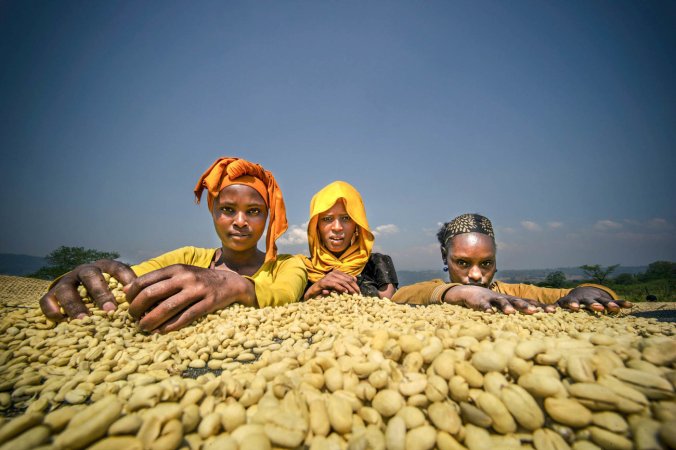
Growing coffee provides income for about 15 percent of Ethiopia’s population and is the country’s top export. Climate change is likely to shrink the land suitable for coffee, thereby also hurting the livelihoods of many people.
Courtesy of Emily Garthwaite

Change is almost never easy. Then there is climate change. Daunting, but we cannot stop considering the implications and the options. The planet may recover in geological time, the underlying logic of those who promote denial of the urgency, but plenty of people are at risk in real time, so no option but to keep focus.

Thanks to the salt, at National Public Radio (USA) for a reminder of coffee‘s relationship with conservation, a reminder of Ethiopia in general, which is always welcome, and especially Ethiopia’s relationship with one of our favorite beverages:

Ethiopia’s Coffee Farmers Are ‘On The Front Lines Of Climate Change’

by Courtney Columbus

Ethiopia gave the world Coffea arabica, the species that produces most of the coffee we drink these days. Today, the country is the largest African producer of Arabica coffee. The crop is the backbone of the country’s economy – some 15 million Ethiopians depend on it for a living. Continue reading

Investigator Of The Abyss

csiro-blue-water-research-vessel-investigator_image-csiro-marine-national-facility-84122ca6688b9466b61bb23f977447c7262cdf3d-s1300-c85.jpg

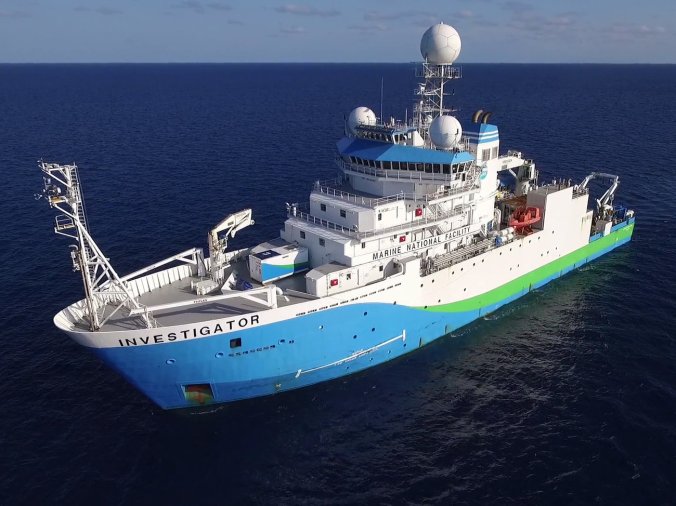
Courtesy of Museums Victoria / CSIRO

Thanks to National Public Radio (USA) and Kat Lonsdorf for a brief look into the deep work of Tim O’Hara:

Explorers Probing Deep Sea Abyss Off Australia’s Coast Find Living Wonders

Far below the surface of the ocean, off the coast of eastern Australia is an area simply known as “the abyss.” The largest and deepest habitat on the planet, the abyssal zone stretches well beyond Australia’s waters and spans half the world’s oceans — but it remains largely unexplored. Continue reading

Ring of Fire

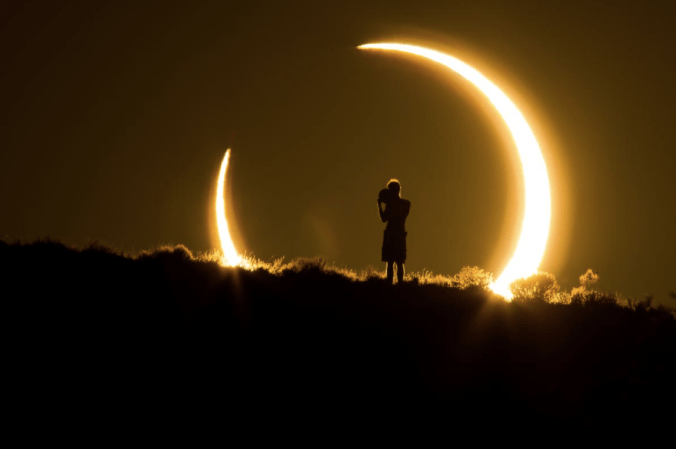
An onlooker watches an annular solar eclipse from New Mexico.

For the past few years it seems that August is the month to amaze and astonish on the astronomical front. Although the Perseid Meteor Shower happens annually, last year there were an unusually high number of meteor “outbursts” because Jupiter’s gravity has tugged some streams of comet material closer to Earth.

While solar eclipses aren’t technically rare, an annular solar eclipse is more so, when the moon is too far from Earth to obscure the sun completely, leaving the sun’s edges exposed and producing the ‘ring of fire’ effect. What’s particularly special about the upcoming August 21st eclipse is the path from which it can be viewed.

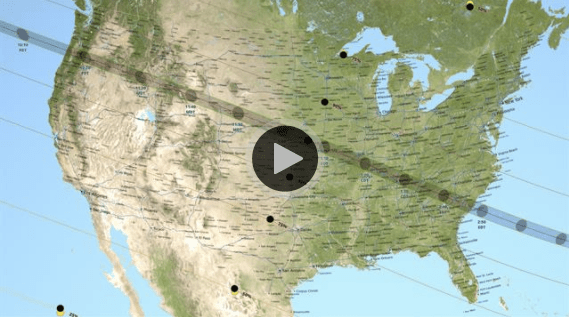
The August eclipse will be the first to go coast to coast across the U.S. since 1918, offering viewing opportunities for millions of people.

Sky-watchers across the United States are gearing up for the best cosmic spectacle in nearly a century, when a total solar eclipse will race over the entire country for the first time since 1918. On August 21, tens of millions of lucky people will be able to watch the moon completely cover the sun and turn day into night for a few fleeting minutes.

The main event will be visible from a relatively narrow path, starting in Oregon and ending in South Carolina. In between, the total eclipse will cross multiple cities in 12 states, prompting plans for countless watch parties, cosmic-themed tours, and scientific observations. (Also see “100 Years of Eclipse-Chasing Revealed in Quirky Pictures.”)

Click on the image above to FOLLOW THE ECLIPSE ON ITS COAST-TO-COAST TOUR

Continue reading

Ammonia, Who Knew?

4617875064_daab01704d_o-1260x708

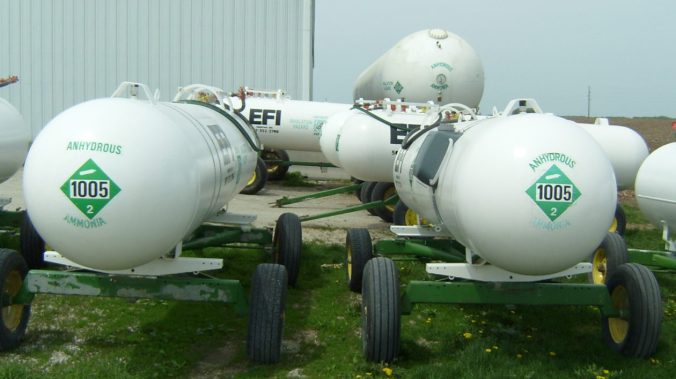
Anhydrous ammonia. Photo © Thirteen Of Clubs / Flickr through a Creative Commons license

Recognizing its utility as a household cleaner, especially to remove grease, ammonia has a smell that is familiar to most of us. But, nearly all of the annual industrial production of ammonia goes into other products, especially nitrogen fertilizer. Some farms inject ammonia directly into the soil. Others apply urea or ammonium phosphate fertilizers made from ammonia. All aim to supplement the availability of nitrogen for crop growth. Not all the ammonia gets into the crop. Inadvertent losses of nitrogen from fertilizers to the atmosphere account for about ten percent of fertilizer applications across the USA. Some nitrogen is also lost in the runoff to streams and rivers. Continue reading

Stanford Earth’s Rosemary Knight

Thanks to Stanford News for this short video on important innovation related to ensuring we all stay hydrated well into the future:

Mapping groundwater from the air

Stanford Earth’s Rosemary Knight recently spearheaded a project to map underground freshwater resources and forecast the intrusion of saltwater into aquifers beneath the California coastal town of Marina. The project, a collaboration between Stanford, the Marina Coastal Water District, and Aqua Geo Frameworks, involved a low-flying helicopter towing a giant, instrument-laden fiberglass hoop that generated ground-probing magnetic fields that penetrated 1,000 feet beneath the surface.

Rome Rewilded

viscosa.jpg

Image: Planet World / Flickr

Thanks again to one of our most reliable sources for the summary of conservation-oriented science, and specifically to Brandon Keim for this one:

An Anthropocene wildness grows in Rome

Even in one of the most densely urbanized places on Earth, wildness and natural abundance may yet flourish again, sustained by both neglect and stewardship. Continue reading

Richard O. Prum’s Beauty Challenge

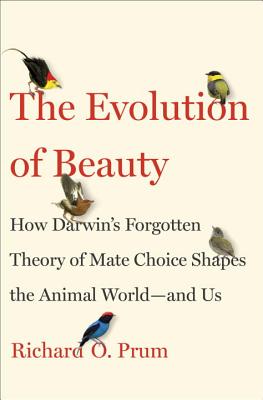
EvolutionBeautyFor evolutionary biology, on this platform we have favored E.O. Wilson because of his biophilia ideas (about which, plenty). For ornithology, we have leaned heavily on the Lab at Cornell and its many wonderful folks. Now, a scientist at Yale combines both of those fields and takes on the topic of beauty in a challenging manner–I am looking forward to this.

Click the book image at the left to go Indie Bound, a community of independent local bookstores, or if you need more convincing, read the beautifully illustrated Challenging Mainstream Thought About Beauty’s Big Hand in Evolution by James Gorman in the Science section of the New York Times. It is as much profile as review and asks:

Are aesthetic judgments about mates invariably tied to traits we see as adaptive and worth passing on Or, does beauty just ‘happen’?

Not long ago, a physicist at Stanford posed a rhetorical question that took me by surprise.

“Why is there so much beauty?” he asked.

Beauty was not what I was thinking the world was full of when he brought it up. The physicist, Manu Prakash, was captivated by the patterns in seawater made as starfish larvae swam about. But he did put his finger on quite a puzzle: Why is there beauty? Why is there any beauty at all? Continue reading

Gallon Jug’s Bird Friendly Coffee

CoffeeConsvtn.jpg

I am back at Chan Chich, with one goal before I start focusing on my plan to go to graduate school. A recurring theme in my work for La Paz Group, especially at Xandari, has been the intersection of birds and coffee. And now I have some months to think about how this may relate to what I will study in graduate school. One of the programs I am considering applying to is the Masters in Environmental Management at the Yale School of Forestry. Can I link what I have learned while working to what I would study there? If so, maybe I could link that to what I do after grad school.

This other post today reminds me of the value of geeking out from time to time. Most of my attention to coral reef comes from Phil Karp’s posts on this platform and I admit to preferring stories featuring real people and their entrepreneurial approaches to conservation. But science is the other best friend of conservation. Today my attention is turning to coffee, in advance of the arrival this week of an intern coming from Cornell University’s College of Agriculture and Life Sciences.

Just one of the many topics for an intern, with science and research on her side, to help us tackle over the next ten weeks, bird-friendly coffee has been on been on my mind since last year but I have been waiting for the perfect moment to focus. Nothing like the arrival of an intern to focus your mind. And so today in my task-oriented wanderings I came across this website (click the banner above), which I loved immediately for sharing this news on capsules, but the rest of the site is a great resource for present purposes as well:

A short round-up of coffee news.

Leading Legumes To A Better Place


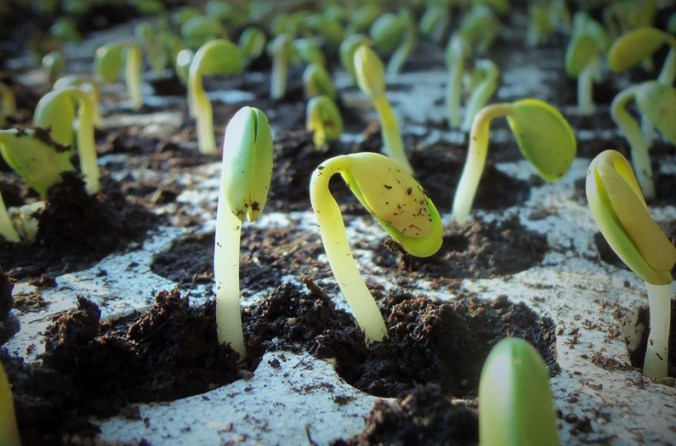
Anthropocene’s Emma Bryce has summarized the science of Building a better soybean:

What will it take to build crops that can withstand future climate changes? A group of plant biologists think they might be on to a solution for soybeans. Using genetic engineering, they’ve created a plant whose yields remain unaffected by high-stress conditions. The key lies in a genetic tweak that makes the plant overexpress a particular enzyme, which is thought to boost the efficiency of their photosynthesis cycle and enhance seed production. Continue reading

Naming For The Sake Of Conservation

Helmeted_Honeyeater_at_Healesville_Sanctuary_in_Healesville_Victoria_Australia._Birds_are_being_bred_under_a_captive_breeding_program_for_reintroduction_into_the_wild_over_time-1260x708

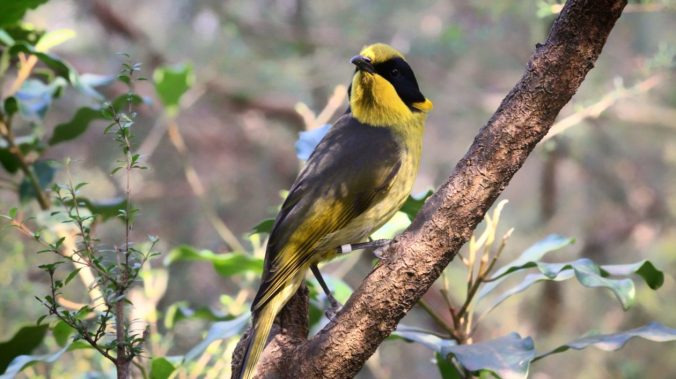
The Helmeted Honeyeater, a subspecies of the Yellow-tufted Honeyeater and the state bird of Victoria. Photo © Dylan Sanusi-Goh / Wikimedia Commons

Thanks to the Nature Conservancy for its conservation and scientific work in Australia, and for this finding shared on Cool Green Science:

…Recognizable common names are often critical for species protection, but subspecies miss out on this public perception benefit. A new paper argues that standardized English names are key to conservation success for Australia’s fantastic avifauna, and creates a definitive list for every subspecies on the continent. Continue reading

Magnifying Whale Scale Science

24TBwhale-4-superJumbo

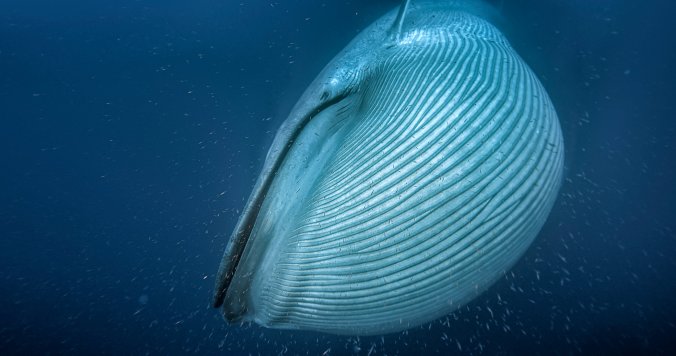
A blue whale off the coast of California. CreditSilverbackFilms/BBC

Ed Yon’g posting on the Atlantic website pursued the same natural history question as Nicholas St. Fleur’s How Whales Became the Biggest Animals on the Planet, and both science writers provide their specific source as seen here in the Times article:

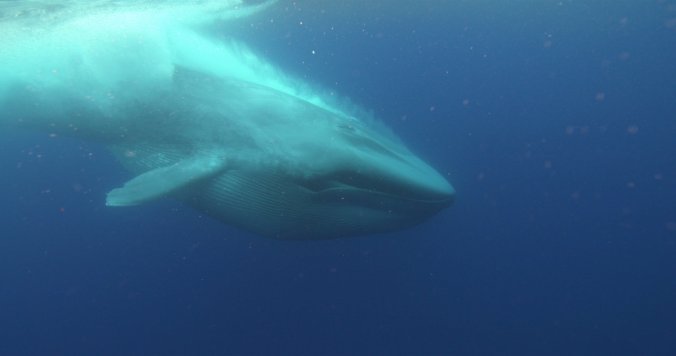
…In a study published Tuesday in the journal Proceedings of the Royal Society B, a team of researchers investigated gigantism in baleen whales, the filter-feeding leviathans that include blue whales, bowhead whales and fin whales. The marine mammals became jumbo-size relatively recently, they found, only within the past 4.5 million years. The cause? A climatic change that allowed the behemoths to binge-eat…

The number of written words in both is about the same, and the quality of writing is comparable, but the photos in the Times article magnify the words there by, it seems, a thousand times, which explains why we are linking to another whale scale story a second day in a row:

24TB-whale3-superJumbo.jpg

Baleen whales became big around the same time as when ice sheets began covering the Northern Hemisphere. CreditSilverbackFilms/BBC

Continue reading

Whale Scale Explained

Thanks as always to Ed Yong, who keeps the fires under our wonder about whales well stoked:

Why Did The Biggest Whales Get So Big?

… and perhaps more importantly: when?

Five years ago, on a boat off the southern coast of Sri Lanka, I met the largest animal that exists or has ever existed. Continue reading

Crop Type & Pesticides

bunch-of-grapes (1)

Image: Pixabay

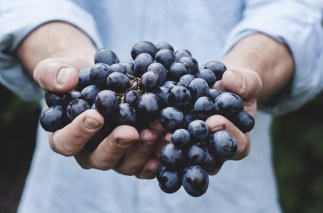
Thanks to Emma Bryce for A more nuanced approach to reducing insecticides on our food, shared via Anthropocene:

Model Mad, Down Under

John Church in Hobart in September 2010. He is known internationally for helping to bring statistical and analytical rigor to longstanding questions about sea level rise. Credit Peter Boyer

We continue to keep our eyes open for stories that offer inspiration even in the face of apparent adversity.

A Parable From Down Under for U.S. Climate Scientists

HOBART, TASMANIA — John A. Church, a climate scientist, did not look or sound like a man who had recently been shoved out of a job.

Speaking softly and downing coffee at an outdoor cafe in this old port city, he sounded more like a fellow fresh off a jousting match. “I think we had a win — a bigger win than I ever anticipated,” Dr. Church said in an interview last month.

Australian climate science went through an upheaval last year, one that engaged the press and the public in defending the importance of basic research. In the end, Dr. Church did indeed lose his job, but scores of his colleagues who had been marked for layoffs did not. Some of them view him as having sacrificed his career to save theirs.

What happened in Australia shows the power of an informed citizenry keeping watch on its government. And it may turn out to be a precursor to an attack on fundamental climate research in the United States.

Continue reading

Citizen Science, Mushroom Edition

04-magic-mushrooms.w710.h473.2x.jpg

Photo: Johan Hansson/Creative Commons Attribution

We have a mycological leaning on this platform, which started due to Milo’s interest, which was infectious.  So, our news filters pick up stories like this; normally I avoid sharing the stories involving hallucinogens, though I read the serious ones myself. I do not expect stories like this one below from New York Magazine, so this was a pleasant surprise:

Meet the Citizen Scientists Who Think Mushrooms Have Superpowers

By

Last month, around 2,500 people with some connection to hallucinogenic drugs gathered at the Oakland Marriott City Center in Oakland, California for what might best be described as the psychedelics state of the union. Psychedelic Science 2017, as it was more formally known, drew professionals of all stripes: chemists who make the hallucinogens, neuroscientists who study their effects on the brain, therapists who discuss their after-effects on patients, shamans and healers who administer the drugs, and anthropologists like Joanna Steinhardt, who are trying to make sense of the meaning of psychedelic culture. Continue reading

Bioluminescence, Fungi, Science


27TRI-MUSHROOM1-superJumbo

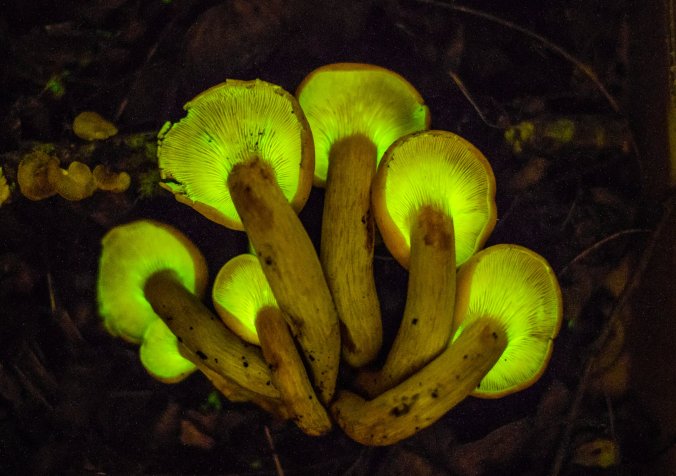
A bioluminescent jack-o’-lantern mushroom found in Pisgah National Forest, near Asheville, N.C. Credit Mike Belleme for The New York Times

Three of our favorite topics in one, thanks to Joanna Klein, the New York Times, and Science (the section of the paper and the thing itself):

PISGAH NATIONAL FOREST, N.C. — Here’s what I was told: Get away from the city, go during a new moon and keep my flashlight off. When the sky faded black enough to spot stars twinkling, I’d be able to see mushrooms glowing. Continue reading

Plants, Water & Sound

flower-and-earbuds.jpg

Thanks to Brandon Keim and Anthropocene for this summary of some recent science exploring the reactions of flora to sound in their search for water:

Plants can hear water. Could noise pollution interfere?

There’s a transformation underway in how people think about plants: not just as inanimate biological objects, but as capable of perceptions and actions that resemble the intelligent behaviors of animals. Continue reading