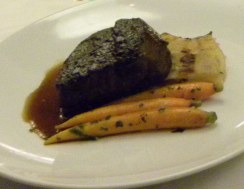
Sleek, sustainable alternatives to disposable tableware

Single-use tableware create increasing, massive amounts of waste. We eat out more than our parents ever did and our lunches are more and more wasteful. The best way to minimize lunch waste is to pack a lunch and pack only what you can eat, and to keep the restaurant option for that special occasion. The bento-box for lunch is a huge trend right now in Europe, mine is a shiny round box. When I happened to eat at my company’s canteen I noticed the invasion of the shelves by disposable packaging. And when my colleagues and I ate out at any of the pricey parisian eateries, it was more and more difficult to find non-disposable tableware. Here in rural South India, I never once had to say “I’d rather have a real cup please”.  When I go to the staff cafeteria, I pick up my large steel tray and my steel cup from the drainer wash it, fill them up and afterwards I wash ’em put ’em back, so someone else can do the same. Easy peasy. Nothing worth adding to the landfill about.   Continue reading
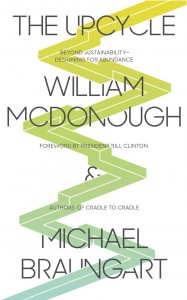
“The Upcycle”, the sequel to “Cradle to cradle”

If you’ve read “Cradle to Cradle” and you come here regularly, chances are you’ll be as excited as I am to learn about the sequel : ‘The Upcycle”.

10 years ago William McDonough and Michael Braungart published one of the most important environmental manifestos of our time.

Based on biomimetics, Cradle to Cradle design is an approach to the design of products and systems. It models human industry on nature’s processes viewing materials as nutrients circulating in healthy, safe metabolisms. The book states that:

“All products can be designed for continuous recovery and reutilization”.

Every product can and should be conceived with the reuse of its materials in mind and every material can and should be conceived to be used again. Just like in nature, nothing goes to waste.

If you have not read it, McDonough’s TED talk Cradle to Cradle design will probably make you want to give it a go.

In their newest book  The Upcycle: Beyond Sustainability – Designing for Abundance,  McDonough and Braungart go further than ‘Cradle to cradle’ saying that we should be ambitious about our role on this planet.

“Industry can do better than “do no harm”: it can actively improve everything with which it comes into contact.” Continue reading

WED 2013: Get A Grip

WED 2013 - Raxa Collective

On June 5, we’ll celebrate World Environment Day. This year UNEP focuses on the theme Food waste/Food Loss. At Raxa Collective we’ll be carrying out actions and sharing experience and ideas. Come and join us with your ideas and tips to preserve foods, preserve resources and preserve our planet.

‘According to the WWF as many as 90% of all large fish have been fished out.’ Photograph: allOver photography/Alamy

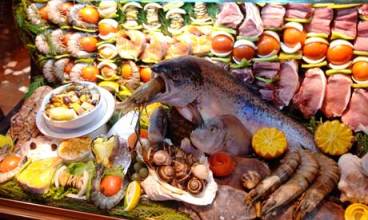
We puzzle daily over how to source sustainable, high quality food. Establishing an aquaculture program in Kerala’s backwaters to supply our resorts, we find the environmental/economic tradeoffs require the wisdom of Solomon.  The Guardian‘s  Matthew Herbert has a clever turn of phrase in the opening line of an article covering this very topic (click the image on the right to go to the article):

We are living through a delicious disaster. Continue reading

WED 2013 : Taste the waste… of water

WED 2013 - Raxa Collective

On June 5, we’ll celebrate World Environment Day. This year UNEP focuses on the theme Food waste/Food Loss. At Raxa Collective we’ll be carrying out actions and sharing experience and ideas. Come and join us with your ideas and tips to preserve foods, preserve resources and preserve our planet.

image_gallery_close_up

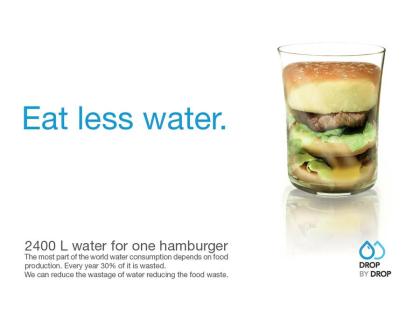
 Most part of the world water consumption depends on food production. Every year 30% of it is wasted. We can reduce the wastage of water reducing the food waste. The Stockholm International Water Institute (SIWI) has released a short documentary titled ‘Taste the Waste of Water’ Continue reading

WED 2013: Megawasted Opportunity?

WED 2013 - Raxa Collective

On June 5, we’ll celebrate World Environment Day. This year UNEP focuses on the theme Food waste/Food Loss. At Raxa Collective we’ll be carrying out actions and sharing experience and ideas. Come and join us with your ideas and tips to preserve foods, preserve resources and preserve our planet.

When I tell people that it’s possible to grow highly nutritional food on agricultural waste products with almost zero technology, I usually get a blank look. On a good day, someone will demand an explanation. Why would such a process, if existent, be so obscure if it could help solve malnutrition in underdeveloped communities? While I’m sure there is a logical explanation for this, it remains a mystery to me at present.

Continue reading

WED 2013 : Chef Nitin Padwal offers a case study in food waste reduction

WED 2013 - Raxa Collective

On June 5, we’ll celebrate World Environment Day. This year UNEP focuses on the theme Food waste/Food Loss. At Raxa Collective we’ll be carrying out actions and sharing experience and ideas. Come and join us with your ideas and tips to preserve foods, preserve resources and preserve our planet.

Nitinbanner

Here in India, food waste reduction is considered as mere common sense and rarely even mentioned, that’s why chef Nitin Padwal taking the time to explain his work for a restaurant kitchen with “0% sent to landfill” is precious and we’ll also deliver a case study on our own work here at AllSpice in Cardamom County. Nitin Padwal  used to work at the Taj Hotel in Nashik and the Renaissance Marriot in Mumbai before  he became Head Chef at Petrichor at The Cavendish London. Since his arrival there in 2010, Nitin Padwal championed the idea of a sustainable restaurant, and has made substantial improvements in that area. Watch the interview… Continue reading

WED 2013: The Fourth “R”

WED 2013 - Raxa Collective

On June 5, we’ll celebrate World Environment Day. This year UNEP focuses on the theme Food waste/Food Loss. At Raxa Collective we’ll be carrying out actions and sharing experience and ideas. Come and join us with your ideas and tips to preserve foods, preserve resources and preserve our planet.

Recently when thinking about the universal recycling symbol it occurred to me that many of our expectations on how basic human needs are met can be influenced by the three concepts of Reduce, Reuse and Recycle.

Continue reading

WED 2013: Europe dumps fish dumping

WED 2013 - Raxa Collective

On June 5, we’ll celebrate World Environment Day. This year UNEP focuses on the theme Food waste/Food Loss. At Raxa Collective we’ll be carrying out actions and sharing experience and ideas. Come and join us with your ideas and tips to preserve foods, preserve resources and preserve our planet.

www.fishfight.net

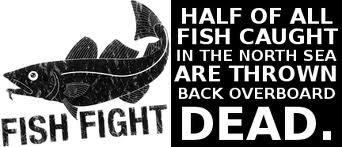
…and about 80 per cent of Mediterranean stocks and 47 per cent of Atlantic stocks are overfished. It may seem rather odd but the European Union’s policy to avoid overfishing consists in tossing dead fish back in the sea if a fleet exceeds its quota.

For decades industrial fleets have been subsidised to plunder the European waters working under the rules of the  Common Fisheries Policy devised in the 1970s. And the rule of ‘discards’ has been let’s say counter-productive in reviving the fish stock. The practice allows fleets to net quantities of fish exceeding their quota, then simply throw any unwanted dead fish overboard.

Continue reading

WED 2013 : Learning To Finish That Meal…

WED 2013 - Raxa Collective

On June 5, we’ll celebrate World Environment Day. This year UNEP focuses on Food waste/Food Loss. At Raxa Collective we’ll be carrying out actions and sharing experience and ideas. Come and join us with your tips to preserve foods, preserve resources and preserve our planet.

As a child, I was always told to finish eating my meals because there were starving children in poor and faraway lands that would gladly trade places with me.  I could not exactly picture what that meant, and the rebelious part of me always wanted to stick a postage stamp on my plate and send it to these children.  No one who grew up with such abundance, I think, could trade the fresh memory of a full meal for a clear picture of hunger.

Being from Texas (and proud of it, so don’t mess with that), with its long “bigger and better” history and wonderful mythology of abundance and its can-do certainty, I did not “get it”.  Now, the hazy memories of those dinners and parental wisdom are coming into perspective with my ability to follow and understand news from around the world.

Continue reading
How about traditional boats in the Periyar Tiger Reserve ?

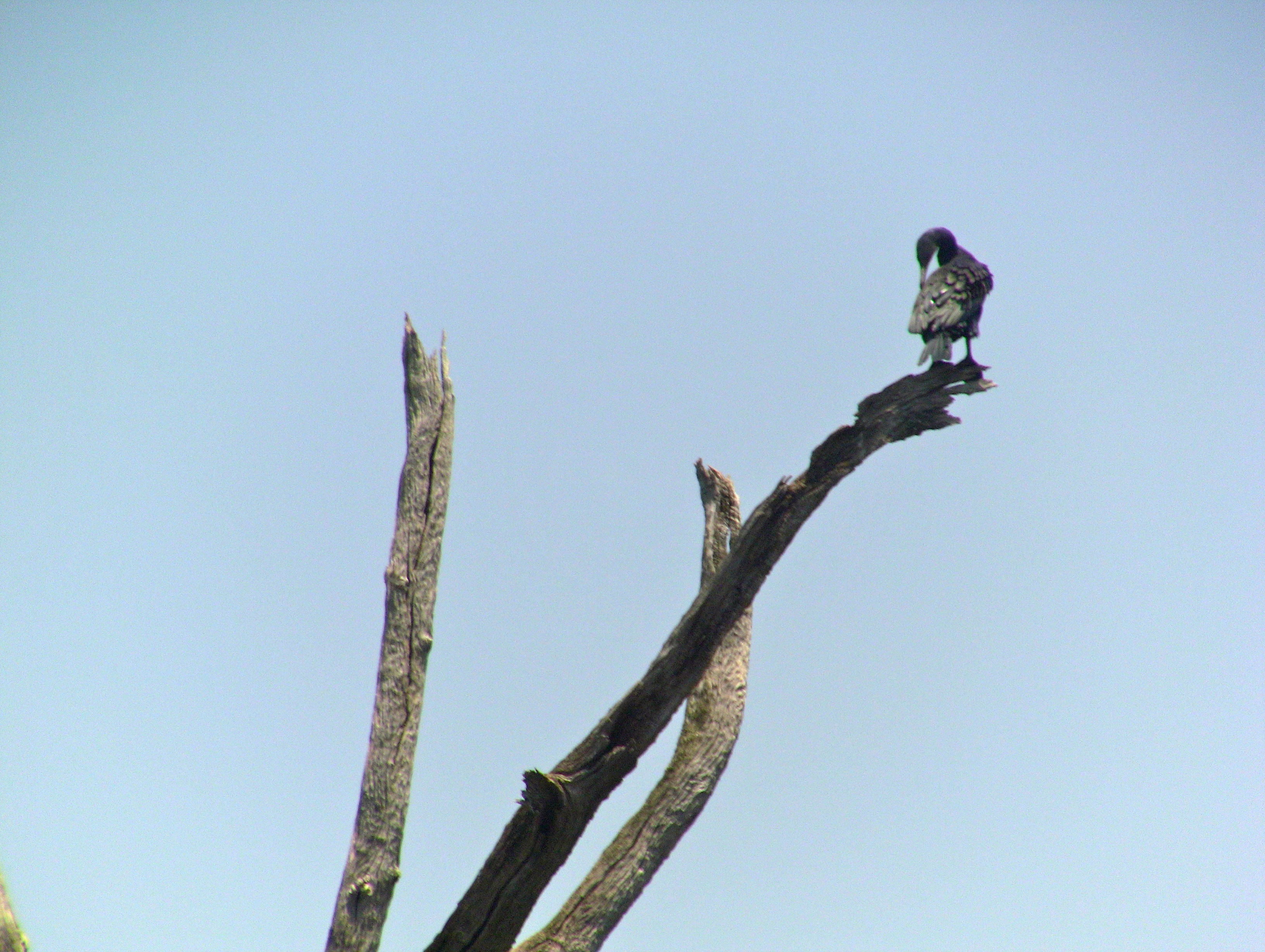
The most popular activity in the Periyar Tiger reserve is boating on the  Periyar river. It’s a lazy, indulgent, moment of enjoyment of sightseeing. The ancient sunken tree trunks, the depth of the woods, the indigenous population fishing along the river…it also offers good chances to sight animals drinking, hunting by the river and excellent opportunities for birdwatching.

During the cruise I kept thinking it could all be quieter though, the engines of the motor boats seemed to break with the pristine tranquillity of this place… Continue reading
The logistics dilemma: double passenger scooter or double-decker lorry ?

Transporting products around the Ghats credit Ea Marzarte My friends and I had been looking for one around town for an aftenoon, and finally I found it a week later driving away towards another town: a coir mat, the ideal support to make my salutations to the sun on. The small motorbike was actually part of a ‘caravan’ carrying people and mats from the neighboring state of Tamil Nadu.  So loaded it was uncanny, this one had either the most efficient engine or the best pilot because it made it to the top of the hill first and stopped there to wait for the others. Continue reading

Everything is good in a banana

My colleague Vinod is an expert on sustainable tourism in India, he has studied the alternatives to plastics. He explained to me that after Brazil, India is the largest producer of bananas in the world… Continue reading

Indonesia’s Tipping Point

A Sumatran tiger, one of thousands of species threatened by palm oil plantations and paper and timber businesses. Photograph: Allan Baxter/Getty Images

Photograph: Allan Baxter/Getty Images. A Sumatran tiger, one of thousands of species threatened by palm oil plantations and paper and timber businesses.

A recent headline in the Guardian‘s Environment section was titled:

Indonesia’s tropical forests set to benefit from further clearing ban

Susilo Bambang Yudhoyono expected to sign extended deal to help restore habitat of tigers and orangutans

This was bound to get our attention, especially after a series of articles in recent months showing that this could go in either direction, not only for Indonesia but any number of countries in the region.  Indonesia is a developing country whose fulcrum might allow market forces to push (or pull?) it to ecological dystopia, or toward some more sane ecological outcome.

Continue reading

Food As Good As Possible

This slideshow requires JavaScript.

Maisie Greenawalt, a graduate of Cornell Hotel School (’93) shares her company’s approach to good food served to corporate clients. For any non-vegetarian, these are important and tough to solve issues.  She puts those issues right out there and if she does not hide from them, neither should we.  Click here to view on the Cornell website or here to view her TEDx presentation on an external site.  According to the Cornell presentation of this talk she is

vice president of strategy for Bon Appetit Management Company, which provides from-scratch food service to corporations, universities, and museums in 32 states. She’s been instrumental in shaping the company’s many pioneering commitments to social and environmental responsibility. Continue reading

University-Based Groups Worth Noting

syn-mosaic

An occasional feature, beginning here, will point to university-based groups–informal organizations, living arrangements, secret societies, etc.– we can relate to:

Co-operative societies bring forth the best capacities, the best influences of the individual for the benefit of the whole, while the good influences of the many aid the individual.

Leland Stanford
October 1, 1891
Stanford University Opening Ceremonies

Shopping Shifts

Lifestyles of Health and Sustainability (LOHAS) is a description, a name, a trend we have mentioned plenty of times in so many words, but not previously using this acronmyn. If you have not already seen it, you can expect to see it more now.  We appreciate its blog, which you can sign up for by clicking through from this article in it (click the LOHAS banner image in this post):

…In the improving but not yet booming economy of 2013, Patricia Aburdene, author of the New York Times bestseller “Megatrends 2000” and most recently “Conscious Money” (Atria Publishing; $16 paperback), predicts priorities and values will play a bigger role in shaping spending decisions. Continue reading

Congrats To The AguaClara Team At Cornell University

From an article linked in one of our alumni emails we learned about an organization with a worthy set of initiatives and actions:

Katerva is building unique platforms to create and leverage its global action network:

  • The Katerva Awards – The pinnacle of global sustainability recognition. Through them, the best ideas on the planet are identified, refined and accelerated for global impact. Continue reading

Industrialized Biofuels Part 2: Brazil’s Production

This post continues my discussion of biofuels from Part 1.

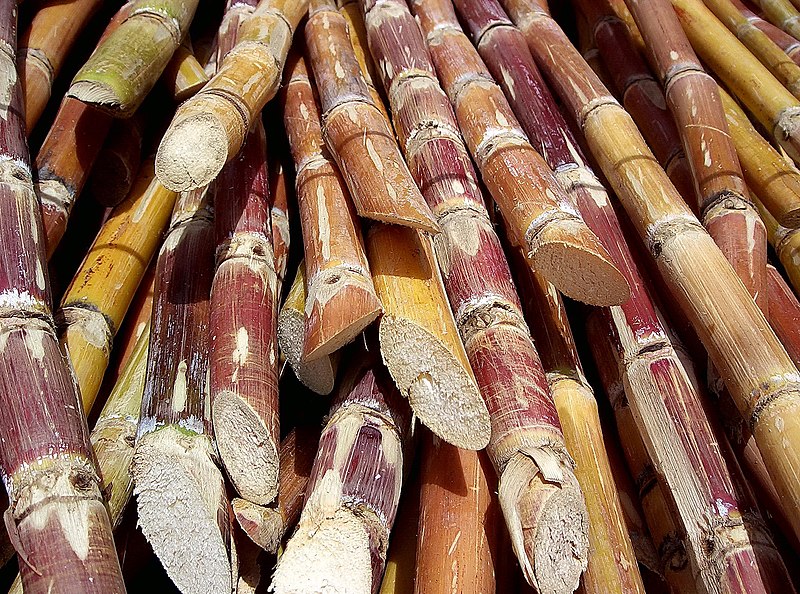
Brazil contains many of the world’s biodiversity hotspots, as well as one of the most important CO­2-sinks in the form of rainforests. As the second largest sugarcane grower in the world, Brazil’s biofuel production relies heavily on sugarcane ethanol, which has one of the highest savings in GHG emissions compared to fossil fuels. However, increasing sugarcane production is not sustainable in the long-term if one of Brazil’s goals is to curtail GHG emissions, since growing more sugarcane means cutting down more rainforest. Instead, second- and third-generation (advanced) biofuels should be considered viable options for replacing sugarcane, or at least strongly supplementing it.

Continue reading

Voyager’s Dilemma

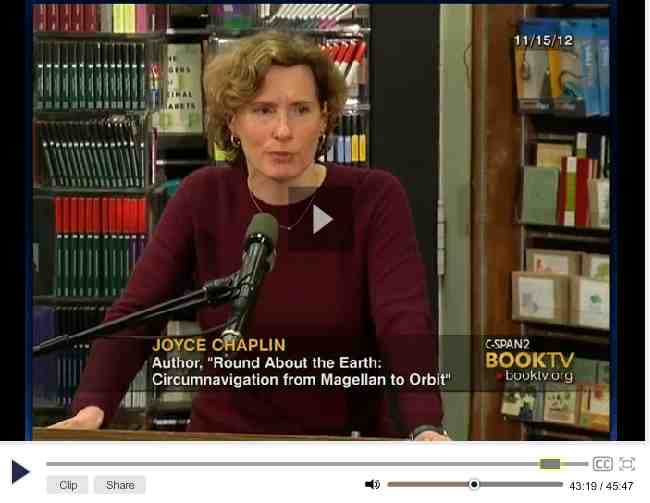
Harvard University Professor Joyce Chaplin talked about her book, Round About the Earth: Circumnavigation from Magellan to Orbit, in which she presents the history of the circumnavigation of earth, going back to the days of Portuguese explorer Ferdinand Magellan. Professor Chaplin spoke at Harvard Book Store in Cambridge, Massachusetts.

Three of our most viewed posts since starting this site in mid-2011 have to do with the intersection of travel (in all its various forms) and sustainability so when we saw this video and the related book reviews we could not help thinking it might resonate with readers who have enjoyed those three posts. One challenge for the modern voyager is an inverse of the same as that to a hospitality-providing organization such as ours going forward: how do we get there and back with the smallest footprint possible?  It is not the same question Magellan was asking but some of the “voyage issues” have not changed over the centuries.  Click the image above to go to the video, and here for a review of the book in the LA Times:

A trip on a 140-foot sailboat helped inspire Harvard professor Joyce E. Chaplin to write “Round About the Earth: Circumnavigation From Magellan to Orbit” — and that may explain the enthusiasm she brings to the many-stranded narrative. At the very least, it underlies her sympathy for sailors on small boats heading into rough, unknown seas.

This history, the first of its kind, is a lively charge through 500 years of worldwide exploration (and beyond). Chaplin sets to the task by carving that time span into three parts. Continue reading

Integrated Pest Management (IPM)

Photo by Milo Inman, India

During my last post I mentioned this agricultural strategy in passing, and I’m actually fairly surprised that the topic hasn’t come up anywhere on the blog before. After all, IPM is an increasingly effective and interdisciplinary way to curb economic losses in crops around the world, and one that often attempts to reduce reliance on environmentally unfriendly chemicals like pesticides.

Completely eliminating an agricultural pest is not the ultimate goal of IPM. In fact, due to ecological intricacies and the risks of removing certain species from an ecosystem, merely lowering the number of pests to numbers that do not cause significant economic damage is more advisable. Achieving this reduction in pest populations “requires an understanding of the ecology of the cropping system, including that of the pests, their natural enemies, and the surrounding environment,” according to Professor Anthony Shelton of the Entomology Department at Cornell University. For example, knowing that a certain pest caterpillar species has certain predator species, a farmer might introduce some of the natural predators into his crop to prey on the harmful caterpillars. If the farmer also physically removes the caterpillars by hand and the pest population dwindles to zero, the natural predators might turn to a beneficial insect, like a pollinator, or even attack the crop itself. This is a very vague and hypothetical example but one that reflects the need to understand causes and effects in an ecosystem if one is planning to employ IPM effectively.

Continue reading