Across Waters to the Mississippi River Adventure

Guest Author: Rania Mirabueno
Image

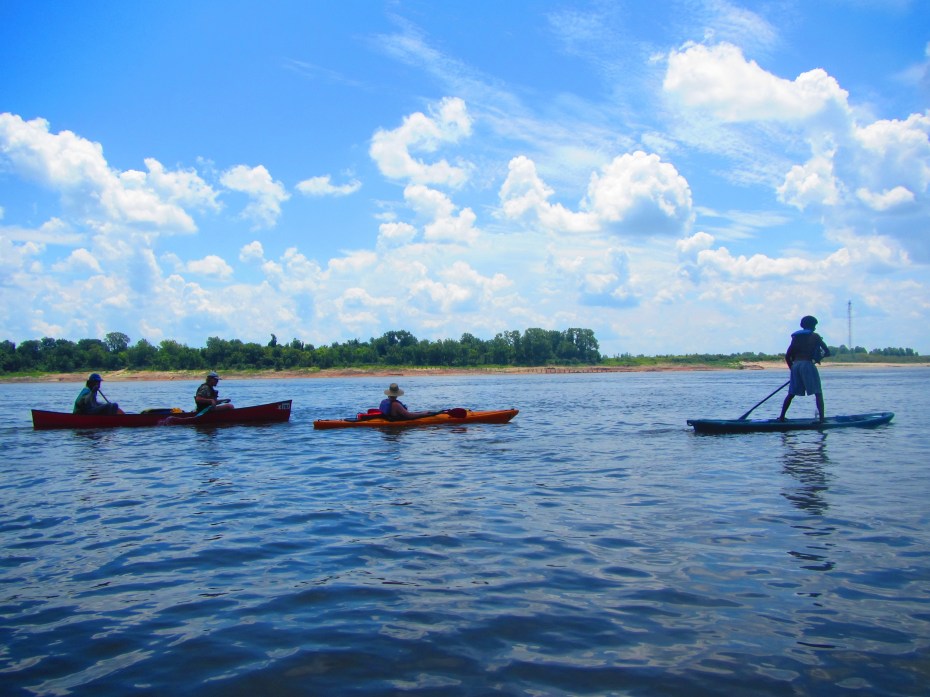
Adventurers canoeing 2320 miles of the Mississippi River.

As I recall my beautiful houseboat experience in the backwaters of Kerala with River Escapes, I cannot help but think across waters to four adventurers, who are embarking on a journey with two canoes and 2320 miles of rafting across 10 US states on the Mississippi River. Continue reading

Sustaining Livelihoods with Water

Guest Author: Rania Mirabueno

Mullaperiyar Dam

Mullaperiyar Dam taken by Milo Inman

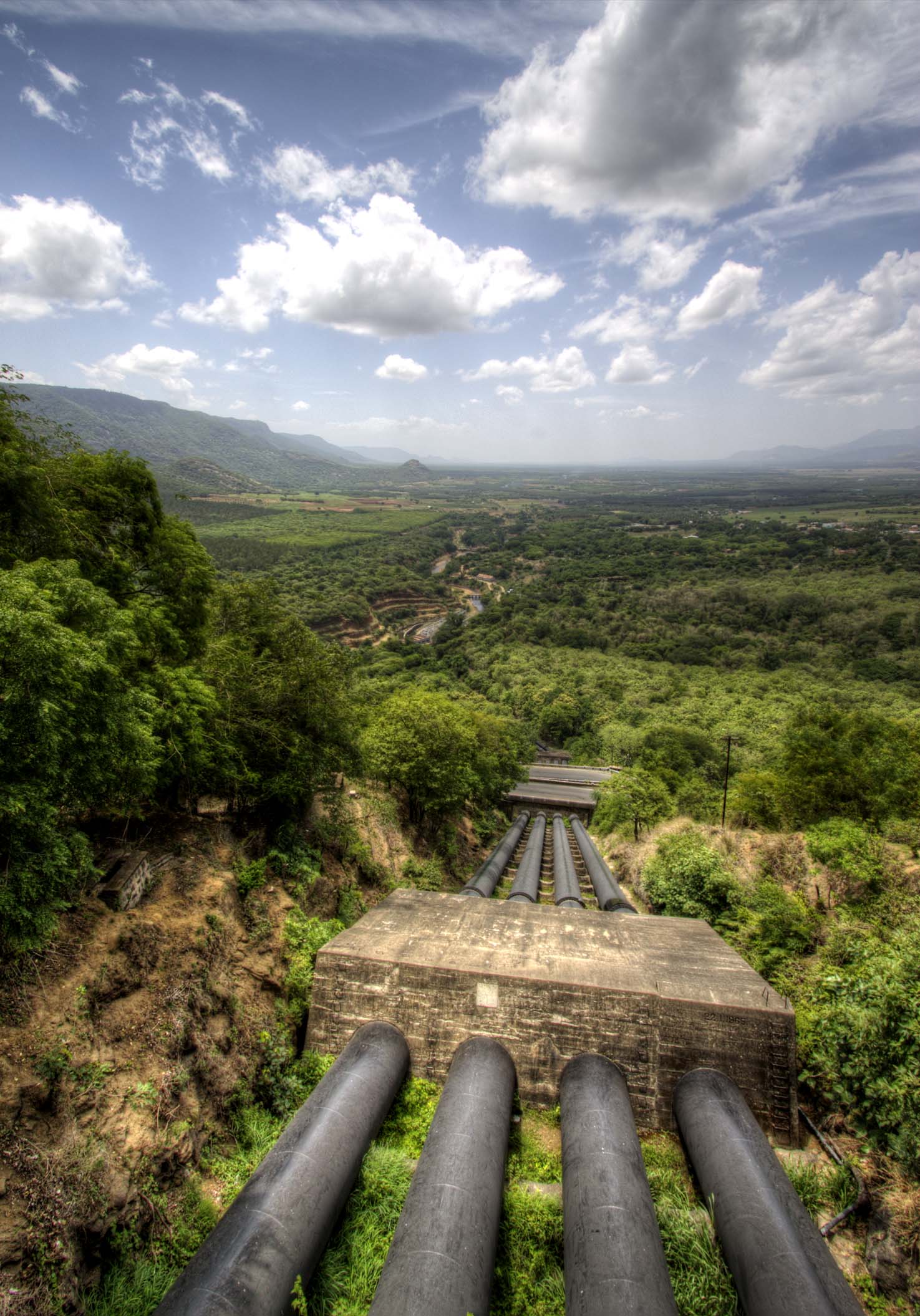
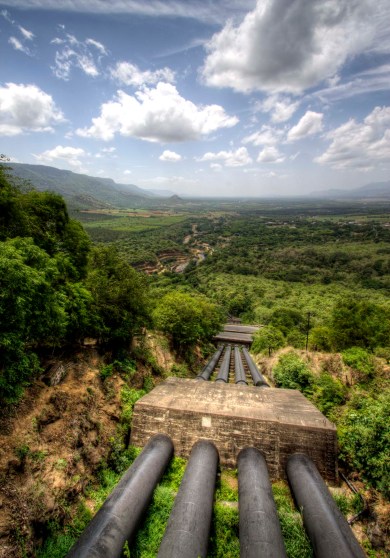
View from Mullaperiyar Dam

View from Mullaperiyar Dam taken by Milo Iman
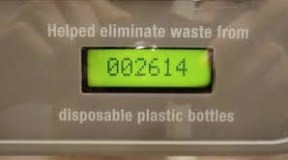
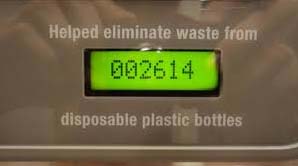
Sustainable Water Fountain

Sustainable Water Fountain taken by Seth Inman

While enjoying this beautiful view into Tamil Nadu from the top of the Cardamom hills in Thekkady, Kerala, I began to think about what was behind me. A massive water system, four gigantic pipes directing water from the Mullaperiyar dam to its neighbor, Tamil Nadu. It instantly hit me how vital water is to human civilization that no pie chart or graph can depict any clearer.

The dispute of water from Kerala to Tamil Nadu rings close to my heart with similar water challenges to my home in the Southwest region of the United States. The Hoover Dam is the lifeblood for populations nearing more than 3 million in Los Angeles to Phoenix. Sustaining livelihoods of people will require creative collaborations among cities and increasing educational initiatives about how our actions as a civilization can negatively or positively affect our land and resources, especially water.

The real question is how does this EZ-fill water fountain found at Cornell University fit in with Mullaperiyar dam? Continue reading

The Case Against Red Meat

Are you trying to eat healthier? Then stop eating red meat.

That’s the message that we’ve see in the past few years: dozens of news articles and medical journals tell us the dangers of red meat–beef in particular. The recent scare over pink slime has further increased distaste and caution around ground beef, and the suspicion is beginning to spread to other types of meat as well. Amidst all of the hype about meat in our diets, sustainability- and health-conscious consumers might wonder why scientists are focusing on red meat. Why not chicken, pork, or fish? The answer is two-sided: one relates to health concerns, and the other relates to environmental impacts of cattle-raising. Let’s briefly look at both.

Want to dig in? Not so fast, suggests the results from a study of the Harvard School of Public Health. Eating just a few ounces of red meat every day can increase your risk of colon cancer and heart disease.

Continue reading

News From Rio

After more than a year of negotiations and a 10-day mega-conference involving 45,000 people, the wide-ranging outcome document – The Future We Want – was lambasted by environmentalists and anti-poverty campaigners for lacking the detail and ambition needed to address the challenges posed by a deteriorating environment, worsening inequality and a global population expected to rise from 7bn to 9bn by 2050.

Click the image above for the coverage in The Guardian.

When Privilege Speaks

We have said on an earlier occasion that when someone as recognized and wealthy as this speaks out on behalf of the environment, it is worth taking note.  Not because his voice is more valid than all the scientists, activists etc. dedicated to the cause.  But because every voice has a role and if more voices connected to immense privilege took the time to send messages like this, we might get where we are going a bit faster…

Road To Rio

The power of convergence and collaboration

• Sustainability optimists speak of an era of convergence – a coming together of new technologies and new business models to create a 21st century economy
• In the below video, sustainability pioneers explain the power of having common goals and a shared, collaborative vision

(click the banner below to go to the video)

Carbon Emissions Series: Scope 3 for Hospitality

If someone asks you to measure your property’s scope 3 emissions, you should tell them that it’s basically impossible. Because it is. That’s the gist of this post. But before we despair over the endless range of scope 3 emissions for a hotel property, let’s toss in the GHG Protocol’s definition:

Scope 3: Other indirect emissions, such as the extraction and production of purchased materials and fuels, transport-related activities in vehicles not owned or controlled by the reporting entity, electricity-related activities (e.g. T&D losses) not covered in Scope 2, outsourced activities, waste disposal, etc.

How far does your supply chain reach? The vast scope, depth, and complexity of hotels' supply chains and customer interactions make scope 3 measurement a daunting task.

From the GMIC’s Sustainable Meetings Conference

Greetings from Montreal! I’m posting from Montreal and the Green Meeting Industry Council’s 2012 Sustainable Meetings Conference. I was fortunate to receive the Nancy Zavada Scholarship that enables me to attend this wonderful conference, and I’ve been thrilled to participate in the Future Leaders Forum, which informs current students of the challenges and opportunities of the meetings/events sector. I’m pleased to briefly share some of the things the conference has covered so far.

Strangely enough, the Hilton hotel at which our conference is held does not seem to be very sustainable. A lack of low-flow water fixtures, occupancy sensors, high-efficiency HVAC, and aggressive guest engagement is evident.

Continue reading

Carbon Emissions Series: Scope 2 for Hospitality

In our continuing discussion about the types of greenhouse gas (GHG) emissions, we have now come to scope 2 and how it relates to the hospitality industry. Much of the research at the Cornell Hotel School focuses on lowering electricity usage, which directly correlates with scope 2 emissions. Let’s start off with a definition.

Scope 2: Indirect GHG emissions from consumption of purchased electricity, heat or steam.

One of the biggest sources of scope 2 emissions is the coal-fired power plant, which emits CO2, NOx, SOx, and a number of heavy metals. Although it is extremely inefficient, coal remains a major source of electricity in the United States.

Continue reading

Carbon Emissions Series: Scope 1 for Hospitality

In my previous post, I identified carbon emissions as the significant metric to track for hospitality, and I explained why hospitality is one of the best industries to target for sustainability efforts. Now I’d like to delve deeper into the different types of greenhouse gas (GHG) emissions and how they relate to hospitality. My goal of this three-part explanation is to provide our readers with a broad understanding of the scopes of GHG emissions and with a general idea of the extent to which hospitality contributes to climate change. Let’s jump right in!

The Greenhouse Gas Protocol defines three scopes of emissions. Our discussion today will focus only on the first scope, as it relates to hotel properties: direct, on-site emissions.

Continue reading

Carbon Emissions Series: Why Hospitality?

In the past two months, I’ve hammered through interview after interview for internships this summer, and sustainable hospitality is a subject that seems to always surface. Along with the standard boiler-plate questions, I noticed that one topic in particular would often be asked about my interest in hospitality: why target sustainability in this industry? Why not sustainability elsewhere? And is the Cornell Hotel School the best place to explore it? I must admit that I didn’t answer the question too well the first few times, but I’ve taken a step back to truly think about my answer.

The hospitality industry's reach is near endless. It is indirectly involved with the GHG emissions of six of the eight major contributors above: transportation, agriculture, commercial services, land use, waste, and power.

Continue reading

I Belize I Can Fly

Guest Author: Robert Frisch

The tiny islands or “cayes” off the coast of Belize sit in the middle of beautifully serene coral atolls and are surrounded by the world’s second largest barrier reef.  Like shallow lakes in the middle of the ocean, the atolls host several UNESCO world heritage sites and some of the best snorkeling and scuba diving in the world.  My team, consisting of three Johnson  students and an MPA student from the Cornell Institute of Public Affairs, found itself tasked with providing consulting services and business advice for the owners of one of these cayes in what turned out to be the most unique spring break of my life. Continue reading

Sustainable Water System in Your Own Garden!

In my opinion, the major benefit for attending Cornell is an opportunity to meet diverse industry leaders face-to-face. This week I was fortunate enough to meet the Sales Director of Aquascape, a water-gardening company dedicated to creating/installing a sustainable and, at the same time, beautiful and decorative water features in your garden. The main way they recycle the water is through rainwater harvesting – by capturing, filtering, and reusing the rainwater. Instead of letting it flow back into the body of water, we could be converting the impervious surfaces (which cause stormwater runoff) to permeable surface that allows us to capture and reuse the rainwater. With this captured grey water, you could be washing your car, irrigating your garden, reusing in water features, etc.

Image Continue reading

“I Will!”

What began as a WWF Australia project to focus public attention on climate change has turned into an international movement that has become the largest voluntary action ever witnessed, reaching 1.3 billion people across the globe.

In the best possible way the movement has gone viral, expanding exponentially, bringing people together in a celebratory atmosphere that represents the power of social media and a good idea. Continue reading

Green Lifestyle Everywhere You Go in a Concrete Jungle

This will be my first post that I’m writing for Raxa Collective. To be honest, I was waiting for a great idea to jump out at me that will brilliantly catch everyone’s attention. But, now that I think about it, blogs are more about sharing a stream of mind in our daily life, so here I am.

As I’m spending my spring break in NYC, I’ve been observing a range of eco-lifestyles all around me, even in this urban area. You may think that New Yorkers care less about the environment because they live in a “concrete jungle”, but it’s proved to be wrong. In NYC, there are so many organic stores, restaurants that serve organically and locally grown vegetables and fruits, farmers markets, etc. – the list goes on and on. Seriously, there are even farming and gardening classes and programs for both children and adults! Continue reading

Linking Locavores

Click the image above for a journalistic description of a utilization of new technology to conserve valuable traditions and provide more efficient access to healthy, tasty food.  Or, after the jump, a short video of the same.

Continue reading

Really, Monsanto?

We try to be careful consumers of information, and link out to stories that match our interests and have relevant factual content.  Not everything that every government says passes the “truthiness” test, but we are reflexively interested in the views and findings of a group like this:

PEER is a national non-profit alliance of local, state and federal scientists, law enforcement officers, land managers and other professionals dedicated to upholding environmental laws and values.

Reflexive does not mean blindly accepting of everything they say, but we are inclined to pay attention to scientific findings related to the environment.  When they raise issues like this related to wildlife refuges then the inclination transforms into something stronger and more urgent: Continue reading

Denser, Faster, Greener

Click the image above to go to the article in which Alex Steffens, of Worldchanging (and TED, and plenty of other deserved) fame gives a synopsis on how to ramp up urban greening most efficiently:

If we’re talking about transportation, the best thing a city can do is densify as quickly as it can. That needs to be said every time this issue comes up, because it’s the only universal strategy that works. That’s the best-documented finding in urban planning—that as density goes up, trip length goes down and transportation energy use goes down.

Continue reading

Really, Nike?

Quinn O’Neill, someone we have never encountered in writing (or otherwise) before, posted that ad and some reflections about it on the dependably superb 3 Quarks Daily.  Reading those reflections is worth a lot more than the five minutes it will take.  On this site we very rarely engage in outrage for reasons we have not fully articulated (yet); but a well-crafted second thought on what might otherwise seem harmless entertainment begs the question: Continue reading

Credit Where Due

The Atlantic Monthly‘s website has had a link to the text of a speech from last year (click the image to the left to go to the source), with some notable observations:

Genuinely sustainable farming maintains the resilience of the entire ecosystem by encouraging a rich level of biodiversity in the soil, in its water supply, and in the wildlife — the birds, insects, and bees that maintain the health of the whole system. Sustainable farming also recognizes the importance to the soil of planting trees; of protecting and enhancing water-catchment systems; of mitigating, rather than adding to, climate change.

Continue reading