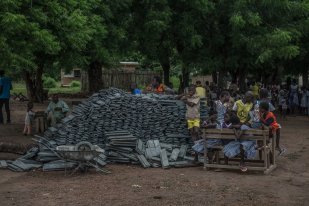
Milo, Mushroom Clubs & Mylo

Mylo, a material made from mycelium, in natural and black. Bolt Threads

Milo’s teen years convinced me of the wonders of fungi. The Mushroom Club of Georgia was in the right place at the right time for him to convert intense curiosity into something more powerful. On another day, more on what he has done with that in the decade since. For now a bit of thanks. We have had the privilege of hosting members of that Club in our home in Costa Rica, and intend to do so again now that travel restrictions have eased. This post is an overdue shout out to that Club and others like it. More kids in those clubs would be a good thing. Meanwhile, nice to see these folks making news again. It helps persuade me that fashion is of greater value than I have given it credit for up to now:

Fungus May Be Fall’s Hottest Fashion Trend

A surprising group of fashion rivals including Stella McCartney and Lululemon are joining forces to back Mylo, a new mushroom leather.

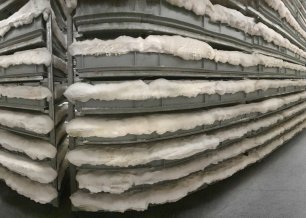
Bolt Threads mycelium mats in the grow facility. Bolt Threads

It may be fashion week in Paris, with showgoers in face coverings parsing runway looks from the latest designer ready-to-wear collections, but several thousand miles away from the French capital, out of the dank, dark belly of an industrial hangar, a potentially more momentous industry trend is … growing.

Mushroom leather might not sound stylish. But Bolt Threads, a start-up that specializes in developing next-generation fibers inspired by nature, is one of a growing number of companies convinced that the material is a viable replacement — in both form and function — for animal-sourced and synthetic skins. Continue reading
Upcycled Foods, Circa Late 2020

The first time I saw upcycling in action, I did not know the word. It became part of my vocabulary in 2012. And then I started seeing it more frequently, but only years later before I would see it in relation to food. Now it is more mainstream, but this PBS news segment shocked me anyway, with the revelation of how much waste there is in the production of tofu. In my experience growing up in the USA, tofu was one of the first “green foods” on the market. Little did we know. Shock is sometimes followed by awe. Case in point: Renewal Mill is providing solutions to tofu production waste and other forms of food waste that seem obvious once you see them do it. But first, someone had to do it. I have not tasted their products yet but I am confident I would savor it on multiple dimensions.

Paint Color: More Than An Aesthetic Choice

Image: Tyros.andi/Wikimedia Commons

Wind is a formidable renewable energy option, but the impacts on wildlife have long been discussed. It’s heartening that such a simple solution as paint has the potential to so drastically reduce the dangers to birds and bats.

A simple paint job can save birds from wind turbines

A small study in Norway showed that painting one blade of a wind turbine black reduced bird mortality by over 70%.

Wind energy is one of the world’s most popular renewables. It’s also one of the most promising—some calculations suggest that strategically placed wind turbines could conceivably power the entire planet. As more turbines go up worldwide, they’ll help us reduce pollution, water use and carbon emissions, along with the environmental degradation, habitat loss and human health risks that come with fracking and oil extraction.

But there are some who don’t benefit quite as much: flying animals. Each year, turbine blades kill hundreds of thousands of birds and bats. As wind power becomes more prevalent, this number may rise into the millions—although it’s important to remember that other power generation methods likely kill far more birds than wind farms do.

This concern has led to a number of proposed interventions, from turning off wind farms during migrations to installing special whistles only bats can hear. A new study presents a relatively low-cost, set-it-and-forget-it option: just paint one of the turbine blades black.

Continue reading

Scaling The Urban Farm, In Paris

8256

Nature Urbaine. Photograph: Magali Delporte/The Guardian

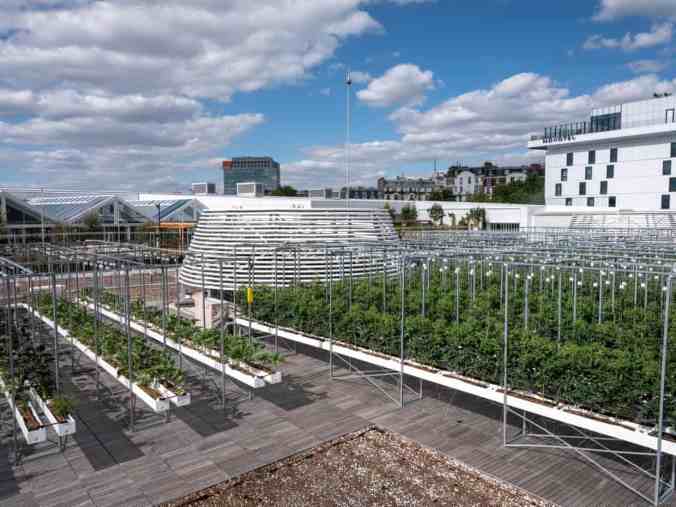
The future of food: inside the world’s largest urban farm – built on a rooftop

In Paris, urban farmers are trying a soil-free approach to agriculture that uses less space and fewer resources. Could it help cities face the threats to our food supplies?

Thanks to the Guardian for keeping stories like this  coming:

5568 (1)

Urban farming on a Parisian rooftop. Photograph: Stéphane de Sakutin/AFP/Getty Images

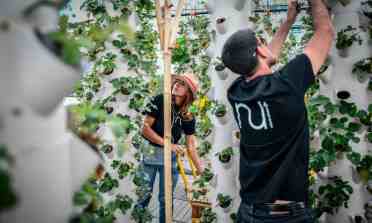
On top of a striking new exhibition hall in the southern 15th arrondissement of Paris, the world’s largest urban rooftop farm has started to bear fruit. Strawberries, to be precise: small, intensely flavoured and resplendently red.

They sprout abundantly from cream-coloured plastic columns. Pluck one out to peer inside and you see the columns are completely hollow, the roots of dozens of strawberry plants dangling into thin air.

From identical vertical columns nearby burst row upon row of lettuces; near those are aromatic basil, sage and peppermint. Opposite, in narrow, horizontal trays packed not with soil but coco coir (coconut fibre), grow heirloom and cherry tomatoes, shiny aubergines and brightly coloured chards. Continue reading

Bureo & Tin Shed Ventures

tsv-main-logoBureo is news to us, and we like good news. We are always on the lookout for fellow travelers, and while Tin Shed Ventures is by no means new it is news to us. And newsworthy based on the partners they have chosen:

Tin Shed Ventures is Patagonia’s corporate venture capital fund, which invests in start-ups that offer solutions to the environmental crisis. Originally launched as $20 Million and Change in May 2013, Tin Shed Ventures partners with businesses focused on building renewable energy infrastructure, practicing regenerative organic agriculture, conserving water, diverting waste and creating sustainable materials. Continue reading

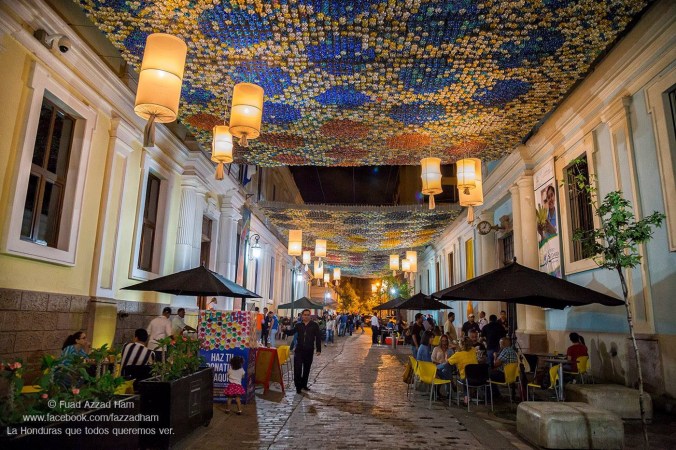
Looking Again At Tegucigalpa, Seeing Why Place Matters

Starting in 1997 I got to know the entire country of Honduras over two years while working on a sustainable tourism development project for the government. I spent more time in Tegucigalpa than anywhere else because my monthly meetings with the Ministry of Tourism were held there. While poverty was visible, the city had a charm, unique in Central America, based on its particular history. At the time I also had many students from Honduras, most from Tegucigalpa, so it was more than a workplace for me. When hurricane Mitch descended on Central America in 1998, nowhere was more devastated than Tegucigalpa; by the time my project ended in 1999 I could not picture how or if the city would recover. I have not been back since, but continued to wonder. Nando Castillo has given me part of the answer, and I thank him for the clarity of his presentation on Medium, which I recommend taking five minutes to read:

Why Place Matters, Part I.

Can our cities evolve into the places we truly need?

1_U-iCEsQyUwFwdbL0H7CgfQ

Image: Fuad Azzad Ham

At Raíz Capital our mission is sustainable urban revitalization. Our vision is for Tegucigalpa, a community with a neglected urban core, to become the creative capital of Central America and regain its glory as a prosperous city. We are still a ways from realizing it, but this is the story of how we found that vision and began to make it come true. Continue reading

Plants To Plastic To Progress

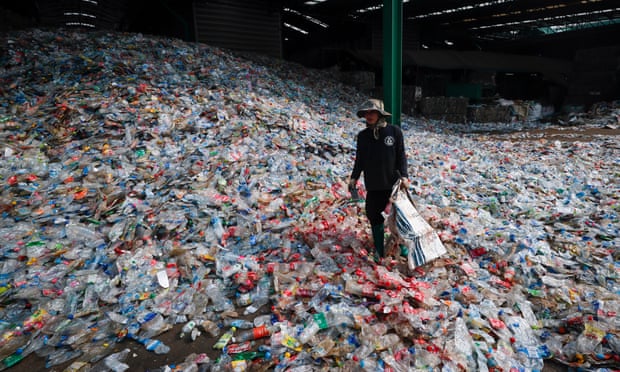
A mound of plastic bottles at a recycling plant near Bangkok in Thailand. Around 300 million tonnes of plastic is made every year and most of it is not recycled. Photograph: Diego Azubel/EPA

We’re always happy to give credit when due. While beer isn’t the first beverage that comes to mind when thinking about the scourge of plastics in the world, bottled soda and water certainly are. So it’s heartening to hear that a company like Coca-Cola, which has contributed to the proliferation of the world’s plastic problem, is backing a bioplastic project that could help to control it.

What To Do With Expired Trees

USDA_USFS_Sierras_web

Dead trees in a California forest in August 2016. U.S. FOREST SERVICE

It sounds like the inverse of rewilding’s restorative approach, when there is a large patch of expired trees; decisions must be made. Thanks to Jane Braxton Little for laying out the questions:

In California, A Push Grows to Turn Dead Trees into Biomass Energy

As forests in California and the Western U.S. are hit by rising numbers of fires and disease outbreaks related to climate change, some experts argue that using dead and diseased trees to produce biomass energy will help to restore forests and reduce CO2 emissions.

Jonathan Kusel owns three pickups and a 45-foot truck for hauling woodchip bins. He operates a woodchip yard and a 35-kilowatt biomass plant that burns dead trees, and he runs a crew marking trees for loggers working in national forests. Those are a lot of blue-collar credentials for a University of California, Berkeley PhD sociologist known for his documentation of how the decline of the timber industry affects rural communities. Continue reading

Crisis Inspired Pivots

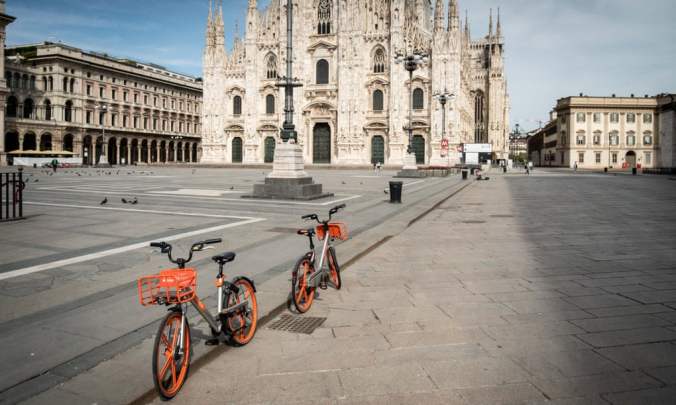
The Strade Aperte plan includes temporary cycle lanes and 30kph speed limits. Photograph: Stefano De Grandis/REX/Shutterstock

Looking for silver linings during the current times isn’t always easy, but reviewing how cities strategize over plans to open economies while keeping the public safe is a possible place to start. (It can also be a source of discouragement, so we’re glad to highlight the enlightened…)

In Milan the concept of pivoting toward carbon-free commuting within the city was a far-reaching goal for a future decade. The current crisis has helped to create a thought shift toward action now.

Seriously working on solutions to both the health crisis and climate crisis together could be a silver lining, indeed.

Milan announces ambitious scheme to reduce car use after lockdown

Milan is to introduce one of Europe’s most ambitious schemes reallocating street space from cars to cycling and walking, in response to the coronavirus crisis.

The northern Italian city and surrounding Lombardy region are among Europe’s most polluted, and have also been especially hard hit by the Covid-19 outbreak.

Under the nationwide lockdown, motor traffic congestion has dropped by 30-75%, and air pollution with it. City officials hope to fend off a resurgence in car use as residents return to work looking to avoid busy public transport.

The city has announced that 35km (22 miles) of streets will be transformed over the summer, with a rapid, experimental citywide expansion of cycling and walking space to protect residents as Covid-19 restrictions are lifted.

The Strade Aperte plan, announced on Tuesday, includes low-cost temporary cycle lanes, new and widened pavements, 30kph (20mph) speed limits, and pedestrian and cyclist priority streets. The locations include a low traffic neighbourhood on the site of the former Lazzaretto, a refuge for victims of plague epidemics in the 15th and 16th centuries. Continue reading

New Activities For Community Developments

merlin_169719372_13a4438f-1626-495f-afa1-85041b75f27e-jumbo

This trend in real estate development is a breath of fresh air:

Taking the Golf Out of Golf Communities

Around the country, planned developments are adapting and reinventing in order to appeal to a wider range of buyers.

07sp-adapt-inyt3-jumbo

Hilton Head Plantation is a gated golf community on Hilton Head Island in South Carolina.

MacDonald Highlands is a master-planned community of less than 1,000 units in Henderson, Nev., a wealthy suburb of Las Vegas within squinting distance of the Strip. For years, its main selling point was DragonRidge Country Club, a private 18-hole golf course sculpted out of the desert foothills, with emerald fairways that wind past multi-million-dollar homes.

But lately, the property’s owner, Rich MacDonald, has had more on his mind than golf.

Mr. MacDonald opened the club in 2001, sold it in 2014 and bought it back in 2016. When he did, he said: “I wanted to make sure we have the equivalent of a cruise director. Someone who does fun things, interesting events. We’ve had to adapt quite a bit because the social aspect seems to be the main focus for new residents.”

At existing golf communities around the country, a similar story of adaptation and reinvention is playing out. Continue reading

Chocolate Made Clearer

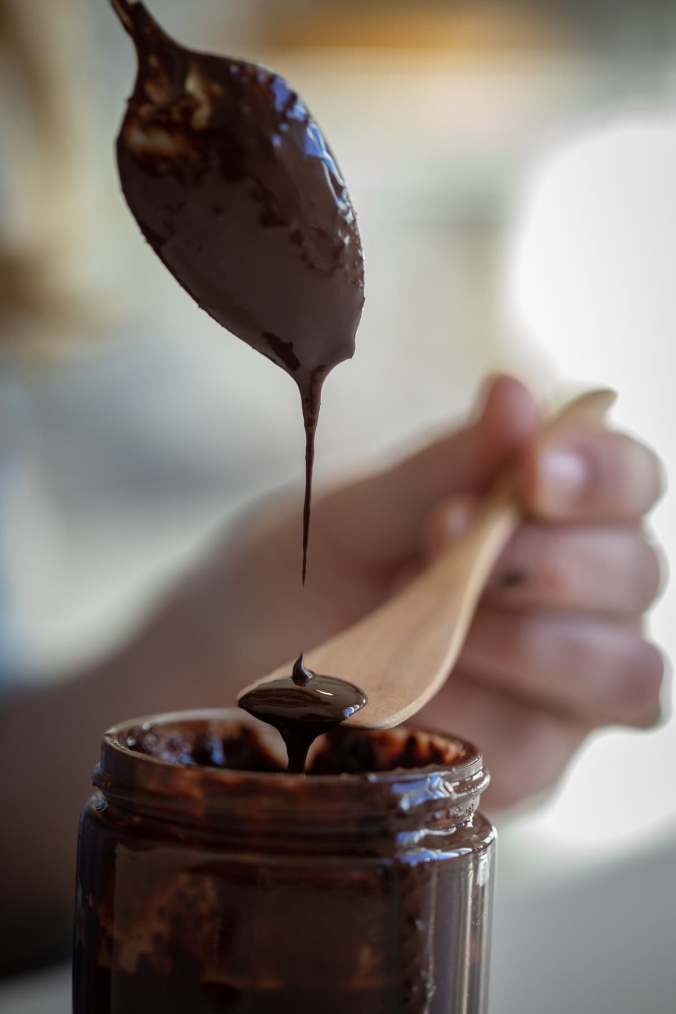
merlin_168444540_dc3d82ca-323f-428e-9a3f-deccbc6b33db-mobileMasterAt3x

Erin Lubin for The New York Times

I had planned to follow up on yesterday’s post today, but there is a better option. Even after years of learning, fun as well as more serious facts than I knew previously about chocolate, so that we would source excellent quality, and ethical, chocolate, there is always more to learn. Thanks to Melissa Clark, as always, for the enlightenment:

Everything You Need to Know About Chocolate

The beloved bar has come a long way in quality and complexity. Here’s a primer on how it’s made, and how to choose the best and most ethically produced.

merlin_168444732_854c1092-d8eb-41db-9a17-1bfbe786f01a-mobileMasterAt3x

Erin Lubin for The New York Times

You probably think you already know everything you need to know about chocolate.

For instance: The higher the percentage of cacao, the more bitter the chocolate, right? The term “single origin” on the label indicates that the chocolate expresses a particular terroir. And wasn’t the whole bean-to-bar movement started by a couple of bearded guys in Brooklyn?

Wrong; not necessarily; and definitely not. Continue reading

Non-Gastronomic Mushroom Utility

6277

Thanks, as always, for the interesting news on creative use for mushrooms beyond the gastronomic, from the Guardian:

Mushrooms and orange peel: could biotech clean up the building industry?

A biotech startup is researching building materials that could revolutionise construction. Not only are they biodegradable – some also absorb toxins

Cocoa husks, dried orange peel, ground blue pea flowers: the ingredients read like a tasting menu. They are, in fact, waste products that are used to make Orb – a sustainable building material that is carbon neutral. It’s versatile enough to be used for furniture or as a substitute for a wood-based sheet material. Continue reading

When Life Gives You Lemons

Ceiba’s juicer at Authentica, as seen in front of the Costa Rica Marriott Hotel Hacienda Belen

To make the best use of the citrus in your life, visit Authentica and find this item. You may already have a fancy electric gadget that can perform the same function as this juicer, and it may seem self-evidently superior.

I beg to differ. First, on the experience: the mix of metal, plastic and/or glass of the electric juicer, designed for speed, eliminates any inherent satisfaction that either the fruit or the tool might provide. Holding this wooden juicer made by our friends at Ceiba Design Collective is a form of time travel. It resembles one I first saw in 1969. And that one likely resembled juicers in use in that village for hundreds of years, typically made of olive wood.

Secondly, I beg to differ on utility. Electric juicers may get the job done quicker, but this juicer gets another, more important job done. Its carbon footprint is a tiny fraction of the electric one, starting with construction and finishing with the use of electricity. And this is made by a group of craftsmen in Costa Rica who work with wood that has been recycled from previous use–timbers or railings from old homes–or wood from trees felled by storms. Experience + utility + sustainability = an authentic Costa Rica takeaway.

Vacation Choices Make A Difference

We did not link out to Annie Lowrey’s article earlier this year, so thanks to her and the Atlantic for this brief summary statement; and with it, a recommendation to read the whole article Too Many People Want to Travel:

Mass Tourism Is Destroying the Planet

Last year, 1.4 billion people traveled the world. That’s up from just 25 million in 1950. In China alone, overseas trips have risen from 10 million to 150 million in less than two decades.

This dramatic surge in mass tourism can be attributed to the emergence of the global middle class, and in some ways, it’s a good thing. Continue reading

Mr. Trash Wheel Is Going Strong

Kormann-MrTrashWheel.jpg

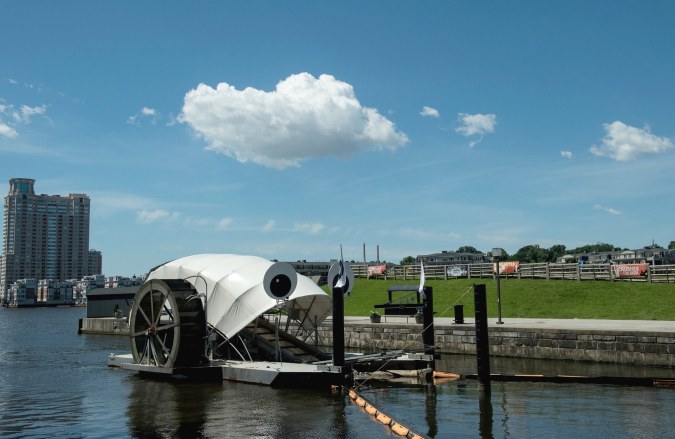
Since 2014, Mr. Trash Wheel has collected approximately twelve hundred and thirty-three tons of trash and debris that otherwise would have flowed into Baltimore’s Inner Harbor. Photograph by Nicholas Kamm / AFP / Getty

Thanks to a writer who never disappoints for this update to an inspiring story we lost track of:

The Promise of Mr. Trash Wheel

By Carolyn Kormann

John Kellett, the former director of Baltimore’s Maritime Museum, used to cross a footbridge over Jones Falls, the largest tributary feeding into Baltimore’s Inner Harbor, every day on his way to work. “When it rained, there was a river of trash flowing down,” he told me. He had spent twenty years working on the harbor, primarily in environmental education and shipbuilding, and had a deep knowledge of its hydrodynamics and history. City officials, he told me, “said they were open to ideas, so I started sketching.” He drew plans for a machine powered by an old-fashioned water wheel—a technology that had once been a staple throughout the city—designed to intercept trash at the mouth of Jones Falls, which is the main source of harbor pollution. A prototype was installed in 2008. By 2014, Kellett’s invention was reborn as Mr. Trash Wheel—a fifty-foot-long machine, weighing nearly a hundred thousand pounds, that resembles a friendly mollusk, with giant, googly eyes and its own Twitter account.

Five years later, Mr. Trash Wheel has spawned three replicas around Baltimore—Professor Trash Wheel, Captain Trash Wheel, and another that was announced last week but has yet to be named or installed in the water. Continue reading

Organikos Single Estate & Single Origin Coffees

Single Estates.jpg

When we introduced Organikos coffees early last month at the two Authentica shops in Costa Rica, we were conscious that single estate coffees, highly prized among aficionados around the world, have not been visible in the country where they are grown. The names of regions are more recognizable thanks to big coffee retailers like Starbucks who have promoted them. So we included the region of origin on the single estate labels. We offer three estates now, and will add more after the next harvest.

Regionals.jpg

We also offer three single origin coffees. These three were chosen because the regions are widely considered by coffee experts to have the most consistent quality, year after year. The beans chosen for these single origin blends are from a mix of farms that, taken together, are best representative of the characteristics the region is known for.

Brunca.jpgCupping notes on all these later. For now, a puzzle. The name of the coffee company, Organikos, harkens to an older and broader set of meanings related to the word organic. Not strictly the certification for all-natural food production, but a wider selection of good outcomes. We chose only one certified-organic coffee among our twelve coffee offerings. It happens to be from one of the less well known regions, Brunca, in the south bordering Panama. To our surprise, this has been our top-selling coffee so far. We promoted it only as organic, but it is also a single estate (Hacienda La Amistad).
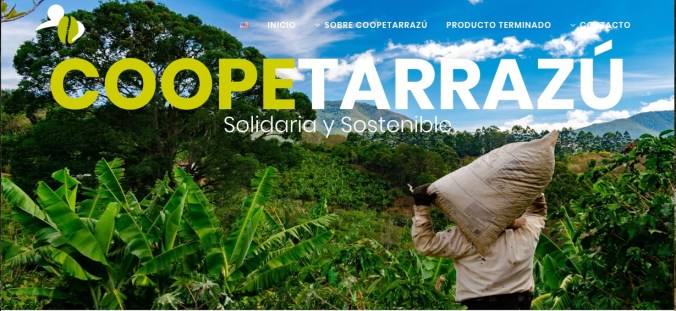
FairTradeIt is not surprising that organic coffee sells well, but it is puzzling to me that it outsells by such a large margin a certified fair trade coffee from Costa Rica’s most recognizable region of origin. Not to mention that this fair trade coffee is produced by one of the country’s most respected cooperatives.

Coopetarrazu.jpg

First and foremost, we have been developing Organikos to offer “taste of place” coffees so that you can sense the amazing diversity of Costa Rica on the palate.

hand-organikos.jpgThe commitment of Organikos to invest 100% of its profits in conservation is no less important, but this is clearly going to be a bi-product of offering the best taste of place options. This is the puzzle I will be working on going in to the holiday season, which coincides with coffee harvest in Costa Rica, which also coincides with the time when more travelers will be visiting the country. So sales data will be one element in the puzzle-solving.

Reducing In-Flight Waste

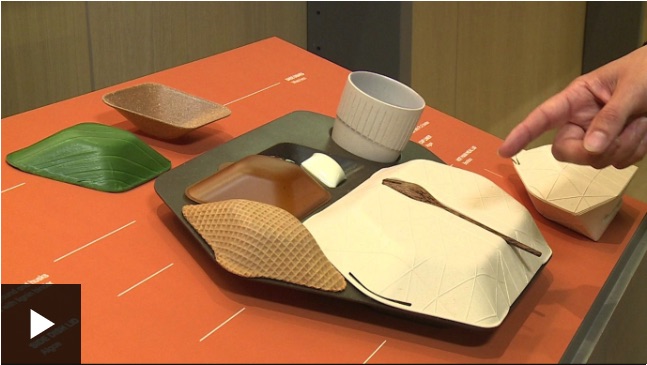
Is this the in-flight meal tray of the future?

_109128066_waste1.jpg

We are happy to see not only that the BBC has given this issue attention, but so has the Design Museum:

_109128066_waste2.jpg

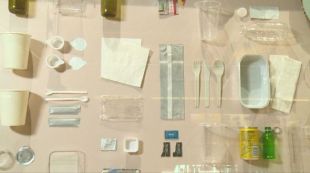
Just some of the waste from an average passenger on a 12-hour flight.

Squeeze and settle into your chair on a long-haul economy flight, and you might be offered a drink, in a plastic cup, which you’ll stir with a plastic stick.

You might be given a pack of toiletries – wrapped in plastic, containing a toothbrush – wrapped in plastic.

You might watch a film, using headphones – wrapped in plastic. You might enjoy a meal which you’ll eat with plastic cutlery, also wrapped in plastic. The list goes on and on.

Put together, that contributes to the 5.7 million tonnes of cabin waste from passenger flights each year.

A greener meal tray

A new exhibition at London’s Design Museum aims to rethink the waste we generate when we travel.

Design firm PriestmanGoode has worked up an environmentally-friendly version of the traditional economy meal tray. Continue reading

When Andeans Dream Of Electric Buses

Medellin_089A3212_web

An electric bus in service on the streets of Medellín, Colombia. METRO DE MEDELLÍN

Happy to see our neighbors to the south taking the lead in greening public transportation:

An Increasingly Urbanized Latin America Turns to Electric Buses

From Colombia to Argentina, major cities in Latin America are starting to adopt electric bus fleets. In a region with the highest use of buses per person globally, officials believe the transition will help meet climate targets, cut fuel costs, and improve air quality.

Medellin_Bus-at-station-MG_web.jpg

Medellín will have 65 electric buses in service by the end of the year, making it the second-largest electric bus fleet in Latin America. MARIA GALLUCCI/YALE E360

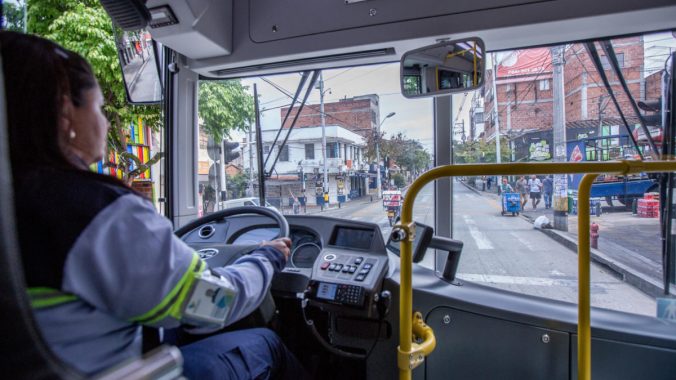
In Medellín, Colombia, passengers cram aboard a battery-powered bus during the morning commute. Inside, the vehicle is a respite from the crush of cars, taxis, and motorcycles winding through traffic outside. The driver, Robinson López Rivera, steers the bus up a steep ramp, revealing views of hillsides covered with rooftops of tile and tin. The bus dashboard indicates that the batteries are mostly charged, with enough power to last through the evening rush hour.

“It’s a little smoother and more comfortable to drive. And there’s hardly any noise,” López Rivera says from behind the wheel. He gently brakes as a street vendor pushes a fruit cart across the dedicated bus lane. At night, the bus will return to a parking lot by the airport, recharging its 360-kilowatt battery pack while the city sleeps.

Santiago-buses-electricos1_web

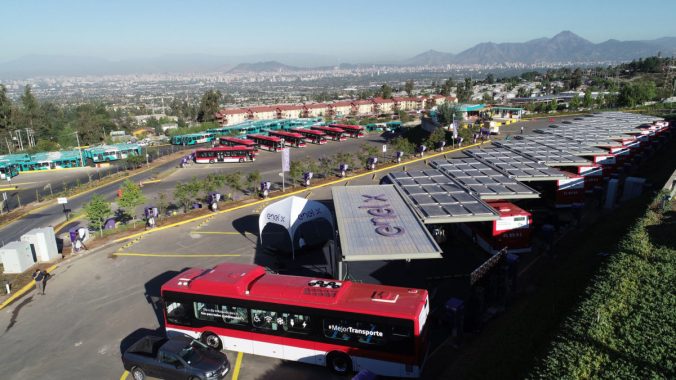
An electric bus charging terminal in Santiago, Chile, which draws power primarily from solar panels. ENEL X

The other 77 buses in the city’s bus rapid transit system, called Metroplús, run on natural gas and move about 251,000 passengers daily. Thousands more privately owned coaches and minibuses burn diesel as they traverse the sprawling metropolitan area of 3.7 million people, with older models leaving a trail of sour-smelling smoke. Faced with chronic air pollution and concerns about climate change, Medellín is now trying to move quickly to electrify its entire mass transit network. Continue reading

Plastic, Back At Work, Building Schools

merlin_157515186_a5507d98-988d-47f3-9b7e-81d1fb8a718f-jumbo.jpg

 Yagazie Emezi for The New York Times

For the two decades our company has been managing conservation-focused enterprises. Elimination of plastic has been a passion, and finding ways to reduce its use has been an obsession. While based in India, and working on a project in Ghana, we got a close look at entrepreneurial plastic re-use for the first time. We have been on the lookout for more ever since and this story gives hope for a whole new level of solution:

Less Trash, More Schools — One Plastic Brick at a Time

Plastic garbage collected by a women’s group is being recycled into bricks and used to build schools in West Africa.

merlin_157515216_f506bbda-79f7-48de-a48e-df2c3acc23cc-jumbo.jpg

Yagazie Emezi for The New York Times

ABIDJAN, Ivory Coast — She left home before dawn. Her four children were still asleep in her cement block house in Abobo, a maze of shops and houses occupied by dockworkers, taxi drivers, factory laborers and street sellers.

She and a friend crossed into the upscale neighborhood of Angré, home to doctors and businessmen. They tossed the plastic castoffs of the consumer class into bags slung over their shoulders as the cocks crowed and the sun peeked over villa walls draped with bougainvillea.

merlin_157515387_a493608b-0bcb-4662-9036-0839d219ce35-jumbo.jpg

Students and residents gathered by plastic bricks outside their school in the Sakassou village. Yagazie Emezi for The New York Times

Mariam Coulibaly is part of a legion of women in Abidjan who make their living picking up plastic waste on the city streets and selling it for recycling. Now they are lead players in a project that turns trash into plastic bricks to build schools across the country.

merlin_157515282_8bf13b00-0c4f-4f76-bbb9-70eb4ccf6548-jumbo

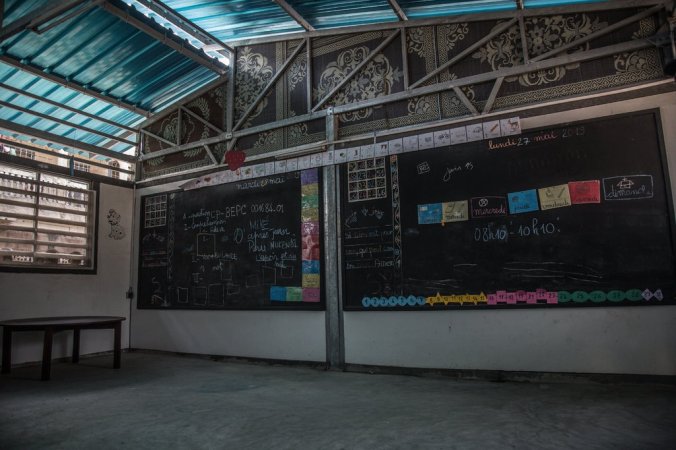
Pre-school principal Tirangue Doumbia ushering students into a new classroom built of recycled plastic bricks at the Gonzagueville school. Yagazie Emezi for The New York Times


They are working with a Colombian company to convert plastic waste — a scourge of modern life — into an asset that will help women earn a decent living while cleaning up the environment and improving education.

She sees it as a chance to better her life, maybe even to rise into the middle class.

“We don’t get good prices” from the current buyers, Ms. Coulibaly said. “This will help us.”

In the past year, the venture has built nine demonstration classrooms out of recycled plastic bricks in Gonzagueville, a scrappy neighborhood on the outskirts of Abidjan, and in two small farming villages, Sakassou and Divo. The first schools were built with bricks imported from Colombia. But in the fall, a factory now rising in an Abidjan industrial park will begin making the bricks locally. Continue reading

The Not-So-New New Renewable

Vanguard_Bar-Way_Deerfield-MA_web.jpg

A manure and food waste-to-energy facility at Bar-Way Farm in Deerfield, Massachusetts. VANGUARD RENEWABLES

Biogas came to the attention to most of us contributing to this platform while in India. It has remained on our radar as an important, if quaint farmland quirky skunkworks. Thanks to Yale e360 for highlighting its emergence as a scaling alternative to other forms of natural gas:

Could Renewable Natural Gas Be the Next Big Thing in Green Energy?

For decades, small-scale biogas systems have collected methane from landfills, sewage plants, and farms. Now, in Europe and the U.S., the growth of this renewable form of natural gas is taking off as businesses capture large amounts of methane from manure, food waste, and other sources.

Vanguard_food-waste-truck_Haverhill-MA_web.jpg

A truck delivers food waste to an anaerobic digester at a Massachusetts farm. VANGUARD RENEWABLES

In the next few weeks, construction crews will begin building an anaerobic digester on the Goodrich Family Farm in western Vermont that will transform cow manure and locally sourced food waste into renewable natural gas (RNG), to be sent via pipeline to nearby Middlebury College and other customers willing to pay a premium for low-carbon energy.

MaasEnergy_Covered-Lagoon-Digester_Galt-CA_web.jpg

A covered lagoon manure digester on Van Warmerdam Dairy in Galt, California. MAAS ENERGY WORKS

For the developer, Vanguard Renewables, the project represents both a departure and a strategic bet. The firm already owns and operates five farm-based biogas systems in Massachusetts; each generates electricity on site that is sent to the grid and sold under the state’s net-metering law. The Vermont project, however, is Vanguard’s first foray into producing RNG — biogas that is refined, injected into natural gas pipelines as nearly pure methane, and then burned to make electricity, heat homes, or fuel vehicles.

“Producing RNG for pipeline injection and vehicle fueling is the evolution of where everything is going” in the biogas sector, says John Hanselman, Vanguard’s CEO. Continue reading