Losar, the Tibetan New Year

Guest Author: Carl Zainaldin
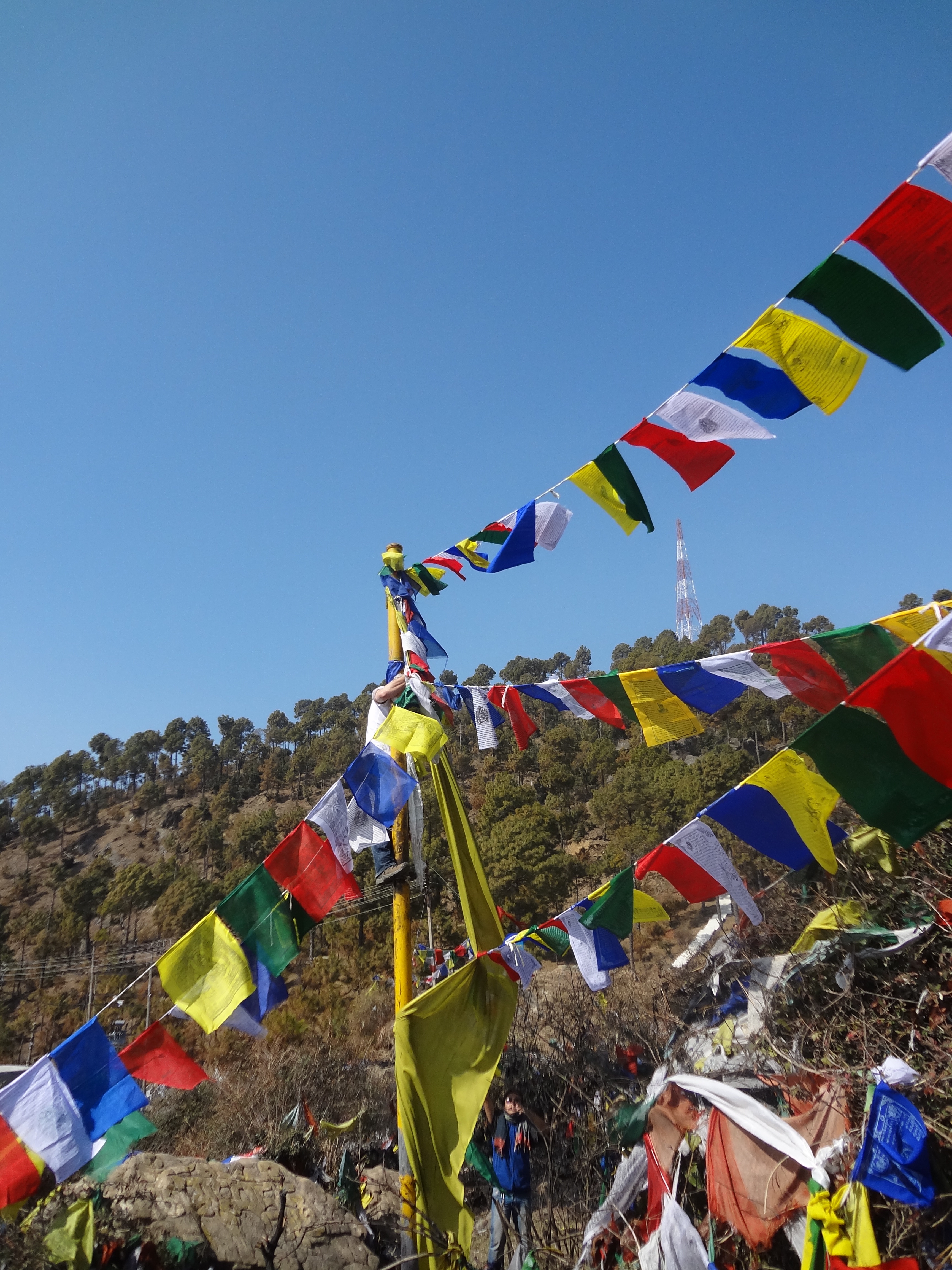
Losar, the Tibetan New Year which usually falls sometime in February, is celebrated by Tibetans all around the world. Lo means year, and sar means new. The Tibetans use a lunar calendar, and Losar falls on the first day of the new month, marked by the first new moon of the year.

Losar lasts for fifteen days, with the celebrations occurring on the first three days. To bring in the New Year, Tibetans dance, sing, drink chaang (a Tibetan beer that is served warm), and bake special goods such as khapsays (dough fried into butter and made into special shapes and various flavors).

Losar is a time for people make pilgrimages to sacred Buddhist temples and monasteries. Monasteries perform Losar pujas (rituals) which are popular events for Tibetans to attend. These pujas include ritual dancing, reciting Buddhist scripture, and performing offerings to certain deities, all of which are supposed to be auspicious activities to bring in the New Year. Continue reading
Holier Than Holi?

This slideshow requires JavaScript.

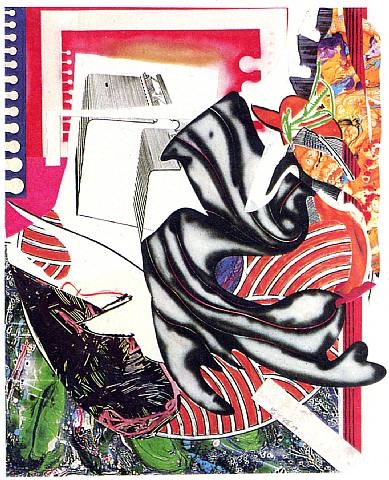
After noting several reasons, big and small, that we trust The Guardian, I kept looking at those photos.  When I showed Milo, as usual he already knew much more about the topic of Holi than I (not a major feat in this case because until seeing those photos in The Guardian I knew precisely zero about Holi), so today when those photos caught my eye again it occurred to me that The Guardian might just have some more.  Continue reading

High Time

…Some years ago — never mind how long precisely — having little or no money in my purse, and nothing particular to interest me on shore, I thought I would sail about a little and see the watery part of the world. It is a way I have of driving off the spleen, and regulating the circulation. Whenever I find myself growing grim about the mouth; whenever it is a damp, drizzly November in my soul; whenever I find myself involuntarily pausing before coffin warehouses, and bringing up the rear of every funeral I meet; and especially whenever my hypos get such an upper hand of me, that it requires a strong moral principle to prevent me from deliberately stepping into the street, and methodically knocking people’s hats off — then, I account it high time to get to sea as soon as I can… Continue reading

Connecting The Madeleines

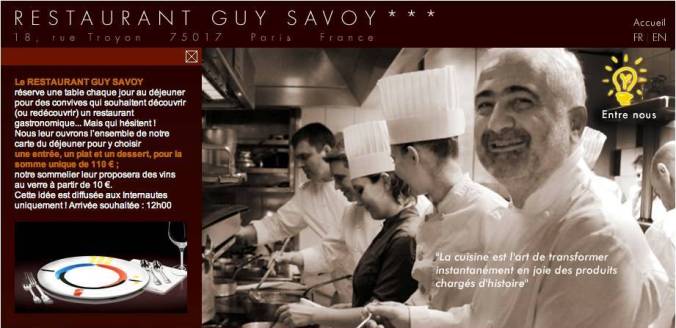
The young man working his way through the kitchen brought to mind a young man of about the same age, three decades earlier. I had the good fortune, in my early adulthood, to work in a restaurant owned and operated by a man who is one of the great chefs of his generation.  I did not work in the kitchen, but in the dining room, from 1983-1985. It provided the most important education of my life, which is saying a lot because I eventually earned a Ph.D. and even that did not top the learning earned in Guy Savoy’s restaurant.

Continue reading

Honesty Boxes

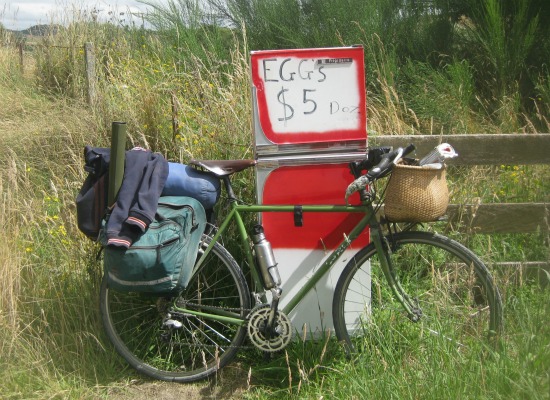
In case you missed the short item about this cyclist down under, it is worth a look.  So is the related item (click the image above to go to the original) about honesty boxes:

Many tourists in automobiles surely pass right by them unaware—but cyclists see these handmade, unguarded food stalls in the distance, usually first as a cardboard sign advertising some product of the homestead. Many times it’s just pine cones, sacks of sheep stool or firewood—and sometimes the sign is just a notice that a reputed local bull is ready and eager to mate.

Continue reading

Biking In The Catlins

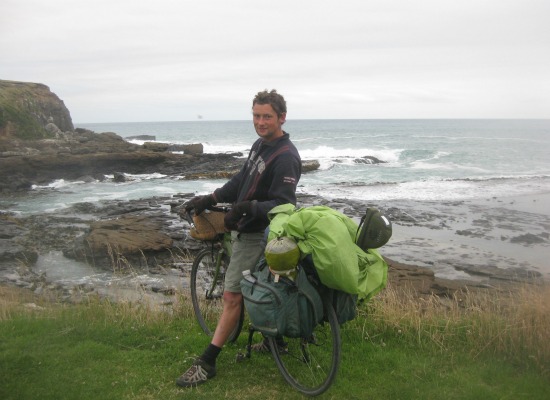
Facing off with the edge of the world, where the gray and blustery waters of the Southern Ocean meet the rocks of Curio Bay, in the Catlins (New Zealand). Photo by Geoff Green.

Today, a post on the Smithsonian blog (sub-blog?) called “off the road” catches our attention.  The photograph on its own would be enough to catch the eye, but reading this fellow’s several paragraphs about a place called the Catlins is enough to get on the raft and start paddling to New Zealand (if, like us, you like faraway places):

A main claim to fame of the Catlins is the area’s high latitude. Slope Point is the southernmost spot of land on the South Island, at 46 degrees, 40 minutes south. Oh, come on, now. Don’t raise your eyebrows and whistle like that. Seattle, for example, boasts a latitude of 47 degrees, and Glasgow goes just under 56 degrees. Yet I’ll grant that the Catlins are farther south than Tasmania, than Cape Town and than most cities in South America. This is, indeed, among the southernmost settled areas on the planet.

Continue reading

Travel, Writing & Games

This series has always been worth reading, whether you are an American looking through the eyes of a fellow American, or otherwise intrigued by a niche of American perspective that is not quite representative of that culture as a whole.

First things first: sometimes a book, a music recording or other item is only available from the mainstream online retailers such as Amazon or iTunes, but whenever possible we promote the purchase from independent sellers.  So click the image to the right if you want a link to independent booksellers in the USA, provided by the ever-entrepreneurial American Booksellers Association.

Now, the side show: the series editor Jason Wilson is also a contributor to a site we refer to on occasion, and he wrote an interesting item a couple of years ago that began:

Continue reading

Birding in North America


Black-footed Albatross

A voice rang out from the stern of the boat, “Black-footed Albatross, nine o’clock”.  Dreams from the night before were coming true as an Albatross, the hermit of the sea, sailed past me and onto my life list…Number 600.  A journey that began five years ago had reached a major milestone.  The day before I reached 600, my dad and I arrived at our Monterey hotel anxiously awaiting our pelagic trip.  I was four species short of my milestone, and I wanted to reach it in California.

Continue reading

Lessons Of The Road

I recently wrote about India’s pithy little roadside instructions with the promise of photos to come.  My last drive to Thekkady was on an unusually traffic free day, so it seemed safe enough to pull over and finally get my shots.

Continue reading

The Dry Tortugas

Nesting Brown Noddies

The sun rose on a beautiful spring day in southern Florida.  After a week and a half of birding with my dad across the state, our trip was coming to a close.  During this time we had seen some amazing species:  Mangrove Cuckoo, Snail Kite, Swallow-tailed Kite, Snowy Plover, Black-whiskered Vireo, Short-tailed Hawk, and so much more.  However, we had saved the best for last.

Continue reading

Munnaranorama

Creating panoramas is an imprecise art – a photographer has to account for several variables when planning a shot. Composition is itself the most simple of these variables – despite the fact that what you see is rarely what you get. A good vantage point at a higher altitude than the subject is ideal, although occasionally elements which frame in the view add interest to the image. Symmetry isn’t necesary, but unbalanced shots should have either objects of interest or follow the rule of thirds (which is by no means an actual rule). A panorama need not be a full 360 degrees, and besides the ‘wow’ factor there is usually little value to this property. The picture ends up being more like a strip than something easily viewable, and takes a great deal of time to see and appreciate.


Continue reading

India Art Fair 2012

In case you are on your way to India, and can divert to Delhi for a day or two, here is a diversion to justify it (click the image above to go to the website):

The 4th edition of India Art Fair, formerly India Art Summit, will once again bring focus to the rapidly growing Indian art market. The 3rd edition in 2011 drew 128000 visitors over 4 days. While 80% of the galleries reported buoyant sales, the fair also attracted a record number of new collectors (30-40%). In only three years, India Art Fair has consolidated its position as the region’s leading platform for modern & contemporary art. Continue reading

Advice For Peace Corps Hopefuls And The Creation Of A Hotel

Guest Author: Robert Frisch

Image

My Peace Corps Location: Matagalpa, Nicaragua

As a former Peace Corps volunteer, it is not a rare occasion that I come across an eager undergraduate looking for some guidance on the decision of whether or not to join the organization.  I also receive many requests for tips on how to make the most out of the two-year volunteer program.  Over the years, I’ve narrowed down my responses to three main categories: Continue reading

REMOC: Behind the Seams

This one was actually made by Ana's daughter Meli - it must be a family tradition!

I don’t know what I was expecting when Ana Teresa invited me to take a look at her studio. On the one hand, I’d seen the quality of the products on the shelves in REMOC, and thus knew that the craftswomen were not amateurs; but I also knew that many of them didn’t have high incomes or hours to invest in their business – one of the challenges of the trade, for them, is that they are making a living while maintaining a home for their families and fulfilling their duties as a wife and mother. So, despite knowing that the work they produce is ‘serious’, I was still impressed when Ana ushered me through a door I’d thought led to a garage, and I found myself in a real, fully equipped artisan’s workshop. Continue reading

Backwaters Home: Pampa Villa

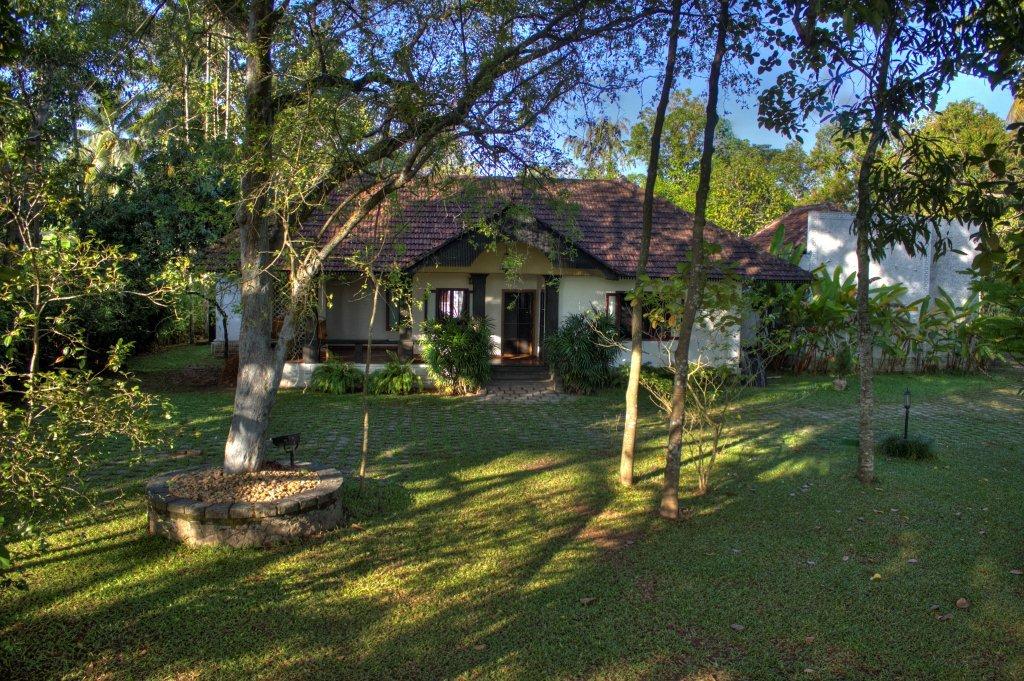
Pampa Villa On The Pamba River

We have mostly shown images of life on Kerala’s backwaters from the perspective of boats, as in looking at and looking from.  As Milo’s recent post showed (at the tail end, so to speak), there is much more life on these waters than first meets the eye of the occasional visitor.  The view above is from the river, looking at a home that Raxa Collective recently took responsibility for.

This responsibility included modifications to the interiors in order to make it more welcoming to travelers.  It had served as the home of a prosperous resident of the backwaters, but now is open to receive visitors whose preferences in terms of privacy, decor and food (at least spice levels) often differ from those of locals, at least a bit.

Continue reading

Haiku and Homilies

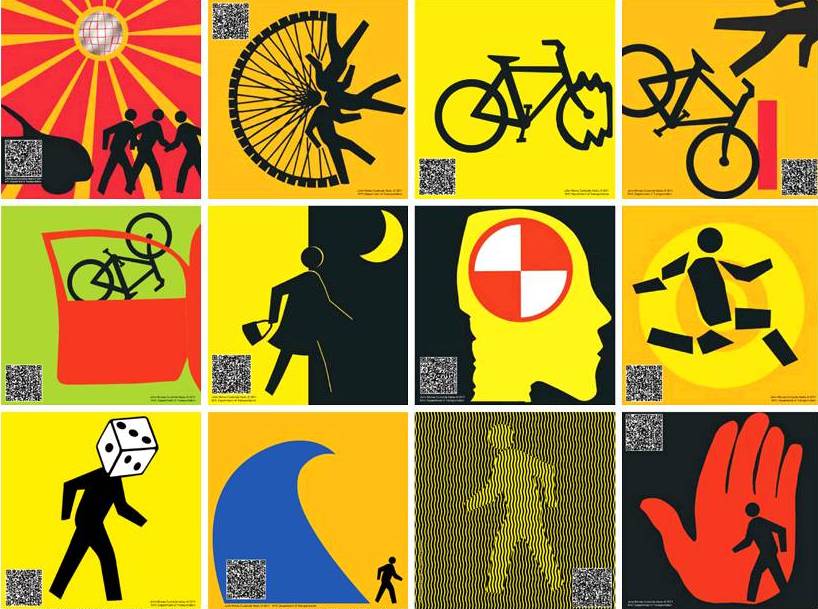
From New York to Paris to Bombay, navigating city streets can be a challenging choreography between bipeds, bicycles and motorized vehicles.  In places like India that dance expands to include the more than occasional quadruped as well.

We’ve written about driving in India on several other occasions, and to mitigate the apparent chaos the Indian Government has a program of sometimes rhyming, often droll, road signs that include little “ditties” such as:

Speed Thrills But Kills

Impatient on the Road, Patient in the Hospital

Safety On Road; Safe Tea At Home!

Reach Home In Peace, Not In Pieces!

Continue reading

Wordsmithing: Walkabout

For anyone who has seen the Nicholas Roeg film, from 1971, that takes this word as its title, the definition is visual.  You could watch that film with no sound and understand this word.  Try it.

Or you might start with the OED definition and etymology which notes that this noun is of Australian origin but begins with a generic, modern catchall meaning and gives specifics on the origin second (after the jump; of particular value, see the last sentence of the 1979 reference):

1.  A person who travels on foot, esp. for an extended period of time; a swagman or traveller.

Continue reading

Vive La Différence

One of our favorite phrases comes to mind upon seeing the news that Umberto Eco, whose book on experiential travel is as must-read as it is little-known, is curating an exhibition on lists at a museum.  Long live the difference: the man of letters, whose academic work on semiotics even many scholars are challenged by, can write trash-free page-turners as well as travel books and, why not, curate a museum exhibition.  Long live the difference: the museum that resists the trashy blockbusters can invite a man such as this to open his cabinet of curiosities. Continue reading