
Eraveli Canal Road, Fort Kochi
Eraveli Canal Road, Fort Kochi
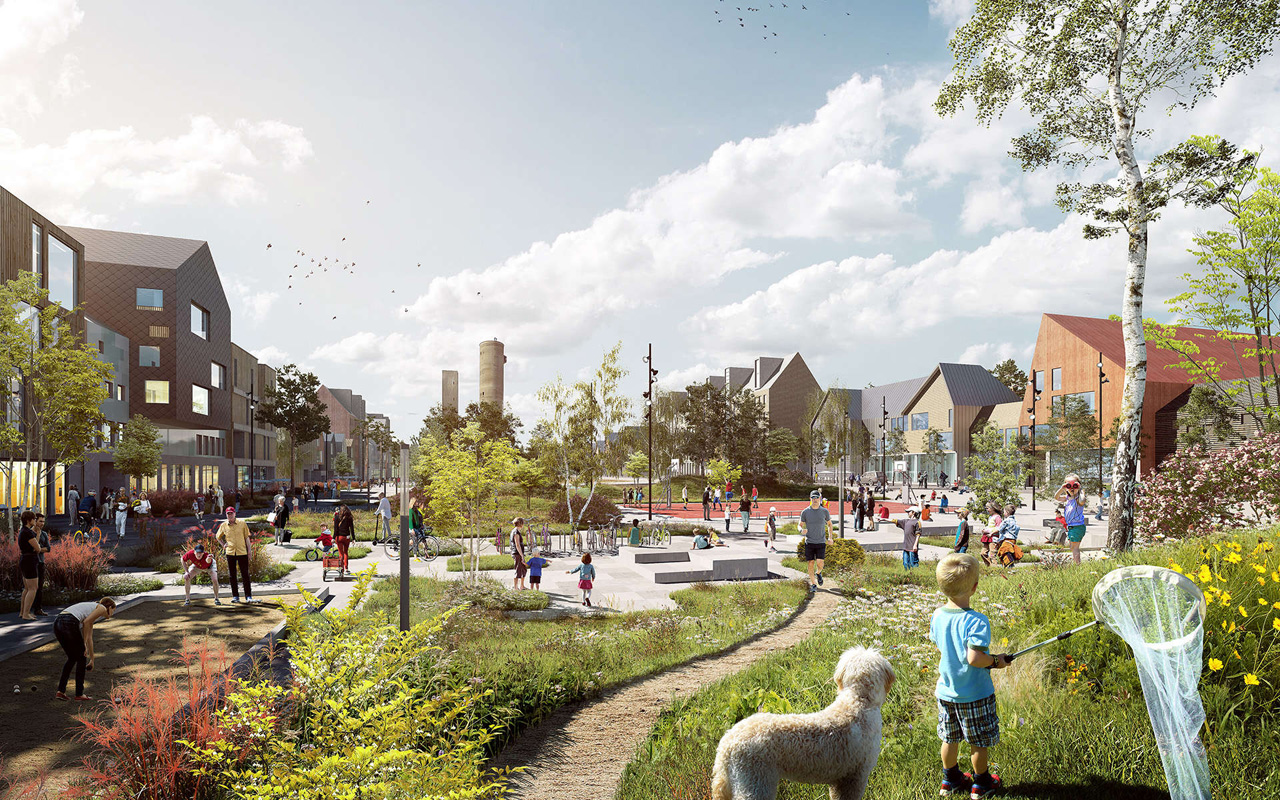
Kiruna is Sweden’s northernmost city, and soon, it’s about to pick up and move two miles to the east, thanks to a mine. PHOTO: Co Exist
Kiruna is home to the world’s largest underground iron ore mine, LKAB, supplying iron ore pellets to the steel industry in Europe. In most places, ore is extracted in opencast mines but not in Kiruna. The ore body in Kiruna is four kilometers long and 80 meters wide and stretches for at least two kilometers in the ground. For the moment, they mine at 1 km deep in Kiruna but they plan to mine until at least 2030 because they don’t know the extent of the ore body. But the city is sinking.

Madrid’s car-free zone is just under 500 acres. Only people who live in the zone are allowed to take their cars inside. PHOTO: Pictures Dot News
After over a hundred years of living with cars, some cities are slowly starting to realize that the automobile doesn’t make a lot of sense in the urban context. It isn’t just the smog or the traffic deaths; in some cities, cars aren’t even a convenient way to get around. Commuters in L.A. spend 90 hours a year stuck in traffic. A UK study found that drivers spend 106 days of their lives looking for parking spots. A growing number of cities are getting rid of cars in certain neighborhoods through fines, better design, new apps, and, in the case of Milan, even paying commuters to leave their car parked at home and take the train instead.

Wind turbines rise along the shores of Lake Erie on land that used to be home to Bethlehem Steel. PHOTO: Brendan Bannon for The New York Times
Along a bend in the Buffalo River here, an enormous steel and concrete structure is rising, soon to house one of the country’s largest solar panel factories. Just to the south, in the rotting guts of the old Bethlehem Steel plant in Lackawanna, where a dozen wind turbines already harness the energy blowing off Lake Erie, workers are preparing to install a big new solar array. And in Lockport, to the north, Yahoo recently expanded a data and customer service center, attracted by the region’s cheap, clean power generated by Niagara Falls.
After decades of providing the punch line in jokes about snowstorms, also-ran sports teams and urban decline, the Queen City of the Lakes is suddenly experiencing something new: an economic turnaround, helped by the unlikely sector of renewable energy.

The city of Modesto’s wastewater treatment plant could supply millions of gallons of water to local farmers in California. PHOTO: Lauren Sommer
Many California farmers are in a tight spot this summer, because their normal water supplies have dried up with the state’s extreme drought. In the state’s Central Valley, that’s driving some farmers to get creative: They’re looking at buying water from cities — not freshwater, but water that’s already gone down the drain.
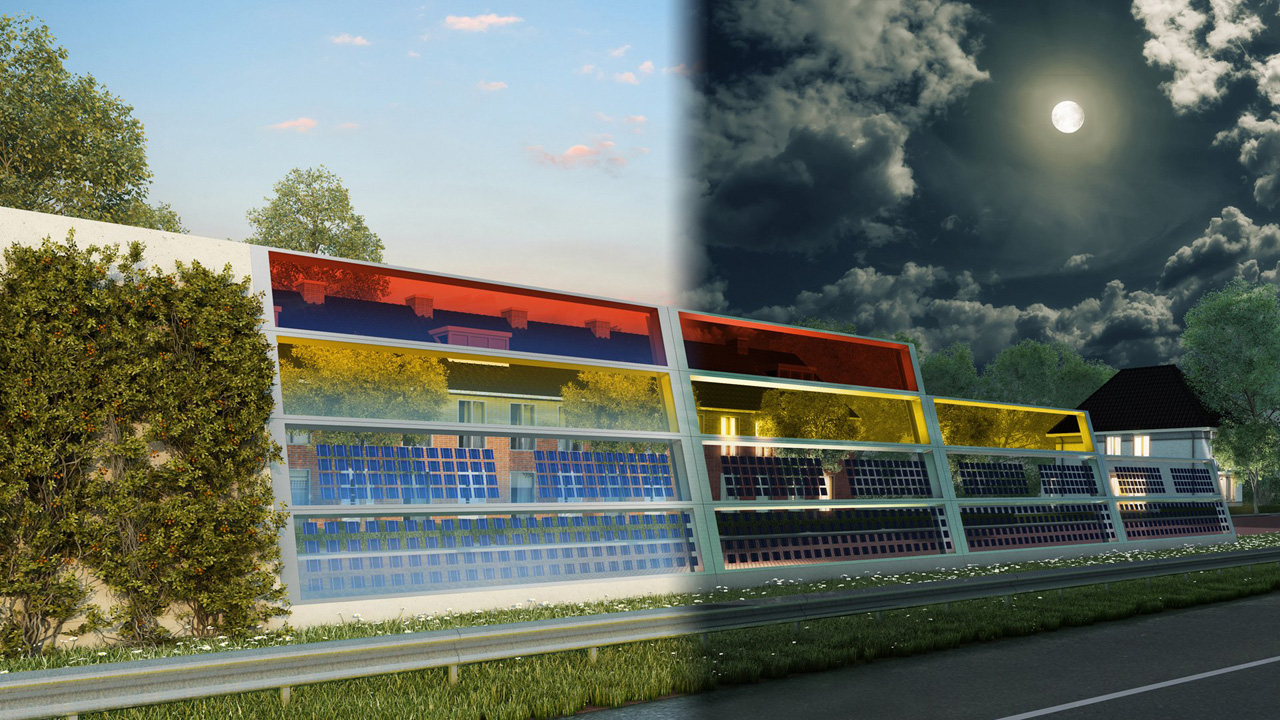
These beautiful, translucent barriers quiet traffic—and generate power at the same time
Driving the Dutch highways just got a lot more colorful. And this has to be one of the best Dutch ideas yet—roadside noise barriers that also generate solar power. Not only that, they work on cloudy days, and one kilometer (0.62 miles) provides enough electricity to power 50 homes. Continue reading

The OAS1S™ architecture is shaped as a 1 and answers to the deep human need to become 1 with nature.
If one Dutch architect gets his way, we might soon be living in car-free urban forests where the buildings look like trees. Raimond De Hullu’s new home design, the OAS1S, runs completely off the grid, thanks to renewable energy and on-site water and waste treatment. It’s made with recycled wood and organic insulation, meeting “cradle to cradle” standards where no material goes to waste. But the designer wanted to also rethink what a green building—and neighborhood—should look like.
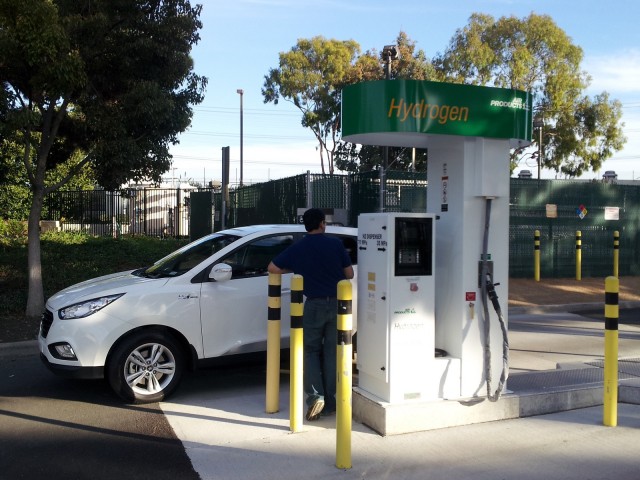
Hyundai Motor Co’s Tucson fuel cell SUV
Hyundai Motor Co believes hydrogen fuel cell vehicles are the future for eco-friendly cars despite challenges of limited infrastructure and slow sales. South Korea’s largest automaker has sold or leased 273 Tucson fuel cell SUVs since beginning production in 2013, lower than its 1,000 target, mostly in Europe and California. Fuel cell cars represent a bigger opportunity than electric cars because competition is less fierce. Hydrogen-powered cars also give more flexibility to designers. They can be scaled to big vehicles such as buses as well as small cars.
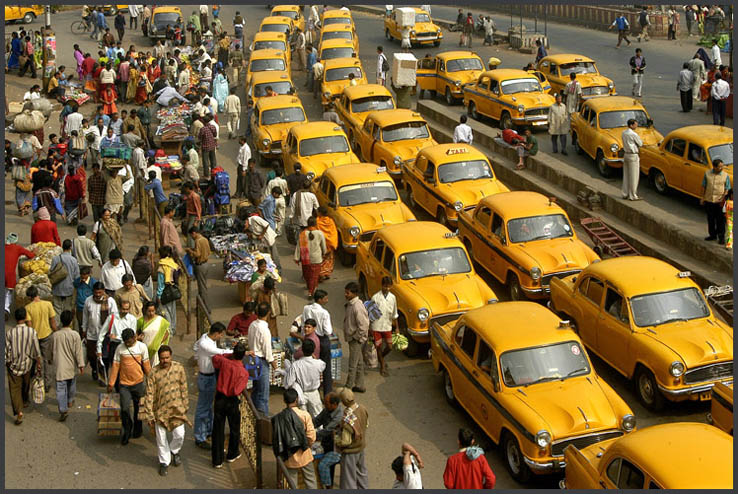
An upcoming aerial ropeway might be the solution to Kolkata’s traffic congestion issues
No, we are not talking flying here. But the Curvo, the world’s first non-linear aerial ropeway for second tier urban commutation. Pollution and traffic-free, the service, operational on electricity, would be on steel frames spreading at a distance of around 90-100 m running through the existing arterial and other roads to avoid congested streets of the city. There will be elevated stops at every distance of 750 m and the cars would be able to gain speed of about 4.25 m per second (12.5 km/hour) with the ability to carry an estimated 2,000 people every hour. Curvo is expected to be introduced in 18-24 months. The cabins will have an accommodation capacity of 8-10 persons.
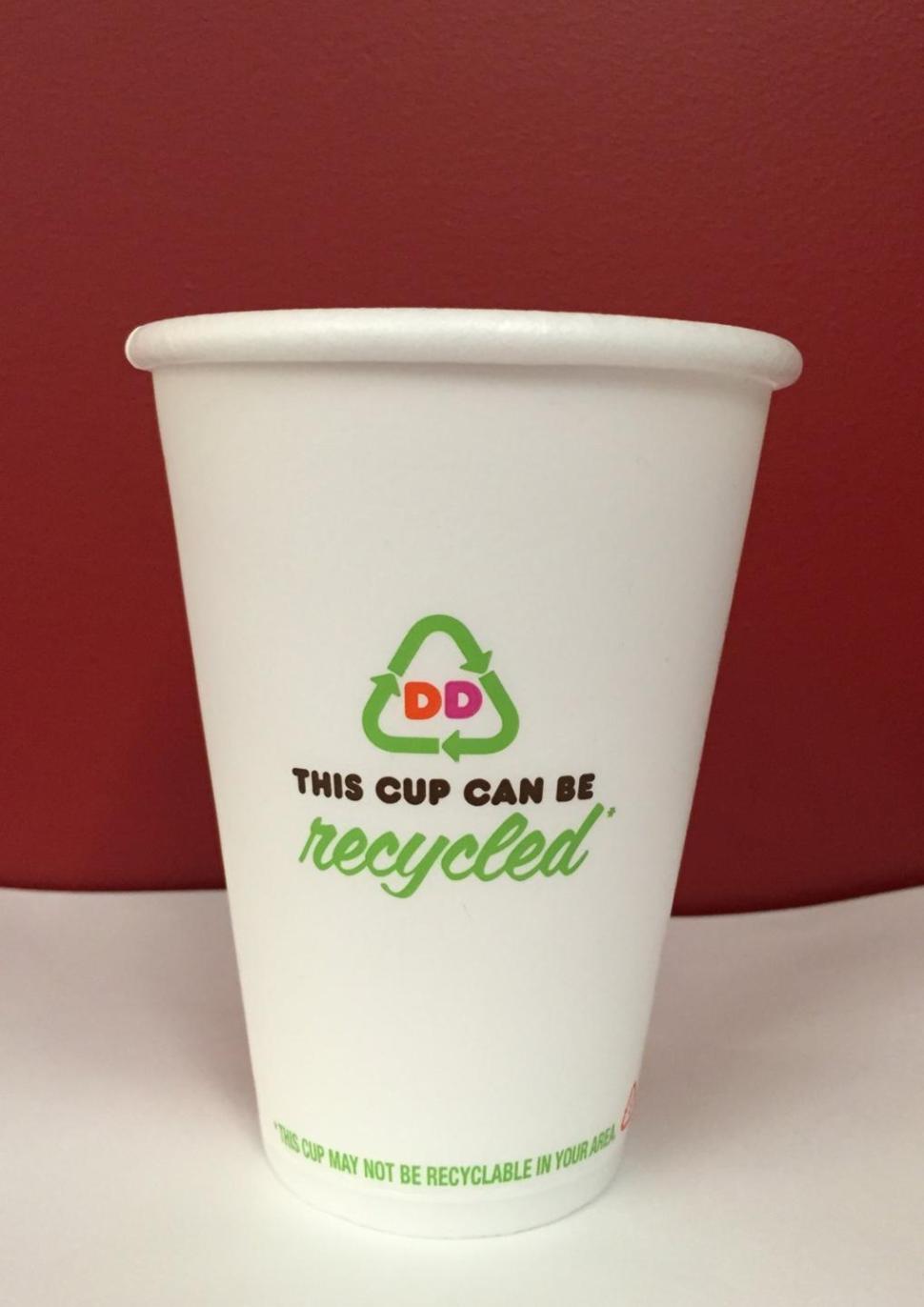
Dunkin’ Donuts is debuting a new cup made of polypropylene, and is slowly being rolled out in New York city’s more than 500 stores. PHOTO: New York Daily News
The city still runs on Dunkin’, just a little bit differently now. Dunkin’ Donuts is debuting an eco-friendly coffee cup in New York that will keep their steamy java hot, but won’t violate the Styrofoam ban that took effect on July 1. The new cup is made of polypropylene and is slowly being rolled out in the city’s more than 500 stores. It features a slimmer-looking design and — unlike the old containers — can be recycled in the city’s system with plastics.

Uganda has the world’s youngest population, with over 78% below 30 years of age. PHOTO: campustimesug.com
Uganda is a ‘young’ country if the above numbers are anything go by. And that makes the nation’s present population one that is acclimatized to he ways of the English language. A consequence of it is the development of a new language – Luyaaye. Designated an Urban Youth Language (informal varieties, the new variant is a combination of mostly English, Sheng (a Swahili-based cant, originating among the urban underclass of Nairobi, Kenya), and other Sudanese languages. Now, why should anybody pay attention to this nascent dialect, that is less rigid than traditional languages and mainly involves word play? And should its dark past be forgotten, the one about the language helping criminals do their business?
“Programmes have been carried out to spread information about AIDS but even with increased dissemination there was a decrease in the take-up of that information,” she said. “When asked what would help, people said ‘speak our language’.
PHOTOGRAPH BY ELI REED/MAGNUM
Amie and I lived around the corner from the Chelsea Hotel during the second term of Ronald Reagan’s presidency. At that moment in our lives, newly married and full of that kind of hope, we nonetheless observed with concern the culture of the USA changing radically around us. New York City, in particular seemed an epicenter for the demonization of “welfare queens” (Reagan terminology) and homeless people (of which there was a sudden massive increase due to various social safety nets being eliminated, a result of the “Reagan revolution”), while the values associated with speculative money, and cronyism, were ascendant.
It seems to me in hindsight that it was the moment when entrepreneurial capitalism receded as a driving force of the culture, giving way to a strong strain of some other form of capitalism. A much darker, or at least shadier, form that culminated in the economic tragedies of recent years in the USA, including contagious sub-strains that made their way to Europe and can be seen in the Greek tragedy today.
Reading that the Chelsea Hotel is g0ing “boutique” is at first depressing, but then not; it is a reminder of how New York City has been transformed by the new rules of capitalism; yet encouraging, even if the Chelsea Hotel’s role as an institution will be lost, because some of its core values remain intact as residents live out their terms there. The heartless strain of capitalism that bred and multiplied in the 1980s, which we have thought monstrous, has forced us to look for answers, which in turn has led us to the entrepreneurial conservation concept that animates our work, daily. The dragon sometimes teaches:
At a moment when the once beautifully entangled fabric of New York life seems to be unravelling thread by thread—bookstore by bookstore, restaurant by restaurant, and now even toy store by toy store—it might be time to spare a thought or two for the Chelsea Hotel. At the hotel on Twenty-third Street, famously rundown and louche—the Last Bohemia for the Final Beatniks, our own Chateau Marmont, where Dylan Thomas drank and Bob Dylan wrote “Sad-Eyed Lady of the Lowlands” and Leonard Cohen wore (or didn’t; people argue) his famous blue raincoat, and Sid Vicious killed (or didn’t; they argue that, too) Nancy Spungen—the renovators and gentrifiers have arrived. The plastic sheeting is everywhere, the saws buzz and the dust rises. In a short time, the last outpost of New York bohemia will become one more boutique hotel. Continue reading
Mattanchery
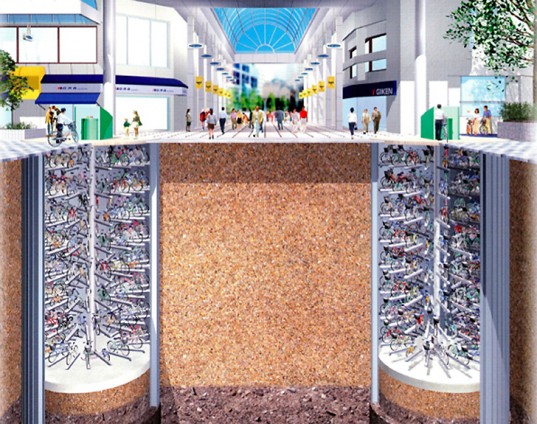
Developed by construction company Giken, the robotic system stores the cycles in a 11-meter deep well PHOTO: GIKEN LTD
If there is one problem that puts developed and developing countries on the same footing, it is parking space. And Japan seems to have found a way around it. At least for bicycles. Considering that they are carbon neutral and land value is high, hindering the commissioning of exclusive bicycle roads and parking lots, this idea could be the future. Eco-cycle is an anti-seismic mechanical underground parking lot for cycles, designed along the concept of “culture above ground, function underground”. So when in Japan, particularly around Kounanhoshi Park, head to this bicycle elevator. Wait as the electronic card reader scans your membership (fee around $15 a month) code, remove pets and all valuables from the cycle, and stand back as your wheels make an eight-second journey to its slot. On your return, scan the code and your ride reaches you in a jiffy. More pedal power to that someone who really gave parking some extra thought!
Detailed photos (and some Japanese) here.
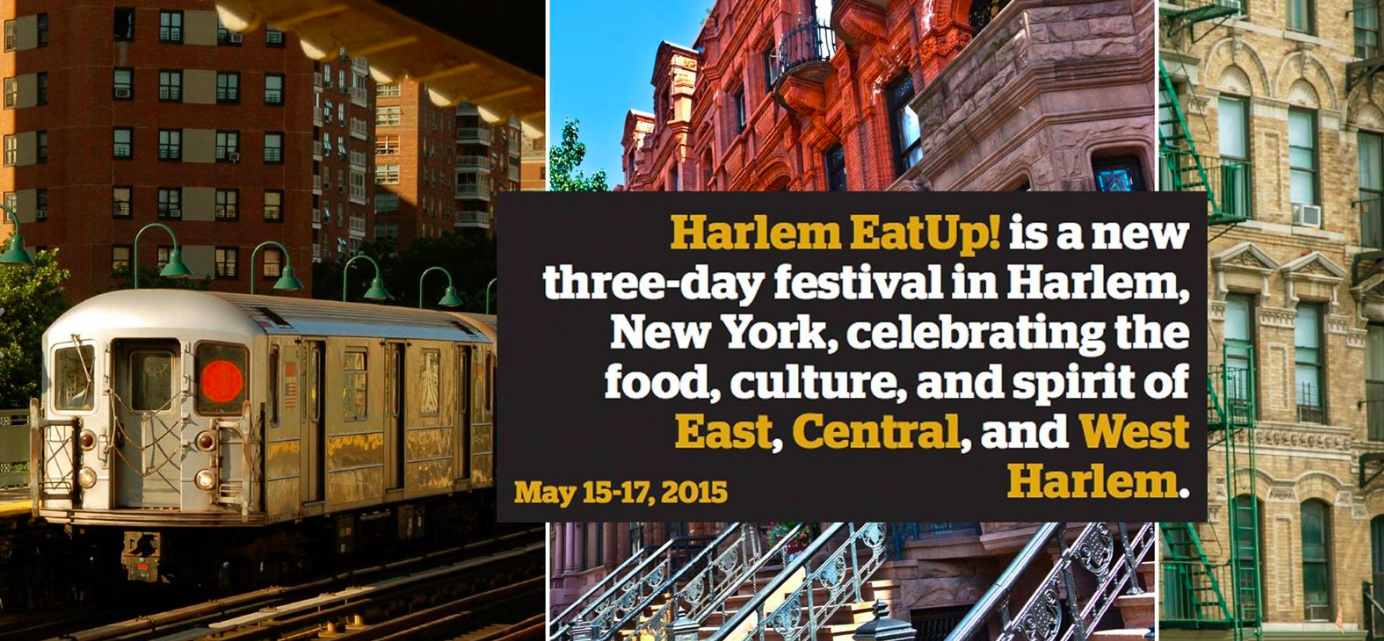
Those of us based in Kerala, India won’t be able to celebrate at this event, but we surely hope some of our readers can. It came to our attention via some inexplicable psychic Soul Food connection and boy do we wish we could be there!
As the banner states, the festival honors the food, culture and spirit of a part of New York with a storied history of Renaissance and decline. The celebration itself is evidence of Harlem’s Neo-Renaissance. Cultural talks, Food strolls, Dinners, and Cooking demonstrations are incorporated into the festival program. Continue reading

Fort Kochi

It’s been awhile since we wrote about Nick Cave and the inspired and inspiringly creative form of upcycling he applies in his “happenings”. It seems particularly appropriate that this particular Flux Project (sounds pretty pop-up, right?) takes place at Atlanta’s Ponce City Market, an adaptive reuse renovation of the historic 1926 Sears & Roebuck building into an urban community of hub of living, work and public space.
About the work
Up Right: Atlanta is a “call to arms, head and heart” for Cave initiates—the lead characters of this work. Through the performance, they are prepared mind, body and spirit to face the forces that stand in the way of self-hood, to enter a world over which they have complete control. Initiates become warriors of their own destiny.
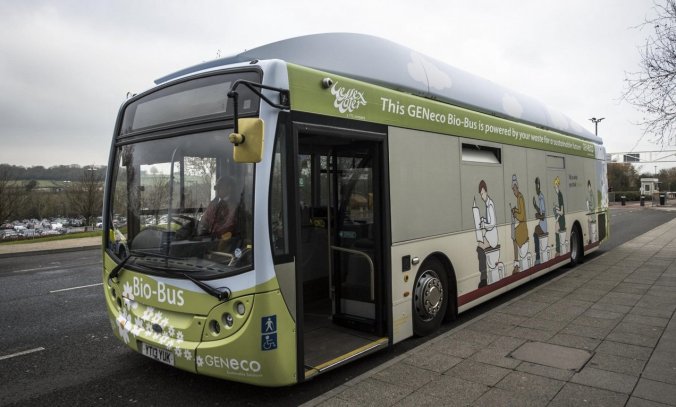
Bristol’s Bio Bus runs on faeces and household waste. Photograph: Ben Birchall/PA
A little over 2 years ago contributor Megan Madill wrote about one of the “Green Cities” of Europe, not to mention all the wonderful bike sharing (and bike friendly) initiatives worldwide.
But this news from the city of Bristol via the Guardian takes first prize. The innovation itself is a wonderful thing, but our applause actually goes more to the cheeky graphics.
UK’s first ‘poo bus’ hits the road
Britain’s first “poo bus”, which runs on human and household waste, goes into regular service this month. Continue reading

Thevara Ferry Junction Photo credit: Diwia Thomas
Several contributors to this site descend from a man from the mountains north of Sparta, who sailed from Greece to New York City more than a century ago, and had a pushcart that earned him enough money to return to his village and become a prosperous olive farmer.
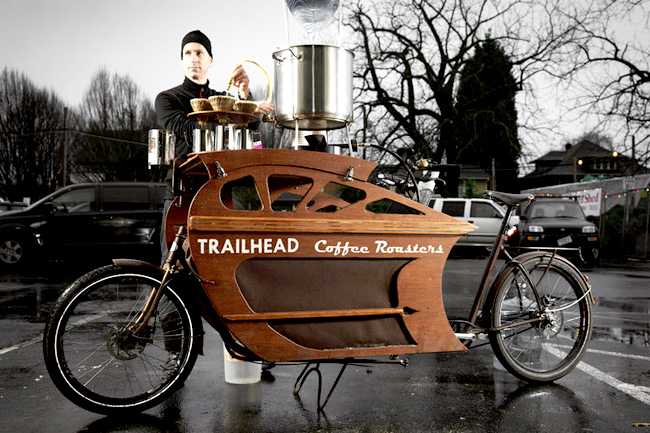
Good things come in, and from, pushcarts. We like the bike design as much as anything else in the photo above, and speaking of aesthetics the last photo below will help understand why we absolutely had to post this. As for pedal-powered treats on wheels, we will do something to extend the reach of 51 in Fort Kochi, so stay tuned… Thanks to Ecowatch.com for this:
Riding your bike to work is gaining momentum as more cities adopt or expand bike-sharing programs, but what about ordering your morning latte or lunch from a bike? With more and more food bikes popping up in cities across the country, finding more meals on wheels (without the truck) might soon be an option. Continue reading
 Organikos