The Montezuma Oropendola

A week or so ago, Jocelyn discussed the Montezuma Oropendola’s song as heard on Xandari property in Costa Rica. As you could hear from the linked vocalizations in her post, the bird makes an incredibly strange, gurgling/bubbling sound, recently described by a Xandari guest as “the sound of pouring water from one jug into another.” James and I have put up photos of the oropendola as Bird of the Day posts before, but I realized after reading Jocelyn’s thoughts on the bird that we haven’t featured any video of this common resident species at Xandari in the past. So I went out with my camera this weekend and was lucky enough to capture a minute of behavior footage to share here. The main thing missing is what the male often looks like when he’s vocalizing: perched on a branch, he typically leans forward as he calls, bending down so far that it appears he might suddenly fall off. At the end of his call he swings back up, and starts the process again.

Although the Montezuma Oropendola is a species commonly seen (or at least heard) from Xandari on most days, they don’t appear to have any nests on property. And you’d notice Continue reading

Cave Swallows in Jamaica

Our last big video from the Jamaican Golden Swallow expedition was from the Blue Mountains. This time I have some footage of a colony of Cave Swallows we found at the end of our trip when we were driving along the north coast of the island. About fifty or sixty birds live in this shelf of rock overhanging the ocean, having created nests in the walls with mud pellets.

In the video above, you can see Justin swimming under the natural bridge to get a better view of the birds as they circle around to check on their nests, possibly Continue reading

“The Great Empty,” more Full than its Sobriquet Implies

Photo © Gerrit Vyn

What will you be doing this Wednesday 5/20 at 8pm EDT? If you’re in the United States and have a television, you should consider watching a PBS Nature documentary on the Greater Sage-Grouse (male in mating display pictured left) and other wildlife members of the vast community that lives in the sagebrush plains that span eleven western states and hundreds of thousands of miles. Titled “The Sagebrush Sea,” the film is the first of its type shot and produced by the Cornell Lab of Ornithology, and it promises to be quite entertaining and educational about this vast and daunting landscape. A friend who was in one of my freshman-year classes at Cornell has been helping out in the editing room as an employee at the Lab this spring, and he tells me that its been a really rewarding experience. Just from watching the trailer below you can see why!

You can check out the PBS Nature schedule webpage to see when the broadcast Continue reading

A Day in the Blue Mountains

Last week we shared the compilation of A Day in the Cockpit. Here’s the second installment of our expedition video, with about nine minutes of the Blue and John Crow Mountains:

Much of this footage was taken within the national park, or Continue reading

A Day in the Cockpit

Out of the several hours of video that we took during our first month of the Jamaican Golden Swallow Expedition, Justin has condensed the cream of the crop into a fifteen-minute compilation that flows from sunrise to moonlight, with lots of birds, scenery, and other life in between.

Watching the video above, you can  Continue reading

Invasive Species, Animated Variety

Our promise to not participate in the cute kitten economy remains steadfast. This is different. Really. It fits into this category, sort of, or perhaps this one.  Hopefully not this one. We like what we see here. Nicolas Deveaux‘s variety are certainly welcome on our pages, one of the many places they were intended to be:

The Rufous-throated Solitaire

Back when I wrote about our ascent of Blue Mountain Peak, I mentioned that the Rufous-throated Solitaire is a bird that can be pretty tough to spot.

In that prior post, I had a picture of the same individual featured in the video above. If you turn the volume up, you can hear all the shrill details of the bird’s call, and imagine sounds like those echoing through the misty hills — the guidebook to Jamaican birds actually describes the vocalizations as “ventriloquial,” which we found to be accurate.  Continue reading

Mega-Meme Coffee Can Still Surprise

We care about coffee. Not only for 10th latitude reasons (geckos and coffee seem to go together), or 1,200 meter reasons (Xandari is perfectly located). Derek gets at it here, but there is more to say and the recent expedition to Ethiopia provides fodder for the next best post on topic. But that will come in due time.  Mainly, we just love coffee and we happen to work in places where it grows well.

So we watch for useful stories about coffee.Below is an excerpt from midway through a great piece from Atlantic‘s website, the most surprisingly interesting written piece on coffee in a long time, and as you have likely noticed coffee stories are a mega-meme these days:

Like many users of the Internet, I had actually already seen “Kill the K-Cup.” The mysteriously anonymous YouTube video was published this January, and spread widely. It spawned a hashtag #KillTheKCup (at the suggestion of the final frames of the video), which is still alive on multiple social-media platforms. Continue reading

Wilbur, Come To Kerala!

Wilbur Sargunaraj sings about life in his family's ancestral village in India. Produced by Wilbur Sargunaraj for NPR and John W. Poole/NPR.

Wilbur Sargunaraj sings about life in his family’s ancestral village in India. Produced by Wilbur Sargunaraj for NPR and John W. Poole/NPR.

Tirunelveli, as the crow flies, is not so far from the Raxa Collective office in Cochin.  Much closer than the location of the average reader of National Public Radio (USA)’s website, or the typical viewer of these videos on YouTube. They ring true with southern Indian sense of hospitality, so we hereby invite Wilbur to our neck of the woods:

Who is that man in a white shirt, black necktie and what appear to be blue plaid pajama pants? And why is he running around a village tasting and drinking all kinds of food?

That’s Wilbur Sargunaraj. He calls himself “India’s first YouTube star.” His videos about life in India have drawn more than a million views. And now he’s made some very first-class videos for NPR’s Goats and Soda blog: “Dunk-A-Chicken: The Village Way” and “The Village Way: Food.” (Well, he says they’re first-class, and who are we to argue?) Continue reading

Bird Behavior at Xandari II

I recently accrued enough videos of birds doing interesting things at Xandari to make a new video to share here. By chance, all the footage I’ve gotten over the last few months has followed a common theme: pecking and pulling. In the video above, you’ll notice that all five species of bird — Rufous-naped Wren, Hoffmann’s and Lineated Woodpeckers, Lesser Greenlet, and Rufous-capped Warbler — were either pecking or pulling at something in an effort to get some food.  Continue reading

Some Animal Behavior Footage from Costa Rica

A dragonfly on a path at Xandari

Whenever I have the opportunity to visit a national park in Costa Rica, I obviously take my camera with me so I can try to get some good photos or videos of all the wildlife I hope to see. Looking back on my files of images from the past couple months, I realized that I happened to have some half-decent videos that represented what I’d consider the four most important classes of Kingdom Animalia/Metazoa from the point of view of a terrestrial biophile: Aves, Reptilia, Mammalia, and Insecta. In other words, when I’m walking through the rainforest, the animals I keep an eye out for will likely fall into the category of bird, reptile, mammal, or insect. If I’m out at night, then maybe Amphibia will get thrown in there too!

In the video above, you can  Continue reading

Bird Behavior at Xandari

Over the past several weeks, I’ve had the fortune of being able to find birds sitting relatively still and have filmed them doing their stuff. All of the species in the video below are quite common here at Xandari, but I hope to eventually be able to share footage of even more rare and exciting birds that James and I sometimes see!

For more bird videos that I’ve taken in the past, you can  Continue reading

Portraiture Of Self-Sufficiency

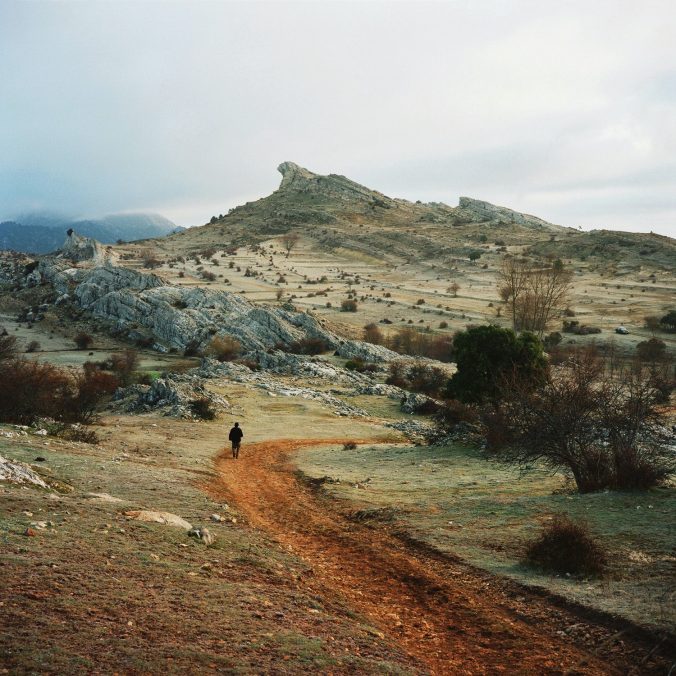
A view of the village of El Pardal, Sierra de Cazorla, Spain, 2013.

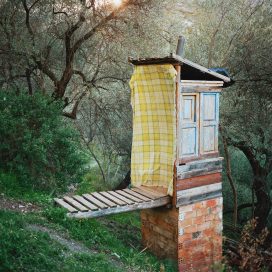
A composting toilet, Sierra Nevada, Spain, 2013.

Many contributors to our platform here, and its readers, have probably considered life off-grid.  Most will experiment during their travels, but stop short of the full monty, which would mean divestiture or most/all possessions and hitting the road. Thanks to this photographer (and the New Yorker‘s far-reaching sampling) for giving us both candid and portrait-like views into some examples of “self-sufficient” lives:

In 2006, while he was backpacking in Australia, the French photographer Antoine Bruy signed up with an international exchange program for volunteers who want to work on organic farms.

Continue reading

Collaboration On Oldest Living Things

Thanks to Jonathan Minard for the short film above presenting Rachel Sussman Carl Zimmer and Hans Ulrich Obrist, and the book that they collaborated on:

Since 2004 artist Rachel Sussman has been researching, working with biologists, and traveling all over the world to photograph continuously living organisms 2,000 years old and older. The work spans disciplines, continents, and millennia: it’s part art and part science, has an innate environmentalism, and is driven by existential inquiry. She begins at ‘year zero,’ and looks back from there, photographing the past in the present. Together, her portraits capture the living history of our planet – and what we stand to lose in the future.

Continue reading

Collaborative Shorts From Brown

We have been watching those folks at Brown University since the early days of this blog, and more recently too. They are a community we never tire of learning more about, and from. In the five years since they first started offering simple but imaginative explanations for complex phenomena (many, but not all, oceanographically topical), we have almost come to expect a six minute short on how to save the world’s high seas from over-fishing collapse. Not likely, but we appreciate their efforts with each new short, most recently from about six weeks ago.

The New York Times, one of our many regular sources for excellent science writing, paid attention to this project late last year. We look forward to more. Background on, and credits for, the shorts:

Continue reading

Yosemite, Raxa Collective Promises To Tread Lightly


Where do you go, if Raxa Collective is both your work and your pleasure, when you want to get away from your normal day to day scenery–which by all means is awesome? Is there such a word as awesomer? Awesomest? Four Raxa Collective contributors have agreed to meet in Yosemite in late May to determine the awesomeness. They will hopefully share their findings in these pages at that time.  For now, vimeo just makes us all wish we were in Yosemite now.

Dolphins, Drones, Delight

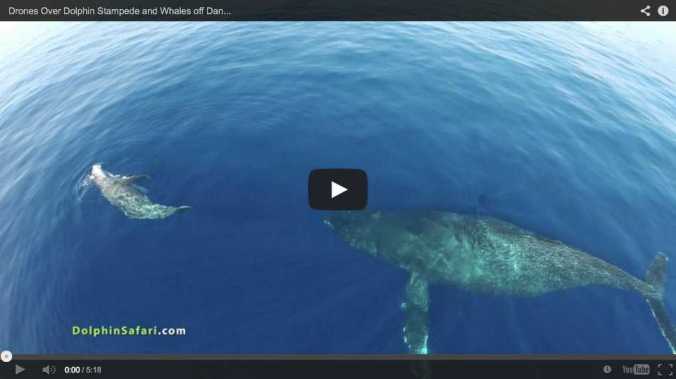
Screen Shot 2014-03-06 at 7.37.42 AM

We have noted on several occasions in the past about the use of drone technology to good ends, but this one takes the cake:

Whatever you think of drone technology, this may be one use that we can all agree on.

The captain of a whale-watching boat who’s also a filmmaker sent a drone with a camera into the sky to capture a stunning event: thousands of common dolphins in a super- or megapod speeding through the waters off California, destination unknown. His gorgeous video of Delphinus delphis, which includes a mama whale nuzzling its baby, is here. Continue reading

Brought To You Live, From The Bugaboos

This slideshow requires JavaScript.

It’s been a pleasure sharing our story here with #thenewyorkermag. Today is the last day of our posts. Thanks for following from the whole crew: @alexhonnold@conradclimber@jimmy_chin@robfrostmedia@renan_ozturk. Photograph by Conrad Anker.

The photos themselves offer a moment of escape.  That is sufficient, but you might want to read the captions (like the one above, which accompanies the last photo, of the climbers smiling), in which case go to the post on New Yorker‘s website.  Better yet, the whole interview with Renan Ozturk excerpted here, is there:

What is your background, both as a climber and as a filmmaker, artist, and photographer? Continue reading

Live from the Hive

Did you ever wonder what it is like to be a Honeybee? Now you can see for yourself with the new live Honeybee cam above. Brought to you by the same people who brought you the famous Bear cam, this live feed offers a variety of camera views of a Honeybee hive recovering from a hive collapse. Continue reading