Fighting Pollution With Garbage

Image may contain Outdoors Flower Plant Nature Pond and Water

Photograph: Abir Mahmud, University of Dhaka

Our thanks to Hannah Richter for her reporting and writing, as well as to Wired for publishing what sounds not like garden variety too good to be true, but quintessentially ridiculous.

Kudos to Nepal for testing out this idea in spite of how it sounds:

Image may contain Lake Nature Outdoors Water Aerial View Architecture and Building

Groups of platforms installed in Nagdaha lake in Nepal. PHOTOGRAPH: SAMYAK PRAJAPATI/THE SMALL EARTH NEPAL

Polluted Lakes Are Being Cleansed Using Floating Wetlands Made of Trash

Platforms combining plants and recycled garbage could offer a cut-price solution for reviving polluted bodies of water.

ON THE BANKS of Nagdaha, a polluted and lotus-infested lake in Nepal, Soni Pradhanang is putting trash back into the water—on purpose.

Image may contain Plant Potted Plant Water Waterfront Boat Transportation Vehicle Outdoors and Food

A floating treatment wetland system loaded with plants. PHOTOGRAPH: SAMYAK PRAJAPATI/THE SMALL EARTH NEPAL

She carefully assembles a platform of styrofoam and bamboo mats, then weaves it together with zip ties and coconut fiber, refuse from nearby tech stores. Then, she pokes 55 plants lush with red flowers through 2-inch holes in the platform, each plant set 6 inches apart. Though Pradhanang’s creation isn’t high-tech, it is effective, and one of the most affordable water-filtration systems available. “I’m cheap,” she says, laughing. Continue reading

Options For Human Waste Management

An illustration of a toilet. Its black lid is open and water is splashing out. An oversize roll of toilet paper is unrolling, seemingly out of control, just above the toilet. The background is pink.

Naomi Anderson-Subryan

Waste has been a regular topic in our pages in the decade+ since we started sharing stories here. Human bodily waste has not been featured, but deserves attention. If you can, consider these options:

What’s Greenest and Cleanest When Nature Calls?

Conventional toilet paper has a big environmental impact. We’ve got the lowdown on alternatives, from bamboo tissue to bidets.

These days, the toilet paper aisle is crowded with products that claim to be more sustainable, from bamboo and recycled material to products with “forest-safe” labels. But are they really better for the environment? And can you cast aside the paper altogether?

Today, we’ll try to get to the bottom of it. Continue reading

Plastic Waste Losing Another Place To Land

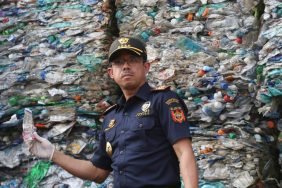
An Indonesian customs official intercepts a container full of illegally imported plastic waste in September 2019. ACHMAD IBRAHIM / AP PHOTO

When conscientious citizens learn more about where all the plastic goes when they do their part to recycle, it can be demoralizing. Recycling is important but the real solution is reducing the waste in the first place:

Indonesia Cracks Down on the Scourge of Imported Plastic Waste

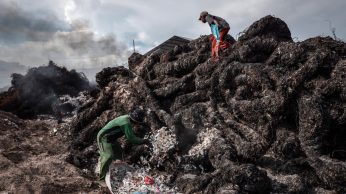
Workers prepare to burn plastic waste at an import dump in Mojokerto, Indonesia. ULET IFANSASTI / GETTY IMAGES

When China banned plastic waste imports in 2018, exporters in wealthy countries targeted other developing nations. Faced with an unending stream of unrecyclable waste, Indonesia has tightened its regulations and has begun to make progress in stemming the plastics flow.

In 2019, at a meeting in Geneva, Switzerland, delegates from 187 countries approved the first-ever global rules on cross-border shipments of plastic waste. Continue reading

Plastics, Waste & What To Do

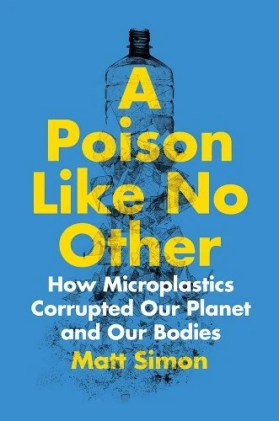
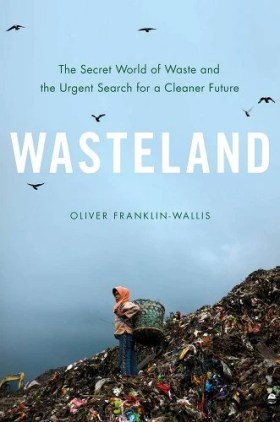
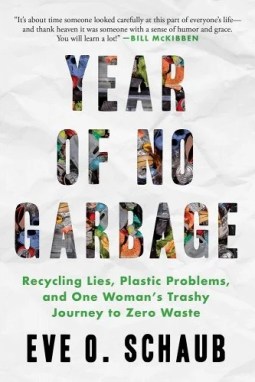
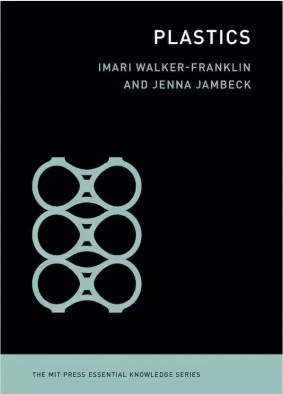
Four books have been read and summarized, thanks to Elizabeth Kolbert (the information challenges you, of course). The covers of those books appear here with links to independent booksellers where they are or will be available, and at minimum the opening story of Kolbert’s article is a must-read if you care about plastic:
How Plastics Are Poisoning Us

They both release and attract toxic chemicals, and appear everywhere from human placentas to chasms thirty-six thousand feet beneath the sea. Will we ever be rid of them?

In 1863, when much of the United States was anguishing over the Civil War, an entrepreneur named Michael Phelan was fretting about billiard balls. At the time, the balls were made of ivory, preferably obtained from elephants from Ceylon—now Sri Lanka—whose tusks were thought to possess just the right density. Phelan, who owned a billiard hall and co-owned a billiard-table-manufacturing business, also wrote books about billiards and was a champion billiards player. Owing in good part to his efforts, the game had grown so popular that tusks from Ceylon—and, indeed, elephants more generally—were becoming scarce. He and a partner offered a ten-thousand-dollar reward to anyone who could come up with an ivory substitute.
A young printer from Albany, John Wesley Hyatt, learned about the offer and set to tinkering. In 1865, he patented a ball with a wooden core encased in ivory dust and shellac. Players were unimpressed. Next, Hyatt experimented with nitrocellulose, a material made by combining cotton or wood pulp with a mixture of nitric and sulfuric acids. He found that a certain type of nitrocellulose, when heated with camphor, yielded a shiny, tough material that could be molded into practically any shape. Hyatt’s brother and business partner dubbed the substance “celluloid.” The resulting balls were more popular with players, although, as Hyatt conceded, they, too, had their drawbacks. Nitrocellulose, also known as guncotton, is highly flammable. Two celluloid balls knocking together with sufficient force could set off a small explosion. A saloon owner in Colorado reported to Hyatt that, when this happened, “instantly every man in the room pulled a gun.”
It’s not clear that the Hyatt brothers ever collected from Phelan, but the invention proved to be its own reward. From celluloid billiard balls, the pair branched out into celluloid dentures, combs, brush handles, piano keys, and knickknacks. They touted the new material as a substitute not just for ivory but also for tortoiseshell and jewelry-grade coral. These, too, were running out, owing to slaughter and plunder. Celluloid, one of the Hyatts’ advertising pamphlets promised, would “give the elephant, the tortoise, and the coral insect a respite in their native haunts.” Continue reading

Celebrating French Environmental Commitments

Paris mayor Anne Hidalgo and the co-president of the Paris bid for the 2024 Olympics, Tony Estanguet, paddle on the Seine in Paris. Photograph: Reuters

Since 11+ years ago many valuable environmental opinions by George Monbiot have been linked to in our pages; today a celebration of a neighboring country’s efforts:

When it comes to rich countries taking the environment seriously, I say: vive la France

Emmanuel Macron’s government is at least doing the bare minimum to avert the planetary crisis – and putting the UK to shame

While we remain transfixed by a handful of needy egotists in Westminster and the crises they manufacture, across the Channel a revolution is happening. It’s a quiet, sober, thoughtful revolution, but a revolution nonetheless. France is seeking to turn itself into an ecological civilisation. Continue reading

Food Waste Best Practice, South Korea Edition

Unloading the food waste at a disposal facility in Seoul. Chang W. Lee/The New York Times

One of the most covered topics in our pages during the decade since we started paying attention to it, still going strong for all the wrong reasons; so, our thanks to the New York Times for assigning John Yoon (reporting, writing) and Chang W. Lee (for photographs and video) to go to South Korea:

Food waste being separated from plastic bags at the Goyang facility.

When wasted food rots in landfills, it pollutes soil and water — and warms the planet. Here’s how one country keeps that from happening.

Around the world, most of the 1.4 billion tons of food thrown away each year goes to landfills. As it rots, it pollutes water and soil and releases huge amounts of methane, one of the most potent greenhouse gases. Continue reading

Ghana Says No Thank You To Europe’s Fast Fashion

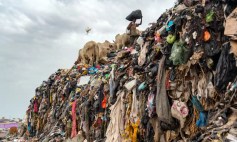
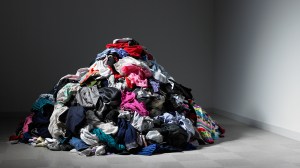
Some of the 6m items of clothing that arrive at Kantamanto Market each week. With the rise of fast fashion in the west, more is discarded as the quality drops. Photograph: Muntaka Chasant/Rex

When  the clothes cast off by the wealthy are cast on to those less wealthy, it should be done so according to the golden rule:

Stop dumping your cast-offs on us, Ghanaian clothes traders tell EU

With 100 tonnes of clothing from the west discarded every day in Accra, ‘fast fashion’ brands must be forced to help pay for the choking textile waste they create, environmentalists say

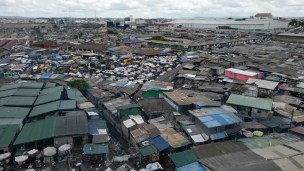
An aerial view of Kantamanto market in Accra, where 100 tonnes of secondhand clothing a day are discarded. Photograph: Misper Apawu/The Guardian

A group of secondhand clothes dealers from Ghana have visited Brussels to lobby for Europe-wide legislation to compel the fashion industry to help address the “environmental catastrophe” of dumping vast amounts of textiles in the west African country. Continue reading

Trashy Fashion

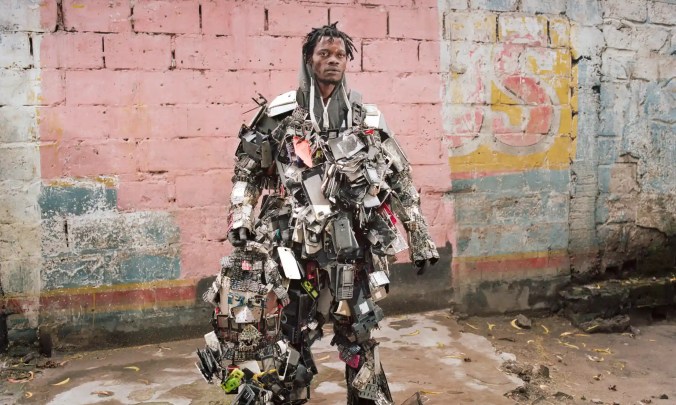
Congolese artist Nada Thsibwabwa photographed by Colin Delfosse wearing a costume made of mobile phones in Matonge district, Kinshasa, Democratic Republic of the Congo. All images © Colin Delfosse

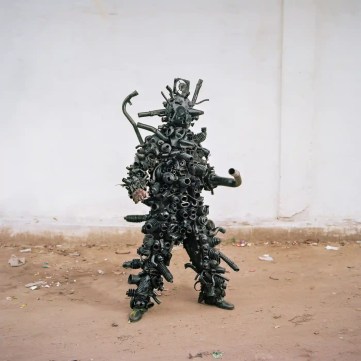
Congolese artist Hemock Kilomboshi posing in his rubber costume in Matonge district, Kinshasa. A member of the Kinact platform, Kilomboshi performs in Kinshasa’s streets to raise issues about globalisation and economic plunder in the DRC.

We featured an African social enterprise in our pages, back in the days of our Ghana work, that today’s story reminds us of. Whether on the streets of Accra, or the streets of Kinshasa, we love the creative approach. Click any image, or the title link below, to see the entire collection in the Guardian:

Rubbish fashion: street art costumes of Kinshasa – in pictures

In his series Fulu Act, Brussels-based documentary photographer Colin Delfosse captures street artists in Kinshasa, who craft striking costumes out of everyday objects found littering the streets, such as discarded wigs, wires, soda cans and bottle lids, to raise awareness of environmental issues facing the Democratic Republic of the Congo. “The statement behind their costumes is to condemn and inform about overconsumption and its side effects, namely pollution, poverty, lack of reliable investments and so on,” says Delfosse. “By capturing these images, I’m giving an echo to their crucial work.”

Congolese artist Jean Precy Numbi Samba, AKA Robot Kimbalambala, pictured in his costume made of car spare parts in the Ngiri-Ngiri district, Kinshasa, December 2019. The car market in the capital’s suburbs is mostly made of highly polluting secondhand (or thirdhand) vehicles from Europe.


Too Much Hype About Too Much Stuff

The Economist recently promoted a notion:

Rags to riches – fashion as an asset class HOW DID second-hand clothes become fashion’s hottest buy? Online resale and rental firms are changing the calculus on what it means to buy fashion “as an investment”

Hype? We will see. The “trapped” value of fashion items in our homes might get liberated as discussed, but what about the fundamental trap of fashion?

Ryan McVay/Getty Images

Kenneth P. Pucker shares an important lesson from his time in industry, and kudos to Harvard Business Review for giving him the platform to explain The Myth of Sustainable Fashion:

Few industries tout their sustainability credentials more forcefully than the fashion industry. Products ranging from swimsuits to wedding dresses are marketed as carbon positive, organic, or vegan while yoga mats made from mushrooms and sneakers from sugar cane dot retail shelves. New business models including recycling, resale, rental, reuse, and repair are sold as environmental life savers. Continue reading

Beggar Thy Southern Neighbors

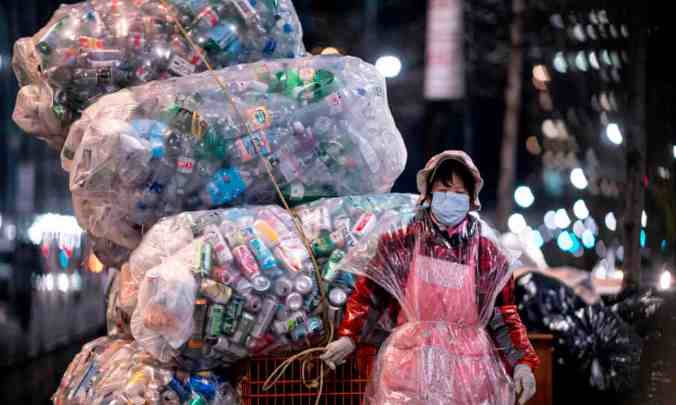
A woman pulls a cart loaded with bags of recyclables through the streets of New York. Photograph: Johannes Eisele/AFP/Getty

Thanks to the Guardian for this Econ 101 textbook example of a “beggar thy neighbor” action taken in one country and imposed on others, using “market forces” explanations to justify the action:

Latin America urges US to reduce plastic waste exports to region

Study finds exports to region doubled in 2020 with practice predicted to grow as US invests in recycling plants

Environmental organisations across Latin America have called on the US to reduce plastic waste exports to the region, after a report found the US had doubled exports to some countries in the region during the first seven months of 2020. Continue reading

287 Pounds Of Plastic Per Person Each Year?

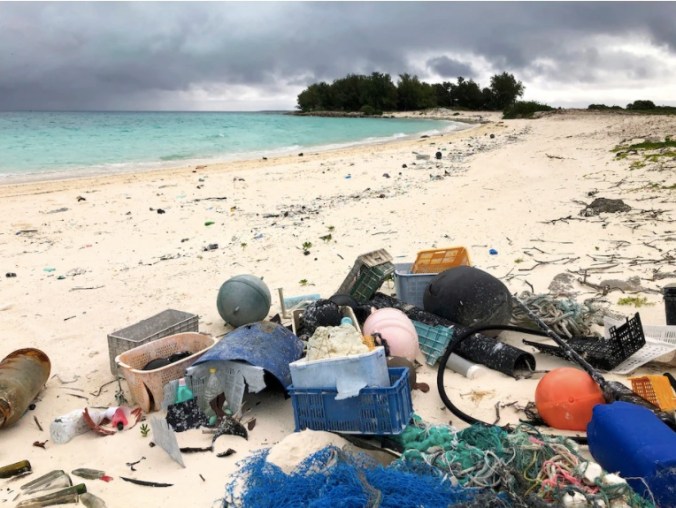
Plastic and other debris is seen on the beach on Midway Atoll in the Northwestern Hawaiian Islands in 2019. (Caleb Jones/AP)

It is clear to me now, after two years of our two Authentica shops offering products made from recycled plastic (among other recycled materials), we will need to be at this for a long time to make a dent. Of all the amazing capabilities we humans have, our ability to generate plastic waste is among the most remarkable. Our thanks to Tik Root for reporting on this finding:

U.S. is top contributor to plastic waste, report shows

Scientists reveal the U.S. role in the ‘deluge’ of plastic littering the world’s oceans in a congressionally mandated report

The United States ranks as the world’s leading contributor of plastic waste and needs a national strategy to combat the issue, according to a congressionally mandated report released Tuesday. Continue reading

Look, Smell, Taste, Don’t Waste

Catchy. Effective? We will see.  Thanks to the Guardian for this view on a UK initiative to reducing food waste at home:

Cut food waste at home by sniffing and tasting, urges new campaign

National government-backed initiative will replace ‘use by’ with ‘best before’ and urge people to judge for themselves

Worried about whether the yoghurt, milk and cheese sitting in your fridge is still safe to eat? Rather than rely on the misleading “best by” date stamped on the side, perhaps its time to “sniff and taste” your staple foods. Continue reading

Really, California?

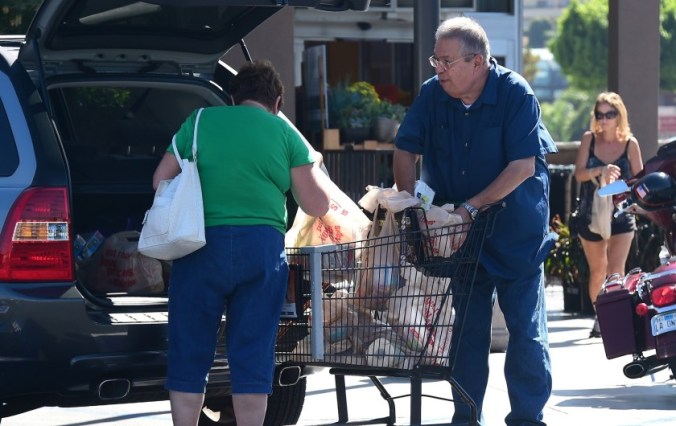
The executive order does not affect cities and counties that adopted their own ordinances banning or regulating single-use plastic bags.(Frederic J. Brown / AFP/Getty Images)

It’s been some months since we added to our “Really?” posts–which is definitely a good things– and California has usually been on the applaud side of our commentary. It’s a sad situation that the plastic industry is able to exert these pressures to take advantage of the current health crisis.

Coronavirus prompts Gov. Gavin Newsom to suspend California’s plastic bag ban

 Gov. Gavin Newsom has suspended California’s ban on grocery stores providing single-use plastic bags amid concerns that clerks may be at risk for exposure to the coronavirus if shoppers are required to supply their own reusable bags to carry their purchases home.


Newsom announced Thursday that he signed an executive order to suspend the 2016 plastic bag ban for 60 days after hearing concerns from the California Grocers Assn. about shoppers bringing reusable bags from home that are handled by store clerks filling them with groceries.

“We are being cautious to make sure there is no transmission of the virus,” said Dave Heylen, a vice president for the grocers’ group. He said the grocers will go back to abiding by the plastic bag ban when the order expires.

The executive order signed Wednesday does not affect the more than 100 cities and counties that adopted their own ordinances banning or regulating single-use plastic bags.

Continue reading

Prepping For Less Food Waste

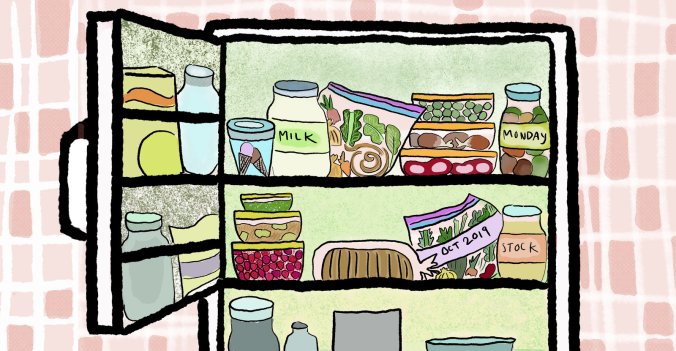
fridge-guy-_custom-2da5185f9372fc1aa92a1c55cffedfeb4544f8f4-s1600-c85.jpg

Clare Schneider/NPR

End of year stories about what to do differently in the new year may seem overdone, but we find them worth sharing when they touch on a theme we cover regularly. This column has the added value of some funny, some even bizarre suggestions:

Food waste is a big problem in the United States, where a typical household of four tosses out about $1,600 worth of food annually. So, Life Kit did a deep dive on how how to reduce food waste.

In planning that episode, the office was abuzz with conversations about our own tricks and tips to save food — from recipes to compost tips. This made us wonder what other wisdom was out there. So we asked you!

We were overwhelmed by your collective knowledge and thriftiness. Our roundup is by no means an exhaustive list, but below are a few tips we felt inspired by. (If you want to join the conversations, you can find them here on Instagram and Facebook.)

Your tips from Instagram

1. Used coffee grounds can be dried and used in a steak rub or mixed with coconut oil and sugar and used as a body scrub. — @Chefanniecarroll Continue reading

Capsules = Pods = Waste

RecycDecept.jpg

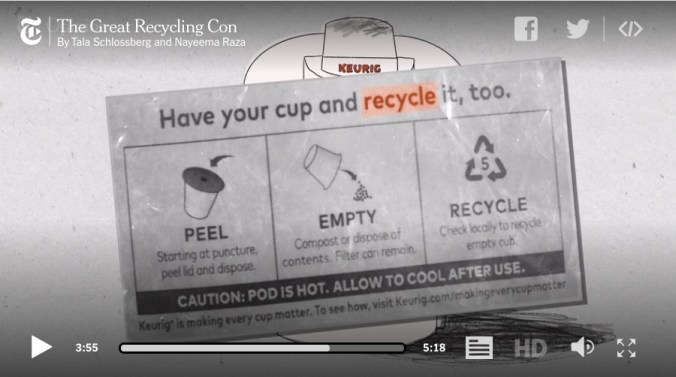
The greatest trick companies ever played was making us think we could recycle their products. The New York Times

My most recent reference to pods could have been the last. Enough said. But my eye was caught by the title of this item yesterday, and all day I kept wondering whether I need to know more about the confidence game that has been, and is, recycling. Deciding this morning to click through I was rewarded with an update on my favorite coffee scandal. Insult on top of injury. Surprised by that? Nope. My thanks to Tala Schlossberg and Nayeema Raza for this creative op-ed video, and accompanying text:

The Great Recycling Con

The greatest trick corporations ever played was making us think we could recycle their products…

Convenience & Connivance

1534.jpg

‘I think we’ve taken convenience and just turned it into a monster,’ said Shaymah Ansari.
Photograph: Francis Gardler/AP

I acknowledge it has not been easy to eliminate plastic from my life. Plastic is everywhere. It is ubiquitous in developing economies as well as in more developed economies. But since recycling is costly, then at least radically reducing its use is important. So consider how seductive convenience is, and how conniving companies can be:

US recycling event is cover for enormous volume of plastic pollution, say critics

America Recycles Day promoted by EPA is brainchild of not-for-profit backed by companies that produce plastic products

4032.jpg

 Packaging for plastic food items that cannot be accepted for recycling. Photograph: Emily Holden/The Guardian

America’s government-backed national recycling awareness day is being used as cover by large corporations that are churning out enormous volumes of plastic that end up strewn across landscapes, rivers and in the ocean, critics have said.

The second annual America Recycles Day event on Friday is being vigorously promoted by the US Environmental Protection Agency (EPA) as a way to encourage Americans to recycle more.

But critics point out that the initiative is the brainchild of Keep America Beautiful, a not-for-profit founded and backed by large companies that produce vast quantities of plastic products that end up as pollution.

Current backers include Coca-Cola, Nestlé, Pepsico, and Altria, the tobacco giant formerly known as Phillip Morris. Decades of campaigns by the group have emphasized individual responsibility for plastic recycling, which data reveals to be a largely broken system. Continue reading

Taking Responsibility For Stuff

GettyImages-1072467826_PR-plastics_web

Recycled materials being stacked at facility in Costa Rica last June. EZEQUIEL BECERRA/AFP/GETTY IMAGES

Some time a millennium or so from now, an article like this one, or perhaps like this one, will be written with wonderment about the waste management practices of the early 21st century. They will not be as amazed by how we digitally stored our most prized possessions, but curious what we did with all our unwanted stuff.

GettyImages-1070623890_UK-plastics_web

Scrap metal at a dock in Liverpool, England, waiting to be exported. CHRISTOPHER FURLONG/GETTY IMAGES

And we have known for some time now that we have not been so clever. We have mostly been hiding that stuff. Out of sight, out of mind. If it seemed too good to be true, there was a reason for that. The long stretch of time during which China’s labor costs and their resource input equations made importing our unwanted stuff a win-win created a kind of mirage. Thanks to Cheryl Katz, writing in Yale e360, for making that clear in this story:

GettyImages-967157238_VietnamPlastics_web.jpg

A worker sorts through plastic bottles at a waste facility in Vietnam. Other Asian countries have increased their waste imports in response to China’s ban. NHAC NGUYEN/AFP/GETTY IMAGES

Piling Up: How China’s Ban on Importing Waste Has Stalled Global Recycling

China’s decision to no longer be the dumping ground for the world’s recycled waste has left municipalities and waste companies from Australia to the U.S. scrambling for alternatives. But experts say it offers an opportunity to develop better solutions for a growing throwaway culture.

The story is big, which is why I was not surprised to see Alana Semuel’s story on the same topic. Both are worth reading, but this one takes a starker view, and the disturbance its title question causes provides an effective added prod to reduce how much unwanted stuff gets created in the first place.

8bea8d007

Bales of plastic are piled at a Recology facility in San Francisco. (Alana Semuels / The Atlantic)

Is This the End of Recycling?

Americans are consuming more and more stuff. Now that other countries won’t take our papers and plastics, they’re ending up in the trash.

After decades of earnest public-information campaigns, Americans are finally recycling. Airports, malls, schools, and office buildings across the country have bins for plastic bottles and aluminum cans and newspapers. In some cities, you can be fined if inspectors discover that you haven’t recycled appropriately. Continue reading

2018, The Year Food Waste Was Finally Taken Seriously

GI_Market_food_waste_web

Americans throw away 133 billion pounds of food annually. TAZ/WIKIMEDIA COMMONS

This is the time of year, in the days prior to the USA Thanksgiving holiday, when I tend to recall the first time food waste, one of the oddest of plagues, came to my attention. Thank you Meg. And thanks to Yale e360 for reporting this heartening news:

In the first 10 months of 2018, investors poured $125 million into U.S. companies whose mission is to prevent food from going to waste, according to a new report.

ReFED, a non-profit dedicated to drastically cutting the amount of food that becomes spoiled or is wasted in the U.S., said that the investments spanned a wide variety of companies focusing on new technologies, software, and business-to-business solutions. They include Apeel Sciences, which received $70 million in private financing to produce a natural second skin to extend the life of produce; Food Maven and Full Harvest, each of which received $8.5 million to help businesses sell excess or less visually appealing produce; Spoiler Alert, which helps businesses better manage unsold food inventory; and ReGrained, which makes flour out of spent distillers grains. Continue reading

Grandparents’ Approach To Avoiding Food Waste

5184b.jpg

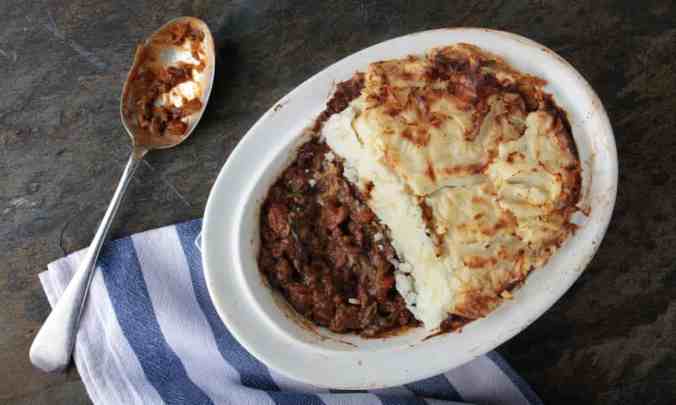
‘Whatever’s in the fridge’: a traditional cottage pie. Photograph: neiljlangan/Getty Images/iStockphoto

This time of year, harvests finishing in many places, abundance is about to give way to the longer lean season. Maybe that is the perfect time to start thinking about stretching the ingredients at hand:

How to avoid food waste: top chefs on their grandparents’ favourite dishes – and what they taught them

Angela Hartnett, Fergus Henderson, Raymond Blanc and many others describe the frugal simplicity – and delicious flavours – that inspire their cooking today

4152.jpg

Summer pudding with ‘beautiful glossy purple juice’. Photograph: Katherine Anne Rose for the Observer

It is all too easy to romanticise the past, particularly with food. In Britain, rationing created a postwar generation that was very well-nourished, but also utterly bored by the meals it ate … or endured. Similarly, for all the criticism levelled at processed foods (“Don’t eat anything your great-grandmother wouldn’t recognise as food,” as the writer Michael Pollan famously advised), food has never been cheaper, nor easier to access and prepare. In 1957, as a proportion of their weekly income, UK households spent roughly double what they now spend on food – 33% of their money. There is a kind of liberation in the Pot Noodle.

Yet among many chefs and campaigning food writers, the sense persists that on a number of issues – particularly food waste, but also obesity, nutrition, cost, pleasure even – there is much to admire in how our grandparents ate. In an era of limited choice and tight budgets, they made a virtue of the necessity to cook with whatever fresh ingredients were available. “My grandparents didn’t cook ‘sustainably’, but they did cook every day, one of life’s best skills, and they didn’t throw leftovers away. To that extent, they were thrifty,” says Tom Hunt, the self-styled eco-chef and Guardian columnist.

To examine that idea, we asked a number of top chefs to choose a meal that encapsulates how their grandparents cooked and to explain how, in its frugal simplicity, it still influences them. Call it going back to the future. Continue reading

Drink The Wonk

5219.jpg

Soft fruit, such as oranges, root vegetables and salad are particularly prone to waste. Photograph: Eric Farrelly/Alamy

Rebecca Smithers, consumer affairs correspondent for the Guardian, has reported on a simple idea to not waste fruit just because its appearance is not standard. Wonky, as they say on the island where the English language comes from. Don’t fear the wonk, this article and this brand are saying. Was this not already happening with juice, as with other waste-reducing beverages? Can a brand be built on such an idea? Thumbs up to that:

‘Wonky’ fruit and vegetables that would have been thrown away are now being used to make a new range of juices, in one of a number of assaults on food waste.

One of the UK’s largest fresh produce growers has teamed up with a Spanish fruit supplier to create a new product, Waste Not, which will stop edible but visually ‘imperfect’ ingredients such as fresh celery, beetroot and oranges from being dug back into the soil, or used for animal feed. The new juices will go on sale in branches of Tesco.

The move is one of a growing number of innovations to reduce food waste throughout the supply chain, following criticism of supermarkets and suppliers that perfectly good food is being thrown out while UK consumers are relying increasingly on food banks. Continue reading