Know Your Packaging

girl-juicebox_wide-4eff0c88df284307072a9da33247352693ffef88-s1600-c85.jpg

Because of layers of material that can be difficult to separate, many containers for juices and broths have traditionally been destined for landfills. But recycling them is getting easier. KidStock/Getty Images

Natalie Jacewicz, a science writer based in New York City has this illuminating story on packaging:

In The Recycling World, Why Are Some Cartons Such A Problem?

Scoot over, cans; cartons are moving in on your shelf space. Specifically, the soft, light rectangular containers commonly associated with juice boxes — “aseptic cartons” to the carton literati.

“They’re growing in popularity,” says Jason Pelz, vice president of recycling projects for the Carton Council, an industry group. “Broth is predominantly in aseptic packaging now, and you see a lot of coconut water in it.”

Aseptic cartons pack several environmental upsides, with one big catch: Traditionally, these containers have been quite difficult to recycle. To take stock of the promises and challenges of this supermarket sensation, I talked to experts on all things carton. Continue reading
App For Food Waste Reduction

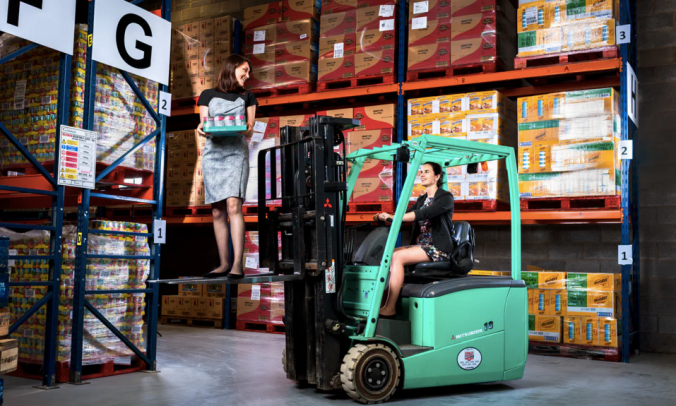
‘A love for food and a distaste for waste’: Iseult Ward (left) and Aoibheann O’Brien in the FoodCloud warehouse in Dublin. Photograph: Mark Nixon for the Observer

‘A love for food and a distaste for waste’: Iseult Ward (left) and Aoibheann O’Brien in the FoodCloud warehouse in Dublin.
Photograph: Mark Nixon for the Observer

Thanks to the Guardian for their coverage of stories about reducing food waste:

FoodCloud: new app proves a nourishing idea for wasted food

The distribution of surplus food in Ireland is being transformed by FoodCloud. Killian Fox meets the duo behind the venture

Killian Fox

Within one community, there can be a business that’s throwing away perfectly good food and just around the corner there’s a charity that’s struggling to feed people in need,” says Iseult Ward of FoodCloud, a remarkable social enterprise which she co-founded with Aoibheann O’Brien in 2012. “We wanted to connect the two.” Continue reading

Food Waste Approaching Zero (Goals Are Powerful)

dsc_0080-90-beea8781c209d5611d13eacd9f03985d6f1a805d-s1100-c85

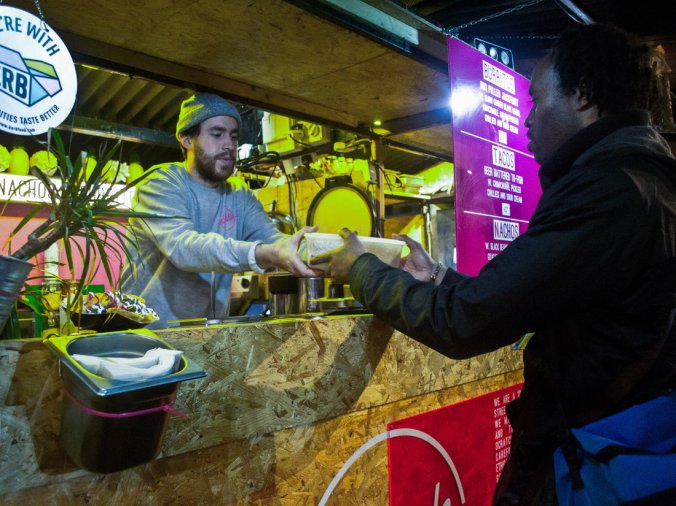
Junior Herbert, a volunteer with Olio, collects leftovers from vendors at London’s Camden Market. London has become a hub for apps and small-scale businesses that let restaurants and food vendors share leftovers with the public for free, and otherwise reduce the amount of edibles they toss. Maanvi Singh for NPR

Green entrepreneurship is alive and well in London (thanks to National Public Radio, USA, and its program the salt for this story):

Eat It, Don’t Leave It: How London Became A Leader In Anti-Food Waste

MAANVI SINGH

It’s around 6 o’clock on a Sunday evening, and Anne-Charlotte Mornington is running around the food market in London’s super-hip Camden neighborhood with a rolling suitcase and a giant tarp bag filled with empty tupperware boxes. She’s going around from stall to stall, asking for leftovers.

Mornington works for the food-sharing app Olio. “If ever you have anything that you can’t sell tomorrow but it’s still edible,” she explains to the vendors, “I’ll take it and make sure that it’s eaten.” Continue reading

Perfectly Good Imperfect Food

24UGLYFOOD-web01-master768.jpg

A customer shopped at Fruta Feia, a Portuguese cooperative created to sell imperfect food. The food industry has begun looking for ways to reduce waste. Bargain-hunting consumers seem to be going for the deals.CreditPatricia De Melo Moreira for The New York Times

Increasing attention to the inherent waste in judgements about imperfection is a welcome topic in our pages:

Food Industry Goes Beyond Looks to Fight Waste

Continue reading

Sanitation’s Reincarnations

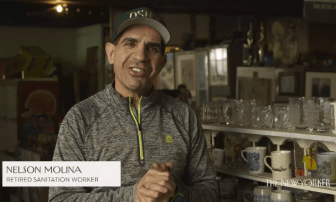
Still from video by The New Yorker

Still from video by The New Yorker

Some trash can be found and then turned into art, like the pieces of plastic that were built into sculptures at the National Zoo. Other trash is not necessarily garbage, but merely objects that someone doesn’t have the space or energy to take care of, and that man’s trash can become another man’s treasure. A man who worked for the New York Department of Sanitation for about thirty years spent a good part of his career collecting and curating things people threw away, but which caught his eye as interesting treasures, as David Owen explains:

Saving Treasures from the Trash

A Sanitation worker shows off the notable items he has rescued from curbs and bins over the course of thirty years.

Nelson Molina grew up in a housing project in East Harlem, in an apartment where his mother still lives. “Starting when I was nine years old, in 1962, I had a passion for picking up,” he said recently. “I had, like, a three-block radius. I would look through the garbage and pick up toys that people threw out, and I would fix them. I had two brothers and three sisters, and I was like Santa Claus to them.” Continue reading

An Object Lesson on Tote Bags

We discovered the “essay and book series about the hidden lives of ordinary things” called Object Lessons through The Atlantic a few months ago, when we shared an article on real cheese. Today, I learned an unsettling – and to borrow a phrase – inconvenient truth about tote bags. Pretty much any time I go grocery shopping I use a couple reusable totes, unless I need some plastic shopping bags to replenish my trash-can liner supply, so what the folks at Object Lessons have to say about the issue is very informative about how we need to change the way we look at certain everyday objects:

For at least a few decades, Americans have been drilled in the superiority of tote bags. Reusable bags are good, we’re told, because they’re friendly for the environment. Disposable bags, on the other hand, are dangerous. Municipalities across the country have moved to restrict the consumption of plastic shopping bags to avoid waste. Many businesses have stopped offering plastic sacks, or provide them for a modest but punitive price. Bag-recycling programs have been introduced nationwide.

Continue reading

Upcycling Food Waste

bread_custom-ab4e4080afab7c1e3e53752023eca6d1b512719e-s800-c85

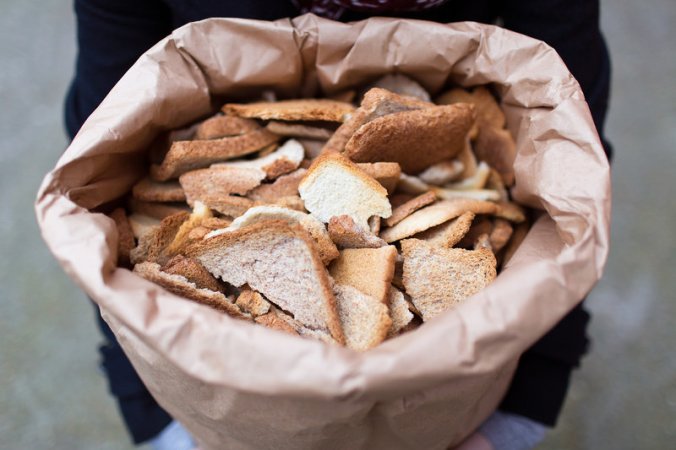
Crusty heels of loaves of bread which are used to make Toast Ale. All photos from: npr.org

We are no strangers to the food waste crisis. We recently wrote about the average landfill contribution per person per state in the U.S. and on prior occasions have shared stories about the severity of poor “waste” management.  At the same time, we acknowledge that there are people who are leading the cause to reduce the amount of food thrown away and salvage the unwanted scraps into healthful and tasty food, or otherwise useful products. It is important for us to share these stories to serve as inspiration for those with an entrepreneurial spirit and to inform citizens how they can support these businesses or organizations.

Toast Ale is a London-based company that sources fresh, surplus bread that would otherwise be thrown out to brew suds and create beer. The company believes it has found an environmentally friendly way to tap into the booming craft beer market. Continue reading

Our Landfill Contribution


asset4

The diagram above provides a clear illustration of the amount of waste each person contributes to the landfill per year in the U.S. It is a regrettable outcome that results from decades of unresponsive national policies and unsustainable urban development, but can be remedied with a multilateral shift towards a circular economy, according to Nithin Coca, journalist for Triple Pundit LLC.

One of the reasons that America went down the path of throw-it-away is related to the reason we decided to build vast suburbs instead of dense, sustainable, walkable cities. We have a lot of land compared to most other developed countries. The same space we used to build suburbs, roads and an auto-centric culture, we also used to hide our waste as we moved into a throw-away economy.

Continue reading

Interview with a “Trash-Man”

One meter by one meter surface sample at Kamilo Point on the Big Island, Hawaii. More than 84,000 pieces of micro-plastic were counted. (Photo credit: Nick Mallos via GreenSportsBlog)

Plastic polluting the oceans of the world is something we don’t like to report on, but do anyway, since it’s such a widespread and high-impact issue. Below, Lew Blaustein of GreenSportsBlog interviews the Ocean Conservancy’s Director of Trash-free Seas, Nick Mallos. The Ocean Conservancy works toward science-based efforts to protect the ocean and its wildlife, as well as human communities that rely on healthy marine ecosystems.

GreenSportsBlog: Director of Trash Free Seas. That is one cool job title. How did you get to the Ocean Conservancy and the “Trash Man” moniker?

Nick Mallos: I’ve been working on trash in the ocean for the better part of a decade, with the last six years at Ocean Conservancy so “Trash Man” seems to fit perfectly. Before that, while at Dickinson College (Carlisle, PA), where I earned a BS in Biology and Marine Science, I spent a semester in the Caribbean to study lemon sharks. While on the Island of South Caicos, I saw that massive amounts of trash and plastics were washing ashore on its north side. This got me interested in marine debris and what was needed to do to remove it.

Continue reading

Reducing Air-Conditioner Use

10airconditioner-master768

Source: New York Times

More than 90 percent of American homes have air-conditioners, which accounts for approximately 6 percent of all the country’s residential energy use and translates to about 100 million tons of carbon dioxide released every year. To save on energy consumption, one can turn off the AC units while not present in the room or increase the thermostat to a higher temperature so that the AC will not turn on as often. However, another aspect of air-conditioners that is not frequently talked about is the actual chemical compounds in AC systems that are responsible for keeping a room cool on a hot summer day. The compounds are called hydrofluorocarbons (HFCs), and it’s a greenhouse gas that contributes to global warming.

HFCs represent a small portion of total greenhouse gas emissions, but they trap thousands of times as much heat in the atmosphere as carbon dioxide.

Good news: If your air-conditioner is working properly, it won’t release HFCs into the atmosphere. Some HFCs are released during the manufacturing process, if your air-conditioner or refrigerator has a leak, or when you throw a unit away, possibly causing some molecules to escape, especially if it’s disposed of improperly (Here’s some guidance on proper disposal).

Continue reading

Dirty Rio

wireap_206705173401436b8c64a3b0e628ca89_16x9_1600

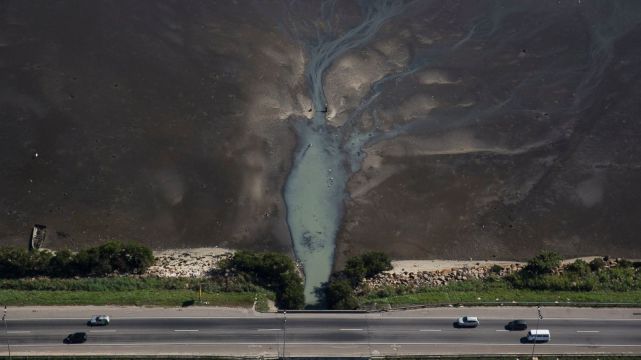
Source: ABC News

The 2016 Rio Olympics start in two days and in three days athletes will have to face the uncontrolled pollution debris and hazardous water contamination levels. The 1,400 athletes participating in water competitions and 300,000 to 500,000 foreigners expected to visit Rio de Janeiro and the beaches at Copacabana and Ipanema are at risk of becoming ill. This unfortunate predicament comes even after the city’s 2009 Olympic bid when authorities pledged that they would invest in a billion-dollar cleanup program to “regenerate Rio’s magnificent waterways.” Continue reading

Good Bag News from England

Image via Pinterest

Last year in October, a five pence charge (around seven US cents) for plastic bags at supermarkets was introduced to discourage shoppers from using the wasteful and unnecessary receptacles – and prevent pollution at the same time. With this extra cost, use of the bags dropped by over 85%, according to the Department for Environment, Food and Rural Affairs. But England hasn’t led the charge (pun intended) in this effort: Scotland, Wales and Northern Ireland all successfully employed the 5p cost prior. Rebecca Smithers reports for The Guardian:

Retailers with 250 or more full-time equivalent employees have to charge a minimum of 5p for the bags they provide for shopping in stores and for deliveries, but smaller shops and paper bags are not included. There are also exemptions for some goods, such as raw meat and fish, prescription medicines, seeds and flowers and live fish.

Continue reading

UK Starbucks to Trial Actually Recyclable Cups

© frugalcup

It turns out that only one in four-hundred paper coffee cups are recycled in the UK; the rest of the 2.5 billion cups used every year are thrown in landfills or turned into greenhouse gases via incineration. The main problem, apart from people simply not throwing the cups in recycling bins, is the plastic lamination on the paper that makes the cups more waterproof. A new cup being released this week, made by a company called Frugalpac uses a thinner film that can be more easily removed to recycle the paper, which itself is less chemically treated than conventional cups.

Starbucks in the UK has announced that it will trial these more easily recycled cups, and hopefully they’ll stick with it. Rebecca Smithers writes for The Guardian:

The cups will feature in a forthcoming television investigation by Hugh Fearnley-Whittingstall. For his next War on Waste documentary, which airs on BBC1 on 28 July, the chef and campaigner has challenged major coffee shop chains to explain why more cups are not recycled and consumers not given better information about environmentally friendly disposal. But Starbucks, one of the UK’s largest coffee chains, is set to be the first retailer to test the product, saying it will trial the Frugalpac cup in some branches.

Continue reading

Smithsonian Features Recycled Trash Sculptures

Image courtesy National Zoological Park

The plastics used in these colorful and eye-catching sculptures being shown at the Smithsonian’s National Zoo weren’t recycled in the way outlined yesterday, but rather were found by artist Angela Pozzi and her volunteers along the West Coast beaches that they traveled, picking up waste to raise awareness at a later date through their traveling art exhibit, “Washed Ashore: Art to Save the Sea.” The seventeen sculptures of marine wildlife are bombastic and full of character. Sabrina Greene reports for the Smithsonian Insider:

“The exhibit at the Zoo appears to be a wonderful success,” Pozzi says. “I have seen dozens of visitors stopping and looking closely, then entering into discussions and then really thinking about the marine debris issue. Besides raising awareness, one of our goals is for the public to start taking ownership of the problem and reevaluating their own plastic usage. We hope to spark positive changes in consumer habits. Every piece of plastic in our exhibit that we have picked up off the beaches, every single bit of it, was once purchased by somebody.”

Continue reading

Photosynthesis as Biofeedback for Adjusting Light Levels in Greenhouses

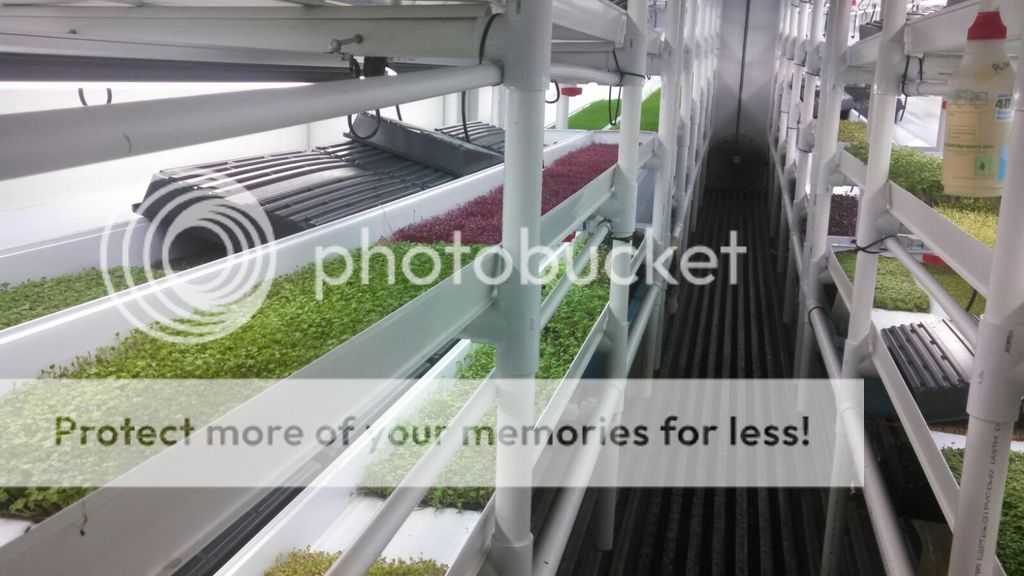
Photo of a small commercial indoor growing setup by CJP

We’ve recently shared interesting methods to improve the growth of plants, whether in the commercial or domestic setting. We learned that tomatoes may reduce need for pesticides, that plants can grow fairly well in artificial bubbles underwater, and now that technology might soon develop to use a metric of how much one’s plants are photosynthesizing to determine how much light they need, in an effort to cut electricity use. Catherine Elton reports for Conservation Magazine on a study published in the Journal of the American Society of Horticultural Science:

Indoor agriculture is gaining in popularity, and there are high expectations that—at a large enough scale—it could help satisfy the growing demand for food. But whether indoor farms, often called vertical farms or plant factories, make economic or environmental sense is hotly debated.

Continue reading

Soaked Boots and River Squirms

dsc01733_zps0mvho6g0

In the spirit of Earth Day, Xandari held a river clean-up last week along the Tacacorí River, which not only is the hotel’s primary supply for irrigation but also the local town’s. Similar to the community street clean-up we led last September and years prior, the purpose of this event was to remove any garbage along the river starting from the river spring and through the length of the property, which amounts to about 1km. Unlike the last clean-up, however, this one was of a smaller, and damper, scale. Continue reading

Coffee Capsules Are Terrible For The Environment, Still

17REVALUED1-master675

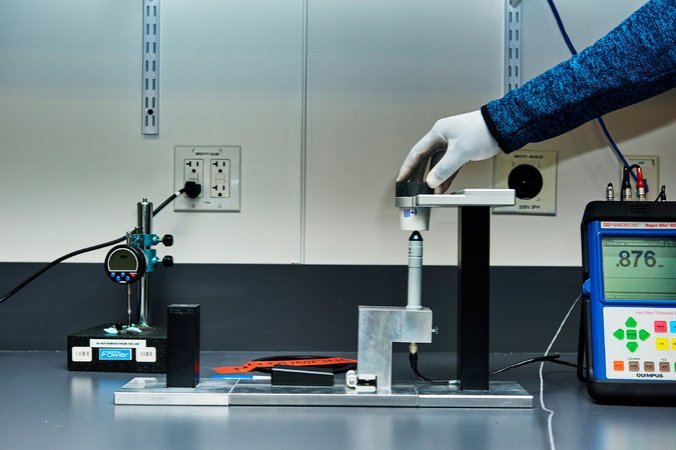
An engineer measuring a K-Cup prototype at a Keurig Green Mountain lab in Burlington, Mass. Tony Luong for The New York Times

Way back when, early last year, I thought for sure this company was going to respond seriously to the challenge posed by the fun-yet-serious viral campaign highlighting its environmental atrocities. Many people I know and love use these machines or machines like them. These friends are generally serious devotees of the capsule machines due to their convenience.

Every person every time, once they learn about how environmentally irresponsible the capsule machines are (more specifically, the capsules themselves are the problem), seems genuinely horrified (or expresses some emotion akin to the one generated by the viral video). But, how many have given up the K-convenience? Hmmm. The notable quote in the following story implies that because demand for this convenience is growing, there is not much likelihood of abandoning the technology–expect continued tinkering for the time being (sounds like fiddling while Rome burned):

Food Supply Change

5184

Accor plans to plant 1,000 vegetable gardens at its hotels by 2020. Photograph: Alamy

Only by scaling up the farm-to-table concept will we see a change to the industrial food production processes that lead to waste and related problems. We cheer our colleagues at Accor for this initiative:

Major hotel chain to grow vegetables at 1000 properties to cut food waste

Accorhotels, which includes Sofitel, Novotel, Mercure and Ibis, will reduce number of main courses on offer and record all food thrown away

One of the world’s biggest hotel chains has announced it will plant vegetable gardens at many of its hotels as part of a plan to cut food waste by a third. Continue reading

Models Show Garbage Clean-up More Effective on Shoreline Than in Gyres

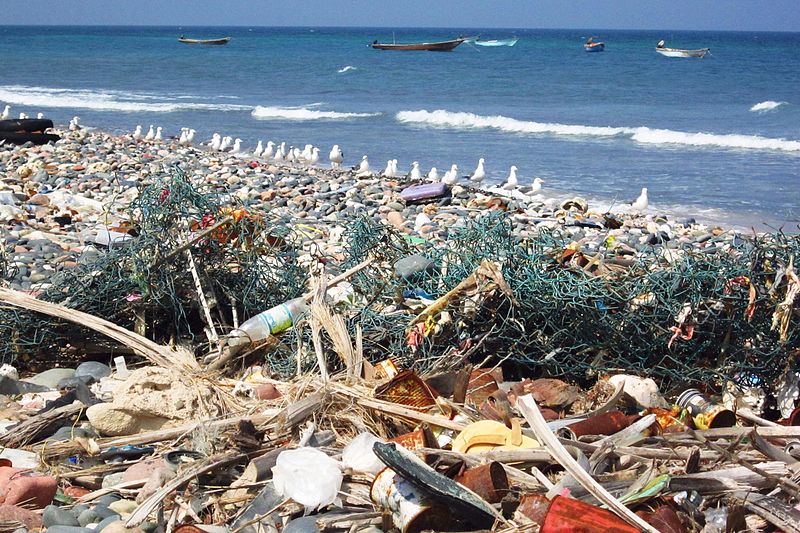
Image of trash on a beach by Flickr user Gerry & Bonni

The health of oceans in the face of massive pollution has been a topic of this blog on multiple occasions, and we’re always interested in learning more about the efforts to clean up the incredible amounts of waste, especially plastic, in one of the most–if not the most–important global ecosystems. New models by researchers at Imperial College London are hypothesizing that, rather than targeting sites like the great Pacific garbage patch, trash pick-up by floating microplastic collectors should be more effective near the coasts, where the rubbish originates. Sarah DeWeerdt reports for Conservation Magazine:

Cleanup efforts for ocean plastics should be concentrated close to shore, at the source of the problem, rather than in areas of open ocean where plastic tends to accumulate, according to a study recently published in the journal Environmental Research Letters. Ideally, if plastic collectors were placed offshore near coastal population centers, they could remove nearly one-third of plastic in the ocean over the next 10 years.

In the study, oceanographer Erik van Sebille and undergraduate physics student Peter Sherman, both at Imperial College London, used data on ocean currents and waste management practices in different countries to simulate the entry and circulation of plastic in the oceans from 2015 to 2025.

Continue reading

Leaving an Ugly Mark in Space

It’s not just here on earth that litter is a problem. In the last 40 years, there have been more than 5,000 launches into space, and they’ve ended up leaving a mark, and now scientists are worried about the litter they’ve left behind. ‘Space junk‘ are the small objects that we’ve left behind in space.They include things like old satellites, gloves, and toolkits accidentally dropped by astronauts. In 2014, the International Space Station had to move three times to avoid lethal chunks of space debris. The problem also threatens crucial and costly satellites in orbit. So what is the scale of the space junk problem, and what can we do about it?

Continue reading