The Slow Ways App, For Right Of Way Walkers

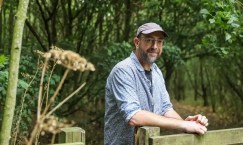
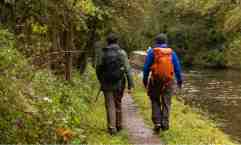
The Slow Ways founder, Daniel Raven-Ellison (right) walks with the Guardian’s Patrick Barkham as they verify a route between Congleton and Macclesfield. Photograph: Fabio De Paola/The Guardian

The right of way is a theme we love, and now there is a technology to assist our pursuit of those rights, at least in one country.

Our thanks to and the Guardian for their coverage of this development:

Walk the walk: the app mapping 140,000 miles of public right of way

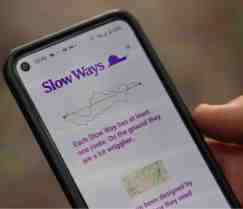
Slow Ways was set up during the pandemic when frustrated locked-down walkers drew up more than 9,000 walking routes across Great Britain. Photograph: Fabio De Paola/The Guardian

Community-based, Slow Ways has verified 60% of a network of pedestrian-friendly routes across Great Britain

I meet up with Daniel Raven-Ellison, the brains behind the Slow Ways walking network, in the darkness of a drizzly dawn at Kidsgrove railway station in Staffordshire. Our mission? To walk and verify the final 17-mile (27km) link in the route between Birmingham and Manchester. Continue reading
The Treefest Walks

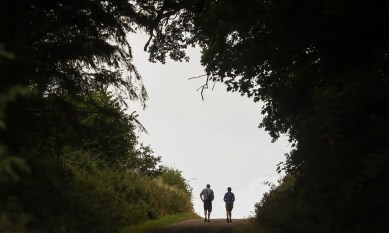
The Treefest walks are part of a £14.5m research quest investigating how to secure public benefits from forested landscapes. Photograph: Fabio De Paola/The Guardian

When is a walk in the woods more than just a walk? One answer might be biophilia, for starters. Our thanks to Miles Richardson for his work and to Patrick Barkham, as per his usual breadth of attention, for bringing another important story to our attention:

‘I’m glowing’: scientists are unlocking secrets of why forests make us happy

Research project aims to discover how age, size and shape of woodlands affect people’s happiness and wellbeing

Miles Richardson is gathering data from the Treefest research walks to examine how biodiverse spaces benefit wellbeing. Photograph: Fabio De Paola/The Guardian

How happy do you feel right now? The question is asked by an app on my phone, and I drag the slider to the space between “not much” and “somewhat”. I’m about to start a walk in the woods that is part of a nationwide research project to investigate how better to design the forests of the future.

Volunteers are being sought to record their feelings before and after eight walks on a free app, Go Jauntly, which could reveal what kind of treescapes most benefit our wellbeing and mental health. Continue reading

Forest Solitude, A Germanic Tradition

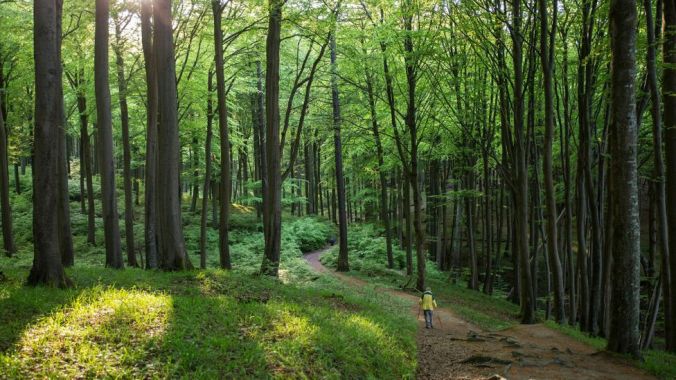
With forest making up around 33% of Germany’s land area, woodlands have become a central part of German culture (Credit: Westend61/Getty Images)

Thanks to the BBC for this article about the Germanic tradition of waldeinsamkeit:

Waldeinsamkeit is an archaic German term for the feeling of “forest loneliness” (Credit: Marco Bottigelli/Getty Images)

Everybody is at it in Germany. They’re doing it in the trees in the Black Forest. Out in the magical Harz Mountains. In the national parks of Bavaria when silhouetted in the moonlight. And in the city centre woodlands of Berlin and Munich. Continue reading

When The Going Gets Tough, Pick Farm-Fresh Edibles

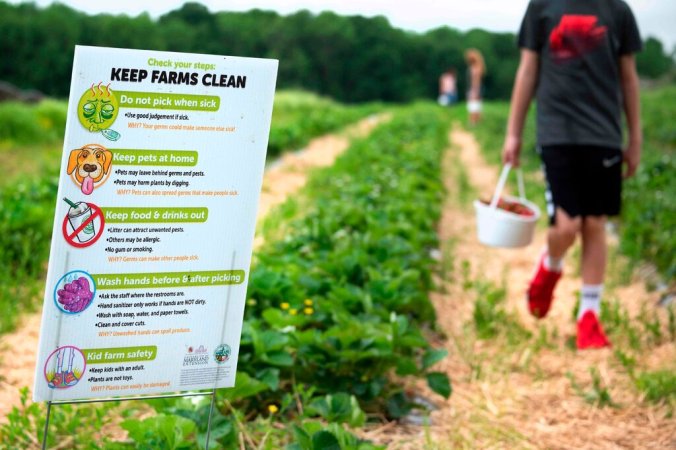
The strawberry patch at Godfrey’s Farm in Sudlersville, Md. Jim Watson/Agence France-Presse — Getty Images

Thanks to Tove Danovich, whose work we are happy to see again after too long a stretch:

U-Pick Is a Popular Pandemic Pick-Me-Up

Strawberry fields, apple orchards and pumpkin patches have seen high volumes of visitors, most of whom have been on their best behavior.

U-pick farms — the choose-your-own-fruit-and-vegetable patches that draw droves each summer and fall — have been especially busy this year. Some farms have been so picked over that they’ve had to close their fields for a day or longer to let new fruit ripen.

With apple-and-pumpkin season in full swing, that popularity is continuing, and u-picks have adapted accordingly. Weekend festivals are out. Mask wearing is in. Most locations have introduced ticketed and timed entry, and created prepaid packages for produce and other amenities, like hay rides, to limit face-to-face interaction. Continue reading

Field of Greens

merlin_166576017_fdfde446-ce22-48ee-8e65-4cfcd0d01c1a-mobileMasterAt3x.jpg

Assembly required: Sweetgreen’s hexagonal, compostable bowls have become status markers. Rozette Rago for The New York Times

05Sweetgreen-illo-mobileMasterAt3x

Illustration by Gluekit; Photographs by Philip Cheung for The New York Time

It is not the first time we are linking out to a story on this company, but thanks to the New York Times for In a Burger World, Can Sweetgreen Scale Up?for a more in depth look at them.

And for that matter, for a theme we care deeply about, which is that we should all be putting more thought into the food we eat, and how it is packaged.

The market is rewarding those companies paying attention to these themes:

Squashing the competition: A worker preparing zucchini.  Rozette Rago for The New York Times

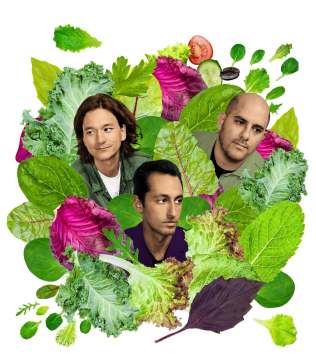
The chain that made salads chic, modular and ecologically conscious now wants to sell you a lot of other stuff.

On a Wednesday morning last fall, several executives at Sweetgreen, the fast-casual salad chain, gathered around a conference table at their headquarters here. They were discussing a new store format, called Sweetgreen 3.0, that had recently been introduced in New York City after two years of planning. At Sweetgreen’s other 102 locations, customers brave queues that, at peak lunch, can make T.S.A. lines look tame. Up front, employees assemble Harvest Bowls, Kale Caesars and infinite customized variants from a spread of freshly prepared ingredients, in a ritual that has become a hallmark of the modern midday meal.

At 3.0, to increase efficiency, the action had been moved offstage, to a kitchen in the rear. Customers give orders to a tablet-wielding “ambassador,” if they haven’t done so ahead of time with their smartphones, retrieving their salads from alphabetized shelves. While they wait they can mull adding one of the Sweetgreen baseball caps or $37 bottles of olive oil on display to the tab.

Many of the changes being tested at 3.0 seem crucial to realizing the ambitious plans of Sweetgreen’s co-founder and chief executive, Jonathan Neman. With its prescient mobile technology strategy, the company hopes to become something bigger — much, much bigger — than a boutique urban chain serving arugula to health nuts and yoga moms. Continue reading

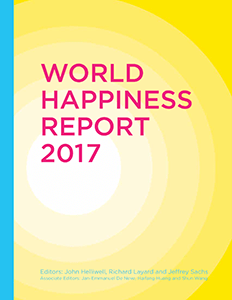
Get Your Copy Of The 2017 World Happiness Report

Not to overgeneralize or stereotype, but what is it with Scandinavians? We have barely noted, certainly not enough in these pages, how remarkably adept they are at navigating in the right direction. They seem to know something about how to live life, with very happy outcomes, that the rest of us might well learn from. And with all the unhappy news, from time to time we must ponder happiness itself. HR17_3_cover_small-232x300.pngClick the image of the report to the right to get a copy of the report, summarized on the website of the Sustainable Development Solutions Network (SDSN) as follows:

The first World Happiness Report was published in April, 2012, in support of the UN High Level Meeting on happiness and well-being. Since then the world has come a long way. Increasingly, happiness is considered to be the proper measure of social progress and the goal of public policy. In June 2016 the OECD committed itself “to redefine the growth narrative to put people’s well-being at the center of governments’ efforts”. Continue reading

The Nature Fix, Interview & Links

LopateNature.jpgThis is 20 minutes well spent if you share our interest in the links between nature and wellbeing; one hypothesis on this topic we favor being biophilia. But science is the realm of the nonstop quest, so the author’s explanation in this interview, of her motivations and her methodology, are worth hearing.

lopatenat2We have a preference for supporting independent bookstores so if this book goes onto your shopping list, before you otherwise get pulled in the direction of an online superstore, Powell’s is a great option; see what they have to say about the book:
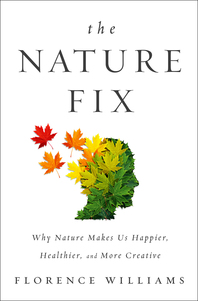
9780393242713_198An intrepid investigation into nature’s restorative benefits by a prize-winning author.

For centuries, poets and philosophers extolled the benefits of a walk in the woods: Beethoven drew inspiration from rocks and trees; Wordsworth composed while tromping over the heath; and Nikola Tesla conceived the electric motor while visiting a park. Intrigued by our storied renewal in the natural world, Florence Williams set out to uncover the science behind nature’s positive effects on the brain. Continue reading

Fly-Fishing In The Rockies

25VOCATION-superJumbo.jpg

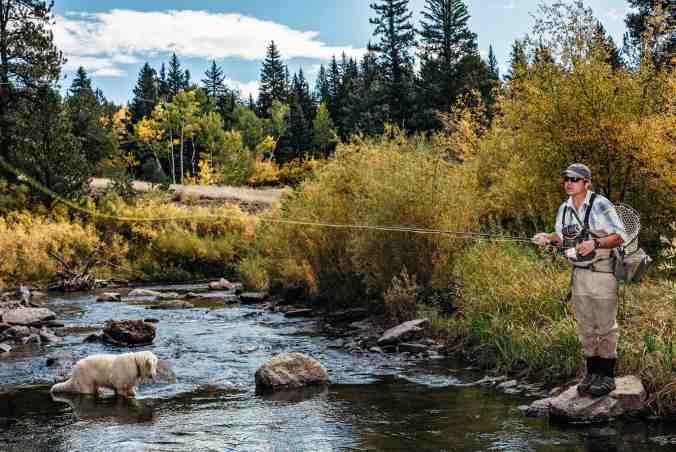
Scott Tarrant is the fly-fishing manager at the Broadmoor resort and hotel in Colorado Springs. Credit Ryan David Brown for The New York Times

We always think we have the best occupations, but occasionally we see what someone else is doing and start having second thoughts. But, as we know, there is a reason why it is called work:

The Curative Power of Water, Waders and a Fly Rod

 As told to

Scott Tarrant, 46, is manager of fly-fishing at the Broadmoor, a resort and hotel in Colorado Springs. Continue reading