Whale Scale Explained

Thanks as always to Ed Yong, who keeps the fires under our wonder about whales well stoked:

Why Did The Biggest Whales Get So Big?

… and perhaps more importantly: when?

Five years ago, on a boat off the southern coast of Sri Lanka, I met the largest animal that exists or has ever existed. Continue reading

Whispering Whales

whispering-whales-1-737094c2b8f1aaac28bc47183219c85f80bea1a7-s1400-c85.jpg

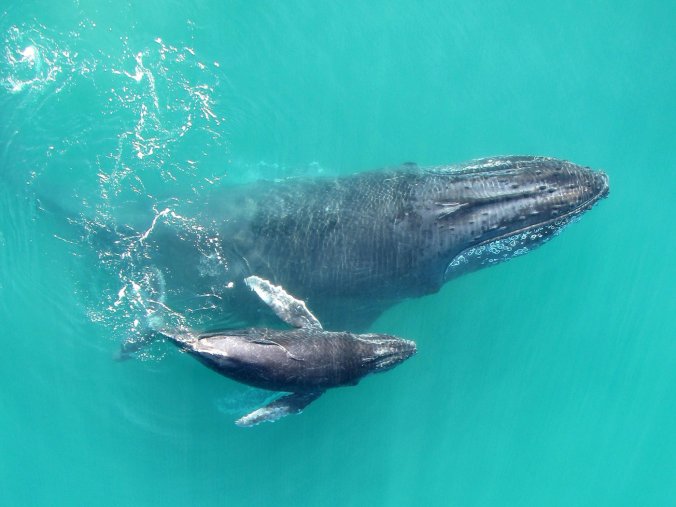
A mother and calf humpback whale swim in the Exmouth Gulf in Western Australia. Fredrik Christiansen/Functional Ecology

Thanks to National Public Radio (USA) for this story:

Recordings Reveal That Baby Humpback Whales ‘Whisper’ To Their Mothers

by Nell Greenfieldboyce

Whalesound.jpgBaby humpback whales seem to whisper to their mothers, according to scientists who have captured the infant whales’ quiet grunts and squeaks.

The recordings, described in the journal Functional Ecology, are the first ever made with devices attached directly to the calves. Continue reading

WhaleCam, Antarctica

WhaleCam.jpg

While fish were surf-spawning in California, the Guardian was sharing this footage from way down south:

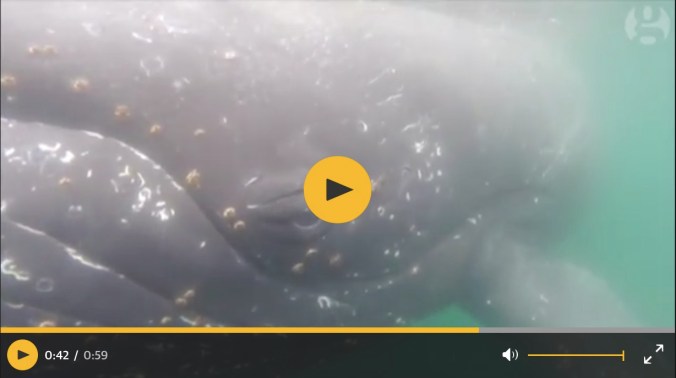
The World Wildlife Fund released this footage filmed in March 2017 that shows the view from a camera attached to a whale in Antarctica. Scientists used suction cups to attach cameras to humpback and minke whales, revealing new feeding habits and their social lives. The data gathered will be used to protect whales and their ecosystems

Whales Off Sri Lanka

4269.jpg

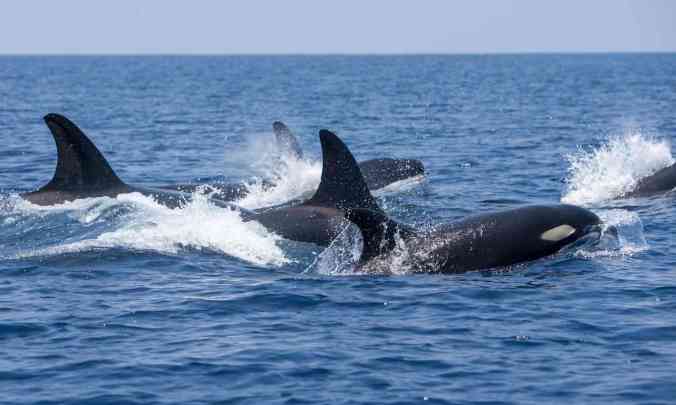
While observing sperm whales off the Sri Lankan coast, Philip Hoare came face to face with eight hunting orcas who had no fear of the 100-strong sperm whale pod

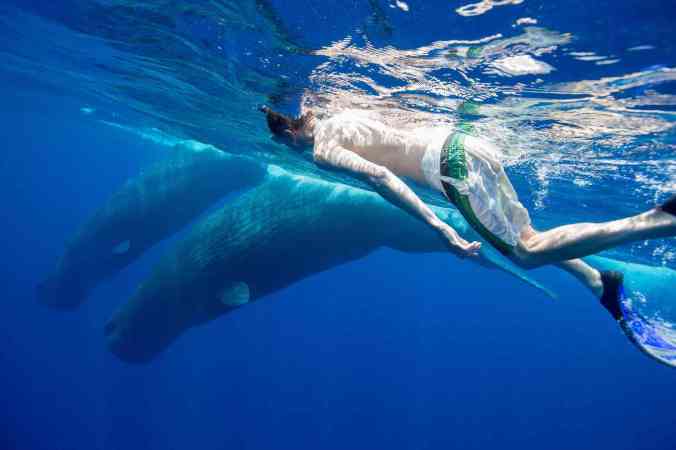
Thanks to Philip Hoare for this photo-documentary of his recent dive in our old neighborhood just south of the southern tip of India:

5184.jpg

Photograph: Andrew Sutton

Continue reading

Whale Songs

As whale season draws near in Baja California Sur, our ears become attuned to this type of singing.

Thanks to TED-Ed and Conservation Biologist Stephanie Sardelis and her talented team for so beautifully answering an age-old question.

The Gulf Of California In Front Of Villa Del Faro

vdfregatta

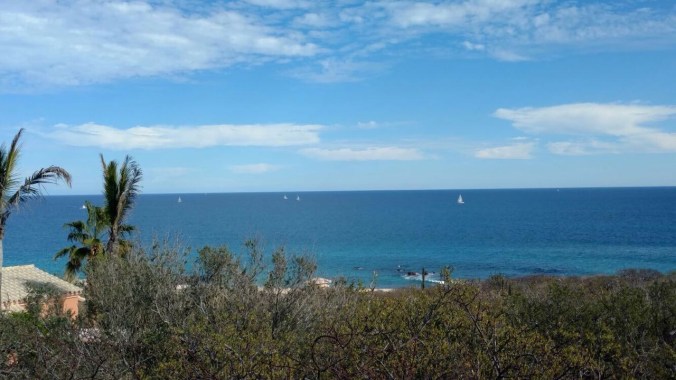
Seth sent a snapshot he quickly took on his phone yesterday late morning at Villa del Faro. He had already told me the day before that they were seeing whales in the same vicinity of where the boats are in this photo, but he had not had his phone handy to snap a picture. So this would have to do. It looked as though a regatta was passing by. Continue reading

Conservation, Nature & Culture

09gero-master768

Credit Ping Zhu

A writer who captures the nuanced relationship between conservation of nature and culture has our attention:

The Lost Cultures of Whales

By

Aboard the Balaena, Caribbean — I am alone on deck, my headphones filled with the sounds of the deep ocean. I have been tracking the sperm whales since 4 a.m. Now the island of Dominica imposes its dark shape in front of the rising sun.

“We have whales!” I shout down to Hal Whitehead, who founded the Dominica Sperm Whale Project with me a decade ago. He puts the kettle on and asks who it is as he comes on deck. Continue reading

Yay, Iceland

CcE7MA8WoAE1RFC

Thanks to Ecowatch for sharing this news, and megathanks to Iceland for making the news:

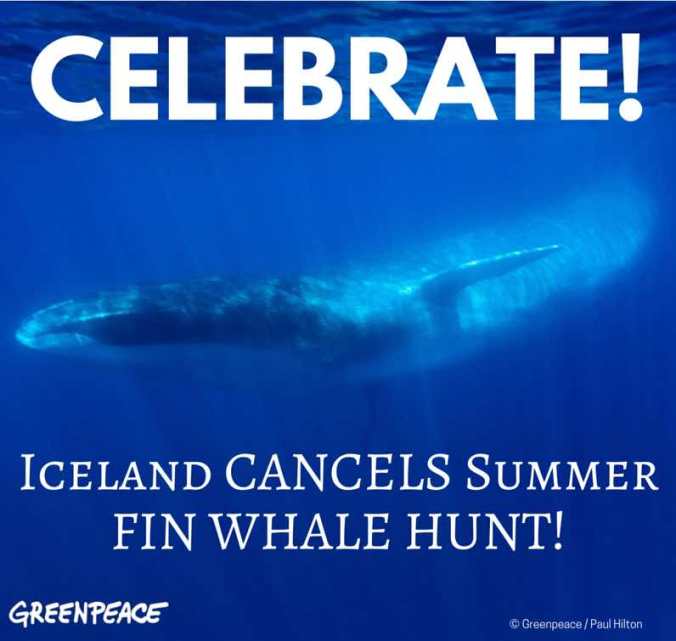
…Word today from colleagues in Iceland and now reports in both Icelandic and English-language media confirm that the planned hunt for fin whales will not happen this summer. The man behind that whaling is claiming that he’s stopping because of “hindrances” in exporting the meat. That’s great news for whales and everyone who has been opposing this needless, senseless hunt. Continue reading

Orcas In Captivity, Reviewed

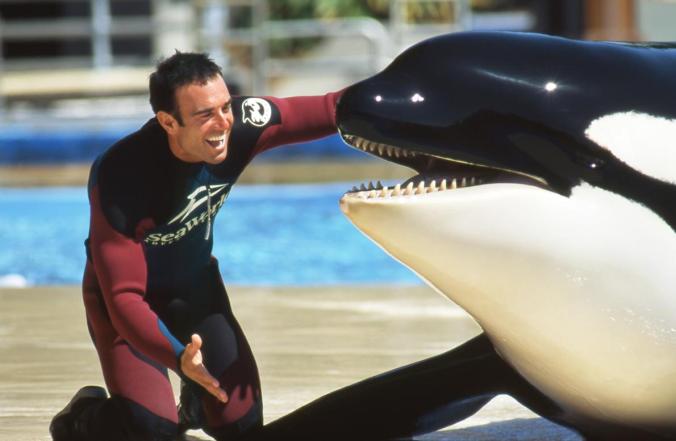
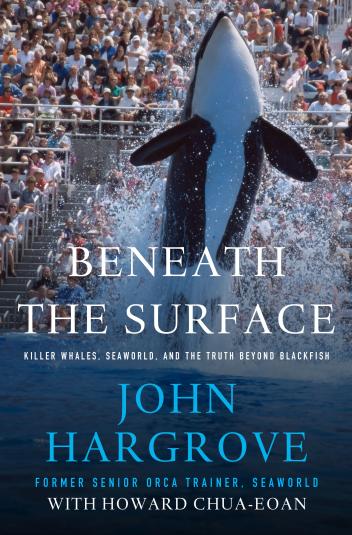
Author John Hargrove interacts with Kasatka during a show at SeaWorld. He calls her “the most dangerous whale in the corporation.” PHOTOGRAPH BY MELISSA HARGROVE

Author John Hargrove interacts with Kasatka during a show at SeaWorld. He calls her “the most dangerous whale in the corporation.” PHOTOGRAPH BY MELISSA HARGROVE

A book we had heard about, finally reviewed in a publication where it belongs to be taken seriously by a global audience of concerned citizens:

Former Trainer Slams SeaWorld for Cruel Treatment of Orcas

Author says the damage to these animals in the name of entertainment and profit is morally and ethically unacceptable.

By Simon Worrall, National Geographic

Continue reading

All Hail This Whale Tale

Gray whale off the coast of Baja. Photo by Joe McKenna via Creative Commons

Gray whale off the coast of Baja. Photo by Joe McKenna via Creative Commons

Mr. Zimmer, whom we have been unintentionally neglecting as a source recently, has caught our attention again.  May we never tire of whale tales:

In May 2010, a whale showed up on the wrong side of the world.

A team of marine biologists was conducting a survey off the coast of Israel when they spotted it. At first they thought it was a sperm whale. But each time the animal surfaced, the more clearly they could see that it had the wrong anatomy. When they got back on land, they looked closely at the photographs they had taken and realized, to their shock, that it was a gray whale. This species is a common sight off the coast of California, but biologists had never seen one outside of the Pacific before.

Continue reading

Whales Need To Eat, Just Like The Rest Of Us

1000 (1)

The Guardian‘s Environment section gets us thinking, today, about the unfortunate qualifier–killer–to the name of this amazing animal. All of us non-vegetarians are killers, right? We just hide that fact as conveniently as we can. The spectacular fashion in which this particular marine mammal satisfies its appetites is something to behold:

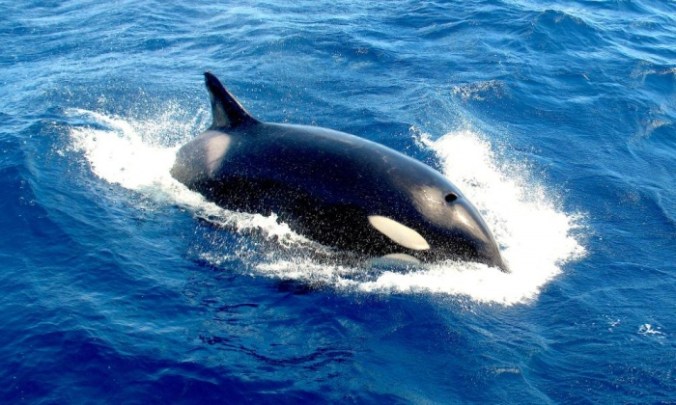
Even before our boat left the shelter of Bremer Bay boat harbour, in south-west Western Australia, shortly after dawn on the first day of the region’s 2015 killer whale season, it felt like we were already at the edge of the world.

I was there to see a tiny place, far out to sea, that marine scientists and environmentalists regard as one of the most special ocean ecosystems anywhere in Australia’s commonwealth waters.

We would motor more than 65km offshore to a location not much bigger than a few football fields, where the ocean is 4.5km deep and weather conditions are almost always treacherous. Where we were going there was a not a single distinguishing feature or landmark – just a GPS point.

More than anything, though, no one yet knows for sure why each year, during February and March, life from around the Southern Ocean converges on that relatively minute speck in the ocean wilderness. Continue reading

If You Happen To Be In New York

Screen Shot 2013-11-04 at 6.31.12 PM

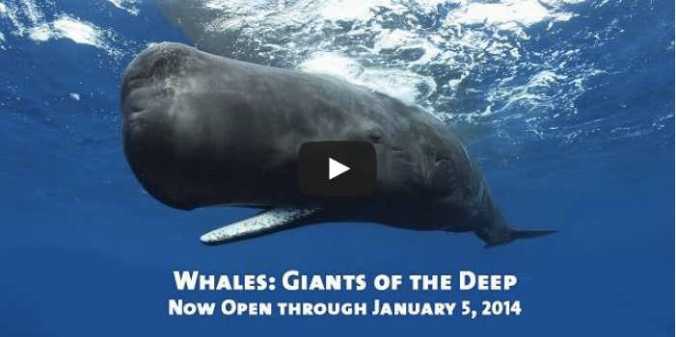
The exhibition goes well beyond that big whale you may remember in that great open space at the Museum:

Whales: Giants of the Deep explores the latest research about these marine mammals as well as the central role they have played for thousands of years in human cultures. From the traditions of New Zealand’s Maori whale riders and the Kwakwaka’wakw peoples of the Pacific Northwest to the international whaling industry and the rise of laws protecting whales from commercial hunting, the exhibition traces the close connections humans and whales have shared for centuries.  Continue reading

A Camera Trap By Any Other Name

Humpback whales lunge feeding in the Inside Passage of Southeast Alaska during summer on an overcast day. Photograph by Mark Kelley, Alaska Stock Images/National Geographic Creative

Humpback whales lunge feeding in the Inside Passage of Southeast Alaska during summer on an overcast day. Photograph by Mark Kelley, Alaska Stock Images/National Geographic Creative

A sweet invention, that camera trap.  Call it what you will, but the more we capture on film, it seems, the better we understand:

Humpback whales are known for their bubble nets. In Cape Cod Bay (map), the marine mammals spend the summer blowing bubbles in circles under the water and then lunging through roiling schools of fish for a mouthful of water and sand lance, a skinny, finger-length fish.

If you watched humpbacks only from the surface, you’d think that was how they got all their food. But a team of scientists has been putting tags on the whales to snoop on them underwater. They found something surprising: Humpbacks actually spend a lot of time feeding at the bottom. (Watch video of humpback whales blowing bubble nets.) Continue reading

Whales In Perspective

Abrams, publisher of the book above, was also publisher for another conservation-friendly artist featured on our pages. They have a series of books that showcase wonders of nature in spectacular fashion, and we encourage a visit to their site by clicking the image above:

Photographer and conservationist Bryant Austin’s breathtaking photographic project Beautiful Whale is the first of its kind: It chronicles his fearless attempts to reach out to whales as fellow sentient beings. Continue reading

See Sea Shepherd’s Saves

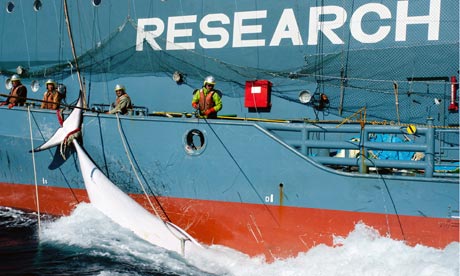
The Sea Shepherd vessel Bob Barker tries to stop a from being whale loaded on to the Nisshin Maru. Photograph: Glenn Lockitch / Sea Shepherd Australia

The Sea Shepherd vessel Bob Barker tries to stop a whale from being loaded on to the Nisshin Maru. Photograph: Glenn Lockitch / Sea Shepherd Australia

From the Guardian’s ongoing coverage of some of our favorite activists (click the image above to go to the story):

I don’t think that there is a more isolated, more remote, or more forbidding place on this planet than where we find ourselves at this moment.

Draw a line due south from Sri Lanka for 4,404 nautical miles and it will bring you to Prdyz Bay, deep in the Cooperation Sea, close to the massive Amory ice shelf. Continue reading

Whale Wonders

Whale

Beach-combing can yield wonderful surprises. Click the image above to see where this wonder was found:

A man finds a rare rock of valuable whale vomit on the beach in Morecambe that could be worth up to £100,000. Ken Wilman and his dog Madge were out on a walk when they discovered the valuable substance. The musky vomit comes from a sperm whale and is a rare commodity used in perfume

Angelic Scream

British Sea Shepherd volunteer Natalie Fox. Photograph: Sea Shepherd

British Sea Shepherd volunteer Natalie Fox. Photograph: Sea Shepherd

Her leader has many admirers among our ranks, but without Natalie and others screaming for justice, the whales would not survive the fury of the fleet from Japan:

One of Natalie Fox’s most cherished memories is of kayaking just off the coast of America Continue reading

You, and 999,999 Other Email Protesters, Can Sometimes Save The World (In This Case, The One Whales Inhabit)

South Korea had planned y to conduct ‘scientific’ whale hunts similar to those carried out by Japan in the Antarctic every winter. Photograph: Momatiuk – Eastcott/Corbis

Bravo, activists of all stripes, but in this case especially the emailing type.  And thank you, Korea, for finally rejecting false justification for whale-killing and doing the right thing. Click the image above for the whole story in the Guardian (whose consistent coverage to these issues deserves credit, too):

Japan, which uses the loophole to kill hundreds of whales every year, is expected to send its whaling fleet to the southern ocean in the next few weeks.

South Korea initially said an increase in whale stocks in its coastal waters had prompted the decision to resume whaling. The fisheries ministry said rising whales numbers posed a threat to squid and fish stocks.

The ministry reportedly began to reconsider after criticism from anti-whaling nations and an online petition that attracted more than 1,000,000 protest emails in three weeks.

Et tu, Japan?

Guardian, Angel, Sea Shepherd

Paul Watson, founder the animal rights and environmental group, Sea Shepherd Conservation, has returned to Antarctic waters after months on the run. Photograph: Markus Schreiber/AP

We feel fortunate to have the Guardian’s coverage of our favorite angelic trouble-maker, Paul Watson, since few other publications seem willing to pay attention to his cause. From our relatively comfortable, distant perch on dry land we nod to the southern waters where he and his band of activists righteously take on the whale-killers:

From aboard a Sea Shepherd ship, Paul Watson told Associated Press on Tuesday that his job is to protect whales, and he can’t do that if he’s in custody. He said the Sea Shepherd fleet is already in the Southern Ocean.

“I want to stay in the ocean,” the 62-year-old said. “I’m not going to be able to do that from some holding cell in Japan.”

Read the whole story here.

Paul Watson, Sea Shepherd & The Rogue’s Gallery Of Nations After Him

A woman with a Sea Shepherd tattoo, the organisation of marine conservationist Paul Watson (not pictured). Photograph: Thomas Peter/Reuters

Quite a few of us contributing to this site have called Costa Rica home at one point or another and it is probably fair to say all of us admire and respect that country’s pioneering role in modern conservation schemes.  For some of us, it was literally the country that inspired us to do what we do.  But no country is perfect, and at least in one current affair Costa Rica seems to be playing the stooge.  Shame on Germany and especially Japan for their leading roles in this farce. Costa Rica’s official abandonment of its core values should not be winked at, even by those of us who otherwise love the country and its people.  Paul Watson deserves our attention and support (click the image above for his editorial in today’s Guardian, which has played its fourth estate role well in this affair):

I must serve my clients, the whales

I can do that far better commanding the Sea Shepherd fleet than I can defending myself from bogus charges by Japan