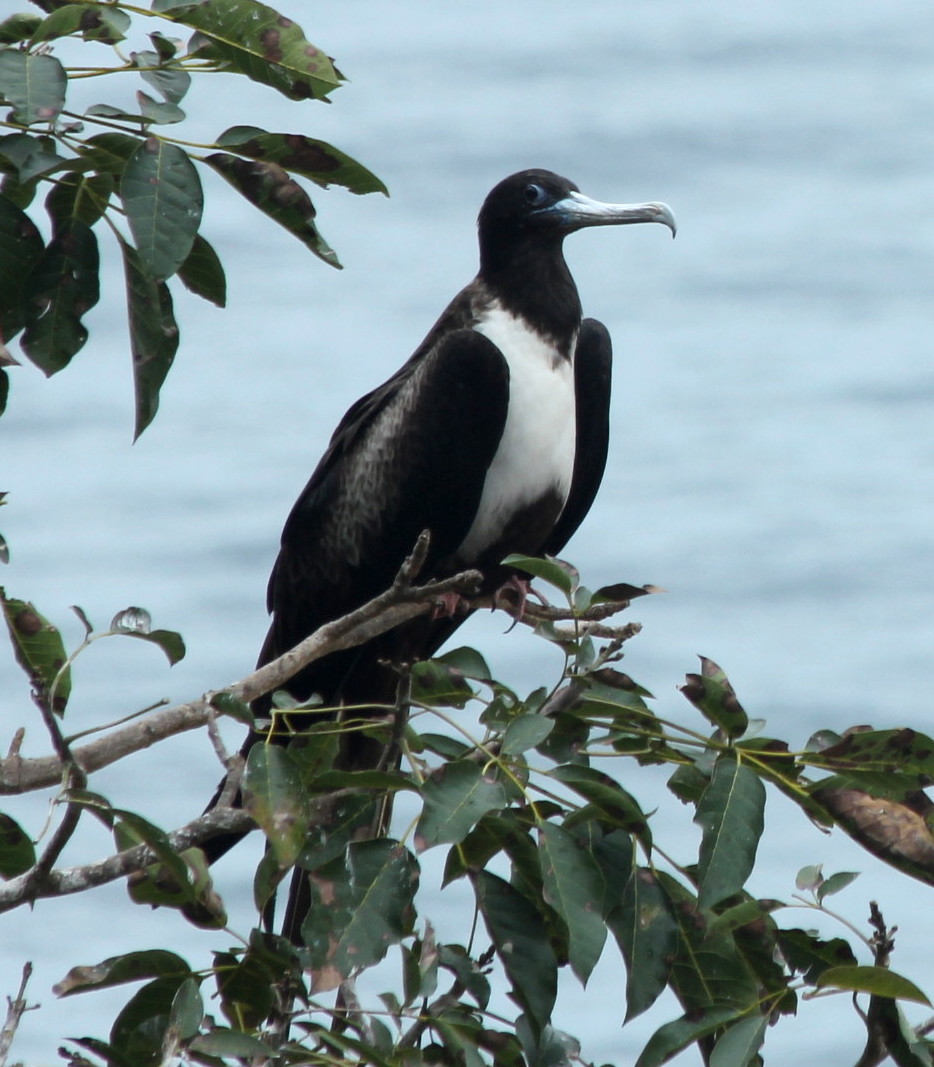
Yelapa, Mexico
Yelapa, Mexico
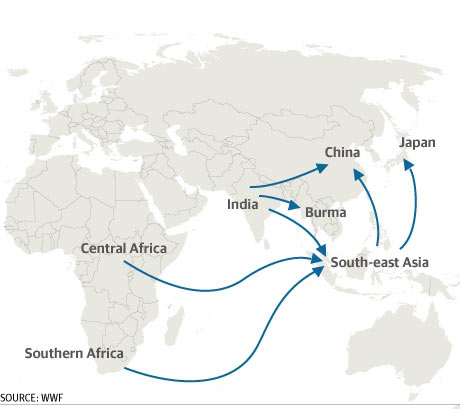
This earlier post touched on WWF’s use of military technology to take on an increasingly militaristic illicit trade. In today’s Guardian, an article with an insightful video embedded (click the map above) touches on approaches to disrupting these patterns. According to a new study commissioned by WWF and conducted by Dalberg, illegal wildlife trade is increasingly mapping on to the patterns of trade for illicit drugs and arms globally:
Organized crime syndicate members at levels 4 and 5 are often located in consumer countries, beyond the reach of enforcement authorities in range countries. For this reason, increased international cooperation is vital. Continue reading
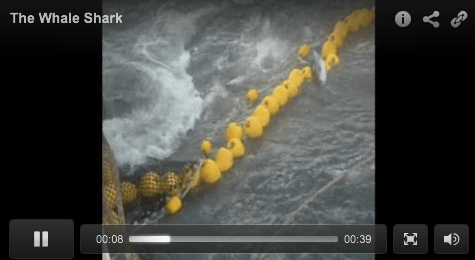
Not all marine creatures have equal opportunity of species survival. As in any social milieu, some are better connected than others; some have benefactors to look out for them; others do not. Thanks to Green Blog, more on the protection of certain charismatic species (but not not others) in the wild blue yonder:
Whale sharks get some respect; the bigeye tuna, not so much.
That was the gist of the message from the Western and Central Pacific Fisheries Commission, whose member nations agreed this week at a meeting in Manila to help reduce whale shark deaths in Pacific fisheries. The commission did not act on a recommendation from scientists that the catch of bigeye tuna be sharply reduced. Continue reading
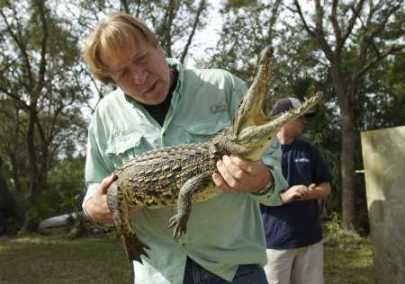
Joe Wasilewski works last month with a Nile crocodile captured near Homestead. The reptile expert says Nile crocodiles “learn that humans are easy targets.”
We do not enjoy reading about, or passing along, such stories. But we must. For shock value. Just not for the sake of entertainment shock value. How and why such creatures find themselves in such locations is a topic we have dedicated at least one post to. Wild creatures belong in the wild, except on rare occasions. In the case below, one wild creature will lose its life as a result of someone’s misguided thoughts to the contrary:
State wildlife officials have given their agents a rare order to shoot to kill in the hunt for a young and potentially dangerous Nile crocodile loose near Miami. Continue reading
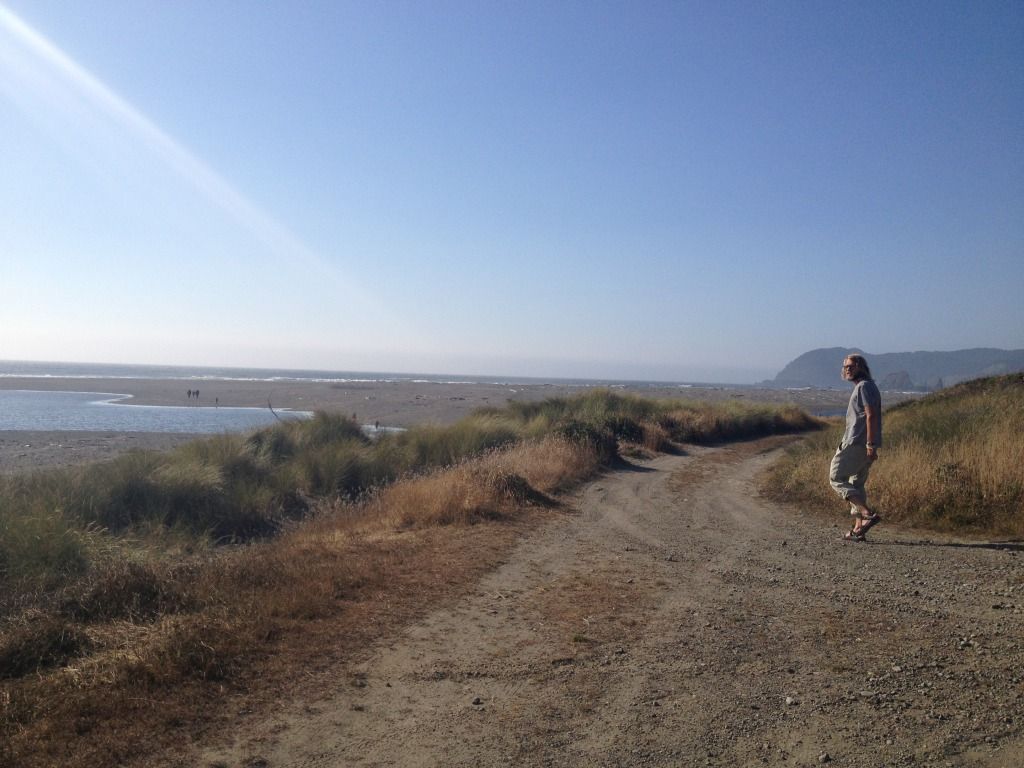
Taking a Quick Stop on the Pacific Coast Highway (Carl)
This is the third in a series of posts on a summer trip; see the second.
In Fort Bragg, the first thing we did was eat a substantial breakfast, since we had missed supper the night before. We ate at a curious Wizard of Oz themed restaurant called “Eggheads,” complete with a yellow-brick road (of linoleum tile) running through the center of the building. We asked the proprietor what had prompted the theme—had the young Judy Garland frequented the coastal town? Were the pots and pans castoffs of the Tin Man’s suit? As it turns out, the answer was rather more mundane: Eggheads’ bathroom is difficult to find. Those wanting to make the trip must go through the dining area and kitchen, exit into a lot behind the building, and hang a left around a corner before finding the small cottage hiding the commode nestled between a few sheds and next to some old gardening equipment. The circuitous route defeats expectations so soundly that, about thirty years ago, management decided to create a prominent trail for customers. When a dull saffron floor tile was chosen, the yellow brick road was born—and all of the many allusions to the Wizard of Oz which thereafter sprung up on the menu and storefront.

Thanksgiving, as a national holiday, has its pluses and minuses (most holidays innocently suffer from the tendency we have to overdo things). Thanksgiving as a practice, a daily or just occasional reflective practice, can only be good. Today I reflect thankfully on the young animal in the video above (click to spend a minute or so viewing it). At first glance you might think it is a puppy. In the video it is clearly in a dog crate, and its facial expressions and movements could just as well be that of a small husky or shepherd dog, or even a mut.
It is a young bear cub. If you want to know its story, click above. The story in that video coincides with the story below.

This leopard kitten was found recently separated from its mother in a protected forest area in Kerala, and I happened to be in the right location at the right moment to witness what happens in such cases if our modern world is working at its best. I learned something in the process, and that has completely changed my view on zoos (for which, this thanksgiving reflection). The coincidence is that both the bear cub and the leopard kitten enlightened me within days of each other, and within that same set of days I had just been listening to a story on Radio Lab on the topic of zoos; all that, just at the time when my calendar reminds me each year (the last Thursday of November) to reflect on what I am thankful for.
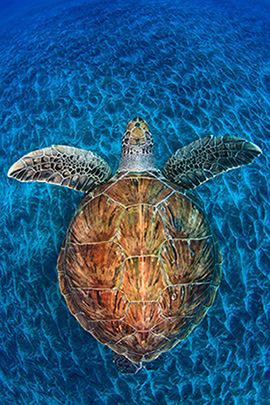
Jordi Chias

There is always a good reason to visit the museum, and now a particularly good one, if you like the image to the left. It is a sampling from the annual award program the Museum and BBC co-sponsor. For information on the exhibition, and tickets:
Veolia Environnement Wildlife Photographer of the Year
19 October 2012 – 3 March 2013
Open 10.00 – 17.50 dailyOpen late last Friday of every month October to February 2012 (excluding December) Continue reading
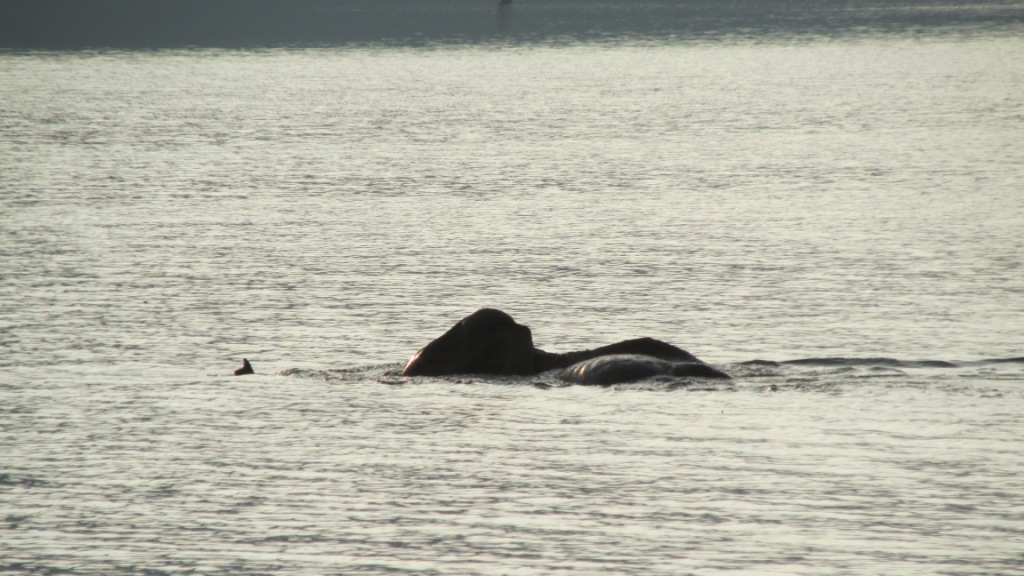
Although the Periyar dam reservoir had cut off the traditional migratory paths of elephants way back in 1899, four years after construction of the dam had started the world’s largest land animals had learned how to overcome the watery impediment. Entire herds, calves in tow, now routinely swim across the reservoir, presenting lucky visitors with one of Periyar’s more unforgettable and thrilling spectacles.

Sambar Deer is one of the dominant deer species in the Periyar Tiger Reserve and an important food source for the three sympatric large carnivores – Tigris, Leopard and Dhole (wild dogs).
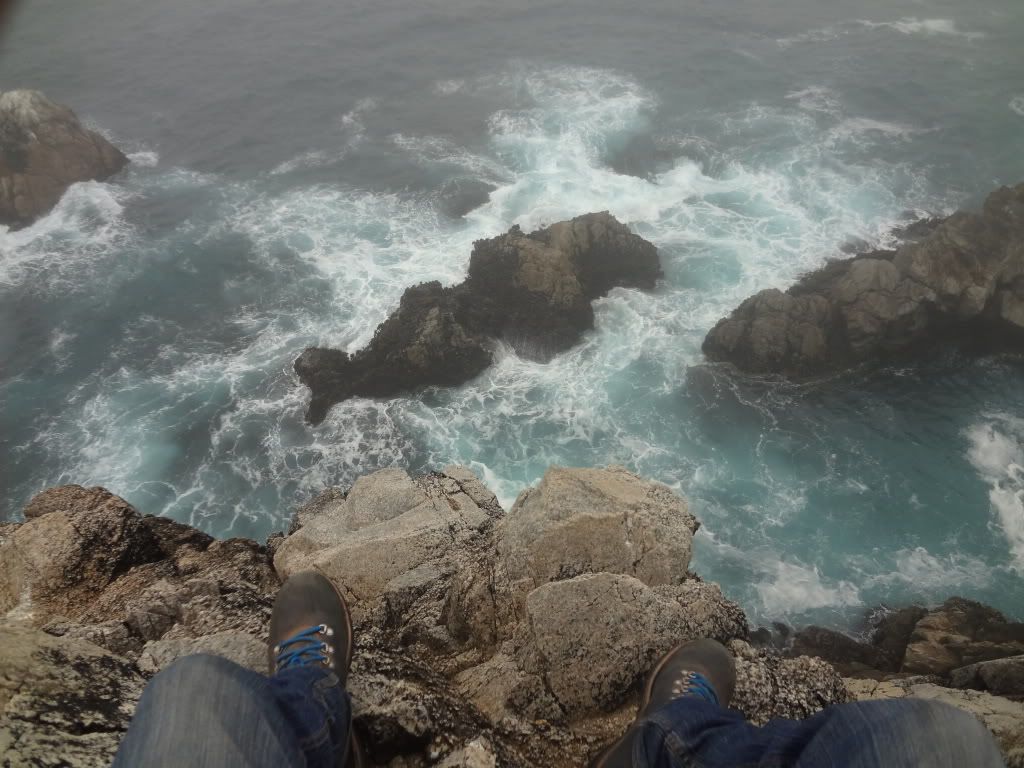
Carl on McClures Beach
This is the second in a series of posts on a summer trip; see the first here.
In the afternoon we were off, driving up the west coast without any real plans; we knew we wanted to be in Seattle in four or five days, but that intervening time period was ours to spend as we wished. From a quick glance at the map, we thought that Point Reyes, a national coastline a few hours north of the bay area, Continue reading

Periyar’s diverse ecosystems of evergreen, semi-evergreen, moist deciduous and dry forest makes it a reptile friendly habitat. Forty-five species of reptile make the reserve their home, including the charismatic Travancore Tortoise.
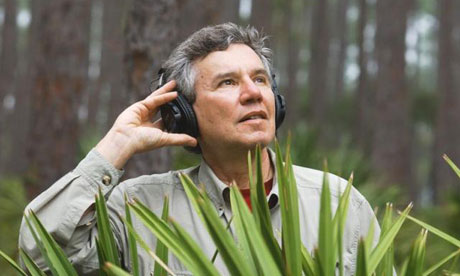
Musician and naturalist Bernie Krause has spent 40 years recording over 15,000 species in many of the world’s pristine habitats. Photograph: Courtesy of Hachette Book Group
Click his photo for the story. Never heard of him. But we have certainly heard his sounds:
Krause, whose electronic music with Paul Beaver was used on classic films like Rosemary’s Baby and Apocalypse Now, and who worked regularly with Bob Dylan, George Harrison and The Byrds, has spent 40 years recording over 15,000 species, collecting 4,500 hours of sound from many of the world’s pristine habitats.
But such is the rate of species extinction and the deterioration of pristine habitat that he estimates half these recordings are now archives, impossible to repeat because the habitats no longer exist or because they have been so compromised by human noise. His tapes are possibly the only record of the original diversity of life in these places.
Click the image below for the bigger story. Continue reading
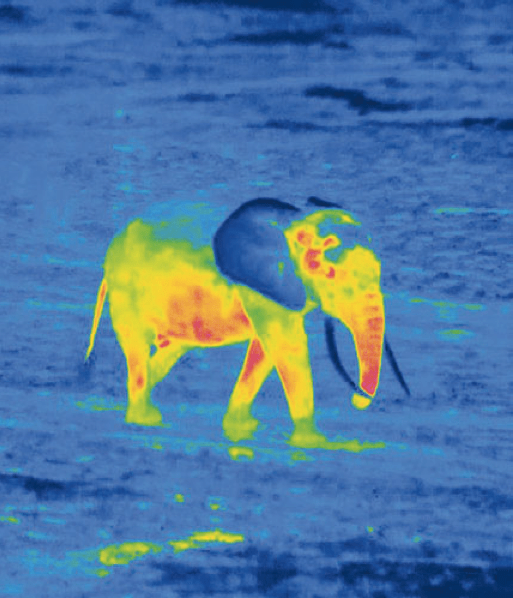
Click the image above for the story called “Forest Elephant Chronicles” in this month’s American Scientist, about new technology for understanding elephant behavior in the wild:
…What inspired your team to try thermal imaging?
Acoustic monitoring has allowed us to study elephant behavior, without bias, over 24-hour cycles. Their activity cycle is nearly equally distributed day and night, but they prefer to enter forest clearings at night. This is where we can observe the elephants directly. We suspect that different types of interactions occur at night because the types of calls differ then. But we have only the beginnings of an understanding of what the acoustic signals mean. We need to investigate this with visual observation. Also, important behaviors may not have identifying sounds associated with them, and we need to know what these are….
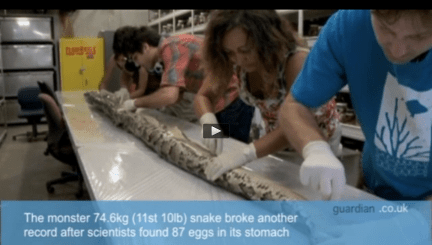 Click to the left to go to the 38 seconds of video on a topic we first posted about here. It has a bit of ick factor, but the topic is of enormous consequence for the original ecosystems where these wild animals come from, not to mention the innocent creatures they encroach on in their new habitats.
 Click the image for the story on BBC’s website:
The Ganges River Dolphin is one of the world’s most endangered freshwater mammals.
Its numbers in South Asia have plummeted in recent decades. But Indian conservationists working on the Brahmaputra River hope to reverse the dolphin’s decline by mobilising riverside communities to protect these amazing cetaceans.


Funny to see this headline at the same time as Martin’s photo just published; not to mention previous posts of Cormorants from time to time.
With a nickname like Black Death (click the headline for the full story), it seems some think of these amazing birds in quite strong, negative terms; they sound evil. Are they? Of course not. Just providing a little friendly competition to those with rod and reel:
Known to anglers as the Black Death, the cormorant is a killing machine that can swim two minutes underwater and diving 80ft. In China, fishermen hunt with trained cormorants, but in Europe the protected species is a hated rival, blamed for emptying rivers of fish.
Anglers have been petitioning the government to do something about the birds for more than a decade. But a perception that cormorant numbers are now out of control has resulted in a clamour for unprecedented action.
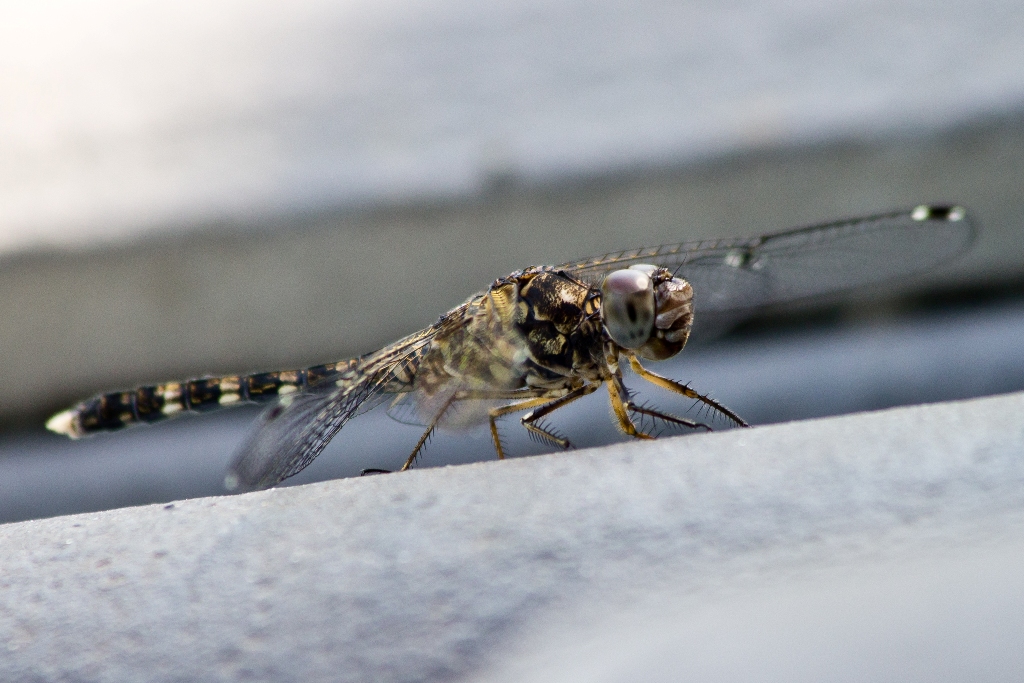
As the monsoons blow through Kerala, the native dragonfly and damselfly populations in the area appear to wax and wane along with the water levels. A sunny day by any water body guarantees sighting at least one species, but as is only so common during the season, overcast days dominate the calendar. Nevertheless, Kerala’s entomological biodiversity remains as strong as the summers, during which dozens of Odonate species whizz back and forth teritorially over their little stretch of pond-shore or riverbank. The main reason that these insects are not out in force as frequently as the rest of the year is that they are most active in hot and dry climates, particularly in direct sunlight. Contrarily, monsoons traditionally offer respite to natives, being wet and (slightly) cooling. When they’re not visibly hunting or mating, dragonfly and damselfly populations are probably strongest in the larval stage – extraordinarily aggressive aquatic predators. I got lucky a few days ago on a sunny day on the backwaters when I saw a Granite Ghost – in my books a rarer species of dragonfly that I’ve only sighted once in Goa.
 The images after the jump are from here and first came to our attention in the Guardian story (click the headline image to the left), which follows a recent interest we have taken in these mercilessly misunderstood and under appreciated wild creatures. Seth’s recent post begins a new vein in our conversation about marine conservation (for
that wait for 2/2 in that series).
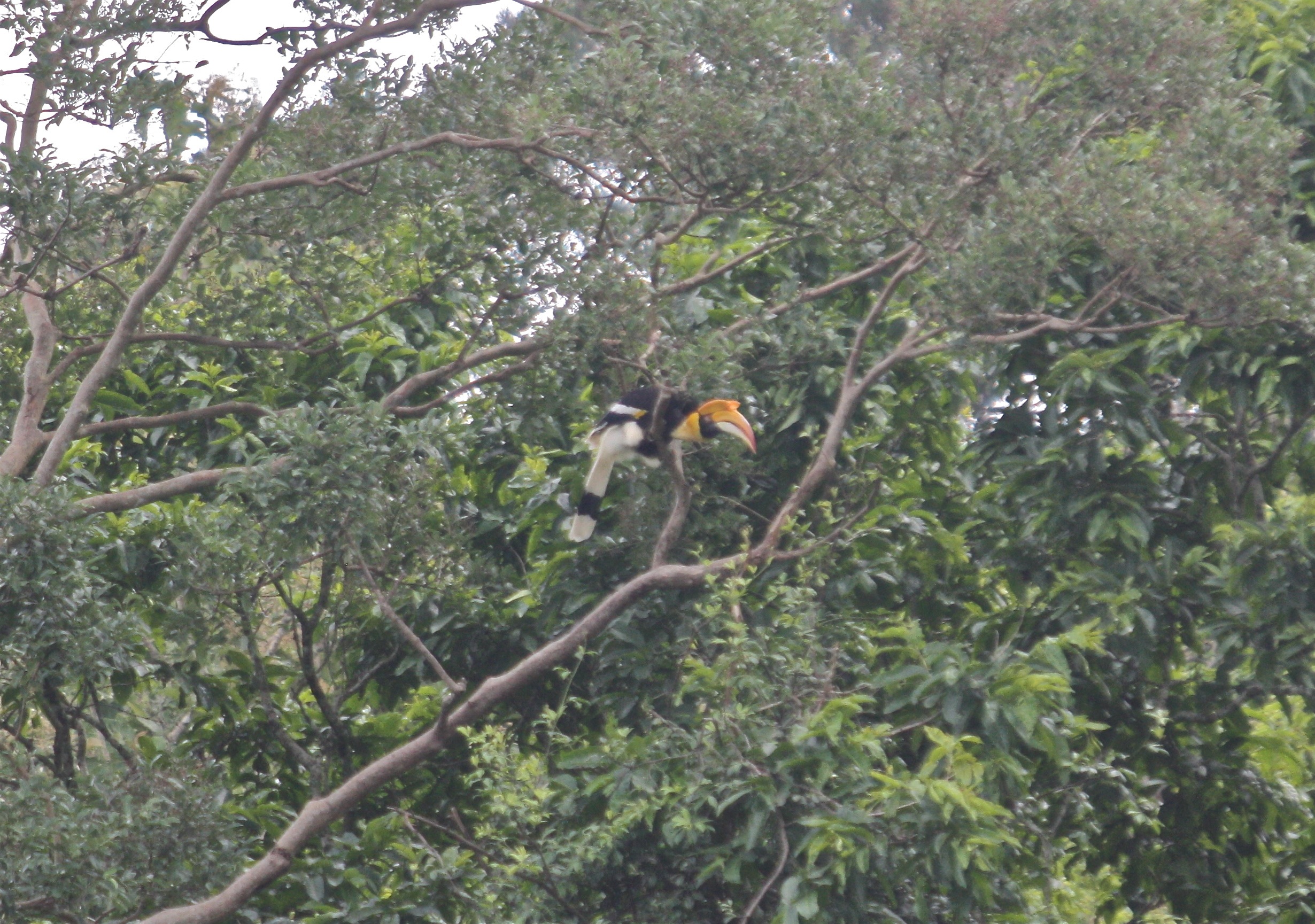
It is amazing how fast ten weeks can go by. I remember sitting in the library at Cardamom County writing about my first day of birding here; I remember how excited I was to see barbets, minivets, and leafbirds from the parking lot. Now, ten weeks later with about a dozen activities completed and many birding expeditions into the Periyar Tiger Reserve under my belt, I’m suddenly looking back on fond memories. My first excursion into Periyar was a Bamboo Rafting trip along Periyar Lake. To be honest, I was a little overwhelmed in this strange new place with its checklist of over 300 unfamiliar birds. As is always the case with Periyar, the excursion was a blast, and that trend continued with the Border Hike, the Nature Walk, the Tiger Trail, the Green Walk, and indeed with every trip into the Reserve.
 Organikos