Unwanted Plastic Renaissance

A worker at a hospital in Kathmandu, Nepal, readies bags of Covid-19 waste for treatment, December last year. Photograph: Prakash Mathema/AFP/Getty Images

The plague of plastic has zombie-like revivification capabilities:

How the plastic industry turned the pandemic to its advantage

With its products proving indispensable to combatting Covid-19, the plastics business is reinvigorated. What will it take to bring this major polluter to heel?

There are only two reasons that the plastics industry will change, a polymer scientist once told me: war or legislation. Continue reading

Tiger Conservation Progress

A Bengal tiger in India’s Kanha National Park. CHARLES JAMES SHARP VIA WIKIPEDIA

Tigers were an important part of our lives when this platform started, and for the following few years of our time in Kerala. We have retained an interest, so this news is welcome all these years later:

Wild Tiger Numbers 40 Percent Higher Than Previously Estimated

The number of endangered tigers around the world is 40 percent higher than previously thought, according to new data from the International Union for Conservation of Nature (IUCN). Continue reading

Monbiot Uncorked

‘The dangerous heat England is suffering at the moment is already becoming normal in southern Europe.’ A firefighter tackles a wild fire in Gironde, France, 17 July 2022. Photograph: Thibaud Moritz/AFP/Getty Images

George Monbiot has never held back, but now the cork is released full force:

This heatwave has eviscerated the idea that small changes can tackle extreme weather

Dangerous heat will become the norm, even in the UK. Systems need to urgently change – and the silence needs to be broken

Can we talk about it now? I mean the subject most of the media and most of the political class has been avoiding for so long. You know, the only subject that ultimately counts – the survival of life on Earth. Continue reading

Packing Well

Digital tablet, smart phone, bag, backpack, passport, sneakers, jeans, shirt, notebook, camera, photography

If there is a smart way to do it, here is a good suggestion:

The Smart Traveler Packs a Book for Every Occasion

As I write this, I’m busy planning a vacation to Maine—a vacation that I will already have enjoyed by the time you read this. There are so many factors to consider—car rental, restaurant reservations, day trips, wardrobe, etc. But perhaps the most important is: What am I going to read? Continue reading

Monarch Butterflies’ Future

A Monarch butterfly, which is now placed in the endangered category of the International Union for the Conservation of Nature’s Red List of Threatened Species, perches at the Royal Botanical Gardens in Burlington, Ontario, Canada July 21, 2022. REUTERS/Carlos Osorio

Butterflies in general, and this species in particular, have graced our pages more than most other insects over the years. Thanks to Emma Farge and Gloria Dickie, from Reuters, for this:

Monarch butterflies rest on a tree at El Rosario sanctuary, in El Rosario, in Michoacan state, Mexico February 11, 2021. Picture taken February 11, 2021. REUTERS/Toya Sarno Jordan/File Photo

Kaleidoscopic migratory monarch butterfly joins global endangered species list

GENEVA, July 21 (Reuters) – The migratory monarch butterfly, which has for millennia turned North American woodlands into kaleidoscopes of colour in one of nature’s most spectacular mass migrations, is threatened with extinction, international conservationists said on Wednesday. Continue reading

What Is Birdsong?

Das Vogelkonzert (The Bird Concert) by Jan Brueghel the Younger, c. 1640-1645 via Wikimedia Commons

If you have been educated to carry out academic research, JSTOR is familiar to you. And if not, but you have the sort of curiosity demonstrated in our pages, then JSTOR daily might be a good companion, as demonstrated here:

Every Good Bird Does Fine

Is birdsong music, speech, or something else altogether? The question has raged for millennia, drawing in everyone from St. Augustine to Virginia Woolf.

To some extent, we all know music when we hear it: a melody, a rhythm, a progression of individual notes that, taken together, elevates the whole into the realm of auditory art. Continue reading

Vertical Farming Super Strawberries

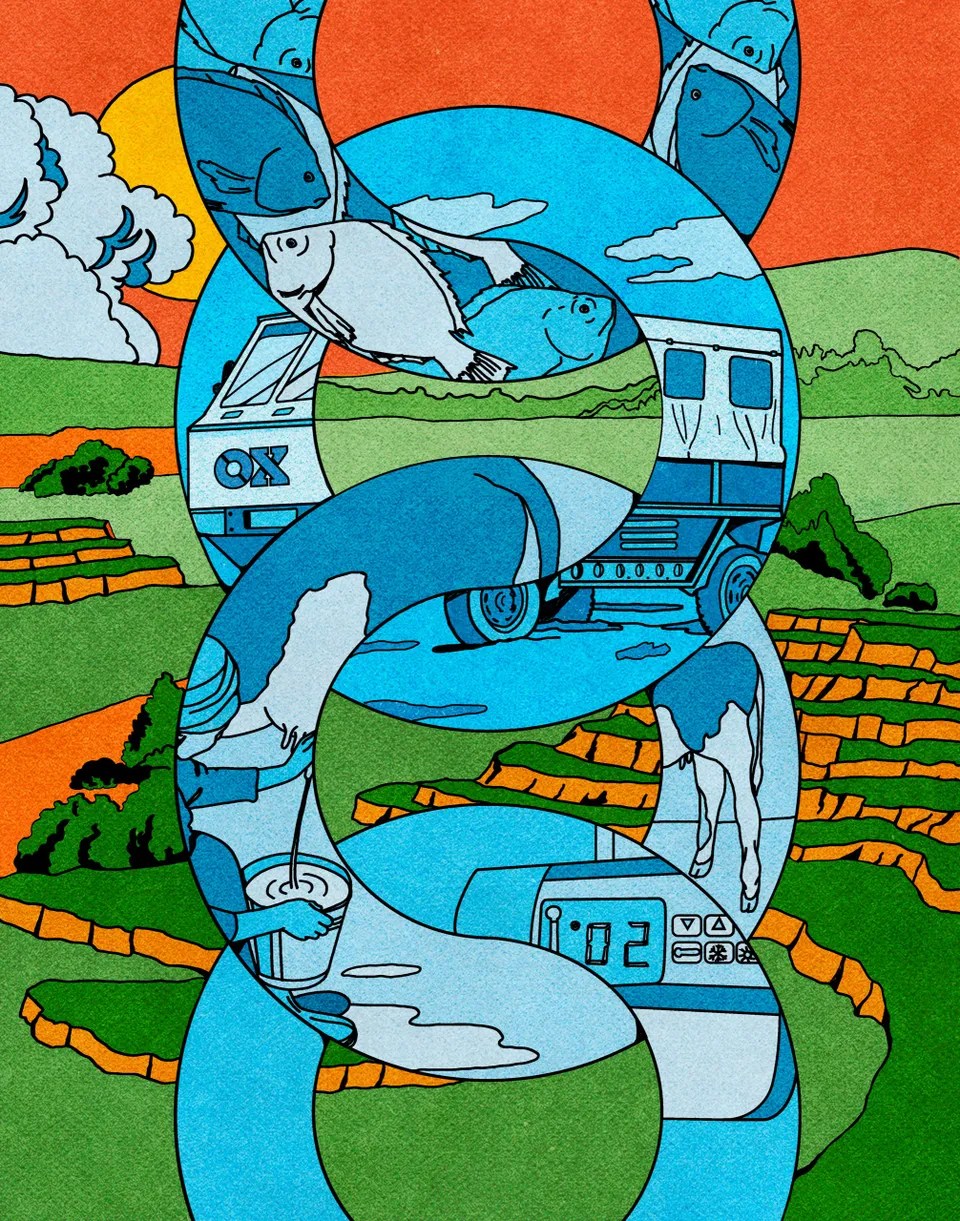
Illustration by João Fazenda

In the early years of this platform we were developing new properties in Kerala, India and food was a focal point. More recently when we indulge in the culinary it is Costa Rica taste of place we are talking about. Occasionally vertical farming makes its way into these pages, but it has been a while:

Selling “Omakase” Strawberries, for the Price of a Full Meal

The founder of Oishii, whose haute-cuisine strawberries have sold for as much as ten dollars a pop, offers a tour of one of his V.C.-backed vertical farms, modelled on the foothills of Japan and built in New Jersey.

Consider the strawberry: red, ripe, an ephemeral pleasure as fleeting as a summer fling. Continue reading

Charismatic Megafauna UK Rewilding

Wild bison released into Kent countryside – video

In Scotland the first such project we became aware of had wild but smaller animals as their focal point. Reforesting and other United Kingdom rewilding initiatives have until now been missing the biggest possible charismatic megafauna:

Wild bison return to UK for first time in thousands of years

The gentle giants released in Kent should transform a commercial pine forest into a vibrant natural woodland

Early on Monday morning, three gentle giants wandered out of a corral in the Kent countryside to become the first wild bison to roam in Britain for thousands of years. Continue reading

Trillion Tree Puzzles

Villagers hired by Eden Reforestation Projects planting trees in the northern part of Goiás State, Brazil. Lalo de Almeida for The New York Times

Zach St. George showcases why the compelling idea is problematic, and why the problematic idea is so compelling:

A plant from which Eden separates seeds to plant in Goiás. Lalo de Almeida for The New York Times

To fight climate change, companies and nonprofits have been promoting worldwide planting campaigns. Getting to a trillion is easier said than done.

On a hot morning in April, near the start of Brazil’s dry season, four women and two men walked single file across a sodden field at the edge of Engenho, a village in the northern part of Goiás State. They wore long sleeves and wide-brimmed hats to protect against the sun, and leather gaiters and gloves to protect against snakes. In a plastic tub, they carried an entire forest. Continue reading

Air Conditioning 2.0

The new mechanism (pictured) could replace traditional vapor-compression cooling technology, which has remained largely unchanged since the early 20th century.

Oddly, we have only mentioned air conditioning twice before in our pages since 2011. So much of the human population is in need of it, and its carbon footprint is so problematic, it presents a significant challenge to efforts to mitigate climate change. Here is reason to mention it again:

Assistant Professor of Chemistry Jarad Mason (left) and co-author Jinyoung Seo have developed a new class of solid-state refrigerants that could enable energy-efficient and emission-free cooling. Jon Chase/Harvard Staff Photographer

Keeping cool without warming the planet

A summer dilemma worthy of Solomon: how to stay cool in days of high heat and humidity without turning to traditional air conditioning, which consumes vast amounts of electricity and emits potent climate-changing greenhouse gases.

The answer potentially involves a new class of solid-state refrigerants that could enable energy-efficient and emission-free cooling. Continue reading