
India
India
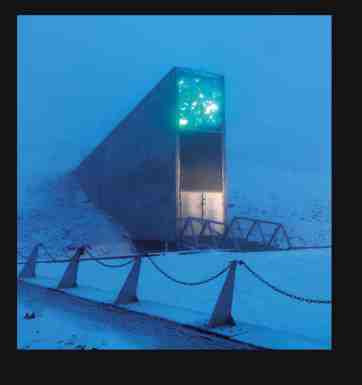 We have featured these banks before, but they are worthy of a more detailed inside look.
So, thanks to by Salomé Gómez-Upegui, Rita Liu and the Guardian. Their article, Seed banks: the last line of defense against a threatening global food crisis is full of images and written descriptions that put these banks in better perspective:
As climate breakdown and worldwide conflict continue to place the food system at risk, seed banks from the Arctic to Lebanon try to safeguard
As the risks from the climate crisis and global conflict increase, seed banks are increasingly considered a priceless resource that could one day prevent a worldwide food crisis. Continue reading
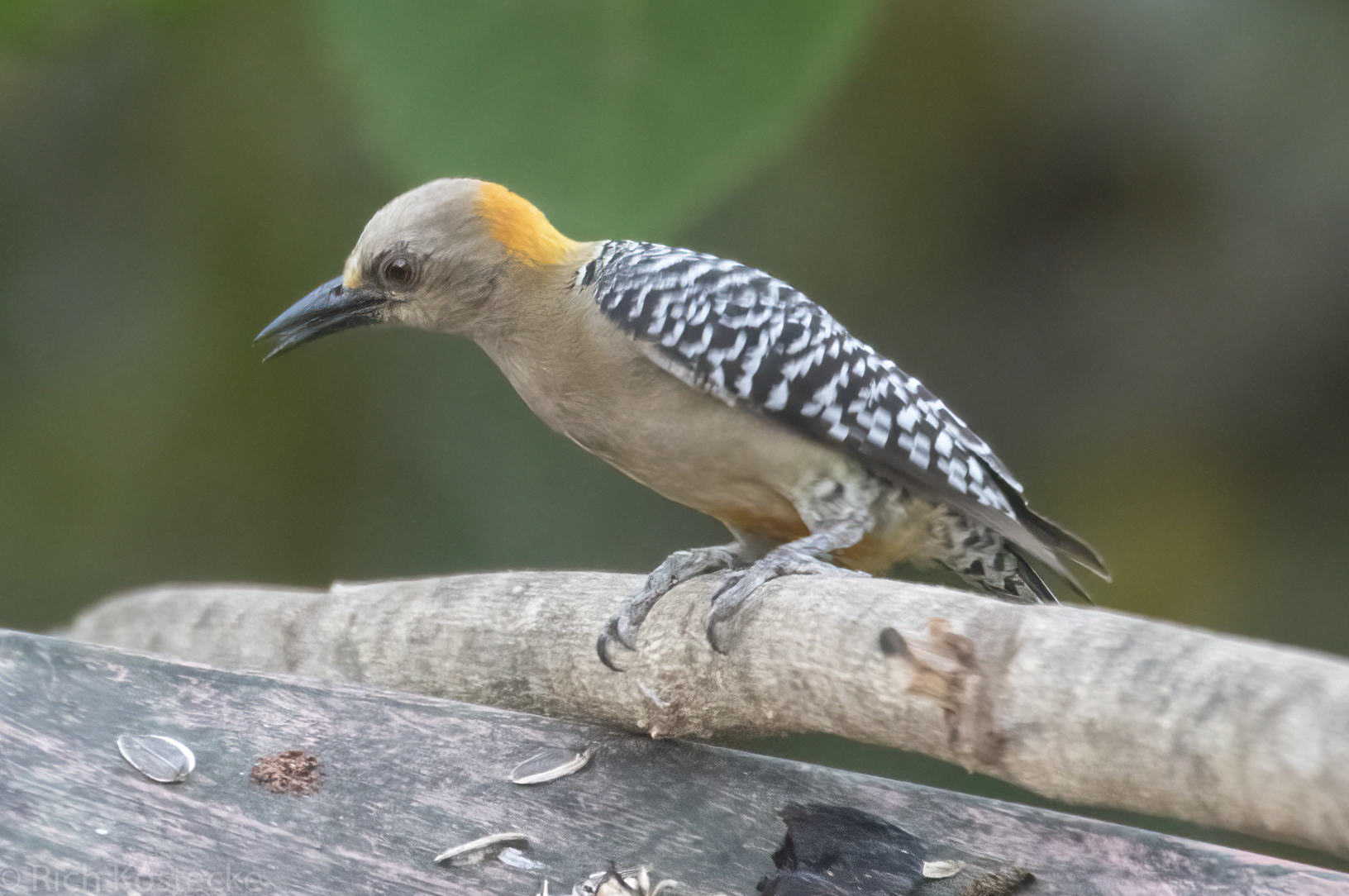
Cerro Lodge, Puntarenas, Costa Rica

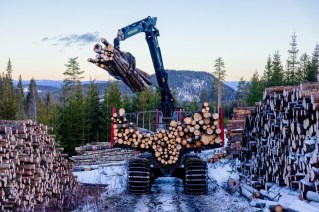
At a warehouse in Moelv, Norway, glulam—short for “glued laminated timber”—an engineered product in which pieces of lumber are bound together with water-resistant adhesives, is manufactured at industrial scale.
The re-emergence of building at large scale with wood has challenged my intuition in recent years. It is not only the carbon logic that needs explanation, but the structural engineering and fire-safety. In this article Rebecca Mead does the math, in elegant prose, and quite convincingly:
Transforming Trees Into Skyscrapers
In Scandinavia, ecologically minded architects are building towers with pillars of pine and spruce.
The timber for Mjøstårnet was harvested from the forests that blanket about a third of Norway’s landmass.
Brumunddal, a small municipality on the northeastern shore of Lake Mjøsa, in Norway, has for most of its history had little to recommend it to the passing visitor. There are no picturesque streets with cafés and boutiques, as there are in the ski resort of Lillehammer, some thirty miles to the north. Industrial buildings, mostly for the lumber industry, occupy the area closest to the lake, and the waterfront is cut off by a highway. Continue reading
El Paredon, Guatemala
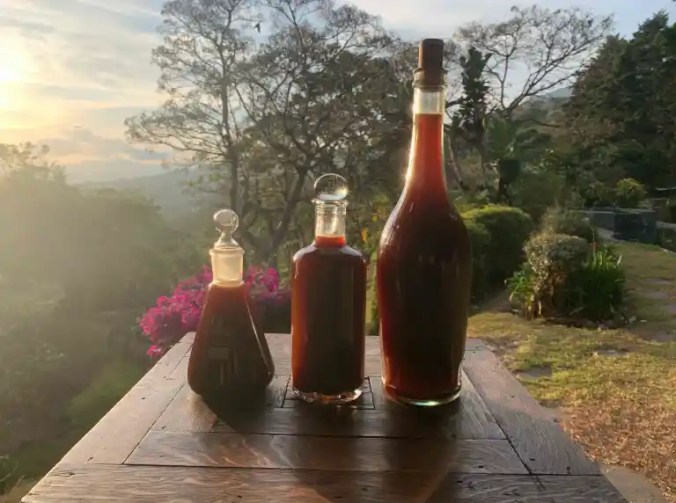
Cold brew coffee experimentation, April 2020
Two years ago, when the pandemic had shut down the airports in Costa Rica and we had no clue how long that would last, we wondered how the artisans and the farmers who supplied our recently opened Authentica shops would fare. We had to ask ourselves what we were going to do with the roughly 7,000 pounds of coffee beans we had contracted to buy from that year’s harvest. The most obvious move was to start roasting in the USA, so we could deliver to customers who had bought from us in Costa Rica and wanted to continue buying.
Cold brew coffee was a brief experiment at the time, but with sufficiently robust results to convince us that when travelers returned we would offer samples. The time has come.
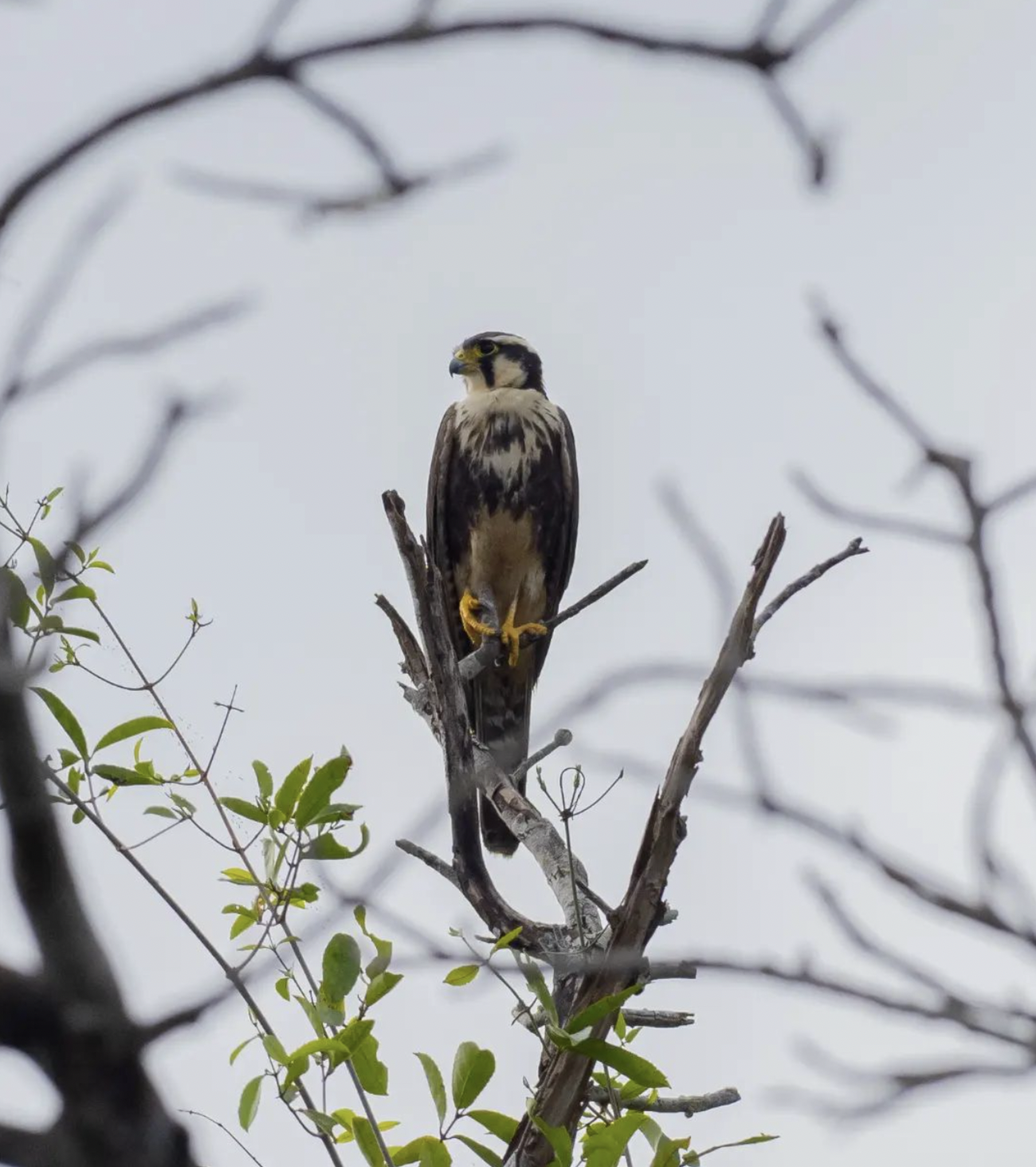
Parque Nacional Laguna del Tigre, Petén, Guatemala
Click on this image to go to the page where the illustrative video about convivial conservation is embedded
New to me, but not new, is this pairing of words that have a magical ring to them when said together:
Convivial Conservation
Convivial (literally: ‘living with’) conservation offers a new and integrated approach to understanding and practicing environmental conservation. It is a Whole Earth vision that responds to the major ecological, social and political-economic challenges facing people and biodiversity in the 21st century
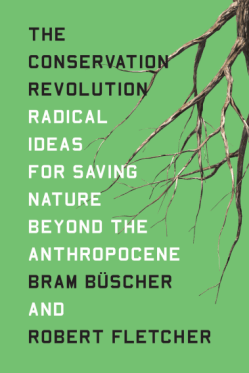
Click on the image above to watch a short video introducing the concept, and click to the right to read more about the book. Click here to read more about ongoing research on this topic. Anyone following our posts on this platform for the last decade+ will have seen a different pair of words frequently used–sometimes related to biodiversity and other times related to culture. Now that I have let this other word pairing have some space in my day, I expect to see the words more frequently in these pages.

Tarcoles, Costa Rica

Photo by Seth Inman taken in Kenya’s Samburu Game Reserve
… Show me a photo. When atrocities dominate the news, and threaten to overwhelm, I lean on old photographs taken by family members that offer a meditative opportunity. Recently I have found myself leaning on those that transport me to some natural phenomenon I have not myself witnessed. Recently, three years after his last work on the African continent, Seth was on a work assignment in Kenya and took the photo above. That has been my meditative escape mechanism recently, but today the Guardian’s occasional series offers some others, thanks to Joanna Ruck:
The week in wildlife – in pictures
The best of this week’s wildlife pictures, including swimming buffalo, a rescued pangolin and swirling reindeer
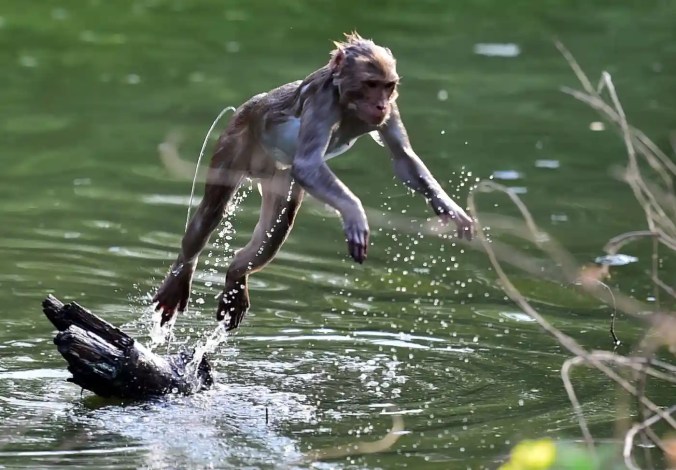
A monkey leaps in a pond during a hot summer day in Allahabad, India. Photograph: Sanjay Kanojia/AFP/Getty
For more pictures in the series, click either image.
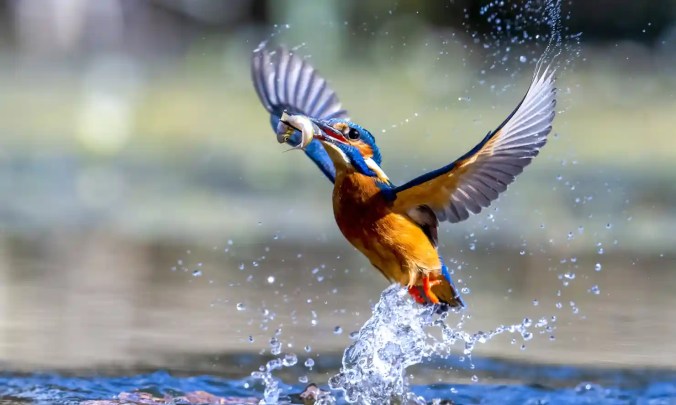
Main image: A kingfisher bags a meal in Lincolnshire, UK. Photograph: Charlotte Graham/Rex/Shutterstock
Pauri Garhwal, Uttarakhand
Source: Geophysical Research Letters.
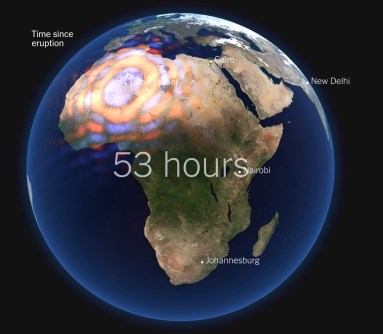
Whenever we see advances in innovative illustration to better our understanding of phenomena, natural or otherwise, we note it here. Atmospheric pressure is something most of us have heard countless times, but not necessarily stopped to think what it is. Among other things, it is important. Also, it is understandable. If you have a couple minutes, watch this accessible animation of a natural phenomenon that does not get enough attention, and read the accompanying text:
‘It’s Super Spectacular.’ See How the Tonga Volcano Unleashed a Once-in-a-Century Shockwave.
By Aatish Bhatia and Henry Fountain
Produced by Aatish Bhatia and Sean Catangui
As shown in this visualization, based on a simulation created by Ángel Amores, a physical oceanographer at the Mediterranean Institute for Advanced Studies in Majorca, Spain, the shockwave took about 36 hours to circumnavigate the globe, spreading out in concentric rings from the volcano known as Hunga Tonga-Hunga Haʻapai and traveling at the speed of sound. The simulation was published in the journal Geophysical Research Letters in March. Continue reading

Guatemala City, Guatemala
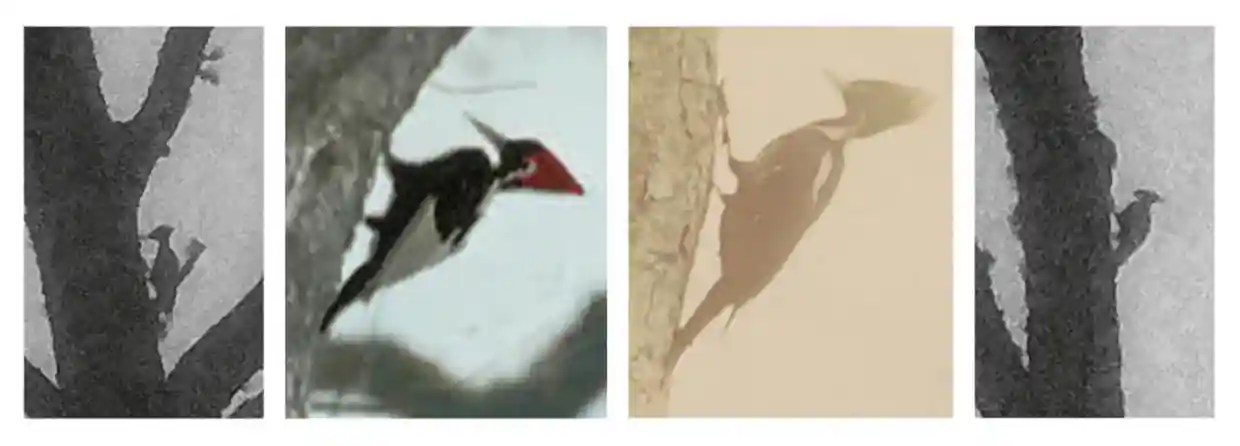
Comparison of photographs taken of apparent ivory-billed woodpeckers in Louisiana from this study (A, D), with a colorized ivory-billed woodpecker, also from Louisiana (B), and a pale-billed woodpecker taken in Central America (C). Photograph: The Guardian
The title of this post should have a question mark at the end of it, or should be considered clickbait. For bird nerds this is likely not even news. But it is important in terms of natural history in general. Ivory-billed woodpeckers have been mentioned a couple of times in our pages; but the chance of seeing one these days was considered to be zero. We can now hope we were wrong about that:
Back from the dead? Elusive ivory-billed woodpecker not extinct, researchers say
An expedition to the forests of Louisiana say extinction of bird, last definitively seen in 1944, has been exaggerated
In terms of elusiveness, it is the Bigfoot or Loch Ness monster of the bird world, so rare and undetectable that the US government declared it extinct last year. But the ivory-billed woodpecker is, in fact, still alive and pecking in the forests of Louisiana, a team of researchers has claimed. Continue reading

Pauri Garhwal, Uttarakhand
(Brandon Thibodeaux / The New York Times / Redux)
When I read about a promising new technology related to carbon sequestration, I am ambivalent based on the experience of many past false hopes. Carbon is a very large problem. Finding new methods of sequestration is a very challenging puzzle.
I track such developments every week by reading the newsletter that Bill McKibben posts on Substack. Most weeks I post something here from that, and do my best to balance the terrifying and enraging with the more hopeful news he occasionally shares there.
The only other newsletter I read regularly is Robinson Meyer’s newsletter for the Atlantic, called The Weekly Planet. Here is one of his worth reading for a bit of encouragement (when you click the hyperlink it will go to the current newsletter, which until April 20 is this one; after April 20 scroll to find this edition):
The Biggest Investment Ever in Sucking Carbon Out of the Sky
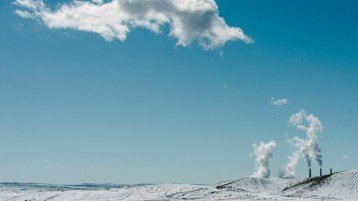
The world’s biggest tech companies are getting serious about carbon removal, the still-nascent technology wherein humanity can pull heat-trapping carbon dioxide out of the atmosphere. Yesterday, an alliance of prominent Silicon Valley companies—including Google, Meta, Shopify, and the payment company Stripe—announced that it is purchasing $925 million in carbon removal over the next eight years. In a world awash in overhyped corporate climate commitments, this is actually a big deal. Continue reading
El Paredon, Guatemala

Knives are the oldest type of manufactured tool, and they’re still evolving. Karsten Moran for The New York Times
I last posted on the topic of knives earlier this year, partly because the onetime blacksmith apprentice in me felt compelled to salute the skillset, but mainly because the mission behind the knife-making in that case was worth promoting.
Otherwise, culinary utensils do not get much attention in our pages. Ceiba being the celebrated exception to that general rule–wooden culinary utensils, but no knives. Derrick Bryson Taylor offers us a good reason to revisit this neglect:
Knives are humanity’s oldest tool, dating back millions of years. A group of scientists in Maryland have produced a version made of hardened wood, which they say is sharper than steel.
More than 60 years ago in “Mastering the Art of French Cooking,” Julia Child, one of America’s most emulated chefs, described the necessity of decent, reliable kitchen equipment. Continue reading
Pauri Garhwal, Uttarakhand
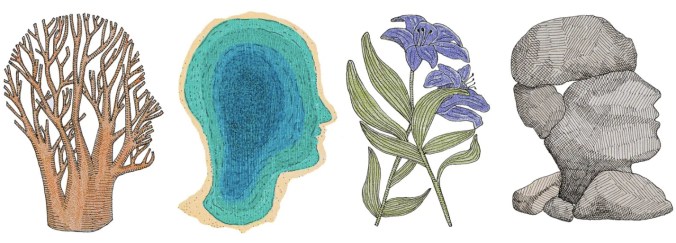
For most of history, people saw themselves as dependent on their surroundings, and rivers and mountains had the last word. Illustration by Marion Fayolle
Florida is on my mind today. Yesterday I listened to some excellent reporting on this podcast episode and was surprised to learn that some consider the political climate in the state environmentally-friendly. Surprising because the entire reporting emphasized what sounded like anti-regulatory business-friendly fervor. And after reading this article by one of my favorite writers, I think the state will be on my mind for the indefinite future (late in the article she writes “Start taking Stone seriously and it’s hard to stop;” so far she is correct):
A Lake in Florida Suing to Protect Itself
Lake Mary Jane, in central Florida, could be harmed by development. A first-of-its-kind lawsuit asks whether nature should have legal rights.
Lake Mary Jane is shallow—twelve feet deep at most—but she’s well connected. She makes her home in central Florida, in an area that was once given over to wetlands. To the north, she is linked to a marsh, and to the west a canal ties her to Lake Hart. To the south, through more canals, Mary Jane feeds into a chain of lakes that run into Lake Kissimmee, which feeds into Lake Okeechobee. Were Lake Okeechobee not encircled by dikes, the water that flows through Mary Jane would keep pouring south until it glided across the Everglades and out to sea. Continue reading

 Organikos