The Force Of Law, On Top Of Information & Protest

A protest in Marseille against the French supermarket chain Groupe Casino for allegedly selling meat products linked to deforestation. Photograph: Christophe Simon/AFP/Getty

What can we do when commercial interests damage our collective future? The identification of and protest against companies doing business in ways that cause environmental destruction are two important forces, but the force of law is another. Thanks to the Guardian for its ongoing coverage of these:

Legal eagles: how climate litigation is shaping ambitious cases for nature

Plans for an airport in the Tagus estuary have failed to take into account its impact on the wetlands, lawyers argue. Photograph: Handout

Environmental lawsuits are nothing new but now lawyers are turning their attention to cases that address the loss of biodiversity

The Tagus estuary near Lisbon is Portugal’s largest wetland, a vital habitat and stopover for tens of thousands of migratory birds, including flamingos, black-tailed godwits and glossy ibis. Continue reading

Why We Care About Octopus

Photo: Brandon Cole

We care about octopus for many reasons and there is plenty to learn about why. This article will make you want to know more about these creatures. Sy Montgomery, writing in Orion Magazine, is the best illuminator:

Deep Intellect

Inside the mind of the octopus

ON AN UNSEASONABLY WARM day in the middle of March, I traveled from New Hampshire to the moist, dim sanctuary of the New England Aquarium, hoping to touch an alternate reality. I came to meet Athena, the aquarium’s forty-pound, five-foot-long, two-and-a-half-year-old giant Pacific octopus. Continue reading

If You Happen To Be In London

Museum number: BP.1079
© Victoria and Albert Museum, London, courtesy Frederick Warne & Co Ltd.

Do you have the inclination of switching from city life to rural? I, for one, made the switch and have no inclination to ever live in a city again. Occasional visits are fine. But as the theme song from a tv show of my youth had it “…keep Manhattan, just give me that country life…”.

My reason for thinking about this today is related to the book on the right. Whether or not you are a fan of her books, you might find the case of Beatrix Potter’s life choices worthy of consideration. Rizzoli has published this book to accompany an exhibition at the Victoria & Albert Museum. Our appreciation to Anna Russell for describing both, and adding plenty of detail about the author’s life, in this article:

The Secret Life of Beatrix Potter

A new book and an exhibition on Potter, who wrote “The Tale of Peter Rabbit,” use letters, sketches, and a coded journal to capture an author who delighted in the detail and humor of the natural world.

Many teen-agers will go to great lengths to keep their diaries private—I kept a little key for mine in a wooden jewelry box, which I guarded jealously—but the children’s book author Beatrix Potter took it to an extreme. Continue reading

Whales, Fishing Boats & Depredation’s Discontents

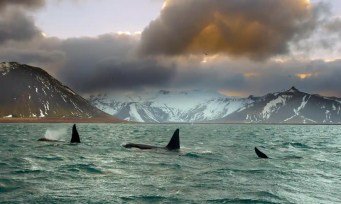
Yesterday’s dramatic photograph at sea shows an interaction between two sea creatures, and combines stark beauty with the occasional terror of pure nature. Man and nature in conflict at sea is not beautiful in any manner. This article below, authored by Nick Rahaim and published in Hakai Magazine, helps put the video above in context. Please click the title to read the story in full at its origin, or listen to it here:

Clever Whales and the Violent Fight for Fish on the Line

As a commercial fisher, I’ve watched colleagues shoot at whales looting from their lines. Here’s why everyone loses when that happens.

Whales seem to be increasingly looking to fishing boats, especially longliners (not pictured), as sources of free meals. Photo by Audun Rikardsen

As I coiled rope on the deck of a commercial fishing boat in the western Gulf of Alaska, I felt the sudden thud of a revolver reverberate in my chest. Continue reading
2022 World Nature Photography Awards

Amos Nachoum/World Nature Photography Awards

Photography award competitions have been an annual source of relief in our pages each year over the last decade, providing needed distraction from other pressing matters. There was one more competition from 2021 that just came to our attention, and it is worth a look; then, below, find a link to the 2022 entry form if you have been snapping some nature pics that might rival the one above:

AMOS NACHOUM, USA – GOLD WINNER AND GRAND PRIZE OF WORLD NATURE PHOTOGRAPHER OF THE YEAR

For hours, I waited for the low tide to arrive along a shallow lagoon on a remote island off the Antarctic Peninsula. Like clockwork, the leopard seal arrived in the lagoon just before low tide. It put its head in the water and looked just like a rock sitting in the receding water. The young Gentoo penguins only dare to enter the water when it is shallow and when they got close enough to the seal, it turned its head at lightning speed, catching one of the penguins by its feet and taking it to deep water. Once the seal reached open water, I followed it and swam parallel to it, observing its actions. To my surprise, it let go of the penguin twice. Each time, the seal chased after the penguin again, as if it was enjoying the game. The terrified penguin tried to escape as the game continued. But soon, the end came.

Octopus Intelligence Illustrated

Octopuses were seen carrying plastic items around while ‘stilt-walking’. Photograph: Serge Abourjeily

It is not how we would prefer to understand them, or for these animals to demonstrate intelligence, but here are some examples of how they adapt to our discarded stuff:

Bottles, cans, batteries: octopuses found using litter on seabed

The most common interaction recorded was using rubbish as shelter. Photograph: Edmar Bastos

Creatures seen using discarded items for shelter or to lay eggs, highlighting ‘extreme ability to adapt’

Whether it’s mimicking venomous creatures, or shooting jets of water at aquarium light switches to turn them off, octopuses are nothing if not resourceful. Continue reading

Understanding That Recent Bird Crash

When news reports about this unusual event reached us, time was short. We did not have time to read any details, and now it is clear that waiting for science to comment was a useful delay.

Thanks to Juan Siliezar for the explanation:

iStock

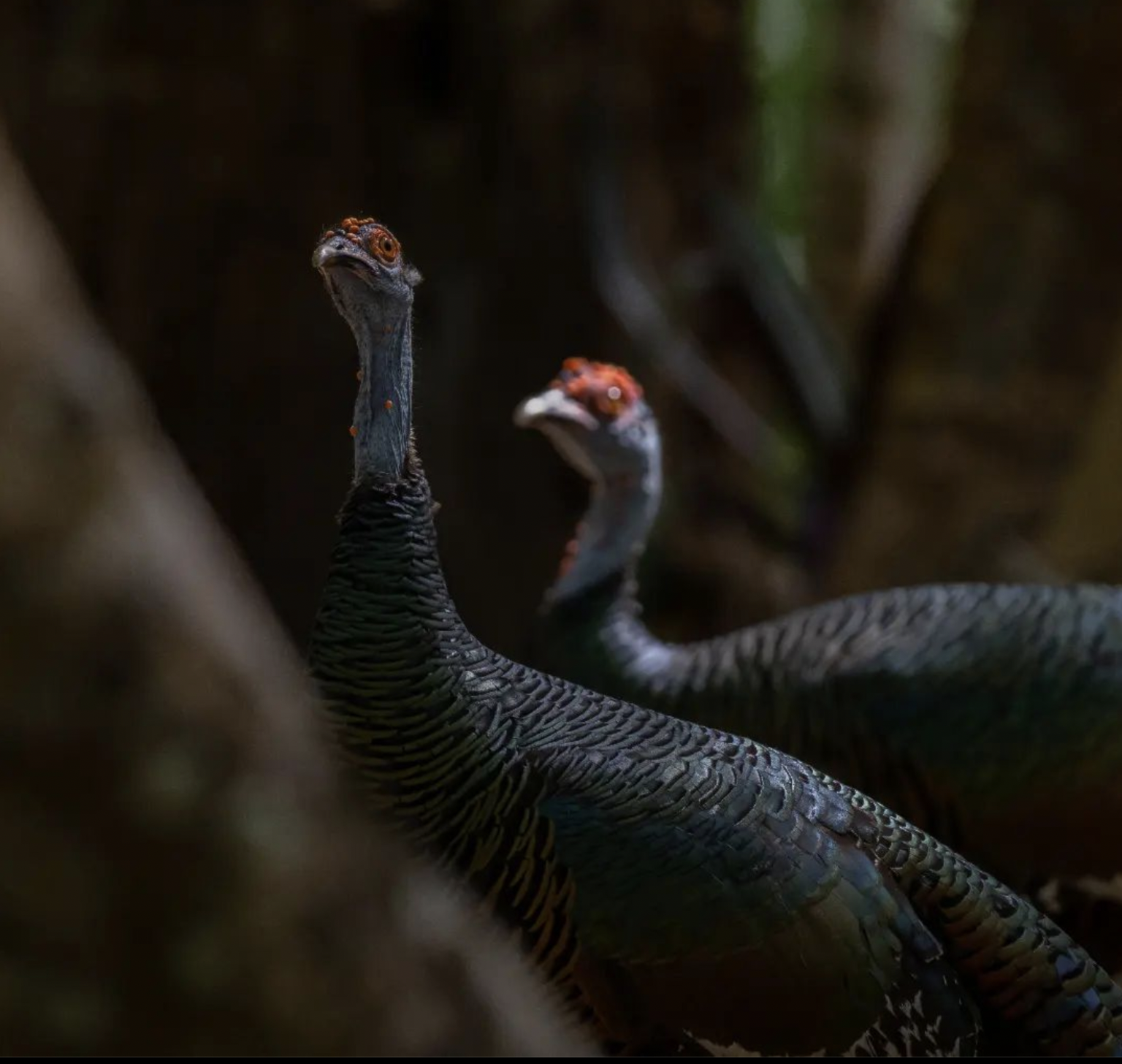
Those birds that crashed and died? It wasn’t fumes

After internet theorists react to viral video, Harvard researchers answer with science

You’ve probably seen the video — or at least heard some chirpings about it.

Footage from a security camera in Cuauhtémoc, a city in Chihuahua, Mexico, shows a massive flock of migratory birds swooping down like a cloud of black smoke and crashing onto pavement and the roof of a house. Continue reading
Frederick Law Olmsted At 200

Portrait of Frederick Law Olmsted (detail), 1895, by John Singer Sargent (1856–1925); The Artchives/Alamy Stock Photo.

From Hedgehog Review, a bit of scholarly reflection on a man whose impact on the landscape of cityscapes is still worthy of consideration:

The Man Who Built Forward Better

On Frederick Law Olmsted’s Bicentennial

Witold Rybczynski

What would Frederick Law Olmsted (1822–1903) make of his works today, in the bicentennial year of his birth? No doubt he would be delighted by the survival and continued popularity of so many of his big-city parks, particularly Central Park and Prospect Park, but also parks in Boston, Chicago, and Montreal, as well as Buffalo, Detroit, Rochester, and Louisville. He might be surprised by the bewildering range of activities these parks now accommodate—not only boating and ice-skating, as in his day, but exercising, jogging, picnicking, and games, as well as popular theatrical and musical events. I don’t think this variety would displease him. After all, it was he who introduced free band concerts in Central Park, over the objections of many of his strait-laced colleagues. He would be pleased by the banning of automobiles; his winding carriage drives were never intended for fast—and noisy—traffic. Continue reading
Maori Tree-Saving

Tourists visiting Tāne Mahuta, the largest known kauri tree, in Waipoua Forest in New Zealand. The tree is named for a god in Māori mythology. Ruth Mcdowall for The New York Times

A former kauri ambassador blowing a conch shell near Tāne Mahuta. There’s hope among advocates that Māori-led interventions have created enough time for scientists to save the kauri. Ruth Mcdowall for The New York Times

Thanks to Pete McKenzie for this story, How Maori Stepped In to Save a Towering Tree Crucial to Their Identity, in the New York Times:

Tāne Mahuta, an ancient tree named after the god of forests in Māori mythology, is threatened by the slow creep of an incurable disease.

WELLINGTON, New Zealand — In an ancient grove in northern New Zealand, the mighty conifer known as Tāne Mahuta, lord of the forest, is threatened by the encroachment of a deadly enemy. Continue reading

Jumpstarting System Change

So many things to change, so little time. If you are looking for a way to jumpstart a change to the system, consider these six lifestyle adjustments (thanks to the Guardian for the feature story on Jump):

From using smartphones for longer to ending car ownership, research shows ‘less stuff and more joy’ is the way forward

Founder of the Jump campaign Tom Bailey. Photograph: Andy Hall/The Observer

Research shows that people in wealthier, high-consuming countries can help avert climate breakdown by making six relatively straightforward lifestyle changes, creating a society of “less stuff and more joy”.

Experts say if enacted these “shifts” would account for a quarter of the required emissions reductions needed to keep the global heating down to 1.5C and increase pressure on government and the private sector to make the necessary far-reaching systemic change. Continue reading