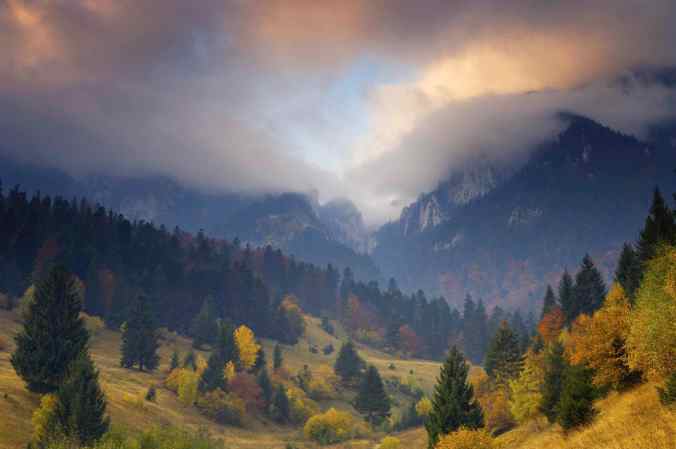
Romania’s Carpathian Mountains, Forever

Rock of the King, NP Piatra Craiului, Transylvania, Southern Carpathian, Romania

The word Carpathian appears, to my surprise, only once in a post before today. Likewise Romania is underrepresented except in passing, and was the focus of just one post, five years ago in our pages. Today I will correct the oversight.
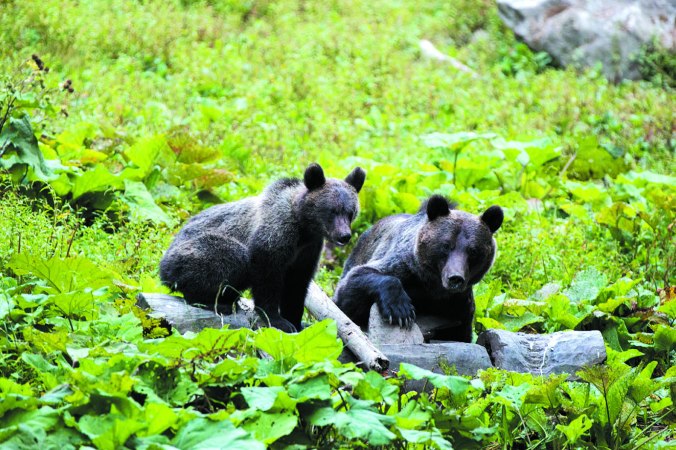
FOUNDATION CONSERVATION CARPATHIA
Bears in the Southern Carpathian Mountains, Romania.

It is surprising because after I was exposed to the idea of rewilding, I started receiving The European Nature Trust’s newsletter. Frequently the newsletter highlights one of the projects they support, in Romania’s Carpathian Mountains. I have been admiring the photographs for years now, and silently supporting TENT’s joint mission with the FCC. Silent no more. Let’s all actively support the Carpathian Mountains of Romania being there forever, intact:
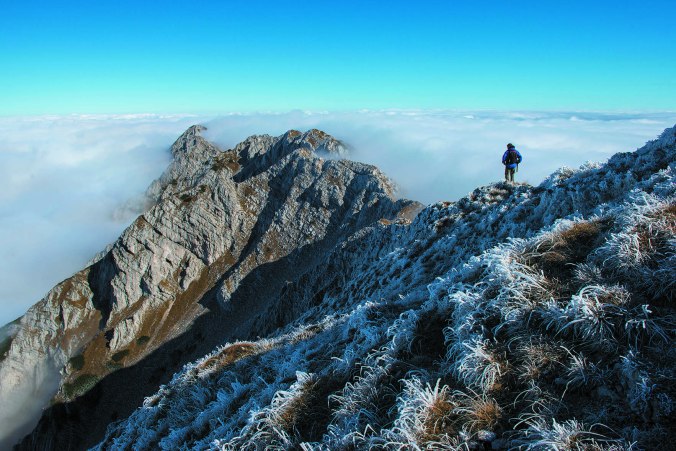
DANIEL ROSENGREN
A frosty morning in the Piatra Craiului National Park, Romania.

TENT is committed to the protecting and restoration of Romania’s natural resources through supporting Foundation Conservation Carpathia.

Romania has 250,000 hectares of virgin forest, mostly in the Southern Carpathians, which constitutes the largest unfragmented forest area in Europe. They contain an extraordinarily high number of indigenous species, one third of all European plant species and are home to the largest European populations of large carnivores. Continue reading
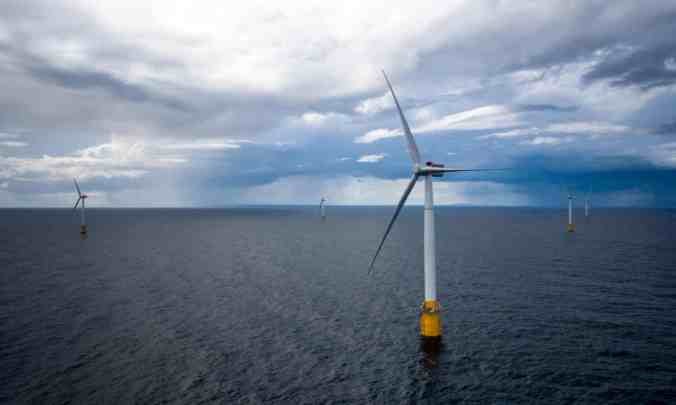
The New Race In Wind Energy, Between Fixed And Floating Turbines

The world’s first floating wind farm 15 miles offshore of Aberdeenshire, in Scotland. The 30 megawatt installation can power approximately 20,000 households Photograph: Xinhua/Alamy

Wind, of all the alternative energy sources we pay attention to, requires vast areas for generation. So water has become the go-to place to place the turbines. It looks like the new race is whether to have the turbines fixed or floating:

Floating wind turbines could open up vast ocean tracts for renewable power

Technology could help power a clean energy transition if it can overcome hurdles of cost, design and opposition from fishing

In the stormy waters of the North Sea, 15 miles off the coast of Aberdeenshire, in Scotland, five floating offshore wind turbines stretch 574 feet (175 metres) above the water. The world’s first floating windfarm, a 30 megawatt facility run by the Norwegian company Equinor, has only been in operation since 2017 but has already broken UK records for energy output. Continue reading
A Taste Of Matthew Raiford’s Heritage

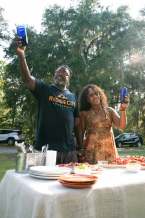
The last food book we featured was not a cookbook, but had plenty of food for thought. Thanks to the Kim Severson (again, after a couple years of our not seeing her work) for bringing Matthew Raiford, his family heritage, his farm and his cookbook to our attention in her article: A High-Summer Feast to Forge Connections in the Deep South. And if time is short, click through just for the exceptional photography:

Rinne Allen for The New York Times

Matthew Raiford swore he’d never return to his family farm in coastal Georgia. But in breaking that vow, he found a sense of community worth celebrating with a lavish spread.

BRUNSWICK, Ga. — It’s not a stretch to say there may have never been a party for a cookbook like the one Matthew Raiford threw on his family farm a few weeks ago.

Rinne Allen for The New York Times

The book’s title is “Bress ‘n’ Nyam” — “bless and eat” in the English-based Creole spoken by the Gullah Geechee people who live along the coasts of the Carolinas, Georgia and northern Florida. Their ancestors were captured in West Africa and enslaved. Nowhere else in America has the cultural line from Africa been better preserved. (Mr. Raiford’s people call themselves freshwater Geechee, which means they are from the mainland of coastal Georgia. Saltwater Geechees are from the barrier islands.) Continue reading
Really, Chase?

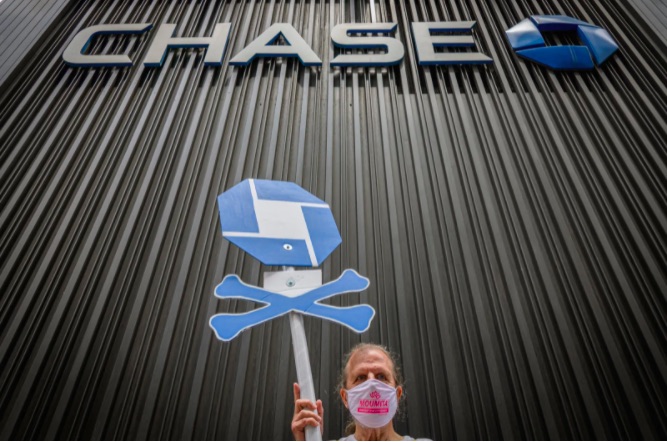
A climate activist picketing outside a Chase Bank branch in New York earlier this year. Photograph by Erik McGregor / Getty

It is a no-brainer to oppose Line 3, but mere opposition does not amount to much. Action is the thing. And action is not always as cumbersome as it may sound. For example, if you bank with the people who are bullish on the future of oil, and who mix your money up with that money, it is time to rethink that relationship. Pull your money out of that bank:

Slow-Walking the Climate Crisis

“Greenwashing” is too kind a term; this is more like careful sabotage.

Travellers arriving in an unfamiliar city used to worry that they’d climb in a taxi and be driven to their destination by the most circuitous route possible, racking up an enormous bill. That’s pretty much what Big Oil and its allies in government and the financial world are doing with the climate crisis—in fact, at this point, it’s the heart of the problem. Continue reading
Adaptation In The Vineyard

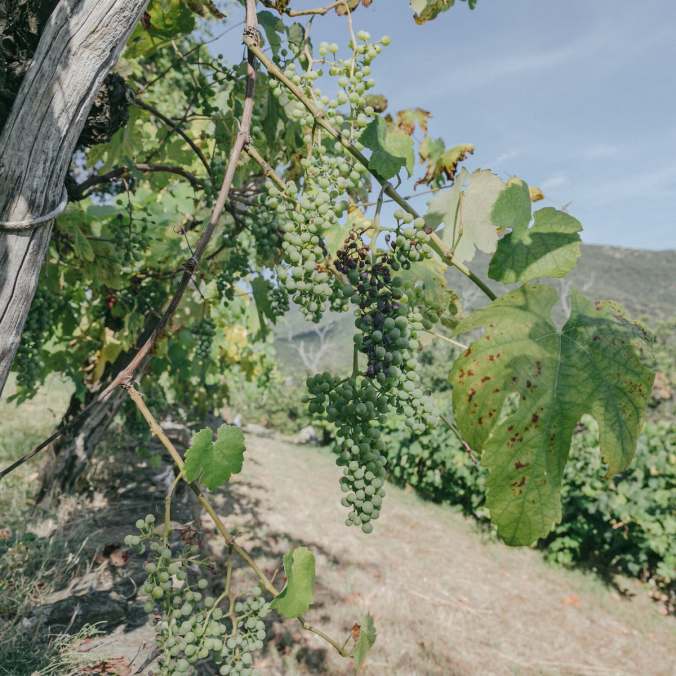
Jacquez vines at Michel Arnaud’s farm in the village of Saint-Mélany in the Ardèche region of France. The American hybrid variety has been banned in France since 1934. Andrea Mantovani for The New York Times

We admire many French traditions, except for those, especially, having to do with birds. When it comes to wine, the French are often but not always right:

For France, American Vines Still Mean Sour Grapes

French authorities have tried to outlaw hardy American hybrids for 87 years. But climate change and the natural wine movement are giving renegade winemakers a lift.

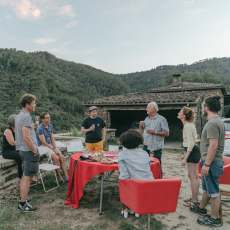
A tasting of forbidden wines at Hervé Garnier’s “Memory of the Vine” association in the village of Beaumont. Mr. Garnier, standing third from right, is one of the last stragglers in a long-running struggle against the French wine establishment and its allies in Paris. Andrea Mantovani for The New York Times

BEAUMONT, France — The vines were once demonized for causing madness and blindness, and had been banned decades ago. The French authorities, brandishing money and sanctions, nearly wiped them out.

But there they were. On a hillside off a winding mountain road in a lost corner of southern France, the forbidden crop was thriving. Early one recent evening, Hervé Garnier inspected his field with relief.

In a year when an April frost and disease have decimated France’s overall wine production, Mr. Garnier’s grapes — an American hybrid variety named jacquez, banned by the French government since 1934 — were already turning red. Barring an early-autumn cold snap, all was on track for a new vintage. Continue reading

Agriculture In Australia Needs A Strategy

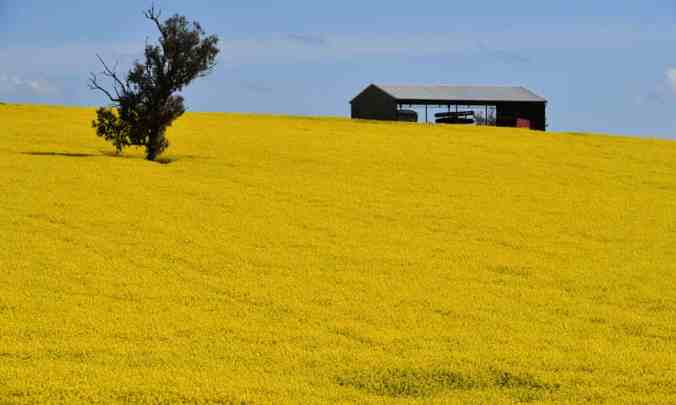
‘Farmers are at the interface of the world’s most wicked problems’. A field of canola crops near the New South Wales town of Harden. Photograph: Mick Tsikas/AAP

Thanks to Gabrielle Chan for this observation on ag down under, and how it impacts us all:

Farmers manage more than half of Australia. We all have a stake in them getting it right

If you eat, you have an interest in farming. If you care about the environment, you have an interest in farming. Yet Australia has no national agriculture strategy

Strip away modernity. Unlearn everything you know about the complexity of your average day. The ordinary interaction, the workaday worries, the pinging of your phone, the relentless roll of the inbox. You are left with the human condition. Continue reading

Totes In Perspective

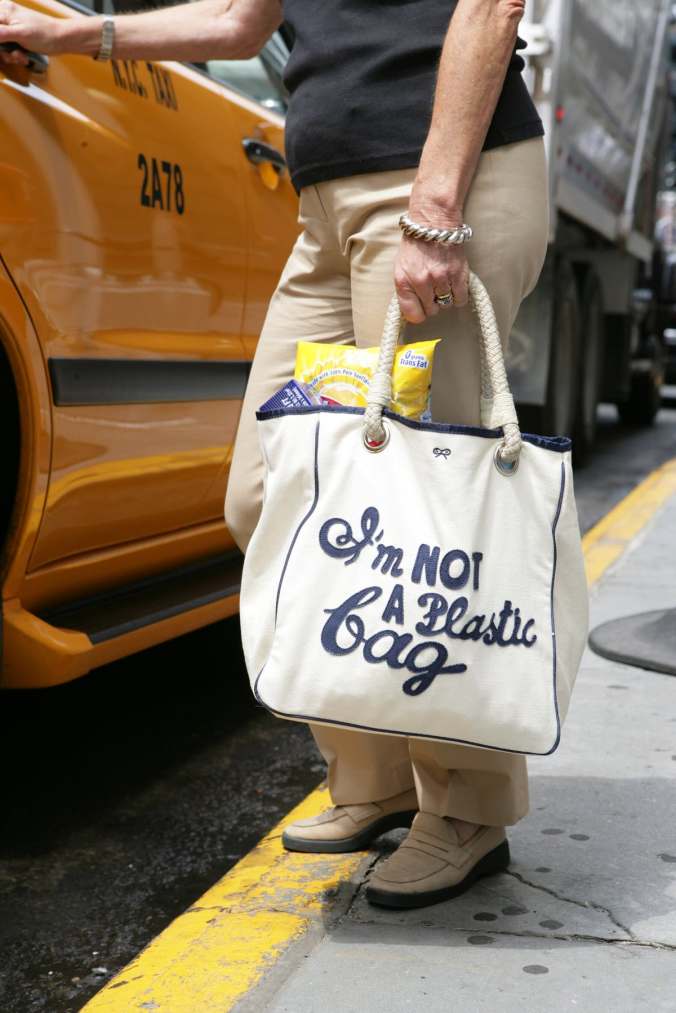
The original Anya Hindmarch tote, sold at Whole Foods for $15 back in 2007, that kick-started the anti-plastic-bag campaign. Lars Klove for The New York Times

It started one way.

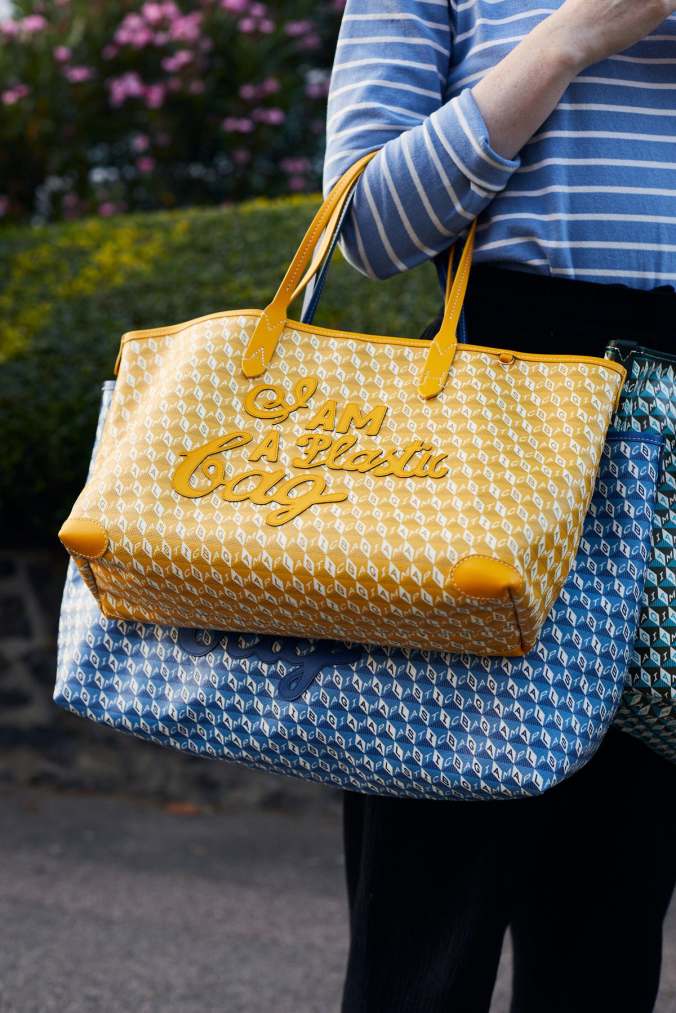
Ms. Hindmarch’s updated version, made from recycled plastic. Suzie Howell for The New York Times

And then it evolved. Now we have to think again about the bags we use to carry things in:

The Cotton Tote Crisis

You can get cotton bags pretty much everywhere. How did an environmental solution become part of the problem?

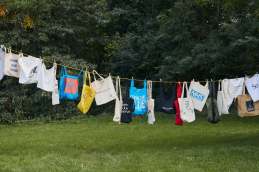
A laundry line of cotton totes accumulated by a single person since the race to replace plastic began. Suzie Howell for The New York Times

Recently, Venetia Berry, an artist in London, counted up the free cotton tote bags that she had accumulated in her closet. There were at least 25.

There were totes from the eco-fashion brand Reformation and totes from vintage stores, totes from Soho House, boutique countryside hotels and independent art shops. She had two totes from Cubitts, the millennial-friendly opticians, and even one from a garlic farm. “You get them without choosing,” Ms. Berry, 28, said. Continue reading

Carbon Capture Closer

Fans draw air into Climeworks’ direct air capture plant in Zurich, Switzerland. CLIMEWORKS

Our thanks as always to Jon Gertner for this news.  Combining capturing carbon with other goals is not new, but it has been goal-setting elusive of significantly robust results; we are getting closer:

The Dream of Carbon Air Capture Edges Toward Reality

Next month, an industrial facility in Iceland will join a growing number of projects to remove CO2 from the air and put it underground. But major hurdles, including high costs, remain before this technology can be widely deployed and play a key role in tackling climate change.

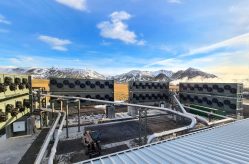
Climeworks’ Orca plant under construction near Reykjavik, Iceland. CLIMEWORKS

In early September, at an industrial facility located about 25 miles southeast of Reykjavik, Iceland, the Swiss company Climeworks will mark the opening of a new project named “Orca.” At least in a conventional sense, Orca doesn’t actually make anything. It is comprised of eight elongated boxes that resemble wood-clad tanks. Each of these boxes — known as “collectors” — is roughly the size of a tractor trailer, and each is festooned with 12 whirring fans that draw a stream of air inside. Within the collectors, a chemical agent known as a sorbent will capture CO2 contained in the air wafting through. Continue reading

Whales’ Future, Our Future

Whale stories have been in our pages on a regular basis over the last ten years not only because of their charisma. Because of how long they have been on the planet, their future should matter to mankind. The biggest of the species hiding in plain sight is increasingly spotted in ancestral waters, which seems like good news, but read on:

Blue whales returning to Spain’s Atlantic coast after 40-year absence

Some experts fear climate crisis is leading creatures back to area where they were hunted almost to extinction

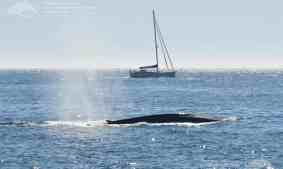
The creatures may have returned to Galicia out of a form of homesickness, or ancestral memory. Photograph: Bottlenose Dolphin Research Institute

Blue whales, the world’s largest mammals, are returning to Spain’s Atlantic coast after an absence of more than 40 years.

The first one was spotted off the coast of Galicia in north-west Spain in 2017 by Bruno Díaz, a marine biologist who is head of the Bottlenose Dolphin Research Institute in O Grove, Galicia. Continue reading

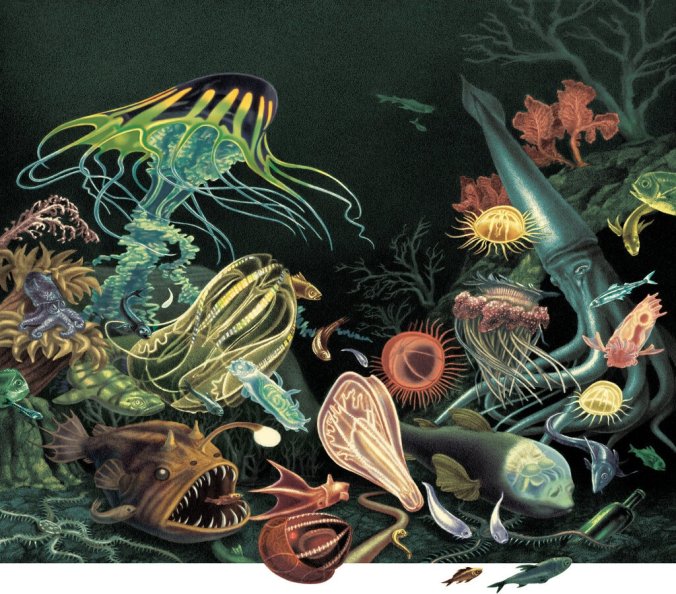
Books About Below The Deepest Most Of Us Will Ever Go

Chloe Niclas

Thanks to Robert Moor for these reviews:

The Wonders That Live at the Very Bottom of the Sea

Two new books, Edith Widder’s “Below the Edge of Darkness” and Helen Scales’s “The Brilliant Abyss,” explore the darkest reaches and all that glows there.

In the deep sea, it is always night and it is always snowing. A shower of so-called marine snow — made up of pale flecks of dead flesh, plants, sand, soot, dust and excreta — sifts down from the world above. When it strikes the seafloor, or when it is disturbed, it will sometimes light up, a phenomenon known, wonderfully, as “snow shine.” Vampire squids, umbrella-shaped beings with skin the color of persimmons, float around collecting this luminous substance into tiny snowballs, which they calmly eat. They are not alone in this habit. Most deep-sea creatures eat snow, or they eat the snow eaters.

Until fairly recently, it was widely believed that the deep seas were mostly devoid of life. For centuries, fishermen hauled in deep-sea trawling nets filled with slime, not knowing that these were carcasses. Some animals, adapted to the pressure of the deep, are so delicate that in lighter waters a mere wave of your hand could reduce them to shreds. The myth of the dead deep sea, known as the Abyssus Theory, was disproved by a series of dredging and trawling expeditions in the 19th century, including a German scientific expedition in 1898 that pulled up the first known vampire squid. But the misconception nevertheless lingered. In 1977, a geologist piloting a submersible near the mouth of a hydrothermal vent, and finding it swarming with creatures, asked the research crew up above, “Isn’t the deep ocean supposed to be like a desert?” Continue reading