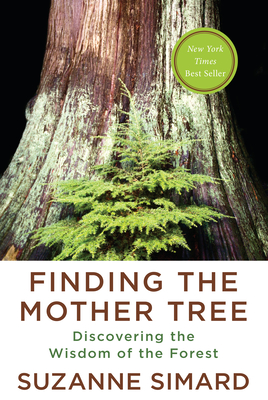
Trees Are Social Creatures

When I first read about trees as social creatures five years ago it was thanks to a man in Germany. I am happy now to learn that a woman in Canada is at least as responsible for this concept as anyone else. She is promoting her book currently and there are at least three good ways to get a glimpse into it, and her, including this book review, this audio interview and IndieBound’s description:

Description

From the world’s leading forest ecologist who forever changed how people view trees and their connections to one another and to other living things in the forest–a moving, deeply personal journey of discovery

Suzanne Simard is a pioneer on the frontier of plant communication and intelligence; she’s been compared to Rachel Carson, hailed as a scientist who conveys complex, technical ideas in a way that is dazzling and profound. Her work has influenced filmmakers (the Tree of Souls of James Cameron’s Avatar) and her TED talks have been viewed by more than 10 million people worldwide. Continue reading
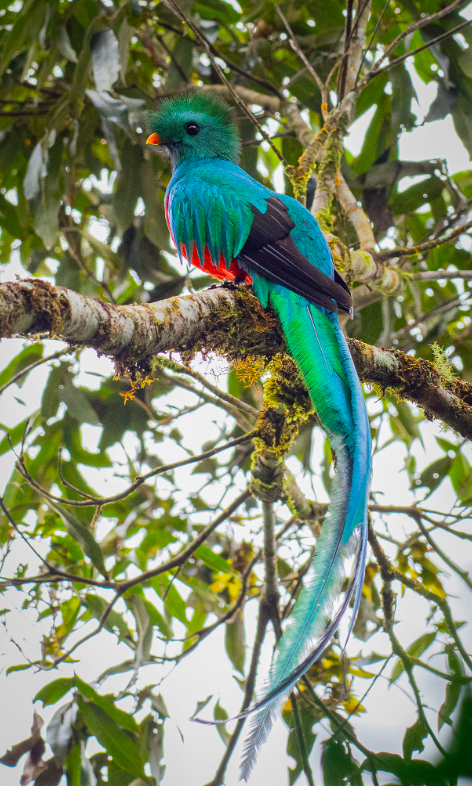
Fungi In Another Light

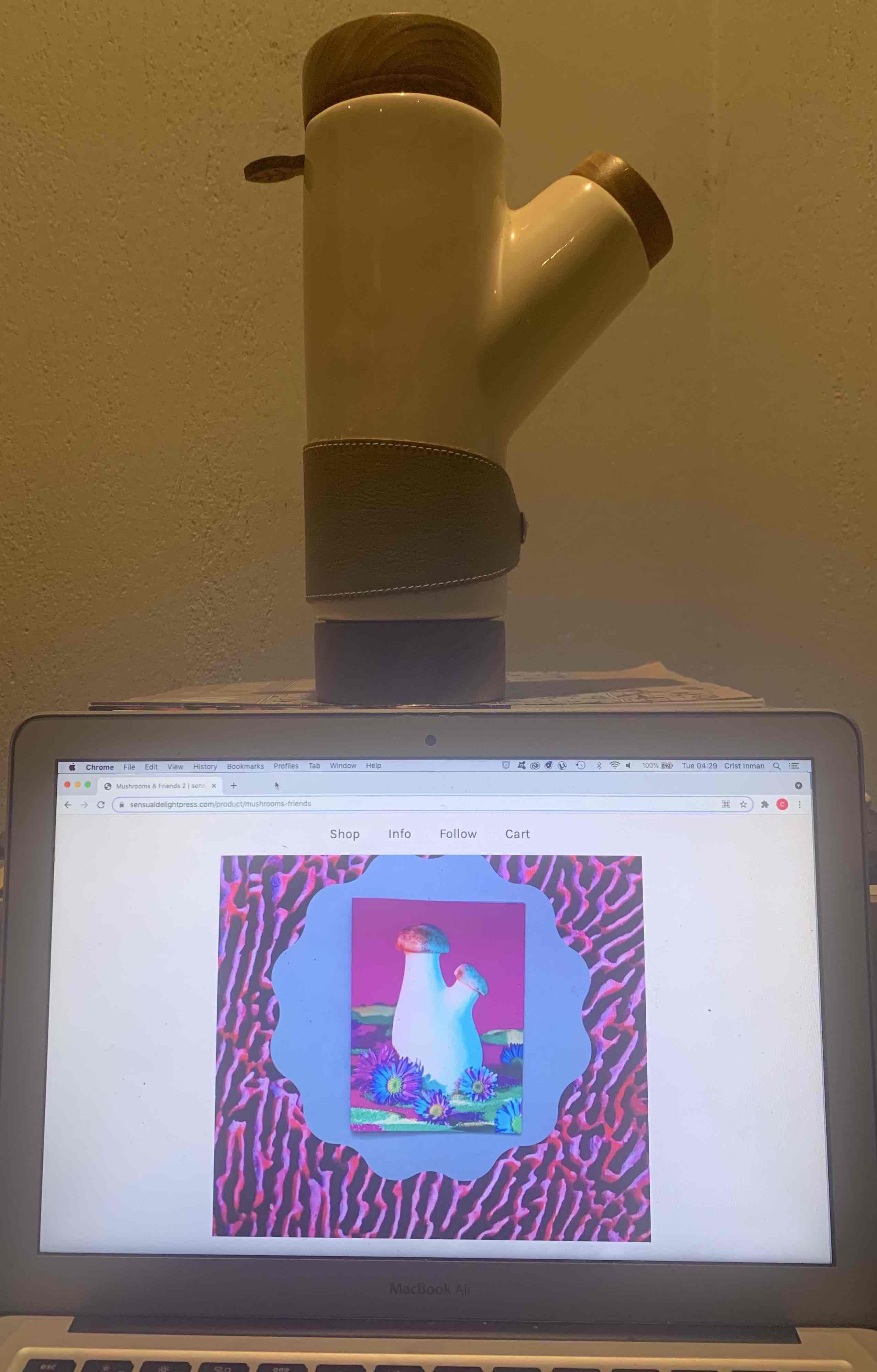
Starting with Milo’s 2011 and 2012 posts, our attention to the wide-ranging topics related to fungi have been in the spirit of public service announcement. Scientific sometimes overlaps with culinary interest, and that intersection has motivated more than one post. Today, having noticed that this coffee-brewer on my desk looks inspired by the Pleurotus that just appeared on my screen, the motivation is aesthetic. Thanks to Helen Rosner, whose sense of wonder has pointed me to a publication that is likely already known by our fungi-focused friends, and well suited to broaden the appeal:

The Mushroom as Muse

A zine by the photographer Phyllis Ma presents fungi in all their alien glory.

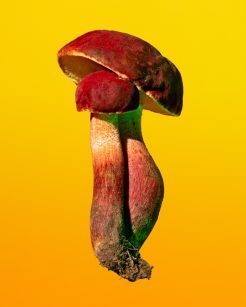
Hortiboletus rubellus.

John Cage, the avant-garde composer, was also a passionate mushroom forager. In his 1954 essay “Music Lovers’ Field Companion,” he wrote about his habit of going into the woods and “conducting performances of my silent piece”—his most famous work, “4’33”,” in which ambient sounds are the only music—while attempting to identify nearby fungi. “The more you know them, the less sure you feel about identifying them,” Cage said, almost three decades later, in a conversation with the French musician Daniel Charles.

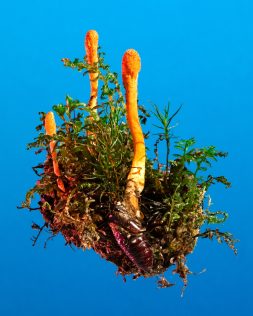
Cordyceps militaris.

“Each one is itself. Each mushroom is what it is—its own center. It’s useless to pretend to know mushrooms. They escape your erudition.” I thought of Cage’s comments while paging through the third and most recent volume of “Mushrooms & Friends,” a photography zine by the artist Phyllis Ma. It is a mostly wordless publication, filled with Ma’s saturated, otherworldly images of mushrooms, many of which she gathers on foraging expeditions through the same upstate New York woods that enraptured Cage more than a half century ago.

Continue reading

Stewarding Species & Ecosystems

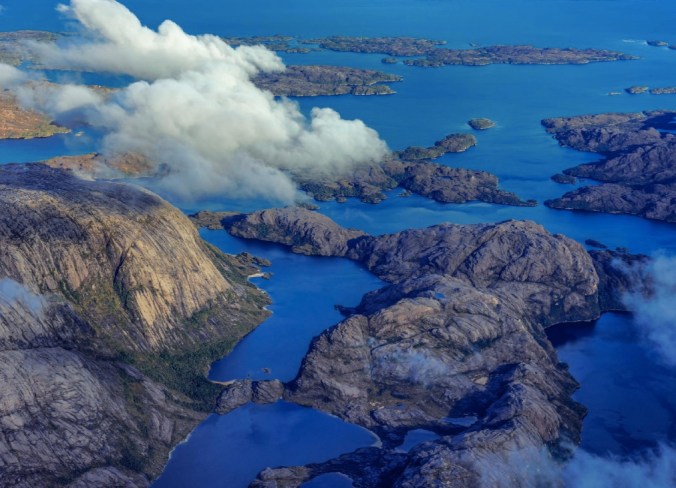
Kawesqar National Park in Patagonia, Chile, is regarded as one of the world’s few remaining intact wild lands. ANTONIO VIZCAÍNO / WWW.PARQUESNACIONALES.CL

Yesterday’s news from Brazil was dismal, providing a how-not-to stewardship example. Today we link to Fred Pearce’s article in Yale e360 about alternative, and more positive examples of stewardship, with a question at the center of the story:

Species or Ecosystems: How Best to Restore the Natural World?

What’s the best way to protect nature and restore what has been lost? A series of new scientific papers offer conflicting views on whether efforts should focus on individual species or ecosystems and point to the role human inhabitants can play in conserving landscapes.

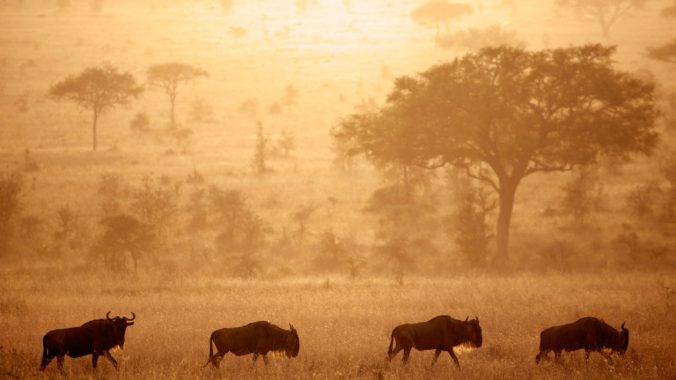
Wildebeest on the Serengeti plain during their annual migration. ALEX BRAMWELL / ALAMY STOCK PHOTO

The Serengeti plain of East Africa is one of the world’s great wild lands — teeming with lions, leopards and migrating wildebeest. But is it ecologically intact, a rare fragment of the earth unaltered by the hand of humanity? Or is it, as many researchers argue, a human-created landscape, nurtured by generations of Maasai cattle herders? Continue reading

Brazil Is The Amazon’s Steward

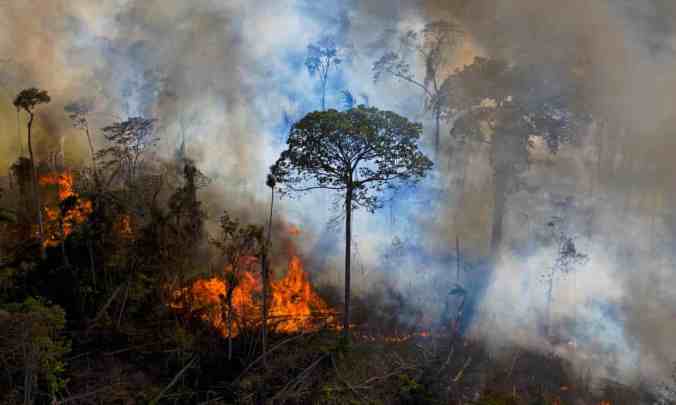
Smoke rises from an illegally lit fire in Amazon rainforest reserve, south of Novo Progresso in Para state, Brazil. Photograph: Carl de Souza/AFP/Getty Images

Stewardship has rights and responsibilities, and we expect better both from and for Brazil in their stewardship of the Amazon region. For our part, among other things, we can all avoid purchasing products that result from this deforestation:

Brazilian Amazon released more carbon than it absorbed over past 10 years

International team of researchers also found that deforestation rose nearly four-fold in 2019

A fallen tree lies in an area of the Amazon jungle that was cleared by loggers and farmers near Porto Velho, Rondonia State. Photograph: Ueslei Marcelino/Reuters

The Brazilian Amazon released nearly 20% more carbon dioxide into the atmosphere over the past decade than it absorbed, according to a startling report that shows humanity can no longer depend on the world’s largest tropical forest to help absorb manmade carbon pollution.

From 2010 through 2019, Brazil’s Amazon basin gave off 16.6bn tonnes of CO2, while drawing down only 13.9bn tonnes, researchers reported Thursday in the journal Nature Climate Change. Continue reading
The Sinking Cost Of Renewable Energy

Because its costs continue to slide with every quarter, solar energy will be cheaper than fossil fuels almost everywhere on the planet by the decade’s end. Photograph by Irfan Khan / Los Angeles Times / Getty

Thanks to Bill McKibben, as always, for at least one bit of good news in his weekly newsletter:

Renewable Energy Is Suddenly Startlingly Cheap

Now the biggest barrier to change is the will of our politicians to take serious climate action.

Earth Week has come and gone, leaving behind an ankle-deep and green-tinted drift of reports, press releases, and earnest promises from C.E.O.s and premiers alike that they are planning to become part of the solution. There were contingent signs of real possibility—if some of the heads of state whom John Kerry called on to make Zoom speeches appeared a little strained, at least they appeared. (Scott Morrison, the Prime Minister of Australia, the most carbon-emitting developed nation per capita, struggled to make his technology work.) But, if you want real hope, the best place to look may be a little noted report from the London-based think tank Carbon Tracker Initiative. Continue reading
What Makes The Frogmouth So Appealing?

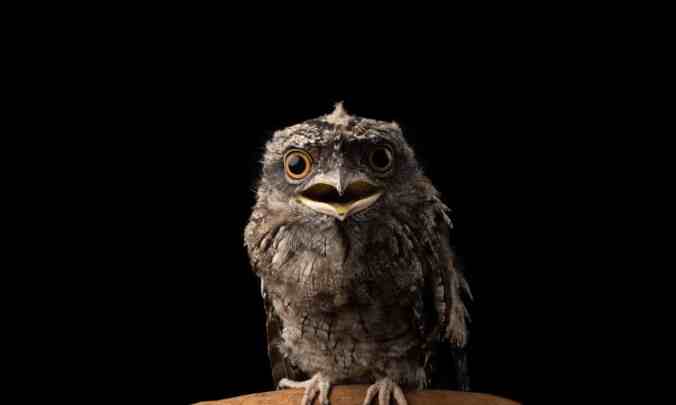
Tawny frogmouth – found to be ‘most Instagrammable’ after an algorithm recorded which photos attracted the most ‘likes’. Photograph: ImagePatch/Getty Images

Nearly a decade ago I first saw a photo of a Sri Lankan frogmouth bird. As more and more photos of this species were offered to us for our daily bird feature they seemed to become more impressive images. Or at least, we never tired of them. And this story may explain why:

Researchers find frogmouth is world’s most Instagrammable bird

A study of likes on the photo-sharing app has (perhaps surprisingly) deemed the Australian and south-east Asian native ‘most aesthetically appealing’

If someone were to ask what the most “Instagrammable” bird in the world would be, it’s unlikely that the frogmouth – whose main aesthetic goal is to look like a jagged tree branch – would be front of mind. Continue reading
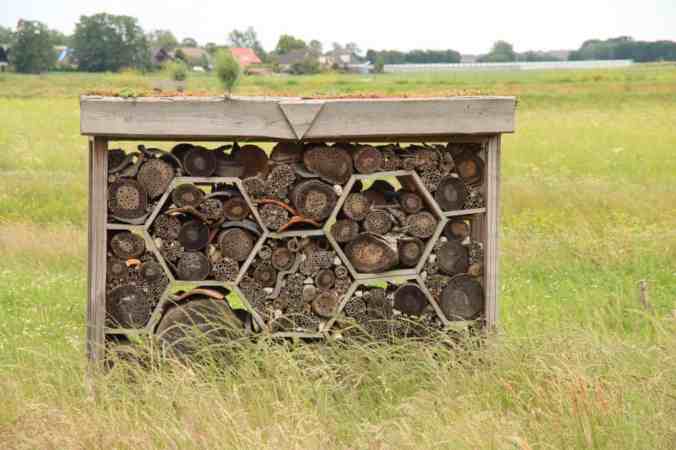
Bee Survey, Bee Hotels & Other Bee News From The Netherlands

A ‘bee hotel’ in Hennipgaarde in the Netherlands. Photograph: Andre Muller/Alamy

Any time we see news on new bee hotels, we are inclined to share. Seeing this news from the Netherlands about a bee survey is also particularly smile-producing. Our thanks to Anne Pinto-Rodrigues and the Guardian’s Environment section for this article:

Bee population steady in Dutch cities thanks to pollinator strategy

Scheme involving ‘ bee hotels’ and ‘bee stops’ reaps rewards as census shows no strong decline in urban population

More than 11,000 people took part in the national bee survey. Photograph: Martijn Beekman/Hollandse Hoogte

Bee hotels, bee stops and a honey highway are some of the techniques the Dutch are crediting with keeping their urban bee population steady in recent years, after a period of worrying decline.

Last week, more than 11,000 people from across the Netherlands participated in a bee-counting exercise as part of the fourth edition of the national bee census. Continue reading

Stenophylla May Be One Of Coffee’s Answers

Climate change is only one of the challenges facing coffee. Thanks to the Economist for keeping us up to date on prospective solutions:

How to save coffee from global warming

Look at research done two centuries ago

Coffee is a multi-billion dollar industry that supports the economies of several tropical countries. Roughly 100m farmers depend on it for their livelihoods. Continue reading

Seed-Saving & Science

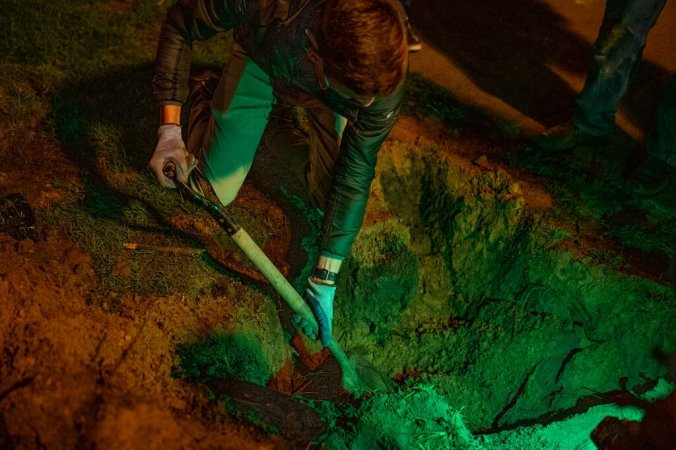
The experiment is a multicentury attempt to figure out how long seeds can lie dormant in the soil without losing their ability to germinate. Derrick L. Turner/Michigan State University

Cara Giaimo has a talent linking science and history, and this article demonstrates it as well as any we have linked to from her. Saving seeds is favorite topic in our pages, so this is in good company:

One of the World’s Oldest Science Experiments Comes Up From the Dirt

Every 20 years under the cover of darkness, scientists dig up seeds that were stashed 142 years ago beneath a college campus. Continue reading

Moonshot To Meatless

Peter Prato for The New York Times

Last month I learned enough from Ezra Klein’s food-related conversation with Mark Bittman to share the podcast episode. I listen to his podcast for the quality of his discussions with knowledgeable guests. But he is also a great essayist and yesterday he published an op-ed essay that is worth a read on a topic we have linked to many times:

Let’s Launch a Moonshot for Meatless Meat

It wouldn’t actually take that much of an investment for Biden to get us headed in the right direction.

I’m a vegan, but I’m also a realist. There’s no chance humanity is going to give up meat, en masse, anytime soon. That said, we can’t just wish away the risks of industrial animal agriculture. If we don’t end this system, soon, terrible things will happen to us and to the planet. Terrible things are already happening. Continue reading