Organikos A Decade Ago & Non-Patagonian Beavers

In a brief interview a student recorded my description of the work I was doing in southern Chile from 2008-2010. The Patagonia Expedition Race had secured Wenger’s sponsorship, and now graduate students from Columbia Business School, as well as from Cornell Hotel School, were developing a strategy for how best to use that sponsorship money to achieve lasting conservation results. The patch on the left arm of my jacket shows another sponsor.
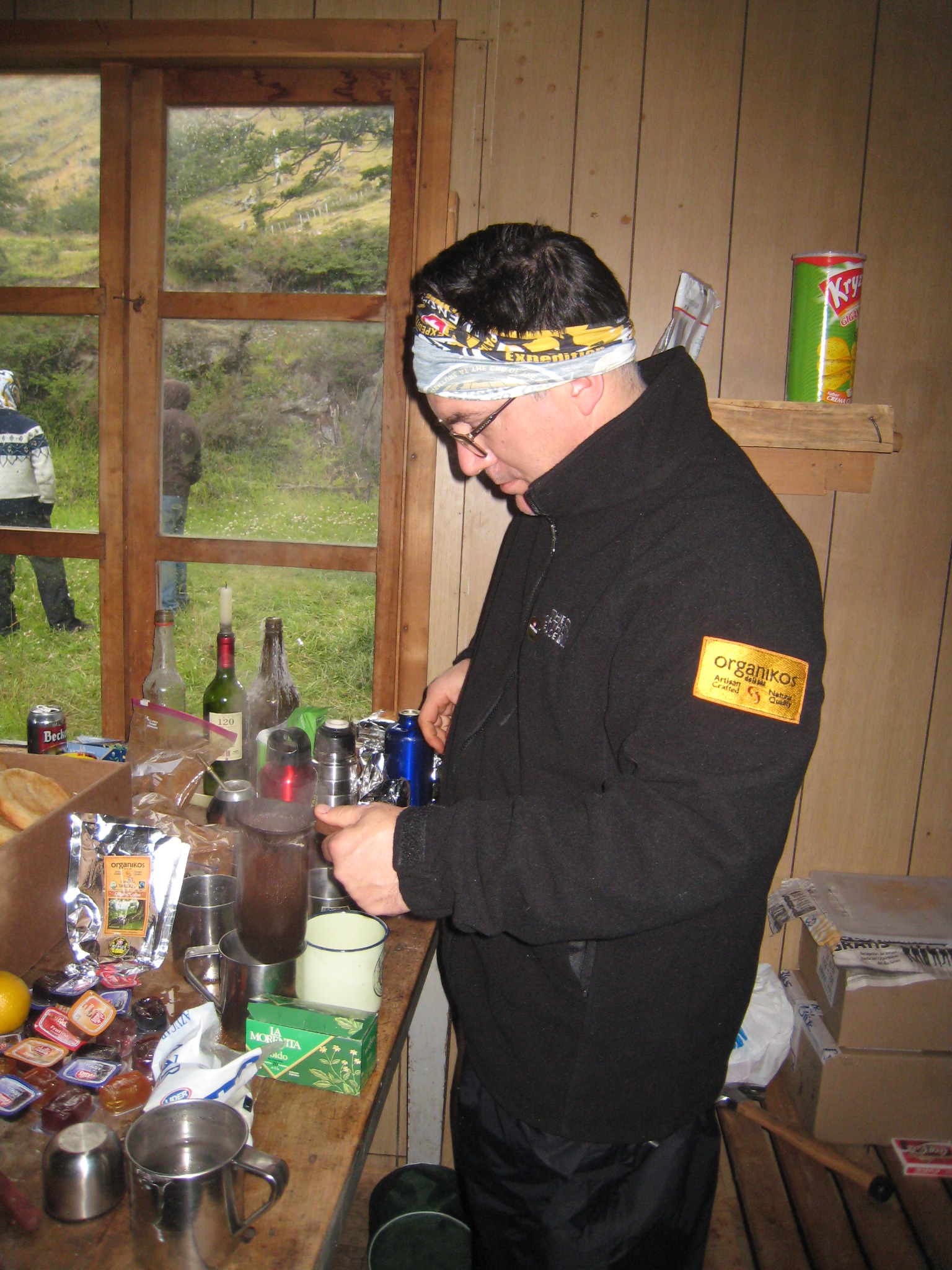
Organikos was a minor sponsor compared to Wenger, but in that earlier iteration of Organikos we were already thinking about what is now the 100% Forward commitment.  As a sponsor, I also served coffee from sunrise to sunset at each station along the Race’s 500-mile route. Somewhere I have photos of the race teams drinking Organikos coffee, but at the moment I only find this one of me prepping coffee in the traditional Costa Rican manner to serve to Race volunteers in a farmhouse where we had spent the night on Tierra del Fuego.
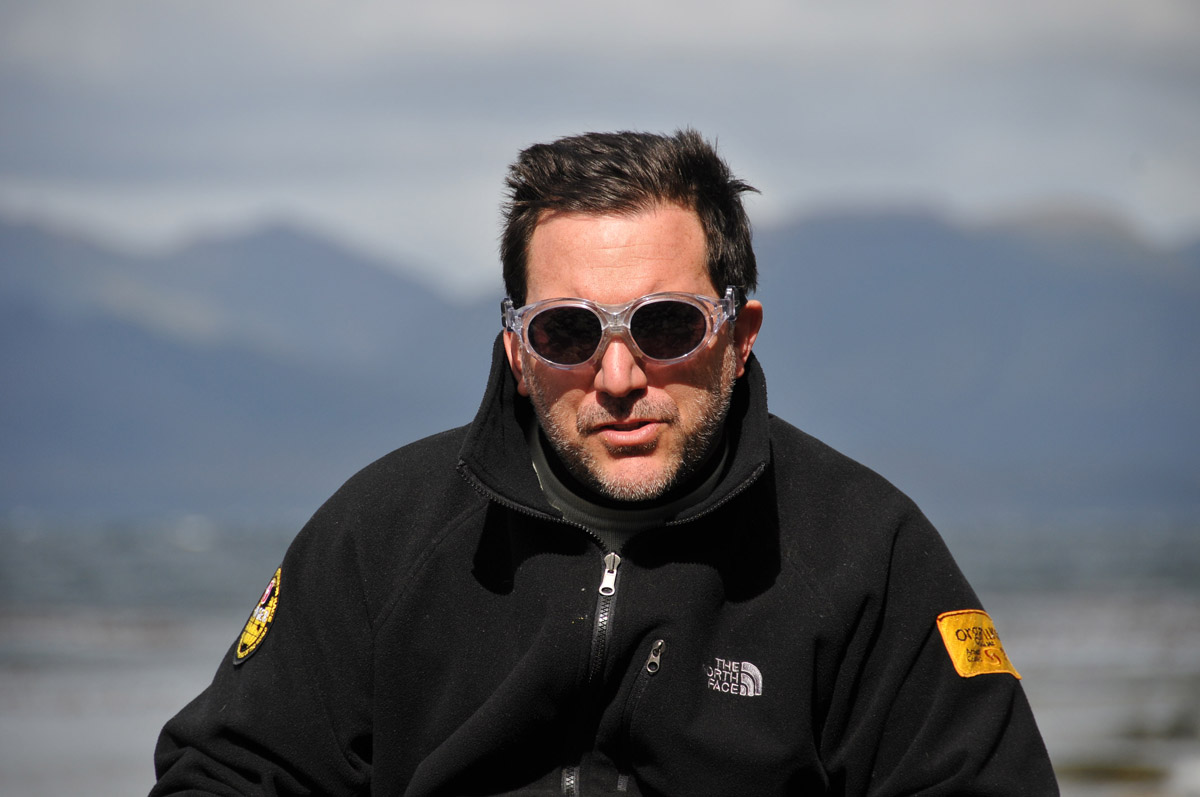
In this photo to the left I was waiting for the racers who would soon be arriving at this station in their kayaks. As serious as I appeared to be, it would take nearly a decade to get that coffee launched more formally into the market.
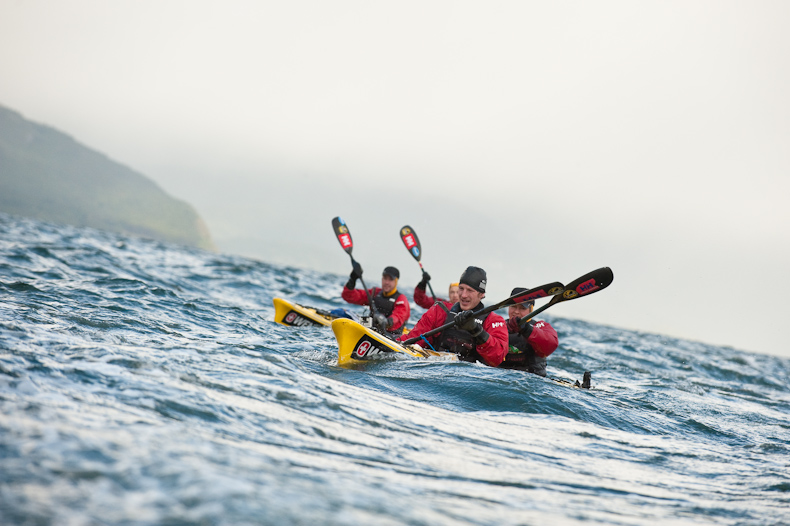
Images Andrew Wilson, Mark Humpfrey, Nicola MaCleod and Bruce Duncan of Team Helly Hansen-Prunesco paddling their way to victory in stage 15 of the 2010 Wenger Patagonian Expedition Race on the island of Tierra del Fuego in southern Chile. Michael Clark Photography

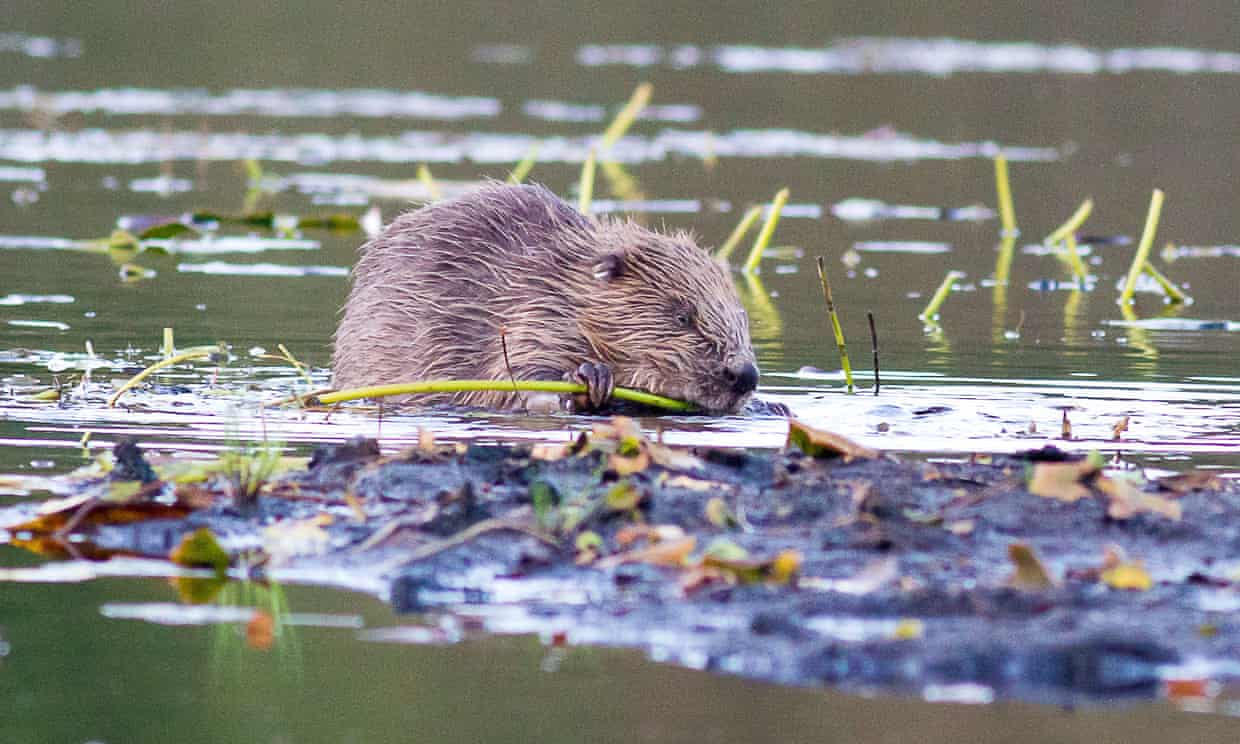
Not long after the photos above were taken, we accepted a new assignment in India that would put the original idea of Organikos on hold. Recently, when Seth took the name and gave it a clear conservation mission, coffee was still the most viable product to start with. I am reminded of all that thanks to Sandra Laville, and the Guardian. Her article, full of good news related to conservation funding in the UK, triggers my memory of the fact that beavers are an invasive species in Patagonia and the Race had the mission of controlling their spread, in the interest of wilderness conservation. Beavers in their natural habitat are in need of protection in some locations, I see:

Wetlands, beavers and Cinderella causes; the growth of environmental funding

Donations from individuals and charities to green causes more than double since 2016

Funding from the People’s Trust for Endangered Species helped reintroduce beavers in Knapdale Forest in Scotland. Photograph: Steve Gardner/Scottish Wildlife Trust/PA

Philanthropic donations to environmental causes have more than doubled in value in the UK as the climate crisis and unprecedented biodiversity loss attract increasing attention from individuals and charities.

The amounts of money given to support efforts to tackle climate change and nature loss range from £5,000 to millions of pounds, and the focus of the funding is as broad.

It includes a £10,000 donation given to support a successful campaign for a deposit return scheme in Scotland; the funding of grassroots defenders of Europe’s last primeval forest, in Poland, and the protection of wetlands in Montenegro; and millions of pounds in support of environmental legal challenges and donations to back campaigning against fossil fuels. Continue reading
Scientific Backstory On A Holiday Tradition’s Key Material

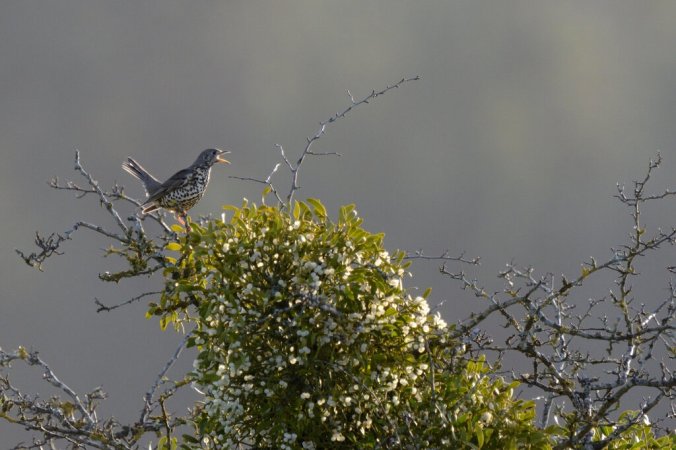
A recent analysis challenges the hypothesis that songbirds helped with a vital step in mistletoe evolution, the move from the ground to the treetops. Fabrice Cahez/Nature Picture Library/Alamy

Cara Giaimo, as ever providing surprising explanations of natural phenomena, has this biology lesson for a holiday tradition:

How Did Mistletoe Get Into the Treetops?

Before someone hung it up in your home, some animal had to get it into the canopies where it thrives to this day.

It’s unclear what trendsetter first hung up mistletoe. Some blame the ancient Greeks, who kissed under the plants during harvest festivals. Others pin it on first-century druids, who might have decorated their homes with them for good luck. Continue reading

Baseball Analogizing Blackrock

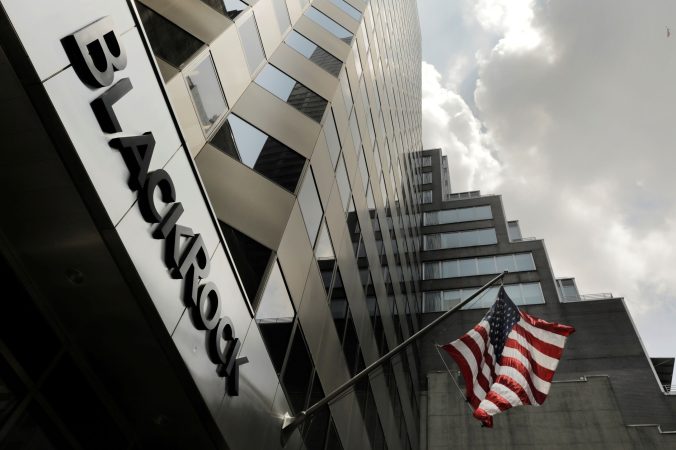
BlackRock, the world’s largest asset manager, continues to behave as if the corporations rapidly destroying the planet are normal players.Photograph by Lucas Jackson / Reuters

Bill McKibben’s weekly newsletter gives us reason to take a closer look beyond the hype about one of the most influential investment firms in the world. He uses baseball to raise concern in a way that is clear, if you know a little about the sport:

Can Wall Street’s Heaviest Hitter Step Up to the Plate on Climate Change?

The year is coming to an end, and all eyes are trained on D.C., as Joe Biden prepares to helm a venerable enterprise with a four-trillion-dollar budget. On the climate front, Biden’s team, which he announced last week, with Gina McCarthy, Deb Haaland, Jennifer Granholm, and John Kerry at the forefront, seems highly credible—a hundred-and-eighty-degree shift from the coterie of coal lobbyists and oil-industry operatives that have decorated the current Administration. Biden’s group has a real shot at getting Washington squarely in the global-warming fight. But, although that federal effort will doubtless occupy much of our attention in the year ahead, let’s close out 2020 by examining the de-facto government based on Wall Street. Its obvious head is BlackRock, the world’s largest asset manager, which is—just for purposes of scale—an eight-trillion-dollar enterprise, and the largest shareholder in almost every company that matters to the future of the Earth. BlackRock is a monetary heavy hitter.

To continue the baseball analogy, BlackRock finally stepped up to the climate plate this year. Larry Fink, the C.E.O., focussed his annual letter to investors on global warming, promising that henceforth sustainability would be at the heart of investment decisions. For that stand, Fink was recently named the first Institutional Investor of the Year—by Institutional Investor magazine. This encomium seems a little like awarding the season’s M.V.P. during spring training, simply because an intrepid player announces his plan to bat .400. In point of fact, BlackRock mostly whiffed on climate last year: the activist group Majority Action reports that, during proxy season, when BlackRock’s votes would have made a real difference, the firm voted to elect ninety-nine per cent of the directors proposed for boards at energy companies and utilities, even if the companies had made no serious climate commitments. The group also highlights that BlackRock supported just three of thirty-six “climate-critical resolutions” put to shareholders at S. & P. 500 companies—resolutions that might have curbed JPMorgan Chase’s lending to the fossil-fuel industry, or Duke Energy’s lobbying efforts. In half these cases, if BlackRock and its smaller competitor Vanguard had voted with the planet in mind, the resolutions would have passed. Fink didn’t bat .400, in other words—he batted below .100. Continue reading

Checking Your Decision-Making On Climate Criteria

Illustration by Ka Young Lee

We missed this useful brief exercise when it was first published a few months ago. Our thanks to Veronica Penney for the quiz and the scientific study it was based upon:

Think You’re Making Good Climate Choices? Take This Mini-Quiz

If you take an airplane trip, can you make up for the planet-warming emissions from that flight by doing things like driving less and turning off the lights in your house? Continue reading

Bubble Wrap & Our Future

It is not light reading. Nor short. But before you order anything else on Amazon you might want to at least skim this report:

Executive Summary

Amazon has a plastic problem. Oceana analyzed e-commerce and packaging market data1 as well as a recent scientific report, published in Science about predicted growth in plastic waste, that projects plastic pollution of aquatic ecosystems by country2 and found that Amazon has a large and rapidly growing plastic pollution footprint. Continue reading

You Can’t Have Your Crabcake And Eat It Too

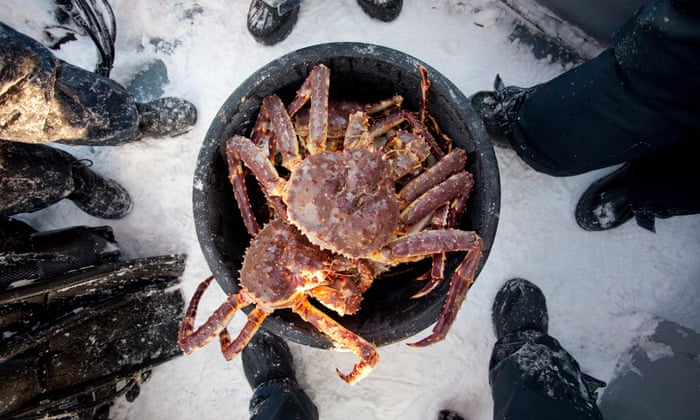
Pot of red gold … Norway exported nearly $9m worth of king crab in October alone. Photograph: Cultura Travel/Philip Lee Harvey/Getty

Invasive species sometimes lead to creative opportunities, but rarely without some tradeoffs:

Crab-22: how Norway’s fisheries got rich – but on an invasive species

Known locally as ‘Stalin’s Red Army’, an invasion of king crabs from Russia created a lucrative industry, and difficult choices

Bugøynes

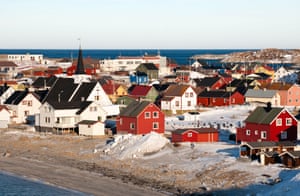
Fishermen in Bugøynes were struggling before the crabs marched in from Russia. Photograph: Nadia Isakova/Alamy

The Norwegian fishing village of Bugøynes, 310 miles north of the Arctic Circle and a frigid, dark place for much of the year, was on the edge of ruin.

Work was scarce. Years of overfishing and mismanagement had stymied cod quotas. Boats lay idle in cold waters. Those who chose to stay were forced to rely on what meagre wages they could still muster from fishing and processing. Continue reading

The Count Is On

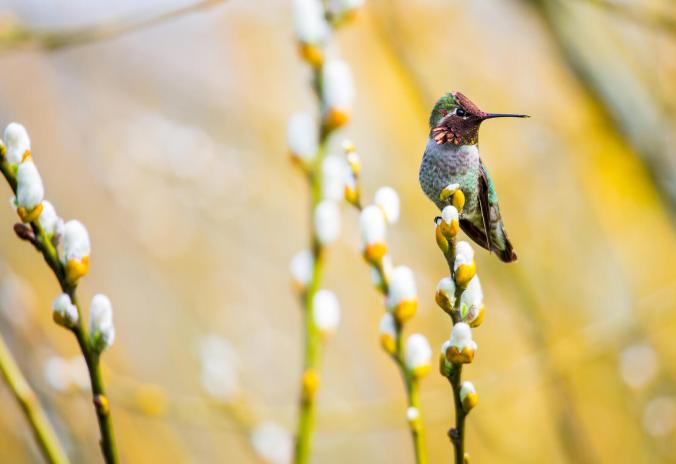
Anna’s Hummingbird. Photo: Matthew Olson/Audubon Photography Awards

This time of the year we always save some time for the census, and not surprisingly 2020 necessitates some adaptation to methodology:

Audubon’s Christmas Bird Count Will Look Very Different This Year

While some local counts may be cancelled due to regional COVID-19 rules, many community scientists across the hemisphere will carry on one of the longest-running wildlife censuses in a socially distanced fashion.

NEW YORK — For the 121st year, the National Audubon Society is organizing the annual Audubon CBC. Between December 14 and January 5, tens of thousands of bird-loving volunteers will participate in counts across the Western Hemisphere all while abiding by Audubon’s COVID-19 guidelines. Continue reading

There Once Was A Puffin

Our thanks to a reader who brought this book to our attention after seeing this photo. If you a puffin aficionado, you might also find these earlier posts worth a visit (there are plenty of others, which you can find by searching our site with the word puffin). The book’s publisher describes it this way:

A seaside story to read with baby! Oh, there once was a Puffin, Just the shape of a muffin, And he lived on an island In the bright blue sea! The dear little Puffin is lonely on his island for he has no one to play with. In this beloved nonsense poem, children will rejoice when the muffin-shaped Puffin, who has a hat for almost every occasion, comes up with a simple—and simply delicious—solution to his problem.

The Weight Of Humanity

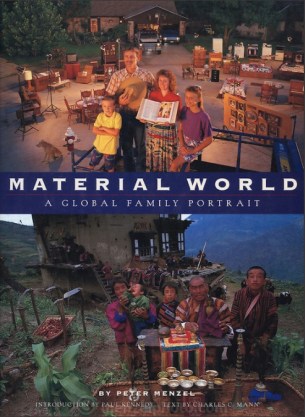
Bill McKibben‘s Climate Crisis newsletter this week has an interesting segment on the total weight of things humans have made, mentioning the book to the right for visual reference. Turns out our stuff now weighs more than all living things on the planet. That is impressive, but not necessarily in a good way:

We are necessarily occupied here each week with strategies for getting ourselves out of the climate crisis—it is the world’s true Klaxon-sounding emergency. But it is worth occasionally remembering that global warming is just one measure of the human domination of our planet. We got another reminder of that unwise hegemony this week, from a study so remarkable that we should just pause and absorb it. Continue reading

Ancestral Plants Worth Saving

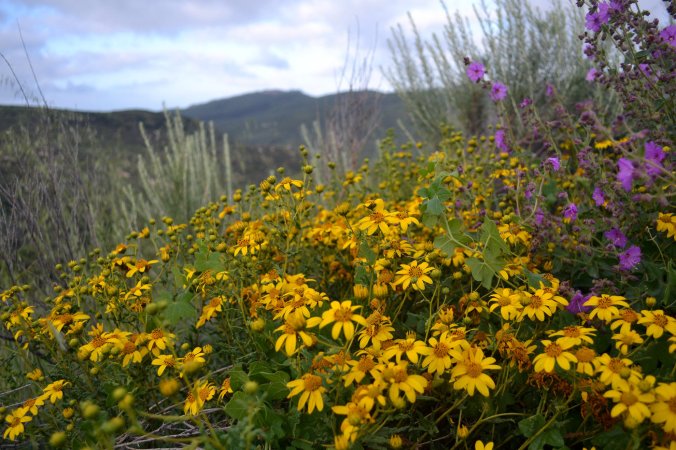
These sunflowers in San Diego National Wildlife Refuge are wild relatives of sunflowers that farmers around the world grow to produce oil. Lisa Cox/USFWS

Thanks to National Public Radio (USA) for this summary of a recent scientific study:

Distant Cousins Of Food Crops Deserve Respect And Protection

Hundreds of native North American plants, often dismissed as weeds, deserve a lot more respect, according to a new study. These plants, distant cousins of foods like cranberries and pumpkins, actually represent a botanical treasure now facing increased threat from climate change, habitat loss and invasive species.

The crops that the human race now depends on, including grains like wheat and tree fruit like peaches, originally were selected or bred from plants that grew wild hundreds or thousands of years ago. And those ancestral plants, like the small wild sunflowers that can be found across the United States, still exist. “If you see them growing along roadsides, those are the ancestors,” says Colin Khoury, a research scientist at the International Center for Tropical Agriculture. Continue reading