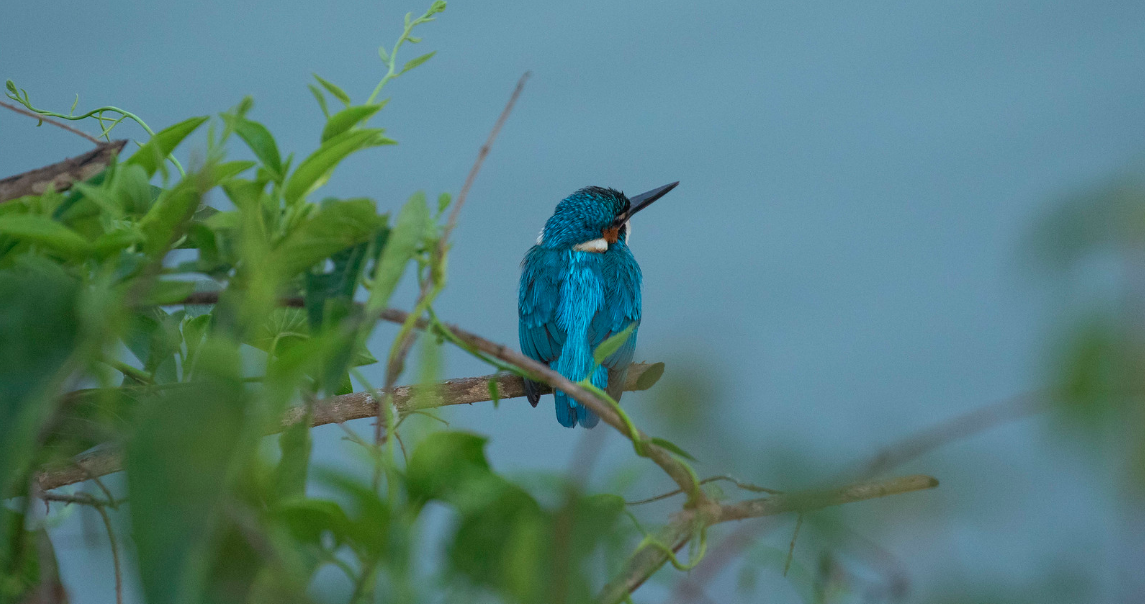
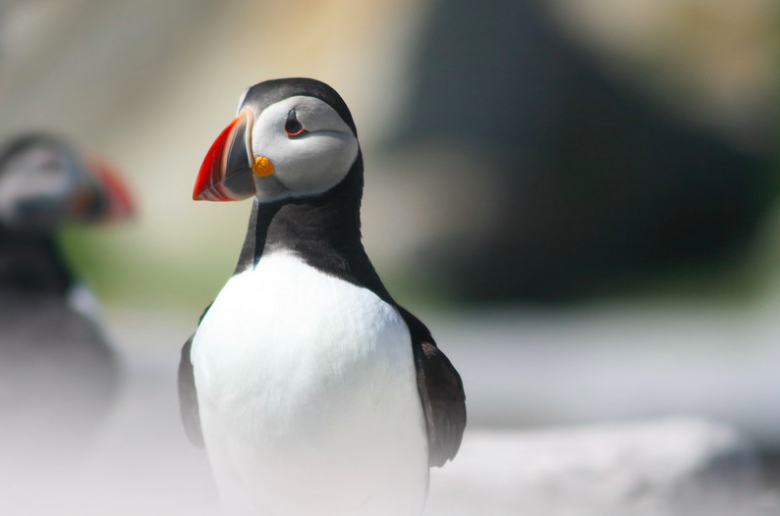
Bandipur National Park, Karnataka
Bandipur National Park, Karnataka
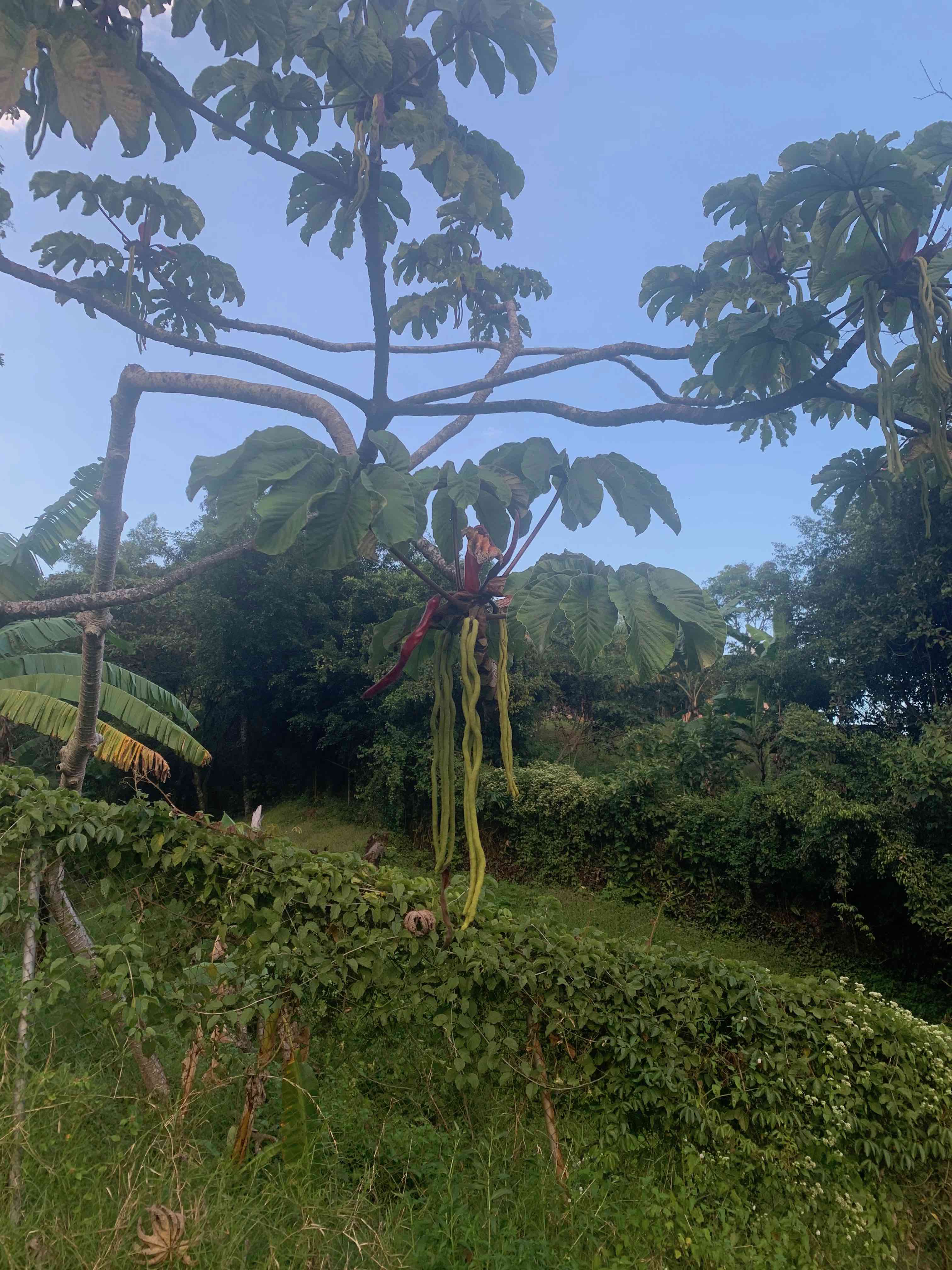
Yesterday, while working on the land we are preparing to plant coffee a few months from now, I noticed that the cecropia trees suddenly have abundant fruit. I knew that sloths love these trees, but while looking for more information to understand this fruit I learned that bats and birds and other animals also appreciate them for food and nesting material; plus, the leaves and roots of the trees have many uses among indigenous communities in the American tropics.
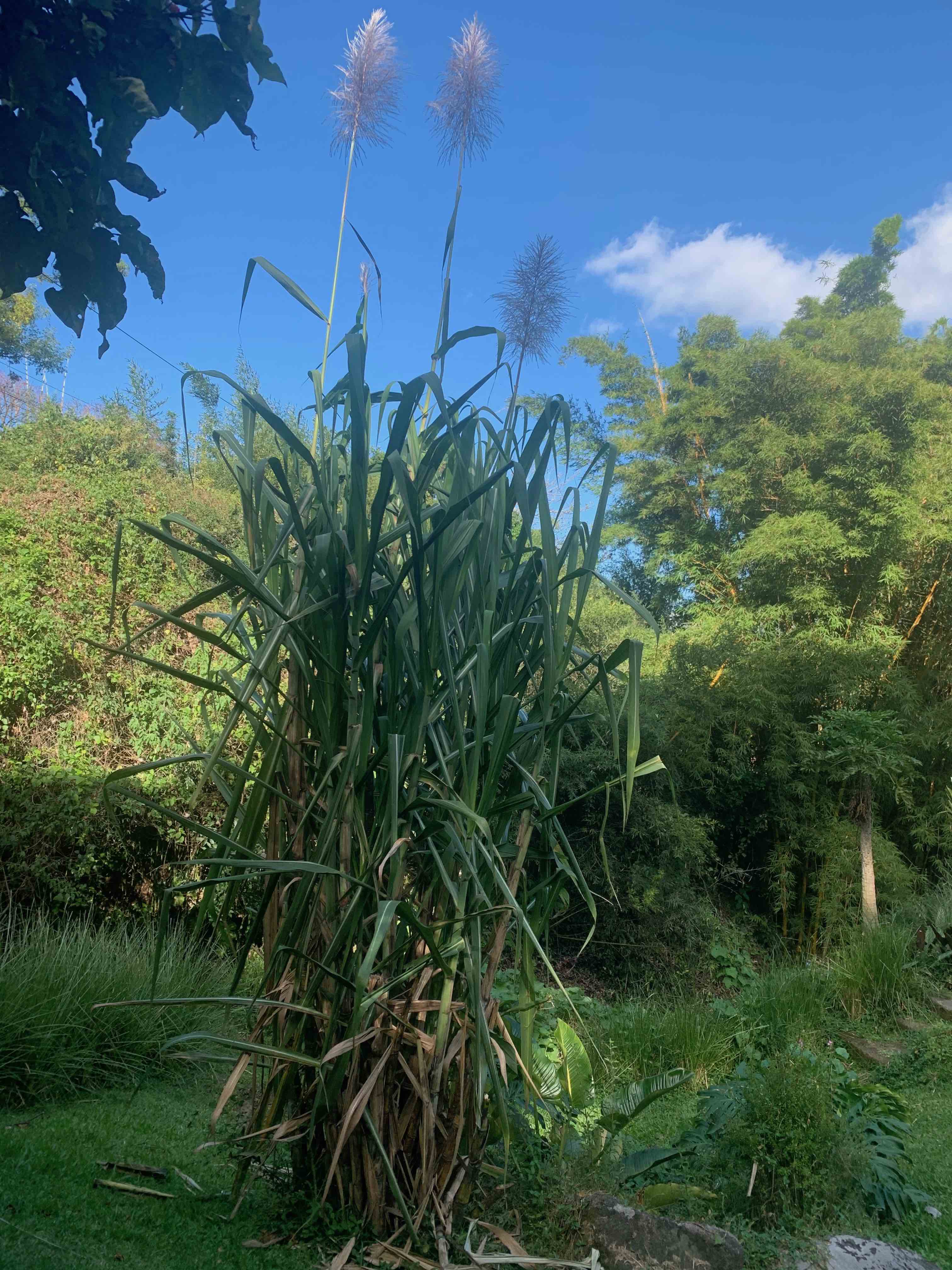
Most of my work recently, now that the poro saplings are planted, is removing unwanted grasses to make way for wanted grasses that help retain soil. One of the grasses planted this year, sugarcane, also surprised me. This plant above, now about one year old, suddenly shot up an extra five feet without my noticing, until yesterday. And the furry, flowery top of the stalks, now visible nearly 20 feet above ground, presumably mean something I will need to read up on. This first stand of sugarcane, which is at the highest point of the land on this property, provided us offspring that we planted along the lowest portion of land, neighboring bananas and plantains that will shade one section of coffee saplings.
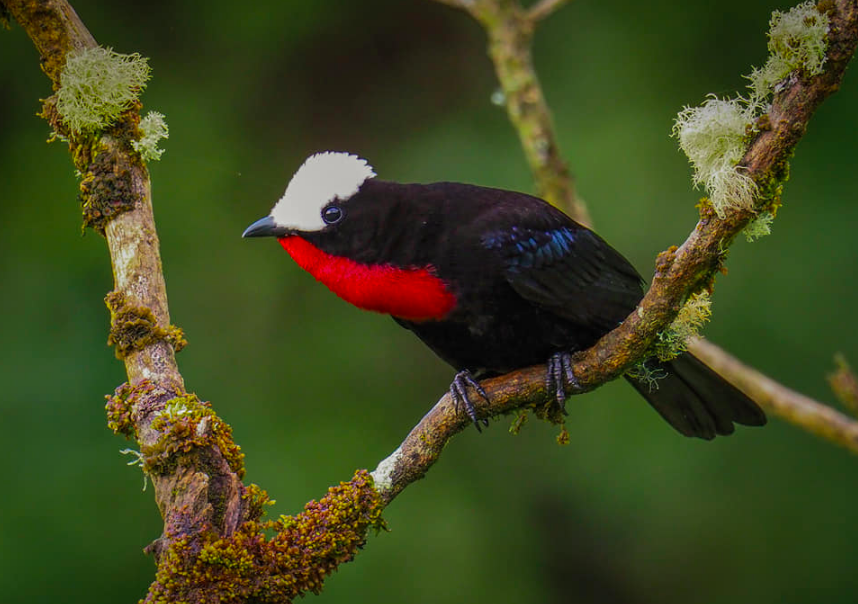
El Tulcán, Ecuador
Yale Climate Connections is a nonpartisan, multimedia service providing daily broadcast radio programming and original web-based reporting, commentary, and analysis on the issue of climate change, one of the greatest challenges and stories confronting modern society.
Today, within the time I have enjoyed my first cup of coffee, I have made two discoveries: a new (to me) source for stories to share here (click the banner above to go to Yale Climate Connections) and a book review that gets me wondering whether science fiction is a genre I have time for after all (I thought not, but click the image below to go to the review for yourself).
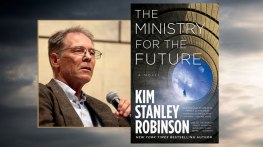
(Kim Stanley Robinson inset photo: Gage Skidmore)
In The Ministry for the Future, his twentieth novel, science fiction author Kim Stanley Robinson creates something truly remarkable: a credible, very-near future in which humans effectively solve the problem of climate change.
Climate lukewarmers may be tempted to interpret this upbeat summary as support for their technological optimism. That would be a mistake. Though it ends well, the story Robinson tells is harrowing.
I first heard about the book yesterday in a conversation with the author:
The most important book I’ve read this year
How climate change will force humanity to rethink capitalism, borders, terrorism, and currency.
That conversation was also a kind of review, but it was not until I looked for more information about the book this morning, and found that review by Michael Svoboda, that I got thinking about the genre of science fiction, and the sub-genre of climate fiction.
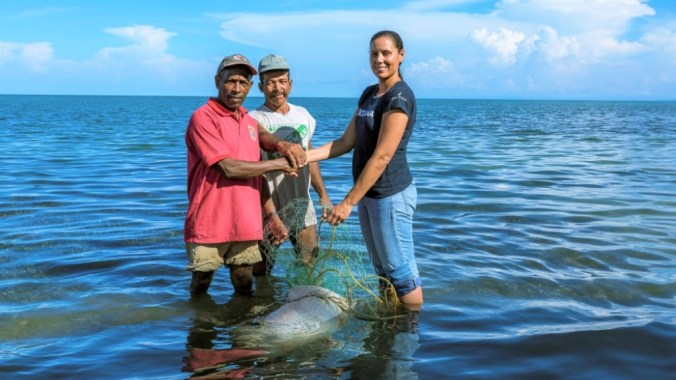
Ray Jacobs (left) hands over his gillnet to Janelle Chanona, Oceana’s Vice President in Belize. Also pictured is Fidel Audinett (center), a Belizean fisher who had been petitioning the government to ban gillnets since 1997. Photo Credit: © Oceana/Alex Ellis
Wonderful news out of Belize!
Tackling a triple threat: Belize banned bottom trawling, offshore drilling, and now gillnets
For a country that’s slightly smaller than the U.S. state of Massachusetts, Belize boasts an inordinate number of ocean wonders. It’s home to the world’s second longest barrier reef, which Charles Darwin once described as “the most remarkable reef in the West Indies.” Here, you’ll find more than 500 unique fish species – enough to give every Belizean island its own mascot and still have about 50 left over.
Because this little Caribbean country has a lot worth protecting, it has enacted some of the strongest ocean conservation laws in the world – and they just got even stronger. Following hard-fought victories that banned all trawling and offshore oil drilling in Belize’s waters, the country has now outlawed gillnets, a fishing gear that kills turtles, manatees, and many other marine animals.
In addition to implementing a nationwide gillnet ban, the Belizean government signed an agreement with Oceana and the Coalition for Sustainable Fisheries to help licensed gillnet fishers transition to other jobs. As a result, Belizean resources and livelihoods will be protected well into the future.
As Janelle Chanona, Oceana’s head in Belize, put it: “This is a historic moment for Belize, her people, the Caribbean Sea and, most importantly, for everyone who depends on the country’s marine resources for their livelihoods.” Continue reading

male – Agua Volcano, Guatemala
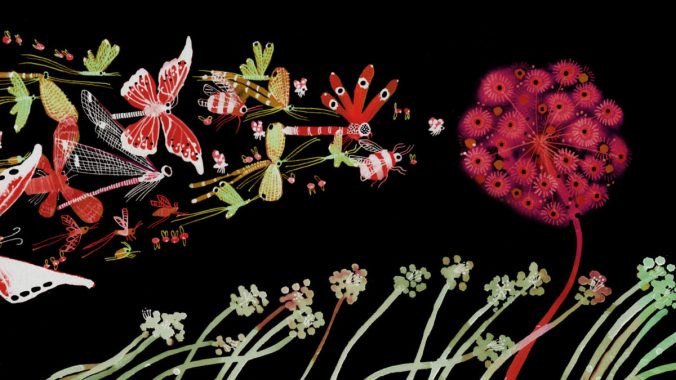
ENZO PÉRÈS-LABOURDETTE / YALE E360
As the curvy berm we started forming earlier this year, combined with 100+ newly planted trees, transition from wet season to dry season, we have been noticing an uptick in insects. While most of my early life experiences in Connecticut led me to believe that the world (or at least I) would be better off with fewer insects, I now think exactly the opposite. Last Sunday I had my first sighting of a bird (same species as our friend Daniel captured by camera in Guatemala a few weeks ago) that is likely here for some of those insects. That sighting alone would have been enough to convince me that more insects are better than fewer. Janet Marinelli‘s article in Yale Environment360 gives me more to ponder on this topic:
How Non-Native Plants Are Contributing to a Global Insect Decline
The impact of introduced plants on native biodiversity has emerged as a hot-button issue in ecology. But recent research provides new evidence that the displacement of native plant communities is a key cause of a collapse in insect populations and is affecting birds as well.
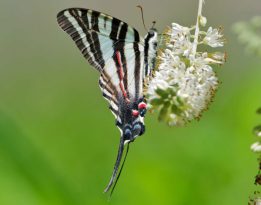
Zebra swallowtails are entirely dependent on pawpaw trees, which have leaves that are the butterflies’ larvae only source of food. COURTESY OF DOUGLAS TALLAMY
For years, Doug Tallamy sounded the alarm about the grave threat that plants introduced from abroad pose to native insects. By transforming native plant communities into so-called novel landscapes increasingly dominated by exotic species on which many insects cannot feed, the University of Delaware entomologist speculated, they imperil not only insects but also the birds and other animals that depend on insects for survival. Continue reading
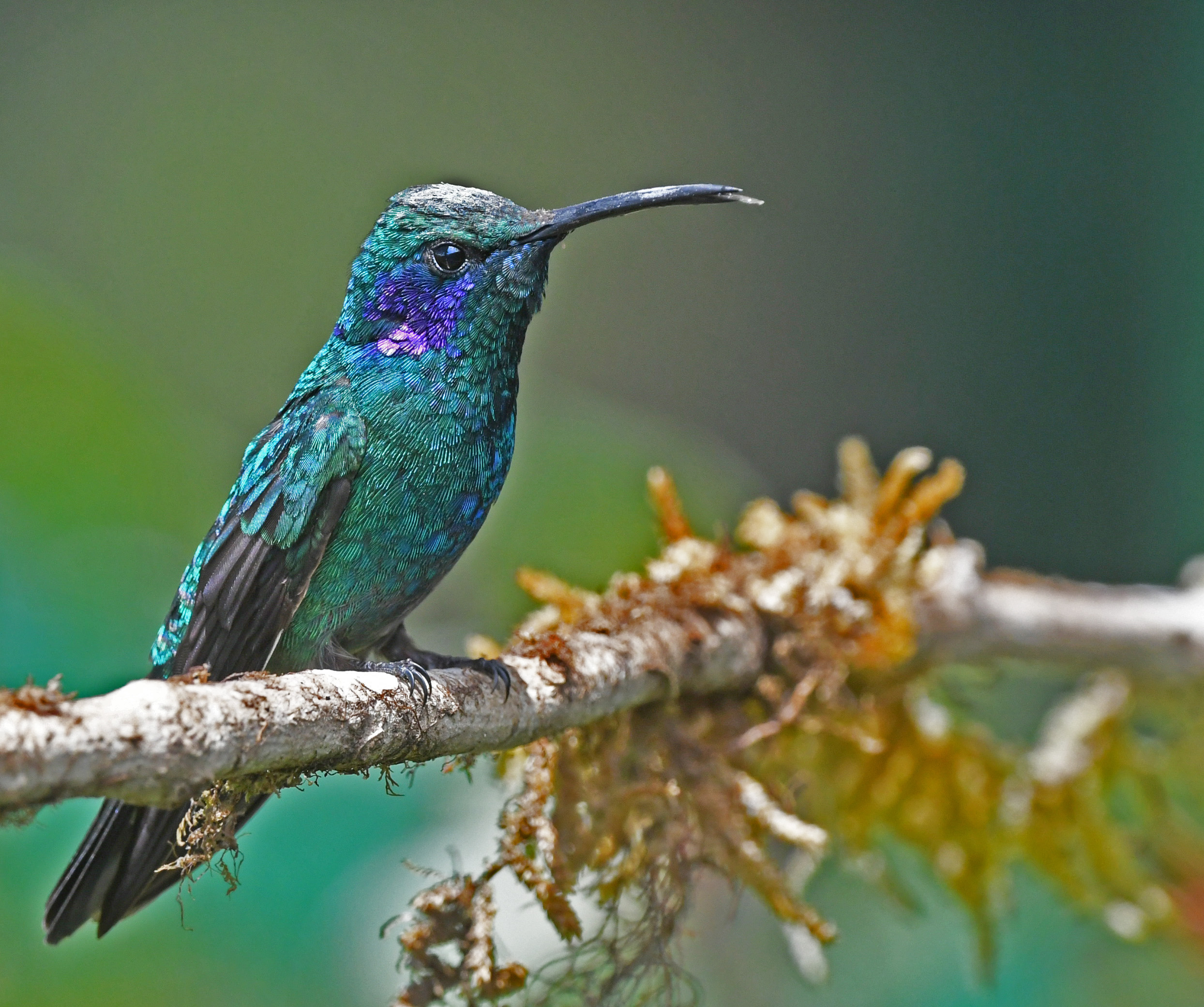
Talamanca Highlands, Costa Rica
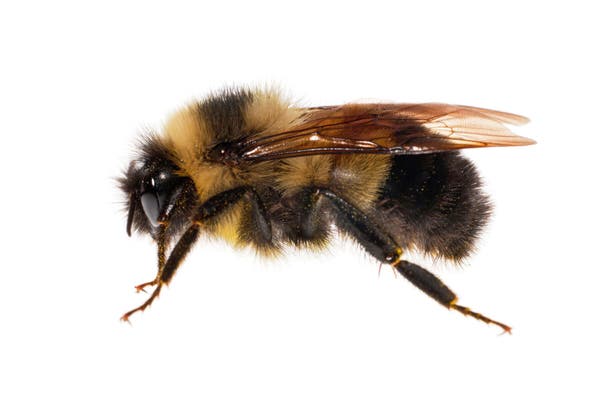
A rusty patched bumblebee. Nature Picture Library/Alamy
If you are a regular here you have seen plenty about citizen science. And plenty about bees. We have posted only one time previously about the intersection of bees and citizen science. Today makes twice:
How You Can Help Count and Conserve Native Bees
Honeybees and their problems get the most attention, but scientists are using tactics learned from bird conservation to protect American bees. Continue reading
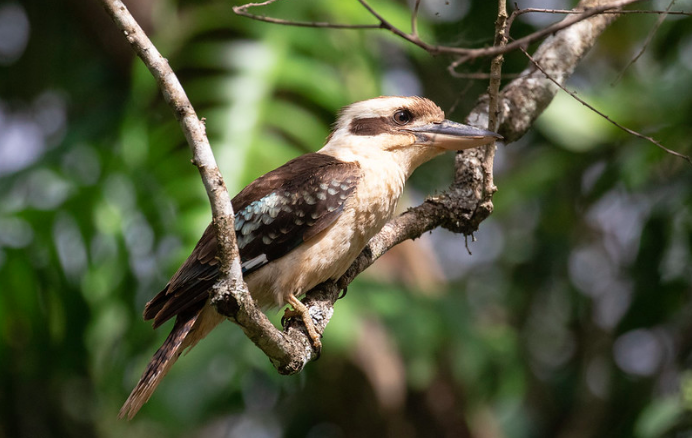
Mt Lewis Rd, Tablelands
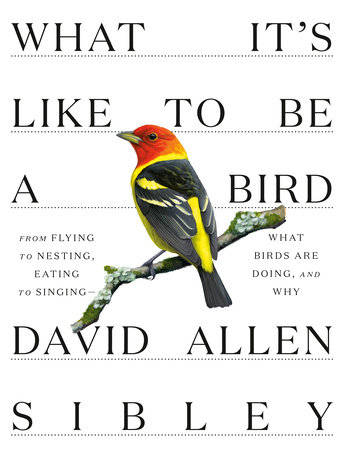 We missed this book when it was published earlier this year, until now–an interview with its author about best birding practices caught our attention. The publisher has this to say about the book:
The bird book for birders and nonbirders alike that will excite and inspire by providing a new and deeper understanding of what common, mostly backyard, birds are doing–and why
“Can birds smell?” “Is this the same cardinal that was at my feeder last year?” “Do robins ‘hear’ worms?” In What It’s Like to Be a Bird, David Sibley answers the most frequently asked questions about the birds we see most often…
 David Allen Sibley is also offering this online course in conjunction with 92Y:
Have you ever wondered what it’s like to be a bird? Can birds smell? Is that the same cardinal that was at your feeder last year? What are backyard birds doing and why? Continue reading

Costa Rica
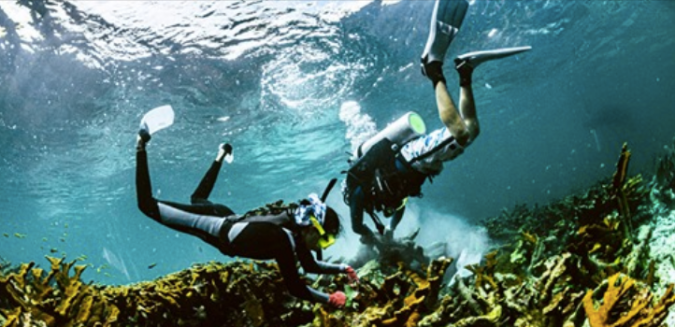
Members of a team calling itself “the Brigade” work to repair hurricane-damaged corals off the coast of Mexico.
An inspiring example of collaborative efforts that bring environmentalists and the insurance industry together to protect fragile marine ecosystems.
A Race Against Time to Rescue a Reef From Climate Change
In an unusual experiment, a coral reef in Mexico is now insured against hurricanes. A team of locals known as “the Brigade” rushed to repair the devastated corals, piece by piece.
When Hurricane Delta hit Puerto Morelos, Mexico, in October, a team known as the Brigade waited anxiously for the sea to quiet. The group, an assortment of tour guides, diving instructors, park rangers, fishermen and researchers, needed to get in the water as soon as possible. The coral reef that protects their town — an undersea forest of living limestone branches that blunted the storm’s destructive power — had taken a beating.
Now it was their turn to help the reef, and they didn’t have much time.
“We’re like paramedics,” said María del Carmen García Rivas, director of the national park that manages the reef and a leader of the Brigade. When broken corals roll around and get buried in the sand, they soon die. But pieces can be saved if they are fastened back onto the reef.
“The more days that pass, the less chance they have of survival,” she said.
The race to repair the reef is more than an ecological fight; it’s also a radical experiment in finance. The reef could be the first natural structure in the world with its own insurance policy, according to environmental groups and insurance companies. And Hurricane Delta’s force triggered the first payout — about $850,000 to be used for the reef’s repairs.
The success or failure of this experiment could determine whether communities around the world start using a new tool that marries nature and finance to protect against the effects of climate change. The response to Delta was a first test. Continue reading

Costa Rica

Butyric acid gives some cheeses their distinctively strong scent. Alexander Spatari/Getty Images
I had been putting off listening to this interview until I had the proper attention span. During the last two years I have worked to improve my understanding of the relationship between tastes and aromas (aka smells) of coffees, mirroring the work I did to better understand wines back in the day. My patience was rewarded with a clear conversation that neither dumbed down nor over-complicated the relationship between olfactory and gustatory experiences. It made me think the book will be worth more than the purchase price:

…On why grass-fed beef tastes different than grain-fed beef
It’s absolutely true that the foods that animals eat in order to grow affect the way they taste when we, in turn, eat them as food. And in the case of grass and grain-fed animals, the difference is in the kinds of fat that they take in. So it’s not that we’re actually tasting grass or tasting grain when we detect the difference between the two. It’s actually the fact that the fats — the oils in grass — are very irregular molecules, and they tend to be broken down in the animal into particular fragments that are very characteristic of those original fats and oils. Continue reading

male – Oxley Creek Common, Brisbane
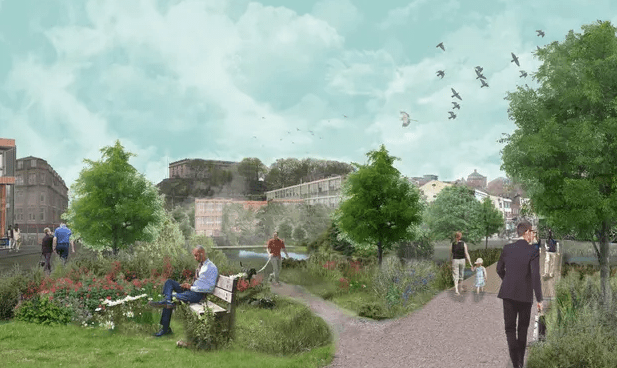
What the Broadmarsh area of central Nottingham could look like if the Wildlife Trust’s ambitious post-Covid wildscape plan gets the go-ahead. Photograph: The Wildlife Trusts
When we’ve written about rewilding on this site before we usually are referring to bringing wildlife back into a landscape that had lost it for decades, if not centuries. This Nottingham project has precedent in terms of plans to transform an urban eyesore into public space that is welcoming to both biodiversity of fauna and flora, and the people who will benefit from taking pleasure in it.
Thanks to the Guardian for highlighting the story. We look forward to reading about the finished project!
An additional Public Service Announcement: If you like this story the Nottingham Wildlife Trust has an ongoing petition to help make this project a reality. Please feel free to follow the link and add your name. Being local to Nottingham is not required.
Going wild? A radical green plan for Nottingham’s unloved shopping centre
An empty 1970s shopping centre in Nottingham could be transformed into wetlands, pocket woodlands and a wildflower meadow as part of a post-pandemic urban rewilding project.
The debate about Broadmarsh shopping centre, considered an eyesore by many, has rumbled on for years. This year it was undergoing a £86m revamp by real estate investment trust Intu when the firm went into administration.
The number of empty shops on UK high streets has risen to its highest level in six years, and as retail giants such as Debenhams and Arcadia Group falter, Nottinghamshire Wildlife Trust has come up with a new model of inner city regeneration: urban rewilding.
The trust wants to bulldoze the already half-demolished Broadmarsh building and turn it into 2.5 hectares (6 acres) of scruffy green space at an estimated cost of £3-4m. The designs were created with Influence Landscape Architects and could set a precedent for what to do with the growing amount of vacant retail space in other cities. “It’s unbelievable to hear that stores like Debenhams are in the position they are in – they’re stalwarts of the city, but it does put out an opportunity,” said Sara Boland, managing director of Influence. Continue reading
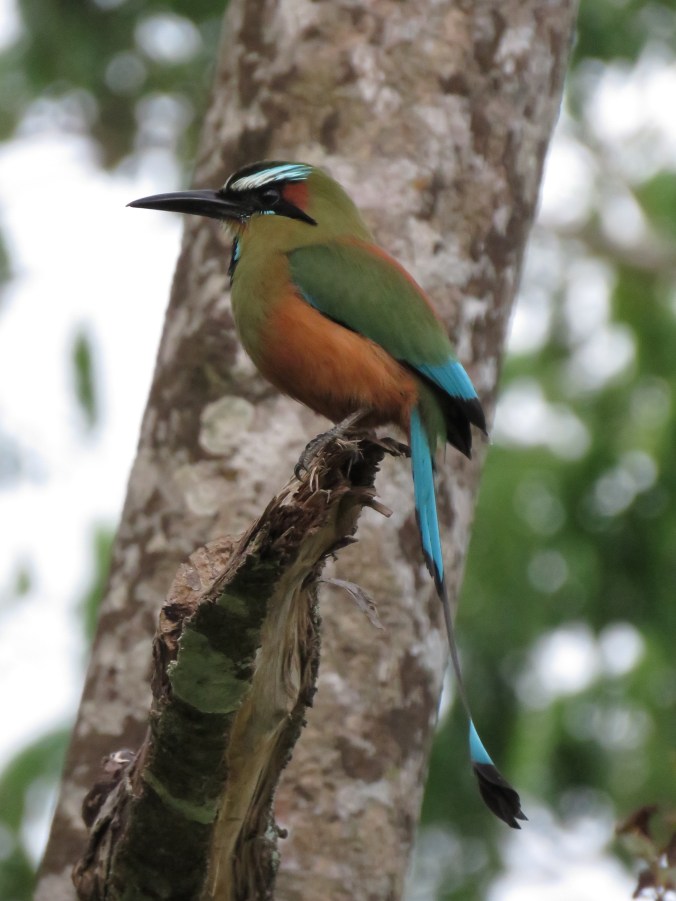
Marriott Los Sueños, Costa Rica
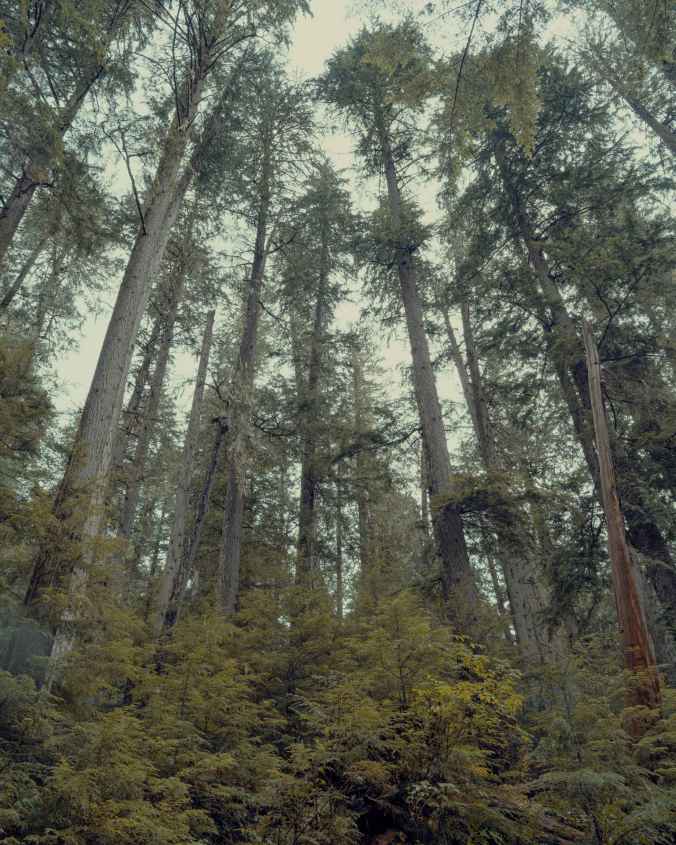
On a topic we have posted about at least a few times before, here is the latest science on the ways in which trees communicate among themselves, and with others, accompanied by some phenomenally beautiful supporting photographs (especially the fungi):
The Social Life of Forests
Trees appear to communicate and cooperate through subterranean networks of fungi. What are they sharing with one another?
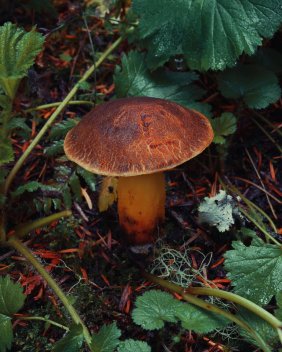
Mushrooms and conks are the fruiting bodies of fungi. Their underground filaments form networks among the root systems.
By the time she was in grad school at Oregon State University, however, Simard understood that commercial clearcutting had largely superseded the sustainable logging practices of the past. Loggers were replacing diverse forests with homogeneous plantations, evenly spaced in upturned soil stripped of most underbrush. Without any competitors, the thinking went, the newly planted trees would thrive. Instead, they were frequently more vulnerable to disease and climatic stress than trees in old-growth forests. In particular, Simard noticed that up to 10 percent of newly planted Douglas fir were likely to get sick and die whenever nearby aspen, paper birch and cottonwood were removed. The reasons were unclear. The planted saplings had plenty of space, and they received more light and water than trees in old, dense forests. So why were they so frail? Continue reading
 Organikos